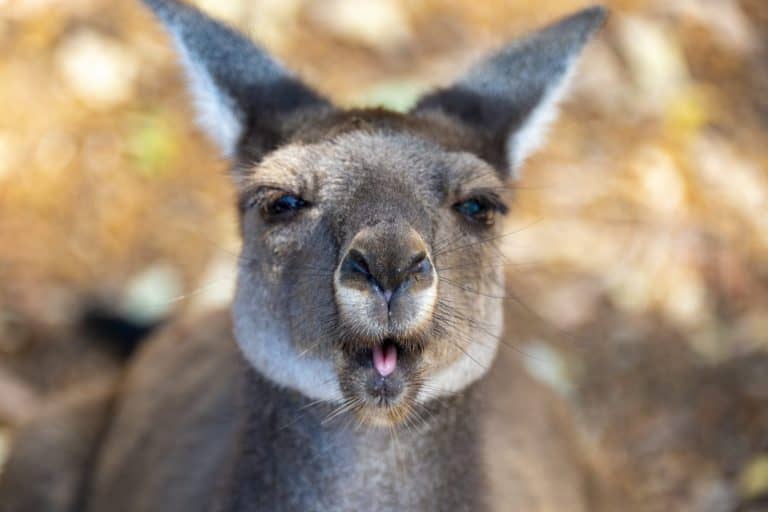
All animals on earth have evolved to best survive in their habitat. Some have developed long legs and fast-twitch muscles that give them super speed. Others have sturdy claws to help them dig. And some have extremely long necks.
Long-necked animals may look awkward, but there’s a reason for that stretched body part! Animals with longer necks can reach higher food that other creatures can’t get to, giving them an exclusive food source. This is especially important during droughts when food can be scarce. Lengthy necks also allow animals to see farther to keep an eye on other animals or predators. Lastly, long necks keep the animals’ heads far from the ground, and thereby farther away from threats.
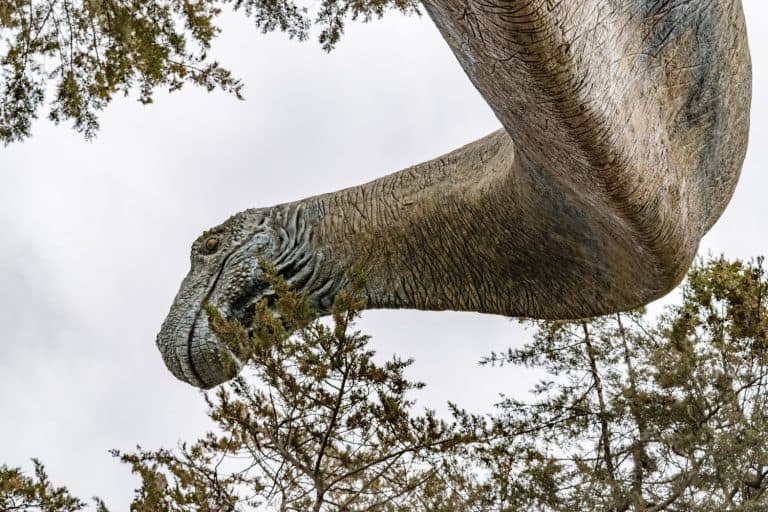
While some species of dinosaur had longer necks than the animals of today (Mamenchisaurus sinocanadorum takes the prize with a neck measuring almost 50 feet!), we’re going to take a look at the current contenders for most impressive neck length. Here are the 12 animals with the longest necks.
12. Eastern Snake-Necked Turtle

Side-necked species fold their heads sideways into their shells.
©iStock.com/Ken Griffiths
While this eastern snake-necked turtle may not be the largest of turtles, its neck is proportionally impressive. The snake-necked turtle’s carapace (shell) measures around just 11 inches long, but its neck can be 60% or more of that length. Also known as the common long-necked turtle, this East Australian species is a side-necked species. This means it bends its head sideways into the shell instead of pulling it directly back like other species.
11. Gerenuk
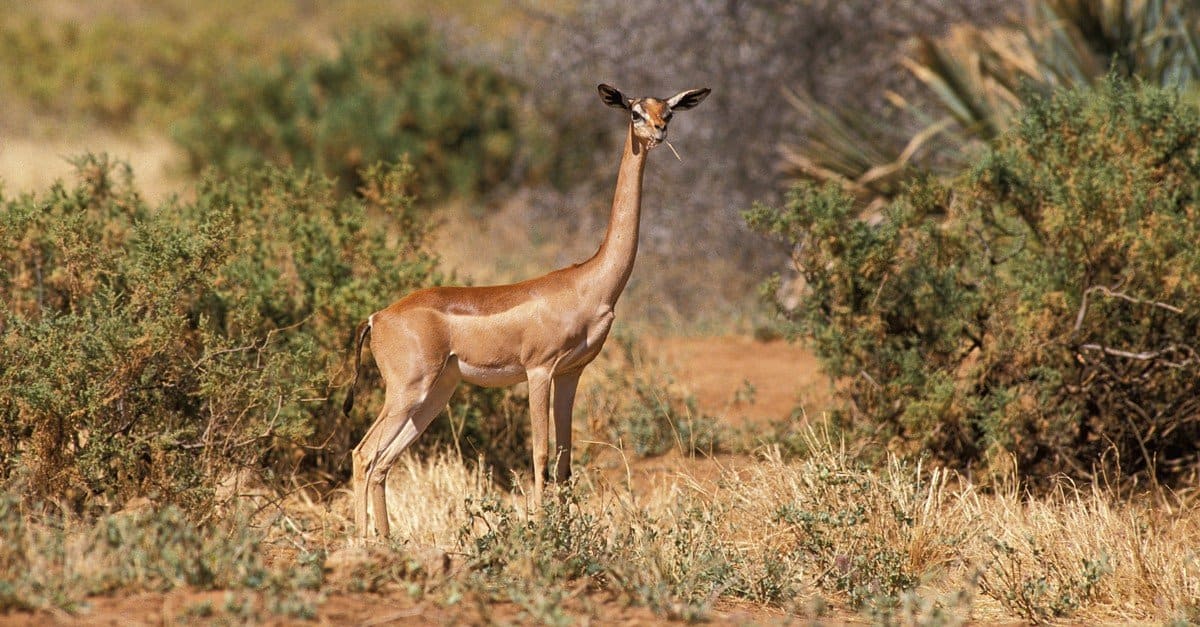
Gerenuks are nicknamed “giraffe gazelles” due to their long necks.
©slowmotiongli/Shutterstock.com
The name “gerenuk” is derived from a Somali word meaning “giraffe necked.” Gerenuks are also known as the giraffe gazelle, and for good reason. A type of antelope native to East Africa, gerenuks have a long, giraffe-like neck that can measure up to 1.5-2 feet long. Considering these animals only stand 4.5-5 feet tall, that’s a pretty impressive neck! Gerenuks are highly adaptive and can be found in several different habitats, including dunes, savannas, deserts, and grasslands. They can stand and even walk on their hind legs for short distances. This allows them to reach food higher up in bushes and trees.
10. Trumpeter Swan
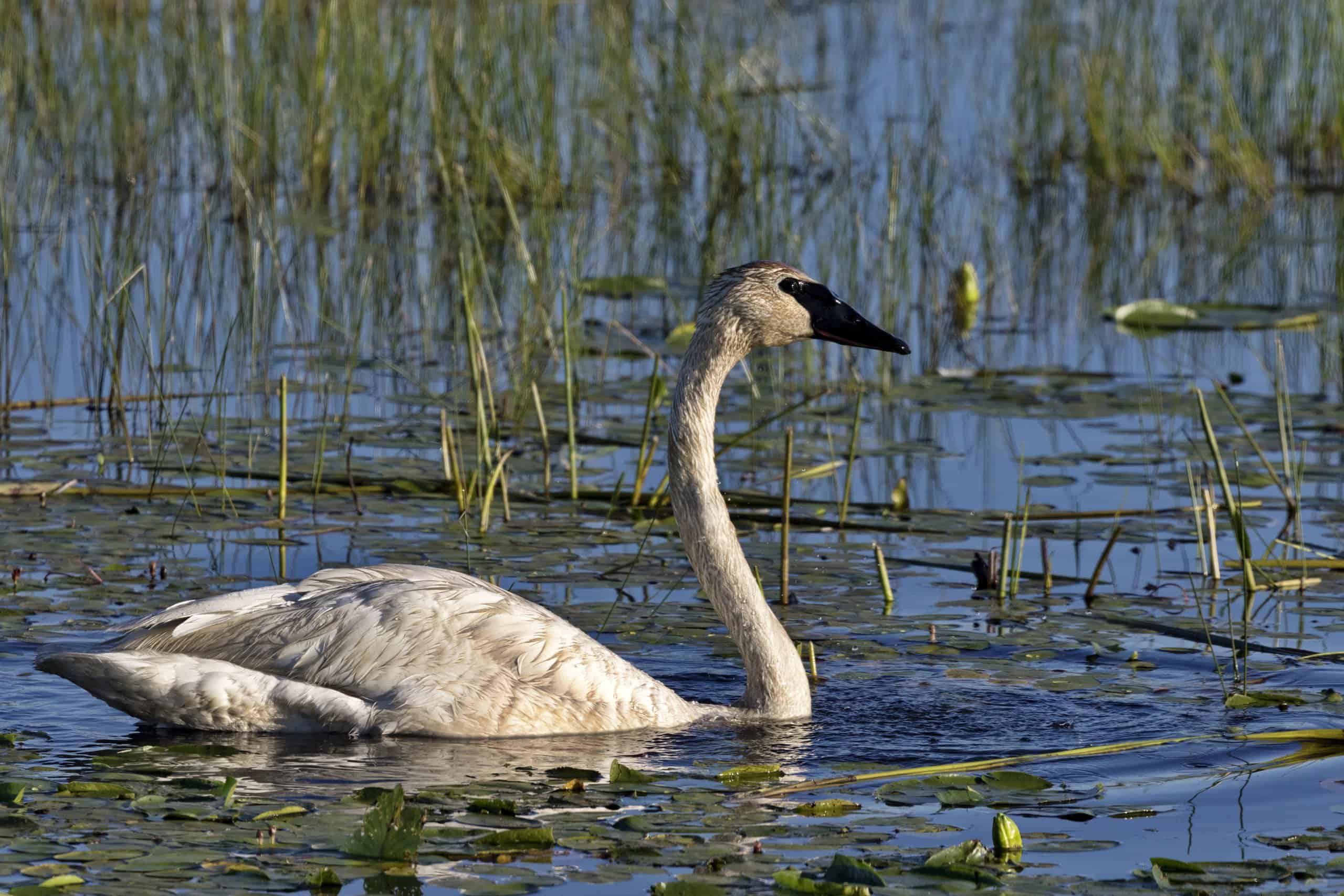
Slightly larger than mute swans, trumpeter swans are the largest swans.
©Florence-Joseph McGinn/Shutterstock.com
The trumpeter swan is the largest waterfowl species and the biggest flying bird in North America. It is also the largest swan species in the world. With a 5–6-foot wingspan, these birds can weigh up to 35 pounds. Up to 6 feet long and 4 feet tall, the trumpeter swan’s neck can be 2 feet long. They have more neck vertebrae than most mammals, with 24-25 vertebrae. Trumpeter swans mate for life, which can be a very long time: These beautiful birds can live up to 25 years.
9. Jabiru
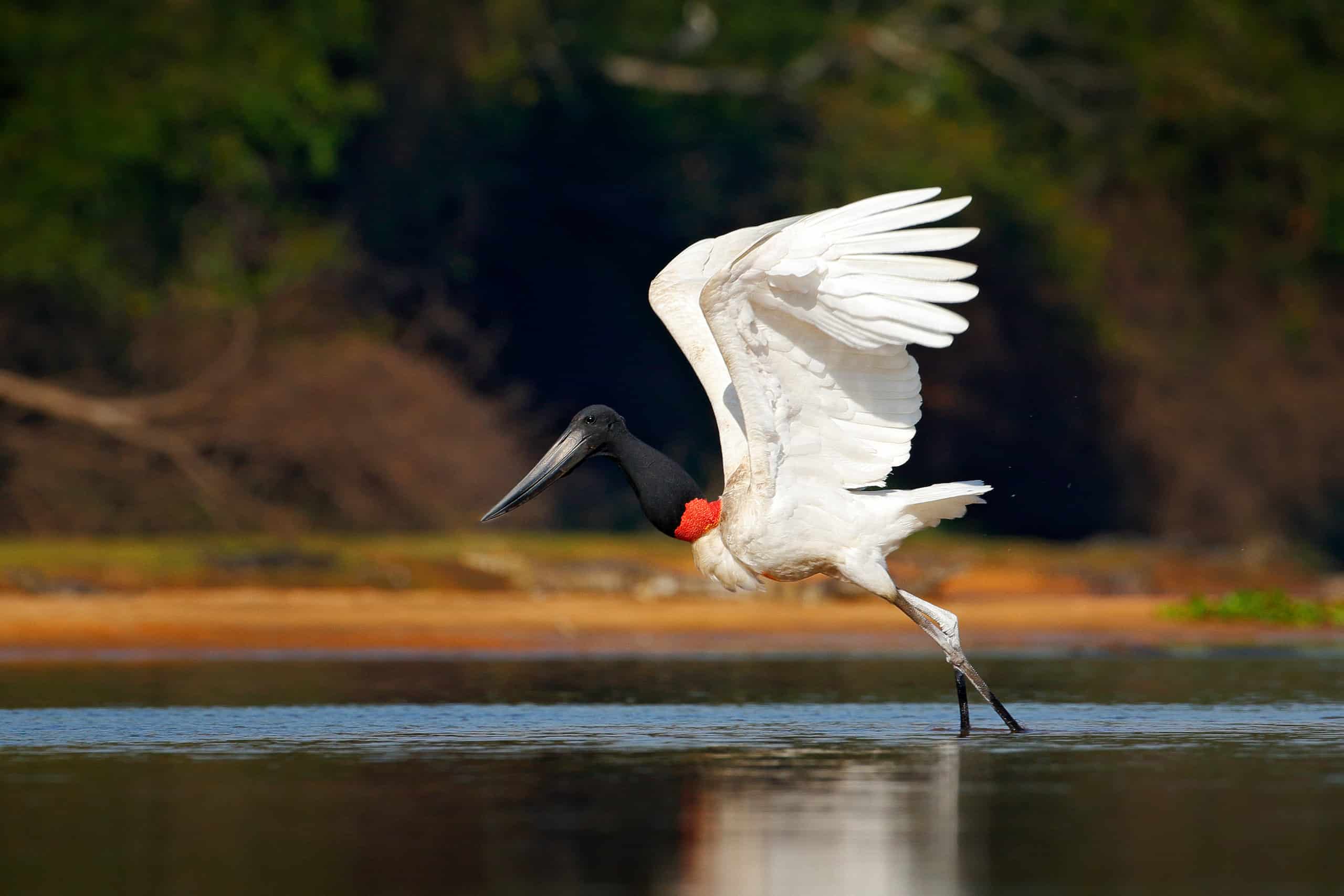
Jabirus have a distinctive red band around the base of their necks.
©Ondrej Prosicky/Shutterstock.com
Although they are found throughout Central America and Northern South America, jabirus are most common in the wetlands of Paraguay and Brazil. These long-legged storks prefer wet areas such as marshes, swampy woodlands, riverbanks, estuaries, or lakes. Jabiru are distinctive birds with black legs, a white body, and a black head and neck with a bright red band at the base of the neck. Standing 5 feet tall, the jabiru’s bright neck can measure up to 2 feet long.
8. Alpaca
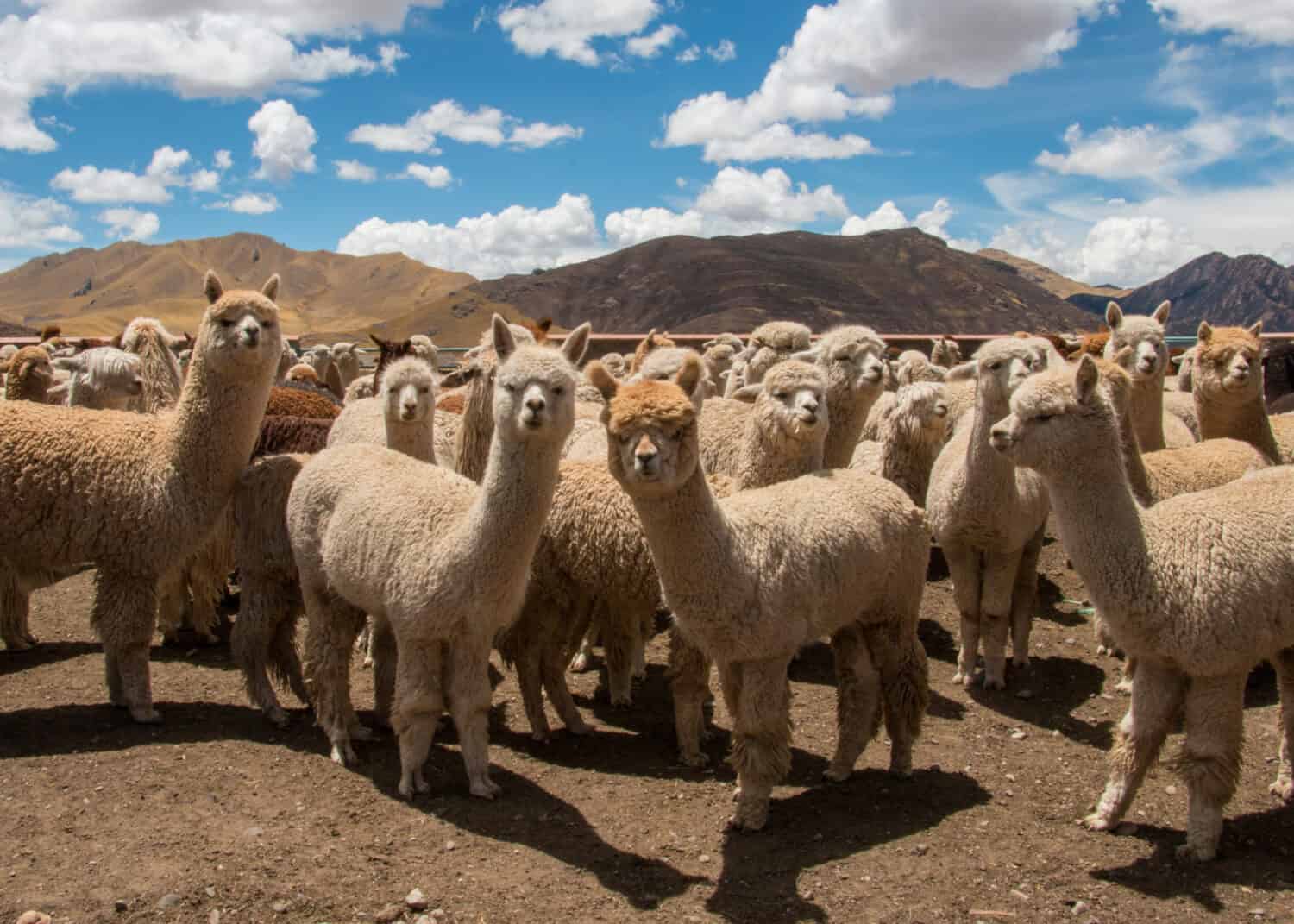
Alpacas are domesticated animals used for wool and meat.
©NewmanFilm/Shutterstock.com
Native to South America, the alpaca is the domesticated version of the vicuña. Weighing 100-190 pounds, the alpaca is smaller than the llama, for which it is commonly mistaken. Alpacas average around 4-5 feet tall, with 2-foot necks. Males (called machos) are typically larger than females (hembras). Alpacas are often used for their wool, which is flame-resistant and practically waterproof. Thanks to their friendly and affectionate nature, alpacas are now being used as therapy animals and are growing in popularity as companion animals.
7. Emu
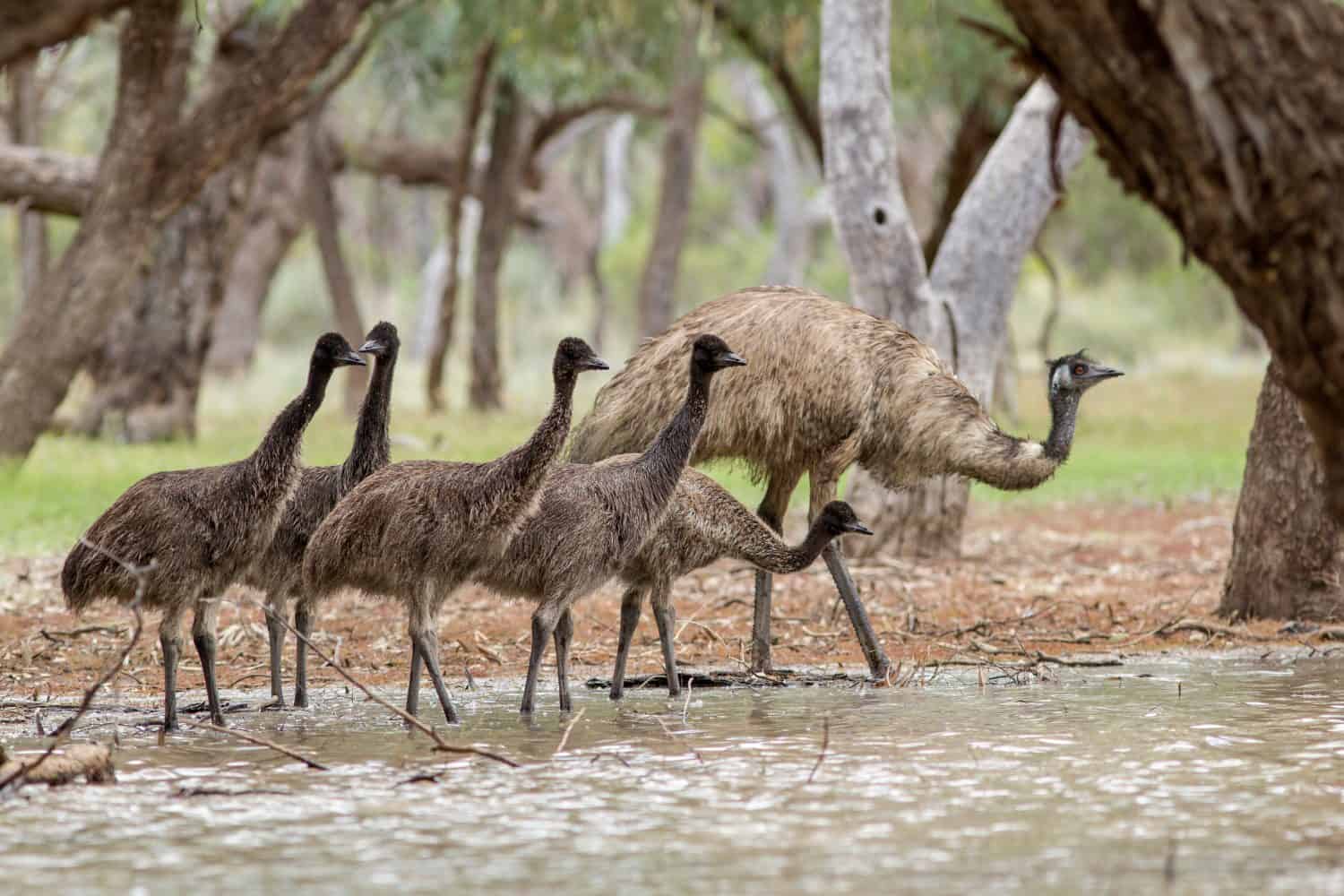
Emus are large flightless birds with small wings.
©Ken Griffiths/Shutterstock.com
A smaller cousin of the ostrich, the emu is the second-tallest living bird. The largest native bird in its homeland of Australia, the emu can be up to 6 feet tall, with a 2-2.5-foot neck. It’s not hard to determine why they are flightless, however: Their wings are only 8 inches long!
In addition to having impressive necks, emus are also incredibly fast. They can reach speeds of up to 31 miles per hour. Unlike flighted birds, male emus incubate the eggs through. the 56-day incubation period.
6. Flamingo
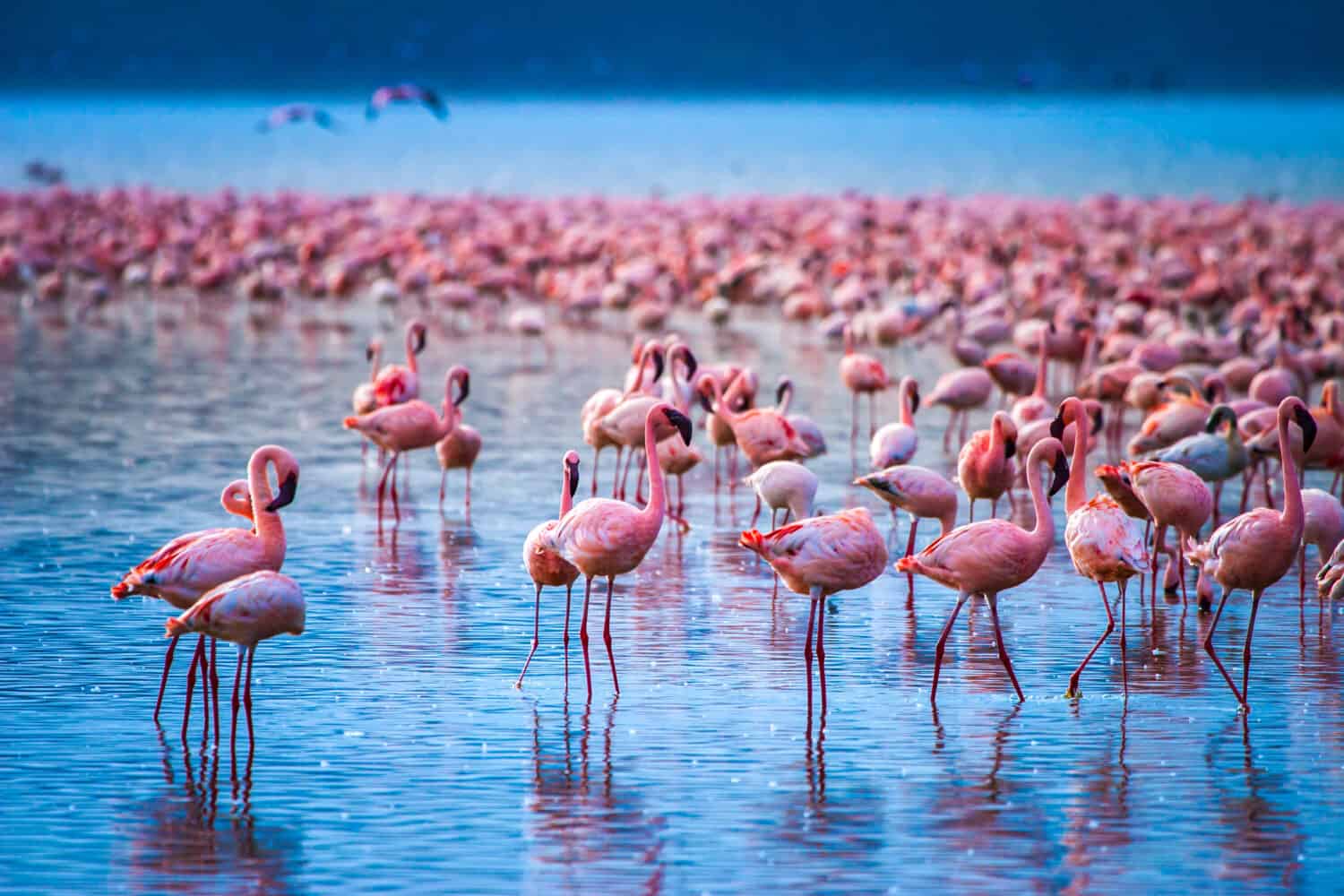
Flamingos are pink from eating algae that contain carotenoid pigments.
©FOTOGRIN/Shutterstock.com
The iconic flamingo is known for its distinctive pink coloring, long legs, and 2-2.5-foot-long neck. Standing 4-5 feet tall, the flamingo’s long S-shaped neck lets them bend down easily to feed on brine shrimp, algae, small crustaceans, and other food. Because their necks have 19 cervical vertebrae (compared to a human’s seven cervical vertebrae) flamingos have flexible necks. They can twist around and even bend their necks backward overhead to groom themselves. Flamingos can be found around the world, with four species in North America, and two in Europe, Asia, and Africa.
5. Anhinga
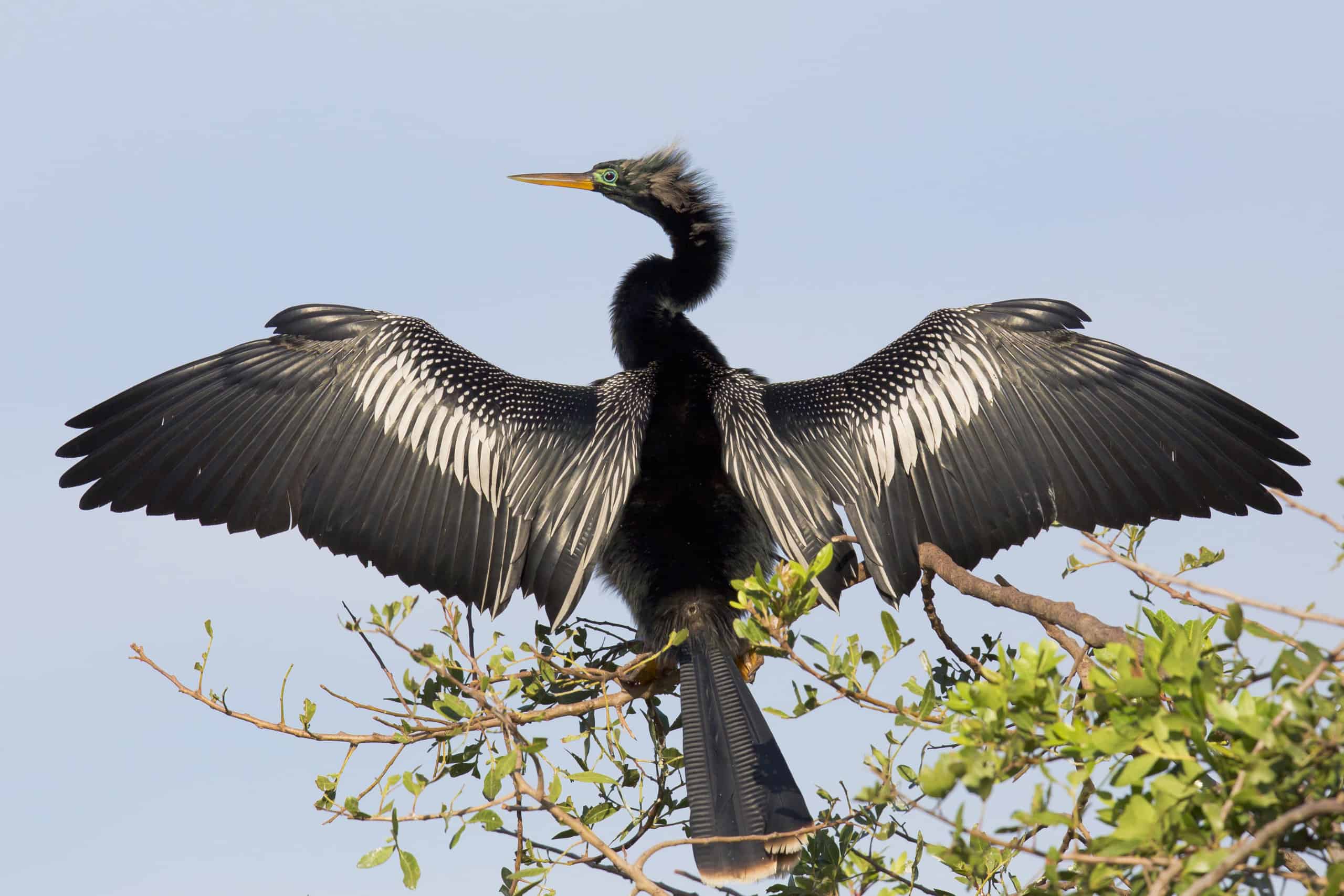
Anhinga’s are known for their snake-hunting abilities.
©Steven Blandin/Shutterstock.com
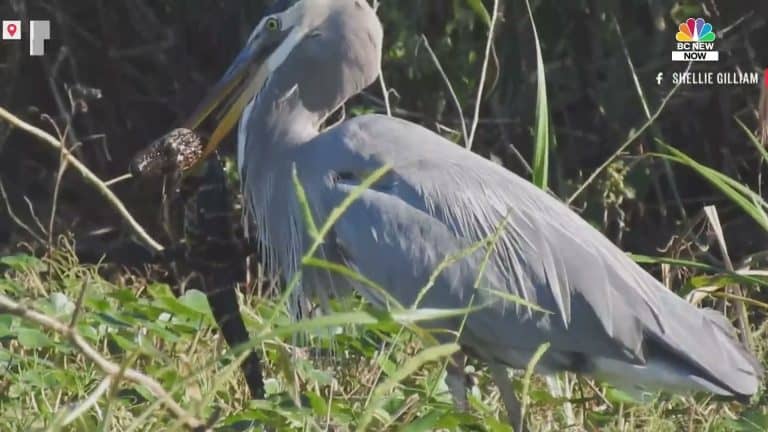
The anhinga is nicknamed the “snake bird” and it’s not hard to see why. The anhinga’s 2-3-foot-long neck nearly doubles its total length. Anhingas carry their necks in a S-shaped posture, which can make it difficult to see how long their necks really are. Another reason anhingas are called “snake birds” is because they are renowned for their snake-hunting abilities. Native to South America and coastal Central America, these birds are similar in appearance to cormorants. The anhinga is also called the water turkey due to its turkey-like tail.
4. Llama
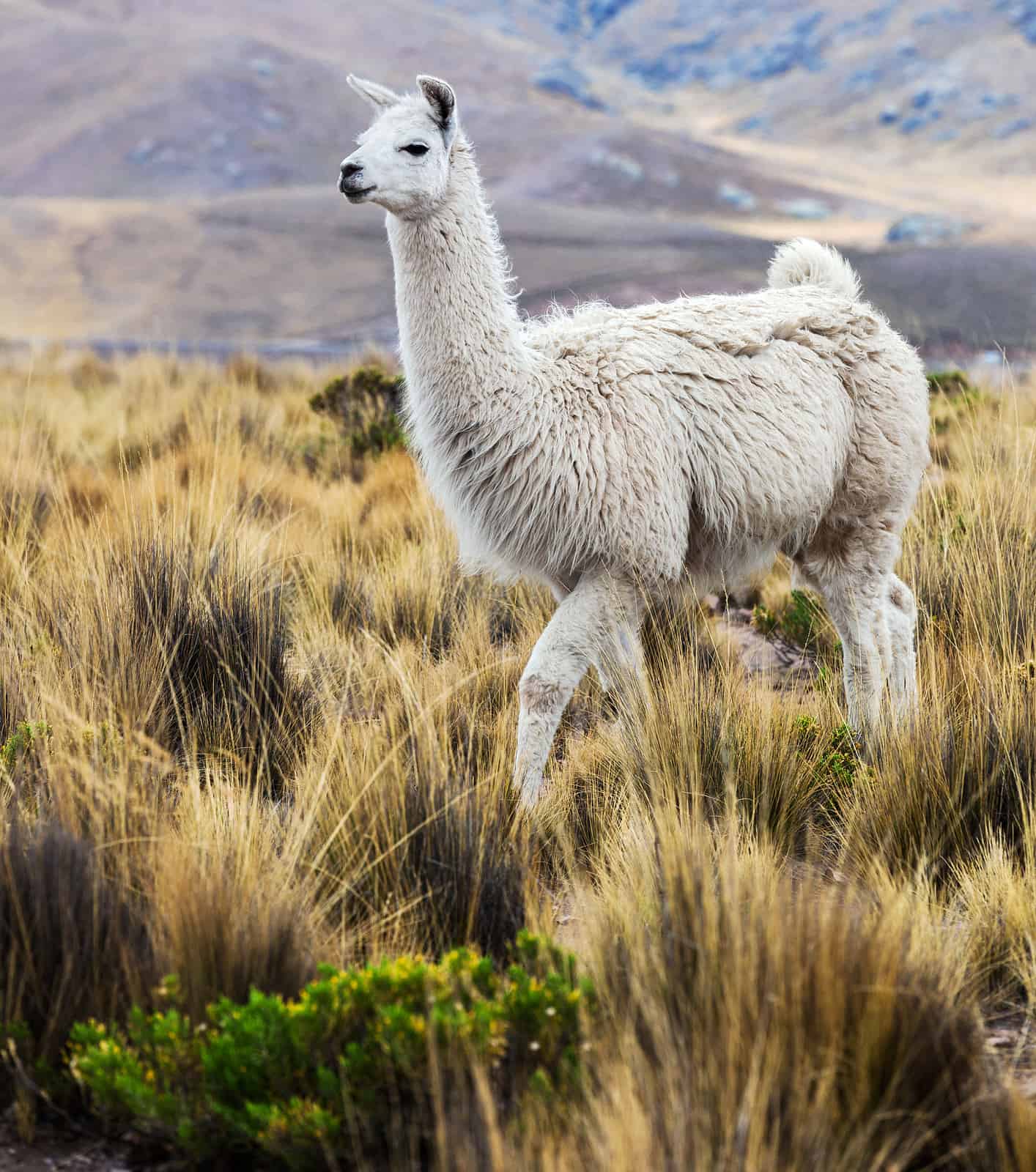
Llamas can spit their stomach contents to distances of up to 10 feet.
©Terex/ via Getty Images
Larger than both the alpaca and the vicuña, the llama can be up to 6 feet tall. Weighing 300-44 pounds, the llama has a 2-3-foot neck. Like alpacas, llamas have been domesticated for use as meat, wool, and pack animals since the pre-Columbian era. Native to the Andes in South America, llamas are social animals that live in herds. While llamas have a reputation for being mean or ornery, they are generally even-tempered animals.
3. Ostrich
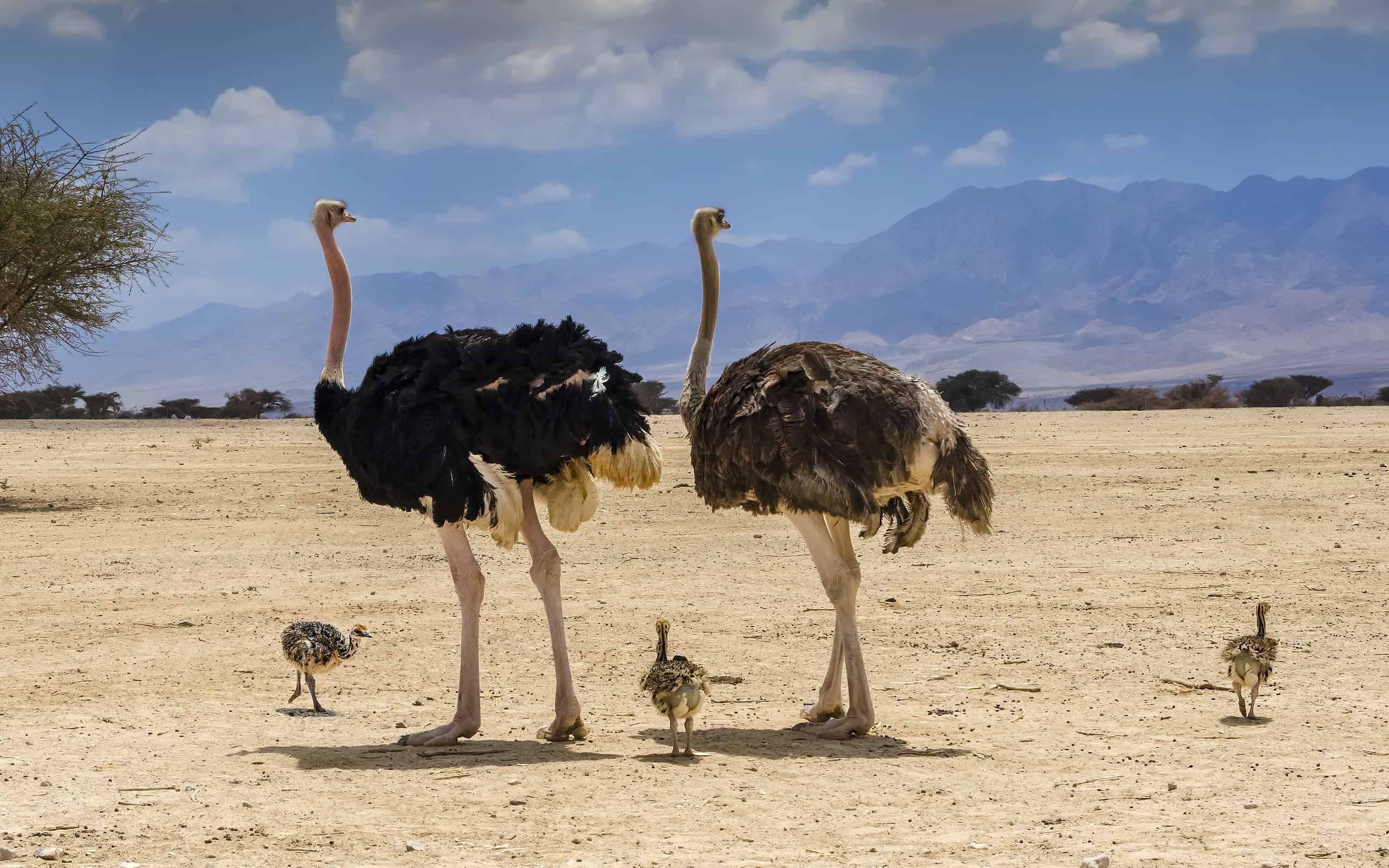
Newly hatched ostriches are around 1 foot tall.
©gorsh13/iStock via Getty Images
The ostrich is the largest bird in the world. Measuring up to 9 feet tall, the heaviest ostrich on record weighed 440 pounds (though ostriches in the wild tend to be between 150-320 pounds). Unlike flighted birds that have hollow bones, the flightless ostrich has solid bones that contribute to its mass. Despite their size, these birds are quick and can run up to 40 miles per hour, making them the fastest-running bird in the world. It’s quite a sight to see those large birds with their 3-3.5-foot necks sprinting across their African homelands!
2. Dromedary Camel
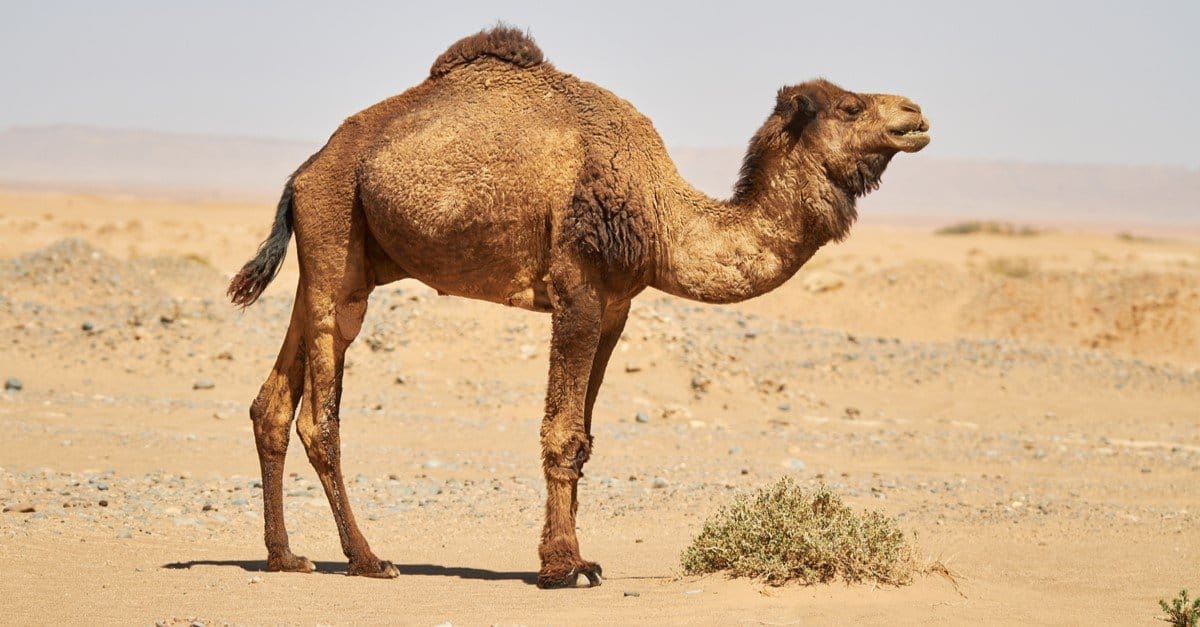
Camels are known for their distinctive humps but are born without them.
©Photoestetica/Shutterstock.com
Unlike their Bactrian counterparts that live in the Gobi Desert of Northwest China and Mongolia, dromedary camels are native to North Africa and the Middle East. While Bactrian camels have two humps, Bactrians are distinct with only one. They are also larger than Bactrian camels, weighing 900-1,100 pounds and measuring up to 11 feet tall with a neck reaching 5-6 feet. Also known as the Arabian camel, these even-toed ungulates can live 40-50 years and are capable of drinking 30 gallons of water in 10 minutes.
1. Giraffe
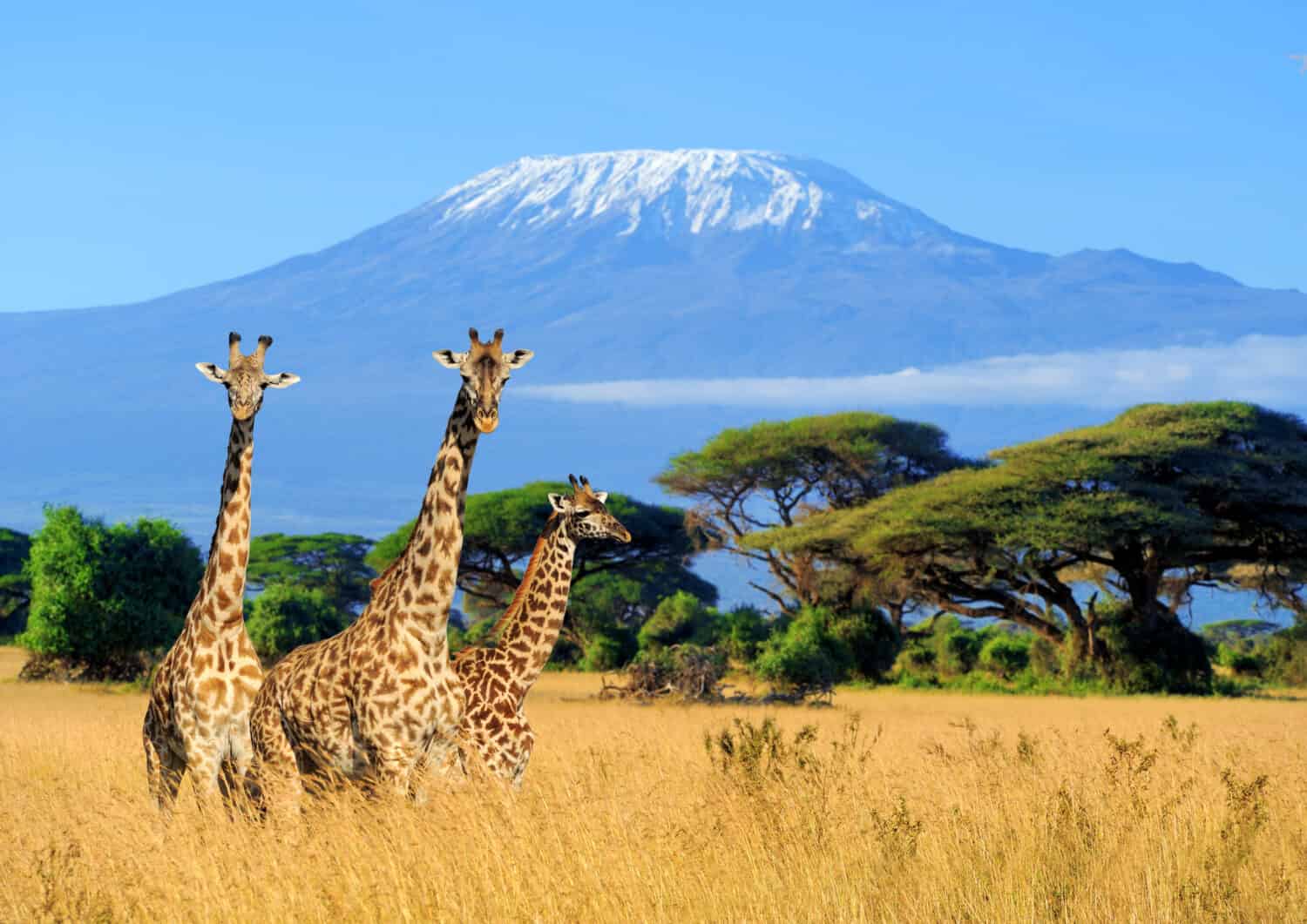
Giraffes have the same number of cervical vertebrae as people.
©Volodymyr Burdiak/Shutterstock.com
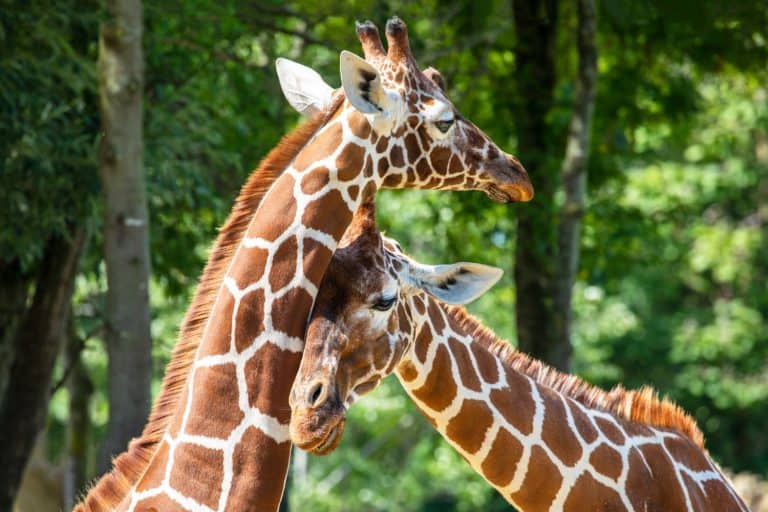
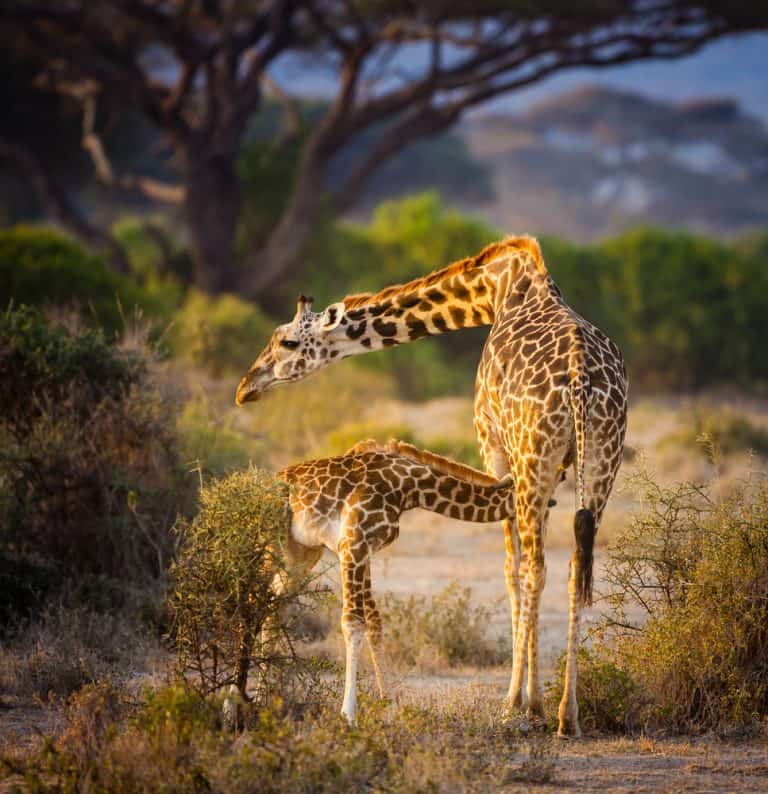
The winner of the longest-neck contest is no surprise. It’s the giraffe! The average height of a giraffe is around 14-18 feet tall, but the world’s tallest member of the species was a 20-foot-tall male named George who lived at the Chester Zoo in the United Kingdom. The giraffe’s impressive neck makes up much of this height, as it can stretch 6-4 feet long. However, dozens of cervical vertebrae don’t support this immense height. Giraffes actually have the same number of vertebrae as humans, with just seven making up their entire necks.
In addition to having long necks, the giraffe also has long legs that allow it to reach speeds of up to 35 miles per hour over short distances. The tallest mammal on earth, even newborns are taller than many people, with an average birth height of 6 feet. As if their incredible biology wasn’t enough no two giraffes are alike. In fact, each animal’s coat patterning is as unique as a fingerprint.
Summary of 12 Animals With the Longest Necks
| Animal | Total Height/Length | Neck Length |
|---|---|---|
| 1. Giraffe | 14-18 feet tall | 6-8 feet |
| 2. Dromedary Camel | 10-11 feet tall | 5-6 feet |
| 3. Ostrich | 6-9 feet tall | 3-3.5 feet |
| 4. Llama | 5-6 feet | 2-3 feet |
| 5. Anhinga | 3 feet long | 2-3 feet |
| 6. Flamingo | 4 feet tall | 2-2.5 feet |
| 7. Emu | 5-6 feet tall | 2-2.5 feet |
| 8. Alpaca | 4-5 feet | 2 feet |
| 9. Jaburi | 4.5-5 feet tall | 2 feet |
| 10. Trumpeter Swan | 4 feet tall | 2 feet |
| 11. Gerenuk | 4.5-5 feet tall | 1.5 feet |
| 12. Eastern Snake-Necked Turtle | 11 inches long | 6 inches |