
Quick Take
- Spaying or neutering your Black Mouth Cur at the wrong time can cause lasting joint damage, and yet waiting too long carries its own serious risks. See the timing risks →
- Two Black Mouth Curs from the same breed can look dramatically different as adults, a fact that traces back to a surprising piece of working history. Explore working bloodline differences →
- Switching your Black Mouth Cur off puppy food too early or too late both backfire, and the right timing depends on something most owners overlook. Find the right transition window →
- Most owners start house training too late, missing the precise window where Black Mouth Cur puppies are most receptive. Check the critical training window →
The black mouth cur is a hardy, versatile working breed that originated in the American South, with roots most commonly traced to Tennessee and Mississippi. Developed by European settlers in the 18th and 19th centuries, these dogs were bred to be the ultimate all-purpose farm dogs, serving as reliable hunting companions and livestock herders, as well as fierce family guardians. Black mouth curs make excellent family pets, but they are best suited for active households with experienced dog owners. They are famously loyal, deeply affectionate with their families, and naturally protective of children. Continue reading to learn more about the black mouth cur and what to expect as they grow and age.
Growth and Weight
Because black mouth curs were historically bred for a variety of working purposes across different regions, their size can vary greatly depending on their specific bloodline.
Male black mouth curs will be significantly larger and more muscular than female black mouth curs of the same bloodline
An average adult male black mouth cur stands 18 to 26 inches tall at the shoulder and weighs between 40 and 95 pounds. A mature female black mouth cur will typically weigh 35 to 80 pounds and stand 16 to 24 inches tall.

©Jennifer Kramer/Shutterstock.com
Because they were bred for different jobs, black mouth curs come in a wide range of sizes.
Puppies grow most rapidly during the first few months of life and will reach their full size between 12 and 18 months. However, they will continue to gain muscle until they are two to three years old. As athletic, working dogs, their skeletal development is completed long before their muscular development.

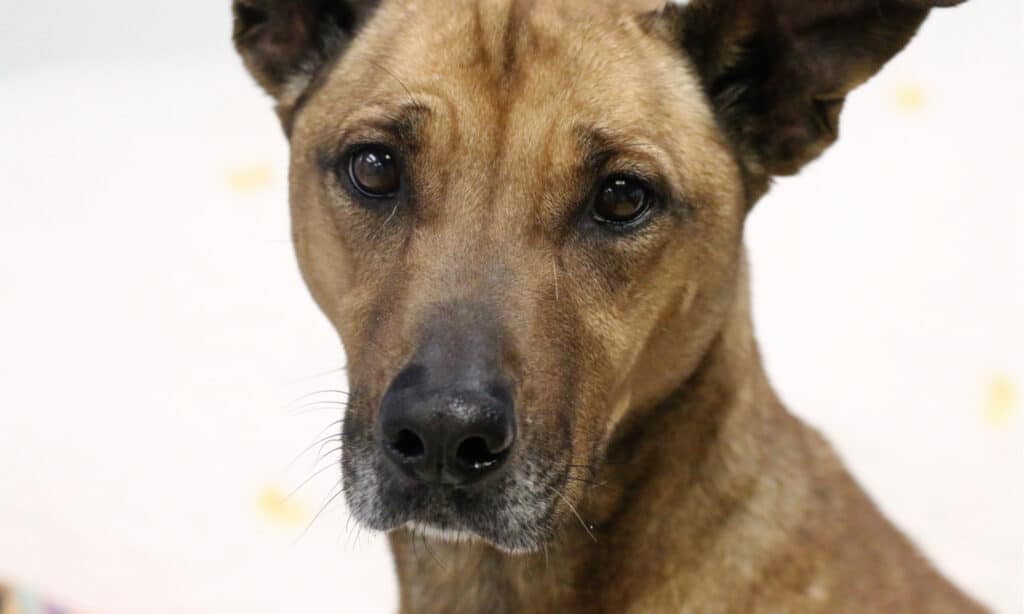
The solid black muzzle is the identifying feature of the black mouth cur.
©Anna Hoychuk/Shutterstock.com
During their first six months, black mouth cur puppies experience a massive skeletal growth spurt, reaching most of their adult height while maintaining a notably lanky and lean appearance.
By the one-year mark, their skeletal growth plates close and they reach their adult height. Over the next one to two years, their development focuses on building muscle, and their chests broaden. Males from larger bloodlines will often continue to add muscle until their third birthday.
How Big Will My Black Mouth Cur Be When It’s Fully Grown?
The mature size of your black mouth cur will depend on its specific bloodline. The significant physical variation found within the black mouth cur breed is directly tied to its history as a utility dog.
Because European settlers and later breeders selected dogs based on their ability to perform specific, demanding tasks in various terrains, the breed naturally developed into distinct, highly specialized size categories.
Smaller, leaner bloodlines, averaging between 45 and 65 pounds, were bred for speed, agility, and endurance, making them ideal for treeing small game and navigating dense brush.

An adult black mouth cur’s size is the result of its specific bloodline and working lineage.
©Oakland Images/Shutterstock.com
Bloodlines intended for the demanding work of pinning wild boars or wrestling cattle were bred for maximum bone density and musculature. These dogs can weigh 80 to 95 pounds or more.
When Should My Black Mouth Cur Be Spayed or Neutered?
Because the black mouth cur is a large, athletic breed, the timing of the procedure requires careful consideration of the breed’s growth and development. Veterinarians increasingly recommend waiting until your black mouth cur is at least 12 to 18 months old before spaying or neutering to reduce the risk of joint disorders.
Spaying or neutering too early, before the growth plates have closed, removes hormones that are critical for proper bone development. This can lead to longer bones that lack adequate muscle and ligament support, significantly increasing the risk of joint issues like hip dysplasia. However, spaying too late can increase your black mouth cur’s risk of mammary gland cancer and pyometra (a life-threatening uterine infection).
When Should My Black Mouth Cur Be House Broken?
House training for your black mouth cur can begin at 12 to 16 weeks of age. Initially, you’ll need to take your black mouth cur outside every two to three hours, including at night, as it will still need to relieve itself.
Puppies can typically hold their bladders for about one hour per month of age. By six months old, they can usually hold it for six to eight hours.
Black mouth curs catch onto house training well when positive reinforcement is used.
©Kelley Varisco/Shutterstock.com
House training your black mouth cur is straightforward but requires patience, constant supervision, and frequent trips outside throughout the day.
In addition to taking them out every couple of hours throughout the day and night, you should also take your dog outside:
- As soon as you wake up in the morning
- After a meal or a large drink of water
- After playing
- Right before bedtime
You’ll need to stay outside each time until your puppy urinates, defecates, or both.
When your puppy pees or poops outside, reward them with praise.
Signs such as sniffing, pacing, or squatting may indicate that your puppy needs to go outside.
When Should My Black Mouth Cur Stop Eating Puppy Food?
A black mouth cur puppy should typically transition to a high-quality adult diet between 12 and 18 months of age, depending on its specific bloodline and gender. Because smaller, leaner treeing lines complete their skeletal growth faster than heavy, large-boned cattle-catching lines, they are usually ready for adult food right at the 12-month mark.
Larger males from heavier bloodlines may benefit from staying on large-breed puppy formulas until 18 to 24 months of age to ensure their slower-developing joints and bones receive optimal nutritional support. Transitioning too early can negatively affect healthy bone density, while waiting too long can lead to excess weight gain after their rapid growth phase ends.
When Will My Black Mouth Cur Start Losing Teeth?

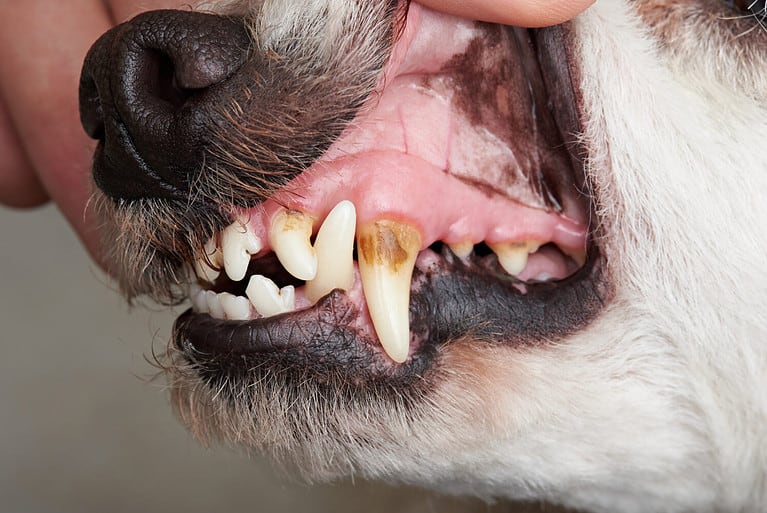
Teething for a black mouth cur doesn’t end until they’re around seven months old.
©Anna Hoychuk/Shutterstock.com
Your black mouth cur will begin losing their puppy teeth at around 12-16 weeks old. You may or may not find lost teeth around your home during this time.
You’ll likely notice an increase in chewing, and your puppy may act out due to discomfort. Provide a variety of chew toys in different shapes and textures, and try to always keep one on hand to distract your puppy if they begin gnawing on your fingers or clothes.
Your home should also be thoroughly puppy-proofed. Don’t leave any wires, toxic substances (such as plants, cleaners, and foods), or valuables within your puppy’s reach.
Your black mouth cur won’t have all of their adult teeth until around six to seven months old, so the teething phase may last for some time.
When Should I Start Training My Black Mouth Cur?
Ideally, training should begin while your puppy is still with the breeder. Reputable black mouth cur breeders start socialization and training at a very young age..
When you bring your puppy home, allow them a few days to adjust. During this time, you can begin getting them used to handling and house rules.
After this short period, you should begin working on socialization, basic commands, manners, and safety cues.
Always use positive reinforcement or force-free training techniques, and avoid aversive tools or methods.
Teach your puppy to accept handling for future grooming sessions or vet visits by gently touching their ears, mouth, and paws.

Most black mouth curs have high energy levels even into their senior years.
©Oakland Images/Shutterstock.com
Common Health Issues Your Black Mouth Cur Might Experience
Black mouth cur breeders tend to focus on the dogs’ working ability, which has helped reduce health problems in the breed. However, some health issues you may encounter in your black mouth cur include:
- Hip dysplasia: This occurs when the hip doesn’t develop properly, which can cause pain and difficulty walking. Some dogs need surgery to repair the joint. Breeders should perform genetic health testing on both parents to prevent hip dysplasia in their lines. Dog guardians can further protect their black mouth curs by waiting to neuter until the dog is fully grown and by not overexercising their puppies or allowing them to jump.
- Allergies: Allergies can be seasonal or food-related, with environmental allergies being the most common. Symptoms can include itchiness, stomach upset, and secondary ear infections.
- Epilepsy: Epilepsy causes seizures in dogs. Primary, or idiopathic, epilepsy is most commonly seen in black mouth curs who are one to five years old.
- Eye conditions: Black mouth curs are prone to several eye conditions, some of which have genetic health tests. Breeders should have up-to-date health testing for both parent dogs, and shouldn’t breed any dog with genetic health conditions.