
Quick Take
- Black bears are the only bear species in Tennessee and have expanded across multiple regions due to conservation efforts.
- The largest populations live in the Appalachian Mountains and Cumberland Plateau, with increasing sightings statewide.
- Seasonal food patterns and habitat conditions strongly influence bear movement and behavior.
- Human activity, especially unsecured food, drives most conflicts, making education and prevention essential.
Across Tennessee, black bears move quietly through forests, mountains, and rural edges, often unnoticed by people nearby. In recent decades, populations have increased due to habitat recovery and wildlife management. As a result, sightings have become more common across the state, including in areas where bears had not been seen for generations.
This growth reflects long-term conservation success, but it also requires greater awareness from residents and visitors. Bears now occupy a wider range of environments, from remote mountain ridges to suburban corridors. Understanding their behavior and habitat needs allows people to safely share space with one of the largest, and potentially most dangerous, native mammals in the region.

Bears are Not Rare in Tennessee
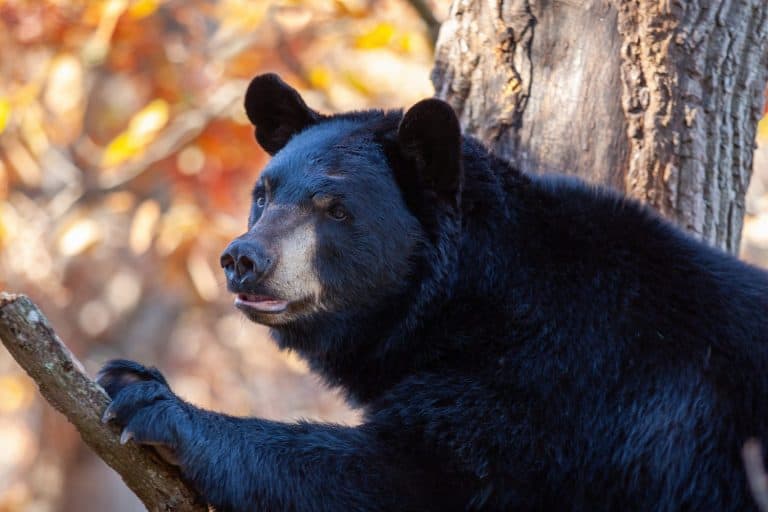
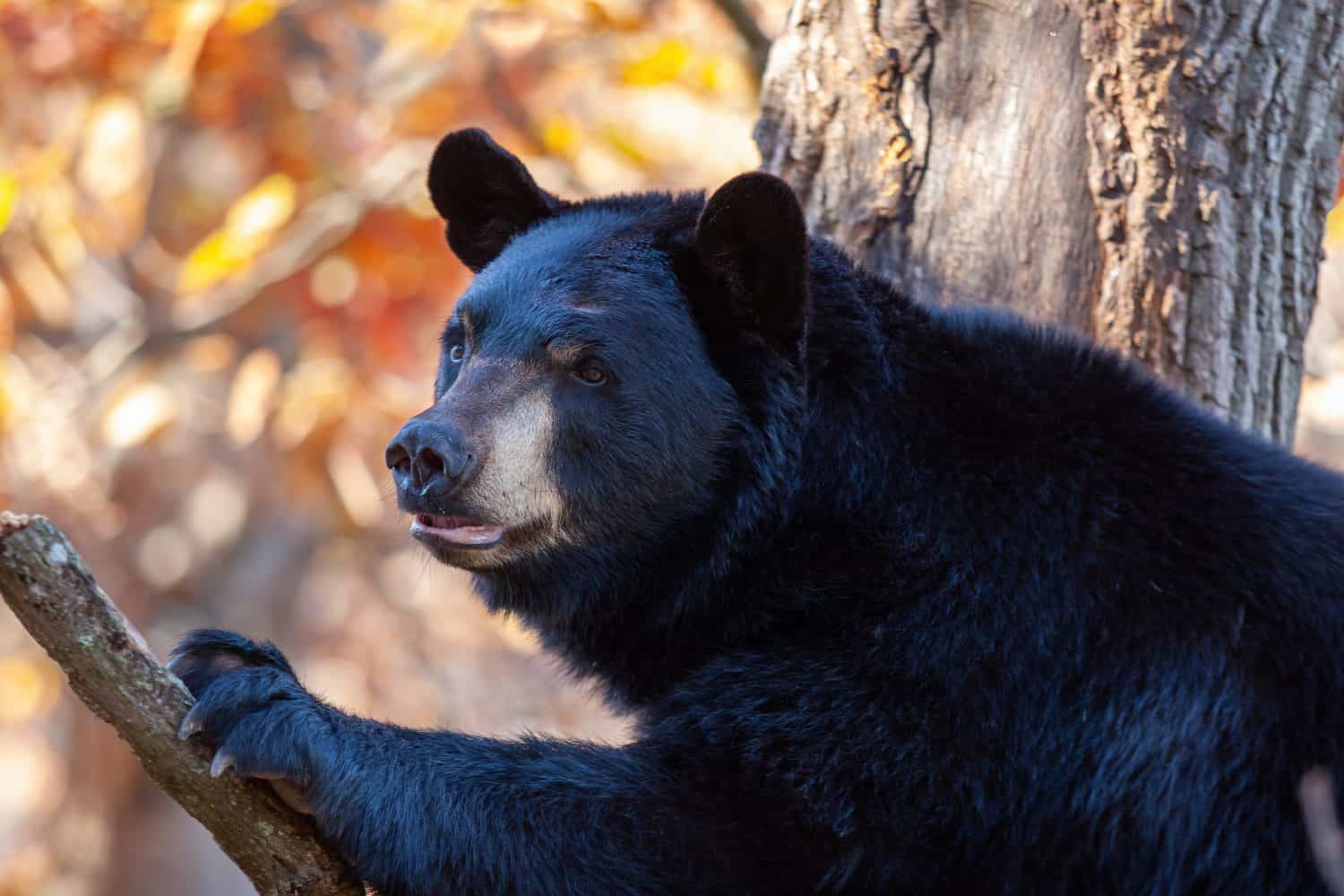
Tennessee supports a single bear species, the American black bear, Ursus americanus. Although black bears were once nearly eliminated from parts of Tennessee due to overhunting and habitat loss, they have made a strong recovery. This species is not considered endangered at the state or national level, and the current estimated population of about 6,000 bears in Tennessee is increasing, as it is in other Southeastern states as well. This is driven by habitat recovery, regulated hunting, and coordinated conservation efforts across state lines. Overall, the species is considered a conservation success story.
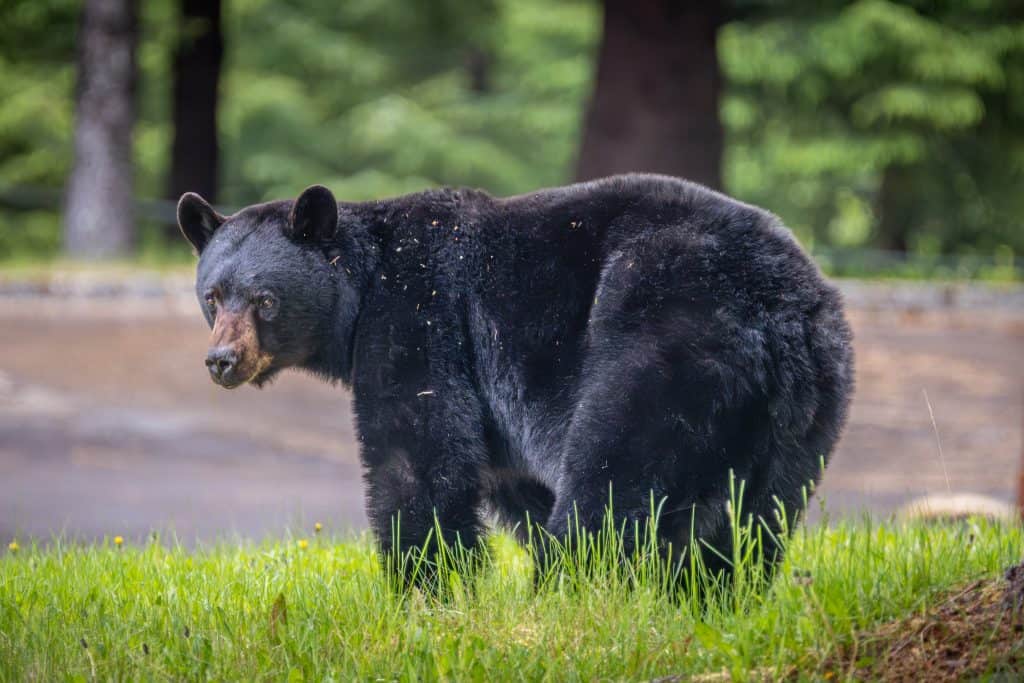
Tennessee has a healthy and expanding bear population.
©Freaktography/Shutterstock.com
Bear Life
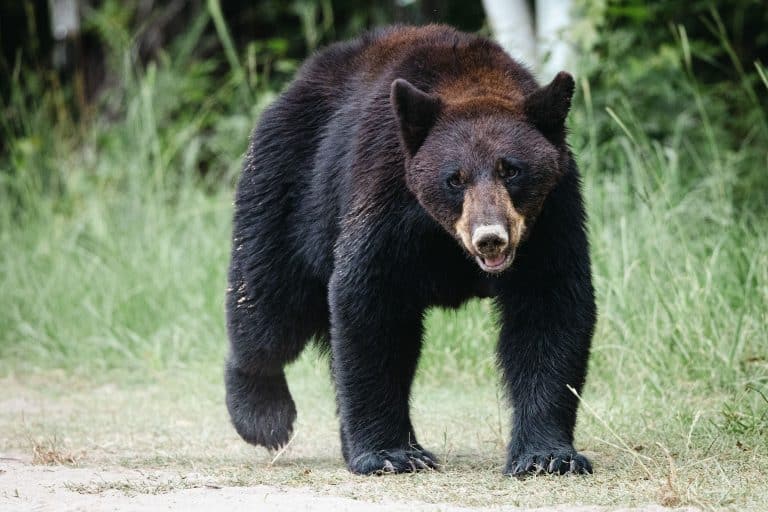
Adult bears usually weigh between 100 and 250 pounds, though males can exceed 400 pounds in areas with abundant food. Most individuals have black fur, but some look browner or cinnamon depending on genetics and local variation. Black bears have powerful limbs, curved claws, and a highly developed sense of smell that guides most of their foraging behavior. They are capable climbers and often use trees for resting, feeding, or escaping danger.
Reproduction in black bears occurs in early summer, but implantation of the fertilized egg is delayed until fall. This process, known as delayed implantation, allows females to time birth with favorable conditions. Cubs are born in winter dens, usually in January, and remain with their mother for about one and a half years. Litter sizes commonly range from one to three cubs. Cubs climb trees frequently, while adults rely more on ground movement but retain climbing ability throughout life.
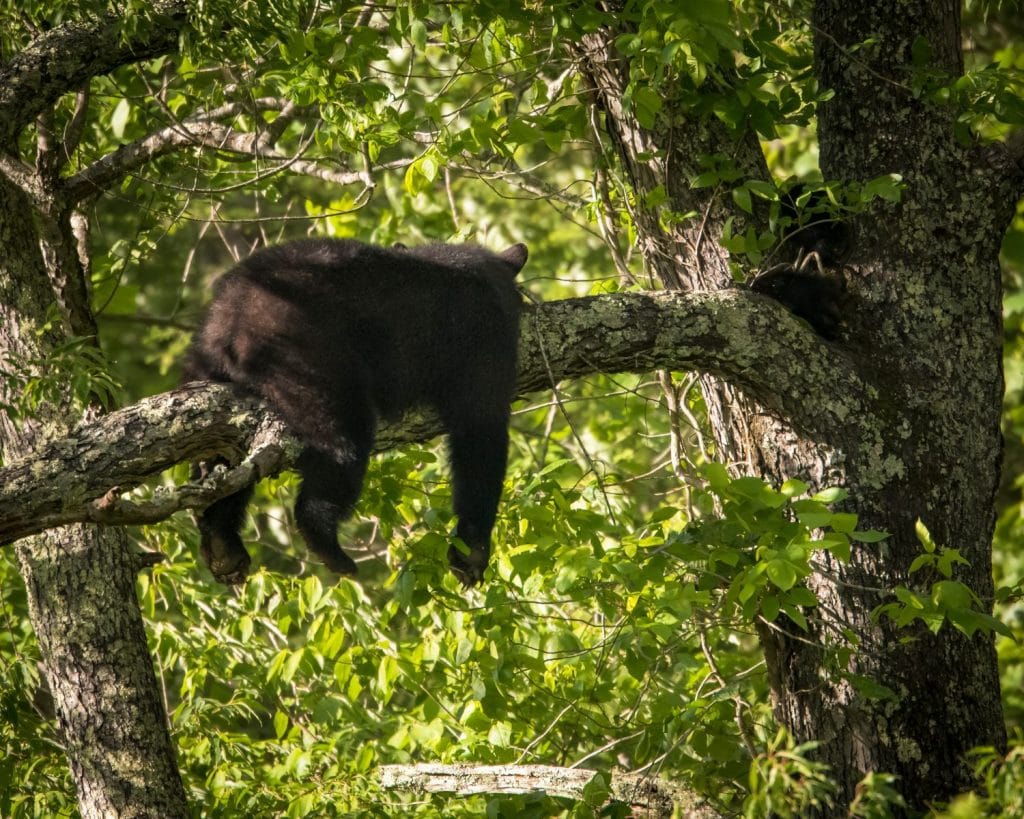
Bears are expert climbers. Here a mother rests on a branch with her cubs.
©Ben McMurtray/Shutterstock.com
Bears Eat Anything They Want
As omnivores, black bears eat a wide range of foods depending on the season. In spring, they focus on fresh vegetation and insects. During summer, they shift toward berries and other soft foods. In fall, they rely heavily on nuts such as acorns and hickory to build fat reserves for winter. Although they can hunt small animals, most of their diet comes from plant material, making them opportunistic rather than active predators. However, they will readily shift their eating behavior to foraging for easier and higher-calorie meals from garbage cans and campsites if people don’t keep them secure and teach their cubs to do the same.
Main Population Regions
Two major bear populations exist in Tennessee today. The Appalachian population occupies the eastern mountains along the Tennessee and North Carolina border. The Cumberland population lives in the northern plateau region, where forested terrain provides shelter and food.
These groups connect to a larger regional population across the southeastern United States. Combined, they support several thousand individuals. As numbers increase, young bears disperse into surrounding areas, gradually expanding the species’ range across the state.
Great Smoky Mountains Stronghold
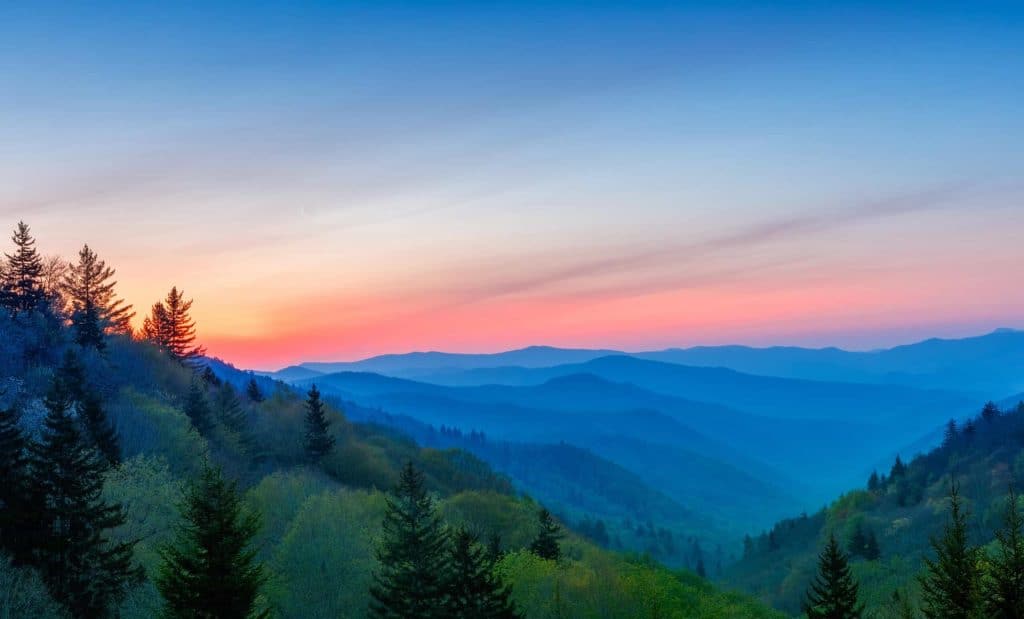
Great Smoky Mountains National Park is like a bear Shangri-la.
©KenCanning / E+ via Getty Images
In the Appalachian part of the state, the Great Smoky Mountains National Park holds one of the highest bear densities in the eastern United States. Estimates suggest around 1,900 bears live within the park, averaging about two per square mile. Driving through the park, it’s not unusual for traffic to back up as people pull over to the side of the road to see a bear; sometimes bears even wander up to cars. People who take foolish risks, like feeding the bears and getting too close, have been injured in the park.
Several ecological factors contribute to the park’s ability to support a large bear population. The landscape includes extensive hardwood forests that produce reliable mast crops, along with a wide range of elevations that create varied growing conditions. This diversity allows bears to shift feeding areas throughout the year as different food sources become available. Because hunting is not permitted within park boundaries, survival rates remain higher than in surrounding regions. Females can raise cubs without disturbance, and bears are more likely to reach older age classes.
Cherokee National Forest
Outside the national park, the Cherokee National Forest forms a vast, connected landscape that wraps around the Great Smoky Mountains and stretches across eastern Tennessee. This forest covers more than 650,000 acres and includes a mix of high ridges, steep hollows, river valleys, and dense hardwood stands. Elevation changes across the region create a range of microhabitats, which support different plant communities and food sources throughout the year. This variety allows black bears to shift locations seasonally while remaining within a relatively stable home range.
Movement patterns within the forest follow the natural structure of the terrain. Bears often travel along ridgelines, saddles, and gaps that serve as efficient corridors between feeding areas. These routes reduce energy use and allow access to multiple habitat zones without crossing open or developed land. Waterways such as the Tellico River and Citico Creek also function as travel paths, offering both hydration and access to food. This network of connected habitats supports wide-ranging behavior while minimizing exposure to human activity.
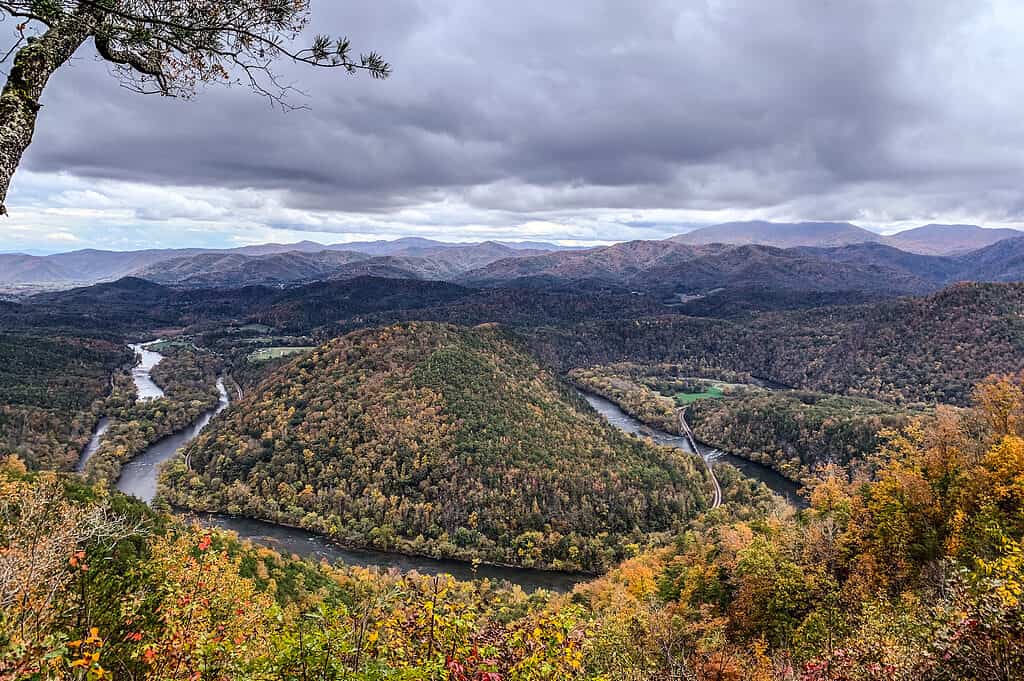
The rugged territory of Cherokee National Forest provides plenty of secure spots for bears to live out their lives undisturbed.
©AppalachianCentrist / CC BY-SA 4.0, via Wikimedia Commons – Original / License
Unlike more fragmented landscapes, this forest allows bears to establish large home ranges that can span dozens of square miles. Lower visitor density compared to the national park further reduces disturbance, though backcountry campsites and trails still intersect bear habitat. Because of this, the region plays a critical role in maintaining genetic diversity and supporting dispersal, especially for younger bears moving between established populations.
The Cumberland Plateau
The Cumberland Plateau now supports a growing black bear population with recent estimates of about 500 bears and a growth rate of approximately 20% per year. After decades of unregulated hunting and widespread logging land use has changed and forests have begun regenerating and hunting is more regulated. These changes created the conditions necessary for bears to return and reestablish themselves on the plateau.
The regional landscape provides strong cover, seasonal food sources, and relatively low human disturbance, all of which are important for long-term survival. Bears in this region often use steep terrain and dense vegetation to avoid detection, making them less visible than those in the Smokies. Survey data collected by wildlife agencies shows consistent increases in bear presence, including higher detection rates at monitoring sites and more frequent verified sightings.
Seasonal Behavior Patterns
Black bear behavior in Tennessee follows a predictable annual cycle shaped by food availability, temperature, and reproductive needs.
Spring
In late winter and early spring, bears emerge from dens in a weakened state after months of limited activity. During this period, they rely on early plant growth such as grasses, buds, and roots, along with insects and occasional carrion. Movement tends to remain concentrated in lower elevations and south-facing slopes where vegetation appears first. Males usually emerge before females, while females with cubs often remain in dens slightly longer to protect their young.
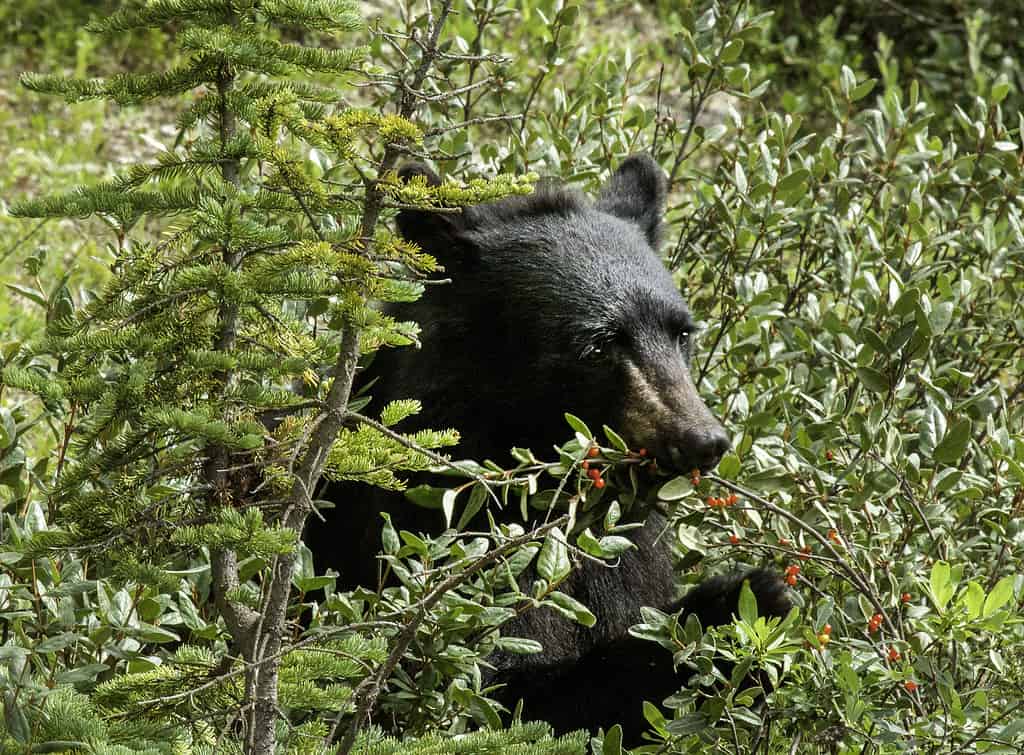
Surprisingly for such massive animals, bears get much of their nutrition from berries.
©millermountainman/ via Getty Images
Summer
As spring transitions into summer, food sources become more abundant and widely distributed. Bears expand their movements to include mid-elevation forests and open areas where berries, insects, and soft mast are available. Activity levels increase, and bears spend more time foraging throughout the day, though they often remain most active during early morning and evening hours. This is also the period when juvenile bears begin to disperse from their mothers, increasing the likelihood of sightings outside established habitats.
Fall
Fall marks the most critical feeding period of the year, known as hyperphagia. During this time, bears dramatically increase their food intake to build fat reserves needed for winter dormancy. They rely heavily on hard mast such as acorns and hickory nuts, traveling long distances to locate productive feeding areas. Movement patterns become more extensive, and bears may appear in unfamiliar locations as they search for food. Denning typically begins between late October and December, depending on food availability and weather conditions, with bears entering sheltered sites such as hollow trees, rock crevices, or ground dens to conserve energy through the winter months.
Winter
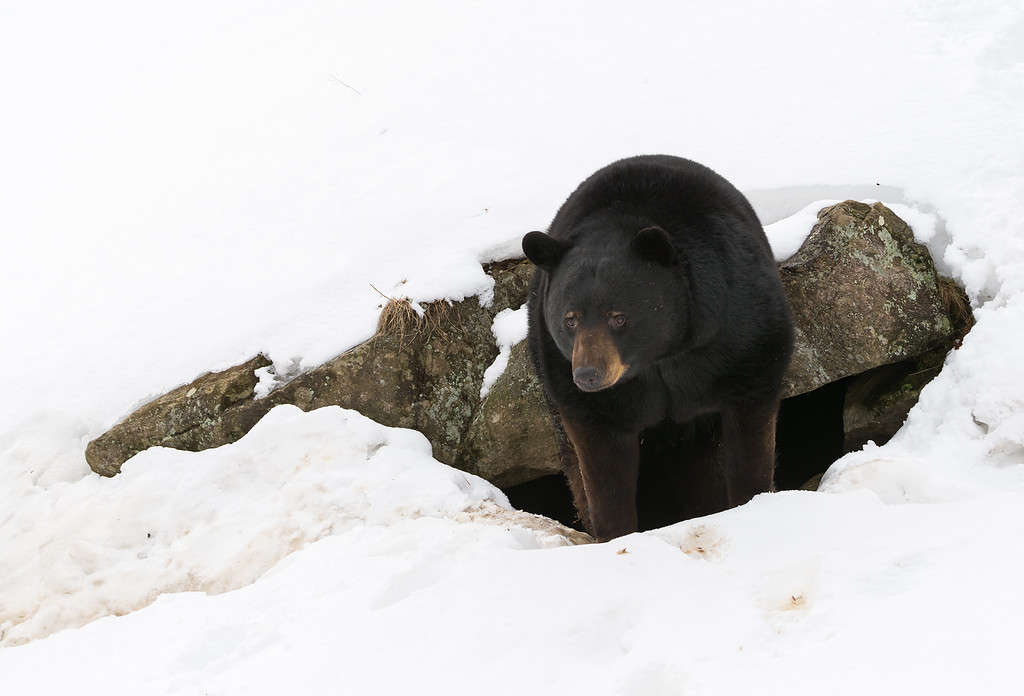
A black bear emerges from his den after a long cold winter.
©Suzan Johnson/iStock via Getty Images
During winter, black bears in Tennessee enter a state of dormancy rather than true hibernation, remaining in dens for extended periods while relying on stored body fat for survival. Heart rate and metabolism drop significantly, allowing them to conserve energy without eating, drinking, or producing waste. Females typically give birth during this time, usually in January, and remain with their cubs until spring. While bears are largely inactive, they can awaken and move during warm spells, especially in milder parts of the state where winter conditions are less severe.
Wildlife Management in Tennessee
The Tennessee Wildlife Resources Agency manages black bear populations through a combination of long-term research, regulated harvest, and public outreach. Biologists use tools such as bait-station surveys, hair snares for genetic sampling, trail cameras, and GPS collaring to monitor population size, movement patterns, and survival rates. These methods provide data on how bears use the landscape, how far they disperse, and how populations change over time. This information guides management decisions and helps ensure that bear numbers remain aligned with available habitat.
Regulated hunting plays a controlled role in maintaining population balance in designated zones, while national parks and certain reserves remain closed to bear hunting. Carefully set seasons and permit limits help prevent overharvest while allowing populations to continue expanding into suitable regions. At the same time, large, protected areas, including national parks and designated reserves, serve as source populations where bears can reproduce with minimal disturbance.
Public education remains a critical part of management, with programs focused on reducing access to human food sources. Efforts such as promoting bear-resistant trash containers and discouraging intentional feeding help prevent conflict and support long-term coexistence between bears and people.
Bear Prevention and Safety
Preventing problems with black bears in Tennessee depends largely on removing access to human food and reducing attractants around homes and recreation areas. Garbage is the most common draw, so using bear-resistant containers, storing trash indoors until pickup, and cleaning outdoor bins regularly can greatly reduce visits. Pet food, bird feeders, livestock feed, and grills also attract bears and should be secured or removed, especially during warmer months when bear activity increases.
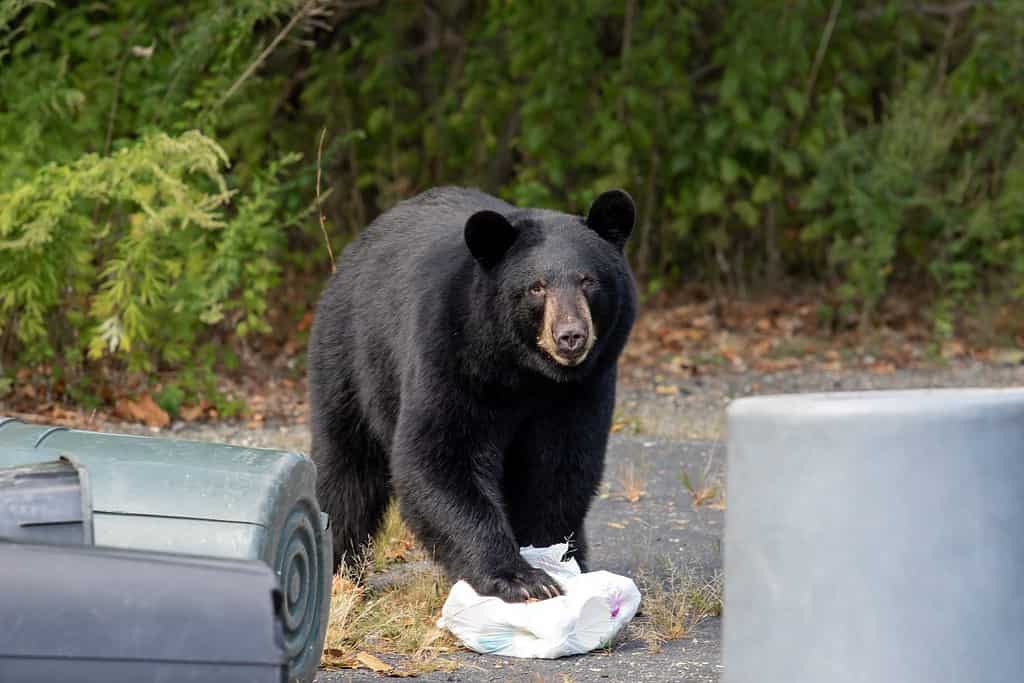
Unsecured garbage cans may attract bears from miles away.
©EleanorAbramson/Shutterstock.com
In parks and forests, proper food storage is essential, including the use of sealed containers or locked vehicles at campsites. Making noise while hiking helps avoid surprising a bear, and staying alert in dense vegetation or near streams reduces the chance of a sudden encounter. When bears do not associate people with food, they are far less likely to approach human spaces.
If an encounter occurs, maintaining distance and remaining calm are the most important responses. Observing a bear from afar is generally safe, but if it begins to approach, standing your ground, speaking in a steady voice, and slowly backing away can encourage it to leave. Running may trigger a chase response, so controlled movement is safer. Giving the animal a clear escape route helps prevent escalation.
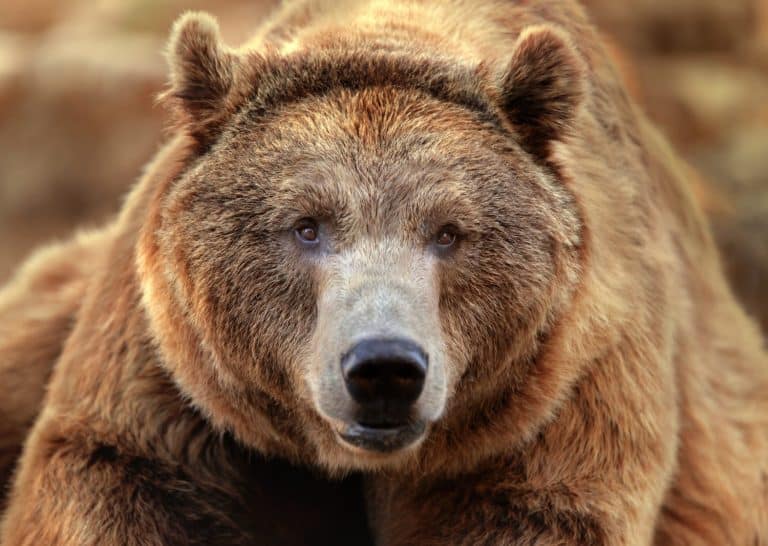
In situations where a bear becomes persistent, making yourself appear larger and creating loud noise can deter it. Although rare, aggressive encounters require a different response, and with black bears fighting back is recommended if physical contact occurs (playing dead is recommended only for brown bears, which are much larger). Reporting sightings or conflicts to wildlife officials supports monitoring efforts and helps manage areas where interactions are increasing.
Established and Expanding
Black bears have become an established and expanding part of Tennessee’s landscape, reflecting decades of conservation, habitat recovery, and effective wildlife management. Their return to areas where they were once absent shows how adaptable the species can be when given sufficient space and resources. As Tennessee continues to balance conservation with human activity, black bears serve as a clear example of how wildlife and people can share the same landscape when managed carefully and thoughtfully.