Quick Take
- North Carolina supports as many as 50,000 black bears across coastal plains and Appalachian Mountains, with populations expanding into new areas as habitat and management improve.
- Bears vary in size and behavior by region, with coastal bears often larger due to abundant food and reproduction timed through delayed implantation and winter denning.
- Habitat differs across regions, with dense eastern wetlands and western mountain forests as core areas, while the Piedmont serves as a growing transition zone.
- Seasonal feeding drives behavior, and coexistence depends on wildlife management, regulated hunting, and reducing human food attractants as interactions increase statewide.
North Carolina supports one of the largest black bear populations in the southeastern United States. These animals can be spotted in a wide range of habitats from coastal wetlands to high-elevation mountain forests in the Smoky Mountains. Unlike states where bears are confined to a single region, North Carolina is home to a bear population divided between two major areas: the coastal plain in the east and the Appalachian Mountains in the west. These regions differ dramatically in terrain, vegetation, and climate, yet both provide the resources necessary to sustain large, stable bear populations.
In recent years, black bears in the state have started spreading into areas that haven’t seen them for a long time. This is partially the result of wise and persistent conservation efforts, and partially simply because black bears are highly adaptable creatures. As bears move into more developed regions, and as developed regions sprawl further into wild habitats, encounters with people have become more common. This article is intended for more than just entertainment; it is also meant to raise awareness for people who live and travel in this state.
A Growing and Well-Managed Population
The American black bear, Ursus americanus, is the only bear species found in North Carolina. Once reduced by overhunting and habitat loss, the population has rebounded significantly and is now estimated at nearly 50,000 individuals statewide. This growth has been supported by a combination of habitat recovery, regulated hunting, and long-term management by the North Carolina Wildlife Resources Commission.

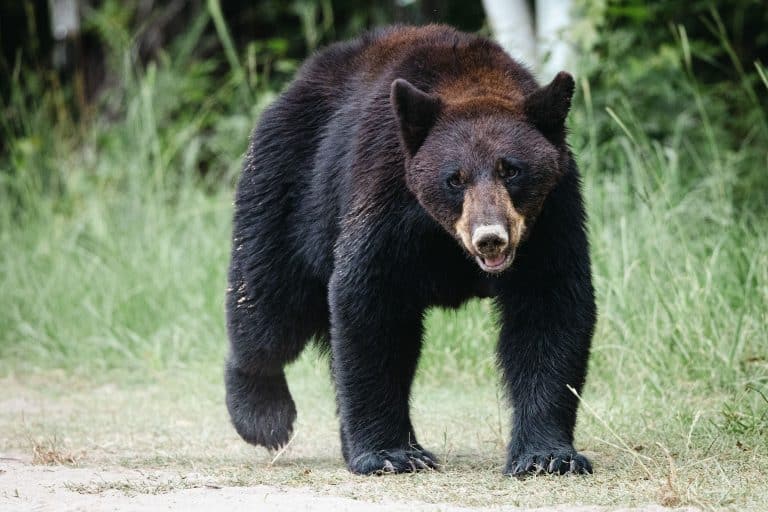
Populations of black bears are thriving and increasing in North Carolina.
©Jukka Jantunen/Shutterstock.com
Population trends vary by region, with particularly strong numbers in both the northeastern coastal plain and the western mountains. These areas function as core population centers, producing young bears that disperse into surrounding regions. As a result, bears are now found across much of the state, including areas closer to human development than in previous decades.
Wildlife officials monitor bear numbers through harvest data, tagging programs, and field surveys. This information helps maintain a balance between population growth and available habitat, ensuring that bears remain a stable and sustainable part of North Carolina’s ecosystems.
Physical Traits and Life Cycle
Black bears in North Carolina vary considerably in size depending on region and food availability. Adult females typically weigh between 100 and 250 pounds, while males often range from 200 to 400 pounds. In the coastal plain, where food is abundant and winters are mild, some individuals grow exceptionally large, with males exceeding 500 pounds.
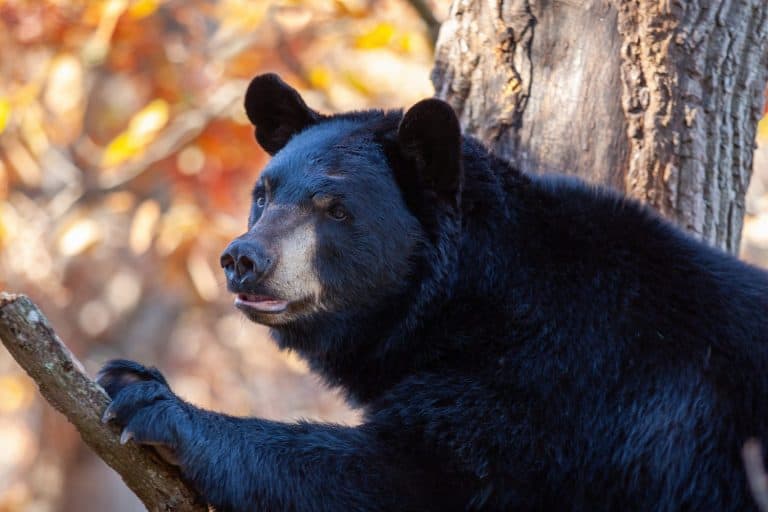
Their thick fur provides insulation during colder months, particularly in the mountains, while their powerful limbs and curved claws allow them to climb, dig, and manipulate food. Bears rely heavily on their sense of smell, which plays a central role in locating food across large areas. They can run and climb quickly, making it hard for prey to escape.
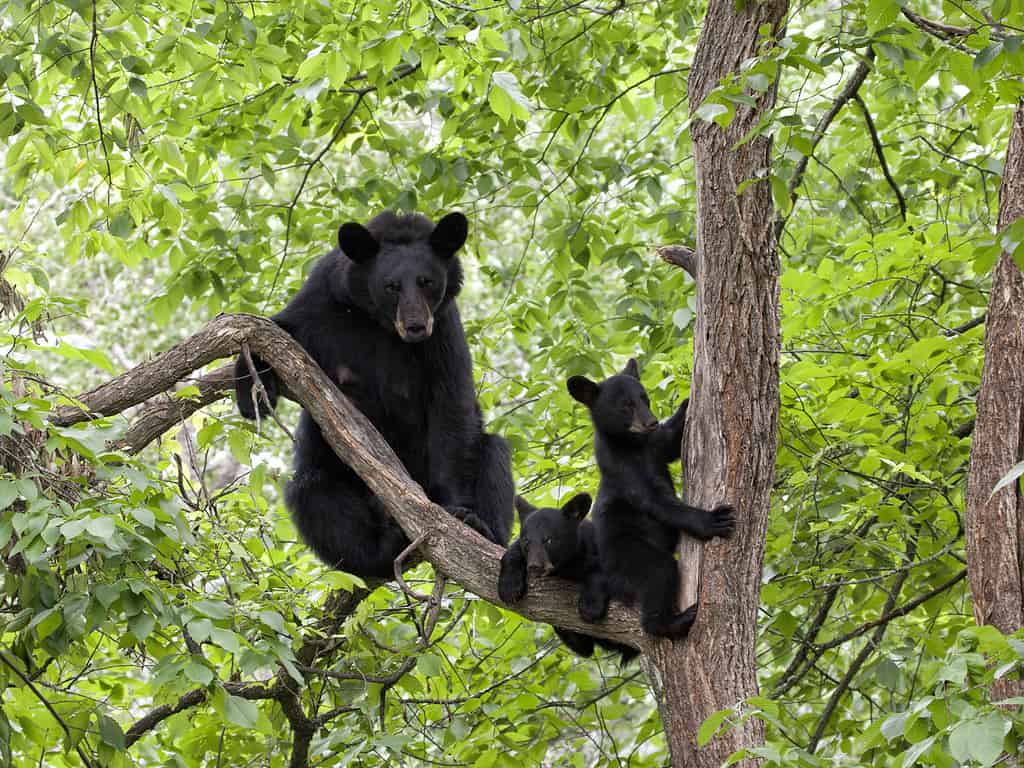
Black bears are quite good climbers.
©dssimages/iStock via Getty Images
Reproduction follows a seasonal pattern. Mating occurs in early summer, but implantation is delayed until fall, allowing females to time birth with favorable conditions. Cubs are born in winter dens, usually between January and February. Litters typically include one to three cubs, which remain with their mother for over a year. Survival rates depend heavily on food availability and habitat quality.
Regional Distribution Across North Carolina
North Carolina’s bear population is divided into two primary regions: the coastal plain and the Appalachian Mountains. These regions differ in habitat structure, food availability, and bear behavior, but both support significant populations.
The coastal plain contains extensive wetlands, pocosins, and agricultural lands that provide abundant food and cover. In contrast, the mountain region features rugged terrain, dense forests, and a wide range of elevations, creating diverse feeding opportunities throughout the year.
Between these two regions lies the Piedmont, an area of heavy human population where bears are less common but increasingly present. As populations grow, dispersing individuals move into this transitional zone, gradually expanding the species’ range across the state.
Coastal Plain Stronghold
Eastern North Carolina supports one of the densest black bear populations in the world. This region includes large tracts of protected land, such as wildlife refuges and state game lands, along with extensive wetlands and pocosins that provide both cover and food.

An American black bear, in the Pocosin Lakes National Wildlife Refuge, North Carolina.
©USFWS / Hollingsworth, John and Karen, Public domain, via Wikimedia Commons – Original / License
The mild climate and long growing season allow for a steady supply of vegetation, berries, and agricultural crops. As a result, bears in this region often reach larger sizes than those in other parts of the state. The combination of abundant food and relatively low hunting pressure in protected areas contributes to high survival and reproduction rates.
Bears in the coastal plain often use dense vegetation to avoid detection, making them less visible despite their high numbers. However, they may also move into agricultural areas, where crops such as corn and soybeans provide additional food sources.
Appalachian Mountain Population
In western North Carolina, black bears occupy the Appalachian Mountains, including areas such as the Great Smoky Mountains National Park and surrounding national forests. This region supports a large and stable population, with habitat shaped by elevation, forest composition, and seasonal food availability.
Hardwood forests in the mountains produce acorns, hickory nuts, and other mast that are critical during fall. Elevation changes create a sequence of food availability, allowing bears to move between areas as different plants produce fruit at different times.
Protected areas, including national parks where hunting is not permitted, serve as important refuges. These areas allow bears to reach older age classes and support high reproductive success. Outside protected zones, regulated hunting helps manage population levels while maintaining overall stability.
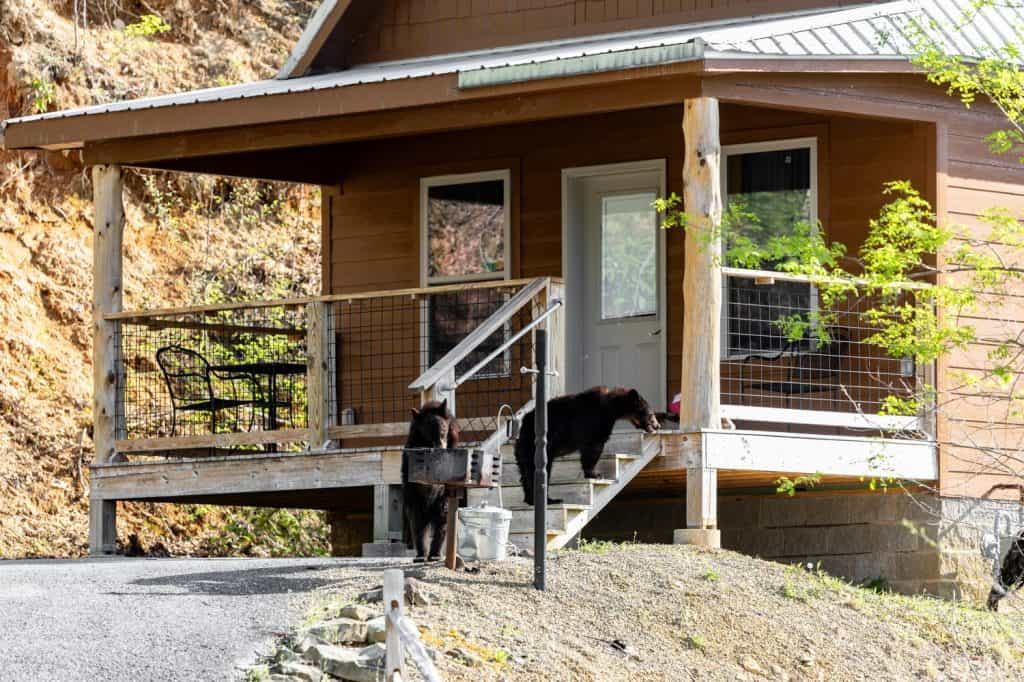
Bears scavanging around a cabin in the Great Smoky Mountains.
©Joseph Hendrickson/Shutterstock.com
The Piedmont Transition Zone
The Piedmont region represents a transitional landscape between the coastal plain and the mountains. Historically, bears were less common in this area due to higher levels of development and reduced forest cover. However, recent decades have seen an increase in bear presence as populations expand from both eastern and western strongholds.
Habitat in the Piedmont consists of a mix of forests, farmland, and suburban development. Most of the state’s largest cities, like Raleigh, are located in this area as well. Bears in this region often move along river corridors and wooded patches, using these features as travel routes between feeding areas. While densities remain lower than in core regions, sightings have become more frequent, particularly in areas where natural habitat connects larger forest blocks.

Raleigh, North Carolina, sprawls out into wooded suburbs merging into woodlands and farms in the Piedmont region.
©Chansak Joe/Shutterstock.com
Seasonal Behavior Patterns
Black bear behavior in North Carolina follows a predictable annual cycle shaped by climate, regional variation, and shifting food availability. As omnivores, bears adjust both their movement and diet throughout the year. Basically, they respond to what the landscape provides in each season.
Spring
In late winter and early spring, bears begin emerging from their dens, though timing varies by region. In the coastal plain, where temperatures are milder, emergence can occur earlier. Bears in the mountains often remain denned longer due to colder conditions. At this stage, bears are physically depleted after months of dormancy and rely heavily on easily digestible food sources to rebuild energy. Their diet focuses on fresh vegetation such as grasses, shoots, and leaves, along with insects and carrion. Movement tends to remain limited at first, concentrated in areas where food becomes available earliest, but activity gradually increases as the season progresses.
Summer
As spring transitions into summer, food becomes more abundant and widely distributed across the landscape. Bears expand their movements and increase activity levels, taking advantage of a diverse range of food sources. Their diet shifts toward soft mast, particularly berries such as blackberries and blueberries, which are common in forest openings, regenerating timber areas, and coastal habitats. Insects continue to supplement their diet. Because these foods are spread across large areas, bears travel more extensively within their home ranges. Activity often peaks during early morning and evening, though bears may remain active throughout the day in less disturbed environments.
Fall
Autumn marks the most critical period in the annual cycle, as bears enter hyperphagia, a phase of intense feeding required to build fat reserves for winter. During this time, they consume large quantities of food each day and significantly increase their movement in search of high-energy resources. In the mountains, hard mast such as acorns and hickory nuts becomes essential, while in the coastal plain, bears rely on a combination of natural foods and agricultural crops. The availability of these resources can vary widely from year to year, directly affecting bear condition and survival. When natural food supplies are limited, bears are more likely to seek out human-related food sources, increasing the likelihood of conflict.
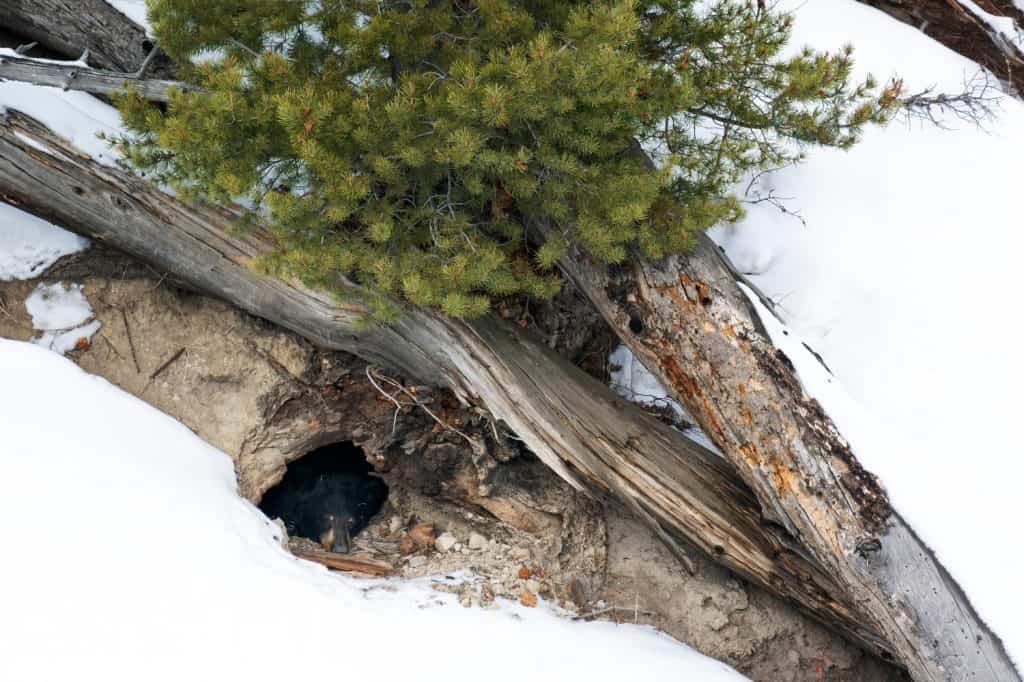
A black bear lazing at the entrance to its den.
©Susan Rogers/Shutterstock.com
Winter
By late fall, most bears enter dens, where they remain for several months in a state of dormancy. During this period, their heart rate and metabolism decrease significantly, allowing them to survive without eating, drinking, or producing waste. In warmer parts of North Carolina, particularly in the coastal plain, some bears may remain intermittently active if food is available. Females give birth during the winter denning period and care for their cubs until spring, when both emerge and reenter the active cycle.
Wildlife Management in North Carolina
The North Carolina Wildlife Resources Commission manages black bear populations through research, regulated hunting, and public education. Monitoring efforts include tagging, GPS tracking, and analysis of harvest data, which provide insight into population trends and habitat use.
Hunting is carefully regulated to maintain a balance between population growth and available habitat. Seasons and permit limits are adjusted based on regional conditions, ensuring that populations remain stable while allowing for continued expansion.
Public education programs emphasize the importance of reducing attractants and understanding bear behavior. These efforts are essential in areas where bears and people increasingly share space.
Bear Safety and Prevention
Preventing conflicts with black bears in North Carolina depends largely on limiting access to human food. Garbage should be secured, and items such as pet food, bird feeders, and grills should be managed carefully. In agricultural areas, crops can attract bears, making management practices important for reducing damage.
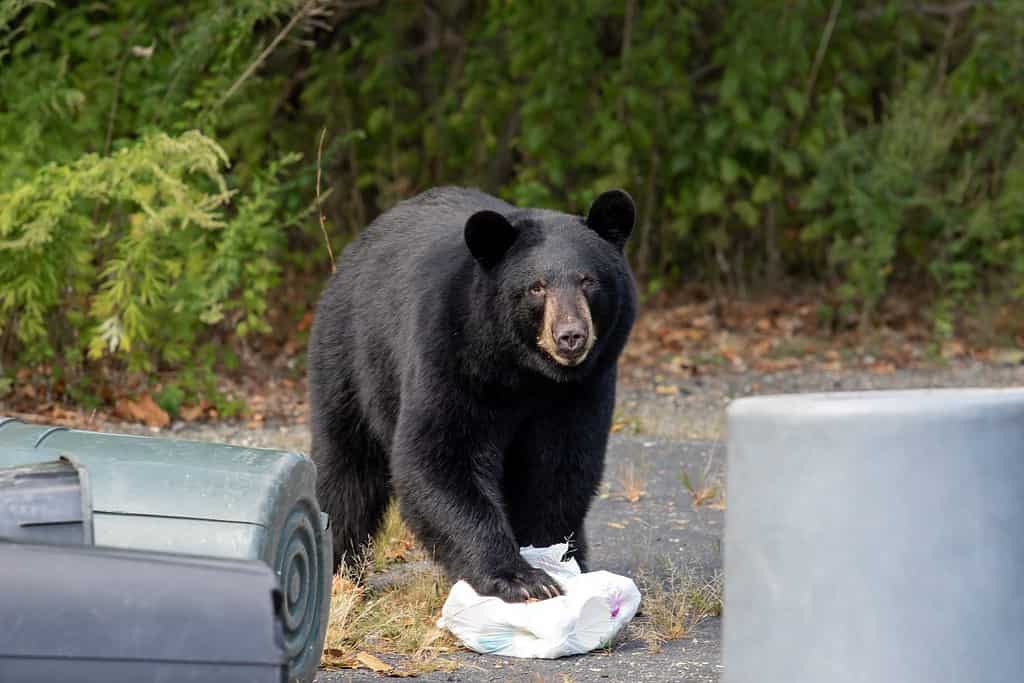
Unsecured garbage cans are like an irresistible dinner bell for bears.
©EleanorAbramson/Shutterstock.com
When spending time in bear habitat, making noise and staying alert can reduce the likelihood of surprise encounters. If a bear is encountered, maintaining distance and remaining calm are key. Backing away slowly and avoiding sudden movements can encourage the bear to leave.
In rare cases where a bear approaches or behaves aggressively, making oneself appear larger and using loud noise can deter the animal. If physical contact occurs, fighting back is recommended for black bears. While you won’t encounter brown bears in the state, if you’re ever traveling in the west and do, remember that in that case, you play dead. And if you get confused in the moment, just remember, fight smaller bears (black bears) but play dead for big ones you can’t beat (brown bears).
A Species Thriving Across Contrasting Landscapes
Black bears in North Carolina demonstrate a high degree of adaptability, occupying both coastal wetlands and mountainous forests. Their continued success reflects the availability of suitable habitat and effective wildlife management across the state.
As populations expand and interactions with people increase, maintaining a balance between conservation and coexistence becomes more important. With informed practices and continued monitoring, North Carolina can support a thriving bear population while minimizing conflict and preserving the state’s diverse ecosystems.