
Quick Take
- Feral swine (Sus scrofa) are a reservoir of infection for over 100 viral, bacterial, and parasitic pathogens.
- Many can be transmitted to humans, domestic animals, and livestock.
- Some of the more significant diseases are leptospirosis, toxoplasmosis, brucellosis, tularemia, trichinellosis, swine influenza, salmonella, hepatitis, and pathogenic E. coli.
- Most can be prevented by using safe and hygienic butchering and dressing techniques, thorough cooking, and proper hand and utensil washing.
Headlines on problems caused by feral swine often focus on the damage they inflict on agricultural land, natural resources, and property. However, they also carry several pathogens that can be transmitted to humans, domestic animals, and livestock. Feral swine (Sus scrofa) are a reservoir of infection for over 100 viral, bacterial, and parasitic pathogens. Here, we review some of the major diseases spread by feral swine, identify who is most likely to be exposed, and outline precautions that can reduce risk.
Brucellosis
Brucellosis is a highly contagious bacterial disease (mainly caused by Brucella suis) that affects mammals, including humans. While the primary route of transmission to humans is through domesticated animals, wild pigs also carry the disease, posing a risk to both livestock and humans. Infection rates in the wild pig population vary by location but are around 10 percent. However, in some parts of Hawaii, it has reached 90.11 percent.
Symptoms and Transmission
In cattle, Brucella can cause abortion, stillbirth, retained placenta, reduced milk production, and weak calves. Infections can spread rapidly within herds, and infected animals then also become a risk to humans, for example, through drinking unpasteurized milk. Infections in dogs usually present as swollen glands, failed pregnancies, swollen testicles, and weak newborn puppies. In humans, it causes a range of symptoms that can occur for a long time before it is diagnosed. These include fever, sweating, and muscle pains.
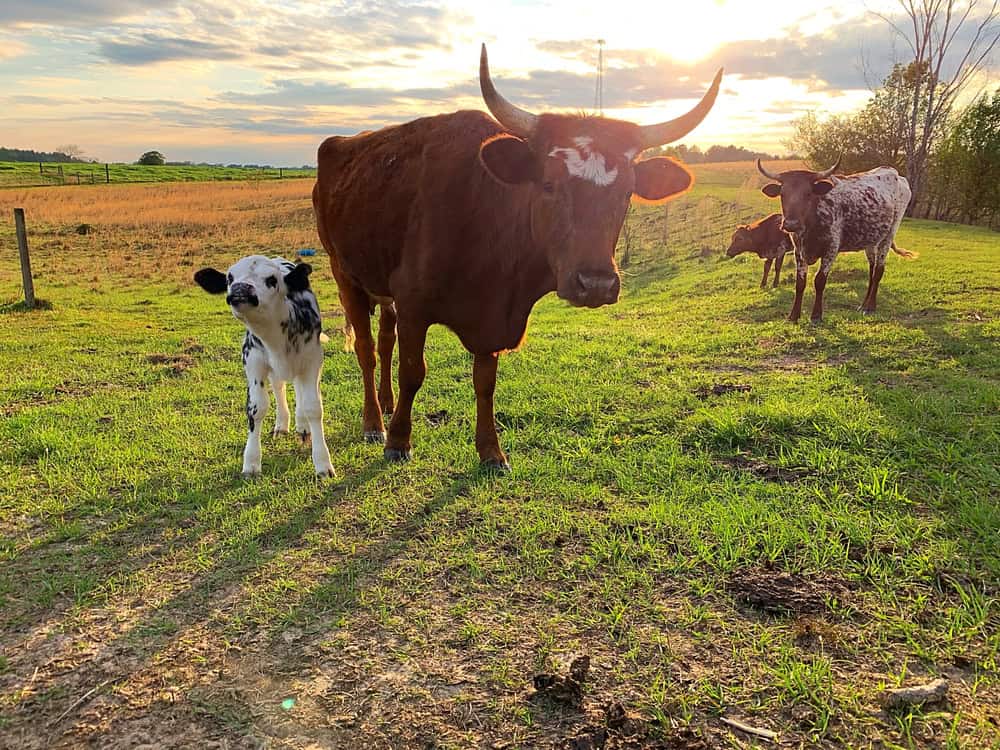
Brucellosis can pass from feral hogs to cattle.
©Terry J Poche/Shutterstock.com
The disease is transmitted by contact with infected animals or animal products. The bacteria are found in feces (poop) and in very large numbers in the products of conception (such as the placenta and birth sac), whether they are aborted or full-term. In some species, bodily fluids such as semen, vaginal fluids, and urine may all be contaminated. Here are some ways you could catch brucellosis:
- Eating undercooked meat and game meat (wild hogs)
- Consuming unpasteurized (raw) milk or dairy products from an infected herd
- Breathing in the bacteria
- Getting wild boar body fluids in your eyes, nose, mouth, or in a cut when hunting or preparing meat or hides
Who Is Most at Risk of Brucellosis?
Hunters and people working with feral pig carcasses are most at risk. However, because feral pigs can transmit the disease to domestic animals, including cattle and dogs, people who have close contact with these animals are also at risk. Hunting dogs are most at risk because they have contact with infected animals, including eating their meat. Also, slaughterhouse workers, animal herdsmen, veterinary staff, animal breeders, and some laboratory staff are at a higher risk.
Preventing Brucellosis Infections From Feral Swine
You can reduce your risk of infection by adopting safe practices when handling feral swine and feral swine products. Hunting and butchering protective equipment should include:
- Eye protection (safety glasses or goggles)
- Rubber gloves
- Closed footwear (boots) that can be disinfected
- Aprons and masks, or respirators
Gloves and boots should be disinfected with 10 percent diluted bleach. Other adults and children should not touch the carcass with their bare hands.
Safe Field Dressing Methods
The following safe field dressing precautions are designed to reduce the risks of transmission of brucellosis. Children should be kept at a safe distance so that they are not splashed with body fluids.
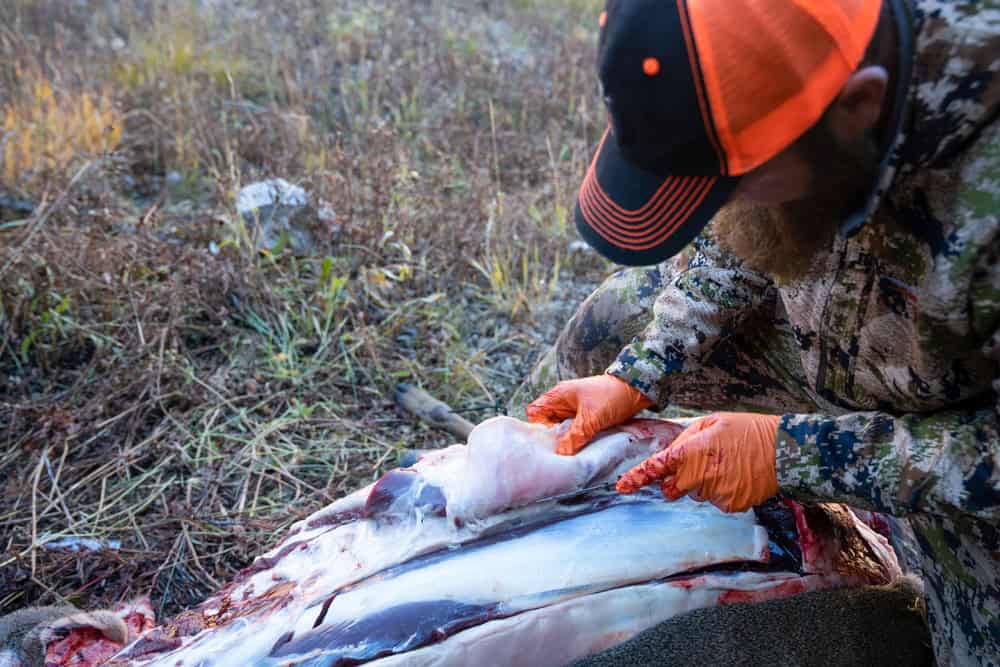
Safe field dressing techniques reduce the risk of brucellosis.
©melissamn/Shutterstock.com
- Do not hunt animals that look sick
- Prepare the game outdoors or in a well-ventilated building with good lighting
- Do not eat, drink, or smoke
- Use eye protection and gloves
- Use clean, sharp knives and take your time to make clean cuts
- If you cut yourself, clean the wound with soap and water immediately, and apply an antiseptic and a bandage
- Avoid contact between your bare skin and the animal’s fluid or organs
- If your dog has had contact with the carcass, avoid touching the dog until it has been thoroughly cleaned.
- Wash your hands in warm, soapy water for 20 seconds and dry with a clean cloth (or use an alcohol-based hand sanitizer)
- Clean tools and surfaces with dilute bleach
- Do not feed raw wild hog meat to hunting dogs or let them play with the raw carcass
- Get advice from the state hunting agency on the appropriate disposal of butchery waste
Hygiene for Feral Swine Meat
Remember that all feral swine meat is potentially contaminated with Brucella. Therefore, wash your hands with warm, soapy water for 20 seconds before and after handling the raw meat. Clean and disinfect all surfaces, utensils, containers, etc. that the meat has come into contact with. Separate raw game meat from cooked game meat and other foods and chill raw and cooked game immediately. The meat must reach an internal temperature of 160°F (checked with a food thermometer) before it is eaten.
Brucella is NOT destroyed by pickling, drying, or smoking.
Leptospirosis
Leptospirosis is caused by a type of bacterial spirochete. Humans usually contract the disease after direct exposure to the urine of an infected animal. However, if the urine enters water, people can also become infected if their skin, eyes, or mucous membranes come into contact with that water. It can also infect livestock. Unfortunately, Leptospira is common in feral hogs. Infection rates vary, but studies have recorded around 44 percent positivity. With these animals shedding the pathogen into the environment, it presents a substantial risk.
Symptoms and Transmission
In humans, the first stage is a fever, chills, headache, muscle aches, vomiting, or diarrhea. Some people go on to have a more severe second stage involving their kidneys, liver, brain, and spinal cord. It can take a long time to recover, and the disease can be fatal.

You can catch leptospirosis from swimming in rivers.
©iStock.com/master1305
Infected wild hogs excrete the pathogen into the environment with their urine. Here, it can survive for about a week in moist soil and mud if the temperatures are favorable. When it rains, the bacteria may travel back up to the surface, increasing the risk of exposure for animals and humans. People become infected by:
- Coming into contact with water or soil contaminated by urine and body fluids from infected animals
- Touching body fluids from an infected animal
- Consuming food or drink contaminated by the urine of an infected animal
Who Is Most at Risk of Leptospirosis?
Any job or activity that puts you in contact with water, soil, or animals (including feral hogs) puts you at risk. Therefore, people who hunt wild boar or who butcher them are at risk. So are people who hike, swim, raft, or kayak, as well as those who garden or do yardwork. People working in veterinary clinics, dairy farming, and sanitation are also at risk. Dogs that hunt in stagnant ponds may also be at increased risk and can pass the disease to their owners.
Preventing Leptospirosis Infections From Feral Swine
You can reduce your risk of contracting leptospirosis from water and soil contaminated by feral hogs or other animals by not swimming or wading through water that could be contaminated by animal urine. Contamination is most common after hurricanes, floods, and heavy rainfall. Cover cuts and scratches with waterproof dressings and wear waterproof protective clothing (including boots) near water. If you must work in areas that could be contaminated, wash your hands frequently (and always before eating), use gloves, protective eyewear, and footwear, and clean and disinfect surfaces.
Toxoplasmosis
Toxoplasmosis is caused by a protozoan (a single-celled parasite) called Toxoplasma gondii. This is a foodborne parasite that needs two types of hosts to complete its life cycle. The first hosts are members of the Felidae family (including domestic cats), where the parasite produces oocysts that are shed in the feces (poop). The intermediate hosts are any warm-blooded vertebrates, such as wild boars and humans, that become infected by ingesting the oocysts. Inside the host’s body, the T. gondii colonizes organs and develops into a cyst called a bradyzoite.
Wild boars become infected by ingesting oocysts in contaminated water, soil, or food. However, they can also ingest bradyzoites if they eat infected prey such as small rodents. The lifecycle continues if wild boars are eaten by larger cat species. Studies have shown that the overall seroprevalence rate of US wild boar populations for T.gondii was 40.8 percent, but it reached 79.4 percent in Hawaii and 68 percent in Pennsylvania. Seropositivity means the presence of antibodies in an animal and indicates it was exposed to the parasite at some time in the past or is currently infected.
Symptoms and Transmission
Most people with healthy immune systems will not get any symptoms of toxoplasmosis. However, pregnant women, immunocompromised people, and infants born to newly infected mothers are at risk. It starts with flu-like symptoms, swollen lymph nodes, and muscle aches and pains. Cysts can damage the eyes, brain, and other organs.

You can get toxoplasmosis from undercooked wild boar meat.
©casanisa/Shutterstock.com
Humans get toxoplasmosis from eating undercooked contaminated meat (including wild boar meat), shellfish, and unwashed contaminated fruit, salads, and vegetables. You can also contract toxoplasmosis directly from animals via cat feces or contaminated soil. Game meat is an important source of meat-borne parasitic infections, and thanks to their omnivorous diet, wild boars are a significant host.
Who Is Most at Risk of Toxoplasmosis?
Many toxoplasmosis cases can be traced to contact with cat feces. However, outbreaks of toxoplasmosis have been associated with the consumption of raw boar meat from recreational hunting. It can also be spread via cross-contamination from knives, utensils, cutting boards, and other foods that were in contact with raw contaminated meat. In this way, raw boar meat can contaminate other foods.
Preventing Toxoplasmosis Infections From Feral Swine
Scrupulous food hygiene practices will help to reduce the risk of toxoplasmosis transmission from feral swine.
Cooking Feral Hog Meat
Thoroughly cook all feral hog meat so that it reaches an internal temperature of 145° F and check this using a meat thermometer placed in the center of the thickest part of the meat. Do not rely on simply checking its color or texture. Then, allow the meat to rest for three minutes before carving. Freezing meat for several days at a temperature below 0° F before cooking will reduce the chances of infection even further.
Cleanliness and Hygiene
Wash all produce before consumption, and avoid unpasteurized dairy products as well as raw or undercooked oysters, mussels, or clams. Wash any utensils, cutting boards, and surfaces with hot, soapy water after handling and butchering raw hog meat. Also, thoroughly wash your hands with warm, soapy water.
Other Diseases Carried by Wild Boars
Wild boars are omnivores and will eat a wide range of things that they find in the environment. Therefore, they can get infected with both Salmonella typhimurium (which usually originates from cattle) and Salmonella enteritidis (which usually originates from poultry). The bacteria can colonize their intestinal tract and lymphatic tissue, contaminate their meat, and be transmitted to humans. While there is no evidence that they play a significant role in infecting humans at this time, the potential is always present.
Tularemia is a disease caused by the bacterium Francisella tularensis. In humans, it is most often called ‘Rabbit Fever,’ and symptoms range from ulcers, swollen eyes, and swollen lymph nodes, depending on the mode of transmission. Between 15 and 50 percent of wild hogs carry the disease. It is passed to humans from wild hogs via fleas and ticks, contact with eyes (typically during butchering), or through eating contaminated food and water. Feral hogs can also carry pseudorabies, anthrax, trichinellosis, and swine influenza, to name just a few. These diseases further underline the need to keep feral hog populations under control.