
Quick Take
- Carpenter bees and bumblebees look nearly identical, yet one physical detail instantly separates them, and knowing it changes how you respond to an infestation. Spot the difference →
- One surprisingly effective carpenter bee deterrent probably already lives in your kitchen, and it doesn't harm the bees or your wood. See the kitchen remedy →
- Carpenter bees don't eat wood like termites do, but ignoring them can still cause serious structural damage through a mechanism most homeowners overlook. Understand the damage risk →
- Hiring a pro to remove carpenter bees humanely sounds straightforward. That assumption tends to fall apart once you learn what most pest control services actually do instead. What pros actually do →
As spring and summer return, wildlife comes out of the woodwork. In some cases, literally! You may have seen a carpenter bee nest, or at least a bee, and not realized what it was. Although carpenter bees are pollinators, some people don’t want them around because of the damage they can cause to structures, particularly those made of softwoods like cedar and pine. Others may encourage the bees to come to their gardens by providing plants they are drawn to and inviting areas to build their homes. There are ways to urge these earth-friendly insects to stick around without destroying your house and furniture. Let’s take a look and see what options you may have.
What Is a Carpenter Bee?
Though they look similar, carpenter bees and bumblebees are not the same species. Carpenter bees belong to the Xylocopa genus, while bumblebees belong to the genus Bombus. Carpenter bees’ common name is derived from their method for building homes: drilling circular holes in exposed wood and hard plant materials such as fallen logs and bamboo. The name given to the genus comes from ancient Greek and literally means “wood cutter.”
Carpenter bees make up a large number of bee species, and the term is used generically to describe these wood-boring insects. Additionally, you may hear them referred to as wood bees, mason bees, termite bees, big black bees, or wood boring bees. About 500 bee species make up the genus, with 31 subgenera.
Two species of carpenter bees occur in the eastern United States: Xylocopa virginica and X. micans. Three western species include X. californica, X. varipunctata, and X. tabaniformis orpifex. The X. virginica is the most widely distributed of carpenter bee species in the United States.
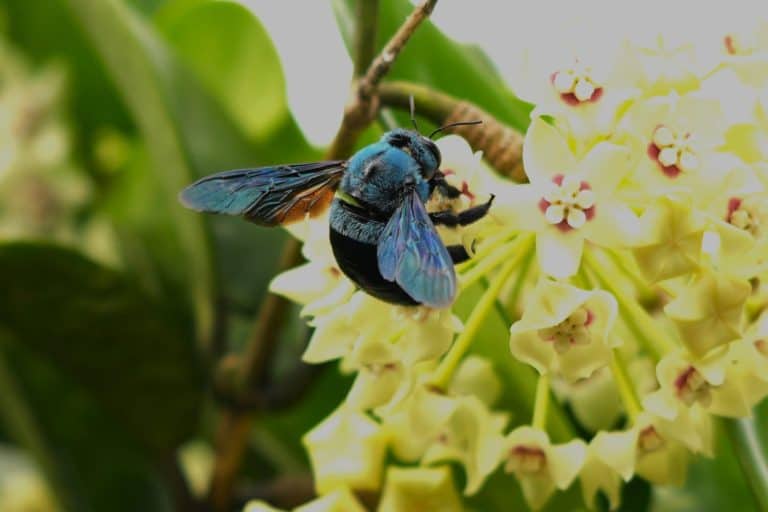
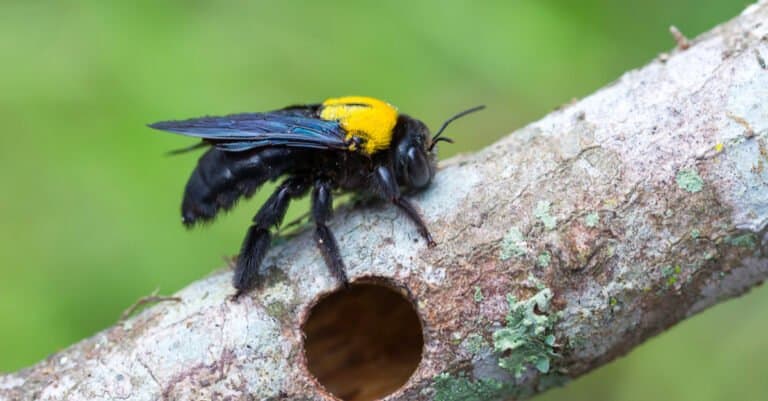
Carpenter bees and bumblebees are not the same species.
©Zety Akhzar/Shutterstock.com
What Do Carpenter Bees Look Like?
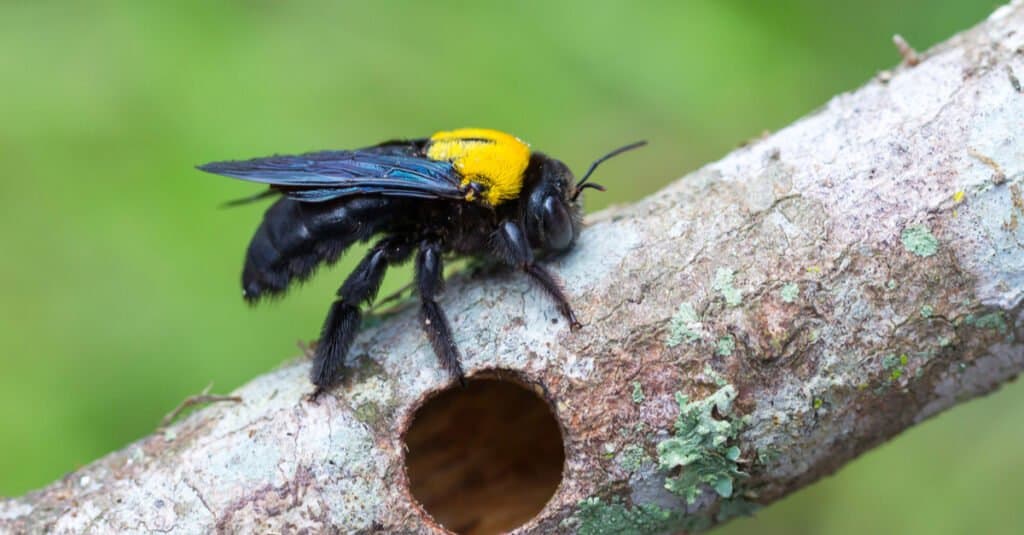
Part of identification of carpenter bee nests involves identifying the bees themselves. In many cases, carpenter bees are all black or primarily black with hints of yellow or white. One way to tell the difference between a carpenter bee and a bumblebee is by a carpenter bee’s shiny, hairless abdomen. Bumblebees have hairy bodies with yellow and black or black and white bands. Male carpenter bees have white or yellow faces. Female bumblebees also have entirely hairy hind legs, while female carpenter bees do not.
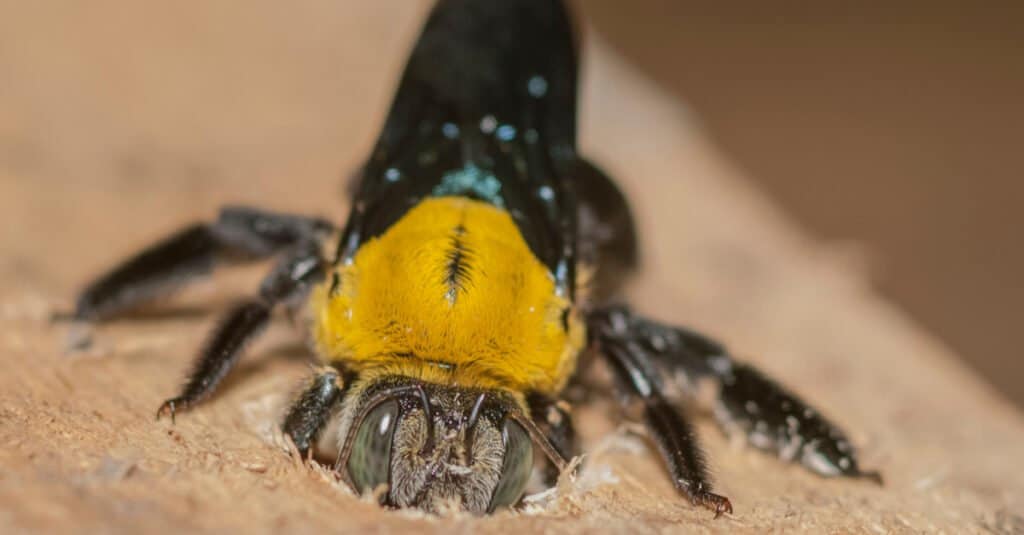
Carpenter bees have shiny, hairless abdomens.
©Yuttana Joe/Shutterstock.com
What Do Carpenter Bee Nests Look Like?
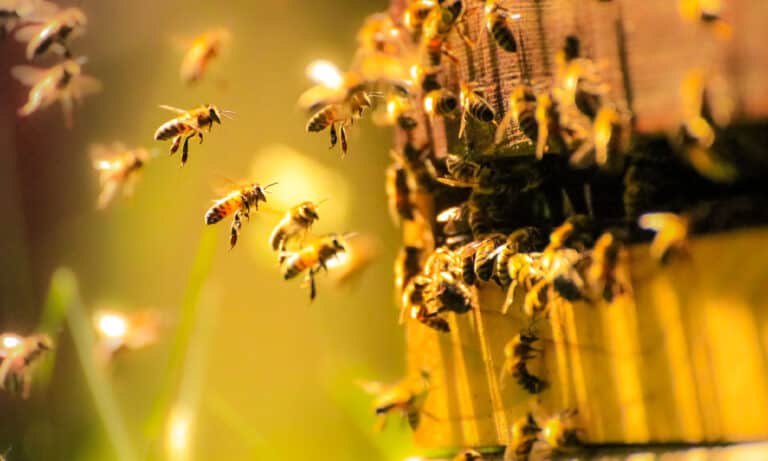
Unlike honeybees, which build hives with the gooey, dripping honeycomb we love, a carpenter bee nest is created through the boring of holes into wood, bamboo, and other natural materials soft enough for their “drilling” skills to work properly. Eggs are laid inside the nests, then they seal in the eggs with food for the larvae when they hatch. The seal protects the larvae until they develop enough to emerge safely.
The holes that carpenter bees bore are perfectly round, with piles of yellow, brown, or green dust typically kicked out from the holes, often still outside the tunnels. The powder comes from the wood or bamboo that the bees have drilled through, much like sawdust from a board you drill through.
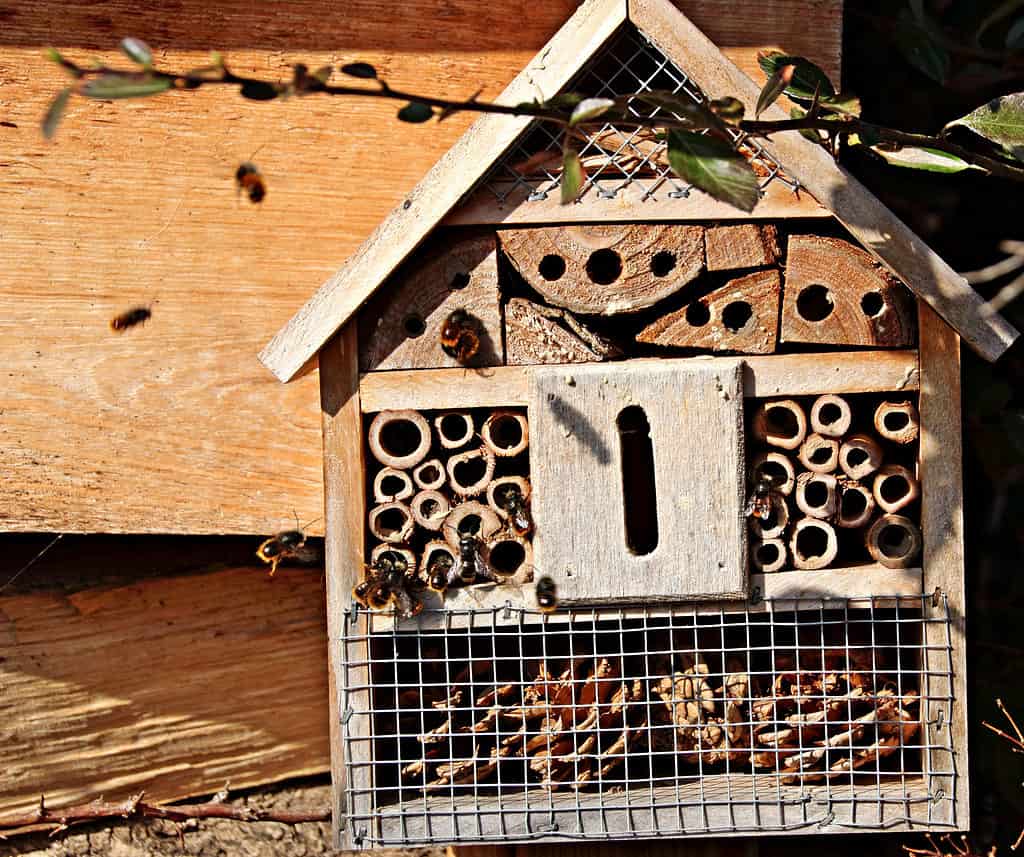
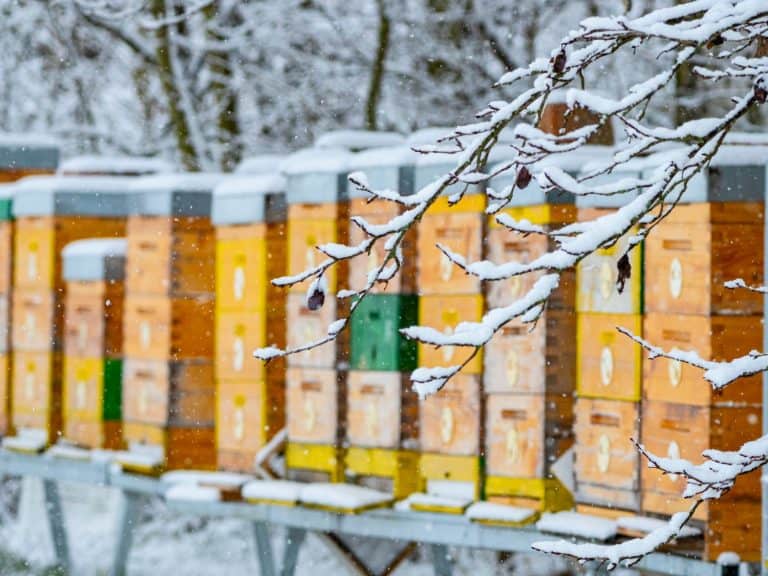
Bee hotels and bee baths make great nesting spaces for pollinators in the garden.
©iStock.com/Alexander Ließ
Softer wood is the preferred housing location for carpenter bees and the holes drilled are usually about 0.5 inches in diameter. Tunnels are typically 4-6 inches initially and can grow to several feet or up to 10 feet with repeated use. This allows for the multiple sub-tunnels branching off the main tunnel, providing developmental space for many eggs. If you spot a guardian bee buzzing around a round, small hole bored into wood somewhere, look for yellow coloration at the bottom of the hole. The yellow marks the presence of bees and the guardian confirms it.
Where to Find Carpenter Bees Nests
If natural material is in abundance near your home, or makes up your home, it’s probably wise to take a look around to see if you spot any signs of carpenter bees. They bore into wooden structures, logs, furniture, wood piles, decks, wooden fences, porches, and similar areas. Unpainted and unstained woods are the most likely locations for nests.
Three major signs of an infestation of carpenter bees include:
- Small piles of wood dust on the ground where there shouldn’t be.
- Discoloration of wood in spots.
- Small, symmetrical holes in wood, bamboo, fences, etc. Even one may indicate an infestation.
Why Might You Want to Get Rid of Carpenter Bee Nests?

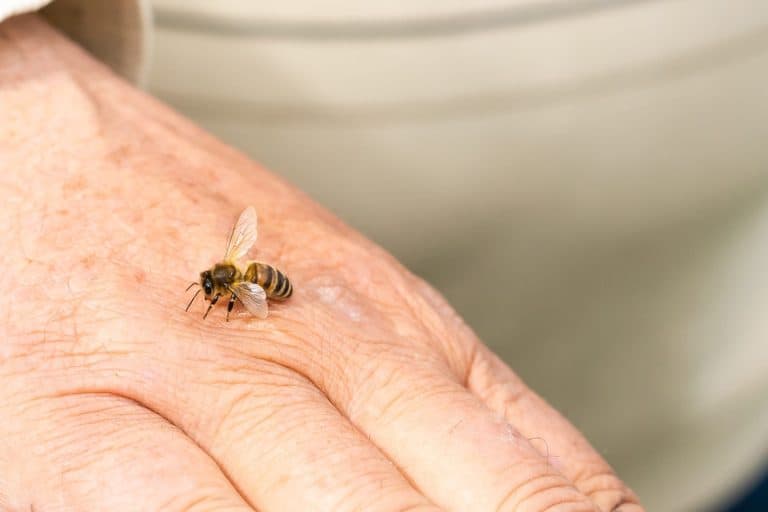
Some folks are allergic to bees — including carpenter bees.
©WIRACHAIPHOTO/Shutterstock.com
While considered mostly harmless, at least to humans, carpenter bees have been known to cause some structural damage. They’re not eating the wood like termites do, but the damage they cause from boring into wood may well cause severe, structural damage if they’re not caught in time. Wood that makes up our houses, porches, decks, fences, and similar structures can easily become the homes of these wood-boring insects.
Unpainted, unstained wood that is undecayed will be the primary target for the holes, though they may bore into dead wood, lumber, and other materials if they are available and unstained. Some people also choose to get rid of carpenter bees because of fear, irritation, or allergies. Carpenter bees don’t typically sting unless provoked or bothered, but that doesn’t mean someone can’t accidentally get in their way and get stung.
Natural DIY Methods of Getting Rid of Carpenter Bees
While carpenter bees are excellent for the environment, they’re not always a great home companion, thanks to their housing habits. Keeping them alive but away from the home is the preferred choice for getting rid of carpenter bees. Some natural solutions make this possible.

Natural methods for getting rid of a carpenter bee nest often include using natural essential oils.
©Sergio Rojo/Shutterstock.com
Citrus Fruit Spray
Inside the home, citrus leaves a fresh, clean scent for humans. Carpenter bees, however, hate the smell of citrus sprays and will avoid it like the plague. Create your own citrus spray with essential oils or purchase pre-made sprays online or at the store. Or, if you prefer, make your own spray by boiling water and adding citrus rind. Once it has cooled, pour it into a spray bottle and take it outside to spray around exposed wood, existing carpenter bee holes, and other locations that seem suspect.
Almond Oil
Another natural deterrent for some insects, including carpenter bees, is almond oil. Grab a spray bottle and fill it with water. Next, add a few drops of almond oil (sometimes called almond essential oil – though an extract would also work). Shake thoroughly, then get to work. Spray around holes, exposed wood, and any other locations where you’ve seen the bees hovering.
Play Some Music
Interestingly enough, carpenter bees hate loud music and other loud noises. Obviously, you can’t keep loud music on day and night, but you can crank the volume up for a while if you notice carpenter bees hanging out. You don’t need to choose obnoxious music, either. Go with your favorites. Just crank it up high so the vibrations are intense enough to annoy the bees into relocating.
Finish Every Bit of Exposed Wood
Okay, so finishing off wood isn’t technically natural, but it does avoid the use of insecticides and doesn’t have to result in the death of carpenter bees. Since the bees won’t bore into wood that has been lacquered, stained, or painted, you can help prevent the issues by adding these finishing touches to your porch, deck, and furniture, or adding a new coat of paint to the house if it’s gotten a bit old.
Other Methods of Getting Rid of Carpenter Bees
If the natural approach simply isn’t working and the damage is ongoing or worsening, there are some other methods for disposing of carpenter bees around the house. Specifically, specialized sprays exist for killing and eliminating problematic insects. The issue with most of these sprays is they are toxic to both humans and animals. They will eliminate the bees, not just drive them away. Make sure you keep the kids and pets away and let the sprays dissipate thoroughly before you remove debris and dead insects.

Sometimes, your only option may be a chemical spray.
©encierro/Shutterstock.com
Other Safety Considerations When Getting Rid of Carpenter Bees
While carpenter bees are typically peaceful, if they feel threatened or become disturbed, they are likely to sting. Sprays and chemicals are particularly aggressive, as far as bees are concerned, so use precautions to protect yourself against stings when you aim to eliminate a carpenter bee nest.
- Be sure to test out the spray bottle before attempting to spray the insects. This goes for both commercial insect killers and for homemade citrus sprays and other natural remedies. Even though the almond oil won’t kill them, the spraying will still irritate the bees and could provoke stinging.
- Wear protective gear. Cover your eyes with glasses or goggles and cover yourself as much as possible with clothing to prevent stings. If possible, wear some kind of netting over your face.
- Maintain a safe distance while spraying. Avoid spray bottles and sprayers with short ranges.
How to Prevent Carpenter Bees from Returning
Disposing of problematic carpenter bees isn’t the only trick here. You’re going to need to prevent them from returning, as well. To help prevent their return:
- Paint or stain exposed wood.
- Remove or replace weathered or decayed wood on exteriors, fences, furniture, and others.
- Use pressure-treated woods for exteriors and outdoor structures like pergolas and decks.
- Use caulk to plug up any existing carpenter bee holes in autumn to help prevent them from wintering in the holes.
Should I Hire a Pro?
Sometimes, DIY methods aren’t enough, particularly if you have limitations like allergies or mobility concerns. In this case, whether the infestation is mild or extreme, it’s never a bad idea to bring in a professional to help you take care of the situation. It should be noted, however, that most pros will use commercial equipment and insecticides, meaning they will eliminate the bees instead of encouraging the carpenter bees to move away from the house. You may be able to request natural deterrents instead, but there’s no guarantee they will be able to accommodate your request. Keep this in mind as you consider your options.