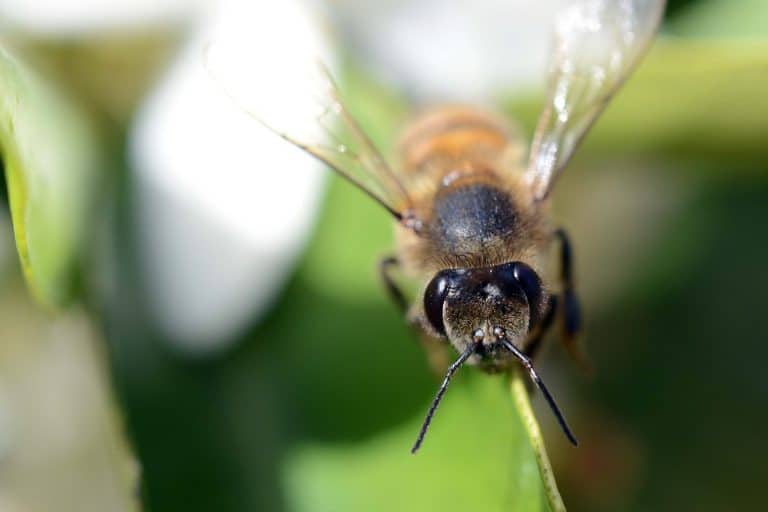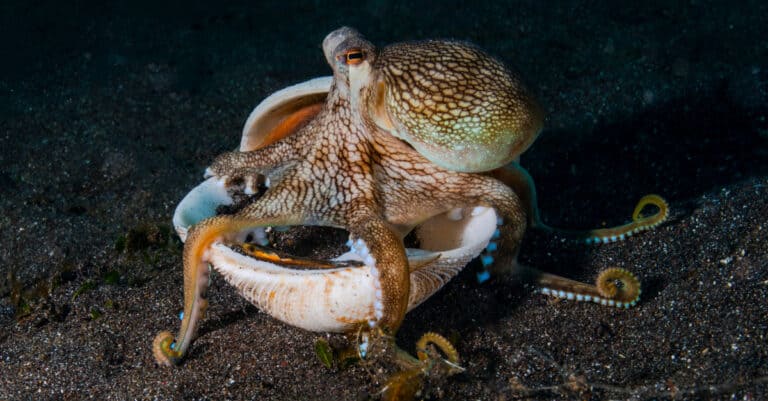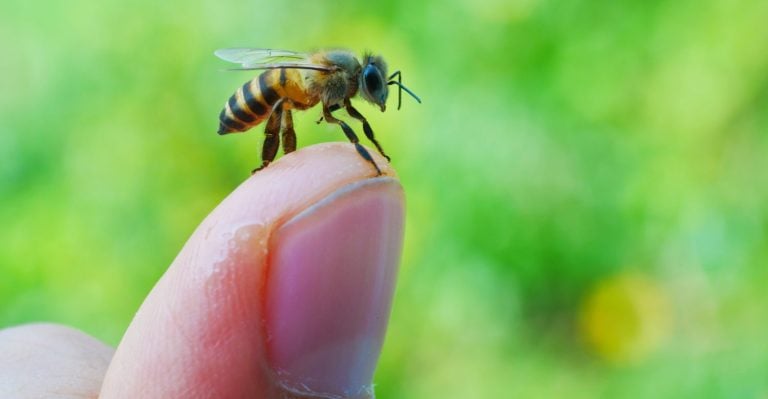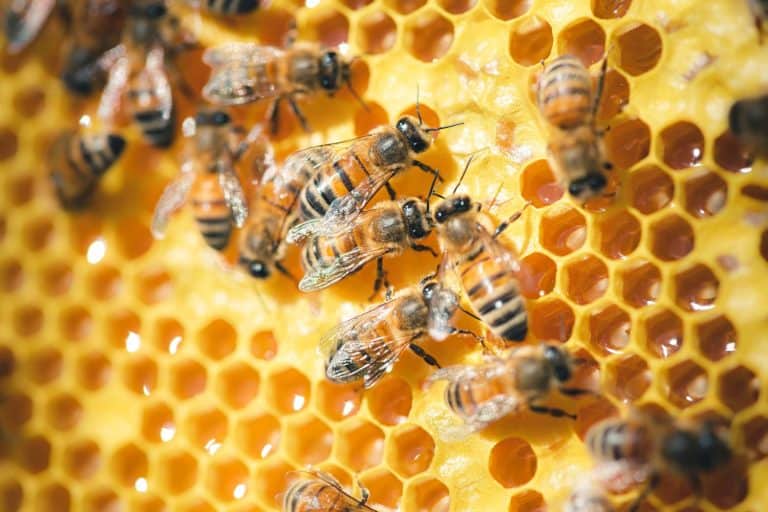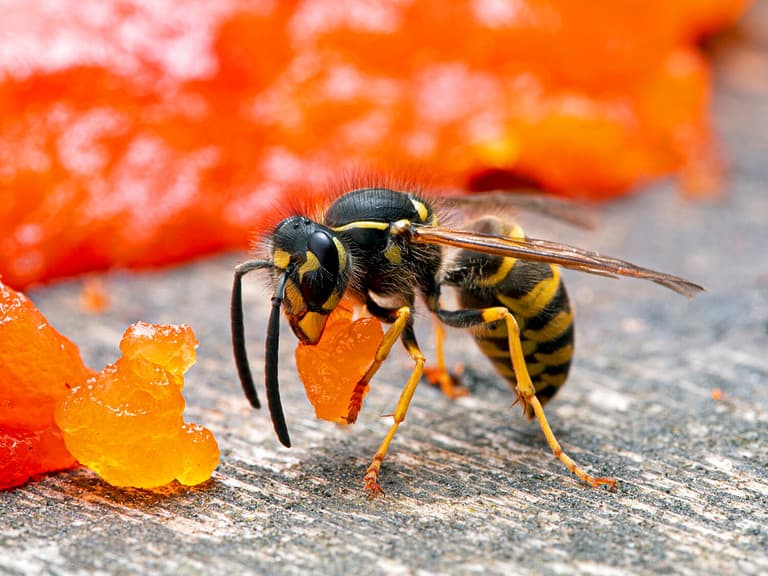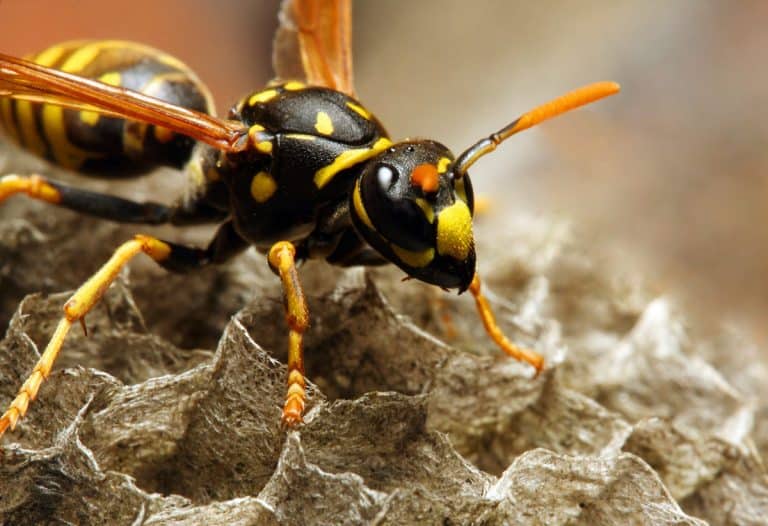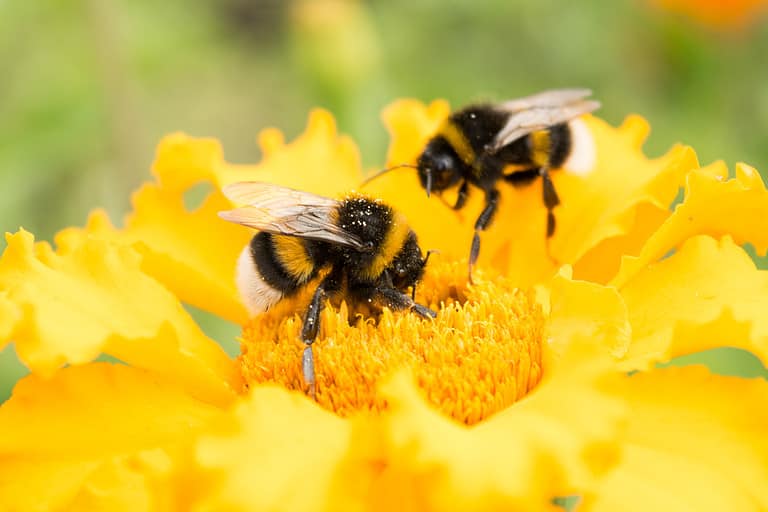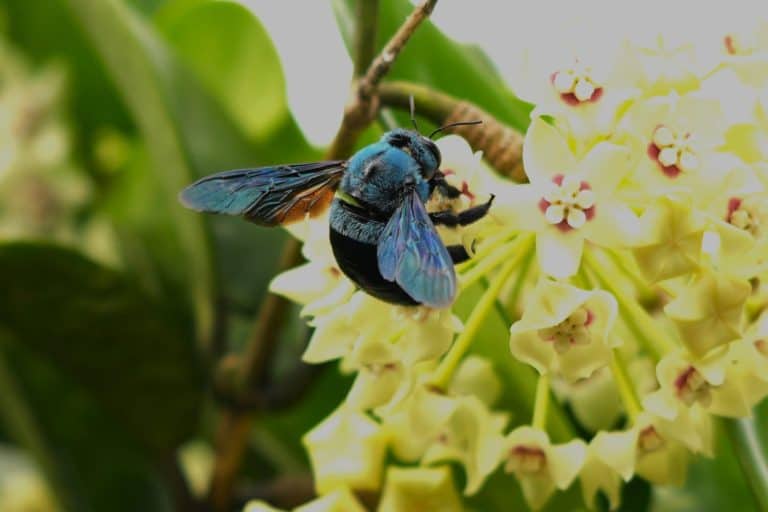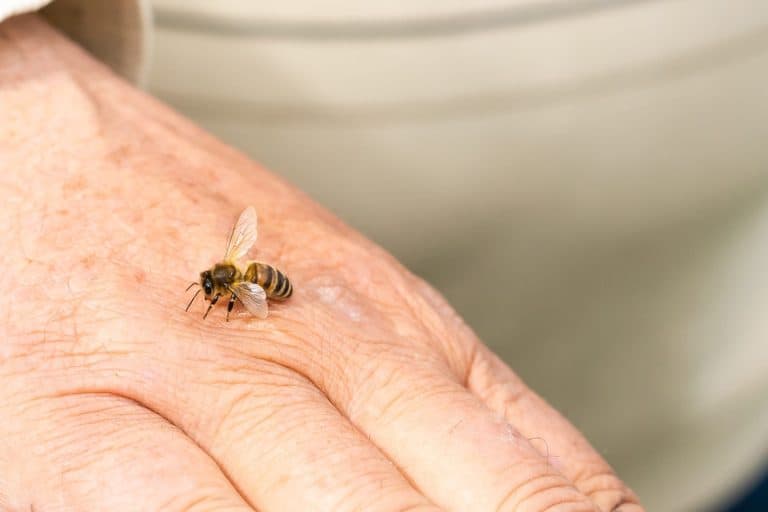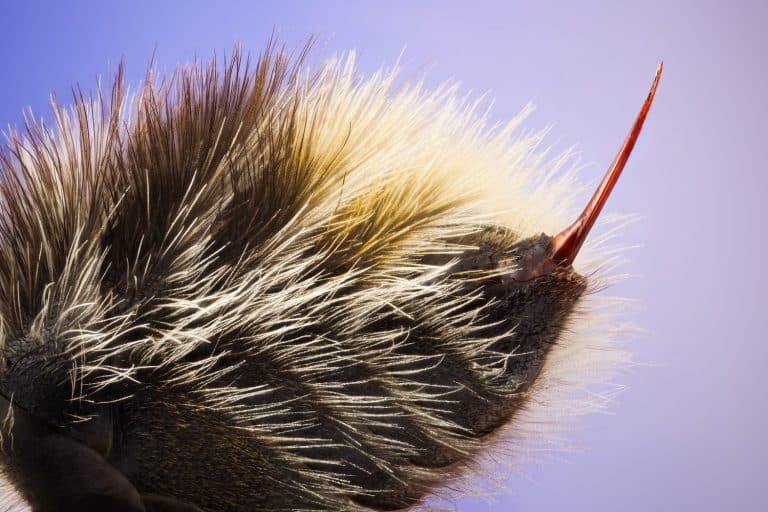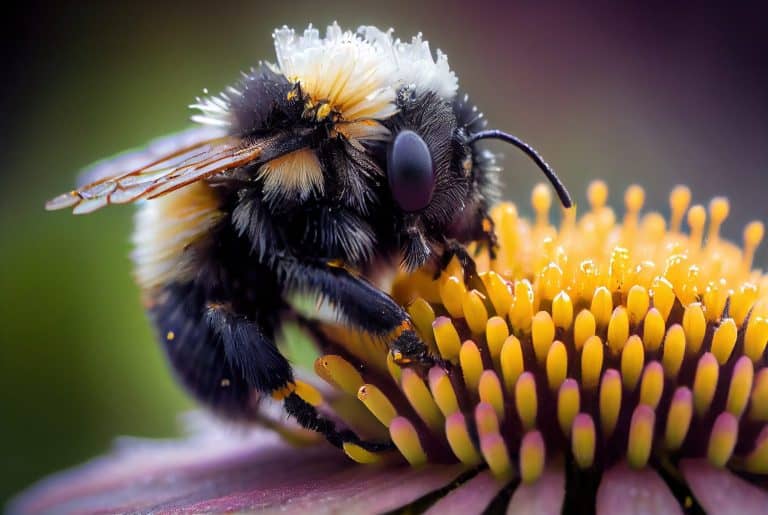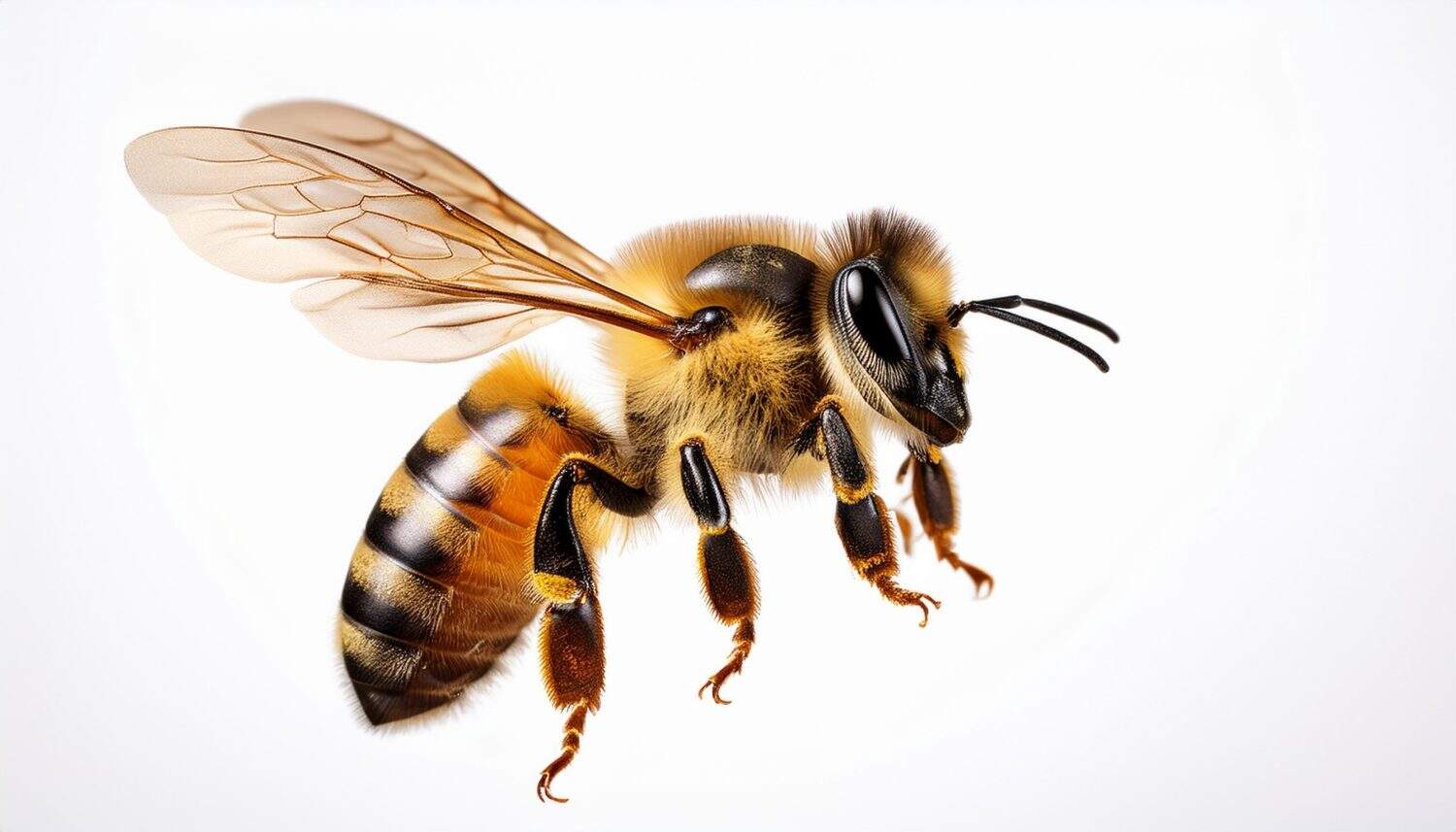

Bees are far more diverse than the honey bee most of us picture. They come in every size and shade, from metallic green to deep black, and they thrive in environments ranging from deserts to mountain meadows. Some live in bustling colonies, while others dig solitary burrows in the ground. Some bees can sting, while others cannot. Each type has its own story, but as major pollinators, all bees play an essential role in maintaining healthy ecosystems and supporting agriculture. This guide takes you through the alphabet, highlighting bee names to showcase the remarkable diversity within this group of animals.
How Many Kinds of Bees Are There?

Honey bees
©Martin Pelanek/Shutterstock.com
Globally, scientists have identified over 20,000 bee species, divided into several families and numerous genera. Bees are found on every continent except Antarctica.. Bees are fuzzy pollen-carriers that feed on nectar and play an outsized role in pollination. Without them, fruits, vegetables, nuts, and flowering plants would all suffer. A few species—like honey bees and bumblebees—live in structured colonies with queens and workers. Others, such as mason bees and leafcutter bees, work alone, each female creating her own nest and laying her own eggs. To illustrate their vast diversity, here’s a closer look at 26 examples, spanning the alphabet.
A – Andrena (Mining Bees)
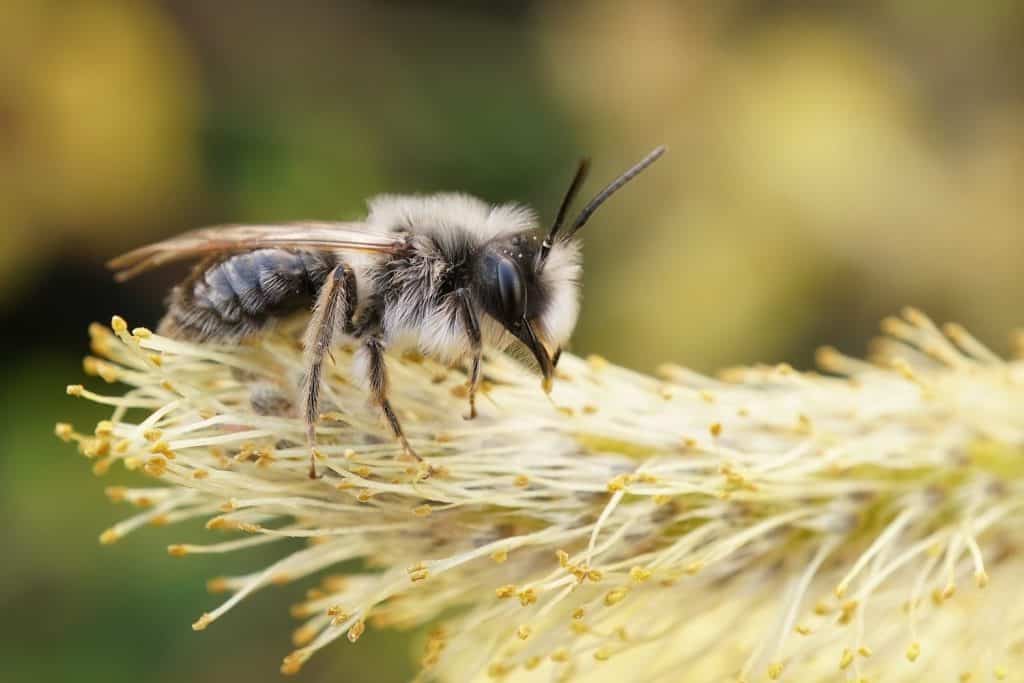
Andrena vaga (Grey-backed Mining Bee)
©HWall/Shutterstock.com
Andrena includes more than 1,500 species across Europe, Asia, and North America. They’re small and pale brown or rust-colored. They are known for digging small tunnels in soil. These solitary bees emerge early in spring and are crucial for pollinating fruit trees and wildflowers. Despite nesting close together in large groups, each female works independently. Gentle and unobtrusive, mining bees rarely draw attention to themselves.
B – Bombus terrestris (Buff-tailed Bumblebee)
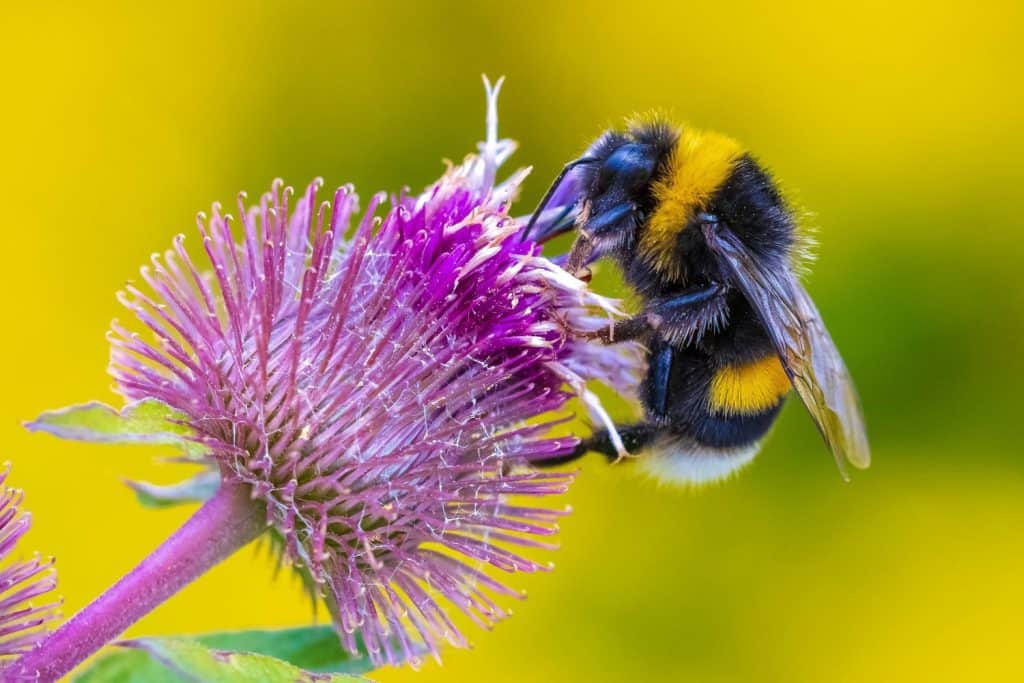
Bombus terrestris
©SanderMeertinsPhotography/Shutterstock.com
One of Europe’s most familiar bees, Bombus terrestris, is plump, hairy, and patterned with yellow and black bands. Their nests, often hidden underground, hold only a few hundred individuals compared to the tens of thousands in honey bee colonies. Bumblebees are exceptional pollinators thanks to “buzz pollination,” where they vibrate flowers to release pollen. Active in cooler, cloudier weather than many bees, they keep plants producing even when others stay grounded.
C – Colletes hederae (Ivy Bee)
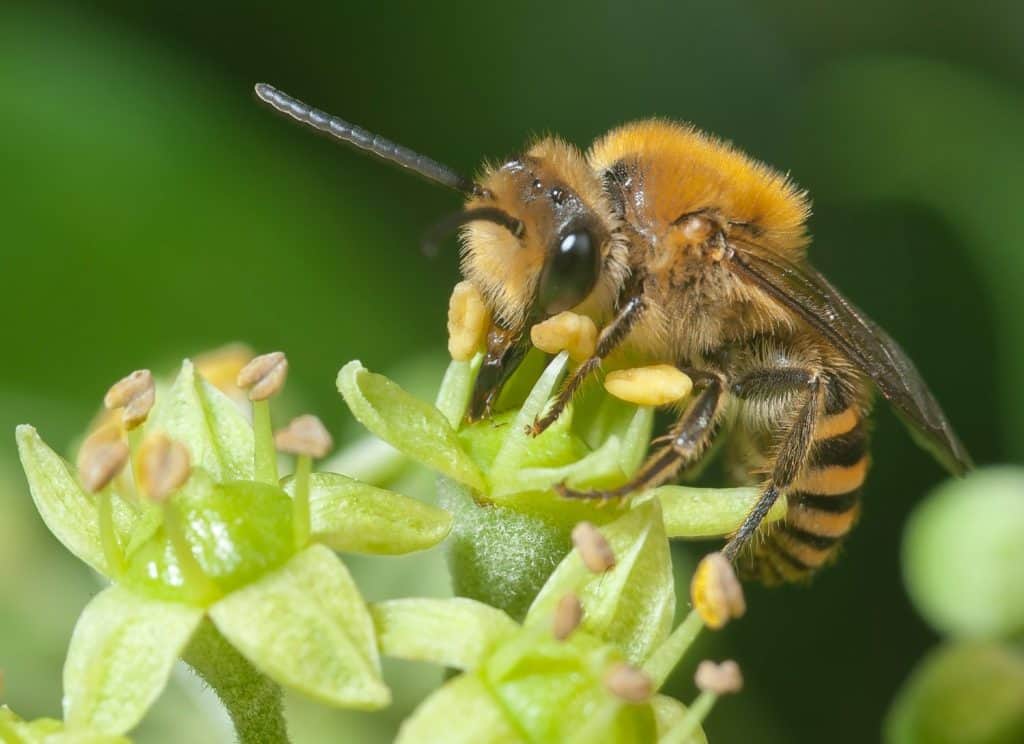
Colletes hederae
©Peter J. Traub/Shutterstock.com
Discovered only in the 1990s, the ivy bee is a newcomer to entomology. It looks much like a honey bee but emerges late in the year, feeding almost exclusively on ivy flowers. Females tunnel into sandy soil to build nests, often clustering in dense colonies. Though each bee functions independently, these gatherings can number in the thousands and create the impression of a hive. They are harmless, important autumn pollinators, and have quickly expanded across Europe.
D – Diadasia enavata (Sunflower Bee)
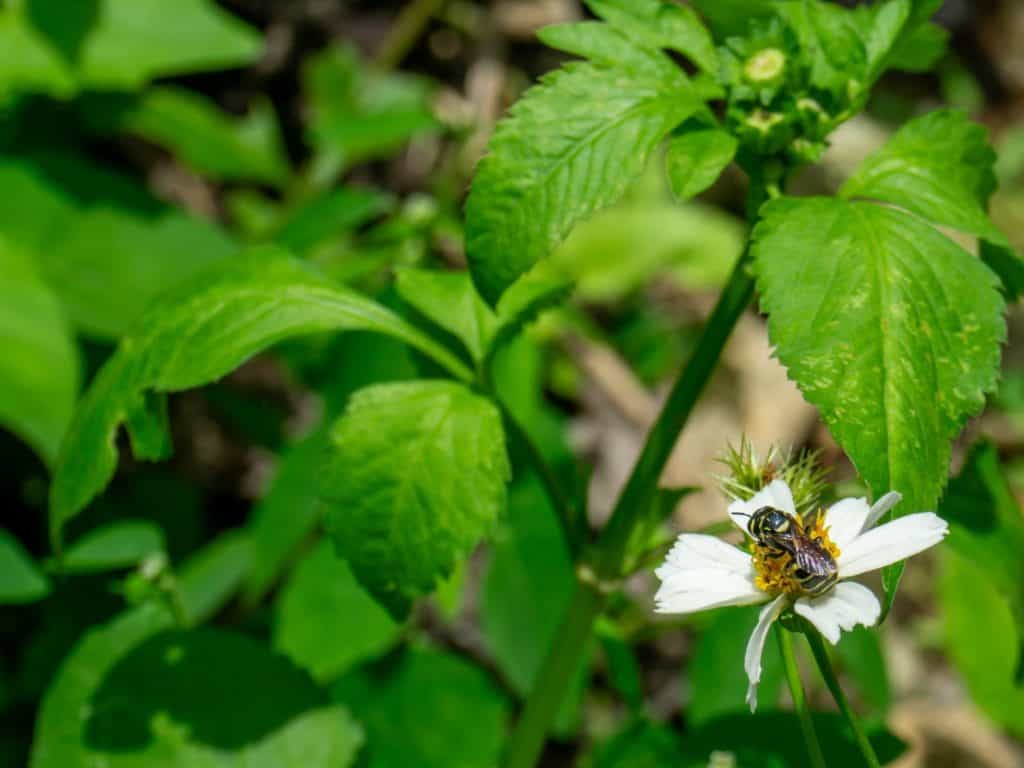
Diadasia enavata
©anto.cakep/Shutterstock.com
This native of the American plains is best known as the sunflower bee, with females gathering pollen from sunflowers and their close relatives in the daisy family to feed their young. Golden and hairy, these bees blend into the bright blooms they visit. Nests are dug in sandy soil, where each female tends her own brood. Though strongly tied to sunflowers, they will also forage on white- and yellow-flowered asters. This makes them vital pollinators for both wild prairies and cultivated fields.
E – Euglossa dilemma (Orchid Bee)
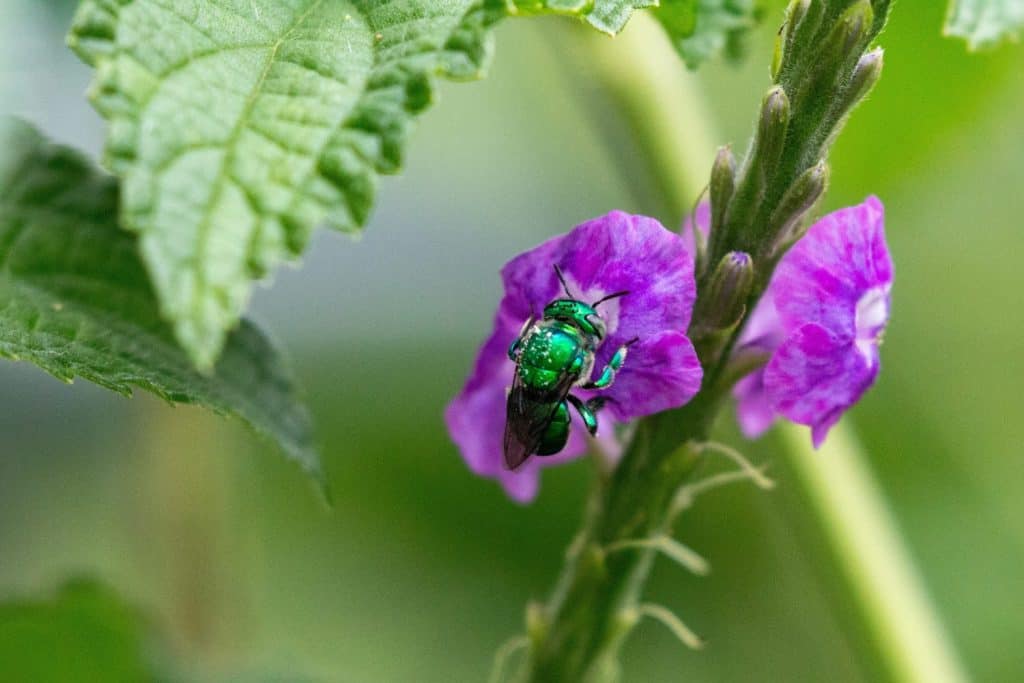
Euglossa dilemma
©Miguel Schmitter/Shutterstock.com
Shiny, metallic green, and strikingly beautiful, Euglossa dilemma is native to Central America but has established populations in Florida. Males collect aromatic compounds from orchids, storing the scents to court females. Their mating rituals are much more elaborate than those of most bees. They nest in cavities or rotting wood, live alone, and pollinate a range of tropical plants, including orchids that depend entirely on them.
F – Frieseomelitta varia (Stingless Bee)
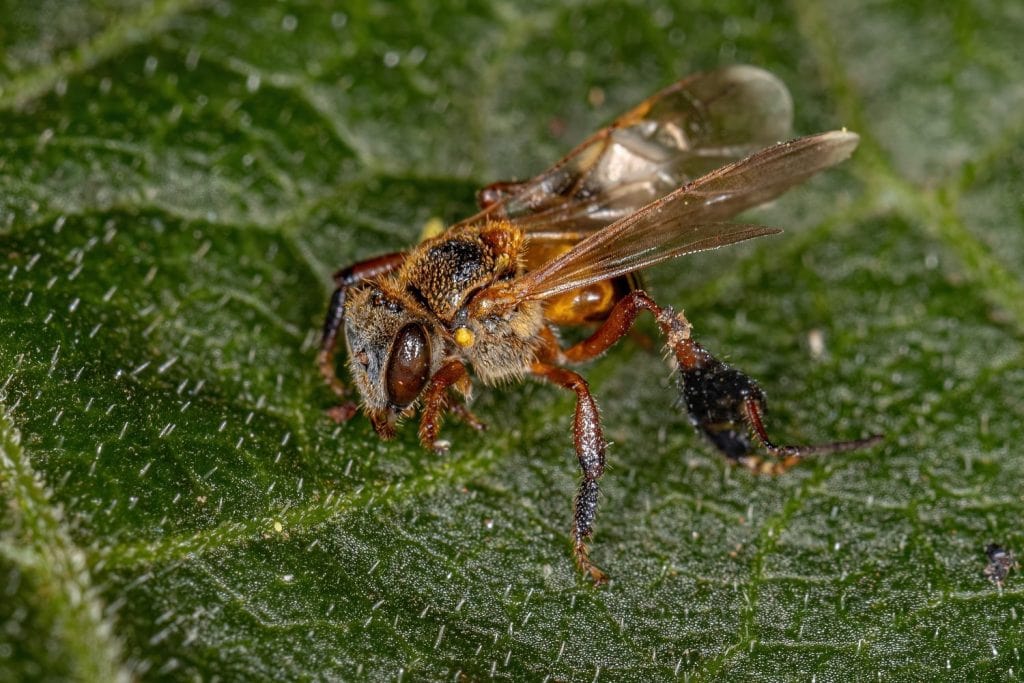
Frieseomelitta varia
©Vinicius R. Souza/Shutterstock.com
These small, dark bees from South America form colonies of thousands. They nest in hollow trees or man-made structures, sealing entrances with wax and resin. Though they lack stingers, they defend their hives by biting and coating intruders with sticky resins. They produce honey with a tangy flavor that is highly valued by local people. Beyond honey, their biggest contribution is pollinating tropical plants that sustain forests and farms.
G – Geotrigona (Stingless Bees)
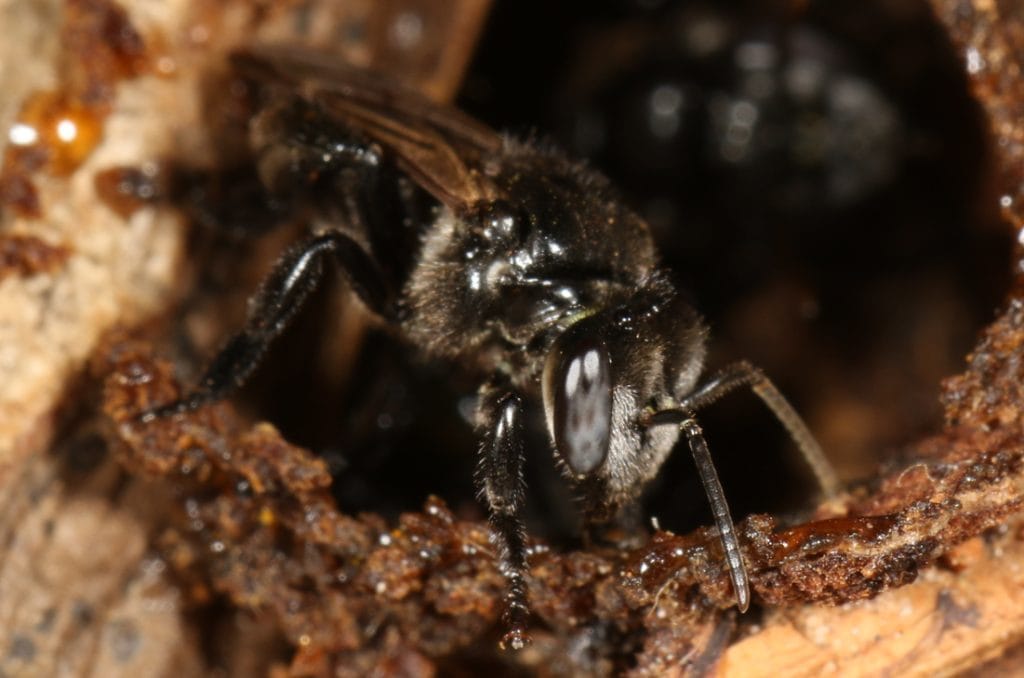
Geotrigona mombuca
Geotrigona is a genus of stingless bees found throughout Central and South America. They are small, dark bees that live in large colonies, often nesting in the ground or hollow logs. Like honeybees, they have queens, workers, and drones, and their hives produce small amounts of honey that local communities sometimes harvest. Their colonies are defended not with stingers, but with biting jaws and sticky resins. Highly social and active year-round in warm climates, Geotrigona species are important pollinators for tropical plants and crops.
H – Halictus tumulorum
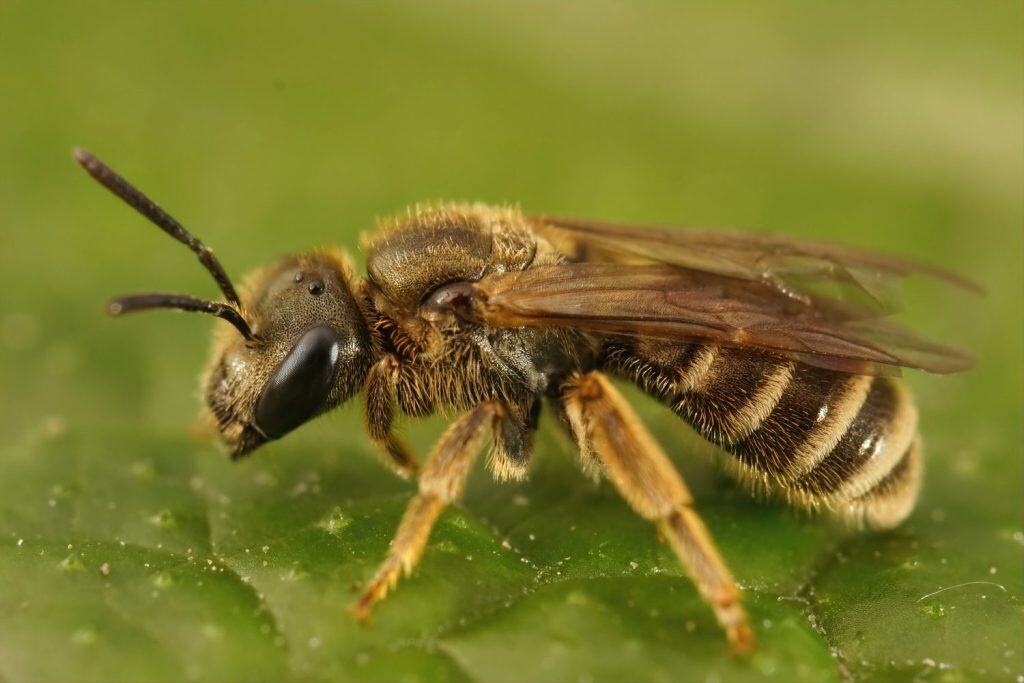
Halictus tumulorum
©HWall/Shutterstock.com
Halictus tumulorum is a small sweat bee commonly found across Europe and parts of Asia. These bees are slender and dark, with pale bands of hair across their abdomens that give them a striped appearance. Females often nest in the ground, choosing bare or lightly vegetated soil where they dig tunnels to rear their young. Though the bees behave solitarily, many nests may cluster together in suitable spots, creating the appearance of a loose colony.
I – Isepeolus luctuosus
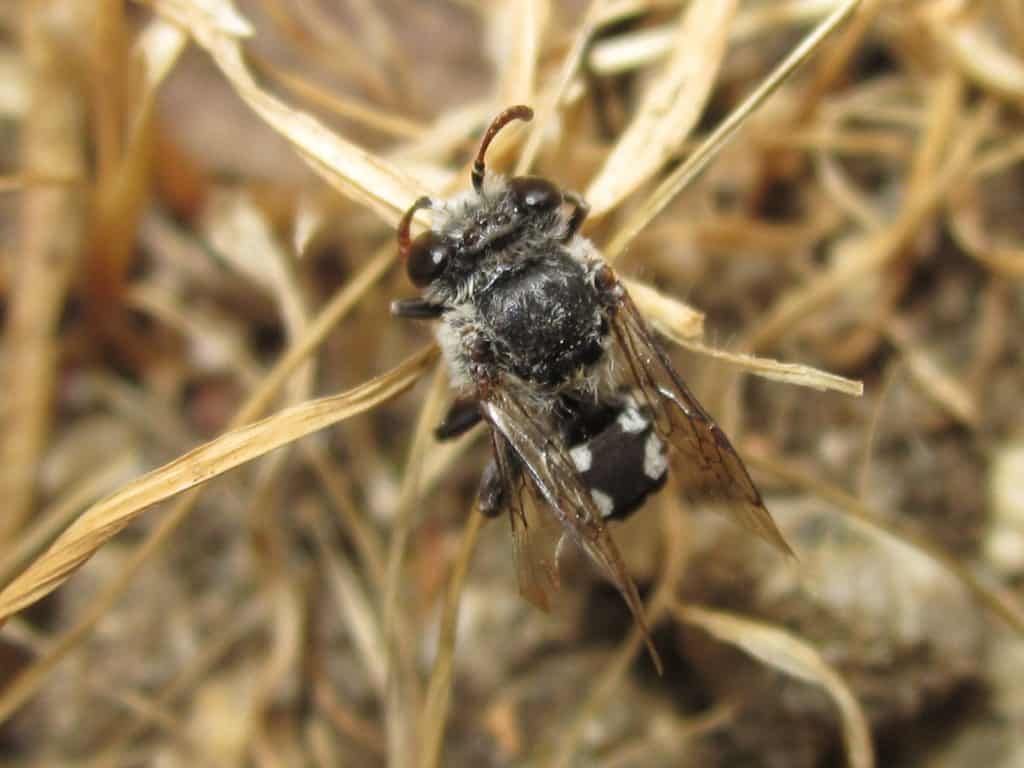
Isepeolus luctuosus
©https://www.inaturalist.org/photos/76899133 – Original / License
Isepeolus luctuosus is known as a cuckoo bee, named for the cuckoo bird that lays its eggs in the nests of other birds. I. luctuosus does the same thing, laying its eggs in the nests of other bees. When the larvae hatch, they destroy the host’s offspring and consume all the stored pollen in the nest. While this lifestyle means they do not directly pollinate plants, cuckoo bees play a role in balancing the population of their host species.
J – Apis mellifera jemenitica (Arabian Honey Bee)
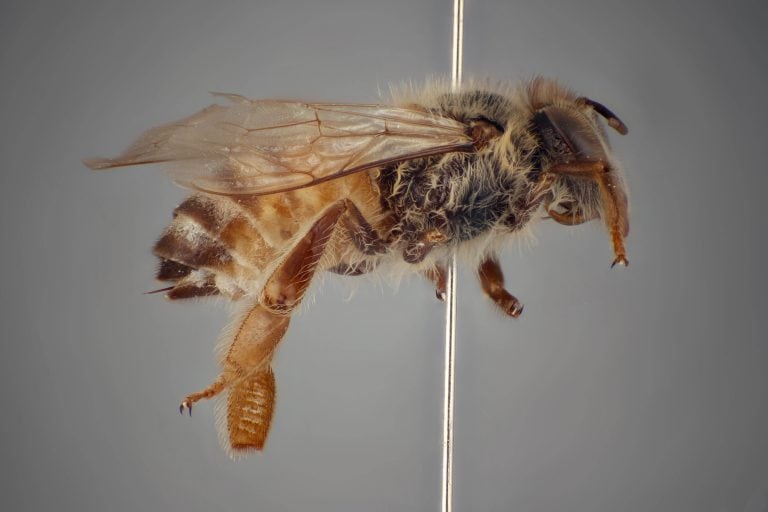
Apis mellifera jemenitica
©Institute of Food and Agricultural Sciences – Original / License
Note: We were not able to identify any bee genera or species beginning with the letter J, so we turned to the subspecies level and selected Apis mellifera jemenitica.
Apis mellifera jemenitica, the Arabian honey bee, is a small, heat-tolerant subspecies native to the Arabian Peninsula that thrives in arid environments. It has a slim build and a yellowish color. It’s good at foraging and producing honey under desert conditions. This makes it highly valuable for local beekeeping.
K – Kelita toroi
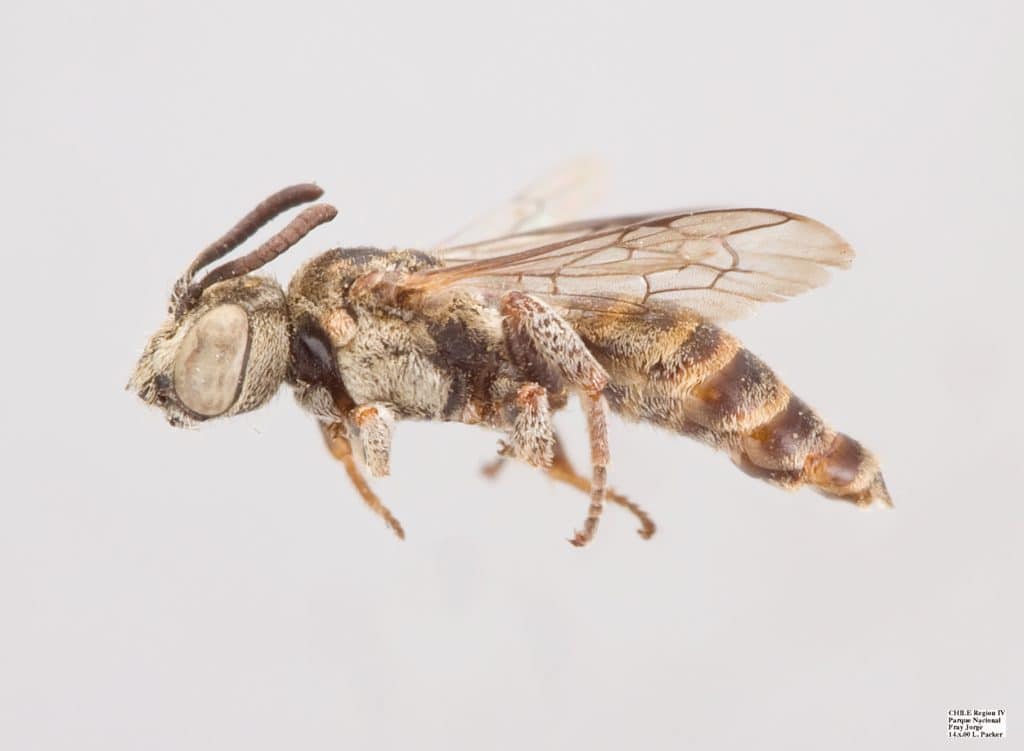
Kelita toroi
©The Packer Lab – Bee Tribes of the World – Original / License
Kelita toroi is a recently described cuckoo bee from Chile. Like other cuckoo bees, it skips the work of building its own nest, instead sneaking its eggs into the nests of other bees and leaving the host to feed and raise its young. This parasitic strategy may sound ruthless, but it is a survival tactic for this species and helps prevent its host species from becoming overpopulated.
L – Lasioglossum zonulum (Banded Sweat Bee)
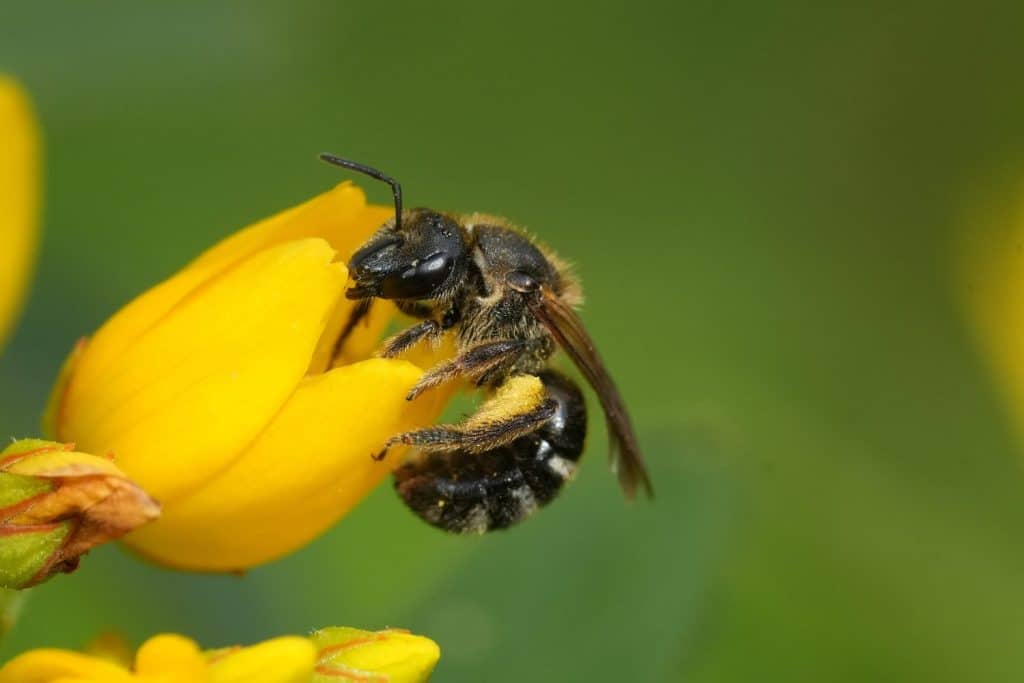
Lasioglossum zonulum
©HWall/Shutterstock.com
Common across Europe and parts of Asia, Lasioglossum zonulum is one of the largest species in its genus. Females typically nest in the ground, sometimes forming dense groups, but they are solitary rather than cooperative. These bees are brownish with pale hair bands on the abdomen, giving them a striped appearance. As generalist pollinators, they visit a wide range of plants, making them valuable contributors to many ecosystems.
M – Megachile rotundata (Alfalfa Leafcutter Bee)
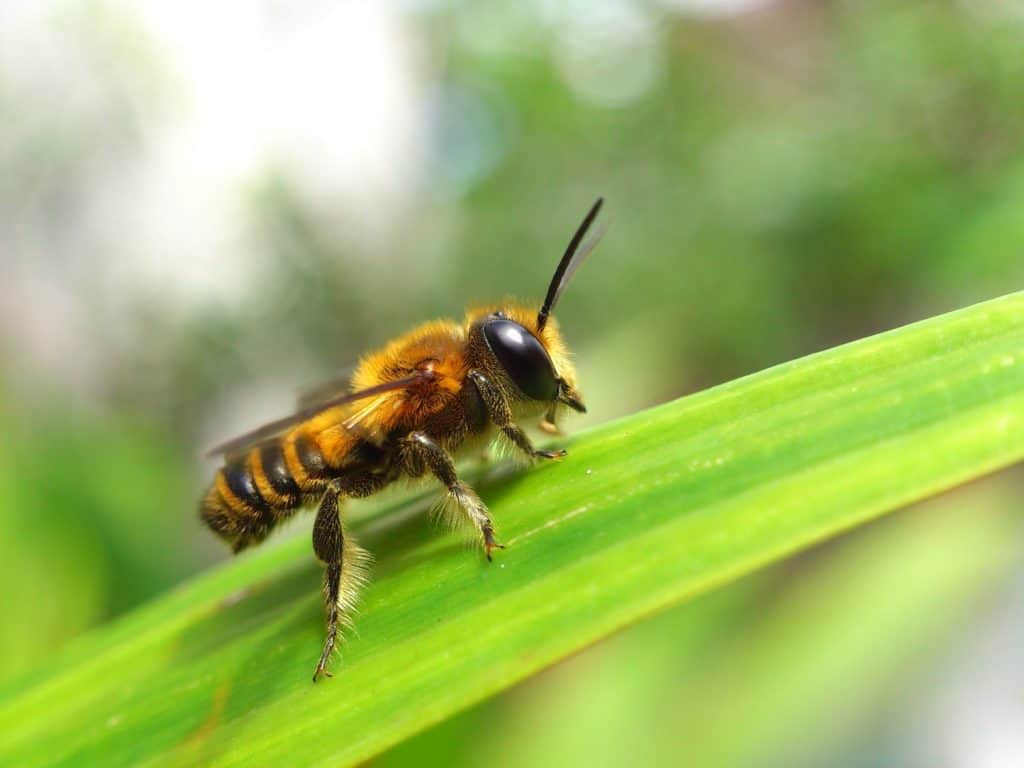
Megachile rotundata
©Mito Photography/Shutterstock.com
Widely used in agriculture, this Eurasian species has been introduced to North America for pollinating alfalfa and other crops. Medium-sized with strong jaws, they cut neat circles from leaves to line their nests in hollow stems or cavities. Solitary but efficient, a small population can pollinate large fields. They rarely sting, which makes them ideal “managed” bees.
N – Nomada goodeniana (Gooden’s Nomad Bee)
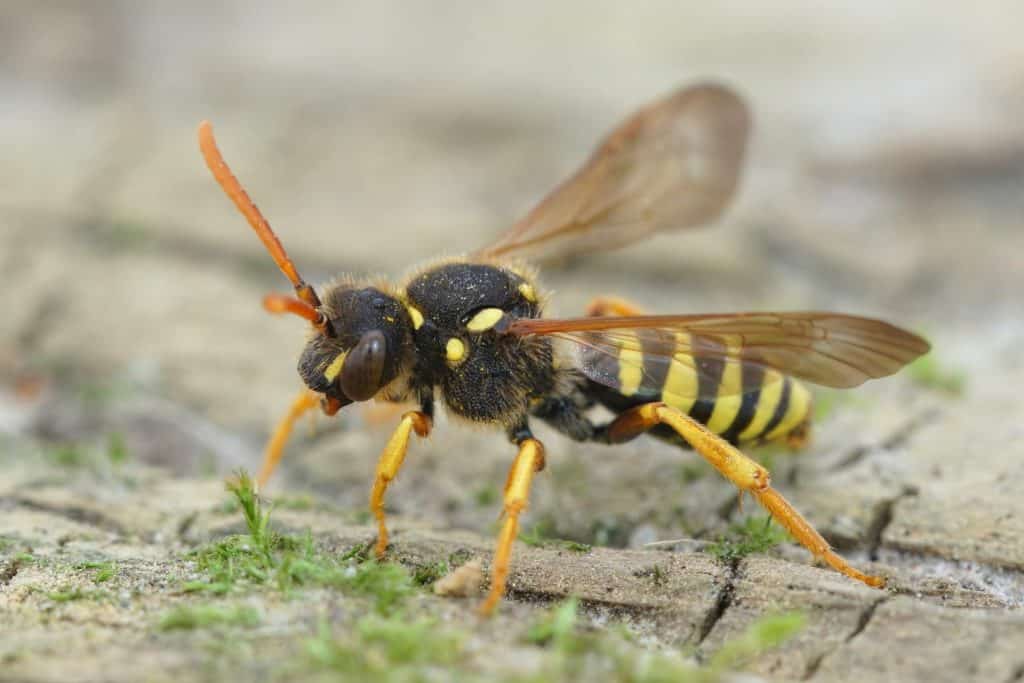
Nomada goodeniana
©HWall/Shutterstock.com
Nomada goodeniana is a wasp-like cuckoo bee found across much of Europe, often seen in spring and early summer. The females lay their eggs in the nests of other solitary bees. The Nomada larvae kill the host’s offspring and eat the pollen the parents have collected. Though they do not gather pollen themselves, they play a role in regulating host populations.
O – Osmia lignaria (Blue Orchard Mason Bee)
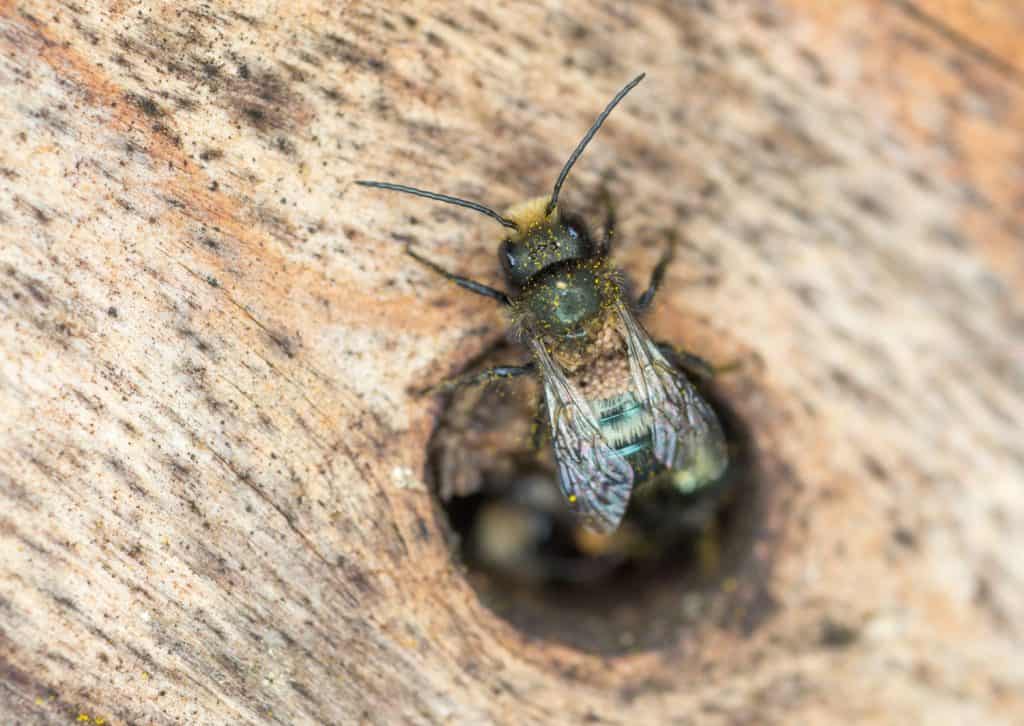
Osmia lignaria
©Jennifer Bosvert/Shutterstock.com
This metallic-blue bee is native to North America and highly effective at pollinating orchards in spring. Females nest in hollow stems or drilled wood, sealing chambers with mud. Each cell is stocked with pollen and nectar for a single larva. They are gentle and active only during the blooming season.
P – Perdita chamaesarachae (Fairy Bee)
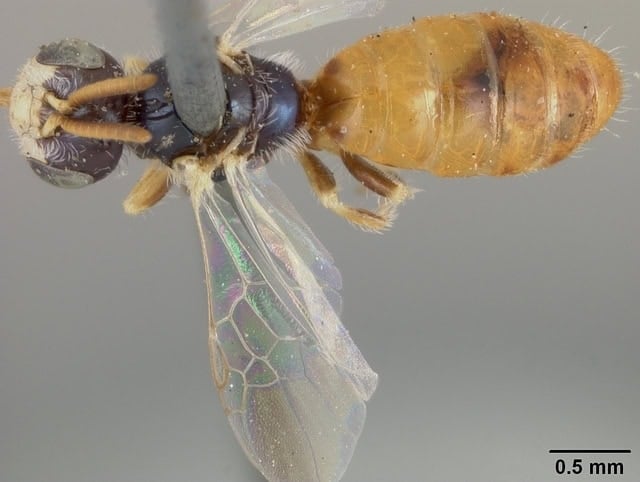
Perdita chamaesarachae is a bee species in a group often called “fairy bees” because of their tiny size. This particular species specializes in collecting pollen from small nightshade plants in the southwestern U.S. It nests in the ground and lives a solitary lifestyle. Though easily overlooked because of its size, it plays a crucial role in the reproduction of its host plants.
Q – Queen Bee
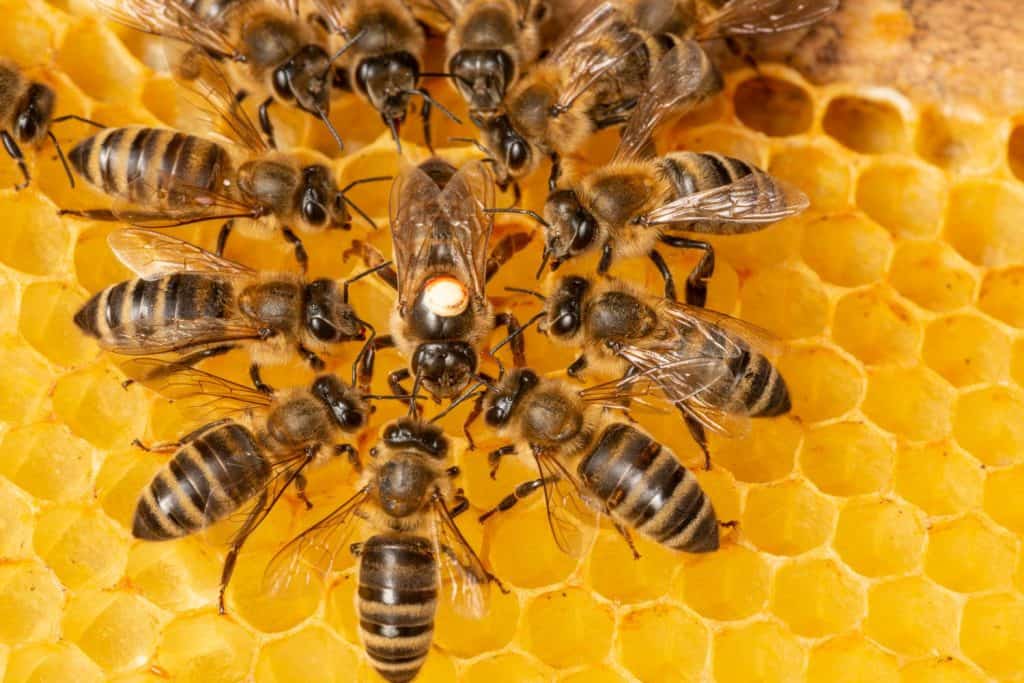
In this hive of western honeybees (Apis mellifera), the queen is marked with a dot and has bee workers around her.
©Kuttelvaserova Stuchelova/Shutterstock.com
Note: We were not able to identify any bee genera, species, or subspecies beginning with the letter Q, so we took this opportunity to explain the role of the Queen bee.
A queen bee is the sole fertile female in a social bee colony. She is responsible for laying all the eggs and releasing pheromones to maintain colony unity and regulate worker behavior. She can lay thousands of eggs in her lifetime, ensuring colony growth, while her special chemical signals suppress the workers’ ability to reproduce. Not all bees have queens—only highly social species like honey bees, bumble bees, and some stingless bees. Most solitary bee species do not have a queen at all, and every female is capable of laying eggs independently.
R – Rhodanthidium septemdentatum (Red-Resin Bee)
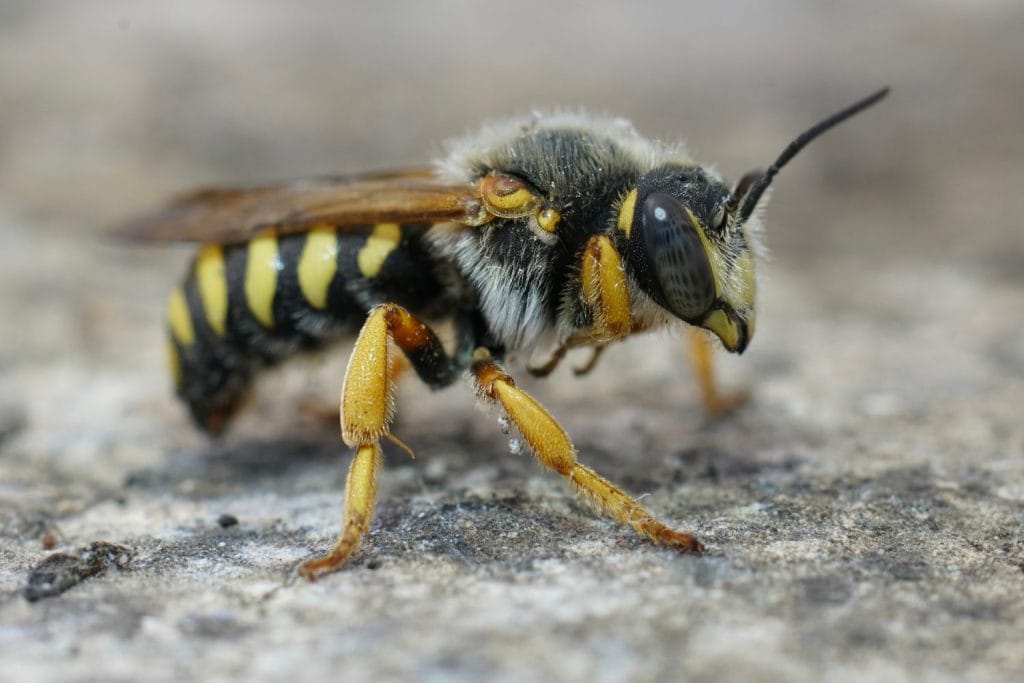
Rhodanthidium septemdentatum
©HWall/Shutterstock.com
This is a bee found throughout southern and central Europe, North Africa, and the Middle East. These medium-sized bees often stand out with their bold black-and-yellow markings. One of the reasons they are so geographically widespread is that they collect pollen from many different kinds of plants. This helps them thrive in areas with diverse landscapes.
S – Scaptotrigona bipunctata (Tubi Bee)
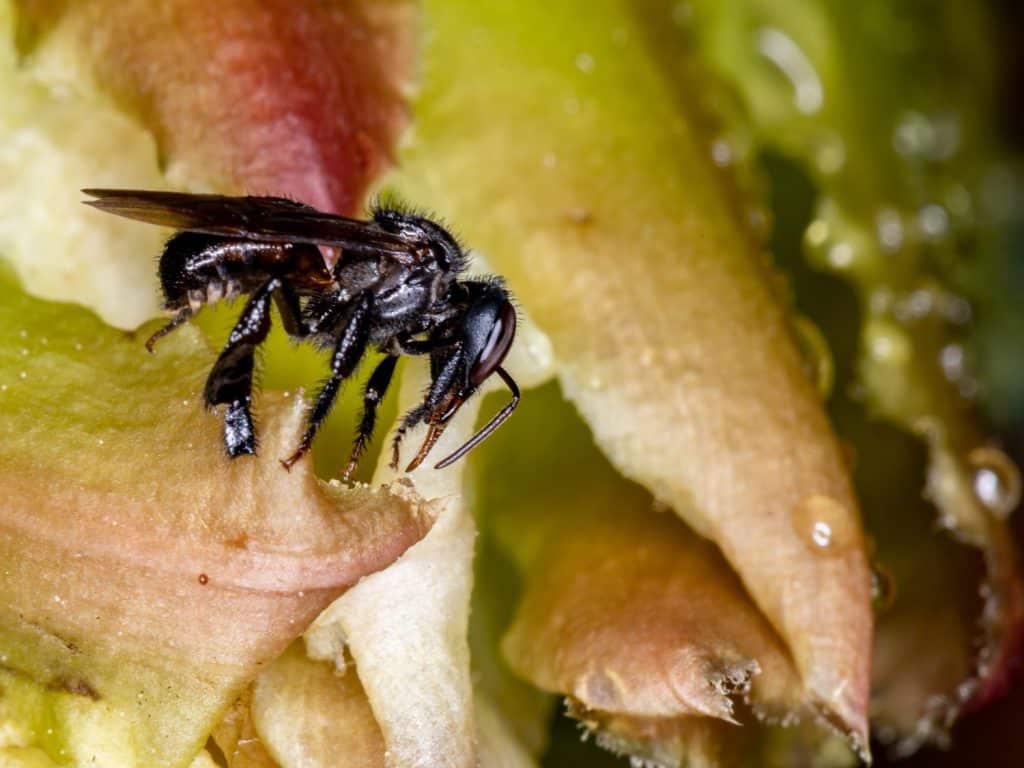
Scaptotrigona bipuncta
©Vinicius R. Souza/Shutterstock.com
Known in Brazil as the tubi bee, Scaptotrigona bipunctata is a stingless bee found throughout South America. These medium-sized, dark-colored bees form large colonies in hollow trees or man-made hives, with thousands of individuals working together. Their honey is highly prized for its tangy, citrus-like flavor, and it has been used in traditional medicine. Instead of stingers, tubi bees defend their hives by biting and swarming intruders, and sometimes smearing them with sticky resins. They are especially valuable pollinators for tropical crops and native plants.
T – Thyreus nitidulus (Neon Cuckoo Bee)
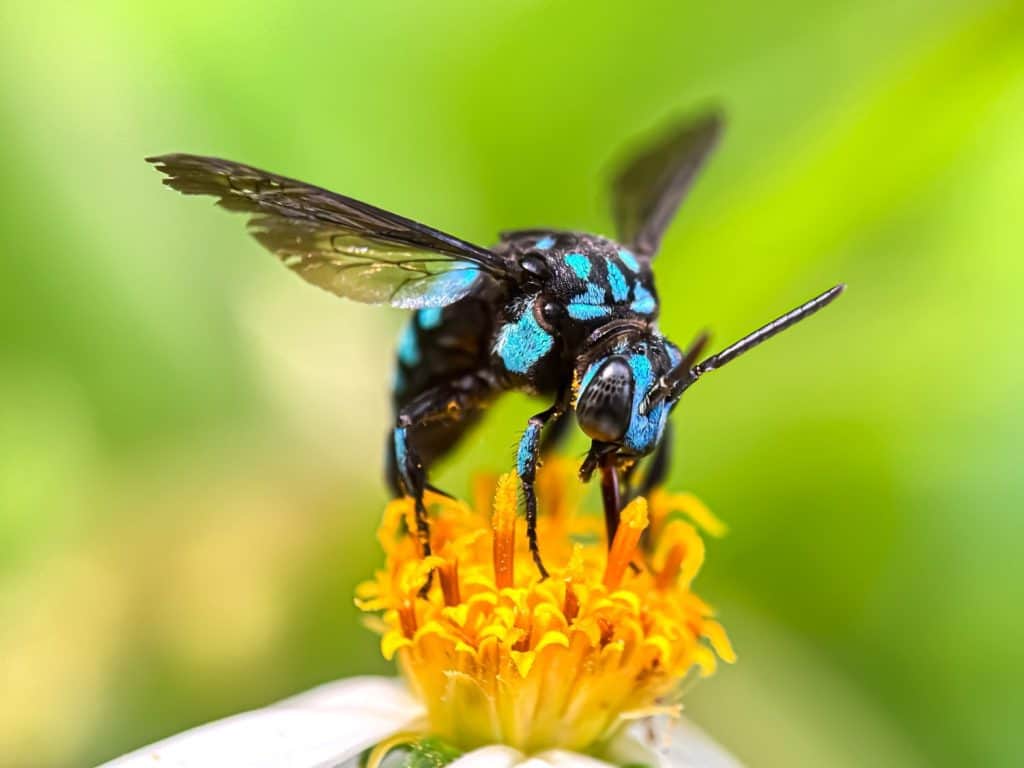
Thyreus nitidulus
©Faisal.k/Shutterstock.com
This beautiful blue and black bee lives in Australia. It is a cuckoo bee that lays its eggs in the nests of other bees, leaving them for the host species to raise. The adults feed on nectar but collect no pollen, leaving pollination to their hosts. So they really are a parasitic species, but in the overall picture of biodiversity, they help provide balance to bee populations.
U – Ukrainian honey bee (Apis mellifera sossimai)
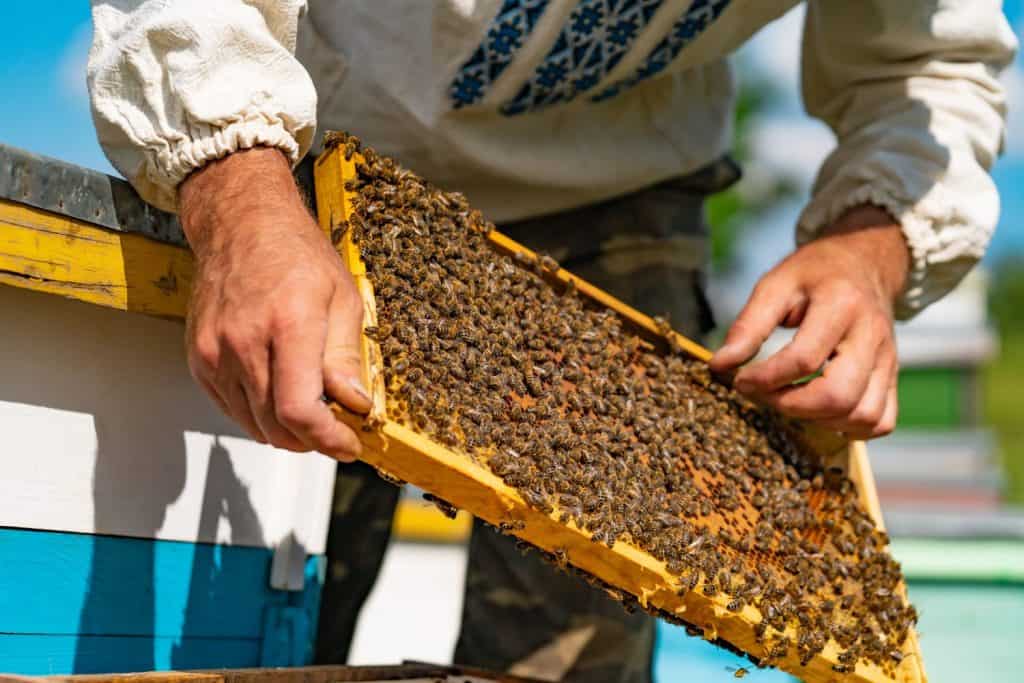
©Terelyuk/Shutterstock.com
The Ukrainian honey bee (Apis mellifera sossimai) is a subspecies native to central Ukraine and the foothills of the Caucasus. Beekeepers appreciate it for its calm nature, ability to handle the steppe climate, and steady production of honey and wax. These bees form strong colonies, resist common diseases, and only swarm moderately compared to other types. Thanks to this combination of hardiness and productivity, the Ukrainian honey bee is a preferred choice for beekeeping in its home region.
V – Vieiraella schrottkyi

Vieiraella schrottkyi is a little-known species from South America.
©jonathandav/Shutterstock.com
Vieiraella schrottkyi is a tiny stingless bee in the family Apidae and the only species in its genus. Found in South America, especially Brazil and nearby regions, these bees are just 3 mm long and have a matte, net-like body surface that makes them easy to recognize. Like other stingless bees, they live in colonies. Because they are small and inconspicuous, these are some of the least studied stingless bees in the region.
W – Wainia eremoplana
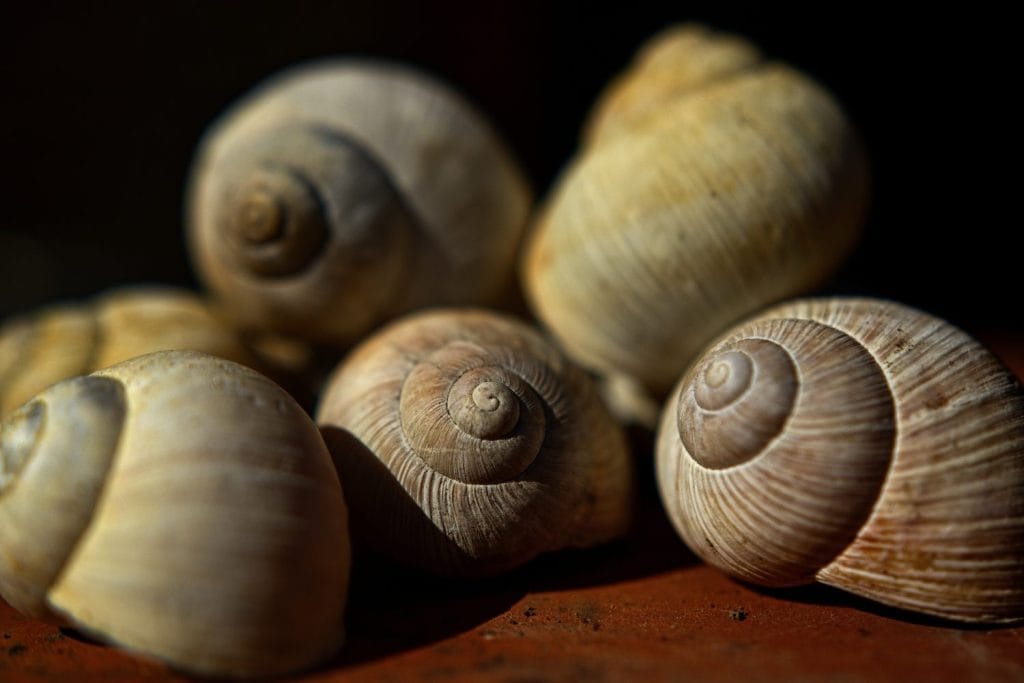
Wainia eremoplana lays its eggs inside empty snail shells.
©Michal Skotnica/Shutterstock.com
Wainia eremoplana is a type of solitary black bee found mostly in parts of southern Africa and the Middle East. Unlike honey bees that live in large colonies, this bee is unique because it uses empty snail shells as a safe place to make its nest. The female lines the inside of the shell with flower petals or grains of sand cemented together with plant resin, then lays her eggs inside and plugs the entrance with more petals and sand for protection. They are important pollinators but are rarely seen due to their unusual nesting habits and their ability to blend in with their surroundings.
X – Xylocopa violacea (Violet Carpenter Bee)
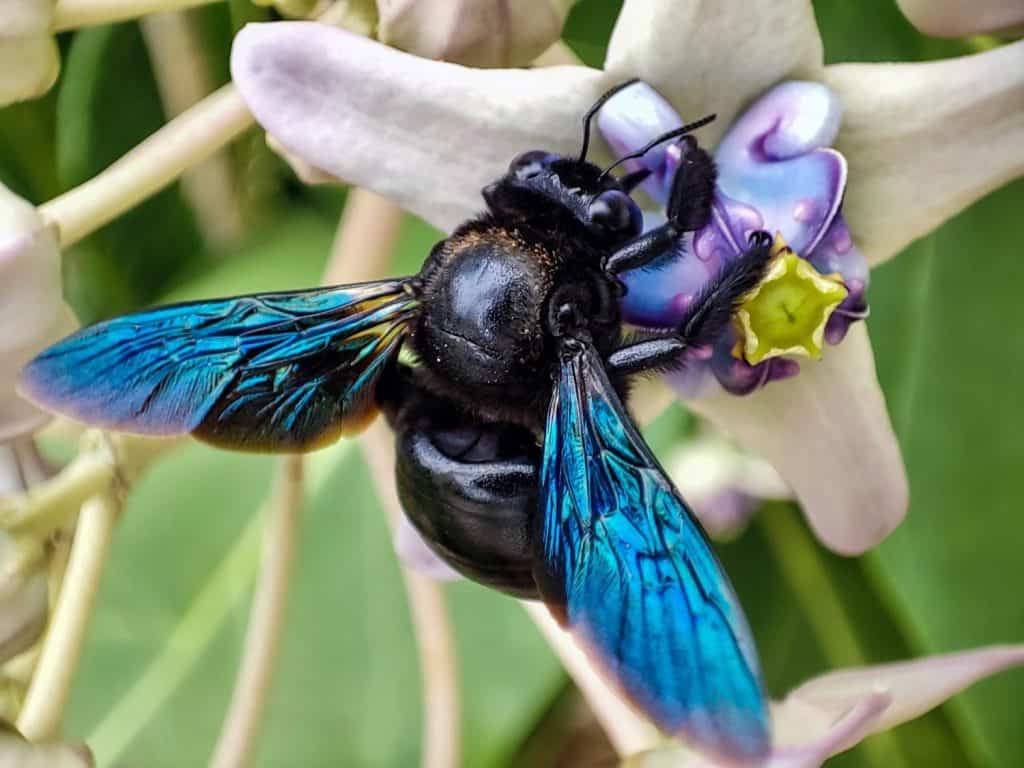
Violet carpenter bee (Xylocopa violacea) foraging on a flower. Selective focus. Blurry background
©Tanabora/Shutterstock.com
The violet carpenter bee (Xylocopa violacea) is one of the largest bees found in Europe. It’s quite beautiful, with its shiny black body and iridescent peacock blue wings. It doesn’t form colonies; instead, it lives as a solitary species. Females bore into dead wood, fence posts, or old timbers to create long tunnels where they lay their eggs, sealing each cell with a plug of chewed wood fibers. Despite their imposing size and loud buzz, these bees are gentle and rarely sting. They are important pollinators, visiting a wide range of flowers.
Y – Yellow-Faced Bumblebee (Bombus vosnesenskii)

Bombus vosnesenskii
©Ernie Cooper/Shutterstock.com
The yellow-faced bumblebee (Bombus vosnesenskii) is a well-known species native to the west coast of North America, from British Columbia down to Baja California. It has a mainly black, fuzzy body with a bright yellow face patch and a yellow band on the abdomen. They nest underground in abandoned rodent burrows or tucked into grassy clumps, forming colonies of only a few hundred. They are highly efficient pollinators and are especially valued in agriculture, where they’re prized for their skill at pollinating greenhouse tomatoes.
Z – Zacosmia maculata (Cuckoo Bee)
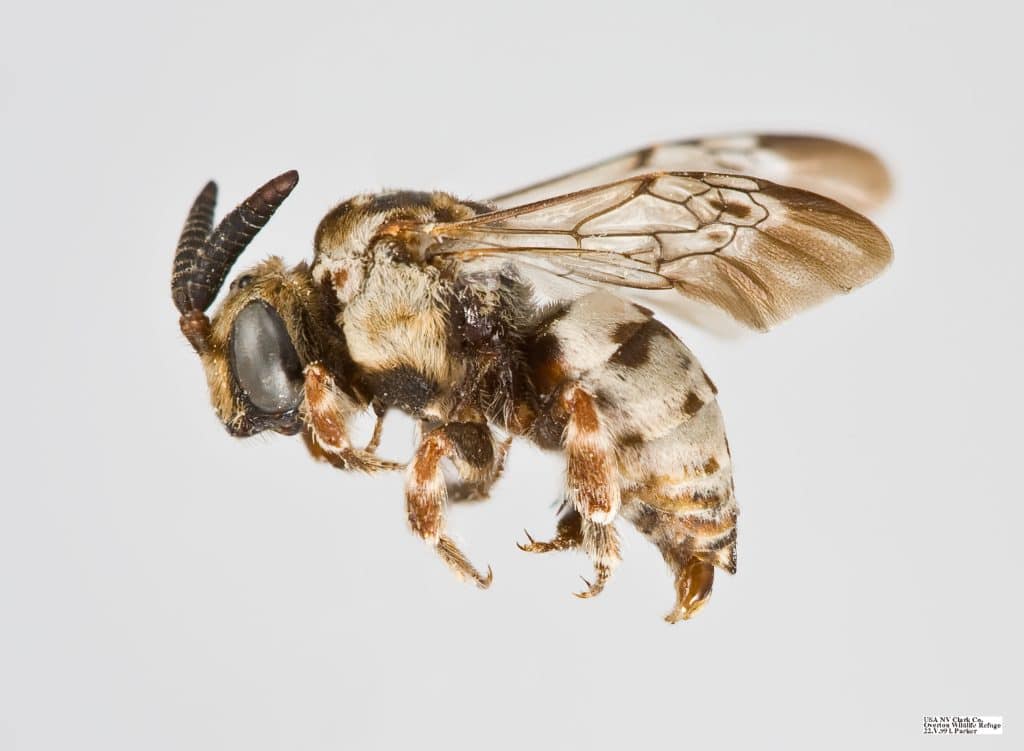
Zacosmia maculata
©The Packer Lab – Bee Tribes of the World – Original / License
Found in North America, Zacosmia maculata is a cuckoo bee that lays eggs in the nests of solitary species. Slender and dark with pale markings, it depends entirely on its hosts to rear offspring. Adults feed on nectar but take no pollen. They are elusive but have a role to play in their environmental niche.
A Vital Species

Bees play a vital role in your backyard garden.
©lyalya_go/Shutterstock.com
Bees show extraordinary variety, yet their numbers are falling. Habitat loss, pesticides, disease, and climate change have all contributed to declines in the United States and beyond. When bee populations shrink, pollination falters, threatening food crops and wild landscapes alike. Protecting them means planting native flowers, reducing chemical use, and preserving habitats. By doing so, we safeguard not only the bees but also the future of our food supply and the health of ecosystems that sustain us all.