
The change of seasons is a necessary part of ecosystem regulation. With the buzzing activities of humans and insects alike, winter gives us a chance to encourage a natural rhythm. As the first signs of frost begin, you might notice a decrease in insect activity. Insects and many other ectotherms rely on their environment to regulate their body temperature, as they cannot generate their own heat internally.
Because they are unable to produce their own heat, they rely on external sources like sunlight. With a drop in temperatures and the changing seasons, insects are typically unable to survive. However, some insects are exceptions. For example, honeybees can band together, forging a warm, vibrating cluster. This vibrating hum of heat enables the colony to survive winters. Solitary bees, however, typically do not survive the winter. If they do overwinter as adults, they can enter a state called diapause. During diapause, they slow down their metabolic activity and rely on food reserves gathered during the warmer months.
Coping with the Seasonal Shift
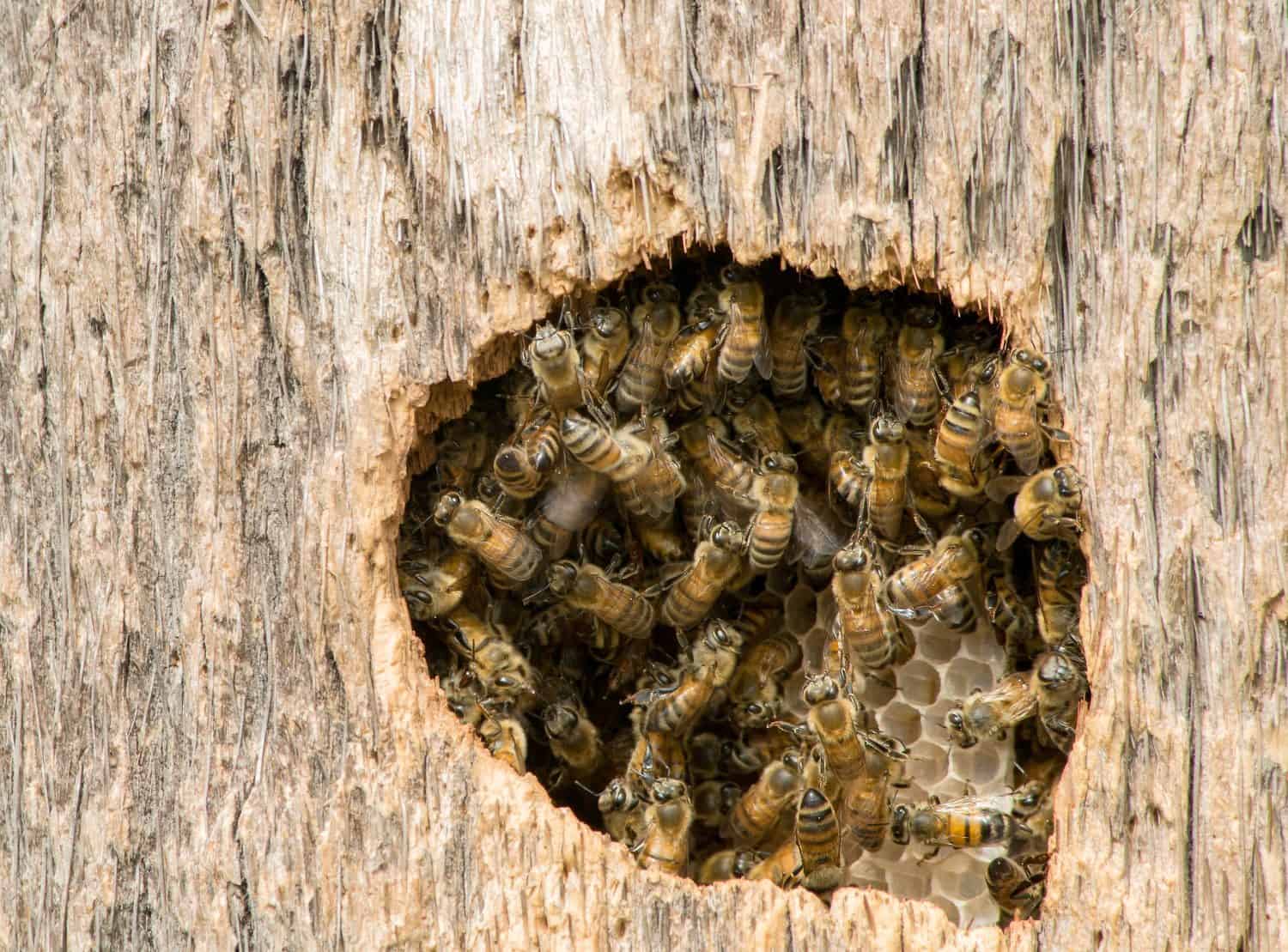
Diapausing is a form of biological dormancy used by many animals.
©Donna Bollenbach/Shutterstock.com
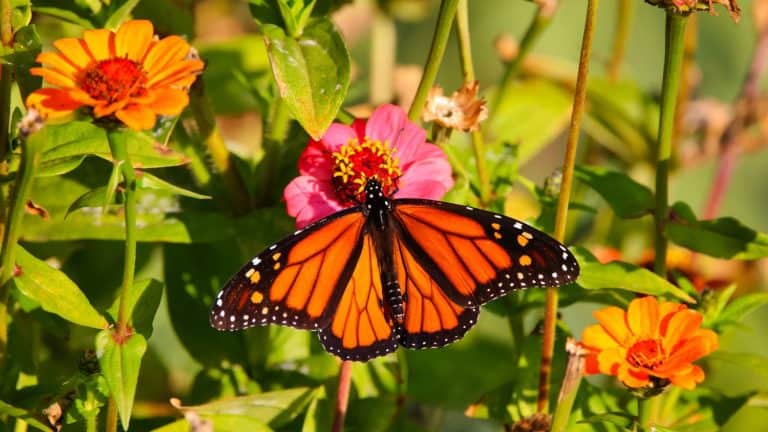
Some insects, like monarch butterflies, migrate to avoid the cold. Bees, however, are a different story. Bees usually do not migrate to another area to avoid freezing temperatures. Instead, they have developed a few habits and adaptations to help ensure their survival. Depending on the environmental conditions, these adaptations not only help to ensure their survival but also that of their future generations.
A major influence on how a bee will spend its winter is its sociality. Even though only approximately 9% of bees are social, this trait is a good indicator of their behavior in the winter. Sociality in bees can range from the complex hierarchies of honeybee hives (eusocial) to the more independent solitary bees. The key to being eusocial is having cooperative brood care with a division of labor and overlapping generations. Maybe think of this like the phrase “it takes a village to raise a child”, except in the villages of truly social bees, everyone has a specific job that is crucial to the survival of future generations.
Honeybee Dynamics
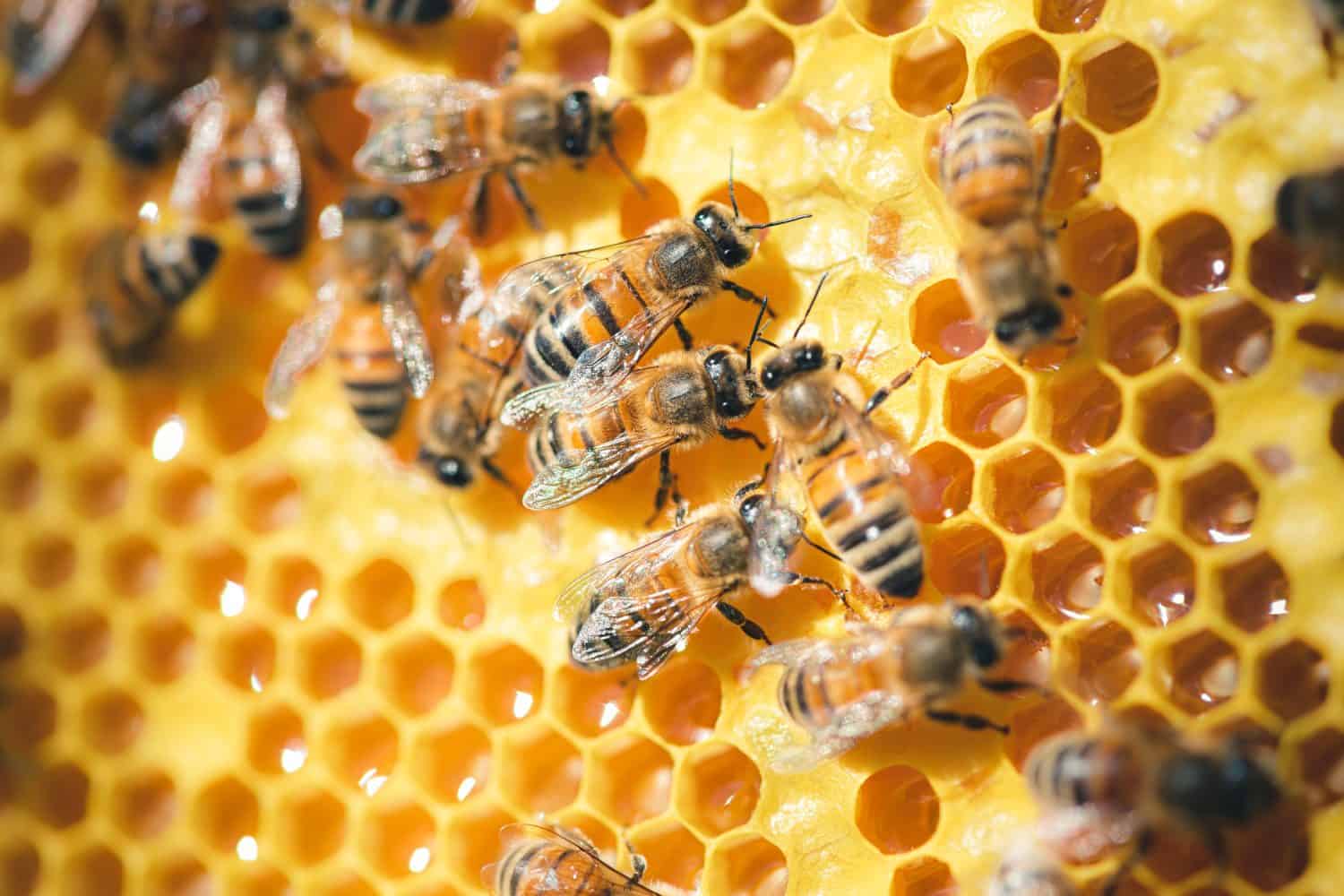
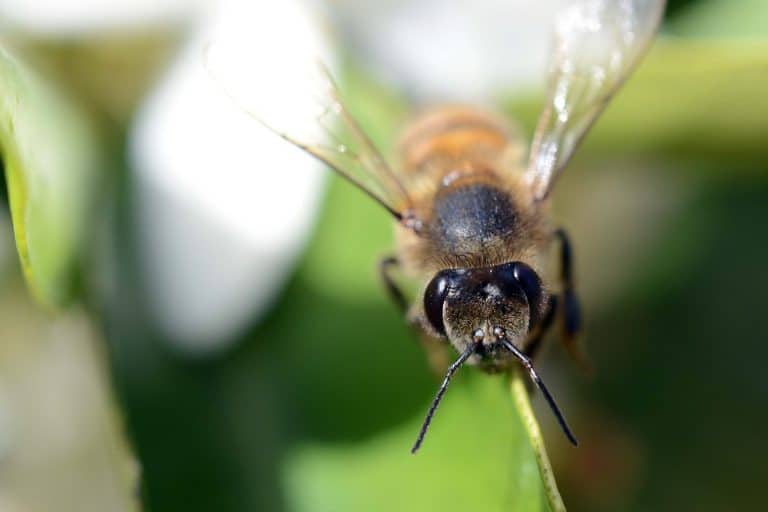
Honeybee hierarchies help keep the hive alive.
©Alexander Wallstrom/Shutterstock.com
When one thinks of a bee, typically the first bee that comes to mind is the honeybee. Honeybees might come to mind at first because of all the products that they provide us with. From honey to beeswax and even wine (mead), honeybees provide us with a multitude of goods. Not to mention, the honey industry rakes in over eight billion dollars a year (according to statistics in 2021).
Honeybees are not a native species. They were imported to North America in the early 17th century. Though they are not native, they are important to note due to their fascinating ability to maintain an entire hive throughout the winter. How, then, are honeybees able to maintain their warmth in the dead of winter? Since these bees, like many insects, do not have a heat source, they generate their own. To maintain the bustling activity of the hive, honey bees employ a unique set of muscles. Honey bees compact themselves and rapidly vibrate their flight muscles (without flying, of course).
Honeybees have a unique ability to switch between being ectothermic and endothermic. This means they can go from using the environment to control their heat to generating their own. This unique phenomenon is why honeybees are referred to as heterotherms. The workers that stay inside the hive during winter typically remain ectothermic, relying on the warmth of the hive. Honeybees that exit the hive are usually endotherms, generating heat for flight and thermoregulation of the hive.
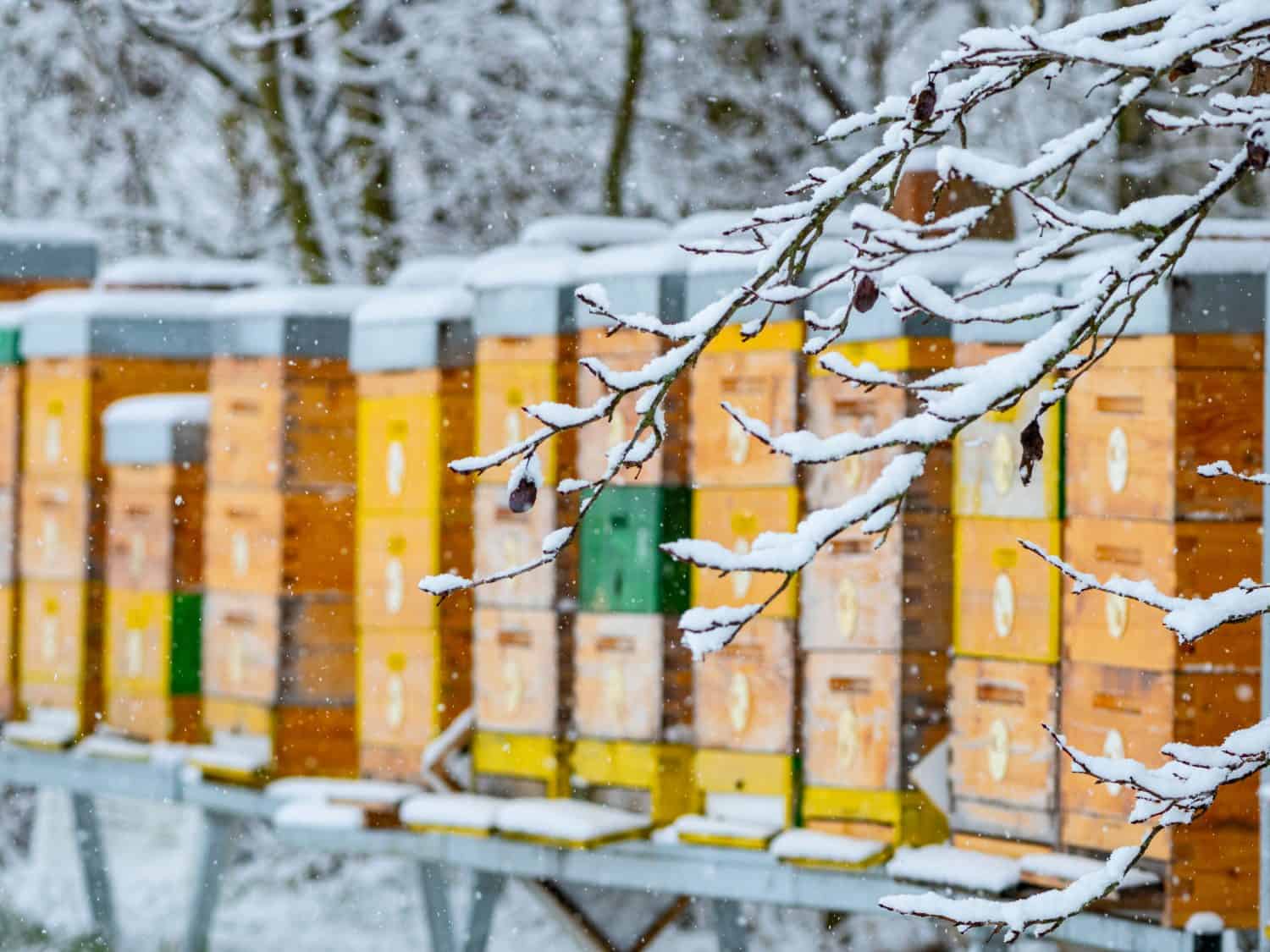
The goals of the hive during winter are to regulate hive heat and keep the queen alive. Bees winterize the hive by sealing any cracks and crevices that might let heat escape. The sealant used to secure the hive is called propolis. Propolis is a mixture of plant sap, saliva, and beeswax that creates a resinous substance. The process of maintaining hive heat can be compared to a rotating ball, with bees continuously moving from the colder outer layer to the warmer inner core. They continuously rotate themselves, shifting the colder outer layer to an inner warmer core.
These eusocial arthropods function as a “superorganism”, creating an environment similar to that of a single animal, working in unison to maintain hive health and heat. Before winter comes, honeybees work to ensure the longevity of their hive by bringing in resources like nectar, pollen, resin, and even water. During deep winter, bees rely on moisture and condensation inside the hive for their water needs, as they are generally unable to leave and forage for water. On days when they do take a risky trip out of the hive, it is usually for cleansing flights. Bee cleansing flights maintain hive health by relieving themselves outside of the hive. These crucial cleansing flights reduce contamination of the hive, which could otherwise lead to disease. In addition, the propolis used to help seal the hive acts as an antimicrobial barrier for further protection against pathogens.
More than Honey: Solitary Bees
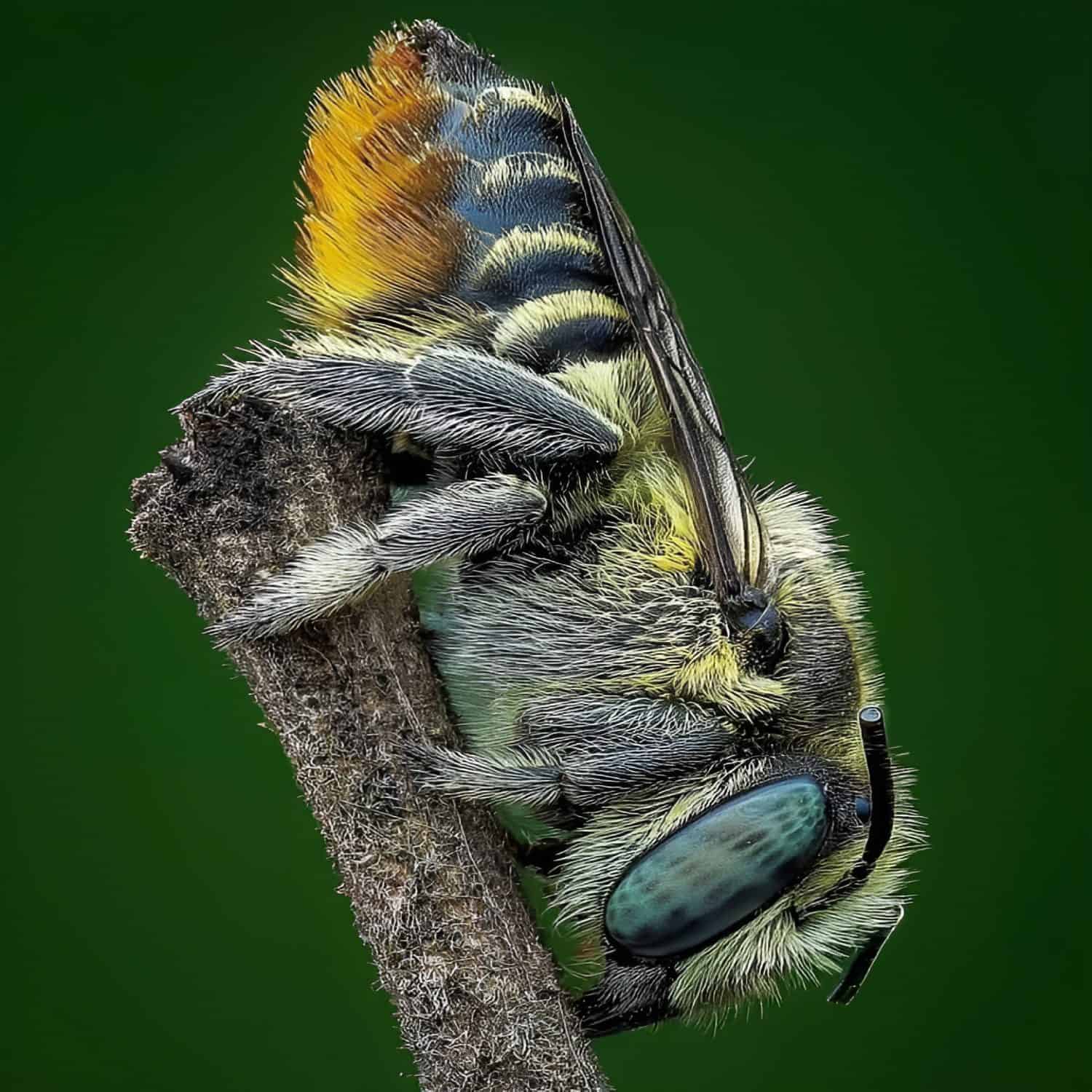
Solitary bees do not serve a queen or make honey.
©Hendra_Saputra_88/Shutterstock.com
Though honeybees might be the ‘model’ bee that comes to mind, they are not the only bees that survive the winter (and they are not even native species). I might be a bit biased, as solitary bees are what I am currently studying, but they are definitely the coolest bees. In fact, most bees are not eusocial; a majority of bees are solitary species (more than 75%). For solitary bees, life is a little different. And as my advisor likes to put it, in solitary bee species, “All bees are queens”.
Depending on the species, females function as engineers, constructing nests out of materials like leaves (as in the alfalfa leaf cutter bee) or by burrowing into the ground. Since solitary bees make up the majority of bee species, there is a wider range of survival strategies among them. Solitary bees like carpenter bees and leafcutter bees must pause their activity and adapt to the cold. Usually, the adults do not survive the winter; instead, their efforts are focused on ensuring the survival of the next generation. What selfless creatures.
Some bees can overwinter or hibernate in the larval stage. Overwintering in solitary bees can involve surviving as adults through the winter (like certain mason bees), or as larvae or pupae (as in leafcutter bees). Specifically, in leafcutter bees, they can enter a state referred to as diapause or nondiapause. Diapause is a genetically and hormonally regulated state of development that facilitates overwintering. In this ‘pre-pupal’ stage (in leaf-cutter bees), they remain relatively dormant until the conditions are more favorable (or when it warms up).
In some female solitary bee species, their offspring are provided with ‘bee-bread’. Bee bread is a mixture of nectar and pollen placed with the egg and then sealed within the nest to provide food for the developing larva. As the female solitary bee completes her journey, her larvae are the ones who continue her genetics. When the new adult bees emerge, they chew their way out of their cocoons and surface to begin the life cycle anew.
From Colony to Queen
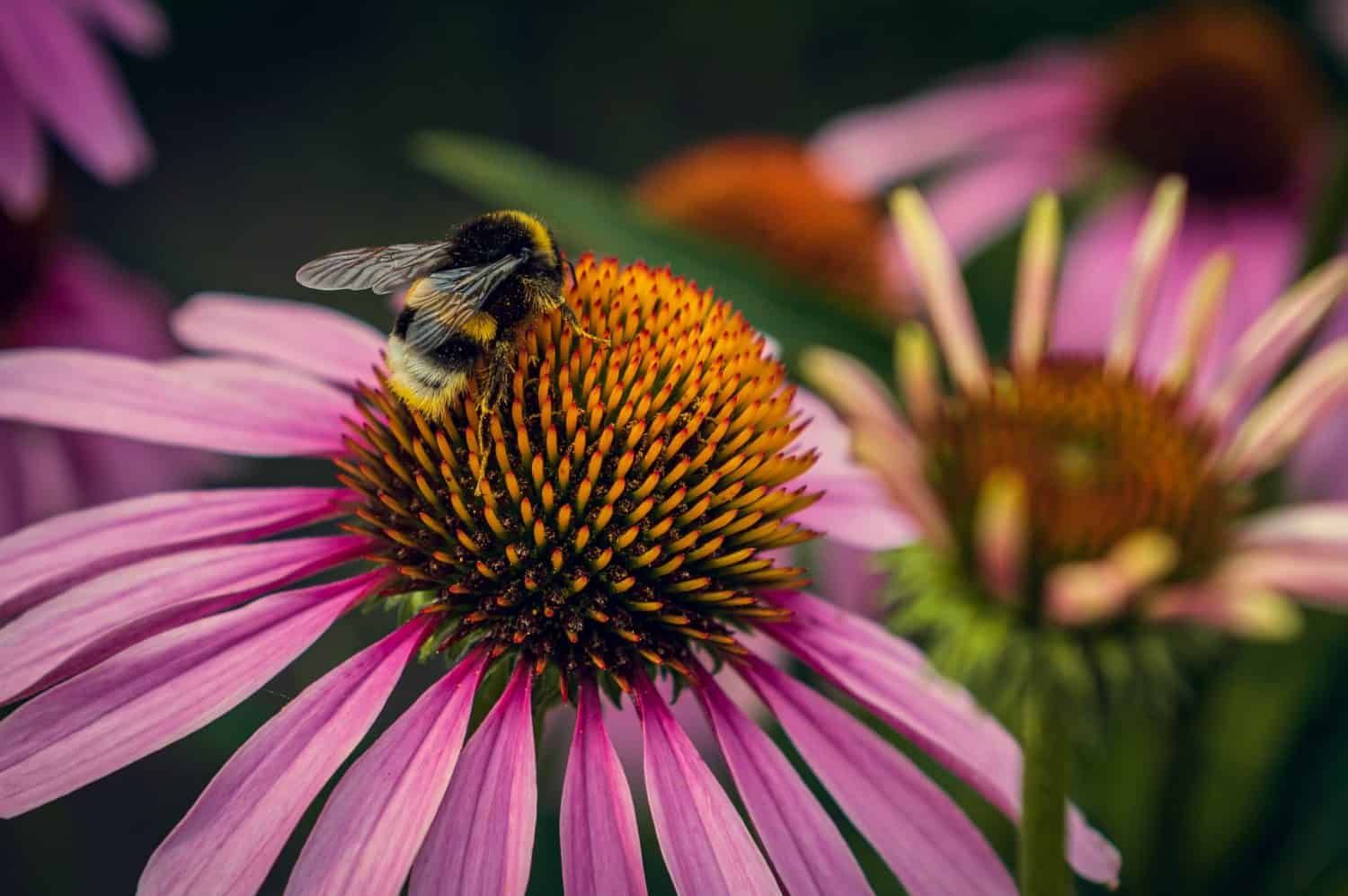
Bumblebees are another form of eusocial bees, referred to as primitively eusocial.
©DiKareva Vika/Shutterstock.com
There are many different social forms for bees. So far, we have discussed eusocial and solitary bees. Another fan favorite, the bumblebee, survives the winter similarly to solitary bees but maintains a colony like social bees. Primitively social bees are those that go through a period when the queen is typically alone. This also occurs in many sweat bees and even some carpenter bee species.
Throughout the summer, the queen works with her colony to focus on its development as a whole. When the seasons begin to change, however, different members of the hive begin to die off. During the winter, the lone survivor among bumbles is the newly mated queen. She survives the winter by overwintering. Overwintering varies among species; for bumblebees, the queen often burrows into leaf litter or rotting logs to keep warm during the winter.
Since the queen is also ectothermic and usually relies on help from the colony to keep warm, she slows down her metabolism and lives off stored body fat collected during the warmer months. A bumblebee queen’s overwintering phase is crucial to the success of her future colony. If she survives the winter, as spring emerges, so does the queen. She then begins feeding on nectar and searching for a new nesting place to start a colony.
Beeing Brave in the Cold
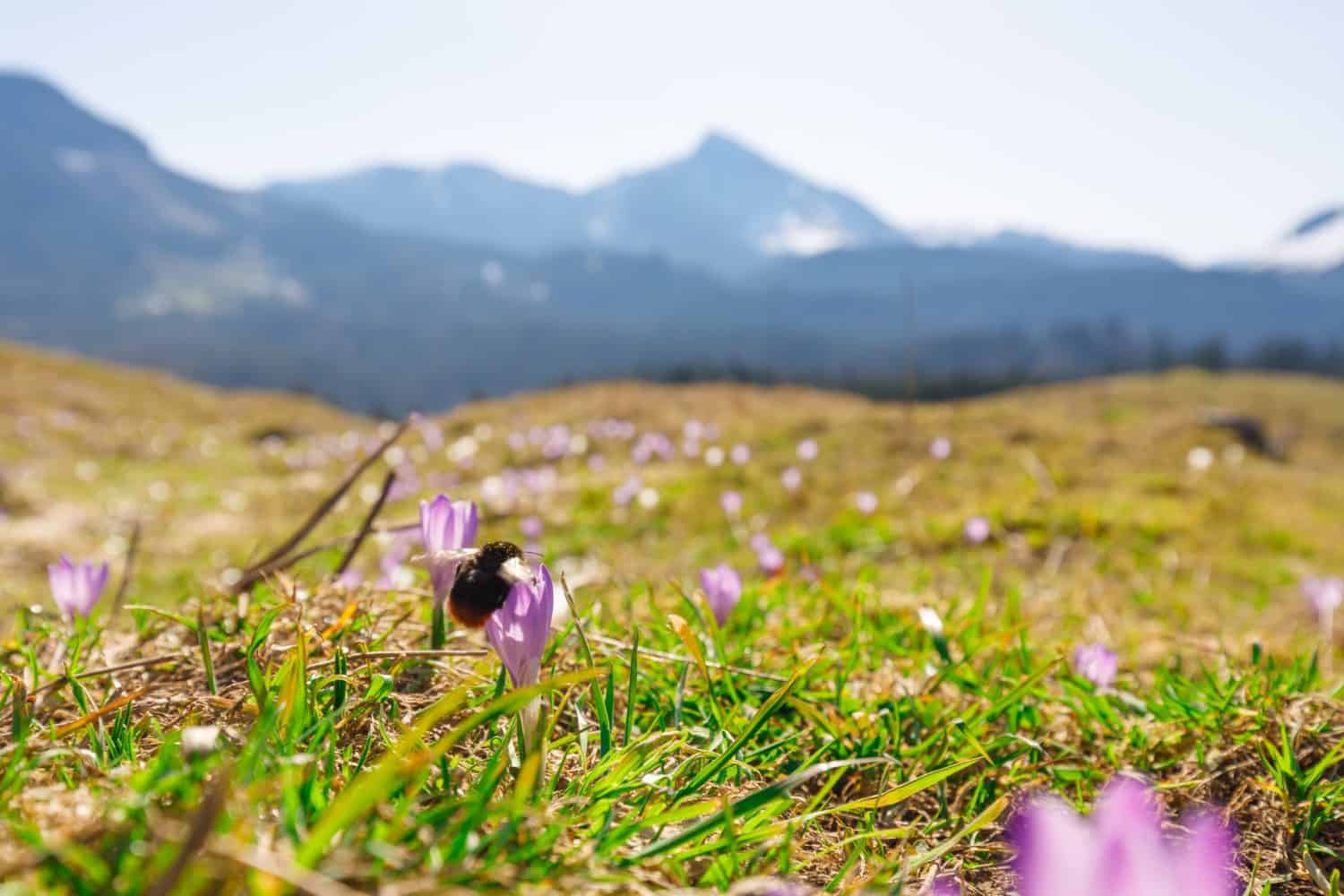
Research suggests that social bees have better learning capabilities than solitary bees.
©Jochen Netzker/Shutterstock.com
As we start transitioning from t-shirts to sweaters and gloves, think about the bees who put on a protective suit of stored fat to protect themselves for the winter. Though some bees do not survive, their persistence in gathering provisions for the next generation is a unique and crucial part of their life cycle. And if you happen to find a bee overwintering, I hope you can admire this necessary process that enables their future generations to buzz again.