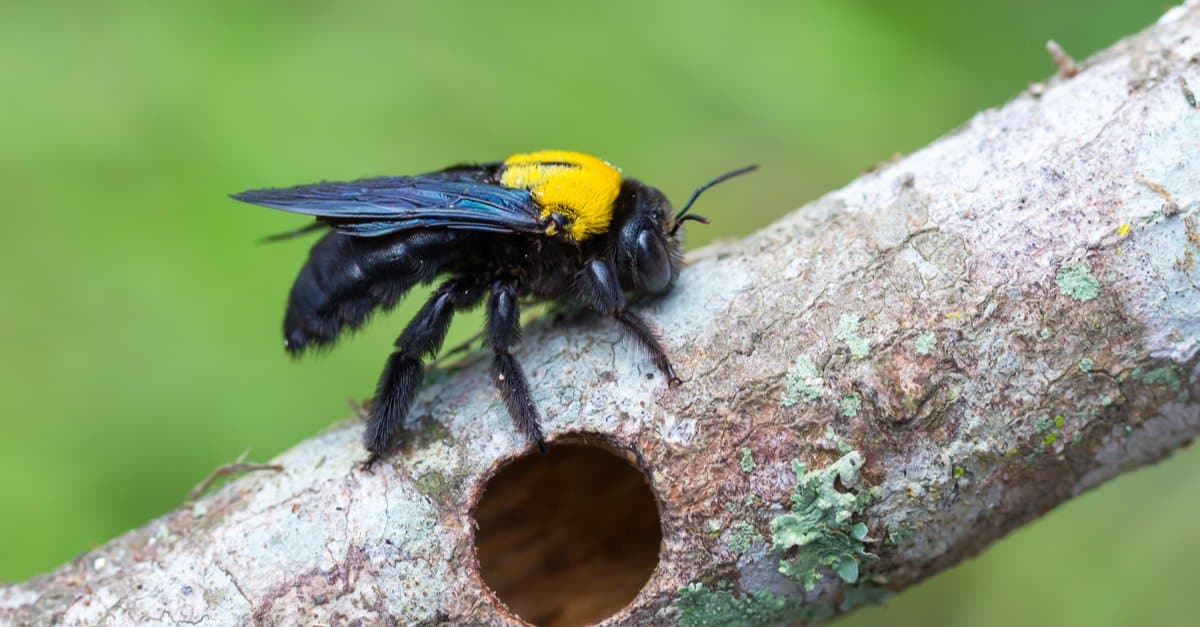

Quick Take
- Carpenter bees do not eat wood. They excavate tunnels to nest.
- They prefer softer, aged, untreated wood. Harder woods deter nesting.
- Carpenter bees are pollinators that aid plant and flower ecosystems.
Bees are fantastic pollinators. Without them, ecosystems would not thrive. Unfortunately, over the last 15 years, there has been a significant decline in both bee colonies and individual bees due to climate change, habitat loss, pesticides, and similar factors. This has left conservationists sounding the alarm to save bees before it is too late.
However, one bee species, although a pollinator, is rather destructive. The carpenter bee bores holes into wood structures. But do carpenter bees eat the wood? The answer to what they actually consume and why it matters may be surprising.
Carpenter Bees Do Not Eat Wood
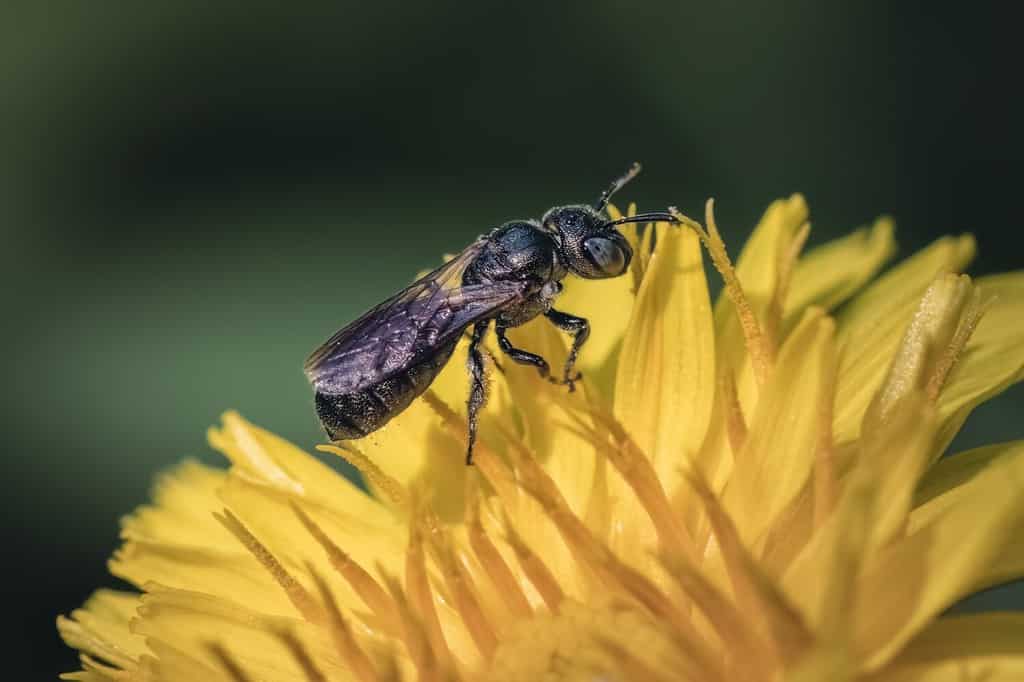
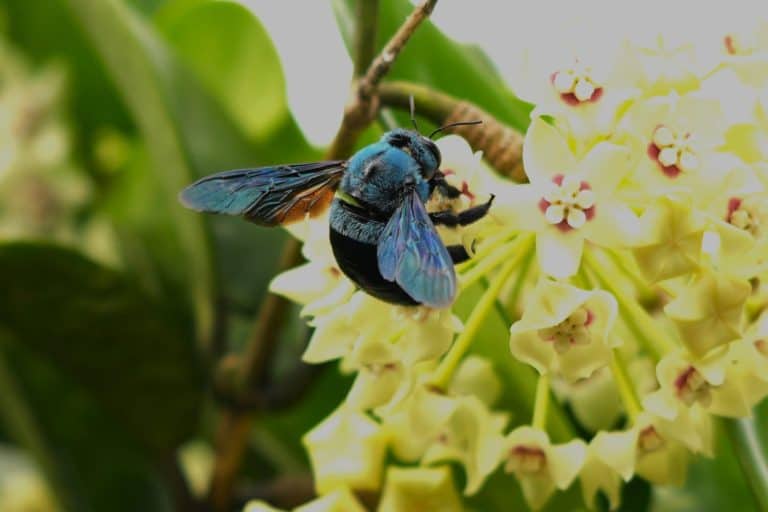
Carpenter bees do not eat wood, but nectar and pollen instead.
©Victoria Virgona/Shutterstock.com
Carpenter bees can be easily identified by their signature yellow and black banding. Much like bumblebees, carpenter bees are relatively large. However, unlike other large bee species, carpenter bees have a shiny abdomen rather than a fuzzy one.
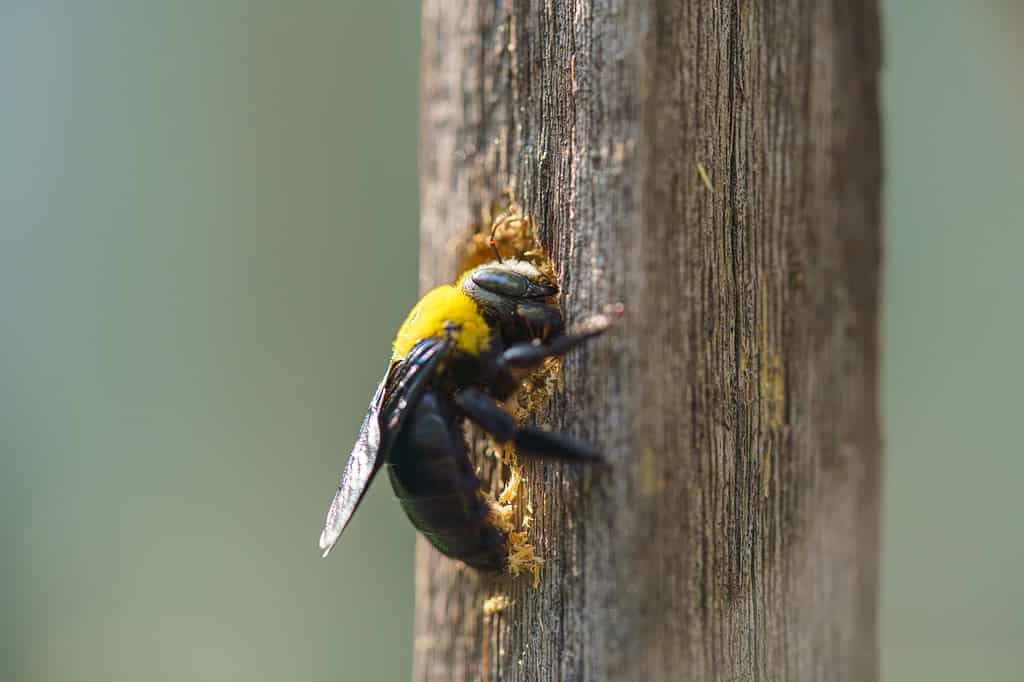
These formidable bees got their name because they make holes in wood. Unlike termites, which make holes in wood as they eat it, carpenter bees do not eat wood. Instead, as they make tunnels in wooden structures or healthy trees, the carpenter bees excavate the wood. The wood is left in piles below the tunnels, serving as evidence of their construction or destruction efforts, depending on one’s perspective.
Like other bees, carpenter bees eat nectar and pollen. Some of their favorite flowers to visit for sustenance include:
- Morning Glory
- Wisteria
- Tomato flower blossoms
- Lavender
- Citrus tree flower blossoms
- Sunflowers
This is important because carpenter bees, while destructive to wood and trees, are part of the pollination process that helps plants and flowers not only survive but thrive. They are a necessary component of ecosystem health in the habitats in which they live. If carpenter bees eat nectar and pollen, why do they create tunnels? The answer is a simple one: carpenter bees need a place to live.
Why Do Carpenter Bees Make Tunnels?
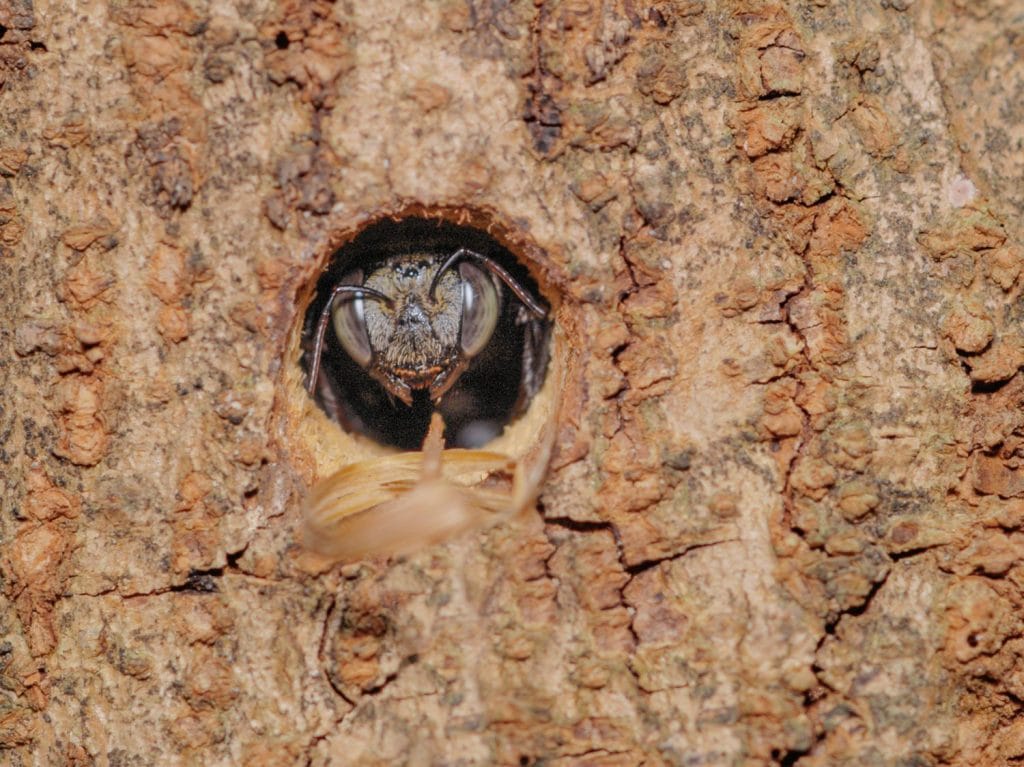
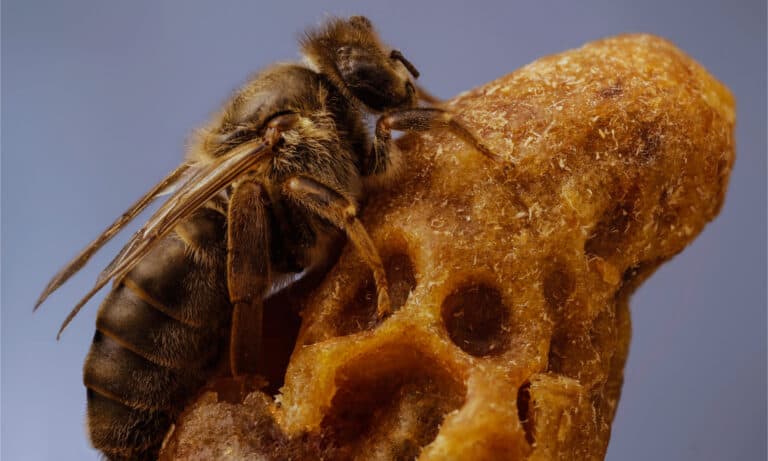
Carpenter bees tunnel to make homes.
©Yuttana Joe/Shutterstock.com
Carpenter bees are not social bees. Therefore, they do not build and sustain hives. Instead, carpenter bees excavate wood structures and trees to create tunnels for not only a place to hibernate but also to lay eggs.
The majority of a carpenter bee’s life is spent in hibernation or in the larval stage. Female carpenter bees typically do not live longer than two winters. However, during that time, they can lay eggs multiple times. The eggs will hatch three to six days after being laid. Larvae hatch from the eggs and are dependent on the mother bee for nutrition to survive. In six to eight weeks, the larvae develop into adult carpenter bees.
The excavated tunnels, which can be up to 10 feet long, are the carpenter bees’ home as they hibernate during the cooler months. In the spring and summer, when the bees are most active, those that survived the winter will use their tunnels again to lay eggs. Younger carpenter bees will tunnel into another wooden structure or tree to lay eggs of their own.
Do Carpenter Bees Have a Favorite Wood to Nest In?

Carpenter bees enjoy tunneling into softer woods like pine, cedar, redwood, cypress, and fir.
©Yuttana Joe/Shutterstock.com
Carpenter bees will not nest in just any type of tree or wooden structure. These bees are very particular about the wood they use when creating their tunnels. Unfortunately, many of these preferred woods are commonly used by homeowners to build outdoor structures or parts of their homes, leading to potential structural issues. The favorite types of wood carpenter bees are drawn to include:
- Pine
- Cedar
- Redwood
- Cypress
- Fir
In addition, carpenter bees look for wood that is somewhat aged, making it easier to bore into, as well as untreated wood. Fortunately, for those living in areas where carpenter bees are common, there are types of wood that can be used to deter the bees from tunneling.
Wood That Deters Carpenter Bees
Carpenter bees will not tunnel into harder woods like oak, cherry, and hickory.
©media-ja/Shutterstock.com
While softer wood can be easier and, in some cases, more cost-effective to build with, these types of wood invite carpenter bees to tunnel. Therefore, if carpenter bees have caused structural damage in the past or are common in the local ecosystem, choosing harder woods is the best way to prevent them from excavating.
The best woods to deter carpenter bees from making a long-term home include:
- Oak
- Cherry
- Hickory
If these types of wood are unavailable or too costly, treating wood can also be effective as a carpenter bee deterrent. The more difficult it is for a carpenter bee to tunnel, the more likely it is to leave the wood alone.
Are Carpenter Bees As Destructive As Termites?
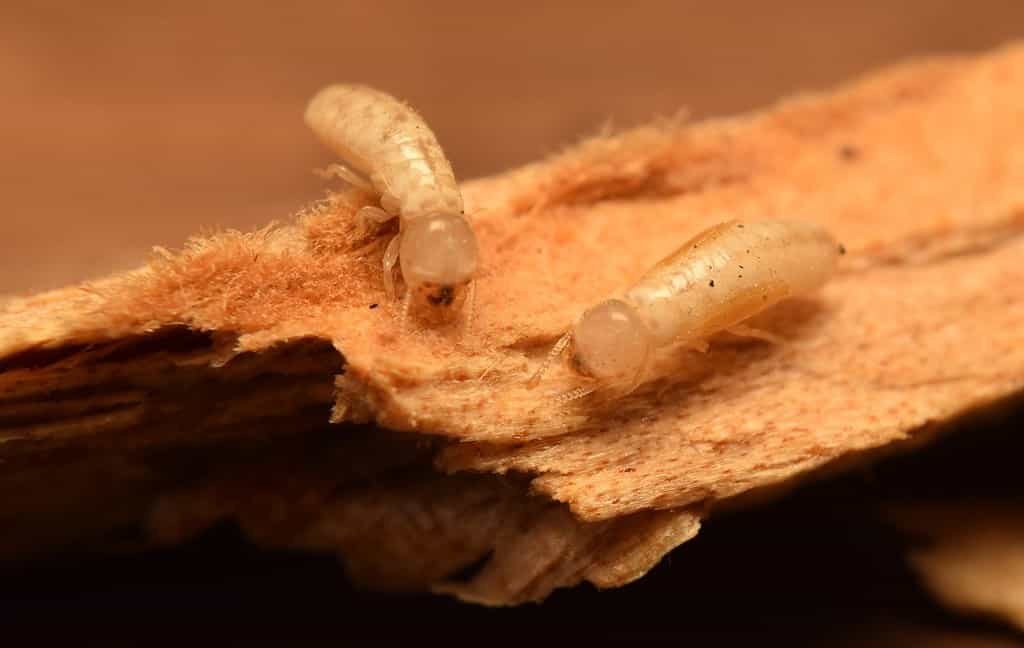
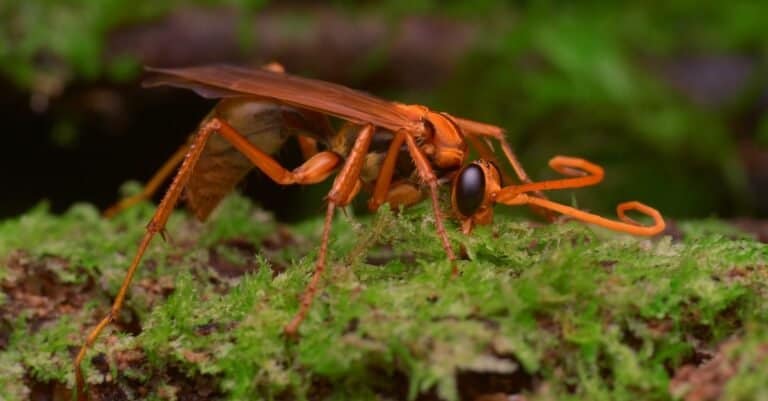
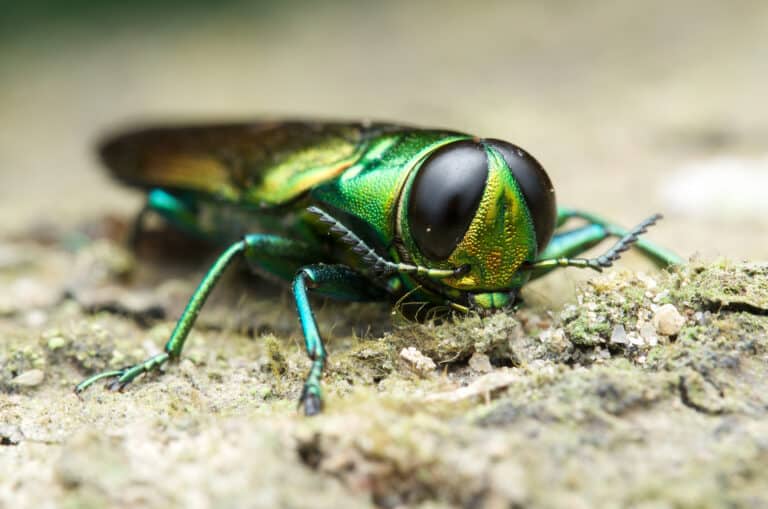
Termites are more destructive than carpenter bees.
©gunawand3570/Shutterstock.com
Because carpenter bees create tunnels in structures, structural damage will occur where the bees make their home. But are these insects as destructive as termites? Unlike carpenter bees, termites eat the wood they burrow into. Instead of making tunnels, termites create honeycomb-like structures as they destroy wood. As this happens and termites eat the wood structure from the inside out, the structure continues to weaken. Consequently, depending on the type of termite infestation, destruction of a structure can happen in a very short time.
Conversely, carpenter bees build their tunnel and continue to use it until they die. However, they will not reuse a tunnel that is already built. This means that regions where carpenter bees are present often have multiple tunnels in a single structure. Over time, this can cause substantial damage if not addressed. While both carpenter bees and termites cause structural damage, termites are considered more destructive because of how quickly they can devour wood.
How to Rid a Home of Carpenter Bees
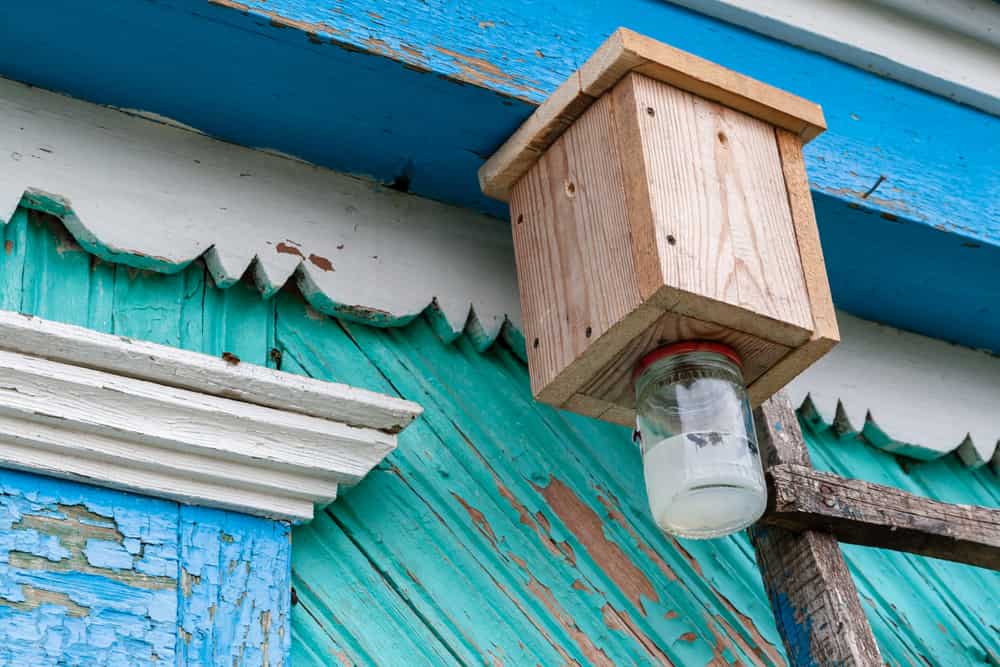
If non-lethal methods do not work to deter carpenter bees, things like bee traps can be used to rid a home of carpenter bees.
©Bragapictures/Shutterstock.com
Given the decline in bee populations worldwide, most people do not feel good about killing bees. However, when carpenter bees cause costly structural damage, sometimes eliminating the problem is necessary. Before calling an exterminator to eradicate the carpenter bee population, there are some methods worth trying to deter the carpenter bees from tunneling and encourage them to go elsewhere. To deter rather than kill carpenter bees, successful methods include:
- Spraying the hole with soapy water
- Surround the hole and introduce citrus essential oils into the tunnel
- Place heavy wind chimes near the tunnel to create vibrations that carpenter bees do not like
- After the bees have left the tunnel, seal it up to prevent them from coming back
- Seal all soft, outdoor wood to keep future carpenter bees from tunneling
- Call a professional to relocate the bee population
Unfortunately, if carpenter bees cannot be stopped using any of these homeowner methods, calling an exterminator is the next step. After professionals have addressed the problem, prevent future tunneling by sealing any holes, treating wood, and making the environment uninviting for carpenter bees.