
The bee world is full of social dynamics that would put even the most dramatic socialite circle to shame. There are queens, and workers, and drones, and even dilettantes. Allegiances shift and roles reverse. That buzzing block in your backyard may look like a noisy patch of chaos, but there are incredibly complex and nuanced social dynamics in a beehive.
To the naked eye, most bees look the same. The social dynamics of bee species, however, can differ widely from each other. Some bees, like orchard mason bees, live pretty solitary lives. Others, like well-known honey bees, are incredibly social and forge strong bonds with each other. In between these two polar extremes of the bee sociality spectrum are several types of social buzzes. Eusociality is the keyword, as it denotes the highest level of social organization. Let’s learn all about the social dynamics of bees, their roles within the hive, and more.
Division of Labor
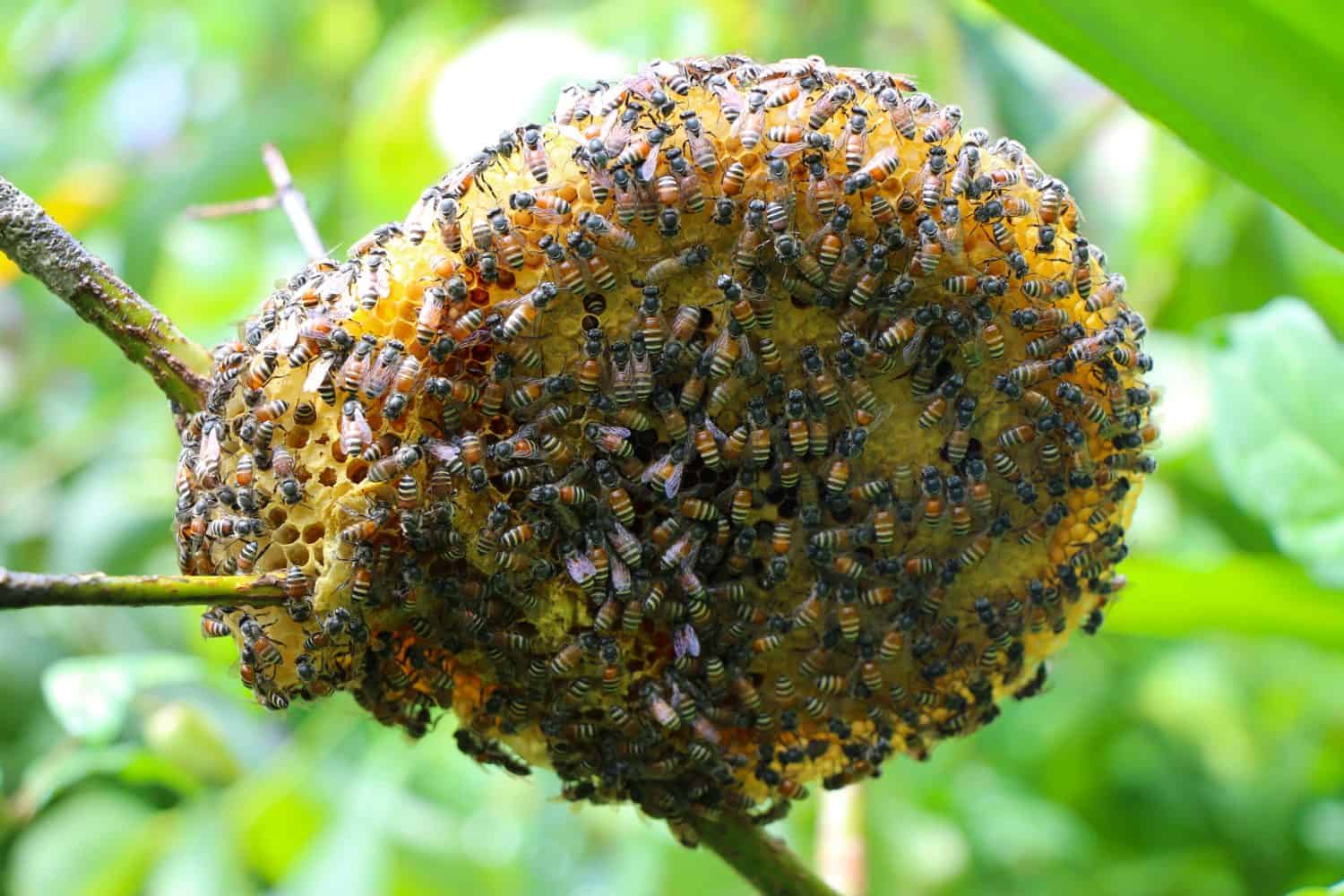
Eusocial bee hives feature bees in several distinct roles with clear divisions of labor.
©Lakshan LG/Shutterstock.com
There are several clear roles taken by bees in eusocial hives. These include queens, workers, and drones. Each role is incredibly important to maintaining the health and vitality of the hive. Each job is highly specialized and requires complex communication systems to keep things chugging. It should be noted, however, that these roles are only strict in eusocial hives. The other types of bee social dynamics are more fluid, with bees taking on multiple roles and responsibilities.
Queen
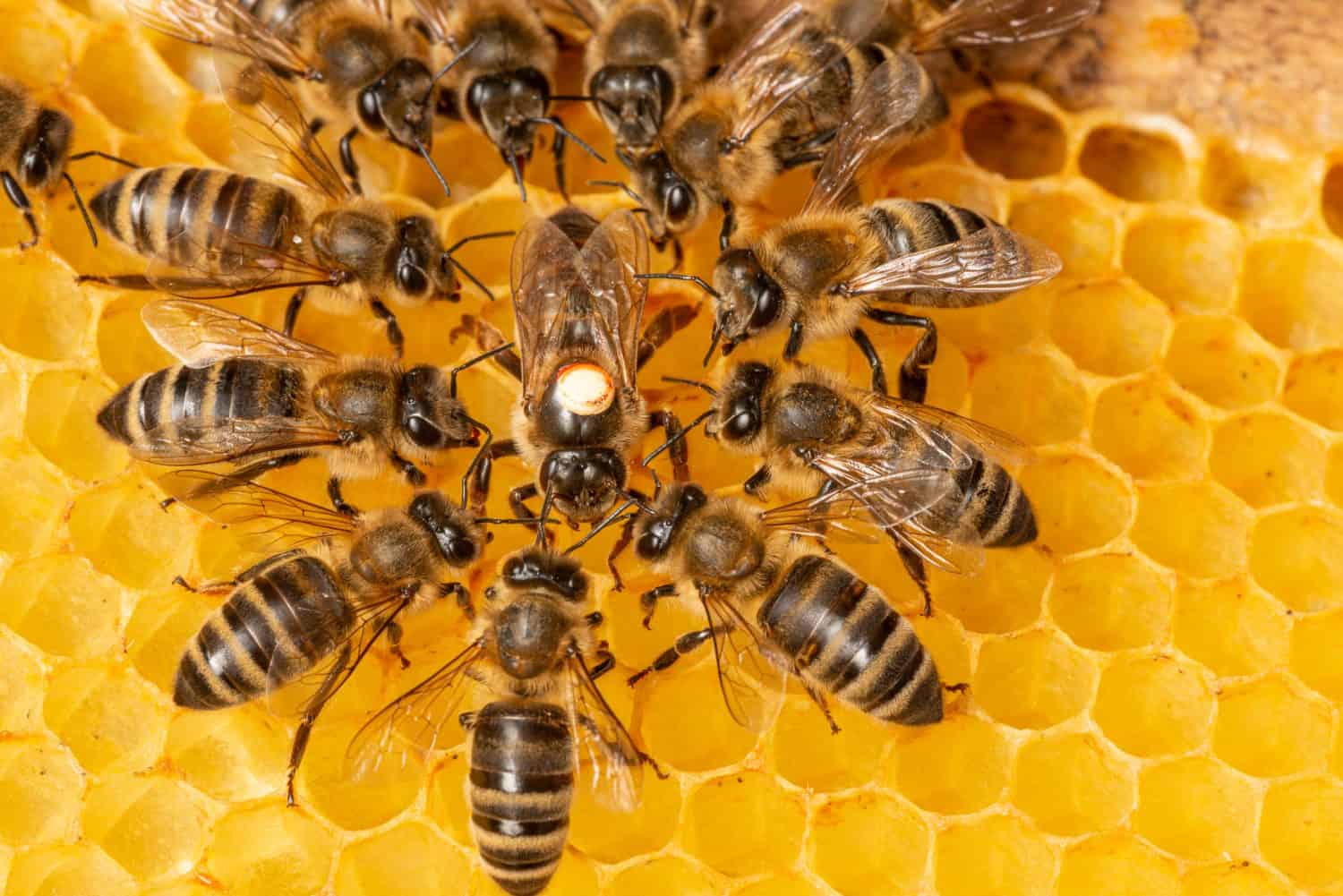
Queens lay all the eggs and maintain social structure through pheromone production.
©Kuttelvaserova Stuchelova/Shutterstock.com
No matter how you analyze her, the queen is the living heart of the hive. She’s responsible for all reproduction, laying thousands of eggs throughout her life. As a leader, she maintains the hive’s hierarchy through complex pheromone signals. These signals not only maintain the responsiveness of her workers, and uphold the rule of social law; they also suppress any other females from competing reproductively. There is only one queen per hive, and she typically lives between one and three years, though some may live up to five years in rare cases.
Worker
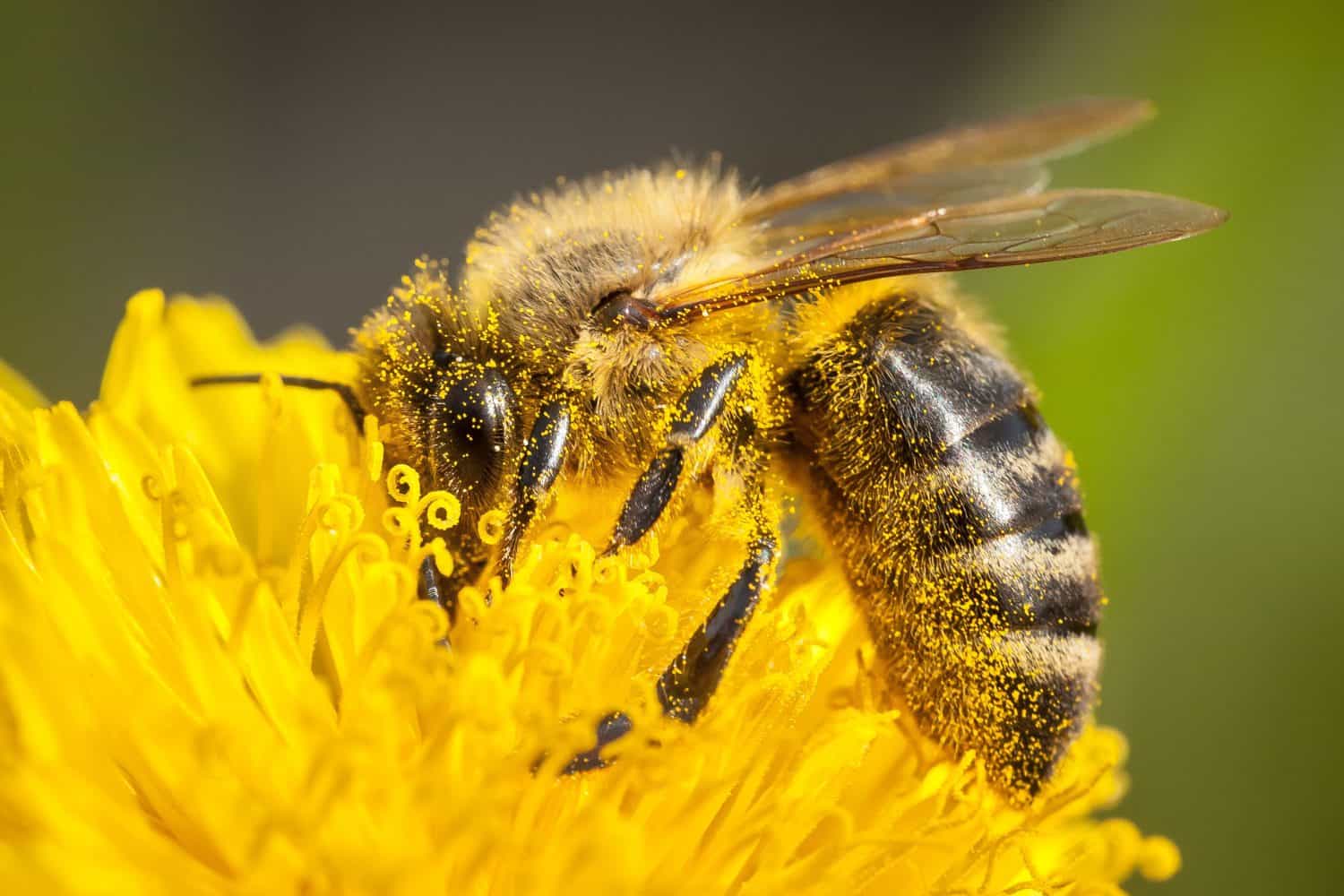
Worker bees do everything from finding food to raising larvae and keeping the hive clean.
©Lima_84/Shutterstock.com
Suffice it to say that worker bees have the hardest jobs. They take care of every duty in hives besides reproduction. Not only do they venture out each day to acquire nectar and pollen, but they also feed bee larvae, guard the hive, and keep the whole structure clean. Their exact role can depend on age; younger workers care for the larvae while older ones do the food foraging.
They can also be direct reproductive competition for queens, as seen in more solitary bee dynamics. Workers make up the majority of the hive, with their population ranging between 10,000 and 60,000 depending on the season and hive health. They live between six weeks and six months.
Drone
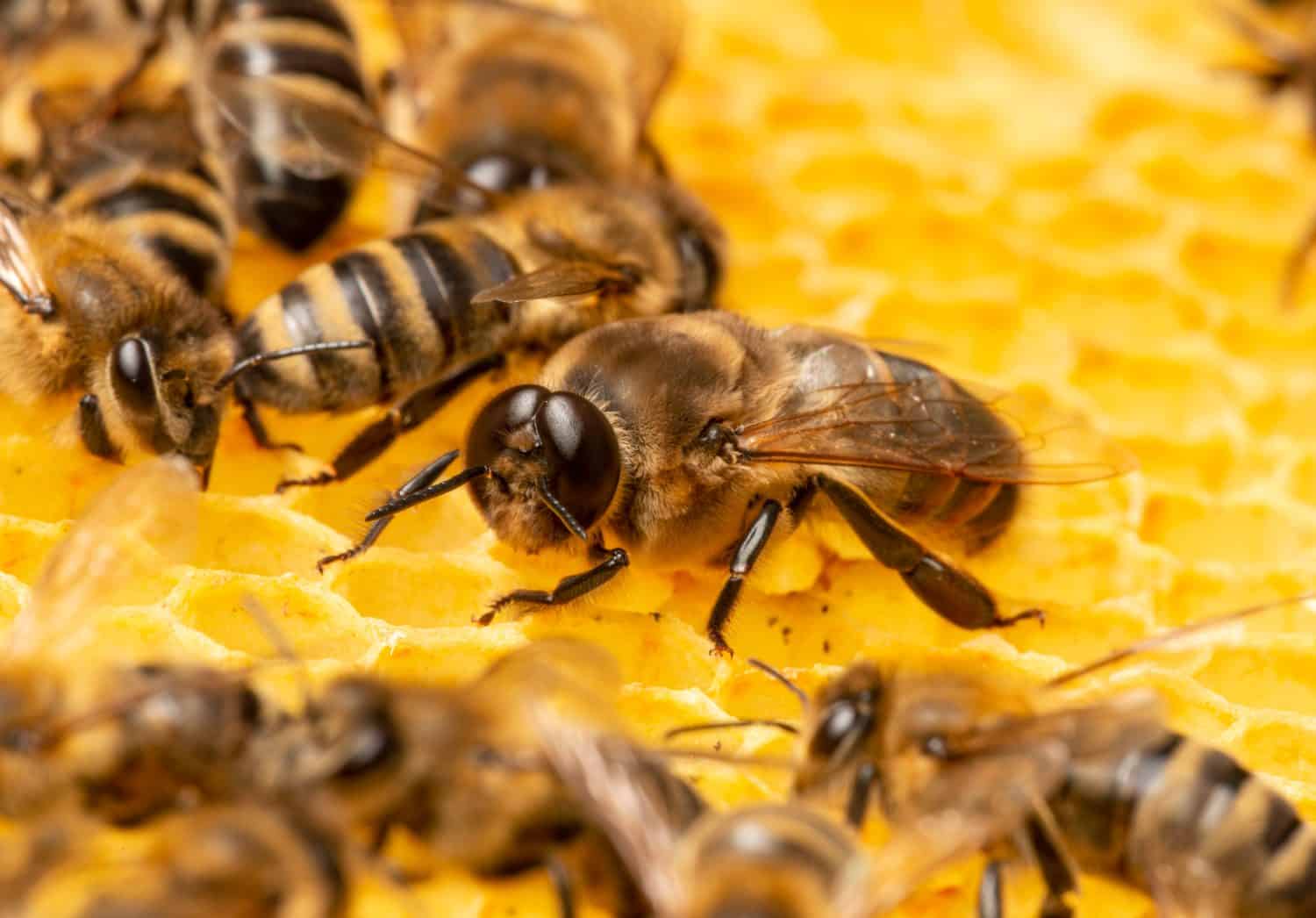
Drones don’t do much besides mate, but new research suggests they undergo periods of hyperactivity.
©Kuttelvaserova Stuchelova/Shutterstock.com
It’s easy to see that drones have the easiest job in the hive. As male bees, they really exist only to mate with the queens from other colonies. They don’t help with food, defense, or brood care. As such, their shelf lives in hives are short-lived; workers only put up with them during mating season before expelling them before wintertime. New research, however, suggests that drones undergo hyperactive periods. There are between 200 and 2,000 drones in a hive, depending on the season (summer is the busiest). They typically live for bout four to six weeks.
Bee Spectrum Breakdown
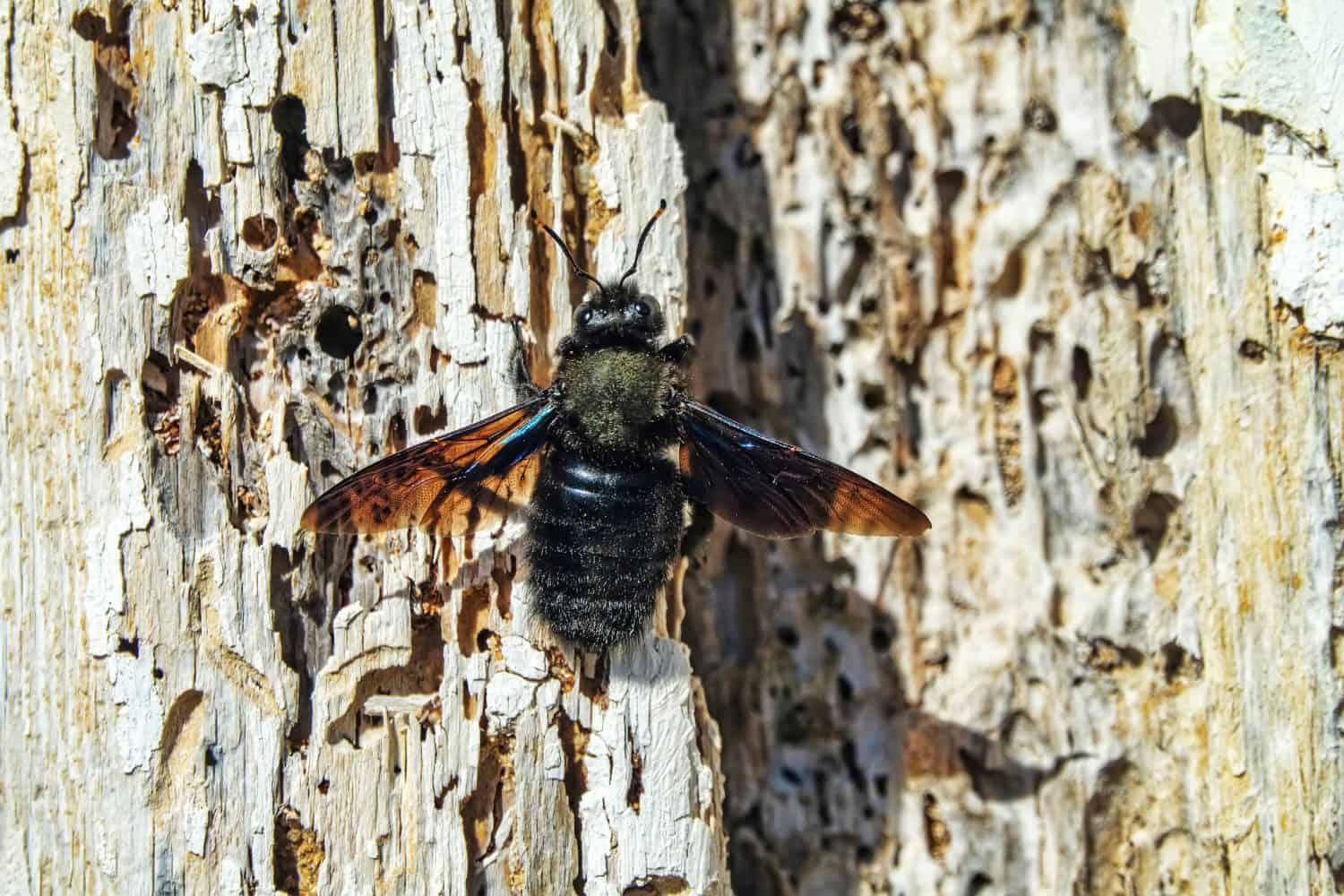
Bee social dynamics are fluid, ranging from highly social to solitary.
©Maximillian cabinet/Shutterstock.com
We all know and love honeybees, and in turn, probably know a bit about their complicated hive social structure. It should be noted, however, that honeybees are some of the most social bees out there. There are plenty of other species on the sociality spectrum. Understanding these variations provides a better sense of bee behavioral dynamics because each stop along the spectrum introduces different roles. Some are highly specialized, as in eusocial honeybees. On the other hand, solitary bees are more like jacks of all trades.
Eusocial
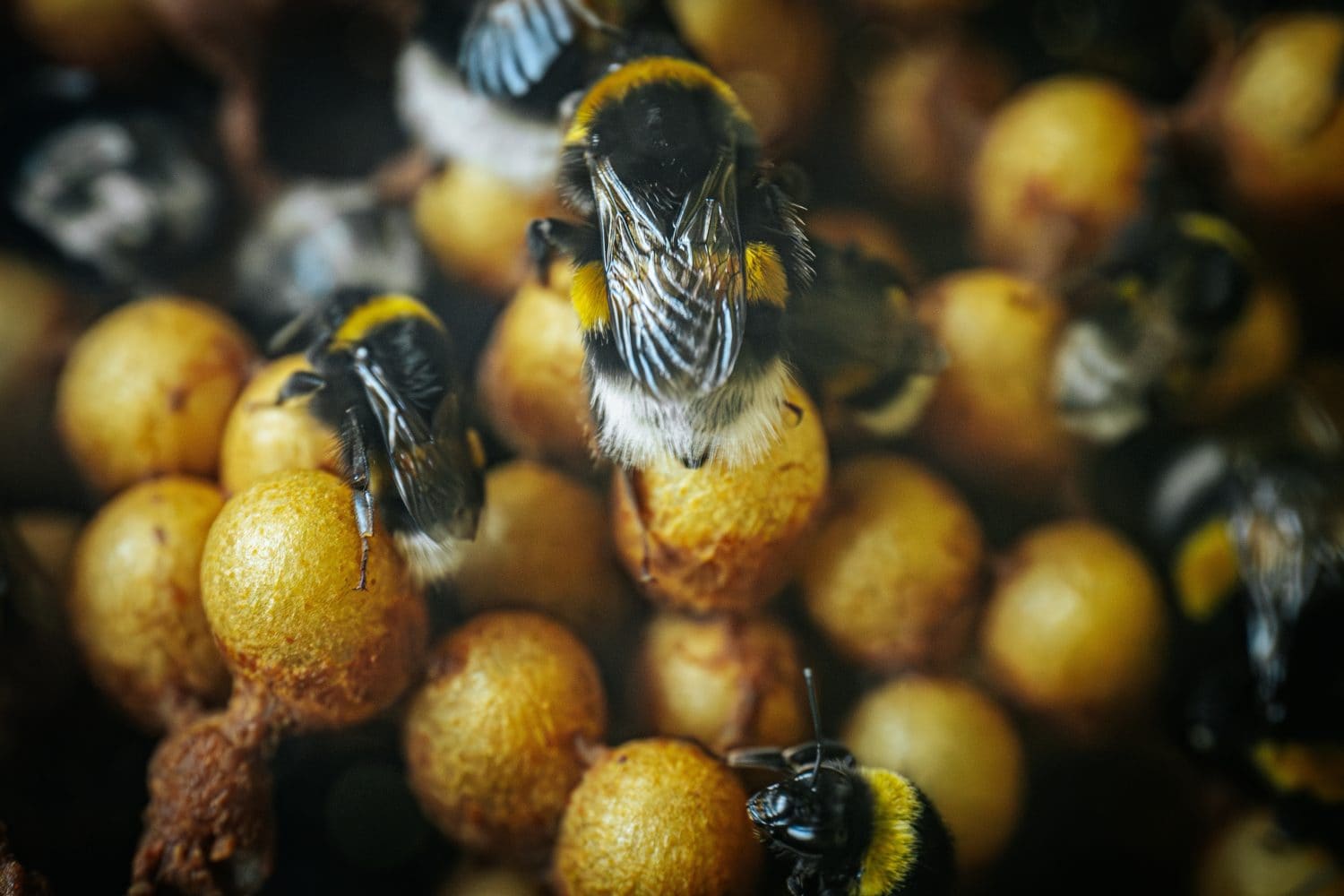
Being primitively eusocial, bumblebees take on several roles within their hives.
©Emvat Mosakovskis/Shutterstock.com
There are two basic types of eusocial bees: highly eusocial and primitively eusocial. Highly eusocial bees like honeybees or stingless bees (meliponines) thrive in complicated, but clear social structures. Their hives have defined roles starting with a single queen. As you move down the hierarchy, there are (sometimes) sterile female workers and reproductive males.
There are also strict and delineated divisions of labor. The responsibilities for food foraging, defense, and offspring nurturing fall on certain shoulders. Maintaining this social structure requires complicated communication systems in the form of pheromone signaling, movement (waggle-dancing), and more.
Primitively, Eusocial bees are similar but a little more loose when it comes to jobs. For primitively eusocial bees like bumblebees, hives feature a single, ambitious queen and a group of workers. The workers help raise young, but the division of labor ends there because they can also reproduce. Plus, these primitively eusocial hives are usually seasonal.
Subsocial and Semisocial
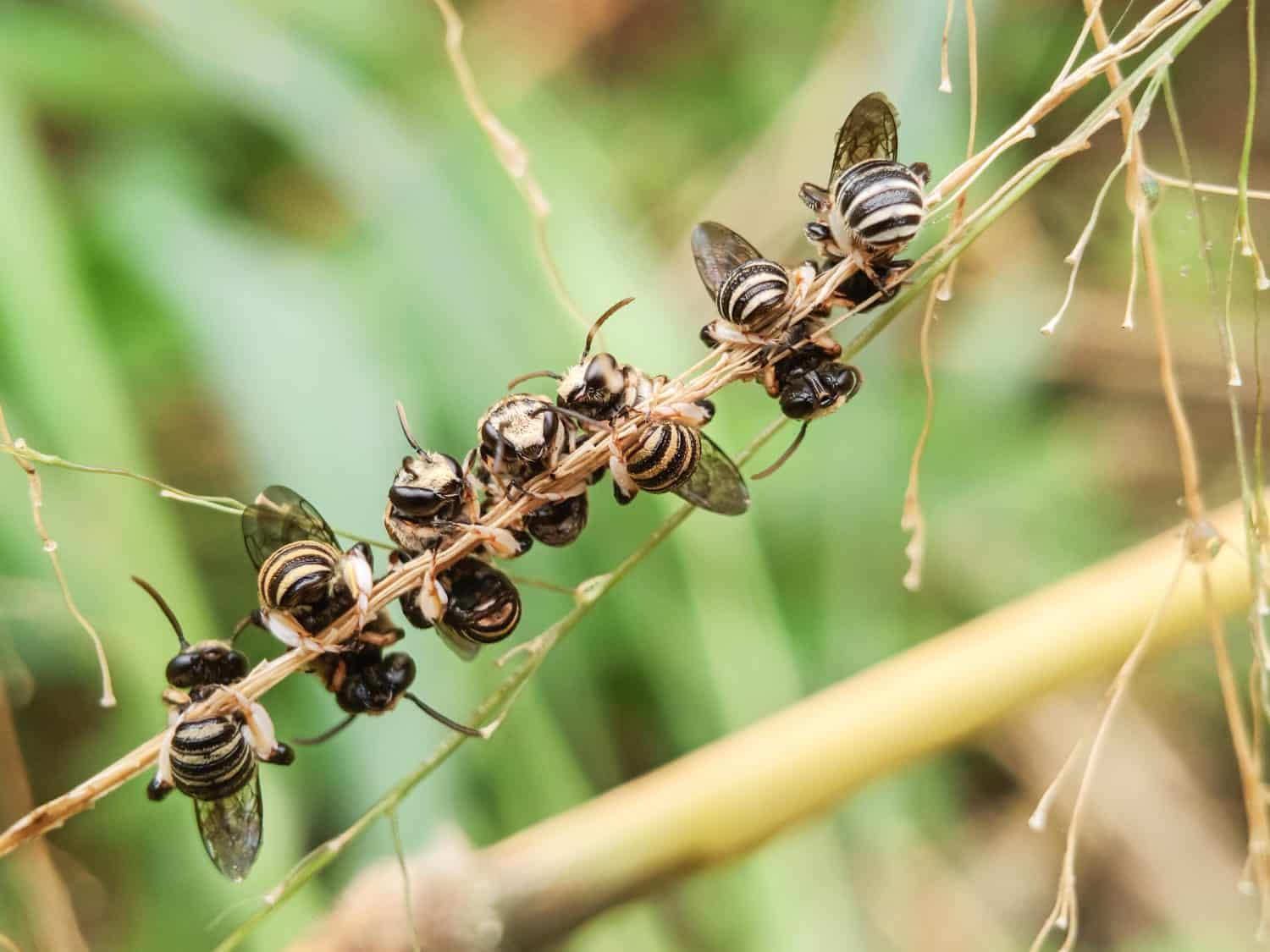
Female sweat bees share nests and help with offspring nurturing, but are all capable of reproduction.
©Muhammad Rinto/Shutterstock.com
To make things more complicated, there are subsocial and semicocial structures. Subsocial bees don’t have clear roles, as queens give birth to female young and nurture them before the females venture out on their own to build hives. They are technically closer to eusocial bees because more than one generation lives in a nest at a time, even if temporarily. Some types of small Australian carpenter bees fit this description.
Semisocial bees are one step lower on the social structure ladder and can be found among some members of the second largest family of bees, Halictidae (sweat bees), though many Halictidae are solitary or eusocial. These bees cooperate with each other, but only to a certain extent. For example, some female sweat bees share nests and even help each other with offspring nurturing. The delegation of duty ends there, however, as all female sweat bees can reproduce. Semisocial bees do not require strict divisions of labor to thrive.
Quasisocial
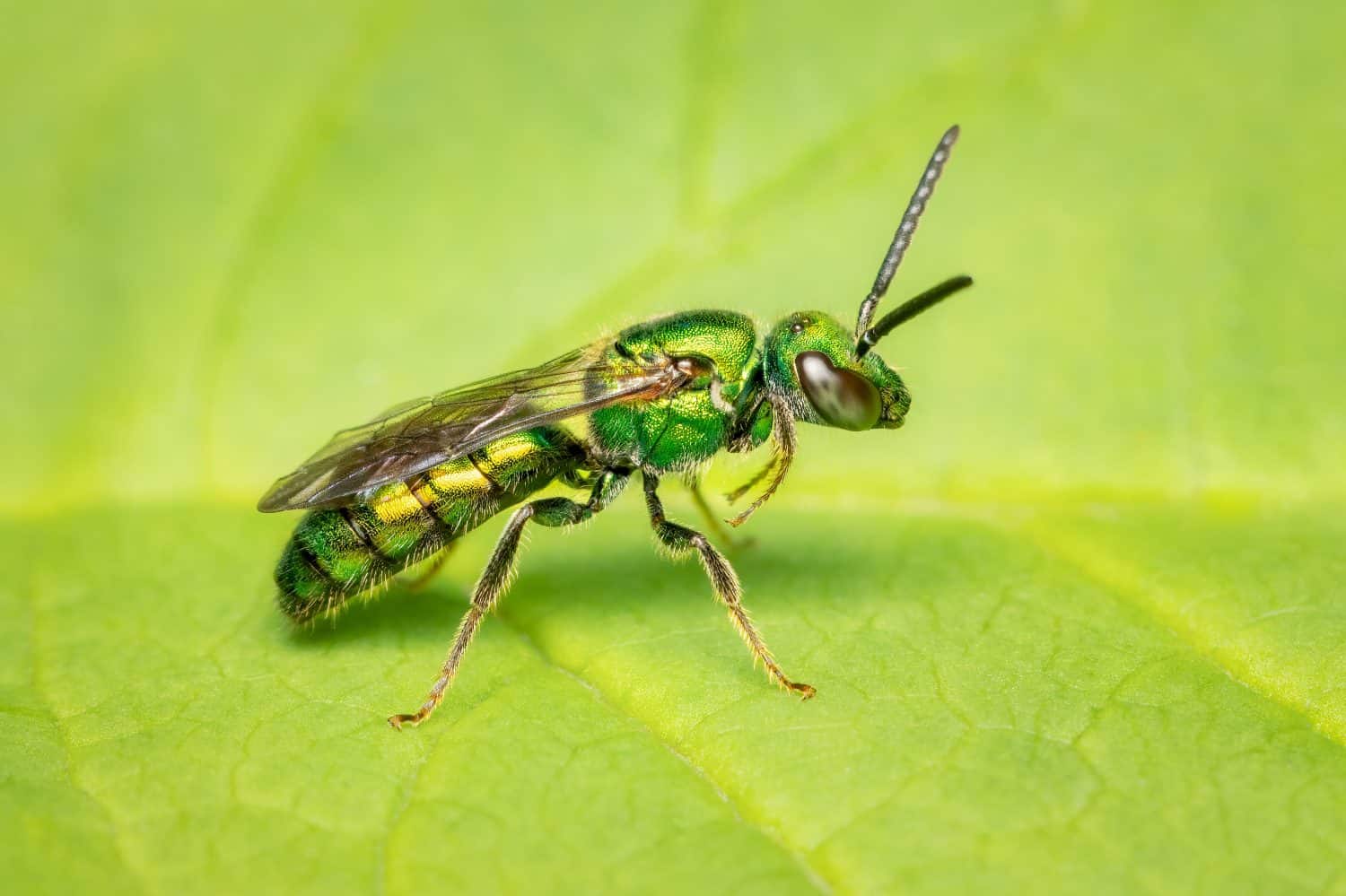
Golden Green Sweat Bees are known to live under temporary quasisocial arrangements.
©Luc Pouliot/Shutterstock.com
Quasisocial, though not a hard and fast type of social structure, deserves a mention. Unlike say, eusociality, quasisociality is a temporary state of things in a hive. It’s sort of like a house filled with latchkey kids. This temporary state describes a nest where there is no mother bee to speak of, only female children left behind with a healthy supply of food. This brood of sisters or half-sisters shares the nest for a while, until one of them dominates the rest. The leading female will remake the nest in her image, repair brood cells, and start laying eggs.
Her sisters will help play house for a while by aiding in food foraging and domestic renovations. This brief, harmonious period is technically the “quasisocial” period. Soon, however, it ends, and the sisters leave to find nests of their own.
Communal
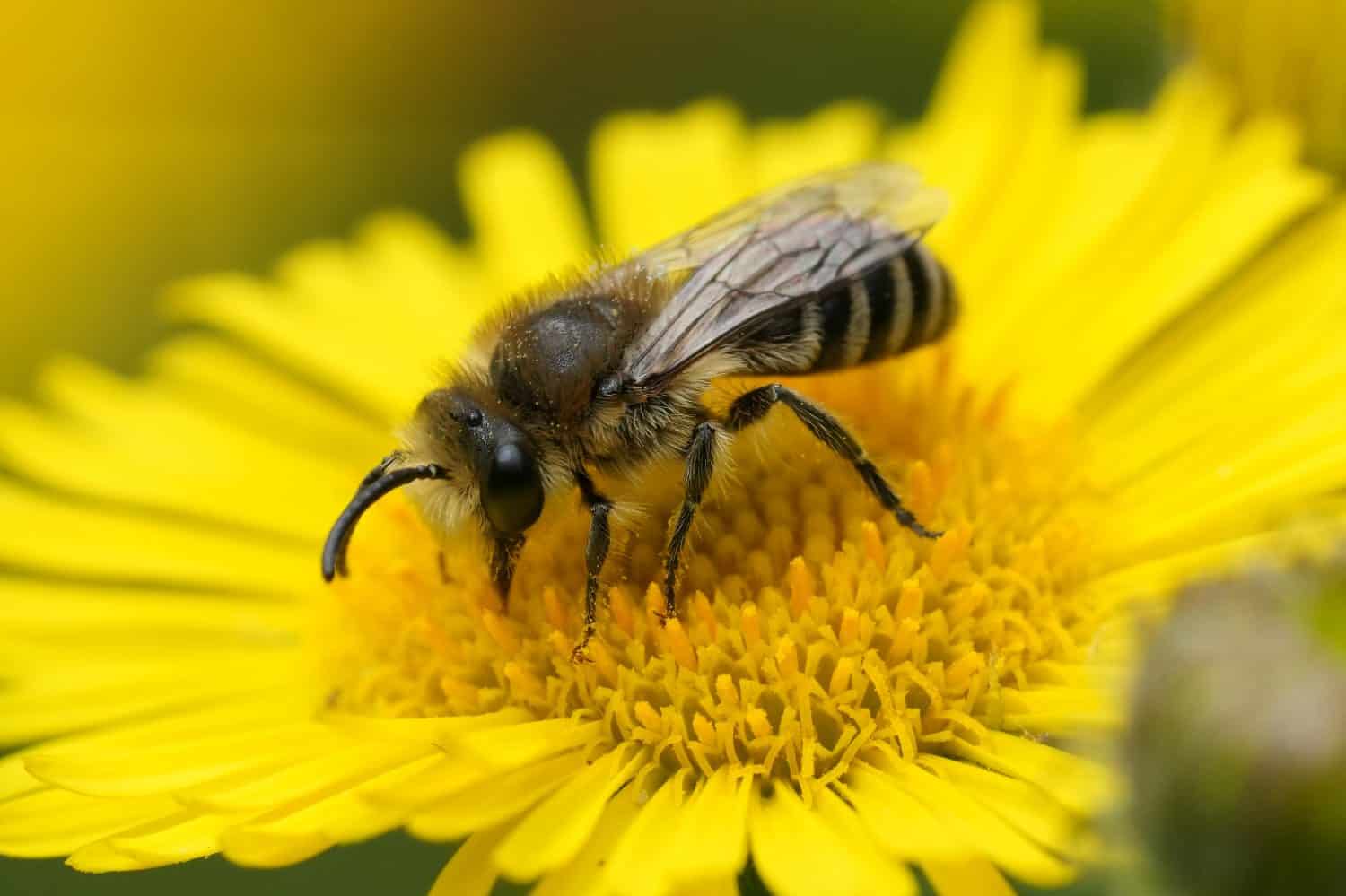
Some types of plasterer bees are known to build individual brooding cells within a single “neighborhood.”
©HWall/Shutterstock.com
Communal social structures for bees are similar to quasisocial structures in that they are often temporary. It’s said that raising young takes a village, and communal bee structures affirm this notion. Communal bees are like members of a homeowner’s association. There is a single entrance into the housing development, but each female keeps a separate house inside. Each female also provides for her young individually.
While up to fifty female bees may share a condo complex, there is not much interaction besides run-ins at the front entrance. That said, this communal structure does provide an extra bit of safety. In the diverse world of bee social structures, communal setups aren’t mandatory. Some solitary bees choose the communal life, while just as many stick to themselves. Scientists believe communal arrangements develop out of quasisocial structures, where a group of sisters expands a single nest instead of leaving to build new ones. It can be easier that way.
Solitary
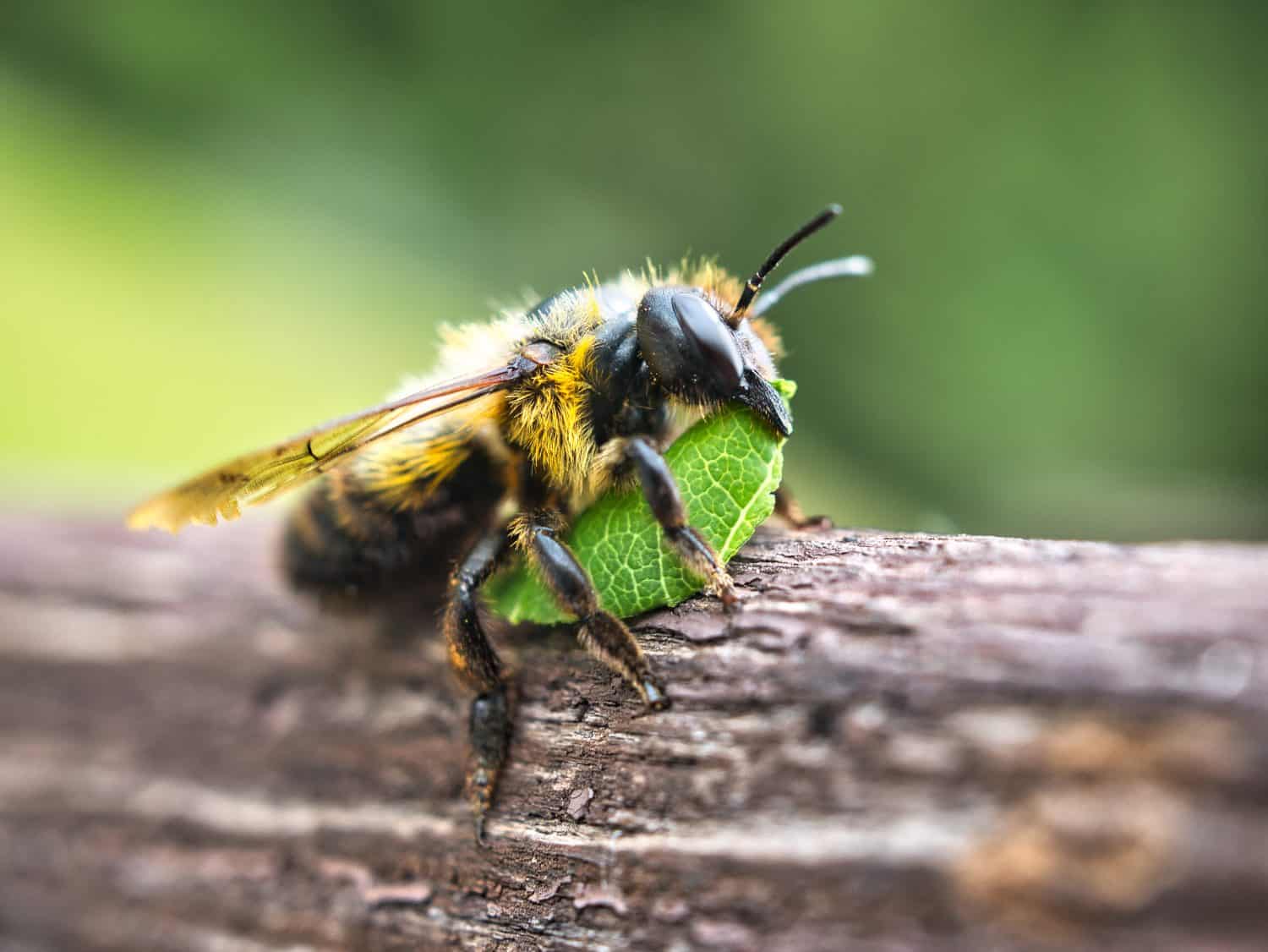
Leafcutter bees are solitary and known for using leaves to line their nesting cells.
©Maurice Lesca/Shutterstock.com
Last but not least are solitary bees. They prefer the simple life, surviving by themselves without the complicated politics of eusocial or even semisocial structures. A solitary female bee mates with a male, but spends the rest of her time on her own terms. She builds a house, lays eggs, and provides for them before moving on. It’s a lonely life, however, as solitary bees come into this world alone, spend all their time by themselves, and never meet their kids.
This may seem like the exception to the rule, but it’s actually the rule to the exceptions. Most bees are solitary, about 70% of bee species. All the aforementioned sub-classifications are technically anomalies in the world of bees, subject to behavioral shifts, seasonal moods, and other inclement social weather. Some examples of these loners are mason bees, leafcutter bees, and mining bees.
The Honey Thickens
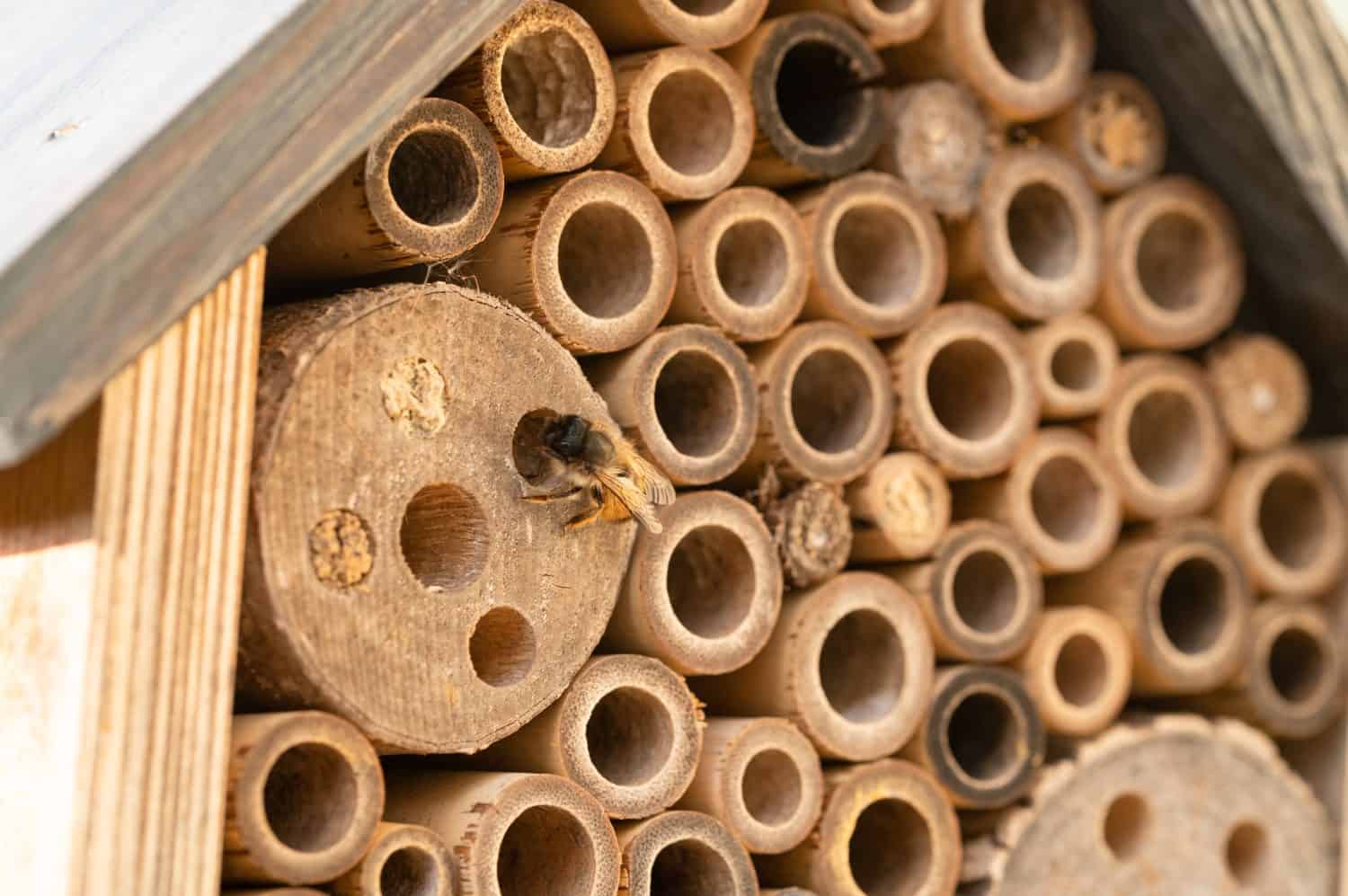
Bees will adopt more prosocial dynamics when resources are abundant.
©Daniel Beckemeier/Shutterstock.com
It can’t be stressed enough that the eusocial dynamic of honeybees is a rare structure in the grand scheme of bees. Most bees are solitary. Furthermore, the more prosocial structures that do exist are incredibly fluid. Factors such as food availability, shelter choice, and temperature shifts can greatly affect which social dynamic bees employ.
There are all those nuanced types of eusociality, but there is also facultative eusociality. This denotes a circumstantial sociability. For sweat bees, this means adopting communal dynamics when resources are in full supply and going at it alone when food is scarce. Bumblebees also adopt facultative eusociality depending on resource availability.
Aggregate Living
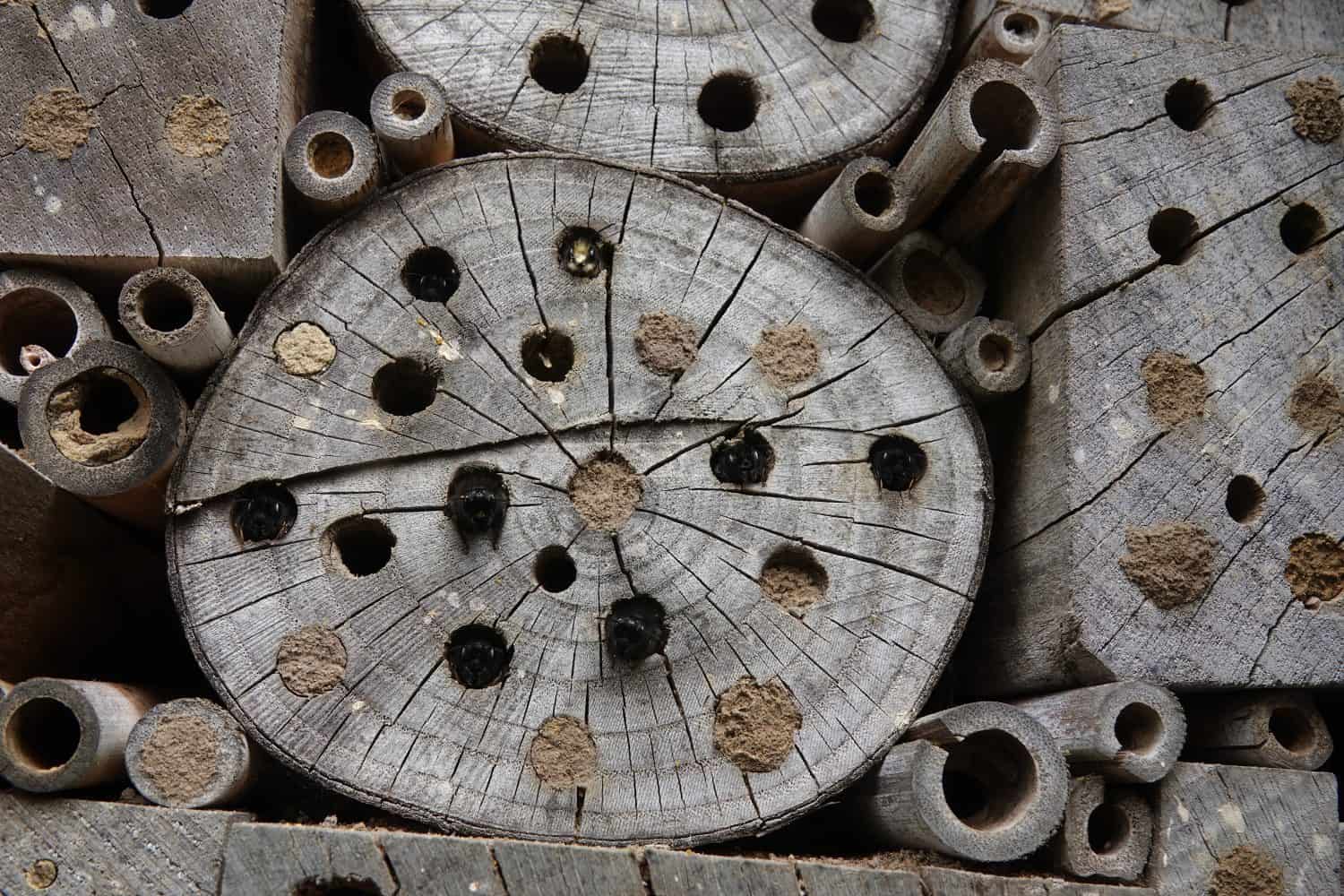
Sometimes bees build nests in close proximity to one another without worrying about social dynamics.
©HWall/Shutterstock.com
There is also an arrangement called aggregate living. It is separate from the aforementioned sociality spectrum because it denotes a type of living arrangement without social rules, per se. These aggregate living situations can be comprised of anything from a few small units to thousands of nests in the same area. These situations happen practically everywhere, depending on the bee species. Aggregates can be found on sand dunes, flat earth, river embankments, and even in thick foliage.
While aggregate living is separate from sociality, the social spectrum can play a part. Communal or quasisocial arrangements are known to occur with small sections of larger aggregates. There might be multi-family units interspersed with single-family homes, all thriving through a semi-separate peace. A glance at an aggregate, however, would make you think it is just one big colony.
Melittologists (bee scientists) aren’t entirely sure why aggregates form. It may be a lack of good real estate, or it may come down to taking the path of least resistance because solitary bees can’t fly far. It might simply have to do with resource availability. In the same way that people build cities next to water sources, bees build aggregate communities where the eating is good, featuring plenty of space for nests. These aggregates are really like cities, too, full of fights, families, thieves in the form of parasites, and a whole heap of commotion, every single day.
Trust Your Gut
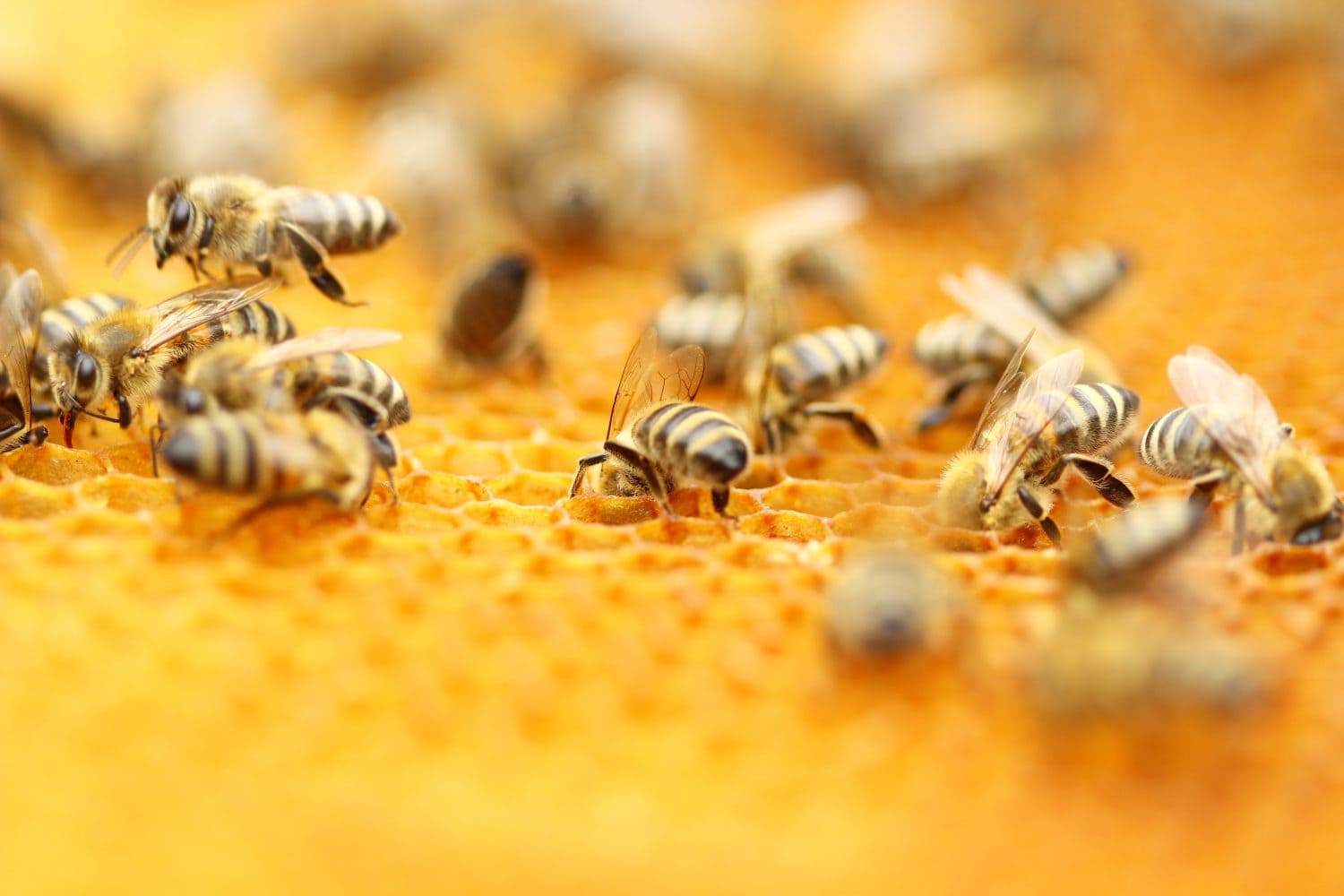
A recent study found that the bacteria in bee guts affected their socialization and role specialization.
©Simun Ascic/Shutterstock.com
A fascinating study from 2022 suggests that the social dynamics of bees come from their guts. Published in “Nature Ecology & Evolution,” the study experimented with two separate beehives. One had all the normal bee gut microbes removed, and the other was left unchanged. After a week of tracking individual bees, scientists found that bees lacking gut bacteria became more derelict in their duties. They became casual with their specialties and interacted with each other less.
Surprised at the results, the scientists investigated further. They found that the bacterium (or lack thereof) that caused the biggest change in behavior was Bifidobacter asteroides. This genus of bacteria is found everywhere, including in humans and insects. While it’s harmless, it does help with digestion. It seems that a common probiotic in yogurt is the same type of bacteria bees need to do their jobs well.
There are incredibly complex factors at play when it comes to the social dynamics of bees and beehives. While there are not many hard and fast rules for responsibilities or hierarchies, there are many possibilities. Like people, bees respond to resources and shift their behavior depending on nutrient accumulation.