
Quick Take
- These two breeds look nothing alike, yet they share a surprisingly tangled genetic history that changed both forever. Explore their shared origins →
- One of the most repeated "facts" about these cats is completely wrong, and believing it could affect your household. See the debunked myth →
- Their personalities seem similar on paper, but one key difference could make one breed completely wrong for your lifestyle. Compare their personalities →
- Both breeds share a surprising health vulnerability that has nothing to do with their breed, and most cat owners never think to guard against it. Check the shared health risk →
Finding a unique feline friend is about discovering a roommate with the right combination of chaotic energy and cuddly affection. Whether you’re looking for a miniature panther or a sophisticated conversationalist, the perfect feline companion is out there waiting to adopt you. Beyond the standard issue tabbies and calicos are numerous domestic breeds, such as the Cornish Rex and the Havana Brown. So what is the best way to determine which breed might be the best fit for you? Continue reading to learn more about these two cats.
Cornish Rex Vs. Havana Brown Cats: History
Cornish Rex cats and Havana Brown cats actually share highly interconnected origins. Despite how different they look today, the Cornish Rex and the Havana Brown both originated in England in the mid-20th century. Because the Cornish Rex originated from a single mutated kitten, the early gene pool was dangerously small and inbred.
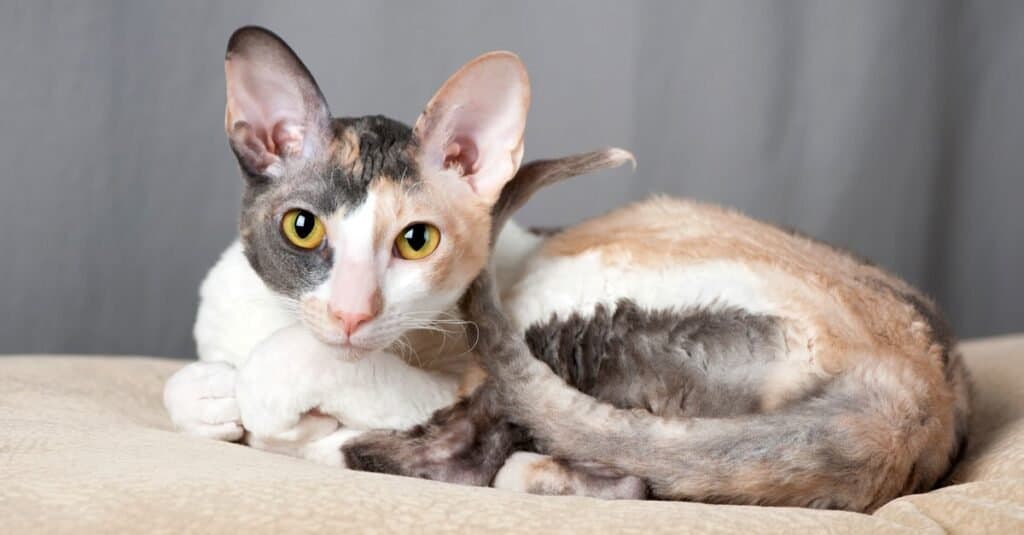
The Cornish Rex cat has a big personality to match its good looks.
©Marina Shanti/Shutterstock.com
To expand the gene pool, breeders began outcrossing Cornish Rexes with other established breeds, as well as the newly developing Havana Brown. Because of this historical cross-breeding, many modern Cornish Rex cats and Havana Brown cats share DNA.
Havana Brown cats were developed by breeding chocolate-carrying Siamese cats with solid black domestic shorthairs, and later, with some outcrossing to Russian blue cats.
Cornish Rex Vs. Havana Brown Cats: Appearance
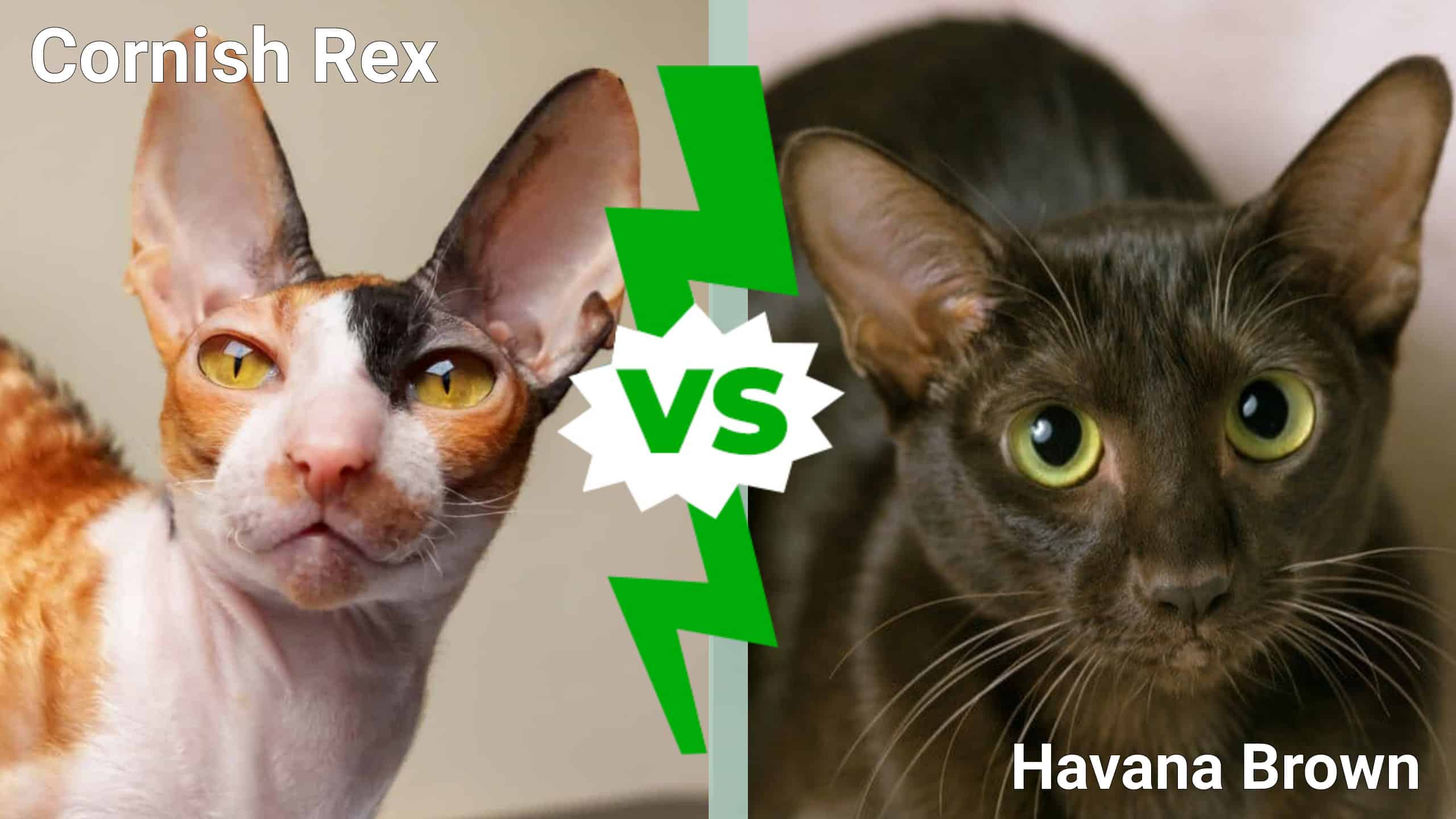
Although they sometimes share DNA, these two felines are very different in appearance.
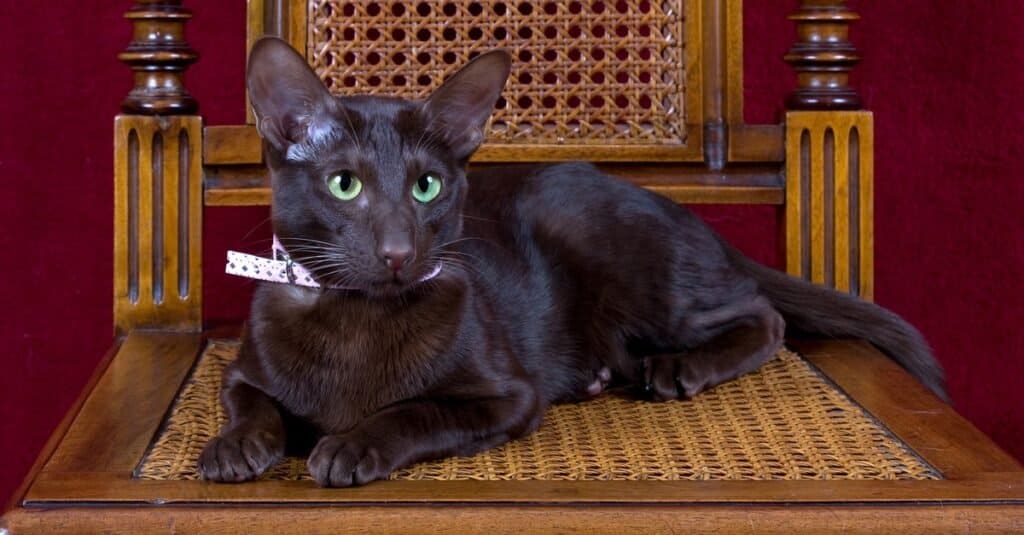
The Havana Brown is playful and smart.
©Bildagentur Zoonar GmbH/Shutterstock.com
Both Cornish Rex cats and Havana Brown cats are medium-sized cats that weigh between five and ten pounds, with males being slightly larger than females.
Cornish Rex cats have long tails, large ears, slightly slanted oval eyes, wide hips, and curved muscular bodies. Cornish Rex cats may have calico, tortoiseshell, tabby, bicolored, or solid coats.

Despite rumors to the contrary, Cornish Rex cats are not hypoallergenic.
©Oleg Kozlov/Shutterstock.com
Havana Brown cats are sleek, shiny cats with striking warm brown coats. Even their whiskers and noses are brown, which is uncommon. Kittens and young adults may have faint tabby stripes, but by maturity, they are all solid chocolate brown. Their coats are short and their eyes are green.
Contrary to rampant rumors, neither the Cornish Rex nor the Havana Brown is hypoallergenic.
Cornish Rex Vs. Havana Brown Cats: Temperament
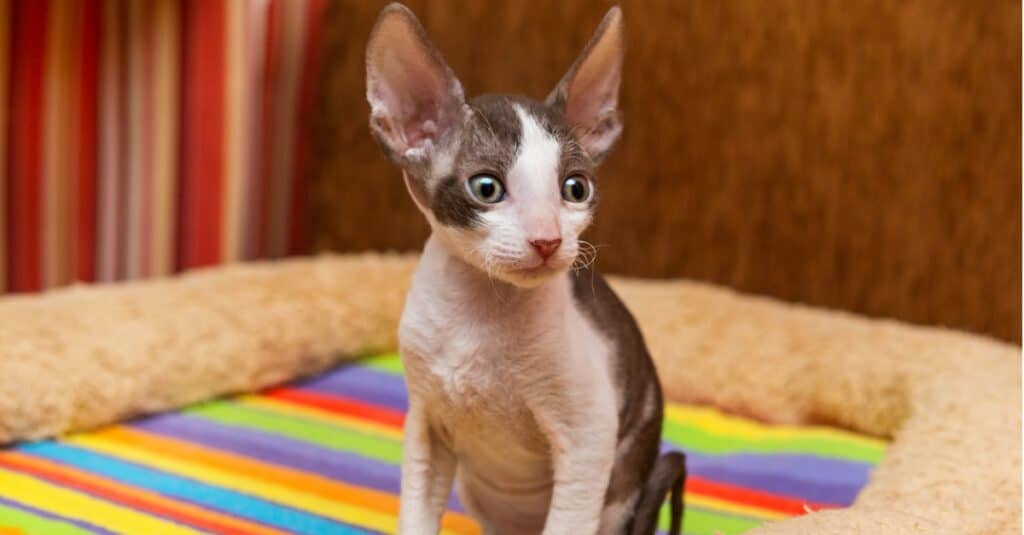
Cornish Rex kittens are fairly easy to recognize. Those giant ears and big soulful eyes give them away!
©Okssi/Shutterstock.com
Cornish Rex cats are quite playful and don’t take themselves too seriously. They tend toward silliness, even in adulthood, which makes them delightfully fun pets. These goofballs are usually fairly even-keeled, with easygoing personalities and great affection for their families, especially if games are involved. They often love napping in laps and cuddling sessions. They are exceptionally communicative and adaptable, which is why they are frequently used as therapy cats.
Havana Browns are also playful but are more content playing on their own with a favorite toy or two. They frequently form attachments with a single person and spend most of their energy focusing on that person. They can also be loners, but overall, most Havana Browns are friendly, sociable, and interested in what is going on around them.
Havana browns love to cuddle up in their person’s lap for some affection or to chase ribbons. If their favorite person isn’t around, they’ll easily adapt to playing with someone else, whether human, feline, or canine.
Cornish Rex Vs. Havana Brown Cats: Diet, Lifespan, and Health Issues
Cornish Rex cats and Havana Brown cats have similar dietary requirements. As domestic felines, both breeds are obligate (strict) carnivores. They must eat high-quality, meat-based proteins and healthful fats. However, the Cornish Rex cat has a higher-than-average metabolism, which requires a higher daily caloric intake. Both breeds love to eat and are prone to overeating if allowed to snack all day. To control this, these breeds should be fed on a schedule, with precisely measured amounts of high-protein cat food.
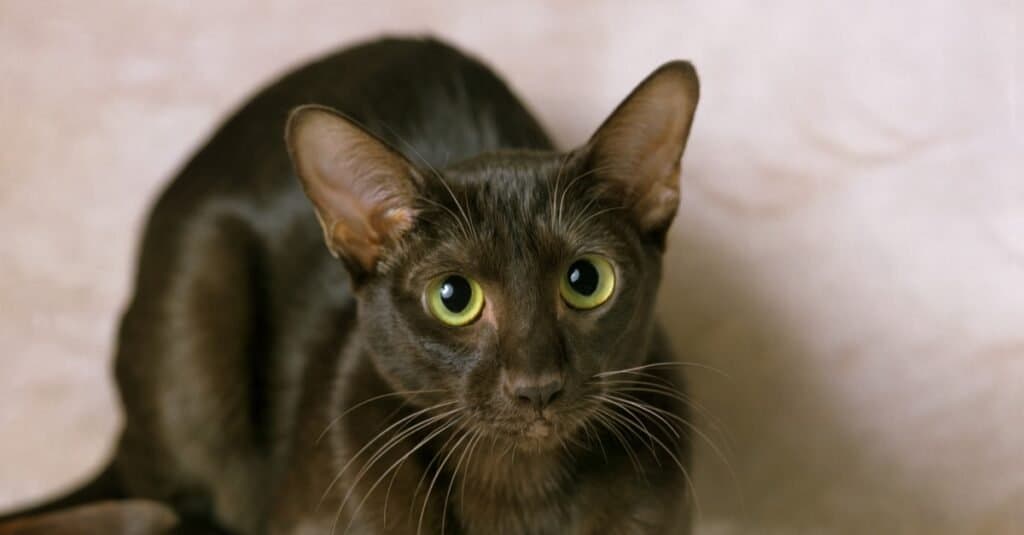
The Havana Brown is one of the few self-brown cat breeds in the world.
©slowmotiongli/Shutterstock.com
Neither the Cornish Rex cat nor the Havana Brown cat is particularly susceptible to disease, which is an advantage of having been crossbred.
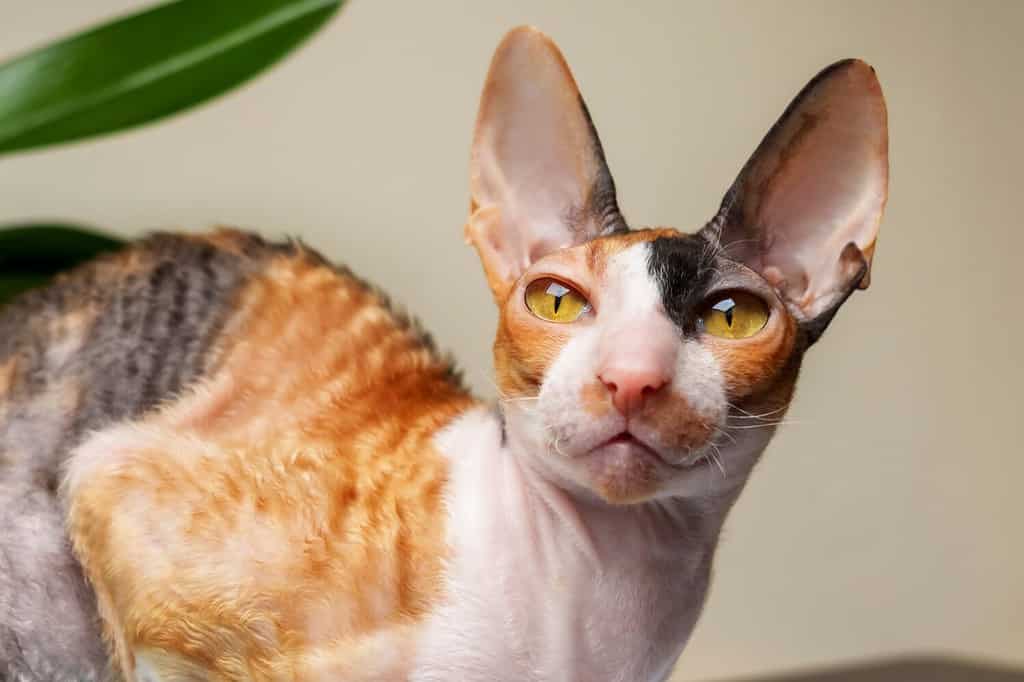
Cornish Rex cats have large ears and thin fur.
©Pavel105/Shutterstock.com
Cornish Rex cats and Havana Brown cats and Havana Brown cats are prone to obesity if allowed to overeat. Because these cats have thin coats, they can get sunburned.
Cornish Rex cats may also suffer from joint problems, such as patellar luxation, and from heart disease.
Havana Brown cats are prone to urinary tract infections and upper respiratory infections.
A Cornish Rex typically lives between 11 and 16 years, with some reaching up to 20 years. The Havana Brown cat has a lifespan of 10 to 15 years with a healthful diet and proper care.