
Quick Take
- A cat's skeleton is built very differently from a human's, giving it remarkable flexibility. Discover the skeletal secret →
- Cats' whiskers do far more than look cute. They play a direct role in squeezing through tight spaces. See how whiskers guide squeezing →
- The 'liquid cat' superpower isn't a quirk. It's a survival tool with a very specific evolutionary purpose. Explore the survival purpose →
- There's one simple rule of thumb that predicts whether a cat can fit through any opening, and surprisingly it has nothing to do with size. Find the whisker rule of thumb →
Cats may not actually have nine lives, but sometimes, they act totally mystical. Just look at how cats always land on their feet! This is due to a righting reflex that lets them orient themselves and find balance in mid-air. They can also jump high due to their strong muscles, allowing them to roam the top of the fridge and other hard-to-reach places. But one of the coolest things cats can do is contort their bodies into tubular shapes to fit into tight spaces!
In a YouTube video shared by @Kittisaurus, cats go through various sizes of cylindrical tubes, contorting their bodies to be able to fit (most of the time) all the way through the tubes. The cute video shows that cats aren’t afraid to attempt to go through tiny spaces, transforming their bodies in remarkable ways, even if they can’t always make it all the way through.
You might not think of cats as being long and skinny like snakes, but they can impressively slither their way through small tubes. “I love how the fluffy ones make little floof cylinders, it[‘s] so cute!” one person commented. Another wrote, “This is a solid proof that cat[s] can liqu[efy.]”
How Can Cats Fit into Such Tiny Round Spaces?
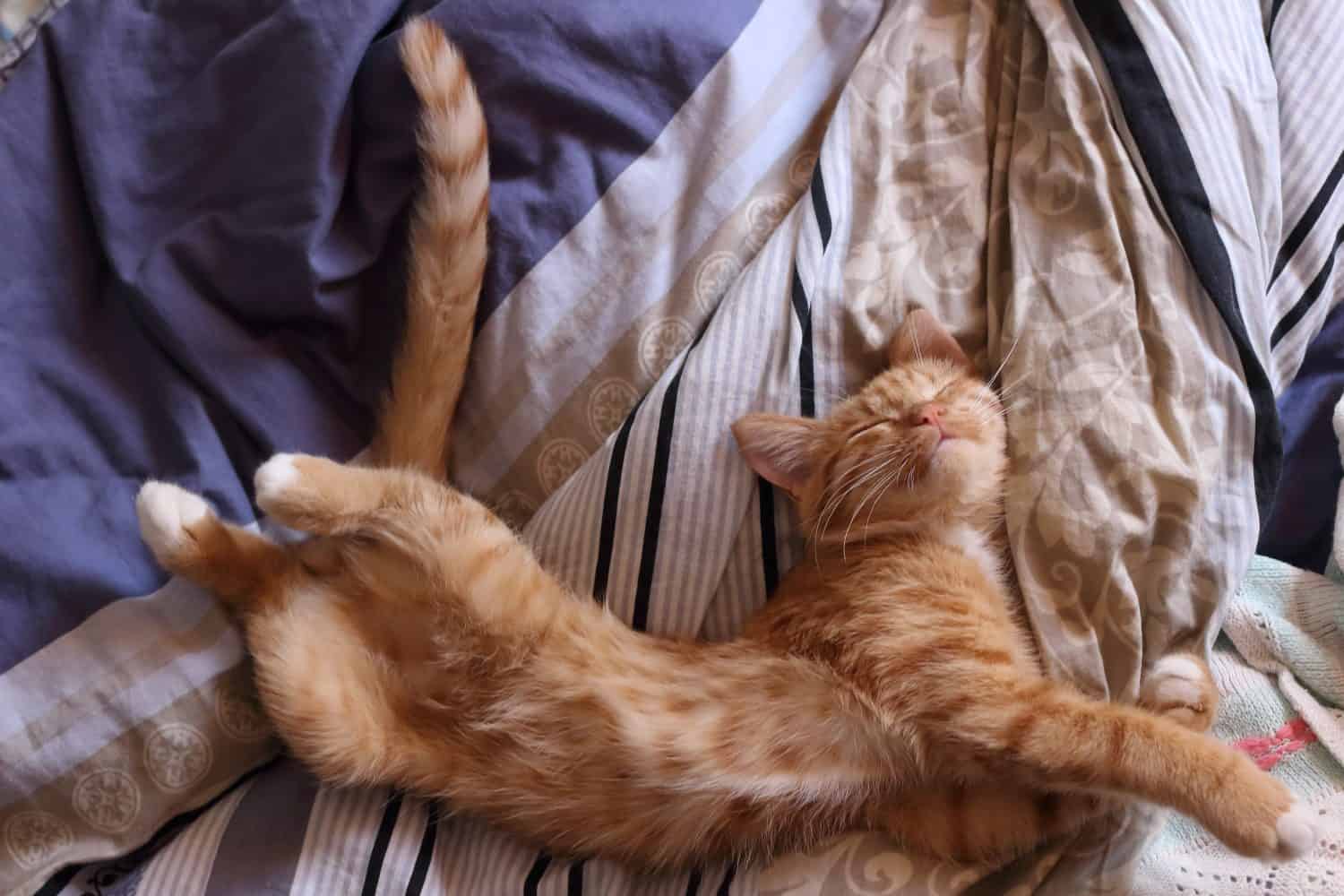
Cats can maneuver gracefully in different situations due in part to their body composition. Their backbone is so flexible that they can twist the front and back halves of their bodies in opposite directions at the same time.
They also have cushioned discs between the 47 to 53 vertebrae in their spines, which act like a spring to help them absorb impact when jumping. Their collarbones and shoulder blades are attached to muscles instead of bones, allowing them to shift these bones to fit into narrow spaces.
Unlike humans, if a cat’s head can fit through an opening, it’s likely that the rest of their body can fit as well—unless the cat is overweight.
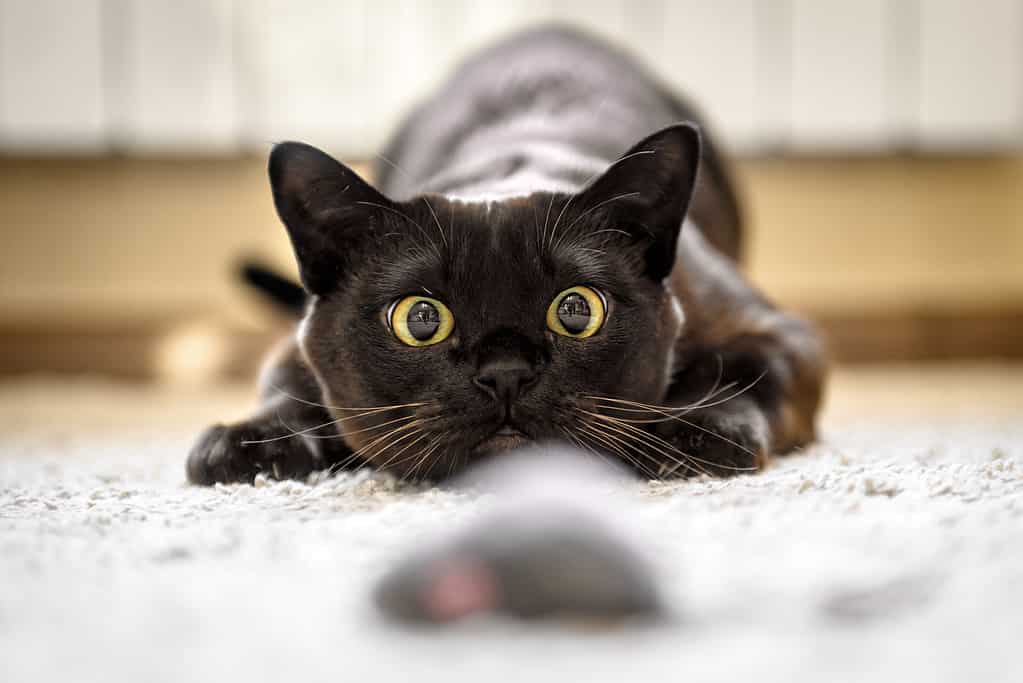
A cat’s ability to contort into small spaces can help them hunt for mice.
©scaliger/iStock via Getty Images
Cats’ ability to squeeze into small spaces isn’t just for making adorable videos; it also helps them hunt mice. Nathalie Dowgray, head of the International Society of Feline Medicine in the United Kingdom, told Live Science in October 2022, “Being able to fit into small spaces is an evolutionary advantage when hunting small prey such as mice, but also for hiding and escape from potential predators.”
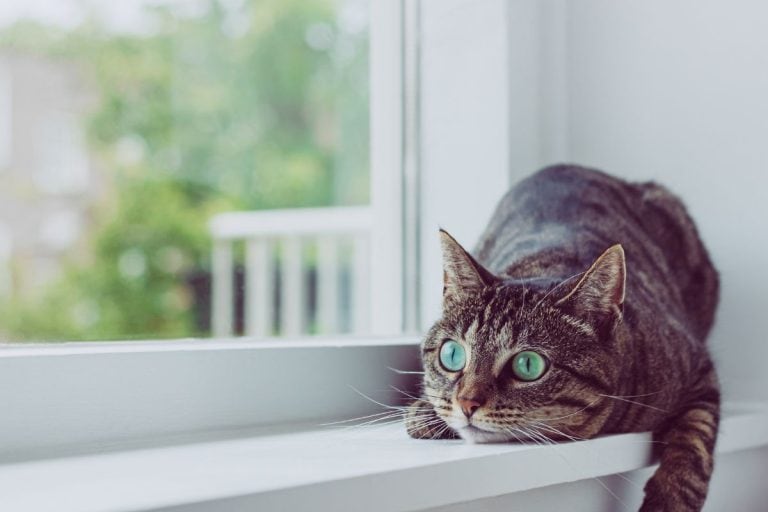
She added that cats’ whiskers also help them get through tiny spaces. Whiskers aren’t just long hairs; instead, they are packed with nerve endings that convey information about a cat’s surroundings and help them judge whether they can fit into small spaces. This sensory hair is called vibrissae and is deeply embedded in a cat’s skin to detect changes in movement, pressure, and vibration. This helps them decide if they want to attempt to squeeze into a small space or not.
Cats may not actually be magical, but they are impressive nonetheless!