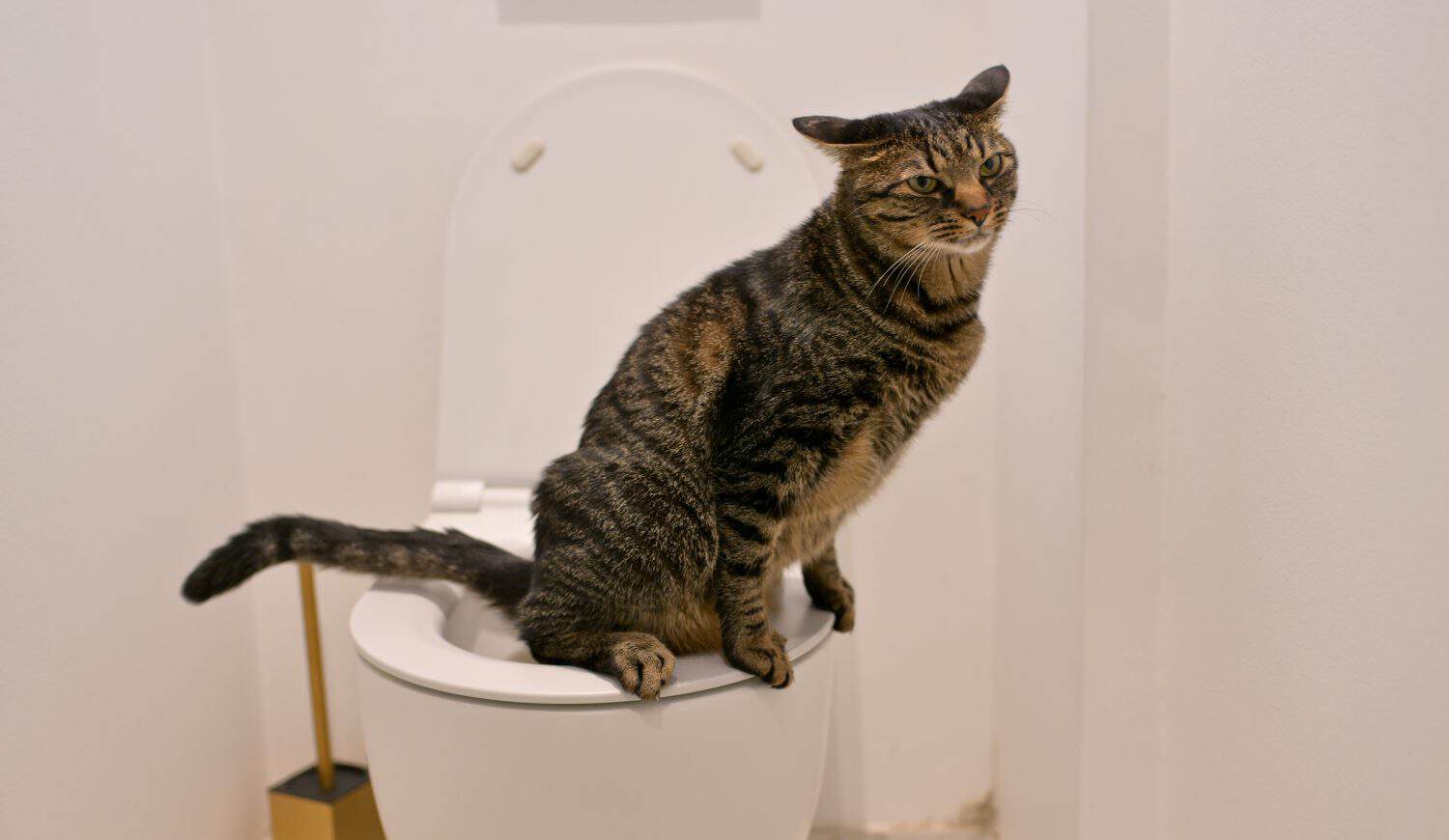

Quick Take
- The biggest factor in whether your cat can learn this skill isn't age, which is what most owners guess wrong. See what actually matters →
- There's a serious hidden downside to toilet training that has nothing to do with your cat's comfort, and it's hard to undo once you've committed. Explore the hidden drawbacks →
- Every step in this process fights something hardwired into your cat's biology, and understanding that is exactly what makes the difference for success. Start the step-by-step process →
If you’re like a majority of cat owners, you have a litter box. Along with that box comes the responsibility of scooping it every day, buying fresh litter regularly, and doing your best to keep the odors under control. If you’ve ever wished there was an easier way, or you’ve ever seen the film Meet the Parents, you’ve likely seen that there is the possibility to train a cat to use a real toilet.
While you may have heard of people potty training their felines, you likely have many questions. In this guide, we’ll tell you about the pros and cons of potty training and the steps you can take if you’re willing to try this unique experiment.
Why You Might Train a Cat to Use a Real Toilet
Though it’s not for everyone, there are many perks to teaching your cat to use the toilet. At first, it may seem impossible, but really, the toilet is just an elevated litter box. Granted, not every cat can master or even comprehend this odd skill. The benefits of this training include:
- No litter purchases
- Less household odor
- No litter tracked through the house
- Less time spent cleaning
- One less pet supply to store
Some owners are also allergic to litter dust or dislike handling waste every day, making toilet training seem especially appealing.
Is the Toilet Safe for Cats?
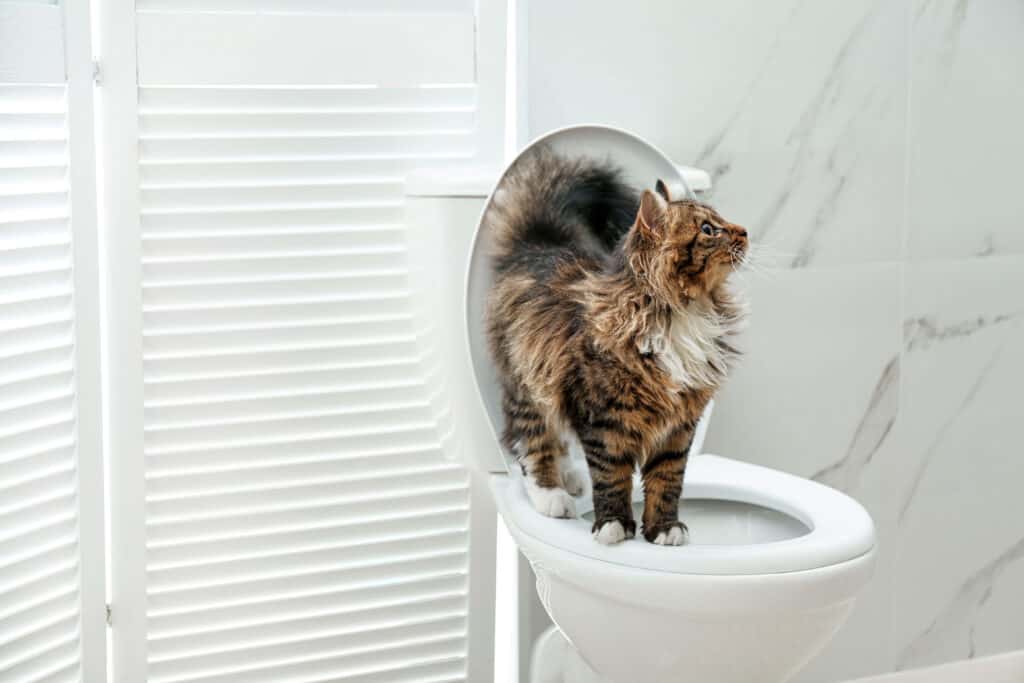
It can be, but it’s not particularly natural for cats. Litter boxes exist because cats prefer to dig into a soft surface before eliminating and then burying their waste afterward. It’s an instinct that helps them hide their scent from predators. The toilet doesn’t allow this same natural behavior. You’re asking your cat to stop evolutionarily instinctive behaviors. As a result, your cat may be unhappy, and you don’t want that for your pet.
There is also the risk that your cat could slip and fall off of the toilet. Most cats will recover almost immediately, but constant falls could create a fear that could set training time back significantly.
Finally, consider one of the strongest arguments against trying to train a cat to use a real toilet, and that’s medical monitoring. When owners observe their cats use the litter box, they can spot potential medical issues, such as blood in the urine, diarrhea, constipation, or reduced urine output. When the toilet is flushed, these issues could be hard to notice.
Do You Have to Start When They’re Young?
No, and that’s one of the biggest misconceptions people have when they think about how to train a cat to use a real toilet. Adult cats can absolutely learn. In fact, many owners have successfully trained cats that were already several years old. Really, the biggest factor that can make the process easier or harder is not age; it’s personality.
An adaptable adult cat often learns faster than a stubborn kitten. That said, kittens under six months may struggle because they’re still growing, are less coordinated, and may be too small to balance comfortably on a toilet seat. Many experts recommend waiting until a cat consistently uses the litter box without accidents before beginning toilet training.
What Happens When Your Cat Gets Old?
This is an important question to ponder. Cats don’t stay young forever, and a 15-year-old cat with arthritis may experience reduced flexibility, joint pain, poor balance, and vision loss. As a result, the cat may no longer be able to jump onto a toilet seat several times per day comfortably. In those cases, some owners reintroduce the litter box, and that’s okay. Most cats can relearn to use the litter box even after several years.
How Long Does Toilet Training Take?
Every cat learns to use the toilet at a different pace, and some may never catch on. Some exceptionally adaptable cats may understand the process in four to six weeks. Just be aware that rushing the process is one of the biggest reasons toilet training fails. Cats don’t respond well to pressure or punishment. Instead, success comes from moving gradually and allowing the cat to become comfortable with each new stage before advancing.
How to Train a Cat to Use a Real Toilet
Now that you know the facts about toilet training your cat, let’s get into the process. To prepare, look online for a cat toilet training kit. You can also purchase training trays and flushable training inserts designed specifically for cats. Other than that, you’ll need patience, cat treats, and plenty of time for positive reinforcement. Next, follow these steps:
Step 1: Move the Litter Box Into the Bathroom
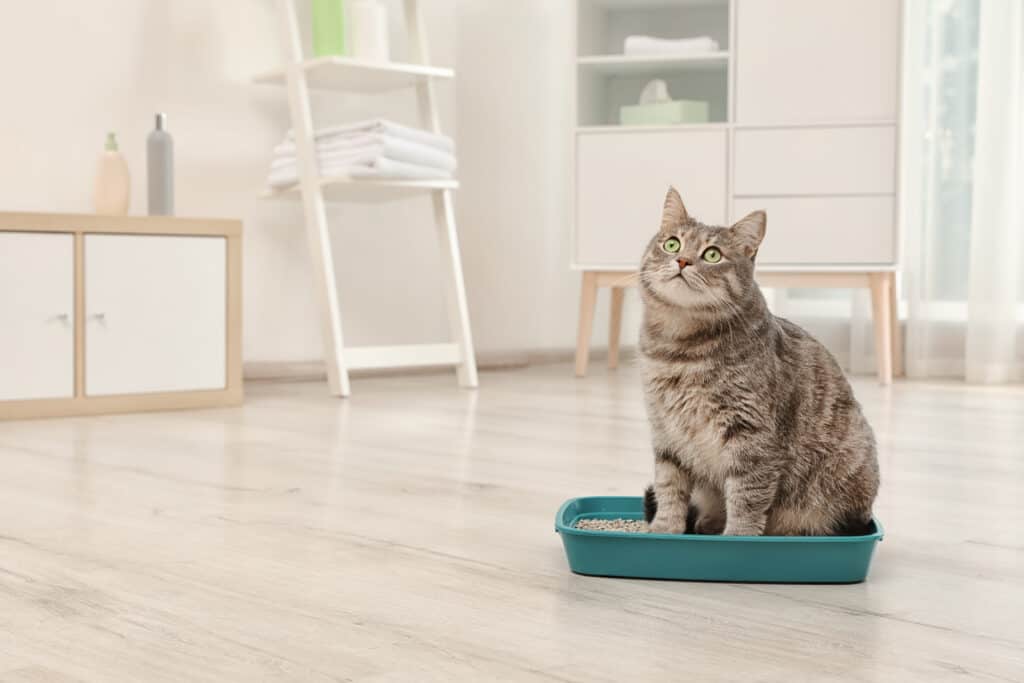
Gradually relocate the litter box into the bathroom. Move it gradually, shifting the litter box a few feet every day. This prevents confusion and helps your cat adjust without suddenly losing access to their beloved litter box. Allow several days for the cat to become comfortable before moving on.
Step 2: Raise the Litter Box
Next, begin elevating the litter box. Raise it only a few inches at a time using stable platforms such as phone books, storage containers, or sturdy stools. Never use anything unstable, as cats don’t like shaky surfaces. Allow one to three weeks to slowly raise the box so your cat doesn’t feel rushed.
Step 3: Move the Litter Box Onto the Toilet
Once your cat confidently jumps onto the elevated litter box, carefully place it directly over the toilet. Many training kits make this step easier by fitting securely beneath the seat. Continue using litter as before, without any sudden changes. Your goal is simply to get the cat comfortable using the bathroom while perched over the toilet. Stay on this step until accidents cease.
Step 4: Introduce the Training Tray
Now replace the normal litter box with a training tray. Most commercial kits contain a shallow tray that fits inside the toilet seat while still holding a small amount of litter.
Step 5: Gradually Reduce the Litter
Cats rely heavily on the texture of litter. Instead of removing it all at once, slowly decrease the amount over several weeks. Eventually, you’ll only have a thin layer remaining. This action helps transition your cat without creating unnecessary stress.
Step 6: Introduce the Hole
Now comes the most important step. Training trays usually include a small removable center. After your cat consistently uses the tray, remove the smallest section so that a tiny opening appears. Waste will now begin to fall into the toilet, while some litter remains around the edges. Many cats need several weeks before they’re comfortable with this change, and patience is critical.
As your cat gains confidence, enlarge the opening gradually. Never jump from a tiny hole to a giant one. Each stage teaches the cat to place more weight on the toilet seat instead of standing entirely on litter. Eventually, only a narrow ring of litter remains around the edge.
Step 7: Remove the Training Tray
When you notice your cat consistently balancing on the toilet seat while eliminating, remove the tray completely.
Patience Will Be Key Going Forward
Once you see your cat routinely jump onto the toilet, balance comfortably, do its business, and then jump off, you know your cat is on the right track. Remember that positive reinforcement and plenty of treats will be key here. Good job on training your cat. From this day forward, your pet ownership journey will never be the same.