
Quick Take
- Scientists spent over a century unable to name the gene behind orange fur, and the reason it stayed hidden so long is genuinely surprising. See how it was solved →
- The mutation doesn't damage a single thing, yet it rewires an entire biological process. That loophole is exactly why orange cats exist. Explore the ARHGAP36 mechanism →
- The lopsided ratio of male to female orange cats is no coincidence, and it traces back to a chromosomal rule that also explains why fully orange females are so rare. Understand the X-chromosome rule →
- Every orange cat on Earth shares one identical genetic signature, and that quirk is now letting scientists trace a hidden map of feline history across human civilization. Trace feline history worldwide →
Orange cats are among the most recognizable felines in the world. From beloved internet celebrities to mischievous household pets, their bright ginger coats have captured our attention for generations. However, despite their popularity, scientists have spent more than a century trying to answer a surprisingly simple question: what actually makes an orange cat orange?
Now, two independent research teams have finally solved the mystery. Their findings reveal that a small genetic change in a single gene, called ARHGAP36, acts like a molecular switch. This switch redirects how pigment-producing cells function, transforming what would otherwise be dark fur into shades of orange.
This discovery not only explains why ginger cats exist but also sheds light on why most orange cats are male and how tortoiseshell and calico cats get their distinctively patchwork coats.
Here’s how a single, subtle genetic change led to the creation of some of the world’s most famous felines.
Solving the Orange (O) Locus Mystery
For more than a century, the Orange (O) Locus Mystery has been a textbook example of sex-linked inheritance and cellular mosaicism (how cells express different genetic traits). While scientists understood how orange fur was passed down, the exact gene responsible remained completely elusive — until now.
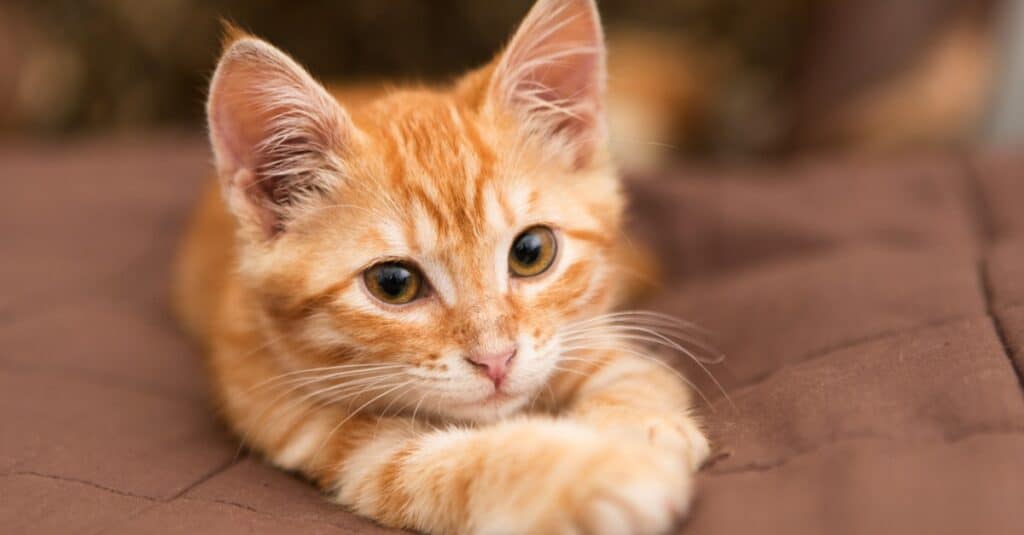
The genetic mutation that results in orange fur does not harm cats in any way.
©iStock.com/Okssi68
In a surprising twist of events, two independent research teams arrived at the exact same conclusion simultaneously. In late 2024, Toh et al. and Kaelin et al. posted preprints on bioRxiv implicating a gene called ARHGAP36 as the gene responsible for orange fur in cats. Their findings were later confirmed and published in peer-reviewed journals in 2025.
Their discovery reveals how a surprisingly small genetic change can create one of the world’s most recognizable coat colors without negatively affecting a cat’s health.
Meet the Gene That Makes Cats Orange
For years, ARHGAP36 escaped notice because it seemed like an unlikely candidate. The gene plays important roles in embryonic development, neural development, cell signaling, and cell proliferation. Because ARHGAP36 is so vital, researchers assumed that any major mutation to it would be harmful or even lethal. However, the two independent research teams discovered something far more elegant.
Using advanced genetic tools — including genome-wide association studies, linkage mapping, and PacBio long-read sequencing — the teams traced the orange trait to a 5.1-kilobase deletion within the first intron of ARHGAP36 on the X chromosome.
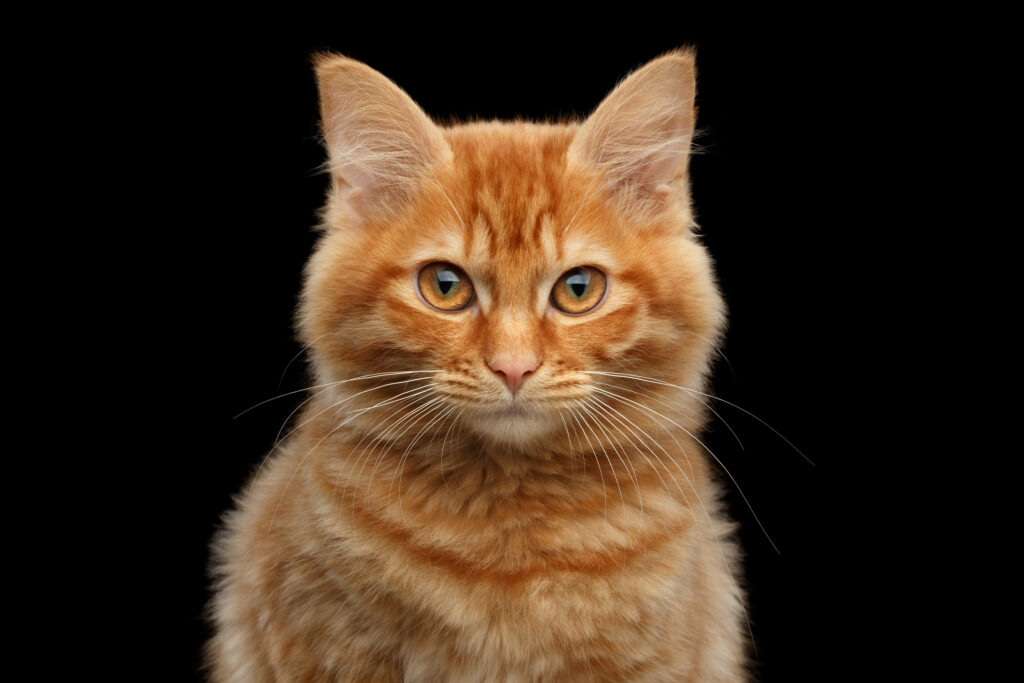
Orange or “ginger” cats are famous for having outgoing and vibrant personalities.
©iStock.com/Seregraff
The deletion does not change the actual protein that the gene creates. Instead, it removes a specific regulatory section of DNA that normally keeps ARHGAP36 turned off inside melanocytes (pigment-producing skin cells). Without this regulatory piece to keep the gene inactive, ARHGAP36 becomes highly overactive inside hair follicles, producing roughly 13 times more RNA than normal.
Because this genetic change only affects pigment cells, it does not cause the severe growth or developmental problems that would occur if the gene were altered in other tissues. In other words, the mutation does not damage or disable the gene; it simply causes it to become highly overactive in pigment cells within hair follicles.
Turning Dark Fur Into Orange
In most cats, pigment-producing skin cells (melanocytes) primarily produce eumelanin, which is the pigment responsible for black and brown fur. Orange cats, however, follow a completely different path. Rather than creating an entirely new pigment, the mutation simply changes which existing pathway dominates.
All orange cats are tabbies.
©Konstantin Aksenov/Shutterstock.com
The heightened activity of the ARHGAP36 gene suppresses key parts of the melanogenesis (pigment-making) pathway. This reduces both the important signaling molecules and the specific enzymes needed to produce eumelanin. As the dark-pigment pathway shuts down, pigment production shifts toward pheomelanin — the red-yellow pigment responsible for orange fur.
By suppressing dark coloration, this genetic tweak effectively redirects the cells to produce the warm ginger tones we see in orange cats.
Why Most Orange Cats Are Male
One of the most famous facts about orange cats is that roughly 80% of them are male. The explanation for this dramatic split comes down to basic chromosome biology and sex-linked inheritance. Because the orange variant of the ARHGAP36 gene sits squarely on the X chromosome, it affects males and females very differently.
Male cats have one X and one Y chromosome (XY), while females have two X chromosomes (XX). A male only needs a single copy of the orange variant (XOY) for his fur to be orange. Because he has only one X chromosome, if that specific chromosome carries the mutation, every single pigment cell automatically follows the orange pathway.
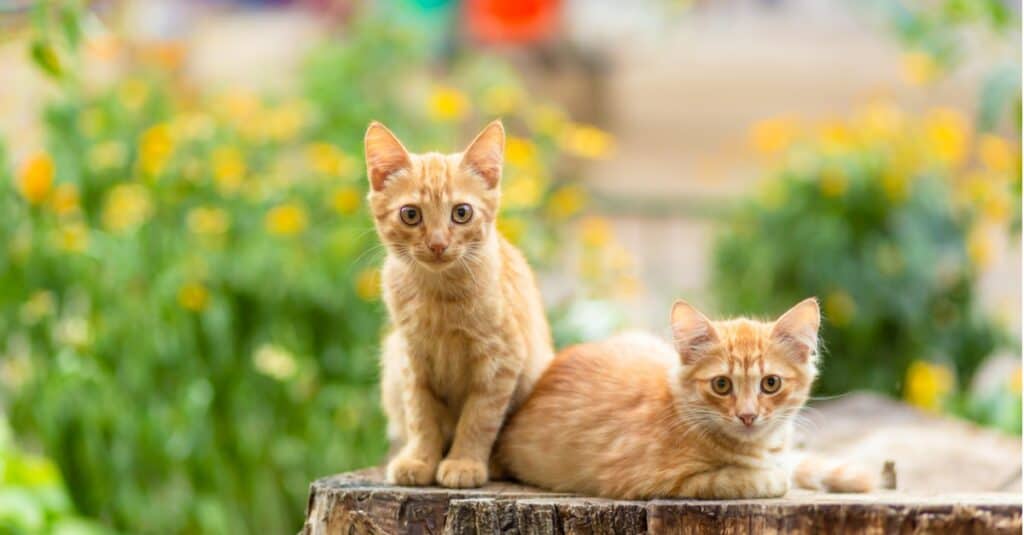
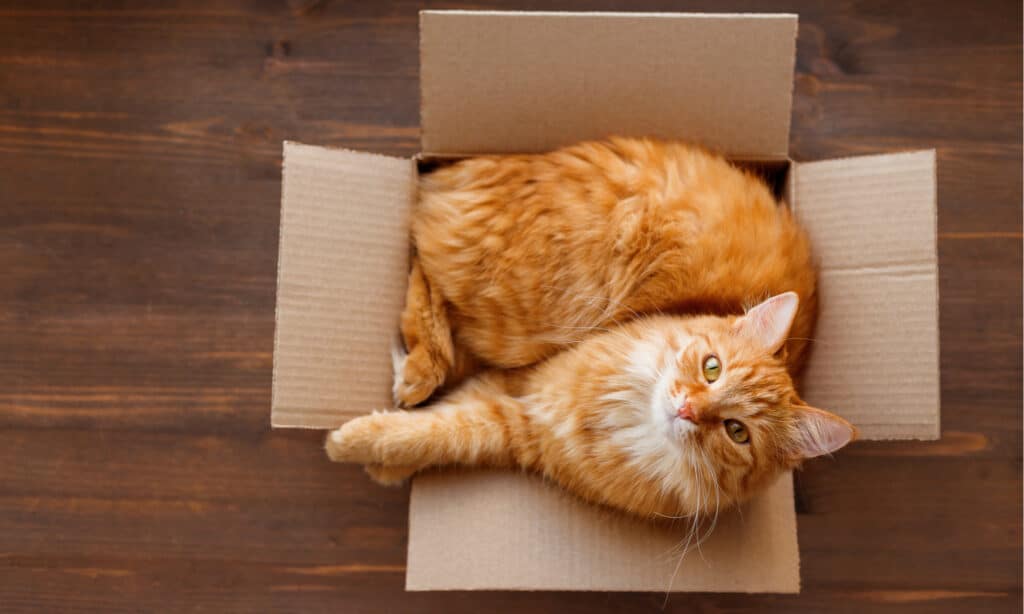
Female orange cats are much rarer than males.
©iStock.com/Kateryna Kukota
It is much less likely for female cats to be completely orange, as they usually need to inherit the orange variant from both parents (XOXO). This genetic combination is much less common, making fully orange females comparatively rare. This fundamental difference in how the trait is passed down is exactly why orange males significantly outnumber orange females.
Nature’s Living Mosaic
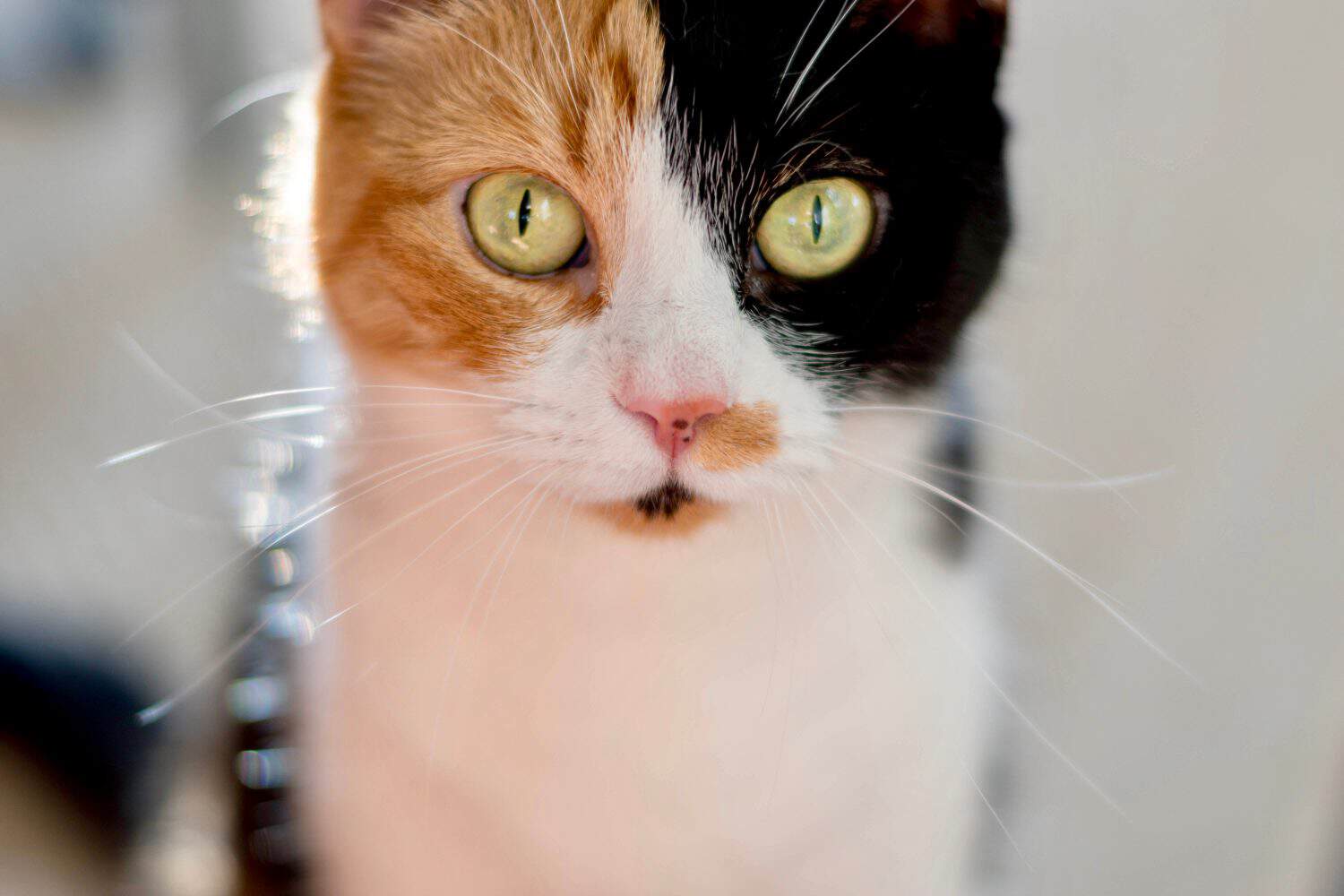
The same genetic mechanism behind orange cats also explains the beautiful patchwork coats of tortoiseshell and calico cats.
These cats are almost always female because they inherit two X chromosomes: one carrying a gene for orange fur and one for non-orange fur (XOX+). Early in the kitten’s embryonic development, each individual cell randomly inactivates or shuts down one of its two X chromosomes, a process known as X-chromosome inactivation. As a result, some clusters of cells keep the orange chromosome active, while other clusters keep the non-orange chromosome active.
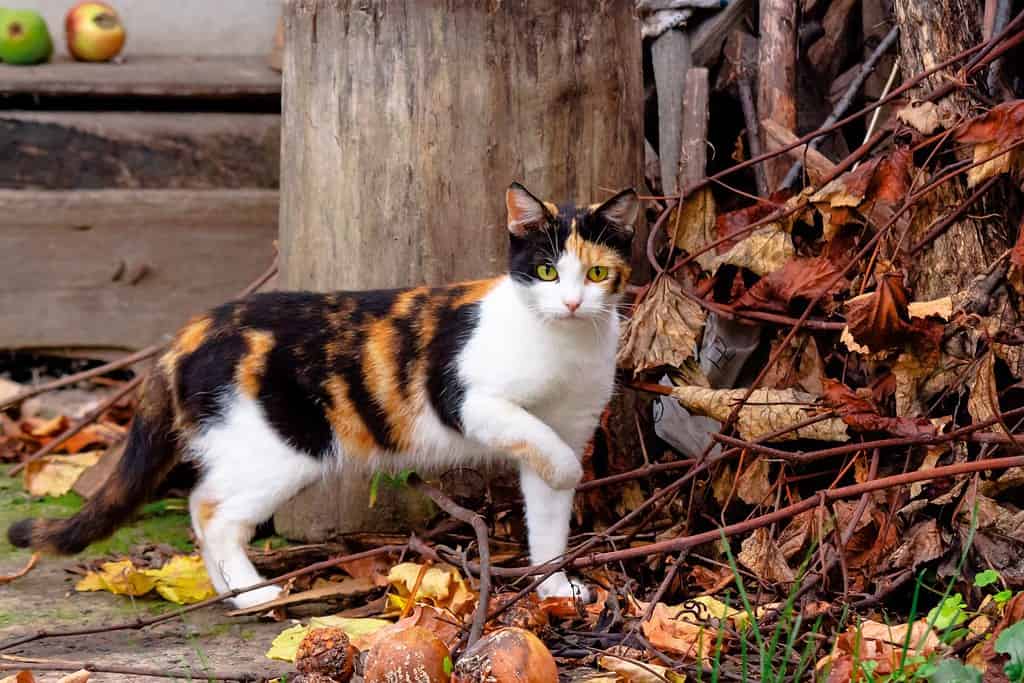
Male calico cats are extremely rare.
©Mike Pellinni/Shutterstock.com
Researchers have now found strong evidence that ARHGAP36 is subject to X-chromosome inactivation. By analyzing DNA methylation patterns (the chemical tags that turn genes on or off), they confirmed that the gene’s expression is regulated by this process, which helps explain the patchwork coats of calico and tortoiseshell cats.
The result is a living mosaic. Areas where the orange chromosome remains active produce pheomelanin and orange fur, while areas where the non-orange chromosome remains active produce darker eumelanin-based fur. The random distribution of these cell populations creates the distinctive patches seen in tortoiseshell and calico cats.
More Than Just a Coat Color
Unlocking the genetics behind orange cats does far more than just explain a familiar coat color — it opens up several exciting doors for scientific research. Previously, scientists only knew this gene for its role in embryonic development, cell signaling, and certain cancers. These findings reveal a previously unknown function: ARHGAP36 is actually a major regulator of pigmentation and melanocyte biology (the cells responsible for color). The discovery provides researchers with a valuable new model to study how cells talk to each other and make critical decisions as an organism grows.
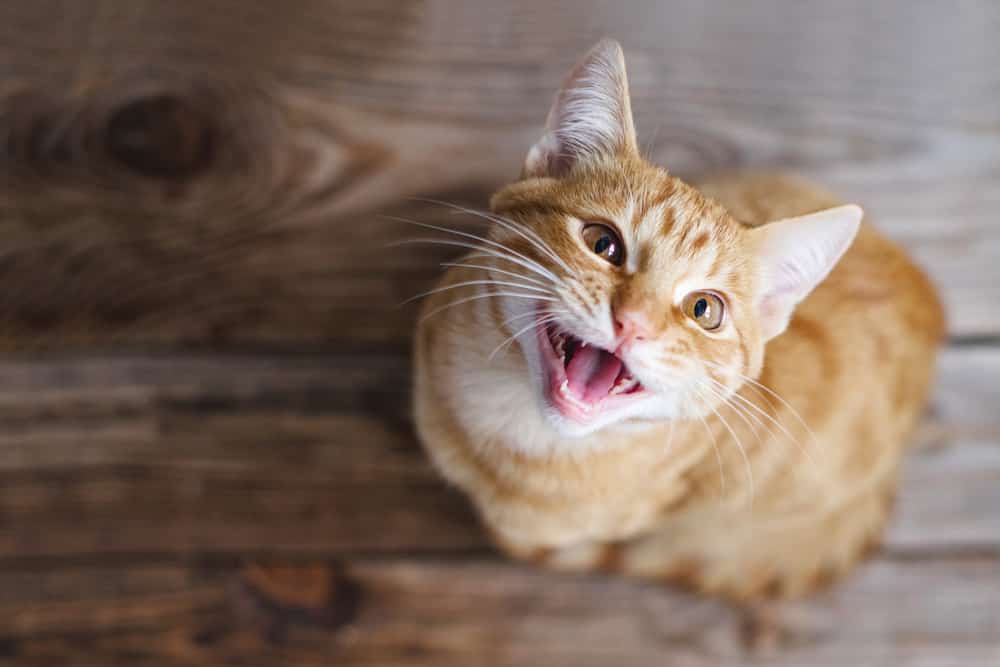
Orange cats can occur in many different cat breeds.
©savitskaya iryna/Shutterstock.com
Interestingly, orange cats from entirely different populations all over the globe share the exact same genetic signature — a specific 5.1-kilobase deletion. Because this exact genetic marker is identical worldwide, the trait likely traces back to a single evolutionary origin. Scientists can now use this marker as a historic GPS to map where the orange mutation first appeared and trace how orange cats traveled and spread alongside humans throughout history.