
Quick Take
- A crocodile's bite is usually its greatest weapon, but against an electric eel, closing its jaws is actually the worst move it can make. See the attack reversal →
- Electric eels have a body technique that makes biting them even more dangerous than simply touching them, a lesson most predators never get a second chance to learn. Discover the body-curling technique →
- Shallow water seems like it should favor a lurking ambush predator, but for the electric eel it works the opposite way. How shallow water helps the eel →
- Despite the name, electric eels aren't eels at all, and what they actually are helps explain why their electrical output is unlike anything else in freshwater. What electric eels really are →
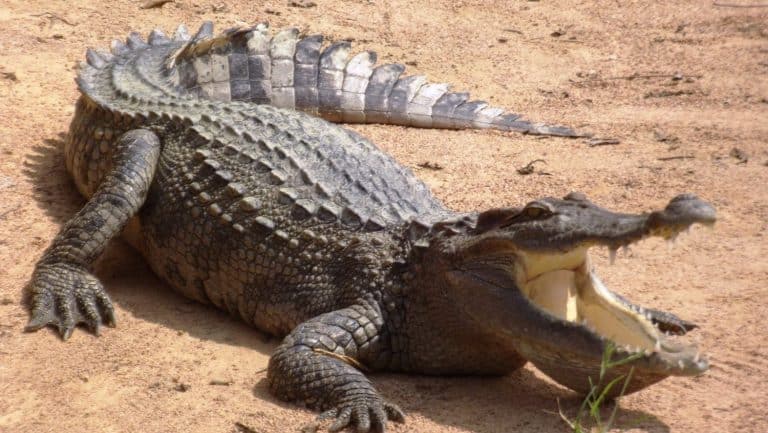
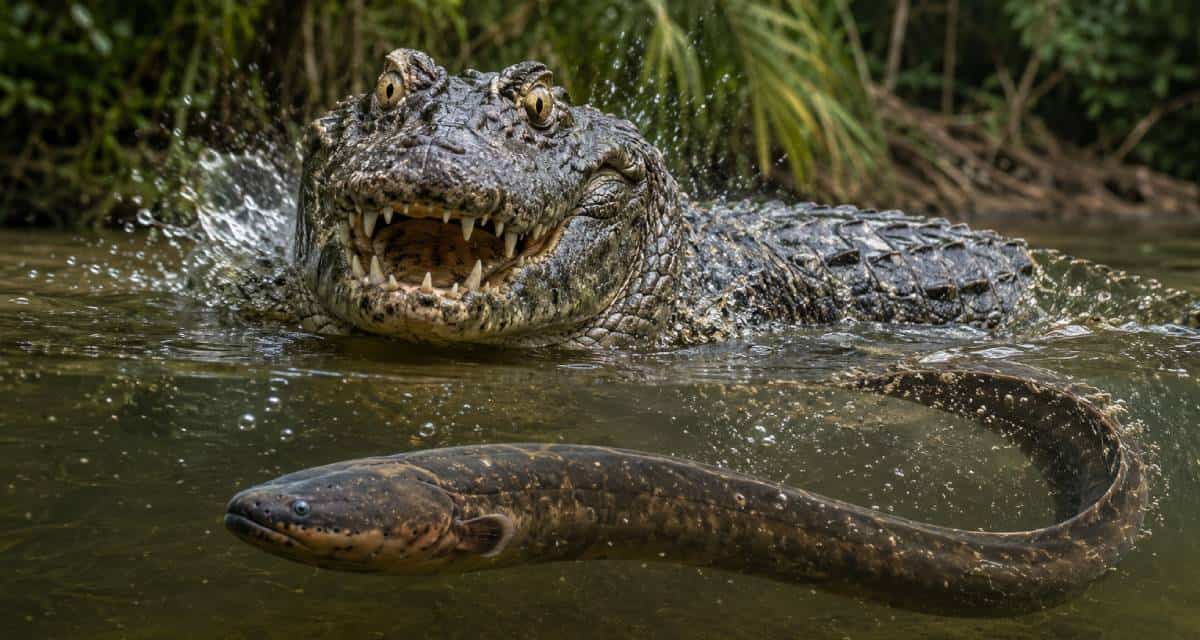
Crocodiles are among the most powerful predators in the animal kingdom. Their crushing bite, explosive speed, and patient ambush tactics allow them to overpower a wide range of prey. Most animals caught in a crocodile’s jaws have little chance of escaping, but an electric eel brings a very different kind of defense to the encounter.
Electric eels can generate intense electrical discharges to stun prey and protect themselves from danger. The strongest species are capable of producing shocks measuring hundreds of volts, giving them a defensive weapon that even large predators may not be prepared to handle. When a crocodile bites down on one, the hunt quickly becomes a painful reminder that not every animal is easy prey.
In this A-Z Animals feature, we take a closer look at the dramatic encounter, explain how electric eels produce their shocks, and examine why this unusual defense can force even a formidable predator to let go.
Croc Vs. Eel
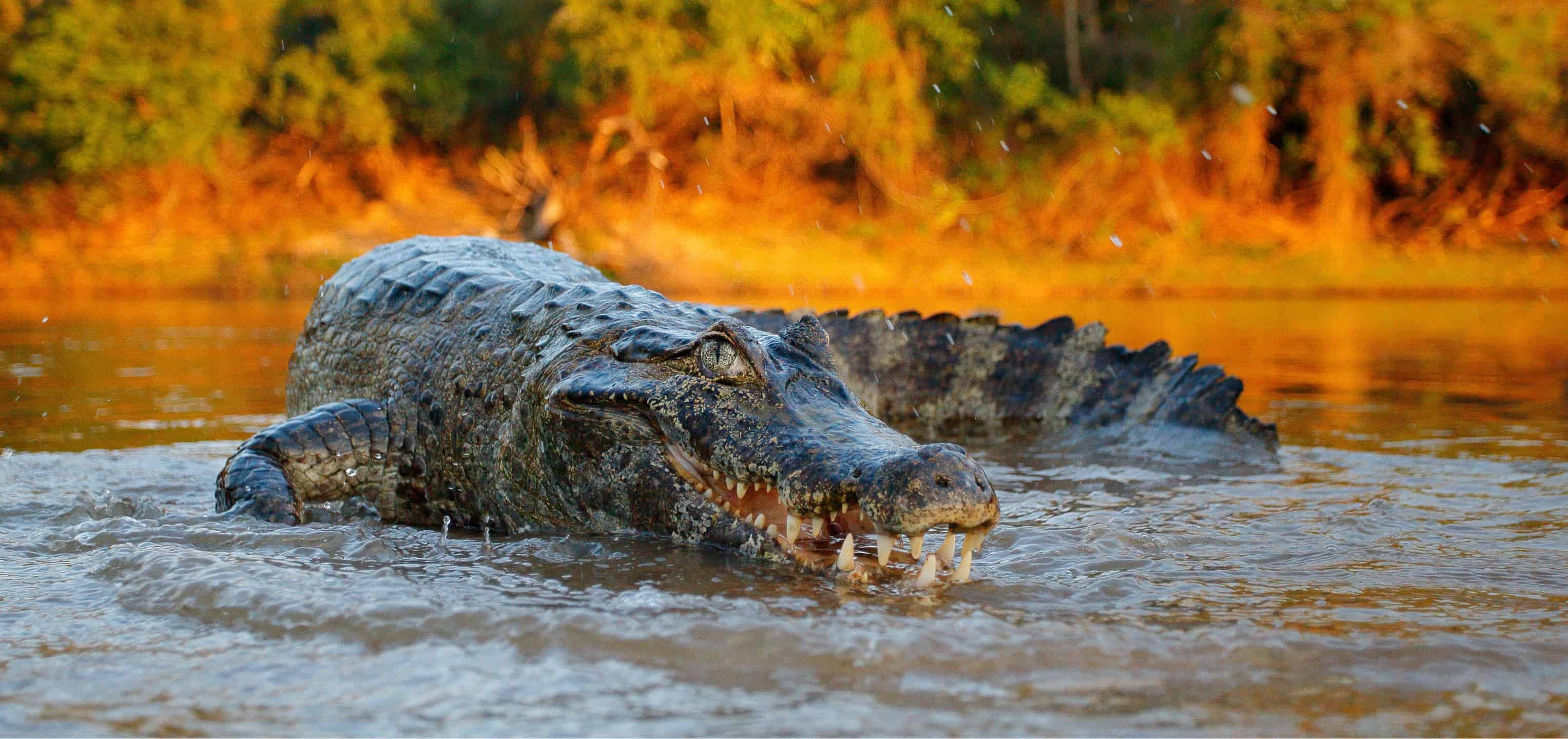
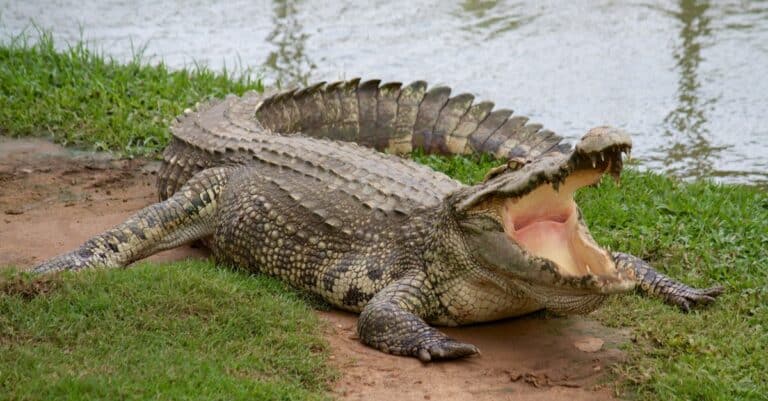
The encounter begins with the crocodile doing what crocodiles do best: lunging, clamping down, and attempting to overpower an animal before it can escape. In most hunts, that strategy works because a crocodile’s bite is enormously strong and its muscular body gives it control once prey is caught. The reptile may thrash, drag an animal toward deeper water, or rotate its body in the maneuver commonly called a death roll. An electric eel, however, is not defenseless prey. The instant the crocodile closes its jaws, it creates direct contact with an animal capable of releasing a powerful electrical discharge. That changes the struggle immediately. Instead of simply holding on, the crocodile appears to tense and thrash as the current affects its muscles. The scene is so striking because it reverses the usual roles: the ambush predator has secured its bite, yet the animal in its jaws still has a way to fight back from point-blank range.
Deadly Shock
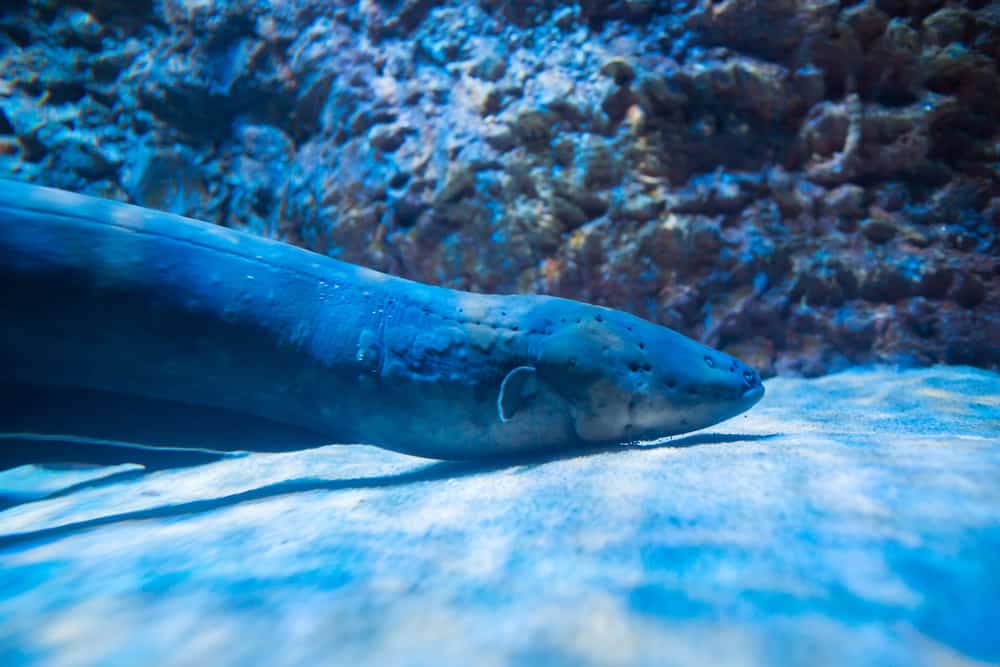
An electric eel produces a discharge by activating thousands of specialized cells called electrocytes at nearly the same time. When those cells fire together, their small individual voltages combine into a much stronger pulse. Because the crocodile has its jaws wrapped around the eel, the two animals are in close contact, giving the current a direct path through wet tissue. The crocodile’s sudden twitching and rigid movements are consistent with involuntary muscle contractions caused by electrical stimulation. The original clip is often described online as showing the crocodile dying, but a brief video alone does not provide enough evidence to confirm the animal’s final condition with certainty. What is clear is that the shock seriously disrupts the crocodile’s control of its body. The eel remains trapped during the exchange, making the encounter dangerous for both animals, but its electrical defense prevents the crocodile from completing an otherwise routine attack.
Is It Normal Behavior for Crocodiles to Eat Electric Eels?
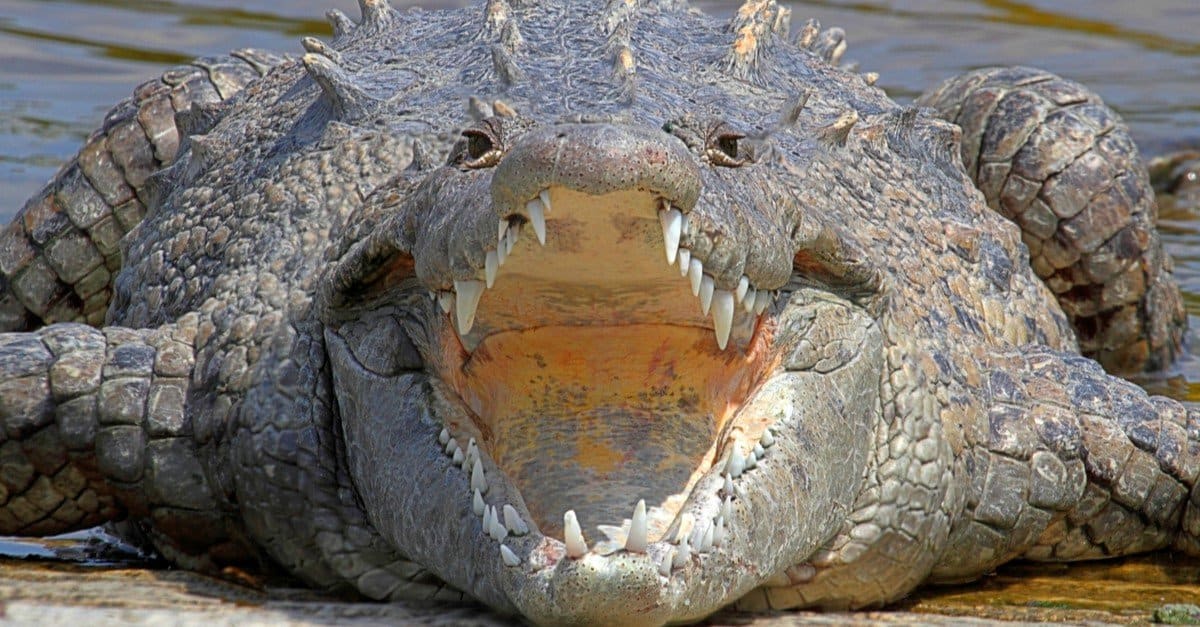
This is not a typical predator-prey pairing. Crocodiles are opportunistic hunters that eat fish, birds, reptiles, and mammals when the opportunity arises, but electric eels live in South American freshwater systems, while true crocodile species and local caimans occupy only some of the same broad regions. Even where their ranges overlap, an electric eel is a risky target compared with ordinary fish. Its body shape may make it look vulnerable, yet its electrical organs can deliver a rapid defensive response before a predator has time to release its grip. Electric eels are not completely free from threats, especially when young, injured, stranded, or caught by humans. Still, healthy adults have few predators willing to attack them directly. The clip is unusual precisely because the crocodilian commits to a full bite instead of avoiding the eel. That decision gives viewers a rare look at what can happen when an apex predator encounters prey with a defense powerful enough to override brute strength.
A Powerful Deterrent
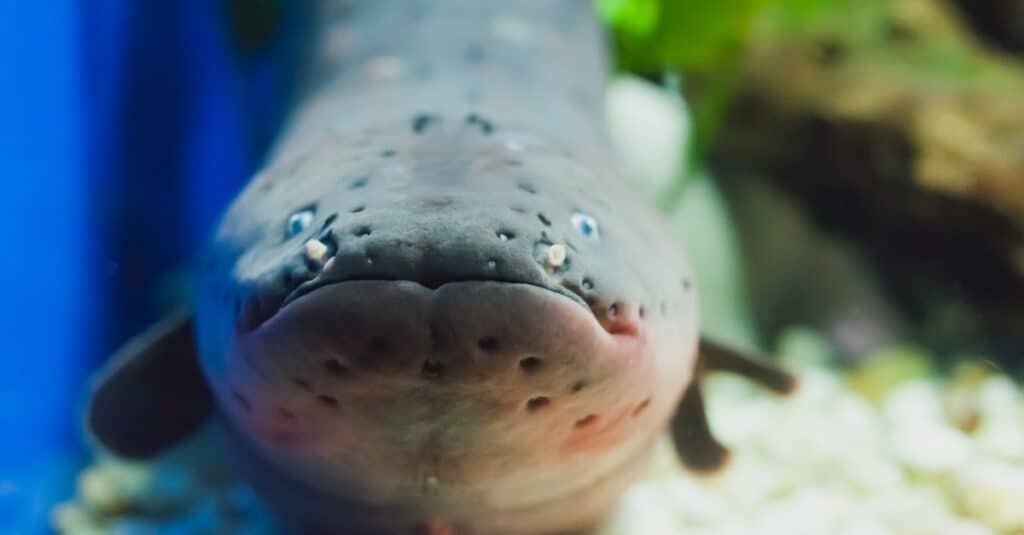
The electric eel’s discharge is one of the most effective deterrents in freshwater habitats. Depending on the species and the size of the individual, an eel can produce several hundred volts, with the strongest documented species capable of reaching roughly 860 volts. Voltage alone does not determine the severity of a shock; current, duration, the path through the body, and the condition of the animal all matter. Water also changes how electricity spreads, although direct physical contact can make the effect especially intense. Electric eels can release high-voltage pulses in rapid bursts, causing pain, loss of muscle control, and temporary incapacitation. They may also curl their bodies around prey or threats, bringing the positive and negative ends of their electric organs closer together and increasing the field across the target. For a crocodilian holding an eel in its mouth, the combination of wet tissue, sustained contact, and repeated pulses can turn a confident attack into an immediate struggle to let go.
Safe in the Shallows
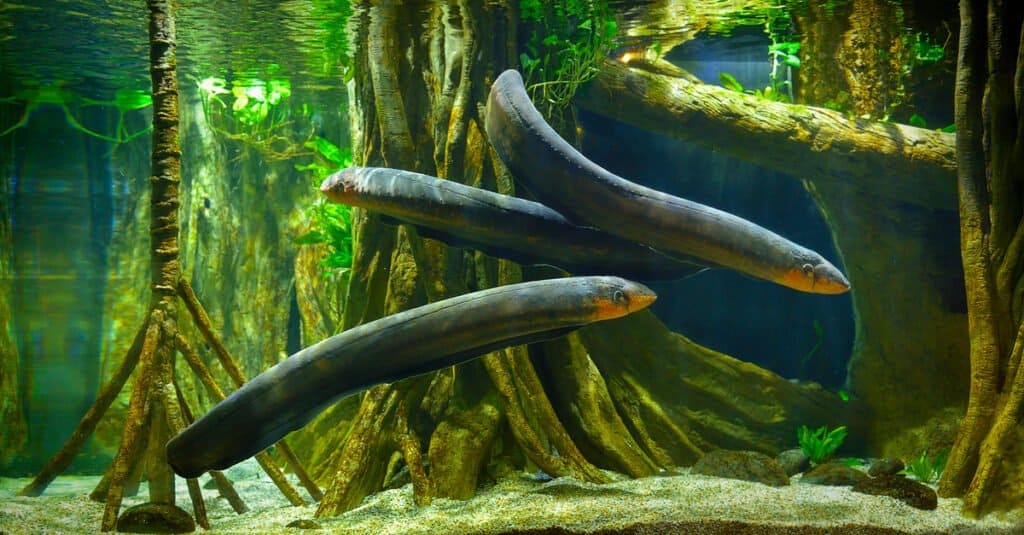
Shallow water can expose electric eels to birds, mammals, and reptiles that might not encounter them in deeper channels, but it can also make their electrical defense more useful. An eel does not have to outrun or overpower a large attacker if it can force that animal to retreat after contact. Researchers have observed electric eels partly emerging from the water and pressing their bodies against a threat, a behavior that can concentrate the electrical field through the attacker rather than allowing more of the current to disperse through the surrounding water. This ability is especially valuable during seasonal changes, when shrinking pools can crowd fish together and leave eels with fewer places to hide. The eel still faces risks from drought, injury, and human capture, but its shock gives it a level of protection that most similarly shaped fish do not have. In the crocodile encounter, the same principle applies: close contact in shallow water allows the eel to defend itself even after the predator has already seized it.
Do Electric Eels Generate Electricity?
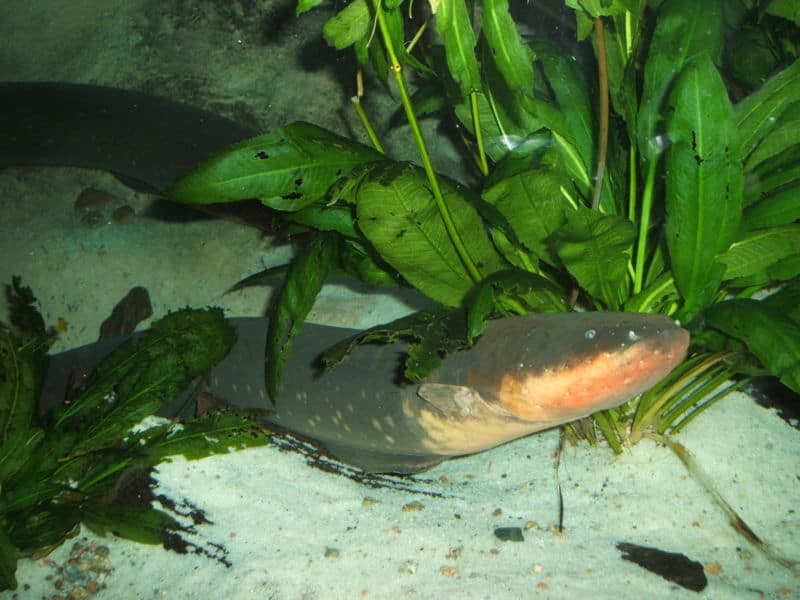
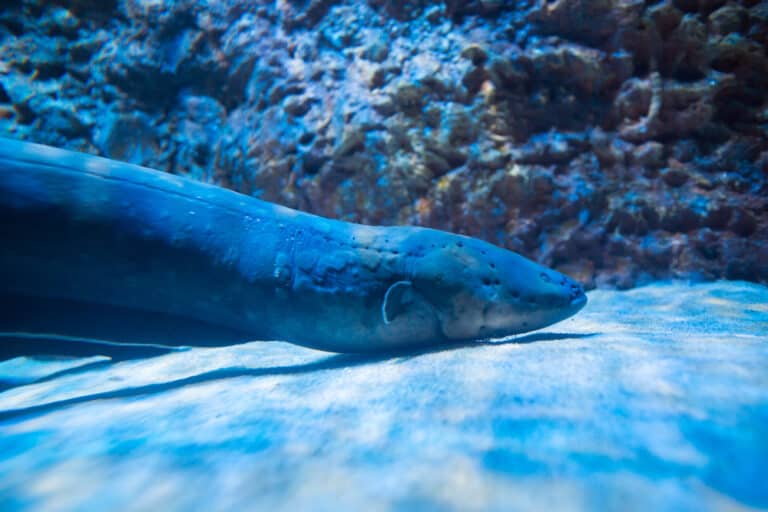
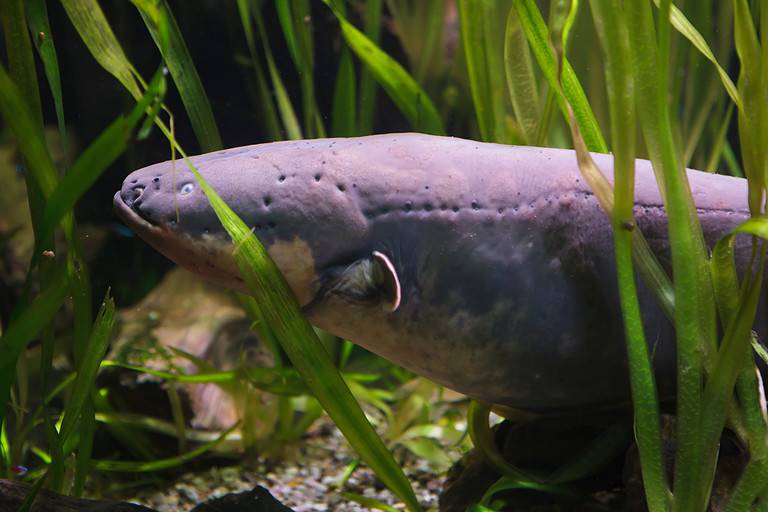
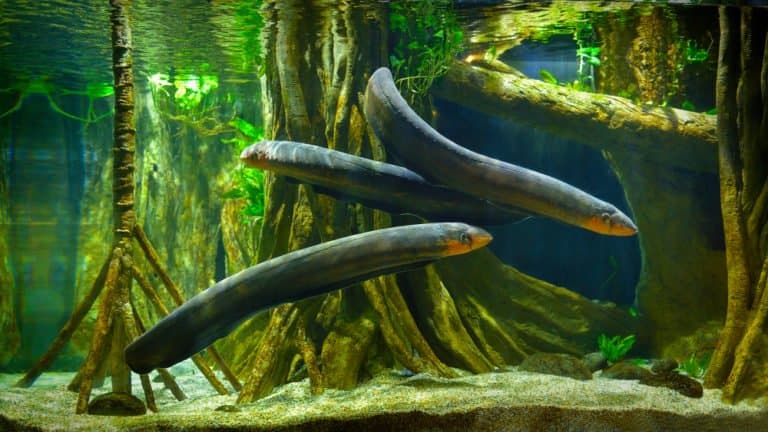
Yes, electric eels generate electricity inside their own bodies. Despite their common name, they are not true eels; they are knifefish related to catfish and carp. Much of an electric eel’s long body is devoted to specialized electrical organs made of electrocytes. These flattened cells function somewhat like tiny biological batteries. At rest, each cell maintains an electrical difference across its membrane. When the eel’s nervous system sends a command, channels in the cells open and allow charged particles to move, briefly reversing the electrical balance. A single electrocyte produces only a small voltage, but thousands are arranged in series so their output adds together. The eel can control when and how strongly these cells fire, producing low-voltage pulses for navigation and communication or high-voltage bursts for hunting and defense. This system works almost instantly, which is why an eel can respond to a predator at the moment it is bitten rather than relying on a slower physical escape.
How Do Electric Eels Make Electricity?
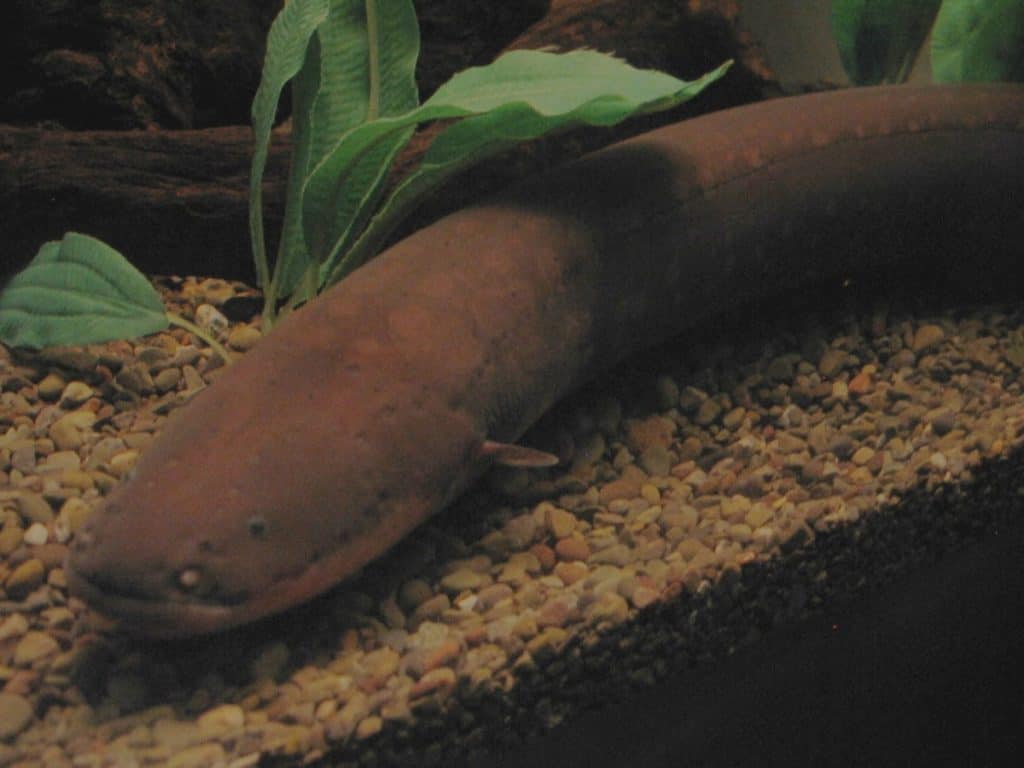
Electric eels rely on three main electrical organs: the main organ, Hunter’s organ, and Sachs’ organ. Together, these structures occupy most of the animal’s body behind the vital organs near its head. The main organ and part of Hunter’s organ produce the strongest high-voltage discharges used to stun prey or repel a serious threat. Sachs’ organ and other portions of Hunter’s organ generate weaker pulses that help the eel sense its surroundings, communicate, and locate objects in dark or muddy water. Those low-level signals create an electric field around the animal. Nearby objects distort the field, and sensory receptors in the eel’s skin detect the changes, providing a form of active electrolocation. High-voltage firing requires more energy and is generally reserved for moments when the eel needs to hunt or defend itself. In the crocodile encounter, the bite provides exactly that kind of emergency trigger, prompting a powerful burst rather than the gentle pulses used during ordinary movement.