
Quick Take
- Dogos Argentinos have a dual personality that surprises most first-time owners, and which side dominates depends on one critical factor. Explore their dual nature →
- Over a quarter of Dogos Argentinos share a hidden health condition that responsible breeders can dramatically reduce, provided you know what to look for. See the health risks →
- Delaying one specific step after bringing a Dogo Argentino home can turn a loyal companion into an unmanageable dog. Why early training matters →
- Their prey drive makes one common household situation surprisingly risky, and this holds true even for dogs raised together from puppyhood. Understand their prey drive →
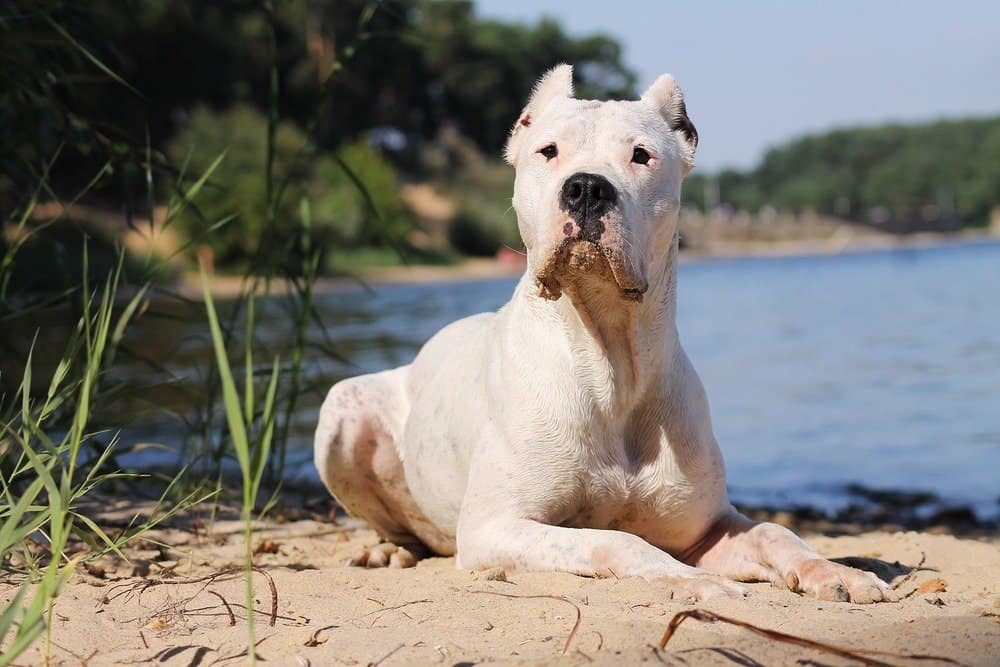
Dogos Argentinos are a dog breed developed in Argentina in 1928. These large, mostly white dogs were bred to hunt wild boar and pumas. Characteristics of the breed include stamina and loyalty. Male Dogos Argentinos stand 24 to 27 inches tall and weigh between 80 and 100 pounds, while females are slightly smaller at 24 to 26 inches tall at the shoulder and weighing between 80 and 95 pounds.
These dogs have been on numerous TV shows, including Animal Planet’s “Dogs 101”, Cesar Millan’s “Dog Whisperer,” and “Ray Donovan.” The star of “Good Bones,” Mina Starsiak, rescued her Dogo Argentino, Frank, and he makes regular appearances on her Instagram. Furthermore, these dogs have proven themselves as successful search and rescue dogs, therapy animals, and military canines. However, you may be wondering whether or not Dogos Argentinos are safe family pets. Continue reading to discover if a Dogo Argentino is a good fit for your family.
Appearance
The Dogo Argentino is a powerful, highly athletic breed known for its sleek white coat and muscular, well-defined frame. Although their coats are predominantly white, many Dogos Argentinos have some black markings, although the American Kennel Club (AKC) will only permit a single dark or black patch around the eye, ear, or face, and covering no more than 10% of the head.
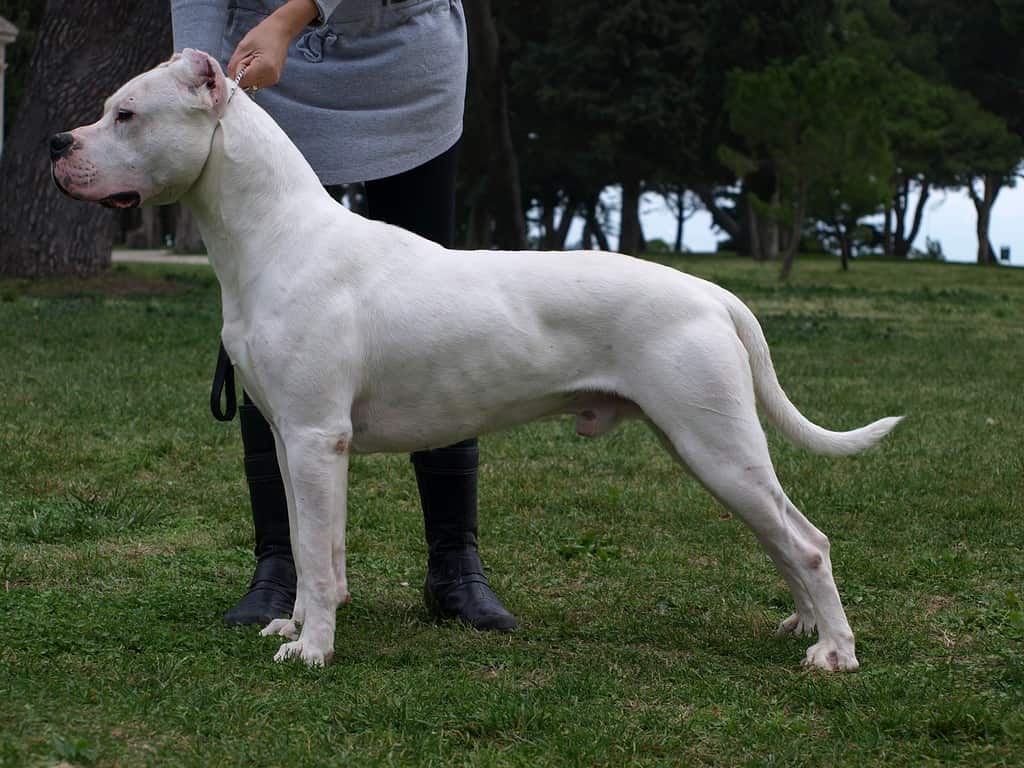
The Dogo Argentino temperament gives them a strong desire to be close or in close contact with a family member.
Temperament
Dogo Argentinos are astonishingly powerful dogs with dual personalities. They can be both a loving family member and a ferocious hunter. However, they are not generally aggressive without provocation. The Dogo Argentino temperament gives them a strong desire to be close or in close contact with a family member. These dogs will welcome most newcomers participating in family events but will remain alert for any threats and will jump into action if they sense danger.
They are devoted to their human families, but they have a powerful prey drive. Therefore, it is advisable to keep them away from smaller dogs and cats unless they were raised together. Even then, it is a good idea to supervise them.
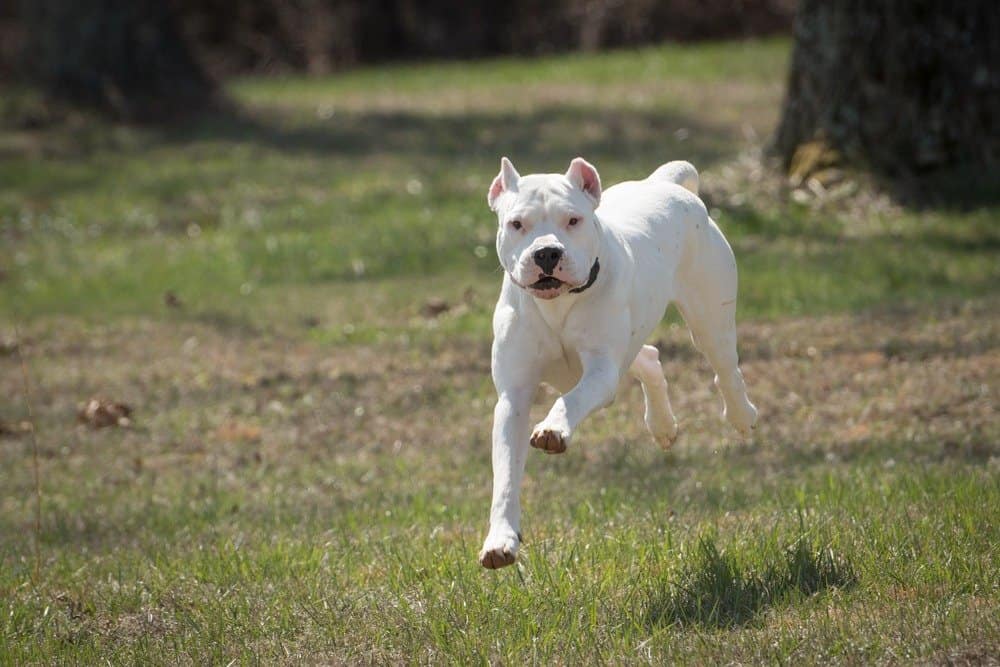
An untrained Dogo Argentino may be difficult to control.
©NSC Photography/Shutterstock.com
Dogos Argentinos are independent and strong-willed; they need an assertive and confident owner who will take on the role of pack leader.
They are athletic and lively dogs who need adequate exercise and stimulation to stay healthy and happy.
It is advisable to begin training them as soon as you bring them home.
Dogos Argentinos are independent and clever, but they are not always eager to please. Therefore, they respond well to positive reinforcement when training. It is up to the owner to begin training as soon as possible and to maintain a consistent and caring training routine. Delaying training until they are older may result in a headstrong dog that is difficult to manage.
Care
Although Dogos Argentinos require plenty of physical activity to stay happy and healthy, they do not need much grooming. Their short, white coats only need a quick brush once a week, making them low-maintenance in terms of grooming.
They should be bathed with a mild shampoo only when they are visibly dirty. Like any other dog breed, their oral health is important, and their teeth should be brushed regularly. Their nails can grow quickly and should be trimmed at least once a month, depending on their activity level. Dogos Argentinos tend to develop waxy ears; therefore, their ears should be cleaned regularly.

A well-trained Dogo Argentino can make a loving and protective family pet.
©BearFotos/Shutterstock.com
Health
Dogos Argentinos do not suffer from many health issues and are generally healthy. IIf they are fed a high-quality diet and get enough physical activity, their life expectancy ranges from 9 to 15 years.
However, their diets should be monitored closely to prevent them from carrying extra weight. Their short coats make them more heat-tolerant, allowing them to participate in strenuous activity without overheating. However, they should always have access to clean drinking water and shade.
One of the most common health issues for Dogos Argentinos is deafness, which can affect over 25% percent of these dogs. Diligent breeders can reduce the incidence of deafness by not breeding dogs with congenital deafness. Therefore, it is essential to choose a reputable breeder who conducts health tests on their dogs.
Like all large dog breeds, the Dogo Argentino can also suffer from:
- Bloat
- Glaucoma
- Periodontal disease: This issue affects most dog breeds. As it is a dental disease, it can be prevented by regular teeth cleaning at home or by a vet.
- Hip and elbow dysplasia: All large breed dogs can suffer from hip or elbow dysplasia. This is when the bone does not fit properly in the joint, leading to arthritis and pain. Luckily, it can be treated with medication or surgery.
- Laryngeal paralysis: This is caused by the nerve that opens and closes the larynx, opening only slightly or not at all. This can lead to increased breathing sounds or difficulty breathing. It can be treated surgically.
- Hypothyroidism: When a dog’s thyroid gland is underactive, it does not produce enough thyroid hormone. This can cause weight gain, low energy, and increased infection susceptibility.