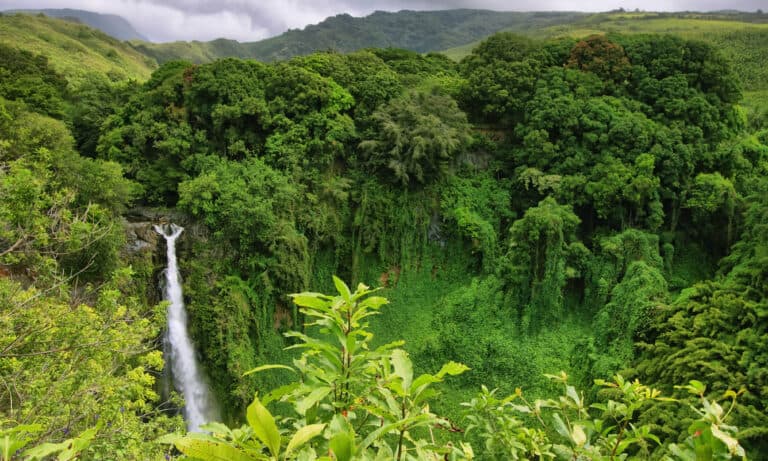
Hawaii (Hawai’i) is one of those enchanting islands where the warm sun kisses your skin, a gentle breeze carries the sweet scent of exotic flowers, and you’re constantly surrounded by beautiful colors. In this paradise, towering palm trees sway in rhythm with the ocean waves, but it’s the flowering trees that steal the show with their ethereal beauty. From the vibrant hibiscus to the delicate and fragrant blossoms of the plumeria, these stunning flowering trees transform the landscape into a kaleidoscope of color. Come along and immerse yourself in the irresistible allure of the many gorgeous flowering trees that thrive in Hawaii!
1. Nāʻū or Hawaiian Gardenia (Gardenia brighamii)
This beautiful flowering tree in Hawaii is unfortunately a critically endangered species in the wild. They once grew freely across the main islands, but today only a few wild trees live on the leeward sides of islands in Lānaʻi and Kānepuʻu. However, cultivated varieties are also very popular, and are used for floral leis and as ornamental plants. Known as nāʻū or Hawaiian gardenias, these gorgeous plants are endemic to the Hawaiian Islands and can grow as large shrubs or small trees usually up to 15 feet tall.
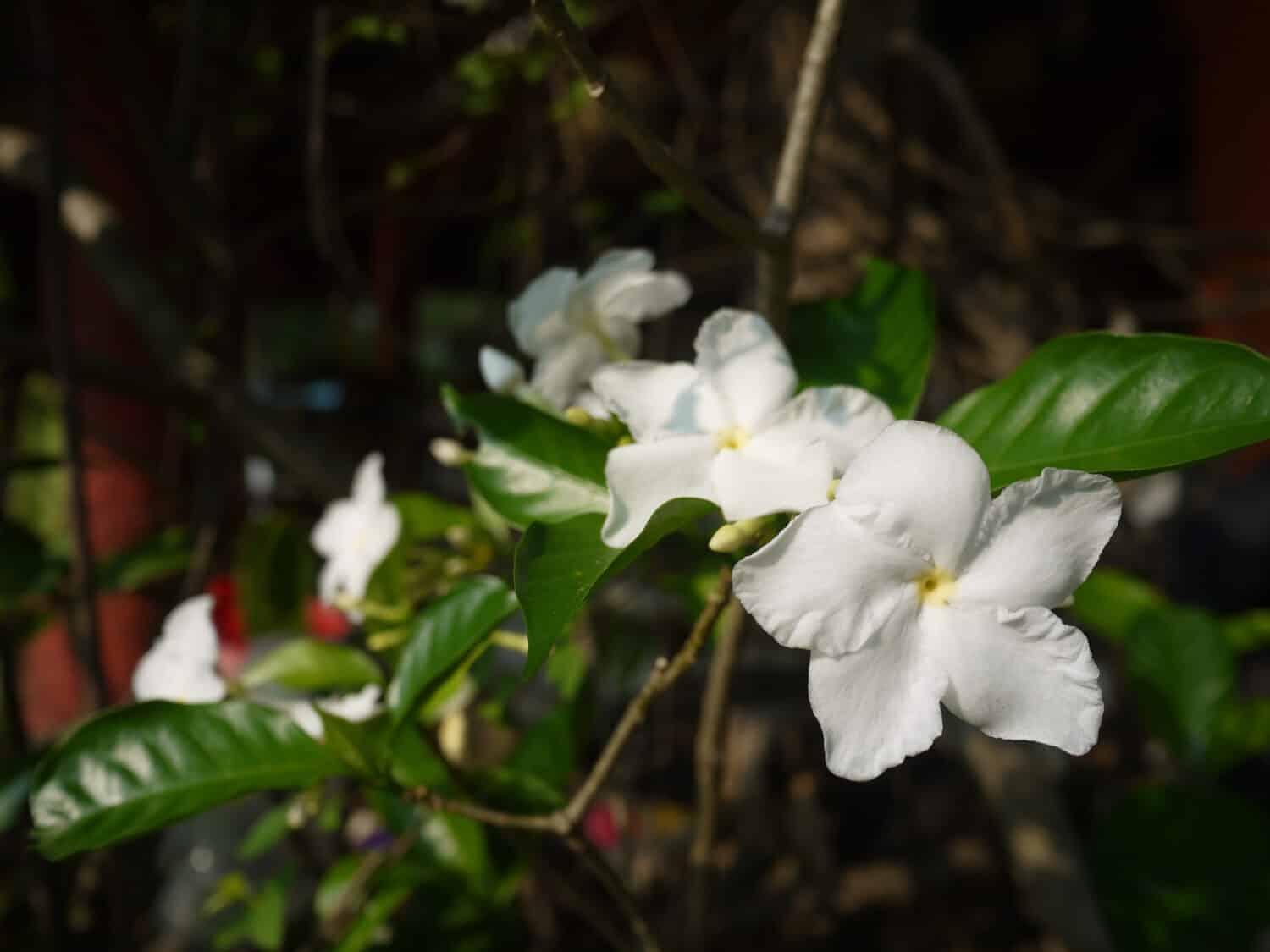
“Nāʻū” means “fragrant” or “sweet” and refers to the flower’s fragrant coconut-like scent.
©Sarocha_Siripan_Boonsen/Shutterstock.com
2. ʻŌhiʻa Lehua (Metrosideros polymorpha)
Another flowering tree native to Hawaii is the ʻōhiʻa lehua. These exquisite trees have long held a revered place in Hawaiian culture, entwined within many of the oli (chants), mele (songs), and mo’olelo (stories) of the island. ʻŌhiʻa lehua trees are one of the few trees that grow well in rocky areas and are some of the very first plants that sprout up after a recent lava flow. Some grow into smaller shrubs that spread out, while others grow as trees with a single trunk. The colorful flowers of the ʻōhiʻa lehua also come in many different colors, like salmon pink, red, orange, and yellow.
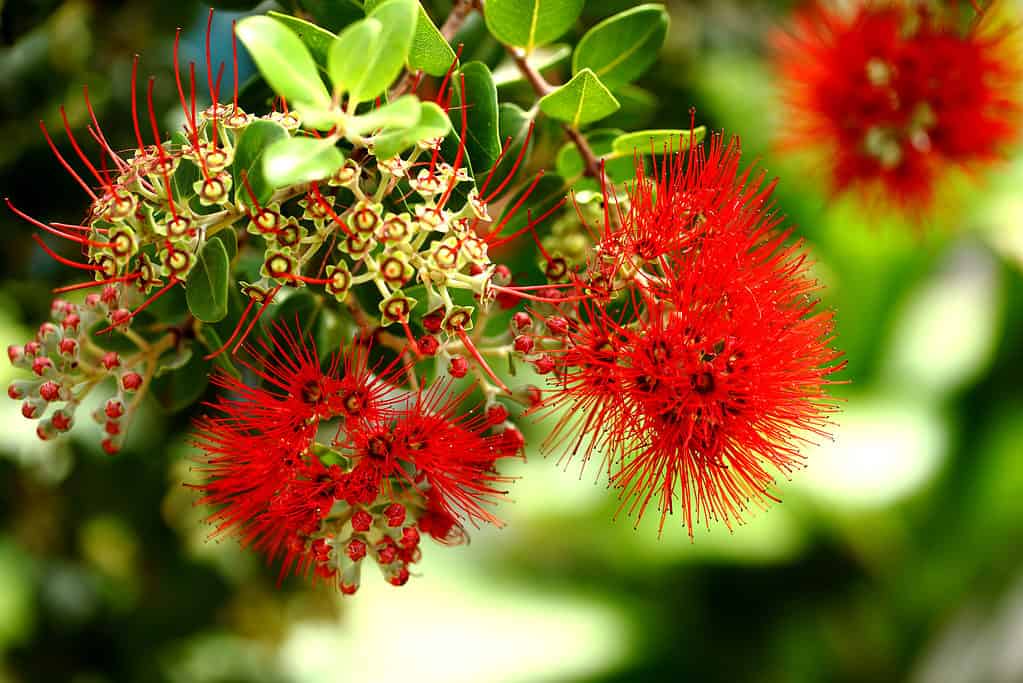
On rare occasions, there are also ʻōhiʻa lehua trees with white blossoms.
©Aaron Miyamoto/Shutterstock.com
3. Puakenikeni (Fagraea berteroana)
“Puakenikeni” is a Hawaiian term that means “ten-cent flower”, which comes from the plant’s history on the islands. Flowers from the puakenikeni tree are commonly used to make leis, which were sold for 10 cents many years ago. Puakenikeni trees grow as large shrubs or small spreading trees up to 15 feet tall. Their small but stunning blossoms grow in clusters at the ends of the tree’s branches. These small blooms are only about an inch in diameter, but the tree continually flowers, so you can harvest blossoms a few times each week. Puakenikeni flowers also change color, transitioning from white to yellow to orange.
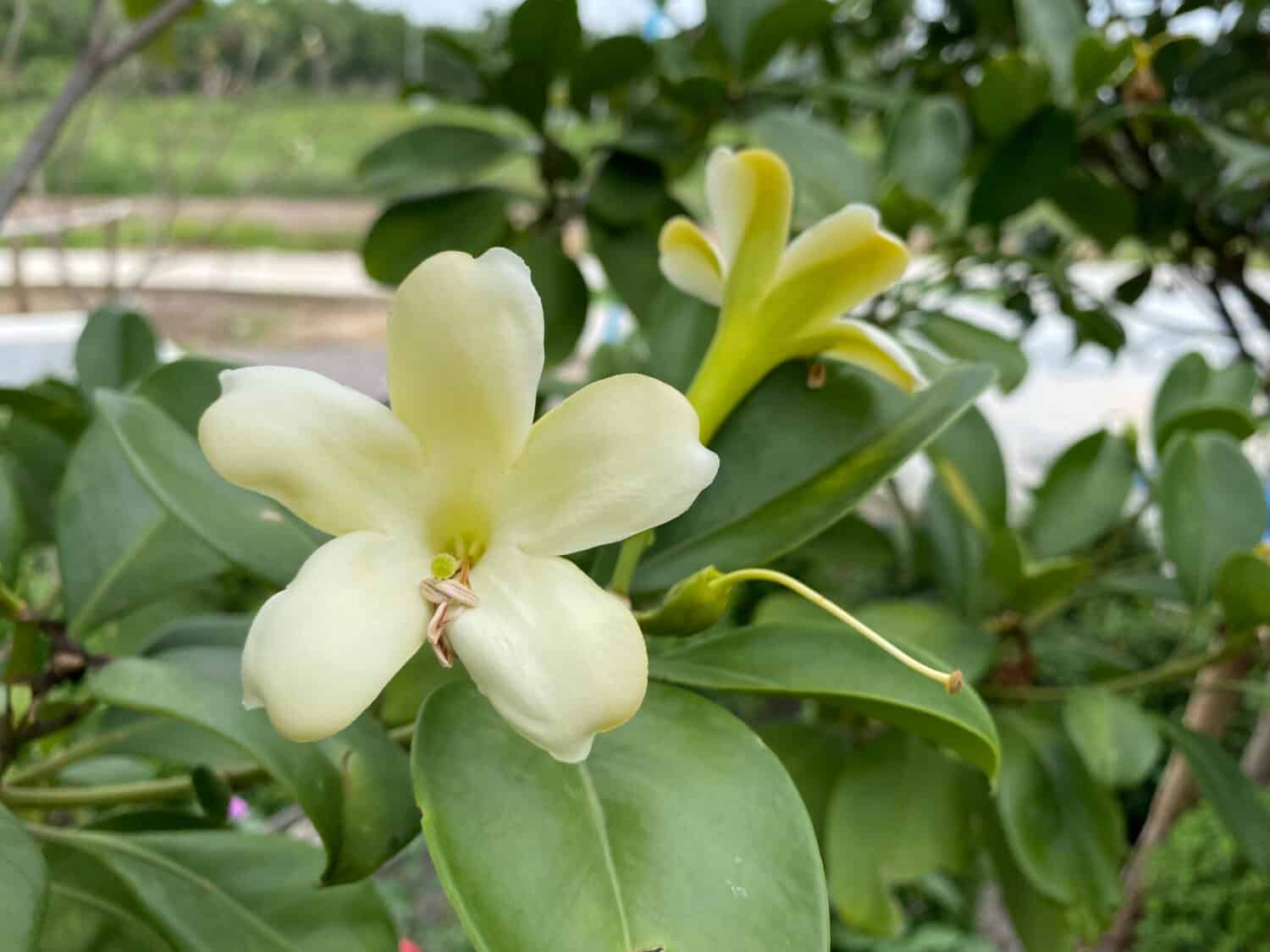
Puakenikeni flowers are very fragrant and can be used to make perfume oil.
©Doikanoy/Shutterstock.com
4. Hau Tree (Hibiscus tiliaceus)
The illustrious flowers of the hau tree bloom in clusters of yellow blossoms with dark red centers. These flowers only last for a single day, and as they mature, their crepe paper-like petals transition from yellow to orange and then red. These fragrant blossoms attract pollinators like butterflies and bees and are popular ornamental plants as well. Most commonly found on the coasts, hau trees can grow in rocky or sandy areas and are very drought tolerant.
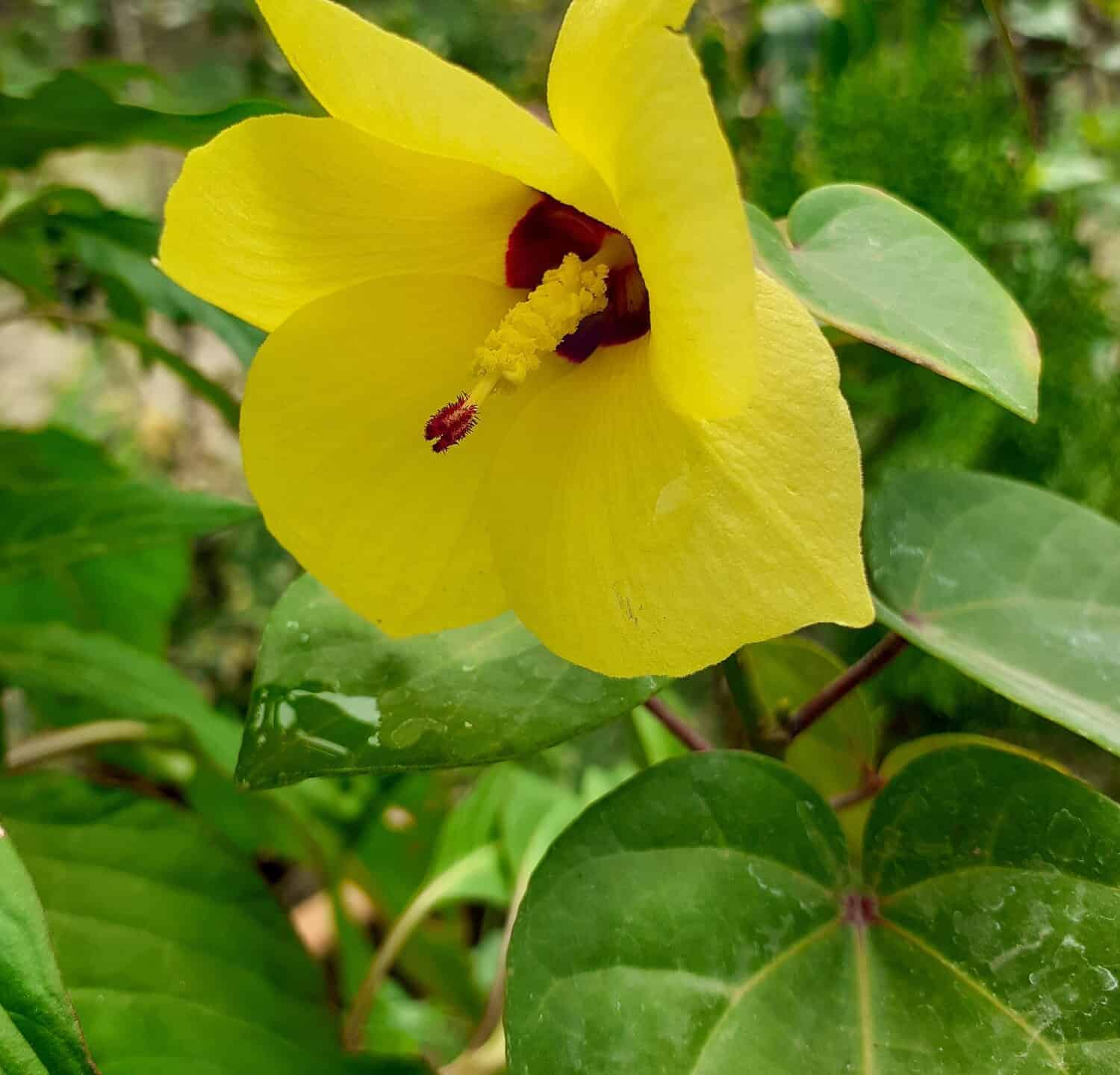
Hau trees grow up to 20 feet tall, with large, heart-shaped leaves.
©Hayat Ullah5599/Shutterstock.com
5. Plumeria (Plumeria)
Also known as frangipani, plumeria trees are native to the Caribbean, Central America, and Mexico. However, they thrive extremely well on the Hawaiian Islands and are now a major part of the Hawaiian culture. You will see them all across the islands, and they are common in leis and decorations.
Plumeria flowers come in many different colors, like pink, red, white, orange, yellow, and white, with stunning petals that overlap one another in a simple pinwheel-like shape. Not only are they beautiful, but plumeria blossoms are also extremely fragrant and are popular for candles, lotions, perfumes, and aromatherapy.
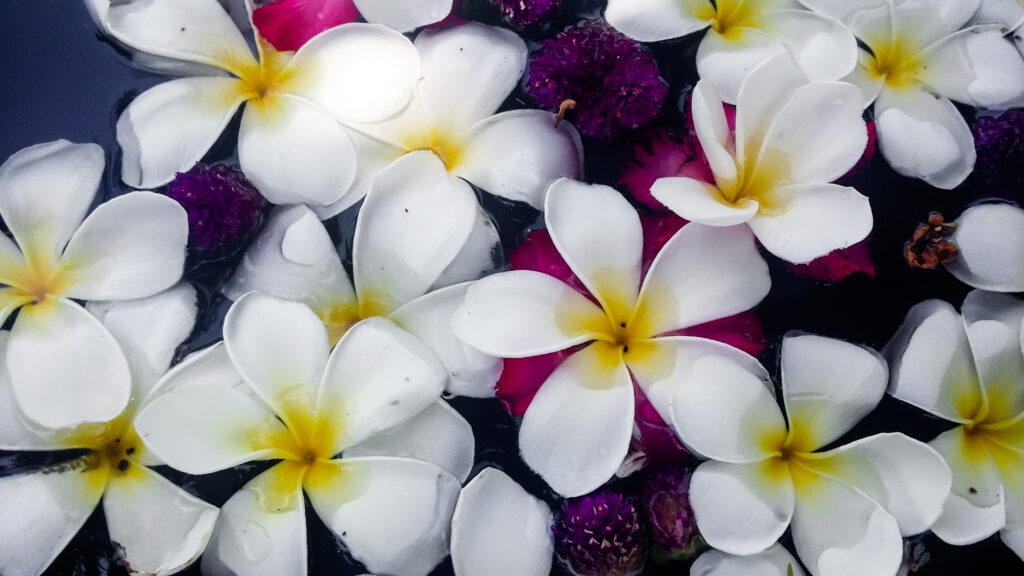
Plumeria trees thrive in Hawaii and do well in hot and dry climates. However, they benefit from watering.
©iStock.com/tumsubin
6. Golden Shower Tree (Cassia fistula)
Native to the Indian subcontinent and neighboring regions of Southeast Asia, the golden shower tree is a brilliant ornamental plant. Reaching heights of up to 70 feet, the golden shower tree branches out with compound leaves made of smaller leaflets, creating beautiful and full foliage in its canopy.
Golden shower trees have vibrant yellow flowers that bloom on drooping stalks, cascading down delicately like rays of sunshine. Not only are the flowers beautiful, but they are also edible, and the tree’s leaves and bark have many different medicinal properties. The seeds, however, are poisonous, so you should leave those alone!
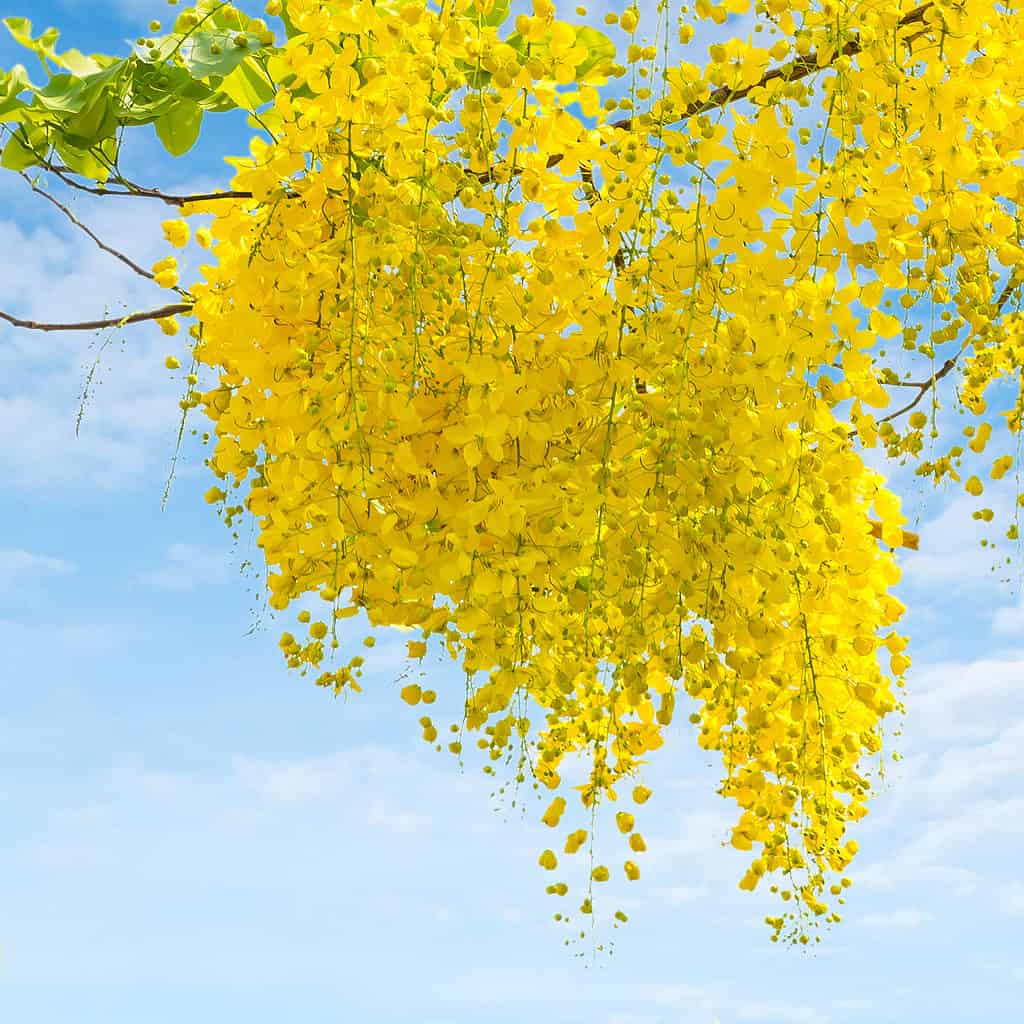
Golden shower trees are also called Indian laburnum, purging cassia, pudding-pipe trees, or Kani Konna.
©TigerStocks/Shutterstock.com
7. Angel’s Trumpet (Brugmansia)
The stunning trumpet-shaped flowers are what give the angel’s trumpet tree its name. These enormous and colorful blossoms hang downwards amid the leaves, with some growing up to 20 inches long! Angel’s trumpet blossoms come in various captivating colors, from white to yellow, red, orange, or pink.
Although they are magnificent during the day, angel’s trumpet trees truly come alive at night. Once the sun goes down, they open their delicate petals and release a captivating fragrance into the air. This attracts many types of pollinators like moths, butterflies, and birds. However, you should always be careful around angel’s trumpet trees; they are members of the nightshade family and conceal potent toxins that are very harmful if ingested.
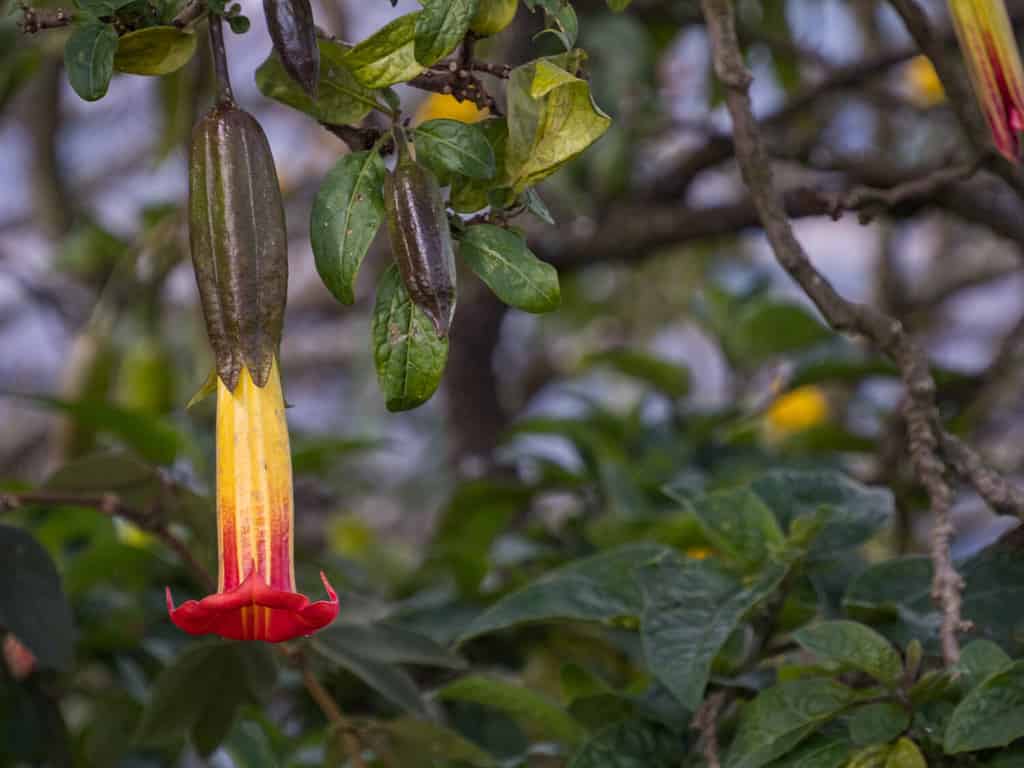
Angel’s trumpet trees can grow up to 26 feet tall.
©Nowaczyk/Shutterstock.com
8. Red Kauai Rosemallow or Kokiʻo ʻula (Hibiscus clayi)
With showy blossoms in shades of bright or dark red, kokiʻo ʻula or the red Kauai rosemallow tree can grow up to 25 feet tall. The tree’s flowers grow 2 to 2.5 inches wide, with five flared and slightly cupped petals and a yellow center. Although they bloom all throughout the year, the best time to see them is in the spring and summer, when the trees produce the most flowers. Endemic to Hawaii, this rare gem only lives in the dry forests of eastern Kauaʻi’s Nounou Mountains. Unfortunately, it is a critically endangered species.
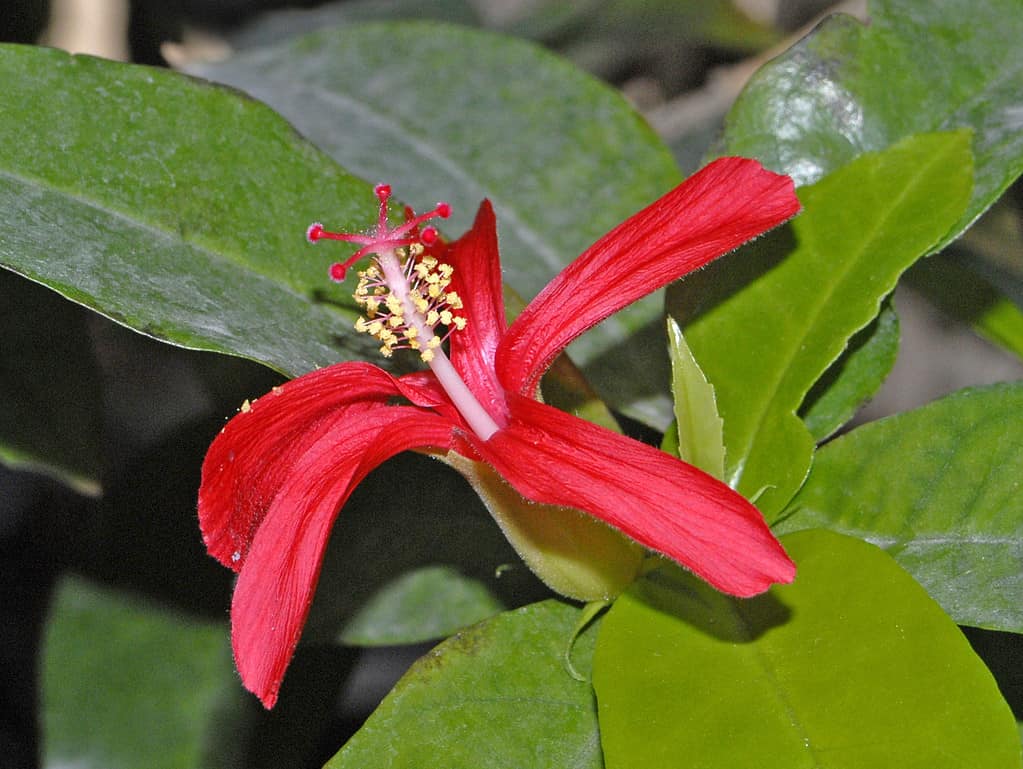
Red Kauai rosemallow trees are threatened by habitat loss and destruction, as well as browsing livestock.
9. Royal Poinciana (Delonix regia)
These extravagant flowering trees in Hawaii are popular for landscaping, as they are relatively fast-growing plants that can grow up to 50 feet tall. Their scientific name is Greek and means “royal flame”, which refers to the trees’ fiery-colored blossoms. Each flower consists of five vibrant yellow, red, or orange-red petals. They grow in clusters amid green, fern-like leaves, making the trees look like they are on fire.
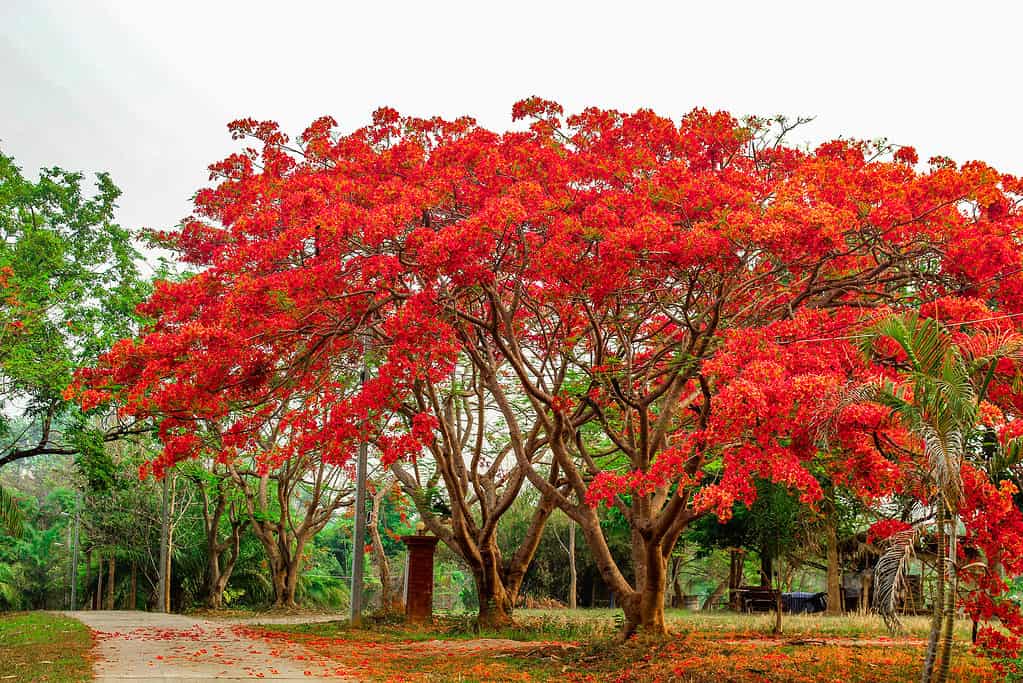
Native to Madagascar, royal poinciana trees are also called flame trees or flame of the forest trees.
©Randall W Simpson/Shutterstock.com
10. Orchid Tree (Bauhinia variegata)
Orchid trees can grow as multi-stemmed, wide-spreading shrubs or as stunning trees around 20 feet tall. Their light green leaves can grow over 7 inches long and are bilobed, which means that they are divided into two sections, making them look like a pair of butterfly wings. Orchid tree flowers grow in colorful clusters at the ends of the branches when the leaves are falling or have already fallen off the tree. Each flower is about 2 to 3 inches wide, with five long stamens in the center and both bigger and smaller purple, pink, or white petals.
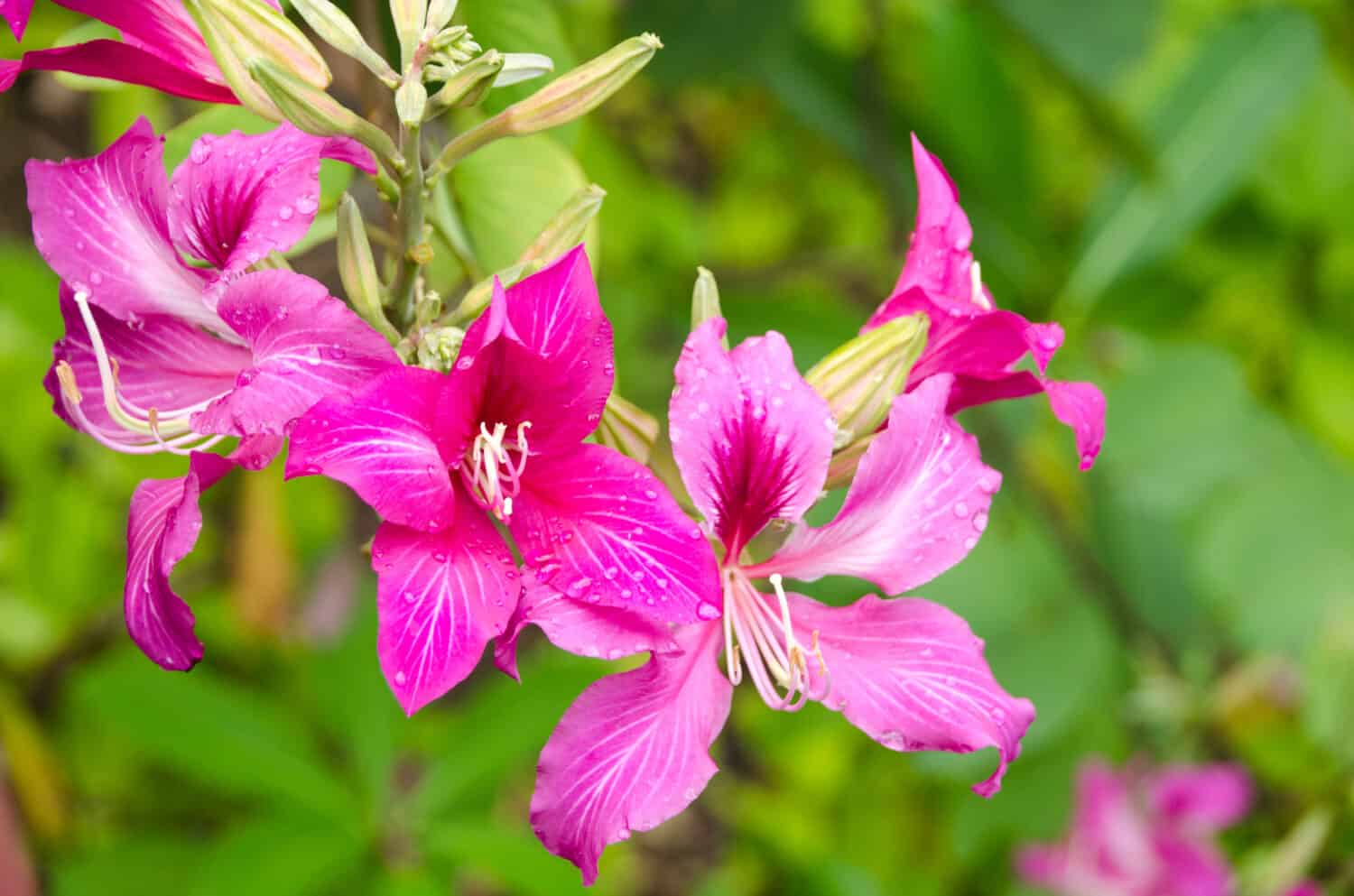
Orchid trees have showy, orchid-like flowers that bloom from late winter to early spring.
©konjaunt/Shutterstock.com
11. White Kauai Rosemallow or Kokiʻo Keʻokeʻo (Hibiscus waimeae)
Endemic to Kauaʻi, the white Kauai rosemallow tree or kokiʻo keʻokeʻo has smooth gray bark and large rounded leaves. Its striking flowers bloom with delicate white petals in the morning, but as the day progresses, they fade to pink. The large staminal column in the center of each flower is a vibrant crimson or pink color, a bold contrast to its pure white petals.
Blooming all throughout the year, the white Kauai rosemallow tree grows as a shrub or a tree up to 30 feet tall. Unfortunately, the white Kauai rosemallow tree is an endangered species, but there are many conservation efforts working to protect this beautiful flowering tree in Hawaii.
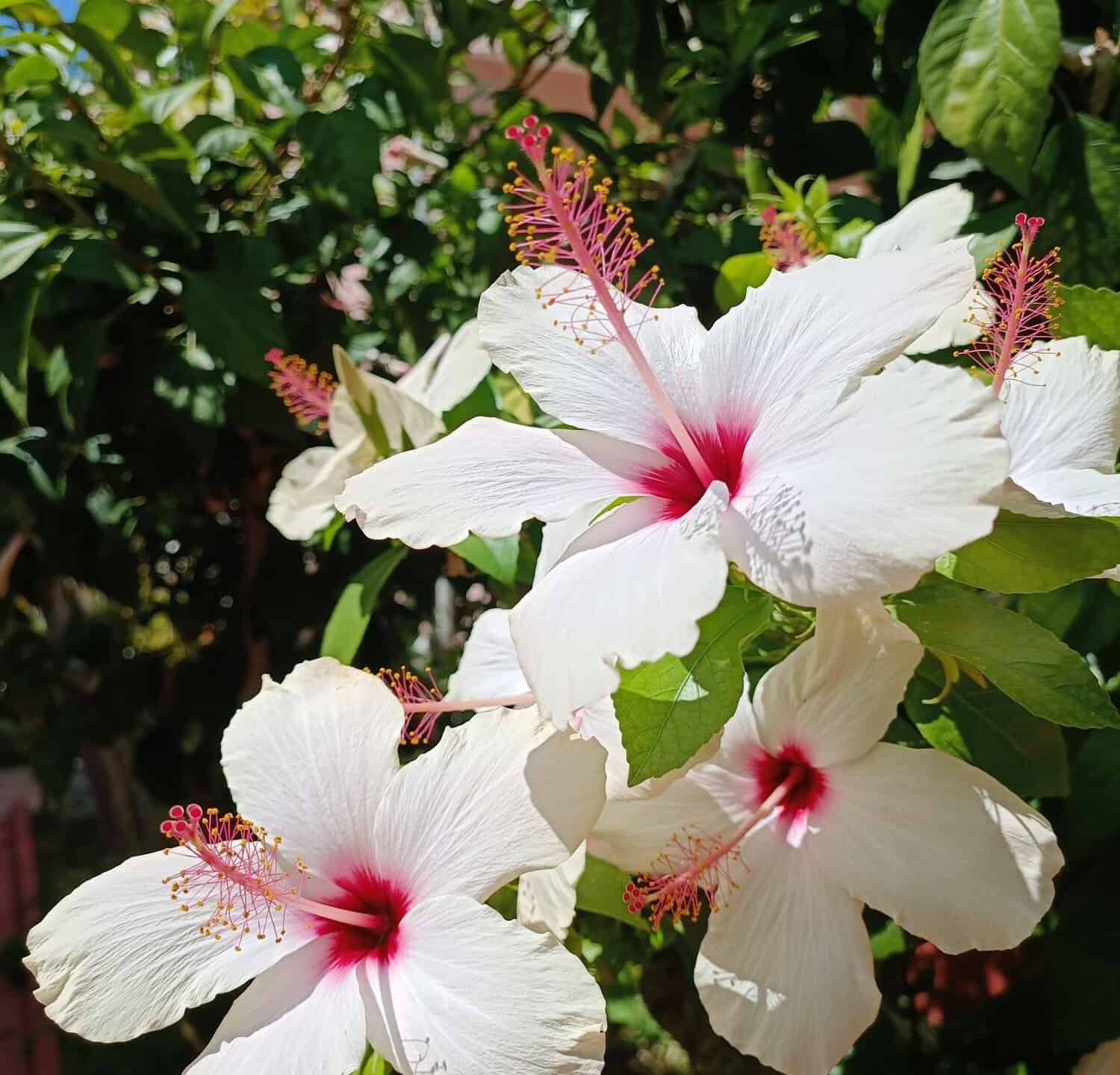
White Kauai rosemallow flowers are both beautiful and fragrant and are commonly used in leis.
©Portrezey/Shutterstock.com
12. Bottlebrush (Callistemon)
These incredible evergreen flowering trees are native to Australia, but they also thrive in Hawaii. Bottlebrush flowers burst in vibrantly colored cylindrical shapes, with tons of tiny spiky stamens spiraling around the blossom. They look like colorful hanging bottlebrushes, which is where they get their name.
Bottlebrush flowers can be up to 6 inches long and come in bright colors like pink, red, orange, yellow, or white. Their numerous colored stamens are like magnets for pollinators — birds and butterflies can’t resist the vibrant hues and are drawn to them like a sweet treat! Bottlebrush trees are also popular because they can tolerate drought, salt, and full sun, and their flowers last for a long time during the warmer months of the year.
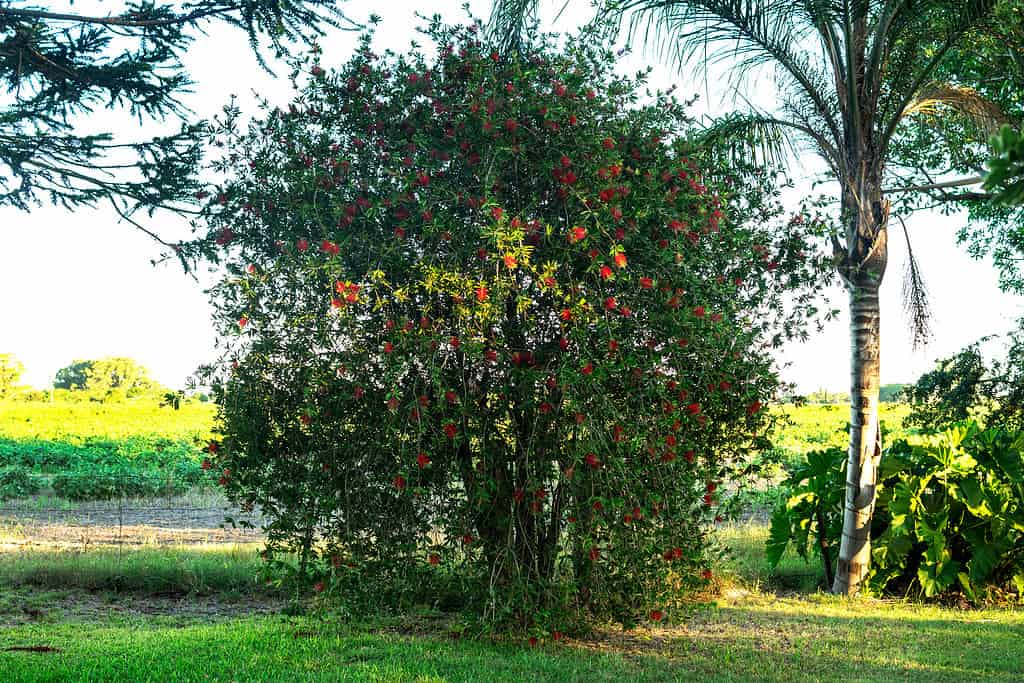
Bottlebrush trees love the sun and do best in warm climates.
©Gaston Cerliani/Shutterstock.com
13. Jacaranda (Jacaranda mimosifolia)
Although not native to Hawaii, jacaranda trees are popular harbingers of spring on the islands. Blooming in late April and May, jacaranda trees produce magnificent lavender-blue blossoms shaped like trumpets. The flowers grow together in clusters and produce a sweet scent. If you visit the islands, you may see rows of beautiful jacaranda trees growing not only in gardens and parks but also along streets and highways. Their beautiful blossoms last for quite a while, and then fall to the ground in lush carpets of lavender-blue petals.

Jacaranda trees do best in warm and tropical climates. They don’t flower as well in cooler environments.
©Tamara Kulikova/Shutterstock.com
14. African Tulip (Spathodea Campanulata)
Native to the tropical regions of Africa, the African tulip tree is a large evergreen that flowers all year long in warm climates and produce a sweet, citrusy scent. Its large and showy cup-shaped blossoms grow in clusters and look like orangey-red tulips. African tulip trees can grow up to 60 feet tall and 40 feet wide, with branches that spread out to form a gigantic umbrella-like shape. They are popular for their showy appearance as well as their ability to grow very quickly.
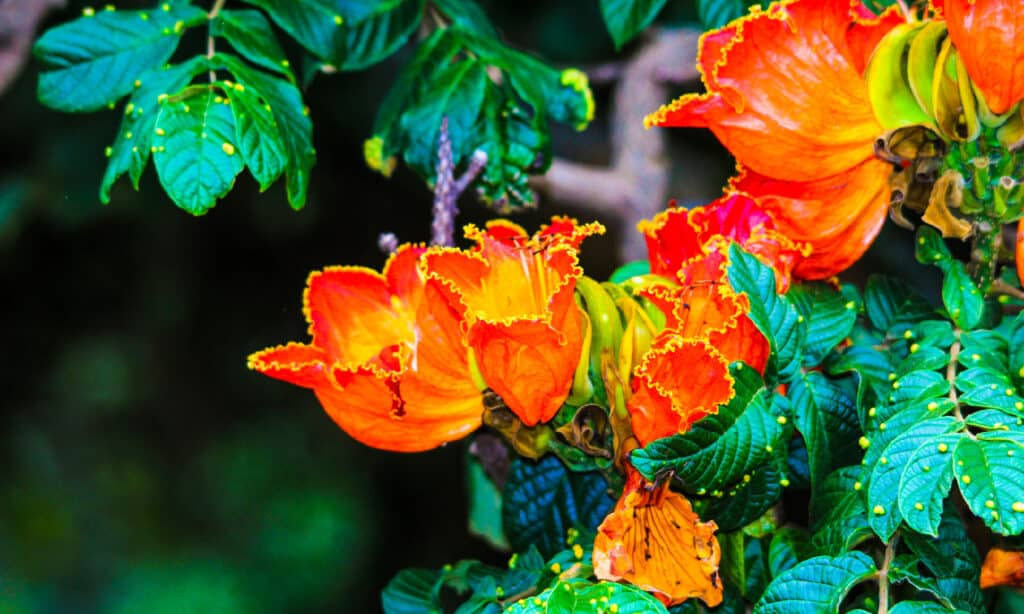
African tulip trees sometimes grow a little too well in Hawaii and are considered an invasive species.
©iStock.com/Ansley Kynes
15. Yellow Tabebuia (Tabebuia argentea)
Also called the tree of gold or the golden trumpet tree, the yellow tabebuia is a spectacular golden flowering tree that thrives in Hawaii. These trees grow 40 to 60 feet tall with large spreading canopies bursting with bright yellow flowers. Yellow tabebuia trees bloom at the beginning of spring, with vibrant blossoms growing together in clusters up to 12 inches long. They grow relatively quickly and can thrive in a variety of different places throughout Hawaii.
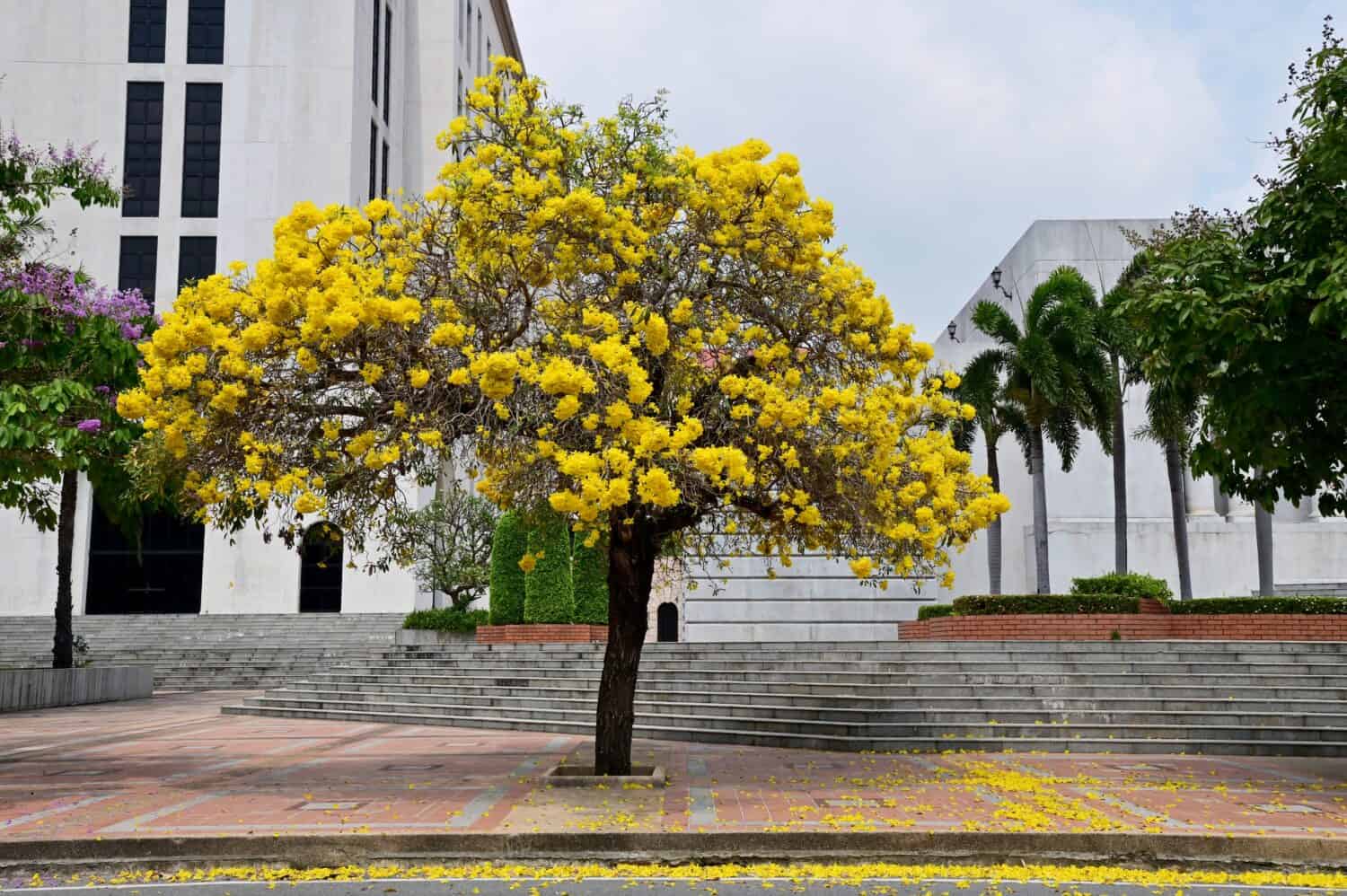
Many people also cultivate yellow tabebuia trees as ornamental trees for their gardens.
©Takaeshiro/Shutterstock.com
16. Hawaiian White Hibiscus or Kokiʻo Keʻokeʻo (Hibiscus arnottianus)
Another native Hawaiian flowering tree is the Hawaiian white hibiscus or kokiʻo keʻokeʻo, which grows as a tree up to 30 feet tall or as a shrub. These beautiful flowering trees in Hawaii grow in moist or wet forests and produce gorgeous white flowers with a large pink or red staminal column in the center. Sometimes the flowers become pinker in color, especially later in the day. Hawaiian white hibiscus trees can bloom almost continuously throughout the year.
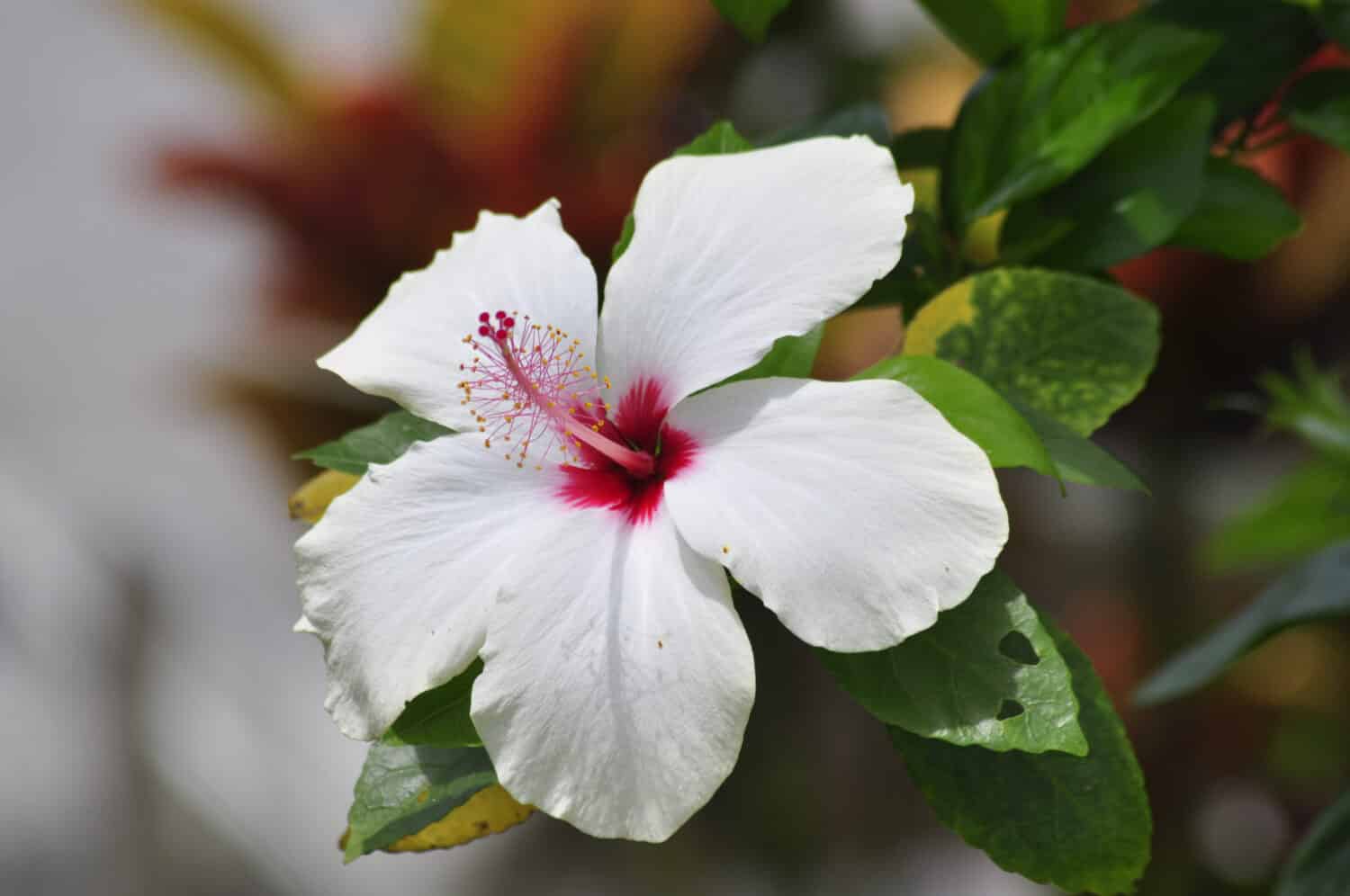
In the wild, Hawaiian white hibiscus trees are only found in the mountain forests of Oʻahu and Molokaʻi.
©Islandgyrl Studios/Shutterstock.com
17. Pride Of Burma (Amherstia nobilis)
Known as the “Queen of Flowering Trees”, the Pride of Burma can grow up to 30 to 40 feet tall with branches that hang down like long, elegant curtains. Its large leaves first start out as a red or purple color, but then change to vibrant green. Pride of Burma flowers are bunched together in hanging clusters of big, bright red blossoms with vibrant yellow spots. Each flower looks a lot like an orchid and has a bunch of yellow or orange stamens in the middle.
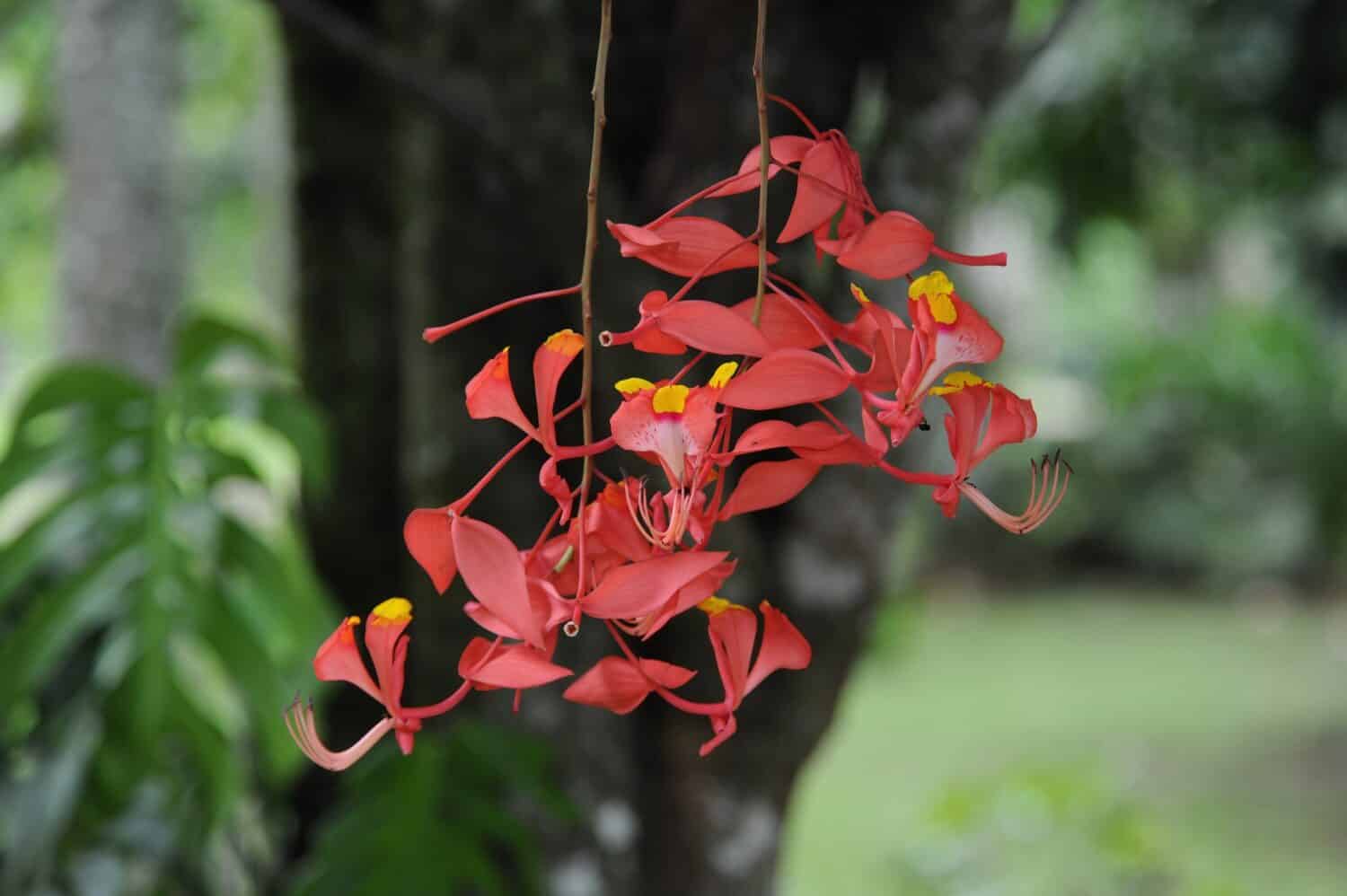
Pride of Burma flowers have a sweet and citrusy fragrance and bloom in the spring and summer.
©SATRIA NANGISAN/Shutterstock.com
18. Yellow Hibiscus or Ma‘o Hau Hele (Hibiscus brackenridgei)
The official state flower of Hawaii is the yellow hibiscus, also known as the ma‘o hau hele or pua aloalo. These vibrantly colored plants grow as shrubs or small trees that bloom from the late winter to late spring, and then sporadically throughout the rest of the year. Their flowers are bright yellow and can grow up to 6 inches across with a maroon-red center and yellow staminal column. Yellow hibiscus trees are endemic to Hawaii and live in shrublands and dry forests. Unfortunately, these beautiful flowering trees in Hawaii are federally listed as endangered species and are rare in the wild.
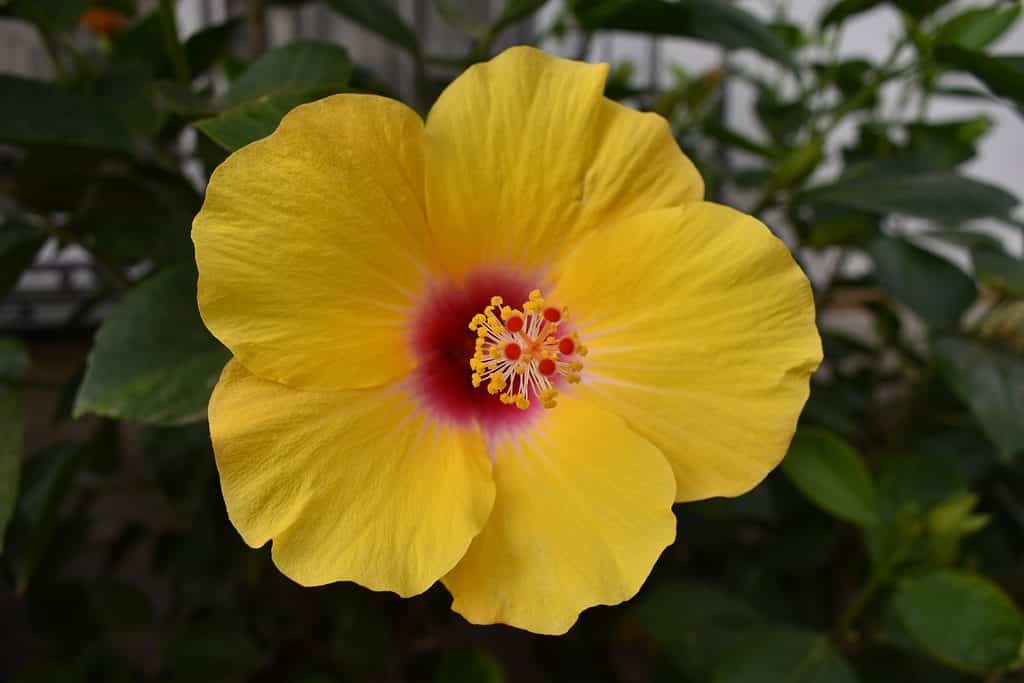
The yellow hibiscus is Hawaii’s official state flower.
©Olga S photography/Shutterstock.com
19. Portia Tree (Thespesia populnea)
Growing as a small tree or shrub, portia trees have beautiful white or pale yellow flowers that are only partially open, with five overlapping petals that come together at a red-colored base. Blooming in the spring and summer, portia trees grow along tropical coastlines all around the world. In addition to their beautiful and delicate flowers, portia tree leaves are edible, and the wood is strong and versatile.
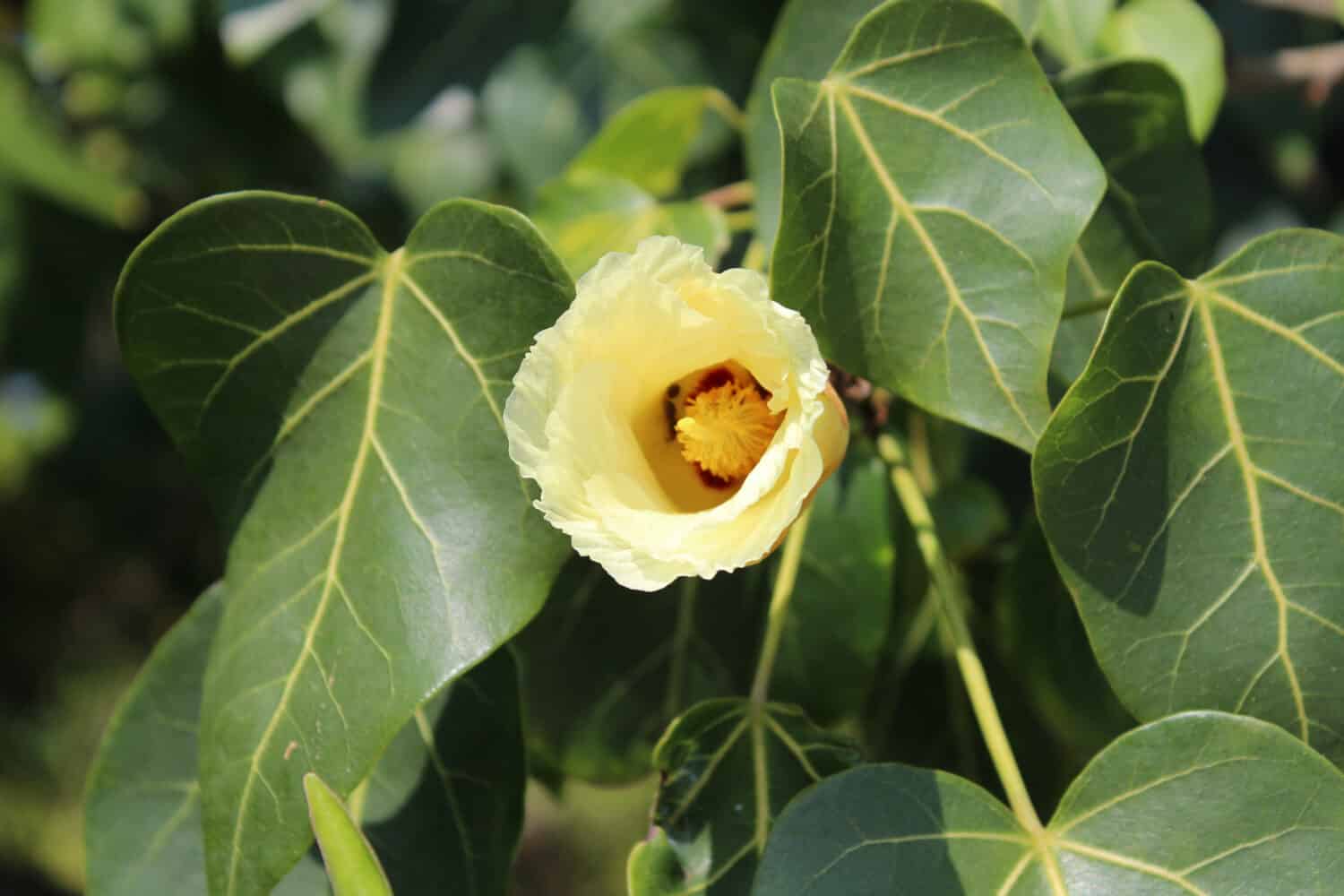
Portia trees are also sometimes called Pacific rosewood, milo, or Indian tulip trees.
©Yundengogo/Shutterstock.com
20. Kokio (Hibiscus kokio)
Another Hawaiian native, kokio trees are only found on the Hawaiian Islands, typically in dry forest habitats or on rocky cliffs. These small evergreen trees can grow up to 20 feet tall, although they are usually much smaller. They have delicate orange, yellow, or deep red hibiscus blossoms that are so vibrant they almost seem to glow. Kokio trees are rare, but their vibrant blossoms are favorites of the ‘iʻiwi or scarlet Hawaiian honeycreeper.
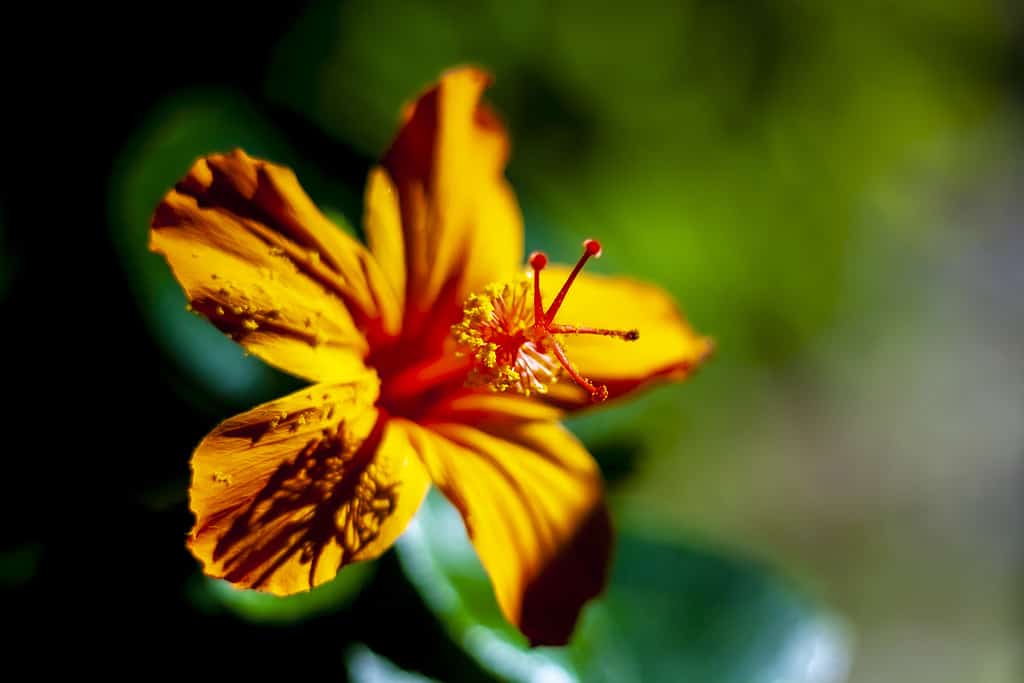
Early Hawaiians often grew kokio trees near their homes and used the wood to make fine charcoal.
©Ward DeWitt/ via Getty Images
21. Chinese Hibiscus (Hibiscus rosa-sinensis)
One of the most common flowering trees with hibiscus flowers in Hawaii is the Chinese hibiscus. These beautiful trees are common along roadsides, gardens, and parks all throughout the islands. They have large, vibrant flowers that grow in clusters all year round, although they flower more abundantly in the spring and summer. Chinese hibiscus flowers come in many different colors, including pink, red, yellow, orange, and purple. They’re typically easy to care for, with edible flowers and leaves that are often used to make tea.
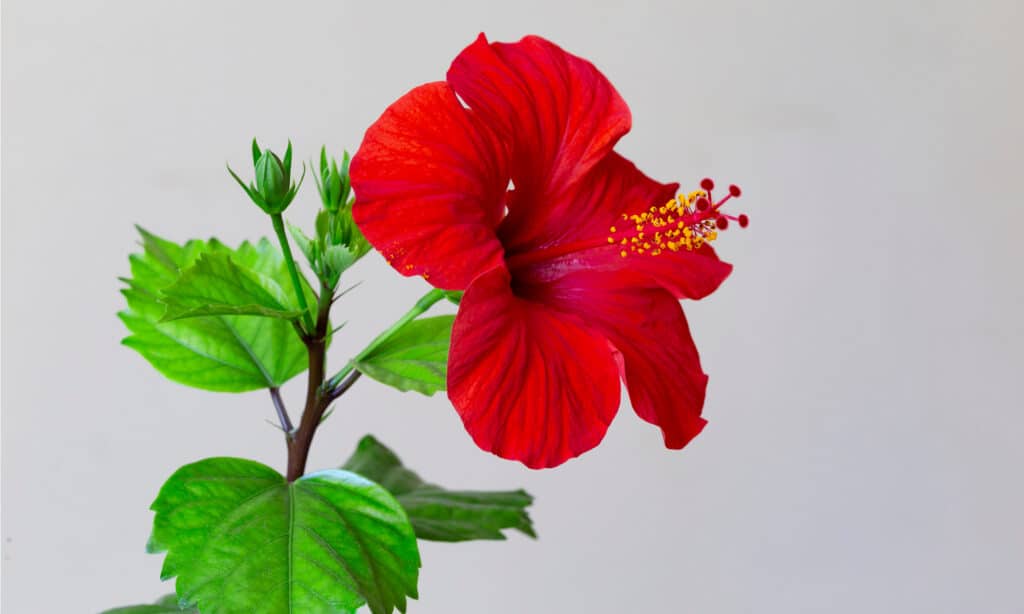
Chinese hibiscus is widely grown as an ornamental plant.
©Ihor Hvozdetskyi/Shutterstock.com
Summary of 21 Gorgeous Flowering Trees That Thrive in Hawaii
| Number | Common Name | Scientific Name |
|---|---|---|
| 1 | Nāʻū or Hawaiian Gardenia | Gardenia brighamii |
| 2 | ʻŌhiʻa Lehua | Metrosideros polymorpha |
| 3 | Puakenikeni | Fagraea berteroana |
| 4 | Hau Tree | Hibiscus tiliaceus |
| 5 | Plumeria | Plumeria |
| 6 | Golden Shower Tree | Cassia fistula |
| 7 | Angel’s Trumpet | Brugmansia |
| 8 | Red Kauai Rosemallow or Kokiʻo ʻula | Hibiscus clayi |
| 9 | Royal Poinciana | Delonix regia |
| 10 | Orchid Tree | Bauhinia variegata |
| 11 | White Kauai Rosemallow or Kokiʻo Keʻokeʻo | Hibiscus waimeae |
| 12 | Bottlebrush | Callistemon |
| 13 | Jacaranda | Jacaranda mimosifolia |
| 14 | African Tulip | Spathodea Campanulata |
| 15 | Yellow Tabebuia | Tabebuia argentea |
| 16 | Hawaiian White Hibiscus or Kokiʻo Keʻokeʻo | Hibiscus arnottianus |
| 17 | Pride Of Burma | Amherstia nobilis |
| 18 | Yellow Hibiscus or Ma‘o Hau Hele | Hibiscus brackenridgei |
| 19 | Portia Tree | Thespesia populnea |
| 20 | Kokio | Hibiscus kokio |
| 21 | Chinese Hibiscus | Hibiscus rosa-sinensis |