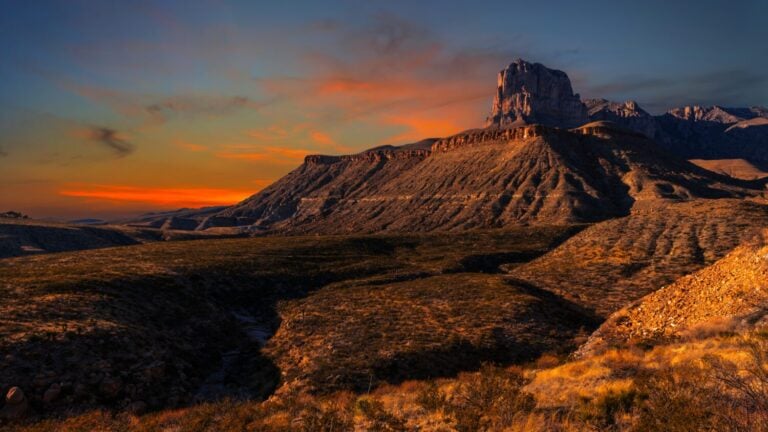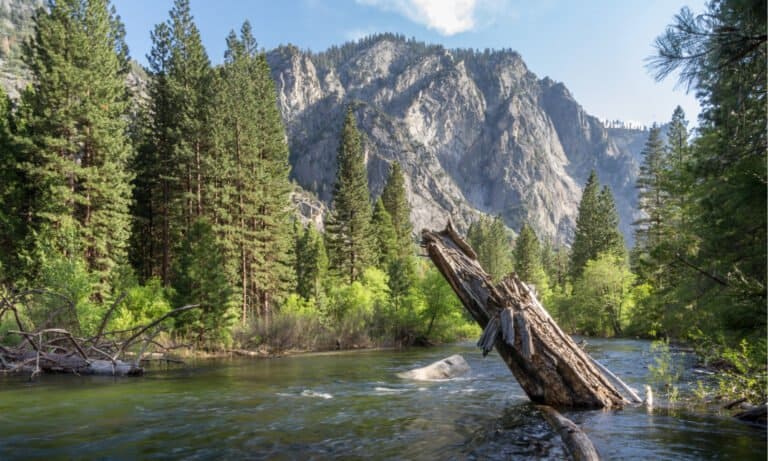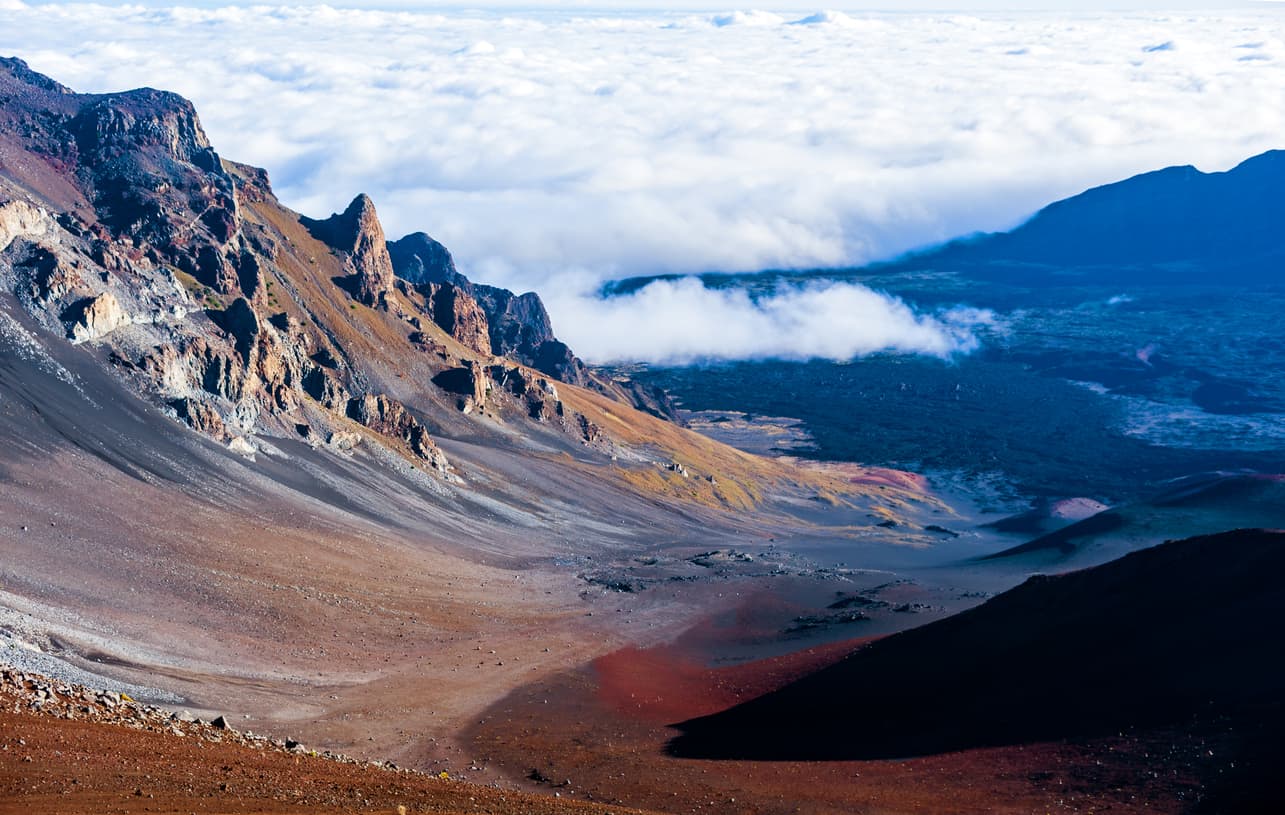

Haleakalā National Park, on the Hawaiian island of Maui, is one of the country’s most remote national parks. Stretching from the summit of Haleakalā mountain to the Kīpahulu coast near Hana, this 33,265-acre park encompasses snowy mountain peaks, lush tropical rainforests, and a rocky coastal shoreline. The island’s remote location means that most animals originally arrived by flying, being carried, or washing ashore. These original settlers evolved and adapted to the island’s unique climate. Today, the park is home to many endemic species found nowhere else in the world.
Hawaiian Goose (Nēnē)

The Hawaiian goose is Hawaii’s state bird.
©Pierre Leclerc/Shutterstock.com
With its black head, bill, legs, and tail feathers, the Nēnē is a striking bird that is easy to identify. When fully grown, this medium-sized goose is about 25 inches long and weighs between three to seven pounds. Males tend to be slightly larger. The Nēnē is the last remaining endemic goose species on the Hawaiian Islands. Nēnēs live in diverse habitats, from high-elevation lava flows and alpine grasslands to urban golf courses. In the park, you’ll usually spot them at elevations between 5,500 and 8,000 feet.
Black Crowned Night Heron (‘Auku’u)

The black-crowned night heron gets its name from its distinctive black crown and back.
©Nycticorax nycticorax/Shutterstock.com
You’ll find ‘Auku’u primarily around the water’s edge, where it hunts the shallows for frogs, small fish, and insects. It has been documented using live bait to lure its prey. The bird’s large red eyes are adapted for low-light conditions, making the ‘Auku’u a proficient night hunter. Its black and gray coloration helps camouflage it after dark. These birds are most active at dawn and dusk, but in the park you’ll often see them out and about throughout the day.
Hawaiian Petrel (‘Ua’u)
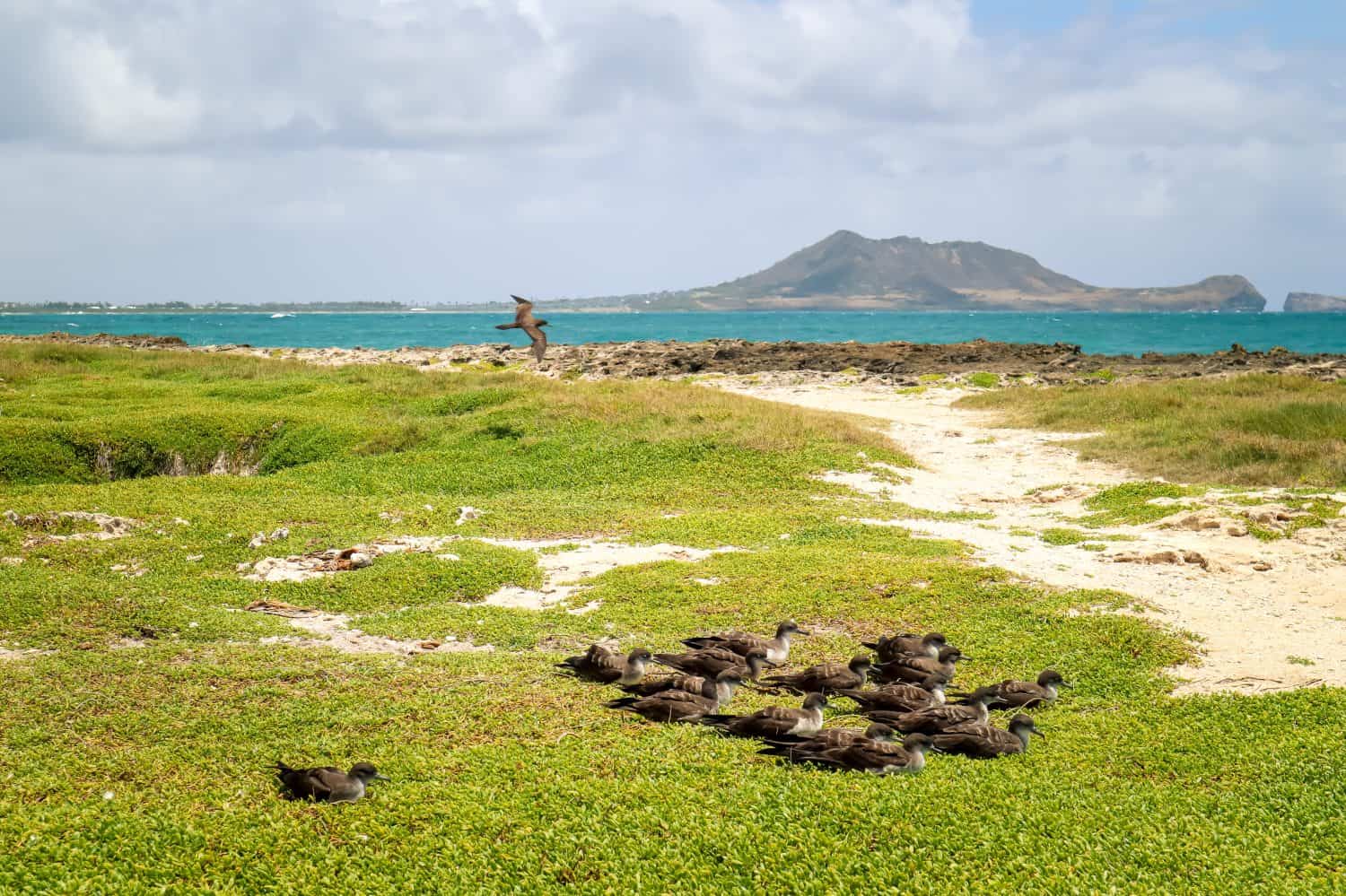
The Hawaiian petrel is one of the many bird species native to the Hawaiian Islands.
©James G Andrews/Shutterstock.com
This bird gets its Hawaiian name, ‘ua’u, from the distinctive call often heard at the large colonies where the birds nest. These petrels seek out nests in crevices and cracks in lava tubes, where they lay eggs between May and June. In the park, the earliest nesters can be found at the summit of the Haleakalā volcano. The ‘ua’u is listed as an endangered species at both the federal and state levels. As seabirds, ‘ua’u feed by catching squid and small fish while sitting on or hovering just above the water.
Maui Parrotbill (Kiwikiu)
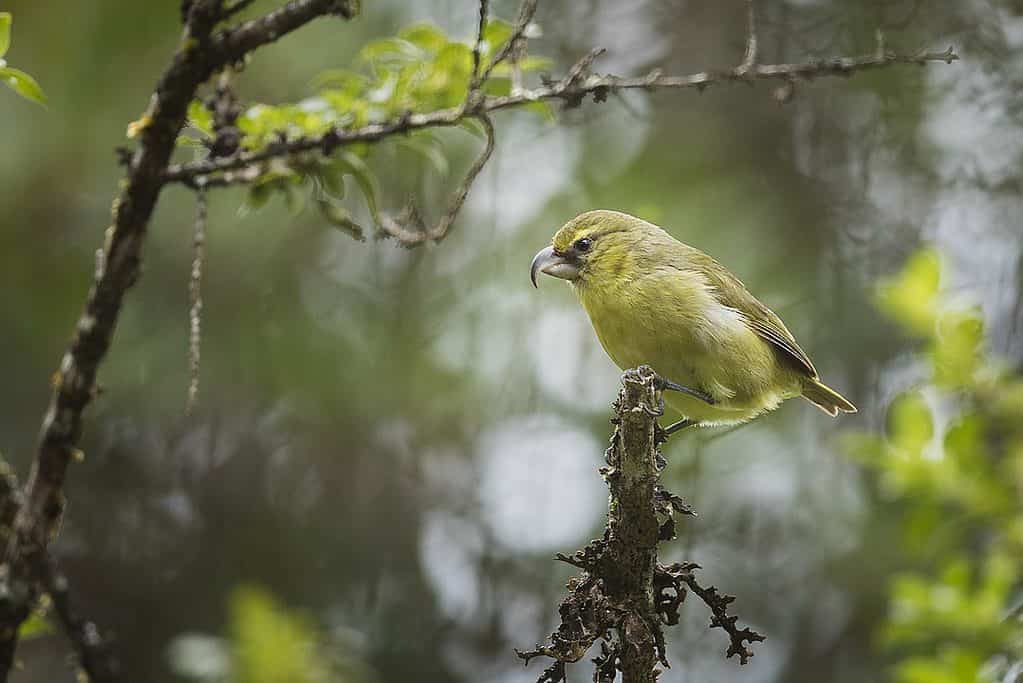
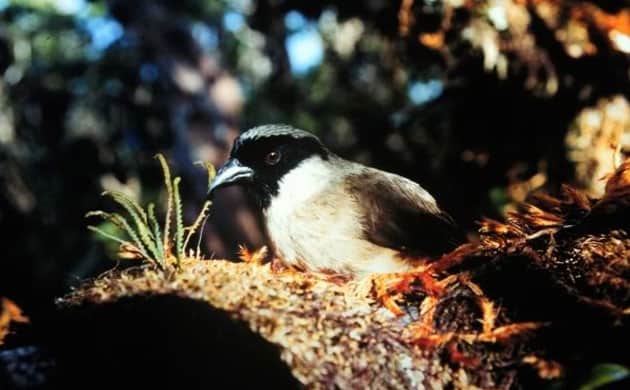
The Maui parrotbill is one of six honeycreeper species found only on the island of Maui.
©Zach Pezzillo, Maui Forest Bird Recovery Project, CC BY-SA 4.0 – Original / License
The Maui parrotbill inhabits the wet forests on the northeastern slopes of Haleakalā, between 4,000 and 7,700 feet. The kiwikiu has the distinctive hooked beak that is a hallmark of all honeycreepers. They use the hooked beak to dig for insects in the moss-covered branches of the forest. They can also use it as a tool to break apart harder wood in search of a meal. Both state and federal governments list the kiwikiu as endangered. According to bird biologists in the park, there are fewer than 200 kiwikiu left in the world.
Crested Honeycreeper (‘Ākohekohe)
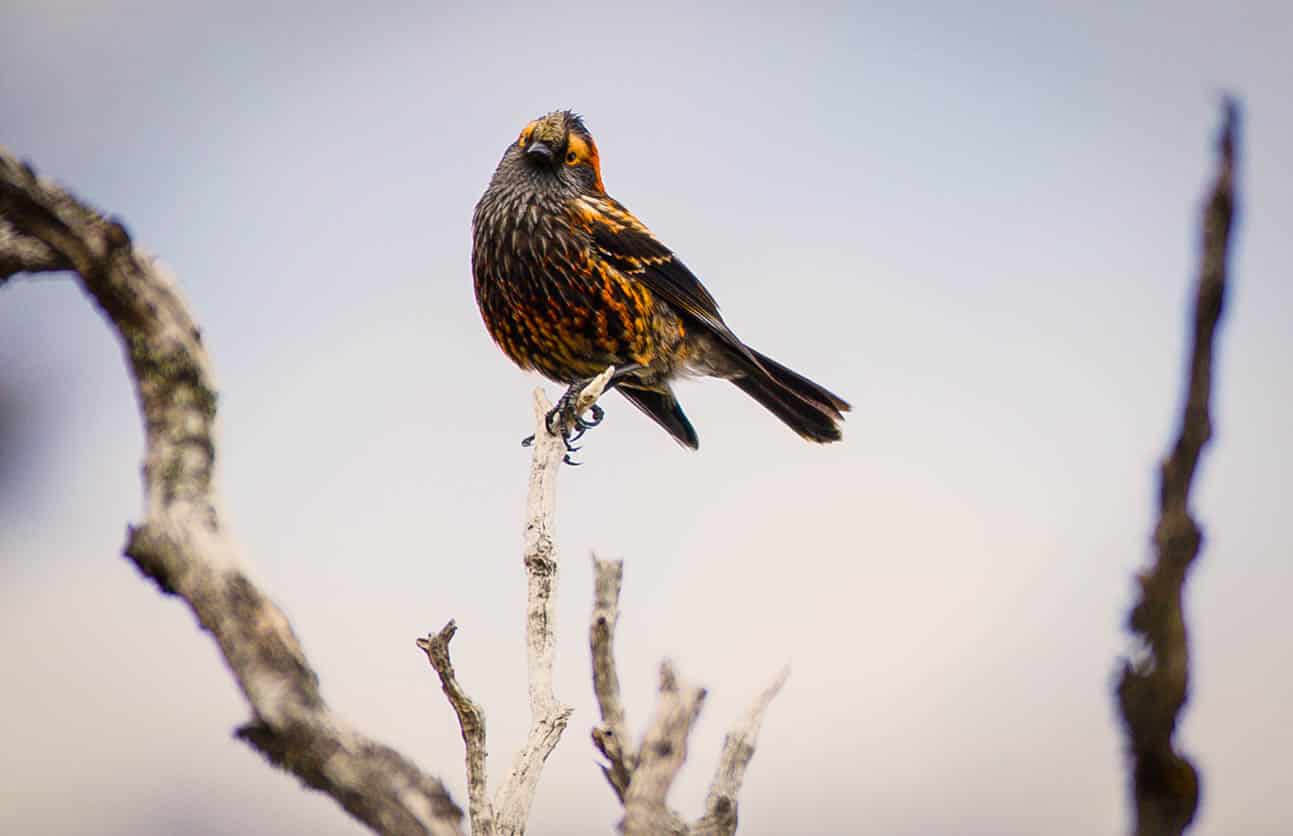
The crested honeycreeper is the largest of the honeycreeper species found in the park.
Its striking mottled plumage, ablaze with orange, yellow, and black, makes the endangered crested honeycreeper easy to distinguish from other honeycreepers. Instead of singing, these birds use a series of croaks, whistles, and buzzes for communication. This is what earned them their Hawaiian name, ‘ākohekohe, which sounds like one of their calls. Like other honeycreepers, the ‘ākohekohe lives in a small forested area of the park, between 5,000 and 7,000 feet in elevation.
Hawaiian Honeycreeper (‘Hawaiʻi ʻAmakihi)
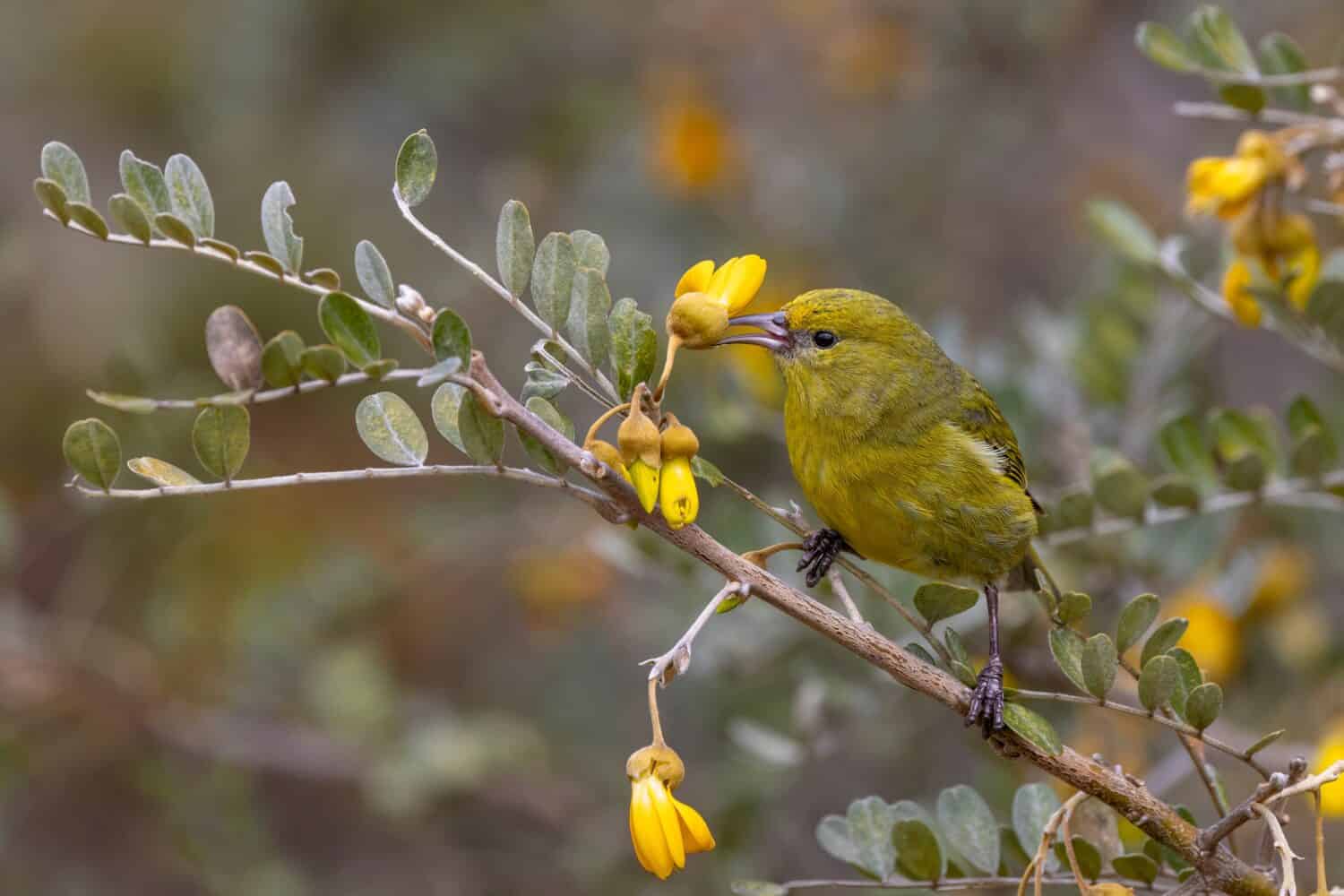
The Hawaiian honeycreeper is one of the few non-endangered honeycreeper species in the park.
©Kendall Collett/Shutterstock.com
Hawaiian honeycreepers are forest foragers that feed on arthropods from the green growth of trees and shrubs. They also use their hooked beaks to extract nectar from Hawaiian flowers like the māmane and native lobelias, and eat fruit from the pilo plant. They are an important part of the overall pollination process. With a wider range than other honeycreepers, you can often spot ‘Hawaiʻi ʻamakihis in any forested region within the park and throughout Maui at elevations between 1,000 and 9,500 feet.
Scarlet Honeycreeper (‘I‘iwi)
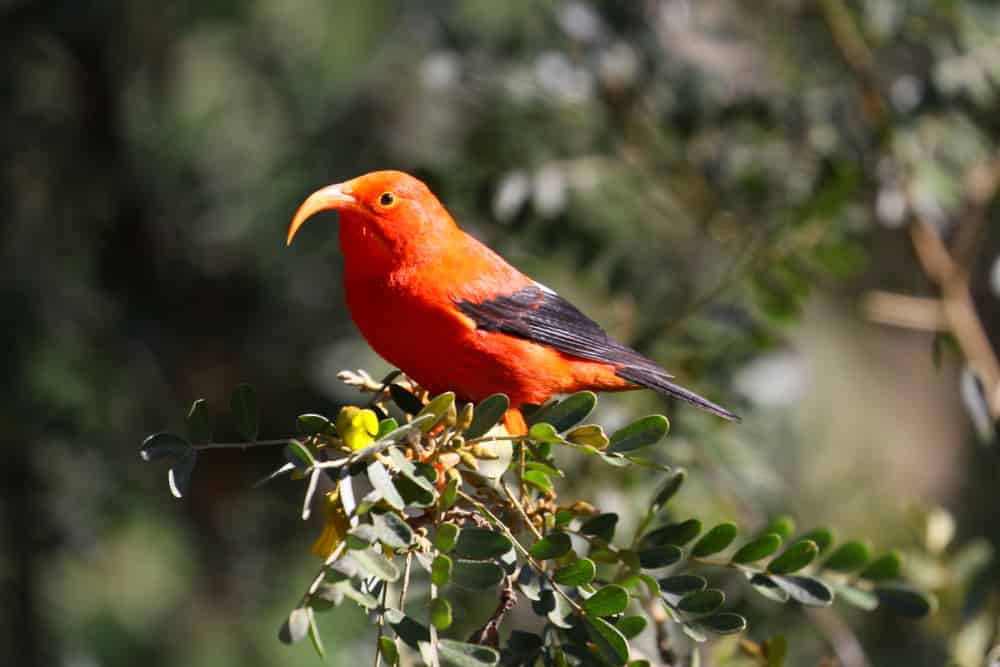
Its bright red body and long, hooked beak make the scarlet honeycreeper easy to spot and identify.
©Thomas Chlebecek/Shutterstock.com
One of the largest of the Maui honeycreepers, the ‘i’iwi is about six inches long and covered in bright scarlet feathers with a black tail and wings. Its bright orange, curved beak has evolved for optimal efficiency when gathering nectar from the long tubular flowers like those on the Hawaiian Lobelioid. ‘I’iwi can get aggressive when other birds close in on prized nectar sources, emitting a loud and raucous call to intimidate and scare away the interlopers.
Crimson Hawaiian Honeycreeper (‘Apapane)
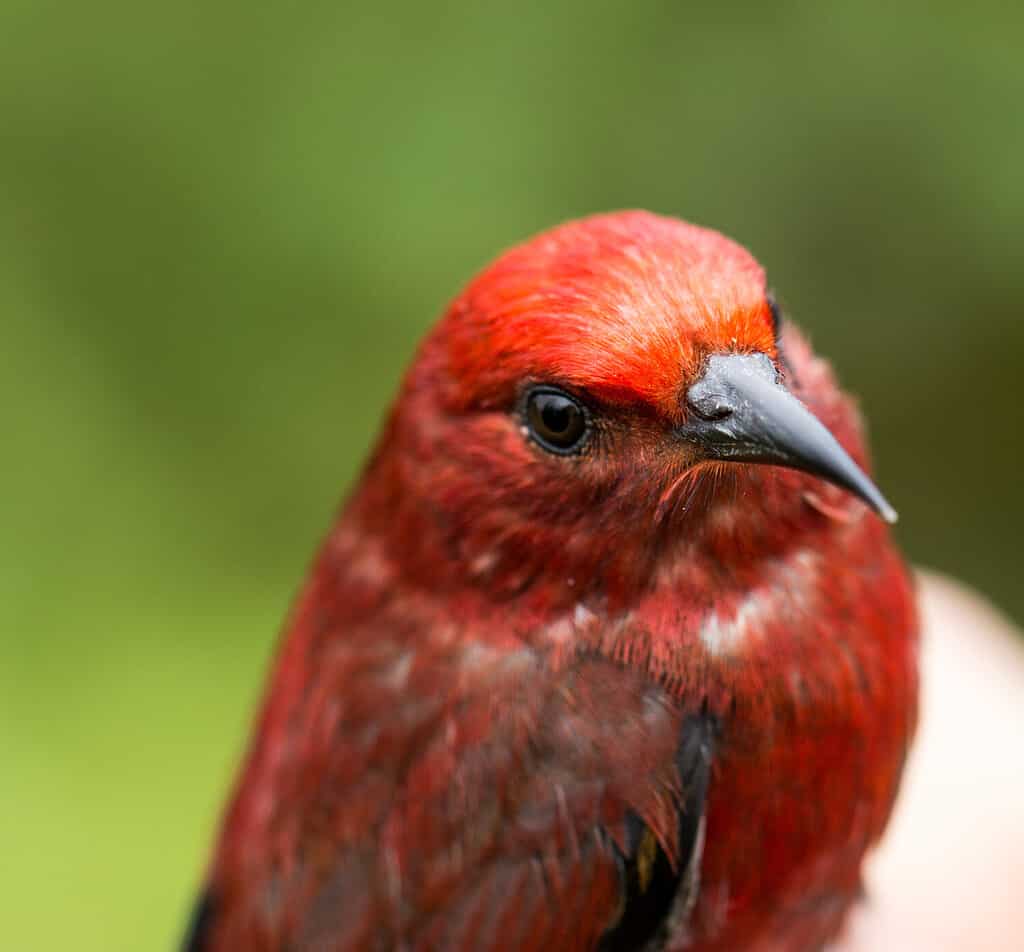
Crimson Hawaiian honeycreepers are the most abundant of the Hawaiian honeycreeper species.
©Evan Austen/Shutterstock.com
This honeycreeper is another important pollinator in the park, helping to keep native ‘ōhi’a plant populations thriving. These birds often feed and forage in flocks, presumably as protection against the more aggressive ‘i’iwi that also enjoy the same nectar sources. The ‘apapane also eats small insects. Their natural habitat tends to be in higher elevations above 4,100 feet. At this elevation, the ‘apapane can best avoid the cold-intolerant Culex mosquito whose bite can infect the bird with lethal avian malaria.
Hawaiian Short-Eared Owl (Pueo)
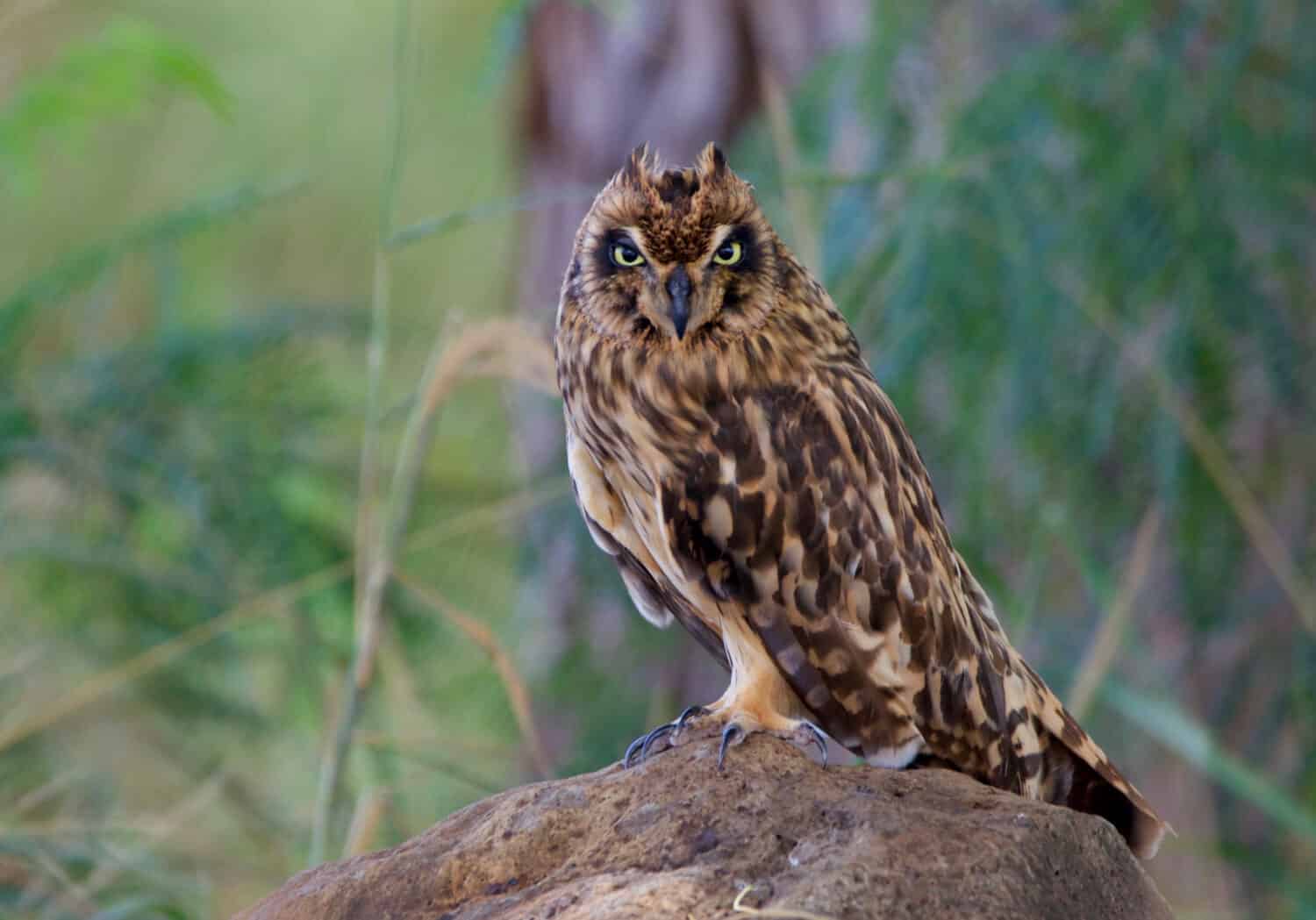
Unlike other owl species, pueo are active during the day and are often seen soaring above open spaces.
©Jessie Lynn Croft/Shutterstock.com
You’ll find pueo in diverse habitats in the park, from the mountainous forests to open grasslands. Male pueo put on impressive aerial displays, called sky dancing, to woo females during the breeding season. Once a female selects her mate, she builds a ground-level nest where she will incubate and raise her chicks. It’s the male’s job to guard the nest from predators and bring food to the female while she tends to the eggs and chicks. Young chicks often fledge on foot before they can fly.
Ring-Necked Pheasant
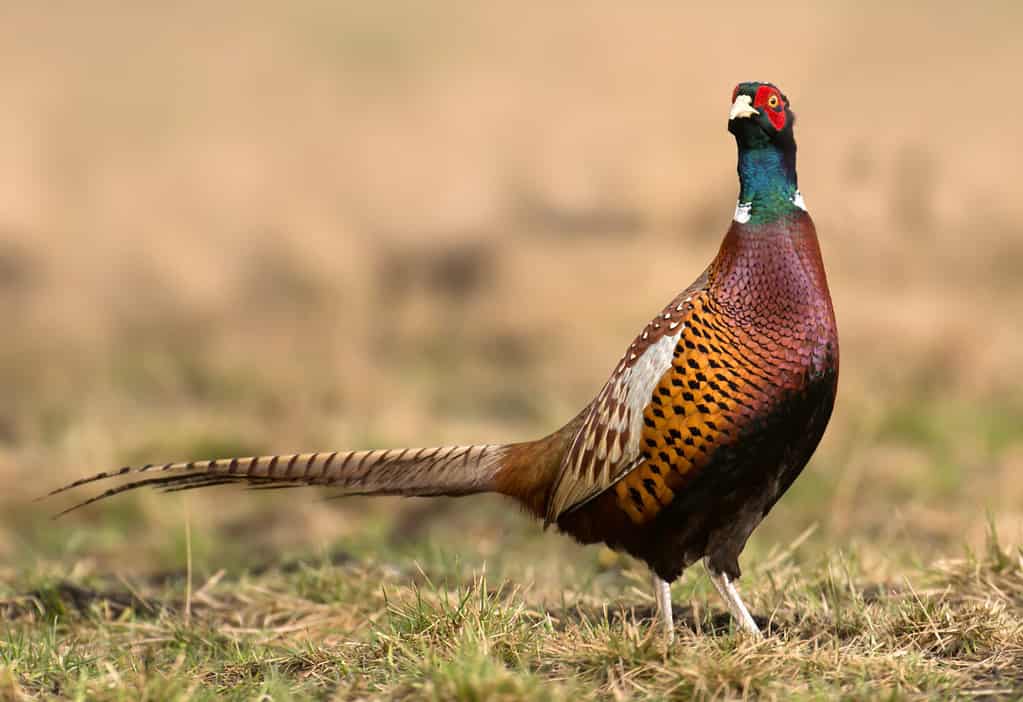
The ring-necked pheasant was introduced to the Hawaiian Islands as a game bird in 1865.
©Piotr Krzeslak/Shutterstock.com
Originating in Asia, the ring-necked pheasant derives its name from the distinctive white “ring” around the bird’s neck. The rest of the feather coloration provides the birds with optimal camouflage in their natural ground habitats in woodlands, farmlands, and wetlands. Male ring-necked pheasants grow to about 33 inches long, of which nearly two-thirds is their 20-inch tail. Females are slightly shorter. They feed on small animals, insects, and grains.
Chukar
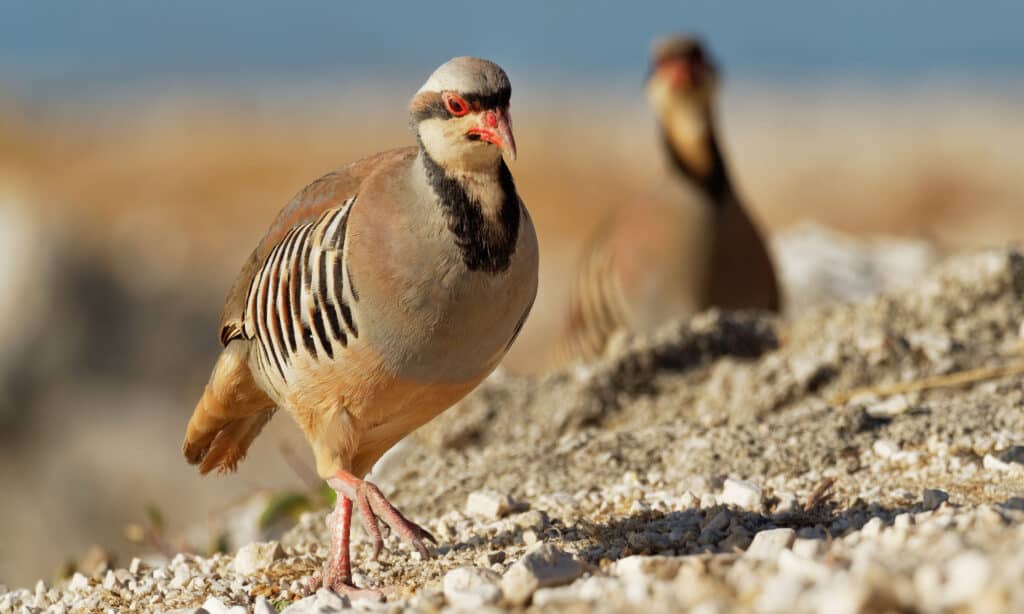
The chukar was introduced to the Hawaiian Islands in the 1920s as a game bird.
©Martin Pelanek/Shutterstock.com
Originating in Asia and the Middle East, the chukar partridge is a non-native species to the park. Originally brought to the islands for hunting purposes about a century ago, the chukar has adapted to the mountain’s dry, cold summit. There, you’ll find them foraging in the volcanic soil, searching for insects, seeds, and leaves. Chukars grow to 13 to 15 inches long and weigh less than two pounds. They have light brown and black feathers that help them blend into their habitats.
Axis Deer (Kia)
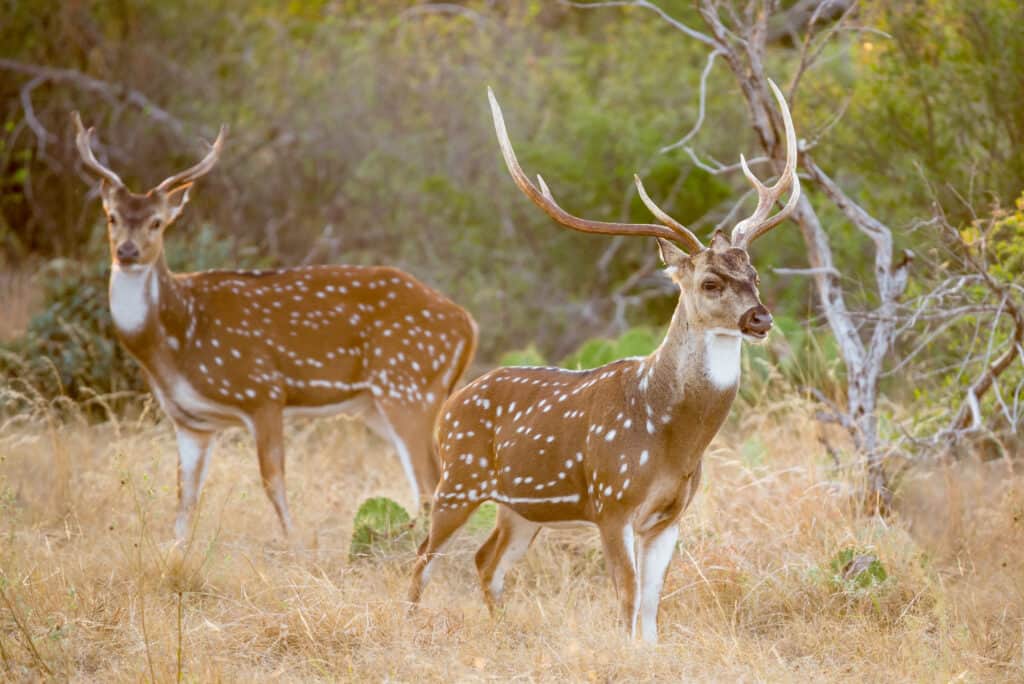
The first axis deer were brought to the Hawaiian islands as a gift from India to King Kamehameha V.
©GizmoPhoto/Shutterstock.com
The axis deer is non-native and invasive to all Hawaiian Islands. They were originally released on Molokai in 1868 and eventually on Maui in 1959. They have no natural predators and reproduce quickly, leading to overpopulation. In 2025, an estimated 26,000 Kia live on Maui, including within the park. Population control measures are in place to keep numbers down and mitigate damage to sensitive park vegetation. Hunting is one method used for population control.
Feral Pig (Pua’a)

Pua’a ancestors were originally brought to the Hawaiian Islands by Polynesian settlers.
©Adrian Eugen Ciobaniuc/iStock via Getty Images
Feral pigs are an invasive species in the park. The original feral pigs were introduced as early as between 500 and 700 A.D. by Polynesian settlers. In 1778, Captain Cook introduced a larger European species that interbred with existing stocks, resulting in the pua’a seen today. Feral pigs are a source of food for Hawaiians, a symbol of hospitality, and represent a connection to the demigod Kamapua’a. However, they also cause significant destruction of native plants and contribute to soil erosion.
Small Indian Mongoose (‘Iole Manakuke)
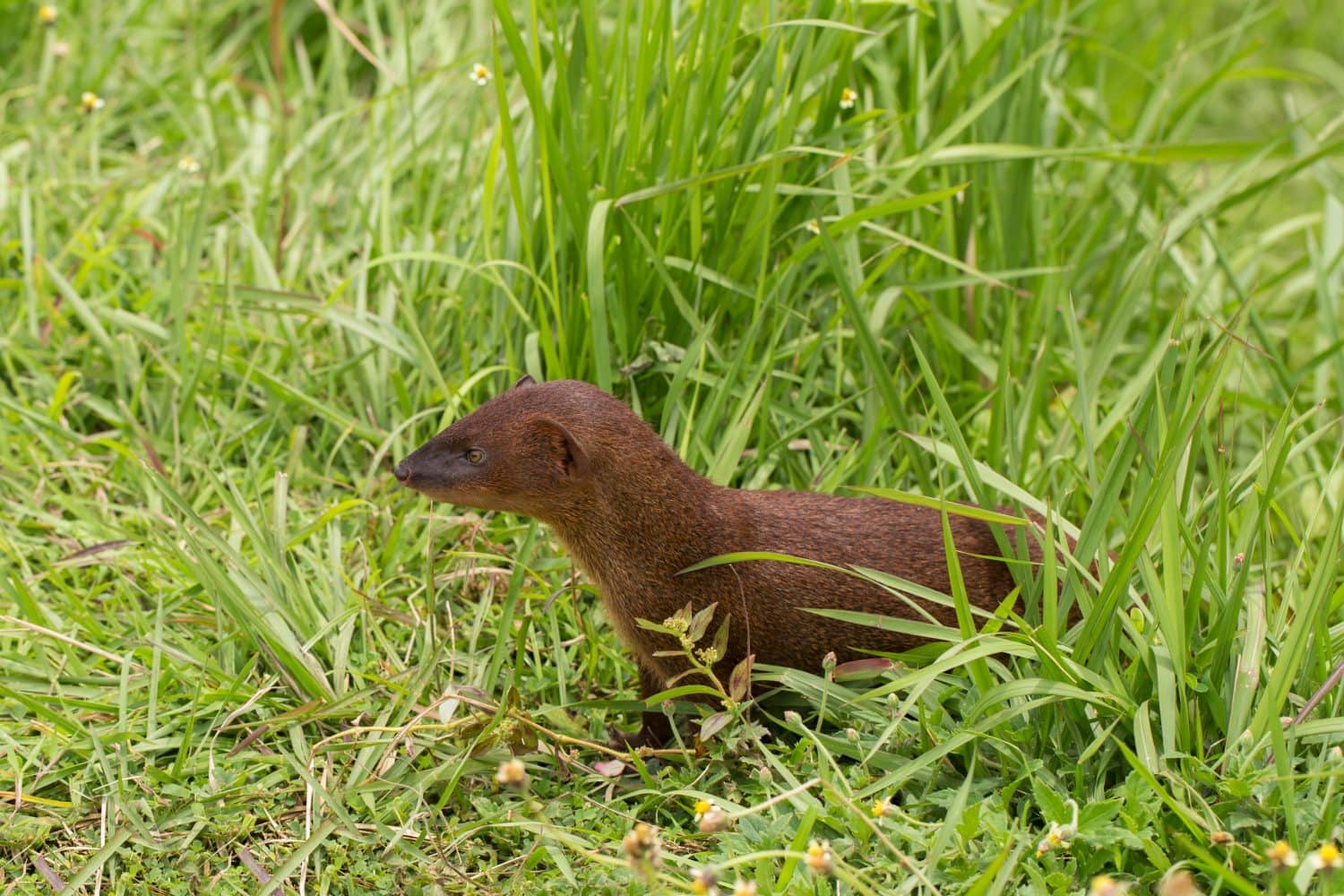
The small Indian mongoose was introduced to the Hawaiian Islands in 1883 to control rats on sugar plantations.
©dwi putra stock/Shutterstock.com
What started as a good idea, controlling rat populations in sugar cane fields, has morphed into significant harm for Maui’s native wildlife. Mongoose are voracious predators that eat eggs, ground-nesting birds, and small mammals, decimating those populations in the park. These weasel-like critters are one of only four mammals immune to snake venom. Slender and fast, these mongoose grow up to 26 inches long. During courtship and mating, mongoose make “giggling” sounds.
Hawaiian Monk Seal (ʻĪlio Holo i Ka Uaua)
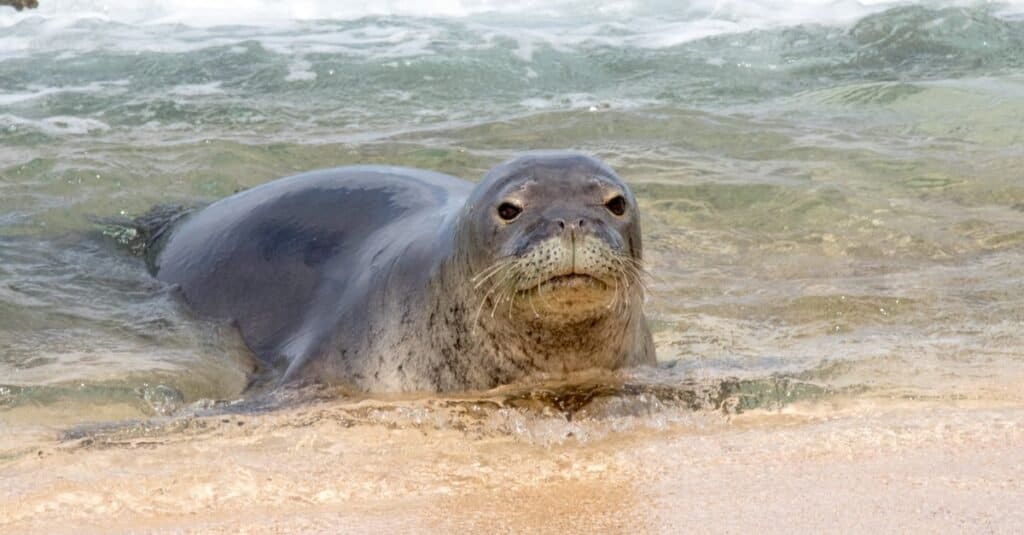
The monk seal’s Hawaiian name means “dog that runs in rough water.”
©Lorraine Logan/Shutterstock.com
The Hawaiian monk seal is the official state mammal of Hawaii. This earless seal is native to all the Hawaiian Islands and can be found in the park along the rocky Kīpahulu shoreline. These seals are highly endangered and protected by state and federal law. Adult Hawaiian monk seals are about six to seven feet long and live up to 30 years. They eat a variety of foods, from sea cucumbers and fish to lobster and octopus. They can dive more than 1,800 feet and hold their breath for up to 20 minutes.
Hawaiian Hoary Bat (Ōpe‘ape‘a)
©Jamie McMillan/Shutterstock.com
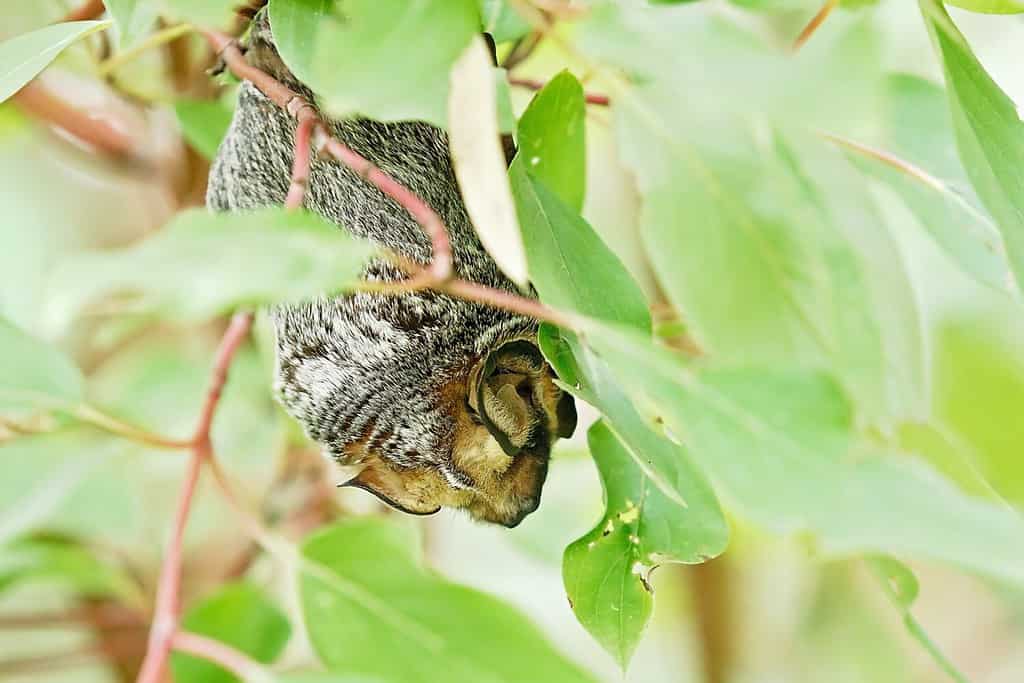
The Hawaiian hoary bat is the official state mammal and the only land mammal native to the islands.
The tiny brown-and-black Hawaiian hoary bat roosts in the leaves of trees within the park. It gets the “hoary” in its name due to the white tips on its fur. Weighing less than one ounce, hoary bats feed on flies, beetles, and moths. They are nocturnal hunters, leaving their roosts after sunset. They are listed as endangered under federal and state law. Major threats to their population on Maui are habitat loss and collisions with stationary objects like barbed-wire fences and wind turbines.
Gecko
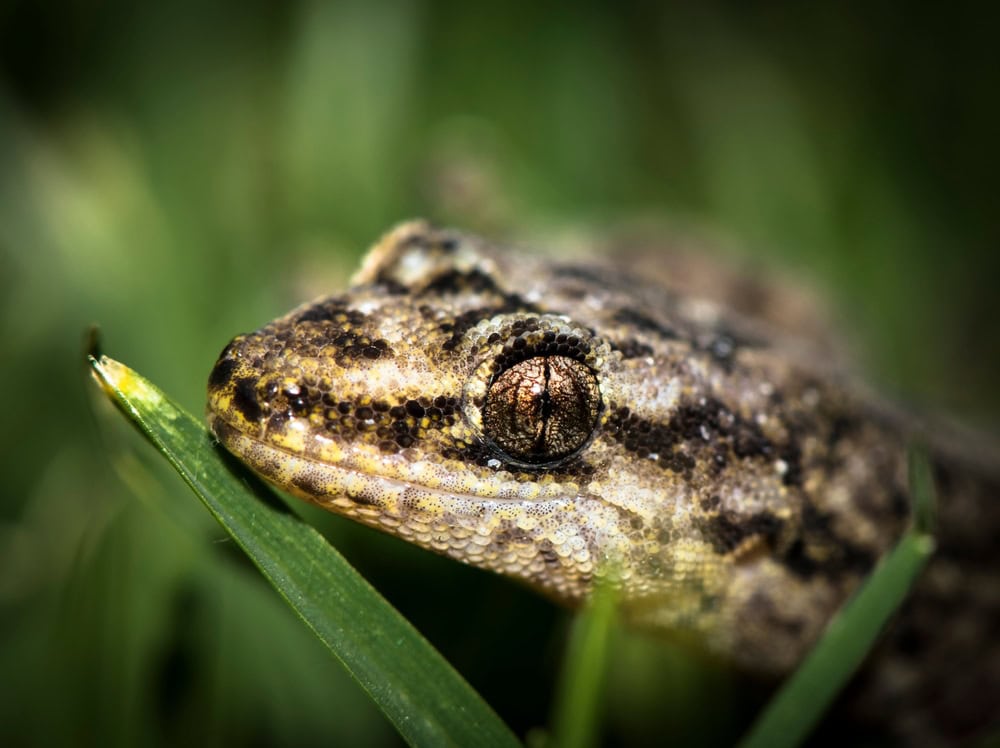
Geckos are revered in Hawaiian culture as guardian spirits called ‘aumakua.
©Wirestock Creators/Shutterstock.com
There are many species of geckos found throughout the park, including stump-toed, bridled house, Indo-Pacific tree, and mourning geckos. Geckos have vision that is 350 times more efficient than that of humans, making it easy for these tiny predators to find their favorite prey, including termites, moths, mosquitoes, and cockroaches. If a gecko loses its tail, it can regrow a new one in weeks. Females can reproduce without copulating, which might be unfortunate news for male geckos.
Brahminy Blind Snake (Nahesa Makapō)
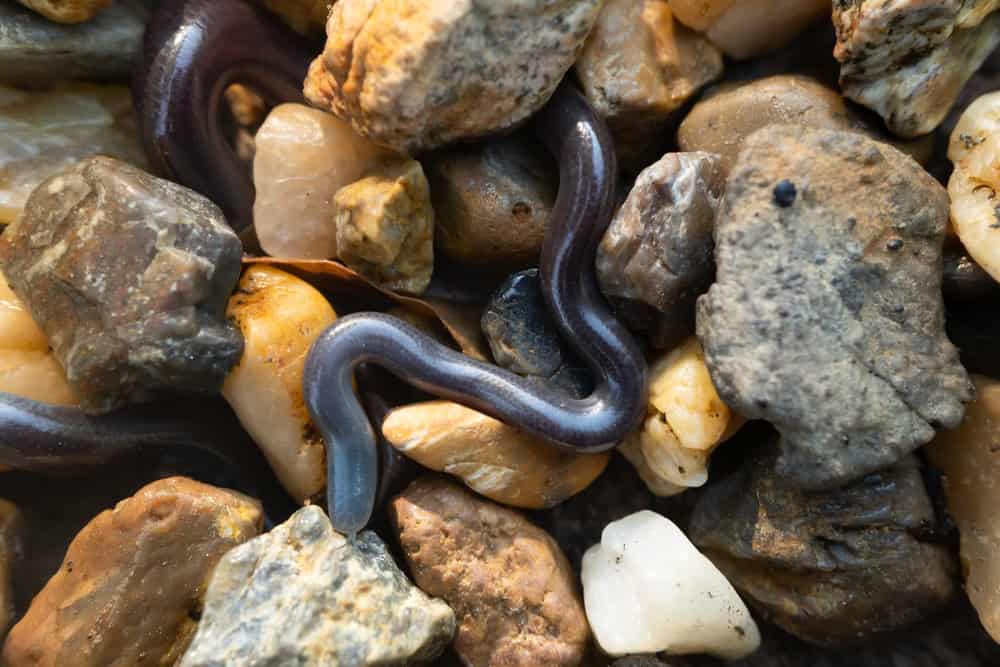
This worm-like snake is an invasive species in the park, but it is non-venomous and harmless to humans.
©frank60/Shutterstock.com
The brahminy blind snake is native to Asia and Africa, and was likely introduced to the Hawaiian Islands as a stowaway in cargo, such as plants. They look like earthworms and, like worms, spend much of their time underground. Evolution in underground habitats has rendered their eyes nearly useless. Translucent scales now cover their eyes, letting in just a small amount of light. These snakes eat mostly small insects, like ants and termites.
Cane Toad
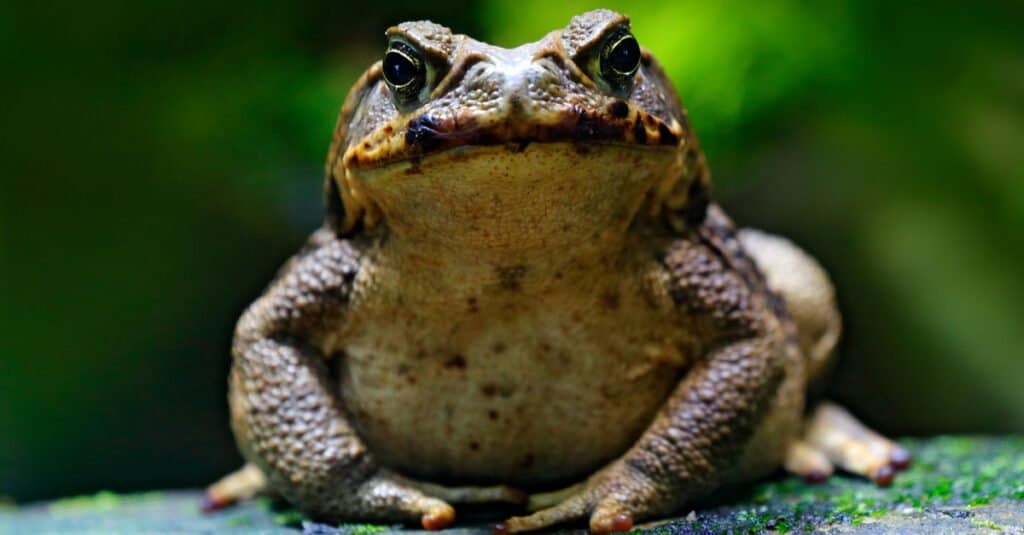
Groups of cane toads are called knots.
©Ondrej Prosicky/Shutterstock.com
Cane toads are another invasive species, originally introduced to the Hawaiian Islands for pest control in sugar cane fields. These toads are voracious eaters, feeding on insects and anything else small enough to fit in their mouths, including other frogs, small mammals, and birds. Cane toads produce a toxic substance that is harmful, and sometimes fatal, to native animals if ingested. These toads are only occasionally seen at lower elevations in the park.