
Quick Take
- Despite weighing 20 times less, the gorilla holds a surprising advantage over the elephant in at least one critical combat category. See the gorilla's edge →
- A gorilla's bite force outranks a lion's, though whether that matters against an elephant is a different question entirely. Check the bite force numbers →
- Speed seems like the gorilla's best shot at an edge, but that assumption changes once you find out how fast an elephant actually moves. See how fast elephants move →
- The gorilla's greatest weapon in this fight might not be its strength or teeth. It could be something far less obvious. See the behavioral advantage →
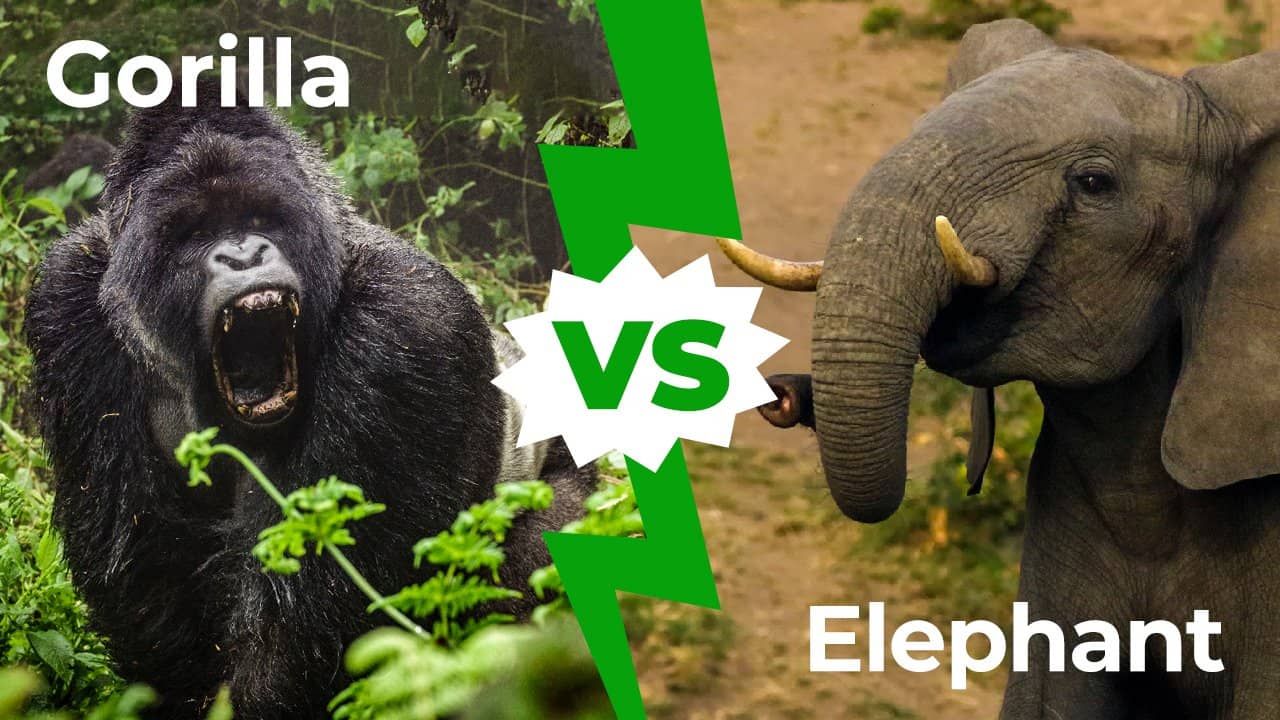
Eastern lowland gorillas (Gorilla beringei graueri) and African forest elephants (Loxodonta cyclotis) both inhabit the dense rainforests of the Congo Basin, located in West-Central Africa, co-existing peacefully. While they generally keep their distance, they do cross paths, often gathering in the same natural forest clearings to forage. But what if these two animals were to get into a scuffle? In a one-on-one match-up, which animal would reign victorious? Six categories will be used to determine the outcome: size, speed, bite force, defenses, offenses, and predatory behavior. Continue reading to discover who would win a fight between an Eastern lowland gorilla and an African forest elephant.
Gorilla vs. Elephant: Size
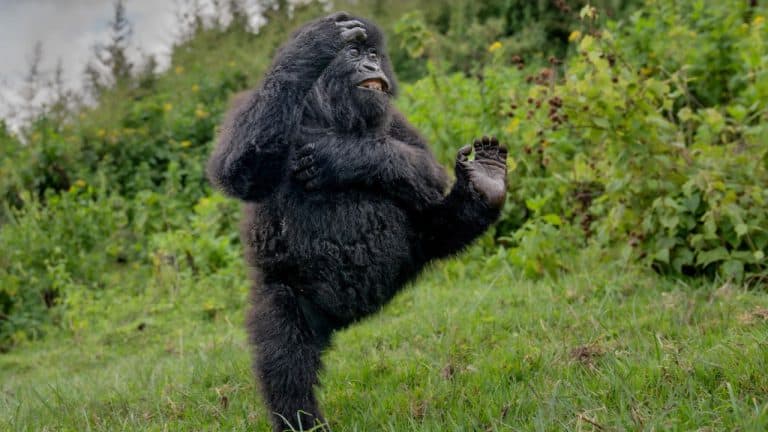
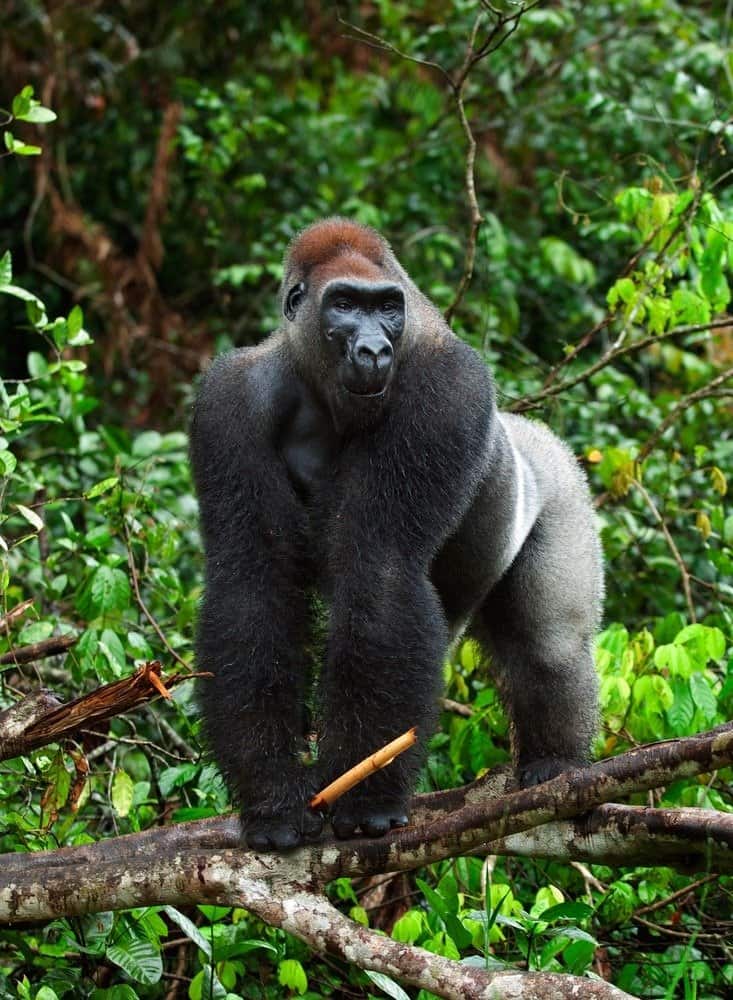
The Eastern lowland gorilla, also called Grauer’s gorilla, is the largest of the four gorilla subspecies, with males, called silverbacks, weighing 300 to 440 pounds, and standing about 5.5 feet tall. Females are smaller, weighing between 150 and 200 pounds and reaching heights approaching five feet.
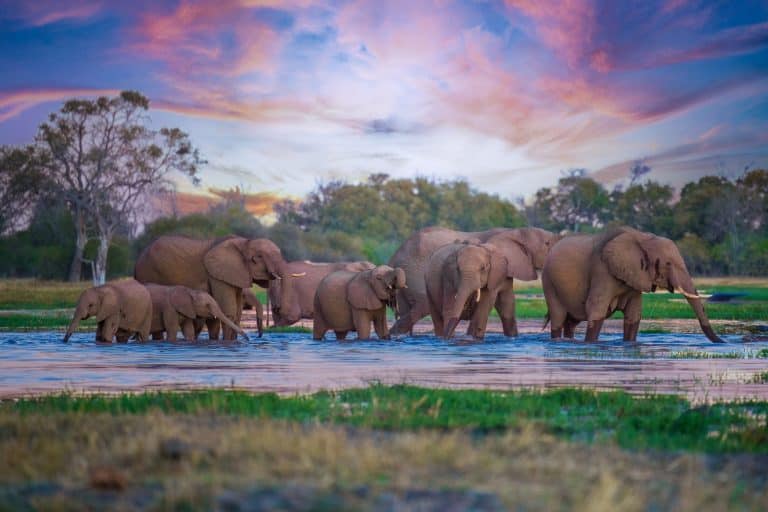
African forest elephants are the smallest of the three elephant species, typically standing between 8 and 10 feet tall at the shoulder. They generally weigh between 4,000 and 10,000 pounds.
The elephant is almost twice as tall as the gorilla and weighs about 20 times more.
Size Advantage: Elephant
Gorilla vs. Elephant: Speed
Although gorillas may look like stocky, slow creatures, they can reach 25 miles per hour (mph) in short bursts, while knuckle-walking, their preferred means of locomotion. That is incredibly swift and matches the elephant’s charging speed.
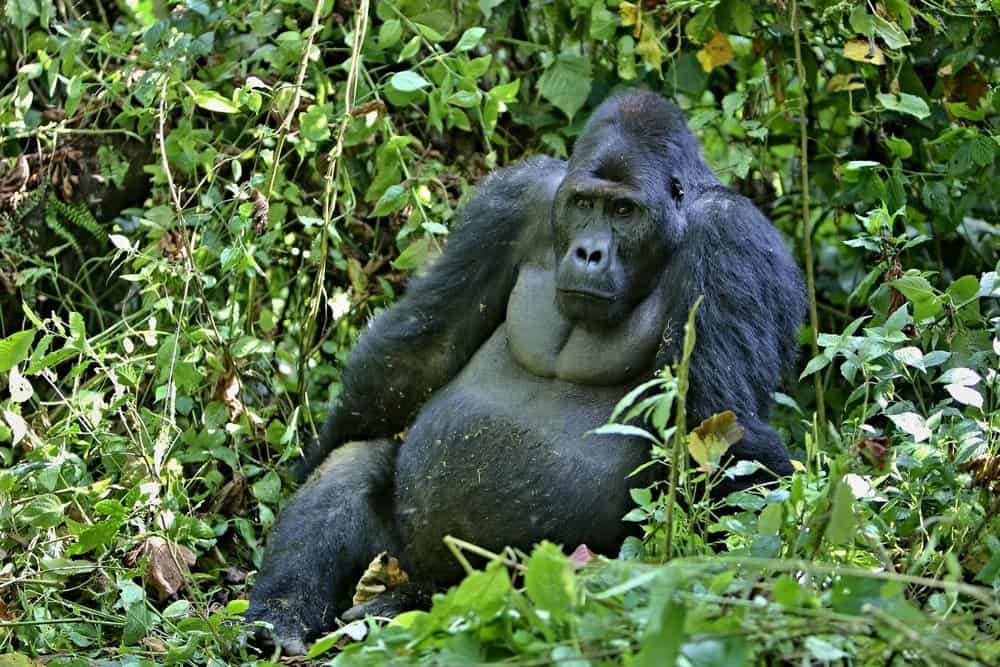
Eastern lowland gorillas are Critically Endangered, with populations declining by over 50% since the 1990s to roughly 6,000 remaining in the wild.
©PhotocechCZ/Shutterstock.com
African forest elephants can move surprisingly fast despite their size, capable of reaching speeds up to 25 mph.
Speed Advantage: Tie.
Gorilla vs. Elephant: Bite Force
Eastern lowland gorillas possess an incredibly powerful bite force, estimated at around 1,200 pounds per square inch (PSI), which is stronger than that of a lion. This massive force, capable of crushing bone, is generated by large, specialized jaw muscles enabling them to process tough, fibrous vegetation.
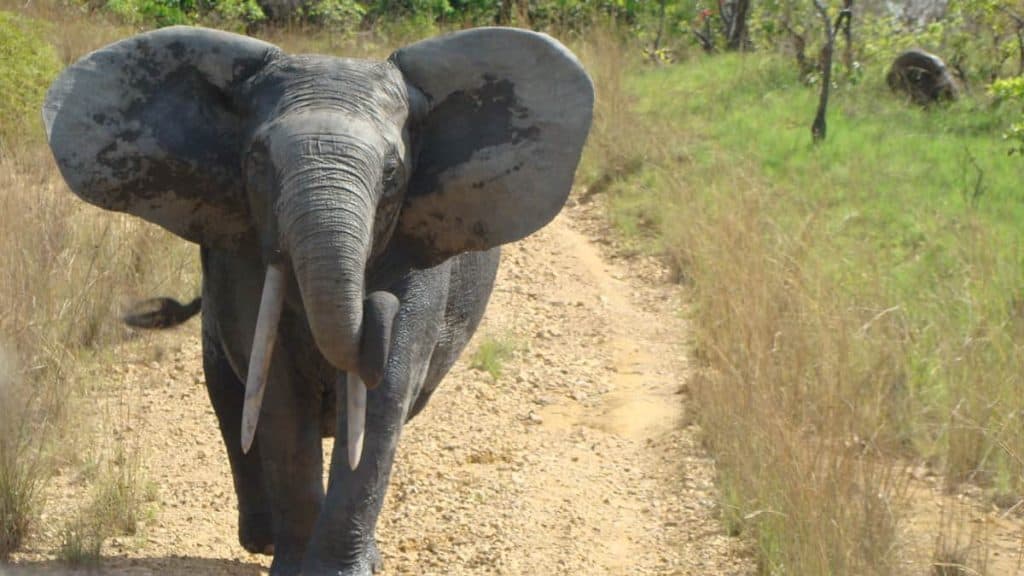
African forest elephants are a critically endangered species.
©Stephanie Manka
There are no specific scientific measurements recorded exclusively for the bite force of the African forest elephant, but it is generally considered to be highly powerful, characterized by a massive grinding force rather than a piercing bite. The forest elephant’s bite is generally less of a direct weapon of attack compared to its trunk or tusks.
Bite Force Advantage: Gorilla
Gorilla vs. Elephant: Physical Defenses
Both gorillas and elephants are social animals that live in groups, and that alone is a powerful deterrent to predators. On an individual level, though, the elephant has a profound physical advantage by virtue of its huge size and thick skin. African forest elephants defend themselves primarily through tight social bonding, forming defensive, protective circles around vulnerable young. They will use their powerful tusks to jab and thrust against predators.
Gorillas use their speed and threat displays to end fights before they begin, and they’re rarely hunted as prey.
Defensive Advantage: Elephant
Gorilla vs. Elephant: Offensive Capabilities
During combat, a silverback gorilla utilizes its immense upper-body strength to grapple and strike adversaries, often employing a closed-fist smashing motion. Furthermore, it uses its long canines to inflict significant, often lethal, damage.
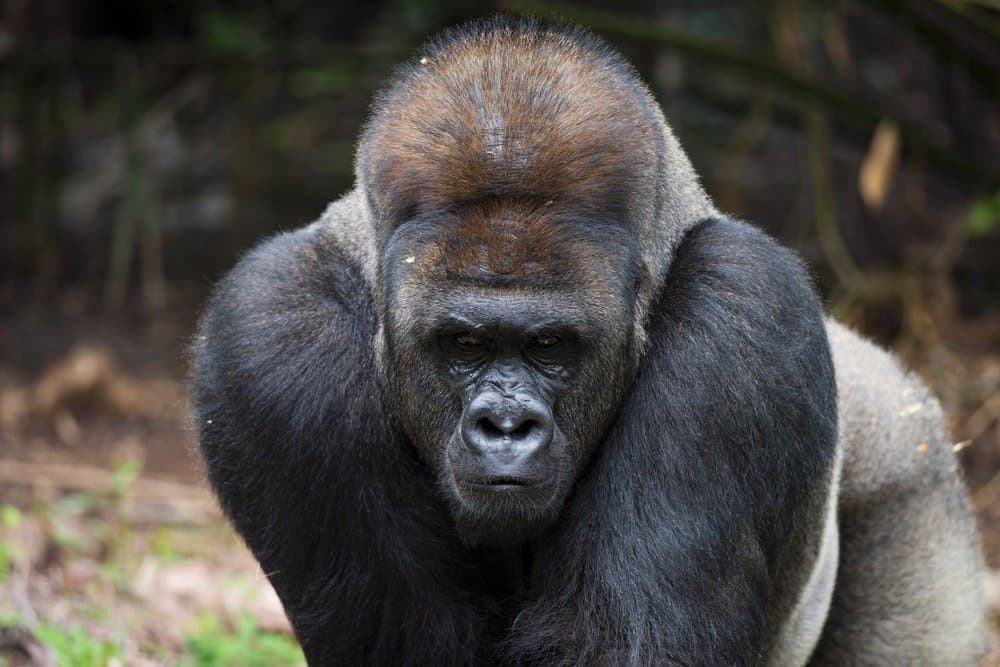
The Eastern lowland gorilla is the largest of the four gorilla subspecies and the largest living primate.
©dptro/Shutterstock.com
Elephants can use their trunks and heads to knock predators down and then dig into them with their tusks. The most common offensive method they use is trampling foes with their massive legs and the weight they support.
Offensive Advantage: Elephant
Gorilla vs. Elephant: Predatory Behaviors
The elephant does not exhibit predatory behaviors, but it will act aggressively toward any animals that encroach on its territory. It will use threat displays of feigned charges that can turn into real ones if the enemy doesn’t back down.
Although primarily herbivores, gorillas are intelligent opportunists that sometimes use simple tools, such as branches to test water depth or foraging sticks. They prefer to avoid serious conflict, often utilizing bluff charges and chest-beating to intimidate rivals. However, if a threat persists, they will defend themselves with force.
Predatory Advantage: Gorilla
Who Would Win in a Fight Between a Gorilla and an Elephant?
An elephant would win in a fight against a gorilla. Gorillas are certainly powerful and intelligent animals, but they lack any effective means of killing an elephant. Unless a gorilla encountered an elephant lying down and managed to inflict severe bites, it simply would not stand a chance.
However, this scenario is highly unlikely. An elephant would most likely hear or smell a gorilla approaching, so it would not be taken by surprise.
More likely, a gorilla would inadvertently enter an elephant’s territory and find itself facing a charging elephant, which could easily flip the much lighter gorilla into the air and then trample it. Elephants are in a completely different league in terms of size and power, which is enough to definitively determine that they would win this battle.
However, the gorilla’s intelligence cannot be ignored. That intelligence would likely come into play before any confrontation, as the gorilla would recognize the danger and choose to retreat rather than engage in a fight.