
Quick Take
- A leopard slug lays eggs from a body part you'd never think to look for, and its location is stranger than you'd expect. See where eggs come from →
- Its scientific name literally means 'biggest slug', though that title doesn't actually belong to it. Explore the scientific name →
- Slugs are hermaphrodites, but some don't even need a partner to reproduce. That distinction matters more than you'd think. Discover slug reproduction types →
- Leopard slug eggs can survive most threats, but there is one surprisingly common one lurking right next to them that they cannot. Find out what threatens eggs →
There is something strangely ethereal about this clip of a leopard slug laying eggs. In the time-lapse clip the slug lays eggs from its gonophore, an opening under its mantle (the fleshy hump) on the right side of its body. Read on to find out more about slug eggs!
What Exactly Is a Leopard Slug?
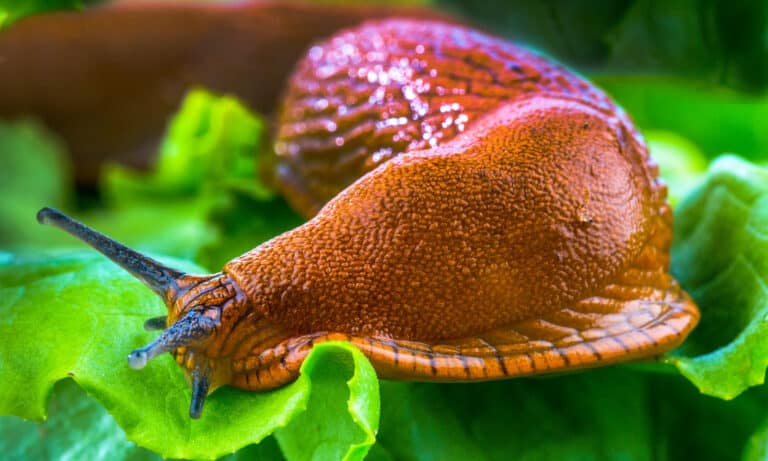
With a name like Limax maximus, which literally means ‘the biggest slug,’ it’s hard not to be impressed by the leopard slug. They are one of the largest slugs on Earth. Most experts believe leopard slugs were originally a native species of Europe and the Mediterranean countries of Africa, but they are now found in North America, South America, Asia, and Oceania.
These slugs are members of the Limacidae family, also known as keelback slugs, and are a type of terrestrial (land-based) mollusc. You will commonly find these slugs in areas where there is a lot of human activity. So, they are frequently seen in gardens, parks, and graveyards. They feed on decaying plant material as well as fungi and lichen. Occasionally, they feed on other slugs’ eggs.
Do All Slugs Lay Eggs?
Slugs are hermaphrodites, which means that they possess both male and female reproductive organs. Most of them reproduce sexually, which means that they find another slug and exchange sperm to fertilize the eggs. Some slug species can self-fertilize and do not need to find a mate. They typically breed from late summer to autumn.
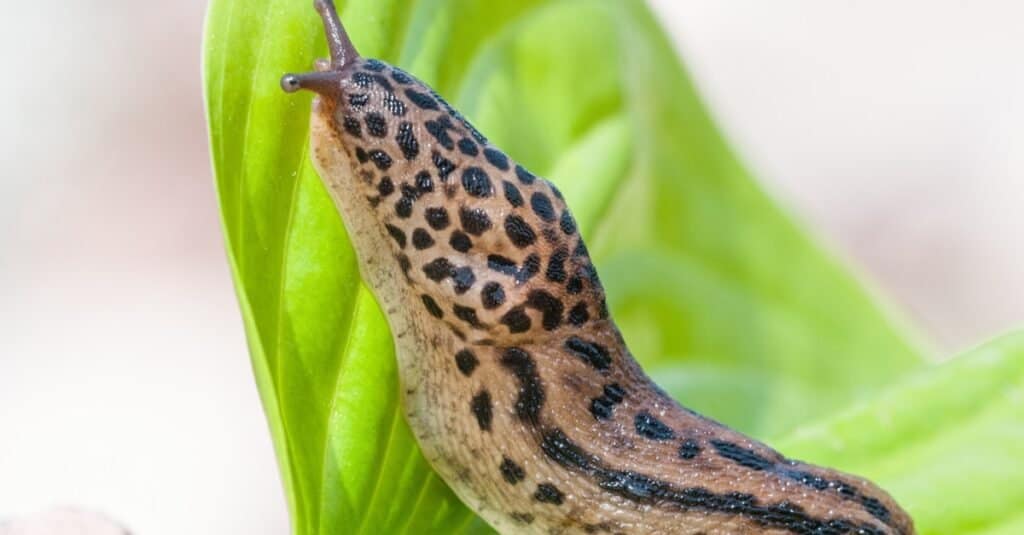
Leopard slugs lay eggs in damp places.
©MMCez/Shutterstock.com
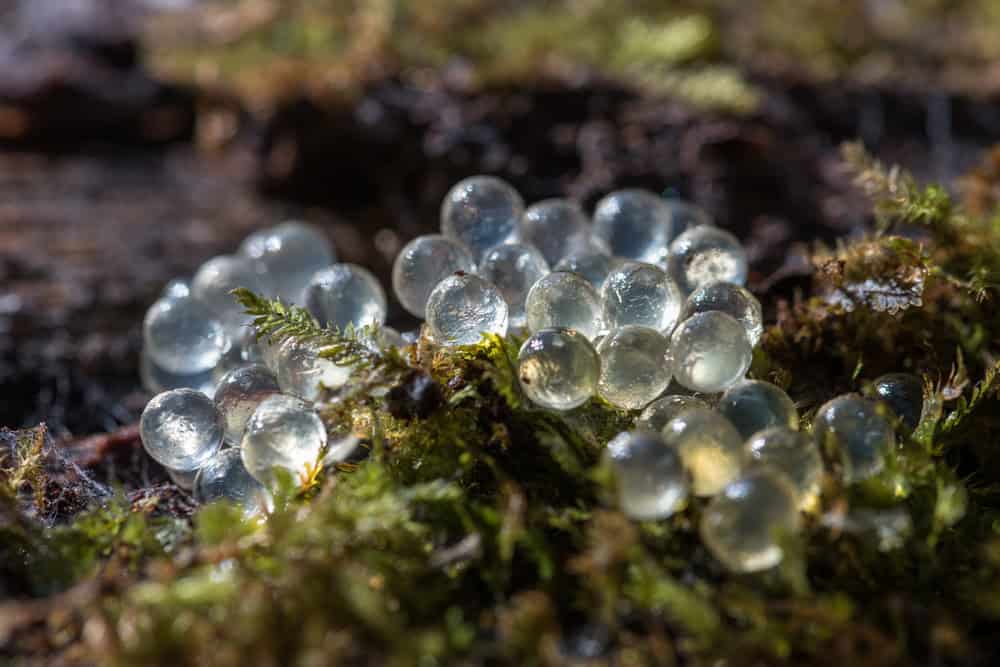
All slugs lay eggs in damp, dark, and sheltered spaces. In the case of leopard slugs, they lay clusters of up to 200 eggs that are slightly attached to each other. These are deposited in moist soil or under objects. As you can see in the clip, the eggs are transparent and elastic with a slightly yellowish color. Most of the eggs will survive provided that they do not dry out or get eaten by beetles or other invertebrates, including other slugs. It takes about a month for the eggs to hatch into tiny slugs.
The newly hatched slugs are pale white, and it takes them some time to develop the patterning of their parents. They reach sexual maturity after two years.