
For most animal species, finding a mate is a priority. That is the only way in which they can pass their genes on to the next generation. The mourning gecko, however, does things differently. As this intriguing clip shows us, they were highly successful at expanding their range from New Guinea to the remote islands of the South Pacific. This is because all that’s needed to produce offspring is a female; her eggs do not need fertilization. A single female who washed up on an island or stowed away on a human boat can start a whole new population. Let’s find out more.
Mourning Geckos
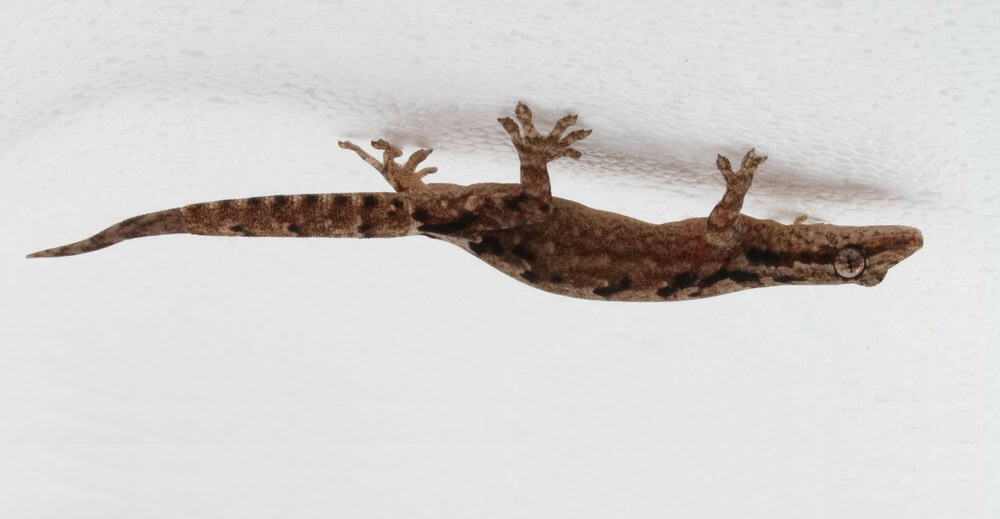
Mourning geckos can walk on your ceiling.
©Michael Benard/Shutterstock.com
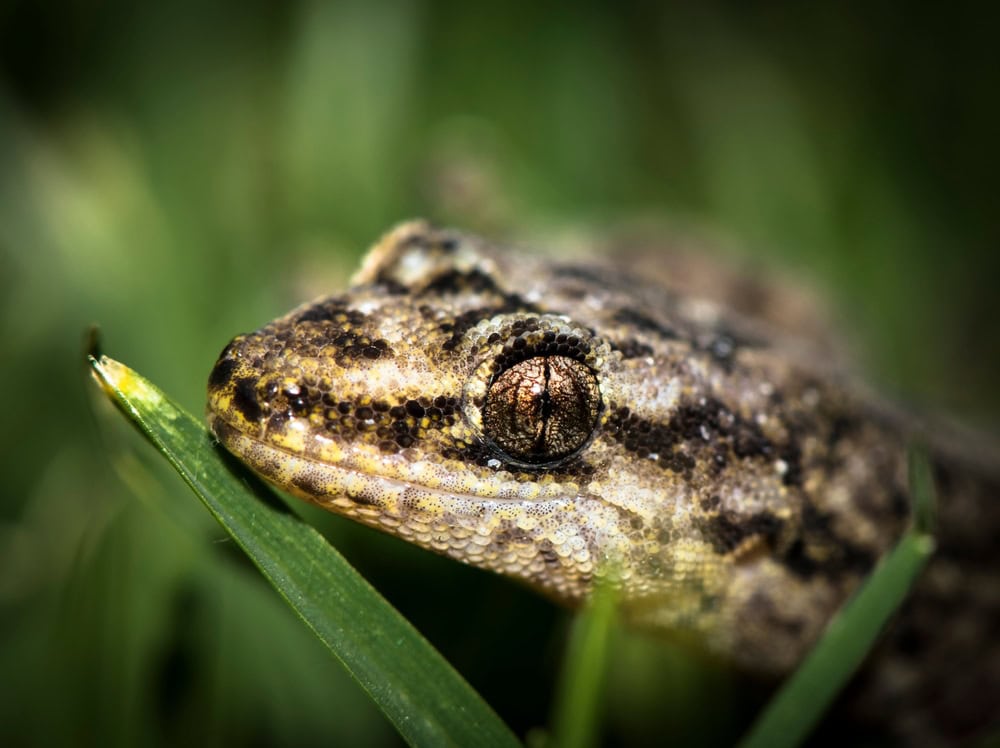
The mourning geckos (Lepidodactylus lugubris) were named as such because the humans that discovered them thought that the females were mourning for the males because there weren’t any! Actually, male mourning geckos do exist, but they are very rare and are usually infertile. The females are not necessarily mourning them either! They are busy producing baby geckos.
These small-bodied geckos live in Southeast Asia and nearly all of the Pacific islands. They have distally divided basal toe pads, which help adhere to vertical surfaces. Thanks to their thick skin and salt-resistant eggs, they are particularly good at surviving harsh sea voyages, either on floating debris or as stowaways on human vessels. Females prefer to lay their eggs in preexisting nests that already contain other eggs. After laying her eggs, she abandons them. In captivity, they live for 10-15 years, but there is little data on how long they live in the wild.
They are ambush predators and rely on their sight to find prey. Mourning geckos are more generalist feeders than other Lepidodactylus species and feed on a wider variety of invertebrates (amphipods, insects, and other arthropods). However, they are also more likely to avoid areas contaminated by feces than the other species. This makes them less at risk of picking up parasites. Their main predators are other (larger) lizards. When attacked, mourning geckos can detach their tails, which later grow back.
Reproduction by Cloning
The reproduction method seen in mourning geckos is called parthenogenesis. In the more commonly seen sexual reproduction, an egg cell needs to combine with a sperm cell. Both of these gametes (special sex cells) contain half of the genetic information needed to create a whole new individual. In parthenogenesis, however, the female produces a new individual by herself. Her eggs contain her complete genetic code instead of half of it and are a clone of herself. She does this through a process called automixis, which is the fusion of gametes or nuclei from the same individual. She basically mates with herself!
Parthenogenesis was seen in primitive, simple organisms and was largely surpassed by sexual reproduction. However, it can make a comeback in species under extreme stress, such as finding yourself alone on a desert island! This may explain why it is seen in so many island species.
The majority of animals that use parthenogenesis are small invertebrates such as bees, ants, and aphids, which can also reproduce sexually. It is very unusual in vertebrate species, but has been recorded in fish and lizards. As a result, the mourning gecko is often chosen by laboratories that need cloned animals for their studies.
The Pros and Cons of Not Mating
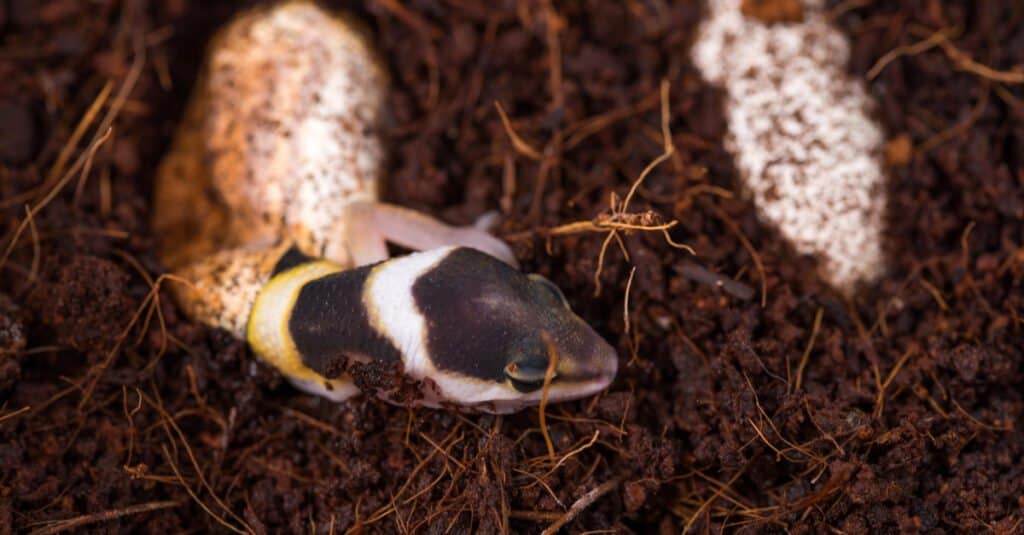
Most geckos reproduce sexually.
©Spok83/Shutterstock.com
Not having to find a mate has obvious advantages! Mourning geckos can produce large numbers of offspring quite quickly without having to go through the hassle of locating and mating with a partner. If there are very few of a species in one location, it is the most reliable way to reproduce. A mature mourning gecko can lay one or two eggs every four to six weeks, and she does this throughout the year. She is not limited by a breeding or mating season. Their incubation period is two to six months. She can populate an island in a short space of time. There is no need for aggression or competition for a mate, which uses up energy and can even lead to injury. That said, there is still a dominance hierarchy among the females. The more dominant female will show aggression by lunging at subordinate females.
On the downside, it means that there is no genetic diversity within the population. This makes the population vulnerable. If a change in the environment, such as a temperature change or a new disease, threatens their survival, there will be no individuals who are genetically able to cope with it. Also, a single harmful genetic mutation could wipe out the entire population.
Interestingly, female mourning geckos have been spotted mating with other males in the Lepidodactylus genus, but from a different species. This may suggest that some hybridization (combining two different species) is taking place. However, a lot more research is needed to confirm this.