
Quick Take
- Your dog's constant sniffing isn't actually slowing the walk down. Vets say it's doing something just as important as the exercise itself. See why sniffing matters →
- Sniffing can cross from normal into a warning sign, but most owners are watching for the wrong thing. Spot the real warning signs →
- If your dog suddenly stops sniffing on walks, vets say that's actually the bigger problem to worry about. Why silence is the red flag →
- Cutting sniff time to boost exercise might be working against your dog in ways you can't see on the walk. Find the right balance →
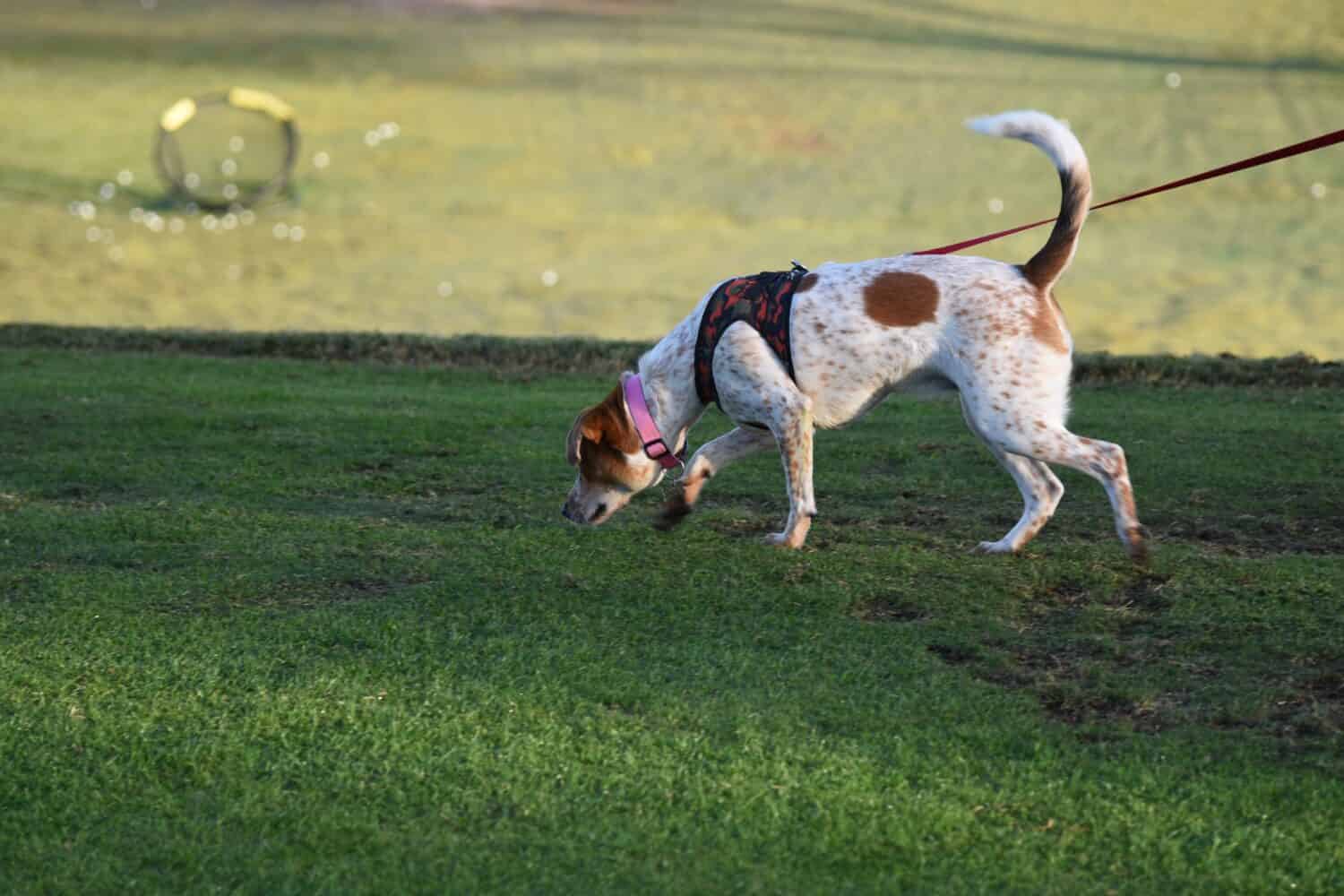
You clip on the leash, step outside, and expect a quick walk around the block. Your dog has other plans. Every patch of grass, mailbox post, and shrub becomes a stopping point, and before long, you are wondering whether this even counts as a walk at all. According to veterinarians, it does.
Humans rely heavily on vision to understand the world around us. Dogs, by contrast, gather much of that same information through scent.
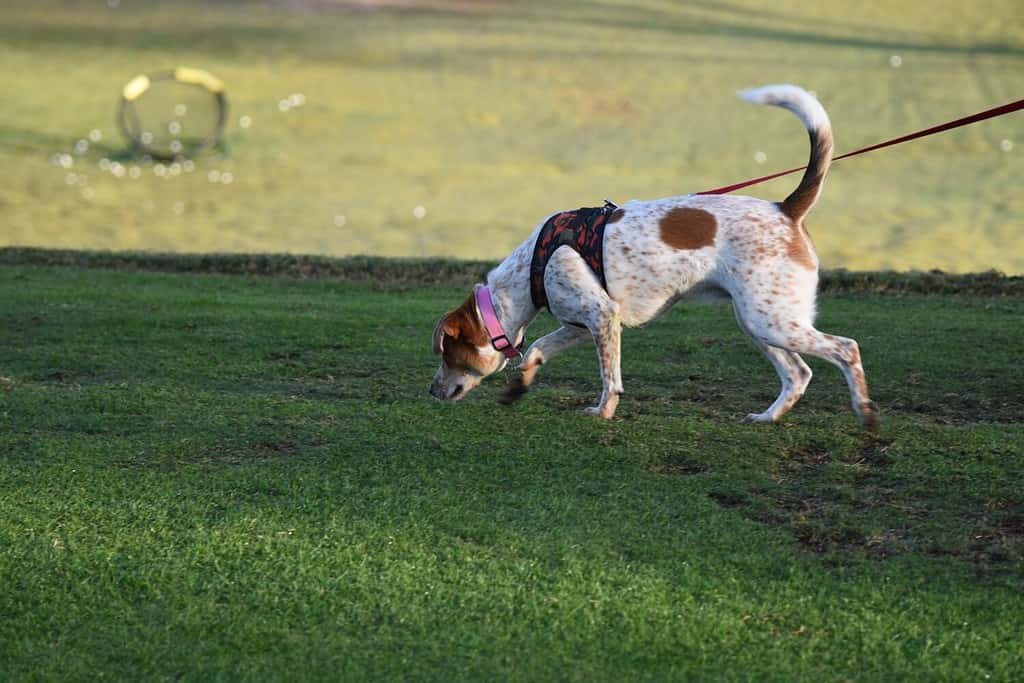
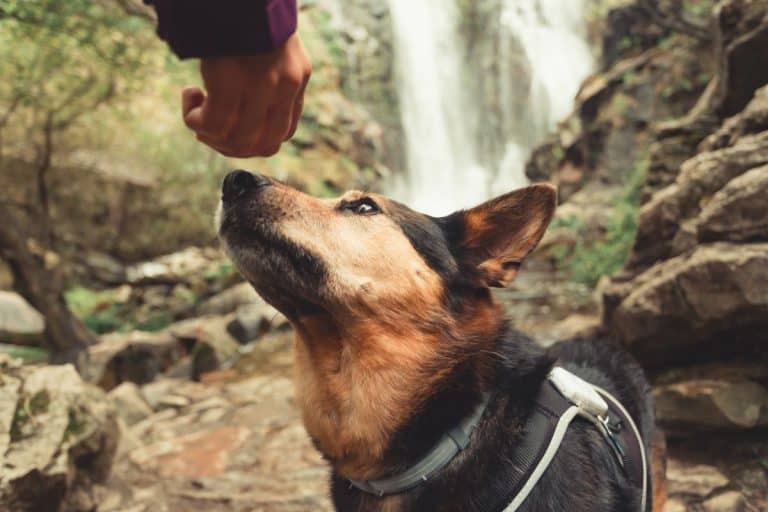
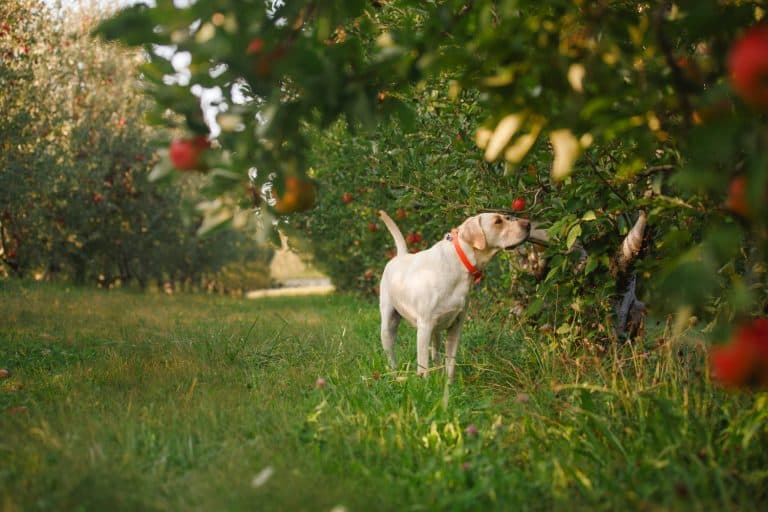
Dogs can smell a scent up to 12 miles away.
©Thomas Trompeter/Shutterstock.com
Dogs Experience the World Through Their Noses
“Sniffing is one of the primary ways they experience and interpret the world,” says Dr. Victoria Carmella, a veterinarian advisor at Pet Honesty. “Even a quick sniff can provide them with a tremendous amount of information, from who’s been there and what’s nearby to what’s changed since their last visit.”
That helps explain why a short stretch of sidewalk can feel uneventful to a person and information-rich to a dog. A dog is not just pausing randomly. It is checking in on a world of invisible updates.
Dr. Dana Varble, Chief Veterinary Officer for the North American Veterinary Community (NAVC), describes it this way: “As humans, we identify trees, neighbors and wildlife mainly with our vision. Our dogs identify those same things by their smells.” When a dog lowers its nose to the ground, Its brain actively sorts and classifies scents, investigating people, animals, and objects in the environment.
That process matters for more than curiosity. It also supports a dog’s mental and emotional well-being. Sniffing gives dogs a chance to engage in natural behavior, stay mentally stimulated, and in some cases even feel calmer.
For owners who get frustrated when the pace of the walk slows, Dr. Carmella offers an important reminder: “If your dog loves to sniff, remember that sniffing is part of the walk for your dog.” In other words, a walk full of sniffing may still be doing exactly what the dog needs.
When “Too Much” Sniffing May Not Really Be Too Much
Many pet owners wonder whether their dog sniffs too much, especially if a quick potty break turns into a slow-moving neighborhood investigation. But context matters.
“The first question I’d ask is: Is this truly excessive sniffing, or is it normal behavior for this individual dog?” says Dr. Carmella. Breed, age, temperament, and environment can all affect how much a dog explores through scent. A young dog in a new area, for example, may spend much more time sniffing than an older dog on a familiar route. Some breeds are also naturally more scent-driven than others.
New environments in particular can trigger more intense sniffing, and that is usually nothing to worry about. “When introduced to a new environment, expect a dog to sniff more than they would in a familiar place,” Dr. Varble says. Dogs are gathering information, learning what is familiar, and identifying what has changed.
Even in a place your dog knows well, more sniffing can simply mean something new happened there. Another dog may have passed by, wildlife may have crossed the area overnight, or a new person may have walked through. Humans may miss those clues entirely, but a dog’s nose does not.
“If your dog loves to sniff, remember that sniffing is part of the walk for your dog.” In other words, a walk full of sniffing may still be doing exactly what the dog needs.
Dr. Carmella
When Sniffing Deserves a Closer Look
The amount of sniffing matters less than whether the behavior has changed from your dog’s usual pattern.
Dr. Carmella says owners should pay attention if a dog becomes unusually fixated, has difficulty disengaging, or shows other symptoms such as sneezing, nasal discharge, low energy, or changes in appetite. “A sudden change in a dog’s normal behavior is something I would take seriously,” she says.
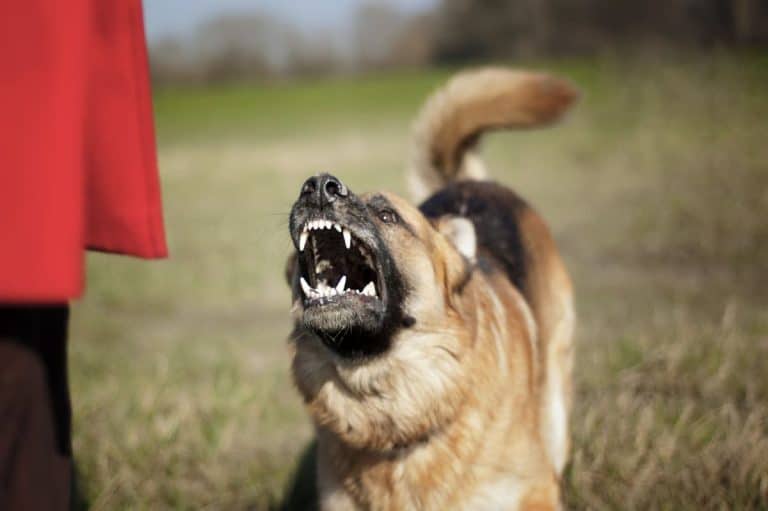
That same rule applies if a dog’s sniffing becomes so intense that it cannot be redirected. While sniffing itself is normal and healthy, a meaningful shift in intensity or pattern can sometimes point to stress, discomfort, or an underlying medical issue.
Dr. Varble also notes that if changes in sniffing occur alongside coughing, heavy panting, or labored breathing, those symptoms should be taken seriously and evaluated promptly.
How to Balance Sniffing With Exercise
Of course, many owners still face a practical challenge: what if a dog spends so much time sniffing that the walk barely provides any physical exercise?
The answer is not to eliminate sniffing. It is to create balance.
“Give your dog the best of both worlds,” says Dr. Varble. One walk can be more structured and movement-focused, while another can be a slower sniff walk where the dog has more freedom to explore. Some owners also find it helpful to build short sniffing breaks into an otherwise brisk walk.
Dr. Carmella recommends a similar approach. Dogs benefit from both physical activity and mental enrichment, she says, and the two do not have to compete. Structured walks, designated sniff walks, play sessions, training, and other enrichment can all work together to support a dog’s overall well-being.
Training cues can also help create a smoother rhythm. A cue such as “leave it” may signal that it is time to move on, while a release to sniff can act as a reward. Over time, many dogs learn that there are moments for walking with purpose and moments for exploring with their noses.
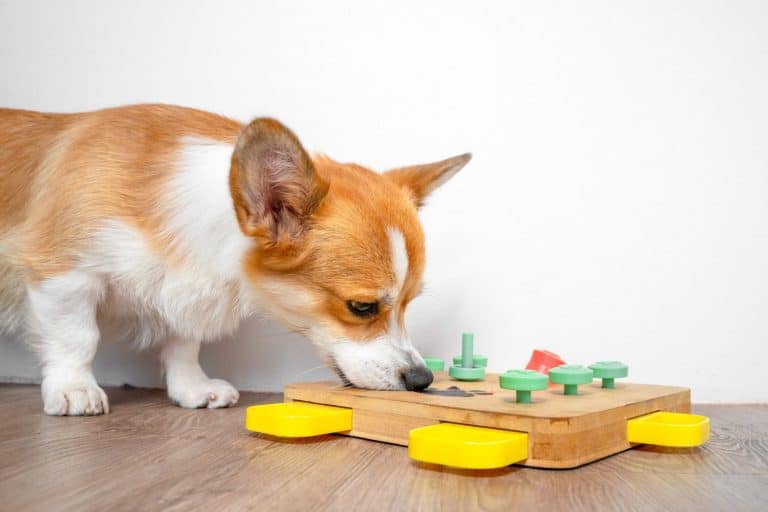
For dogs who are especially scent-driven, Dr. Carmella also suggests enrichment at home, such as a snuffle mat, to give them another healthy outlet for that natural behavior.
What It Means If Your Dog Suddenly Stops Sniffing
While many owners worry that their dog sniffs too much, veterinarians say a sudden loss of interest in sniffing can be the bigger red flag.
If a dog that normally enjoys scent exploration suddenly stops, Dr. Carmella says it may indicate discomfort, fatigue, illness, or a broader change in the dog’s well-being. A veterinary exam is a good idea if the shift is persistent, significant, or accompanied by other symptoms such as lethargy, coughing, decreased appetite, nasal discharge, or changes in mobility.
Dr. Varble similarly advises owners to look at the bigger picture. If the dog is also sneezing, coughing, showing discharge, or moving differently, those clues may help a veterinarian identify what is going on. Because dogs tend to be creatures of habit, a meaningful departure from routine can be one of the clearest signs that something is off.
So, Can Too Much Sniffing Be a Bad Thing?
There is no universal threshold at which sniffing suddenly becomes unhealthy. There is no set number of minutes that counts as too much for every dog.
Instead, veterinarians say the concern lies in the context. Sniffing may be worth evaluating when it becomes unusually intense, impossible to interrupt, dramatically different from the dog’s normal behavior, or paired with other signs of illness or distress.
For most dogs, though, sniffing is not a problem to solve. It is a deeply natural and beneficial behavior. It allows them to gather information, satisfy instinctive drives, and engage with the world as dogs were built to do.
The key for owners is to know their dog’s baseline. A walk full of sniffing may simply mean your dog is enjoying the outing exactly as intended. But if that behavior shifts sharply, whether it increases or drops off, it is worth paying attention.
The goal is not to rush your dog past every smell. It is to understand when all that sniffing is just part of being a dog and when a change in that behavior may be worth a conversation with your veterinarian.