
Quick Take
- Dominating Southeast Asian forests requires traveling across distances of several feet between interconnected tree lines.
- The patagia and elongated ribs create a restrictive maneuverability constraint for the Draco genus.
- Contrary to popular belief, these lizards rely on a parachuting method instead of flight.
- A brief ground descent is necessary for females to deposit 2 to 5 eggs.
On social media, we are introduced to so many different species that we don’t see in our everyday lives. One example is the Thai flying dragon. These gliding lizards look like tiny dragons and are both adorable and mesmerizing. This Instagram post by @loopyoutside shows a close-up video of the lizard and its wings. Read here to learn more about the Thai flying dragon.
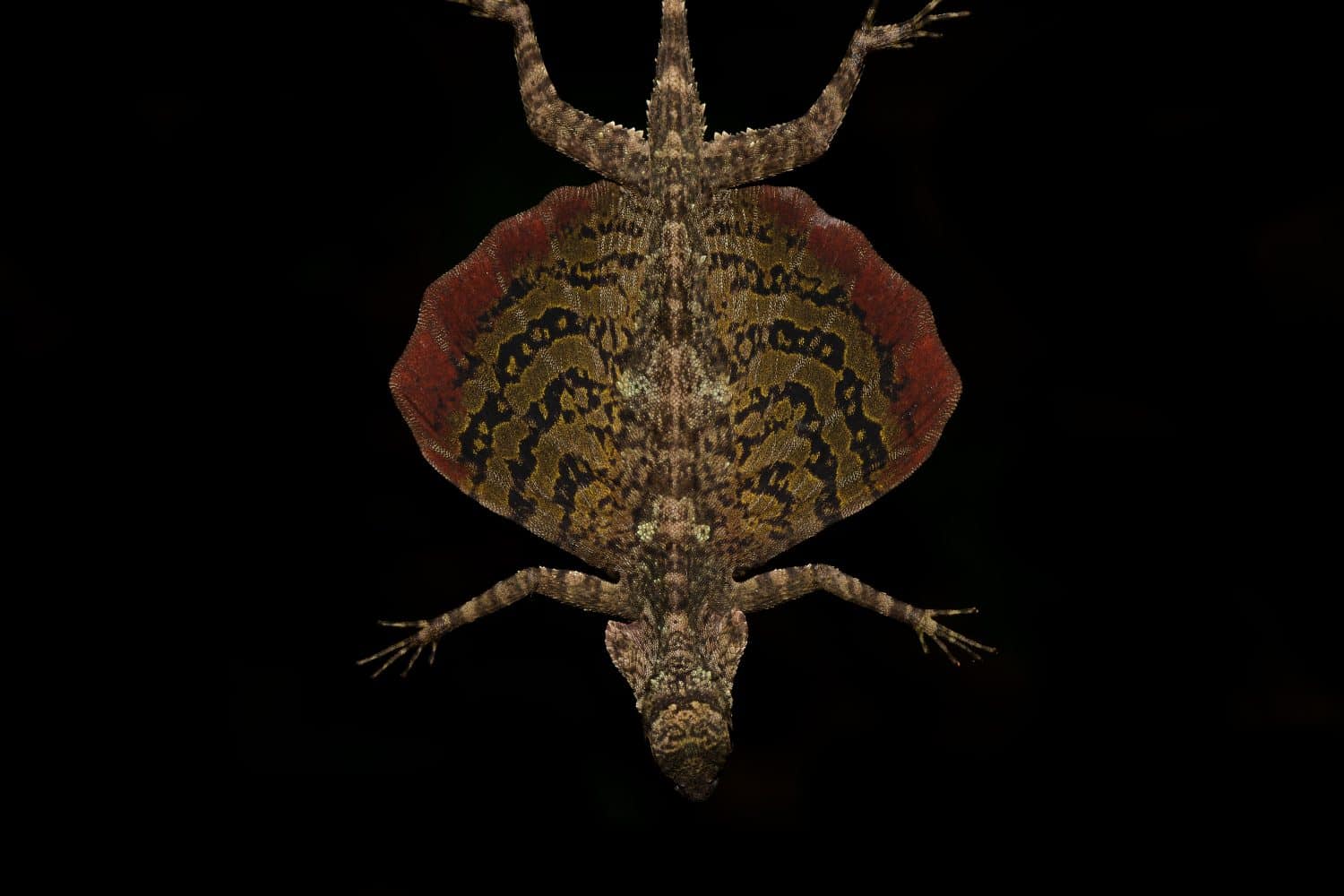
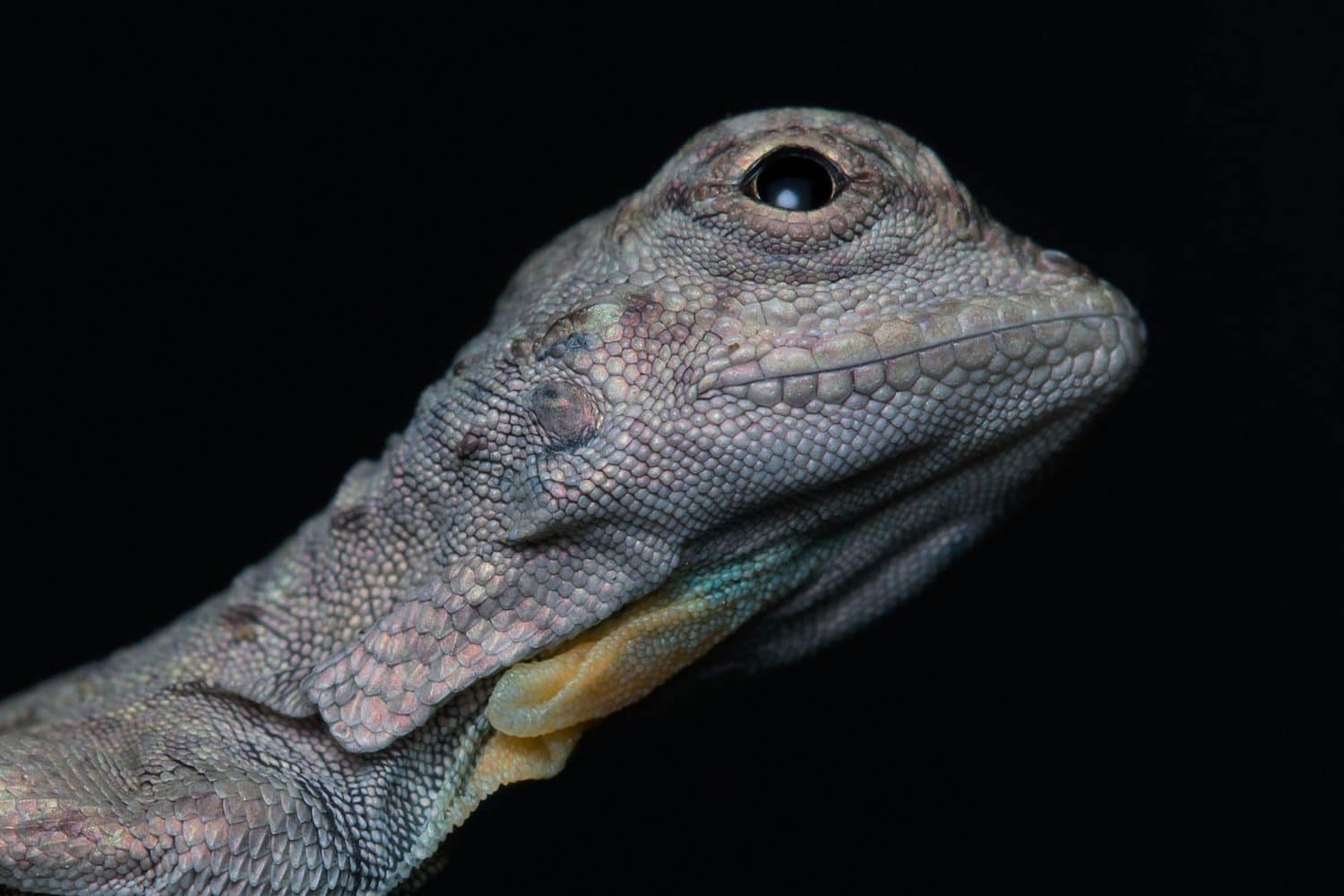
The Thai flying dragon is one of the more common species of flying lizards.
©Andaman Kaosung/Shutterstock.com
About the Thai Flying Dragon
The Thai flying dragon, as the name suggests, is a species native to Southeast Asia, including Thailand, Myanmar, Cambodia, and more. They are arboreal lizards, which means that they spend most of their lives in trees. Their habitats include tropical rainforests and wooded areas, specifically dense regions where the canopy is interconnected. This environment also provides excellent camouflage.
Because of their habitat, these lizards are insectivores. They typically eat ants, termites, and other small insects. Their bright and colorful gliding membranes are an amazing sight, but also necessary for their everyday behaviors. Thai flying dragons—specifically the males—are territorial. They often claim multiple trees as part of their domain. To signal to other lizards to back off, they display their gliding membranes. This display signals both health and intimidation, and is also used to attract females.
After mating, females descend to the ground to lay their eggs in small holes. They then ascend back up, highlighting how brief their visits to the ground are. Thai flying dragons lay clutches of about two to five eggs at a time.
After hatching, the babies are completely independent. There is no parental care or guarding, which makes the hatchlings extremely vulnerable at this stage. Interestingly, they already possess the anatomy necessary to climb trees, as well as the gliding membranes. After climbing up, they go on to live independently, searching for food and shelter within the trees.
Do They Actually Fly?
The Thai flying dragon belongs to the genus Draco, which includes several other species of flying dragons or lizards. These flying lizards are among the most common of the nine species found in Thailand. As seen in the video, the lizards have beautiful wings that stretch from their front legs to their back legs. However, instead of flying like birds, these lizards glide. The “wings” are actually skin flaps, or patagia, and they use them to glide between trees. The patagia are supported by elongated ribs that extend outward, functioning like a parachute.
To glide, the lizards leap from a high perch and catch the wind as they travel to another tree. Depending on the height and wind conditions, they can glide several feet at a time, making it appear as though they are flying. By using their tails like rudders, they can control the direction of their glide to some extent. This ability makes them highly adept at maneuvering through the canopy and efficient in their arboreal habitats.