
Quick Take
- Lionesses and male lions took completely different approaches to the flooded bridge, a contrast that reveals something unexpected about how these animals handle danger. See how they crossed →
- The Maasai Mara has seen floods powerful enough to wash away entire bridges, and 2024 proved just how fast conditions can turn catastrophic. Explore the 2024 floods →
- Lions can swim, but the real danger lurking in African floodwaters has nothing to do with the current. Watch the crossing →
- Climate scientists say you can't blame a single flood on global warming. Even so, what they do project for East Africa's future rainfall is harder to dismiss. See the rainfall projections →
In the remarkable video at the top of the page, a group of lions crosses a bridge while fast-moving floodwater pours across and beneath it. A lioness and a younger lion carefully make their way along the raised edge, moving single file as water rushes through openings in the bridge below them. One wrong step could have put either animal into a much stronger current.
The footage is described as coming from Kenya’s Maasai Mara National Reserve, where heavy rains can quickly swell rivers and streams. As the first pair reaches the end of the bridge, the lioness steps down into the shallow water covering the road, followed by the younger lion. Another lioness soon appears behind them and makes the same crossing.
The video then cuts to several adult males approaching the flooded bridge. Unlike the lionesses, they move directly through the shallow water instead of carefully balancing along the raised edge. One crosses without much hesitation, while another pauses near the water before following the rest of the group. Whatever route they choose, the lions clearly seem interested in getting across without spending any more time in the floodwater than necessary.
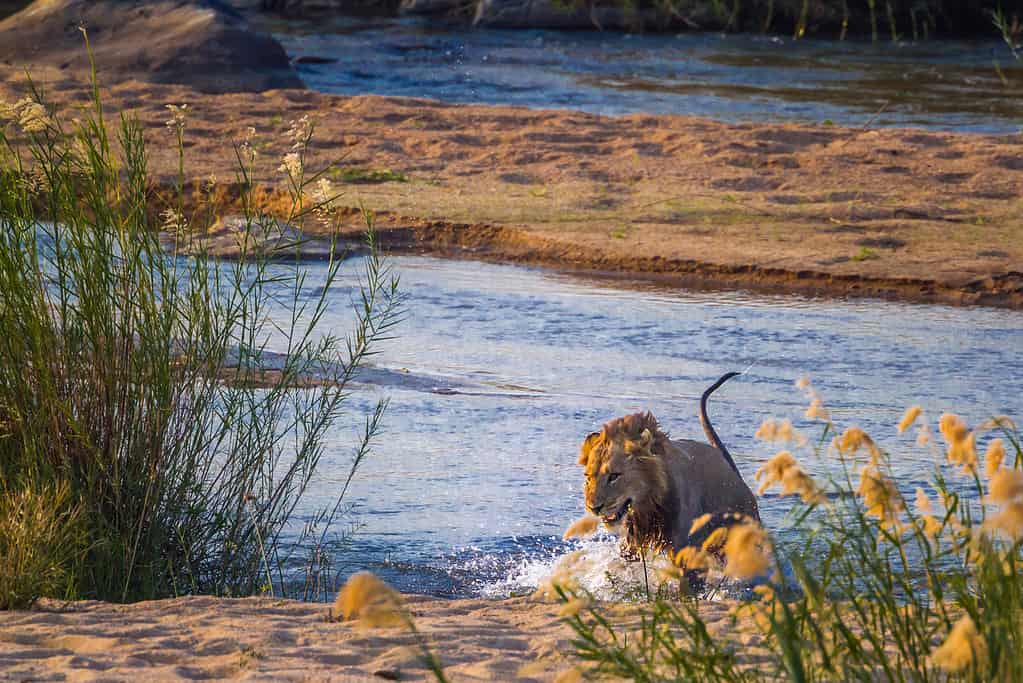
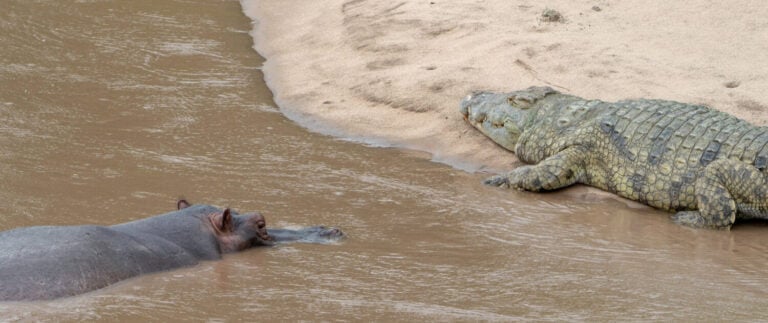
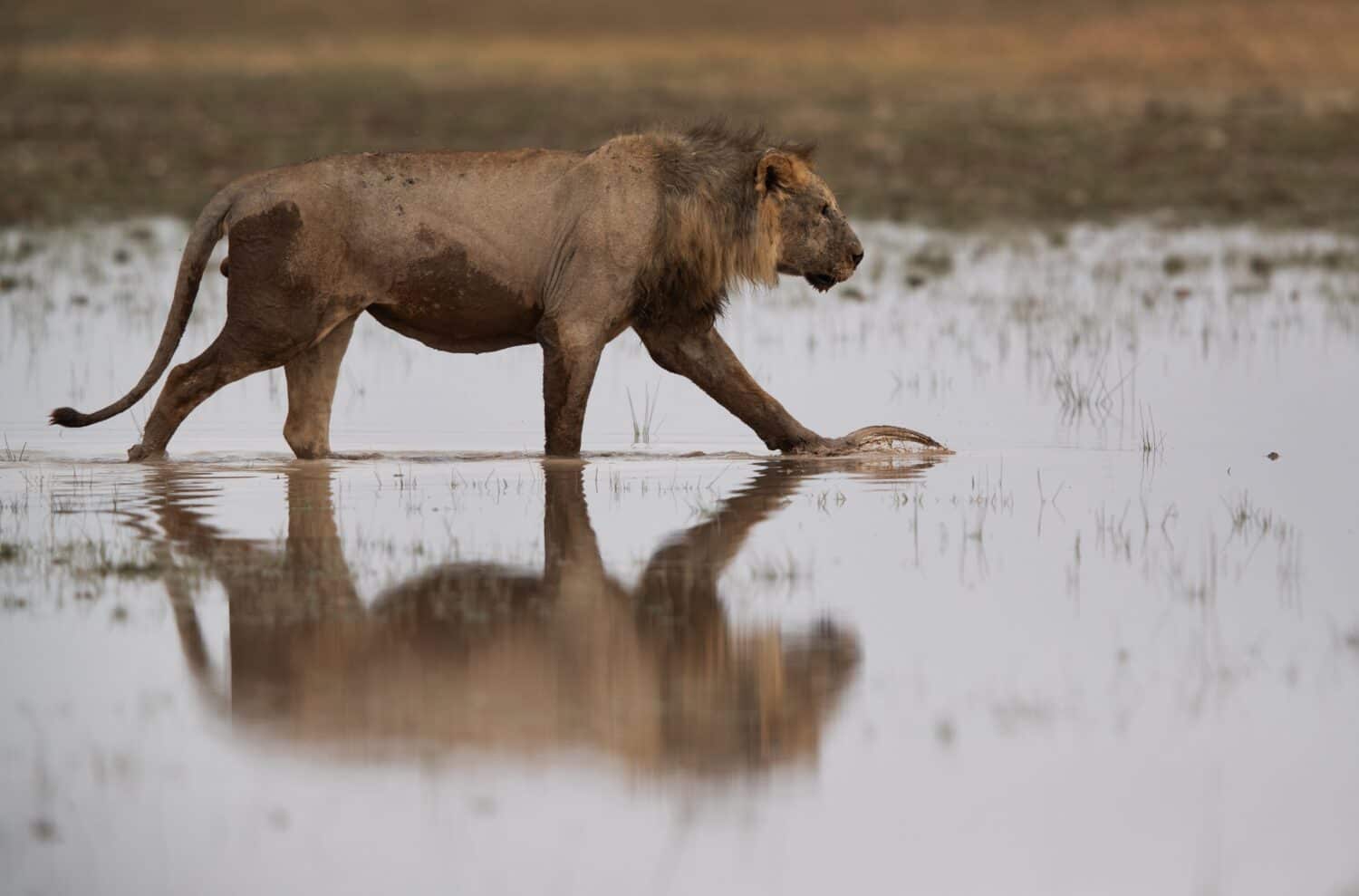
Lions can swim when they need to, but strong currents can make flooded waterways dangerous. Crocodiles can add another risk in some African rivers.
©PACO COMO/Shutterstock.com
The final male takes his time before crossing. He pauses near the flooded section, lowers his head toward the water, and eventually steps onto the bridge. He then continues across and follows the other lions onto the drier road beyond the floodwater.
How Common Is Flooding in the Maasai Mara?
Heavy rains are a normal part of life in the East African savanna, and flooding can occur in the Maasai Mara when rivers rise quickly after storms. The region has distinct rainy periods, including the longer rains generally associated with spring and shorter rains later in the year, although rainfall varies considerably from year to year.
Flooding in the Mara can be powerful. Heavy rain caused the Mara River to flood in May 2023, and in May 2024 the Talek River rose to exceptional levels, flooding camps and washing away a bridge. Seasonal rainfall is essential to the ecosystem, replenishing water sources and supporting the grasslands that feed the region’s enormous herbivore populations. Too much rain in a short period, however, can turn normally manageable rivers and roads into dangerous crossings.
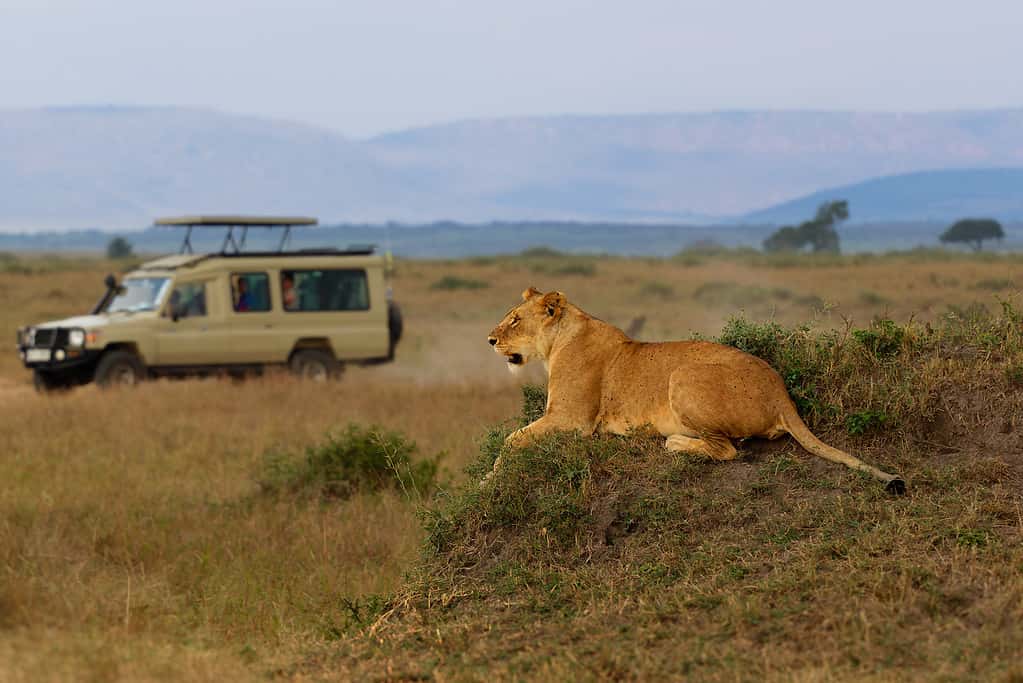
The Maasai Mara National Reserve supports lions and a wide variety of other wildlife across its grasslands and river systems.
©iStock.com/phototrip
Is Climate Change Making Heavy Rainfall Worse?
Climate change adds another layer to the picture, but it is important not to blame a single flood on global warming without specific scientific analysis. East African rainfall naturally varies from year to year, and individual storms can be influenced by several atmospheric and ocean patterns.
That said, climate research does point toward a greater risk of intense rainfall as the planet warms. Studies of changing rainfall patterns in East Africa have examined how precipitation is shifting across the region. The Intergovernmental Panel on Climate Change also projects that heavy rainfall events will become more intense and frequent across much of East Africa at higher levels of global warming.
For wildlife in places like the Maasai Mara, that can mean dealing with both extremes. Long dry periods can reduce water and forage, while intense storms can suddenly flood rivers, roads, and low-lying habitat. The lions in the video appear to handle the flooded crossing well, but scenes like this are a good reminder of just how quickly conditions can change on the savanna.