
Much of the plant life on Earth fits into one of two groups — the gymnosperms and the angiosperms. Gymnosperms, whose name translates to “naked seed”, arrived first. They were some of the first vascular plants to use seeds and pollen to reproduce and enjoyed great evolutionary success because of it. While there are still some gymnosperms in existence, like conifers and cycads, most of them have died off.
The angiosperms, whose name means “covered seed” evolved into existence much later. These are the flowering plants that dominate our world today. Building on the foundation laid by the gymnosperms, they developed innumerable ways of reproducing by way of pollen and seed. Depending on a few factors, most angiosperms fit neatly into their own two subdivisions: the monocots and the dicots.
In this article, we’ll explore the differences between monocots and dicots and give some examples of each. We’ll talk about the anatomical differences between the two groups, how to tell them apart at various life stages and learn about a few flowering plants that don’t quite fit the mold.
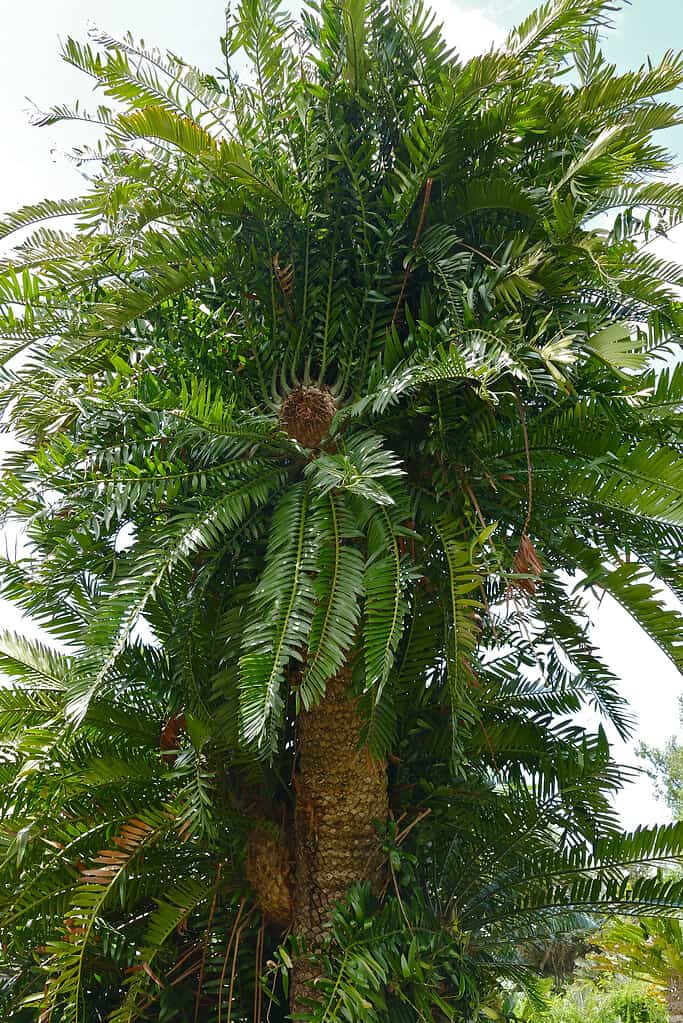
While angiosperms dominate the modern world, gymnosperms like the cycad above represented much of Earth’s plant life for over a hundred million years.
What Are Monocots and Dicots?
You’re probably already familiar with photosynthesis — the process by which plants create sugars using the sun’s light. Before a plant develops leaves, however, it cannot create its food. To jump-start its life and help it become established, a seedling must rely on a part of its embryo called the cotyledon. In some cases, a cotyledon functions as a store of nutrients that the seedling uses to develop its first set of true leaves. In others, the cotyledon helps the seedling metabolize a different nutrient stored within the seed. Think of them like a disposable plant battery. Once the plant has used up its cotyledons, it sheds them in favor of the photosynthetic leaves it will produce for the rest of its life.
Traditionally, botanists would use the number of cotyledons that a seed or seedling possessed to determine whether it was a monocot or a dicot. One cotyledon denoted a monocot while two denoted a dicot. Vascular structure, root habit, and flower characteristics, among other features, also aided in the distinction. With recent findings in molecular biology, however, this method of grouping plants has become outdated.
The New Paradigm
Though many angiosperms sort neatly into the dicot and monocot dichotomy, there are many plants that never quite fit the mold. For example, water lilies of the order Nymphaeales have a strange cotyledon structure that resembles a pair of cotyledons fused into one. They also have leaf veins and vascular structures that more closely resemble those of the monocots, despite their rank among the dicots. As it turns out, these and other such nonconformists — now known as the basal angiosperms — are the ancestors of both the monocots and the dicots.
While it is not the oldest angiosperm on record, the New Caledonia amborella (Amborella trichopoda), is certainly the oldest species of angiosperm alive today. The only species in its genus, this somewhat simple-looking plant belongs to an order that was among the earliest plants on Earth to develop flowers. The fact that this amborella species exists today is remarkable. By examining its genetic information, phylogenetic researchers can gain insight into the earliest stages of angiosperm evolution.

The relatively unassuming Amborella trichopoda is likely the oldest extant species of angiosperm. Research suggests that it is a common ancestor of all flowering plants on Earth.
From the basal angiosperms onward, the traditional dichotomy breaks apart even further. The same type of genetic research that identified the basal angiosperms also shows that the dicots are, in fact, the parent group of all monocots. This turns the old dicot grouping into a paraphyletic group representing many genetic lines. These include the eudicots or true dicots, and several other dicot and monocot lineages.
Dicot vs Monocot — Still a Useful Distinction
Although new research methods have outdated the traditional angiosperm dichotomy, the old sorting system is still pretty useful. Many botanists still use the old categories and identify plants based on the characteristics that they used traditionally. As genetic research has shown, however, these physical characteristics aren’t always accurate indicators of a plant’s taxonomic grouping.
We’ll list these important plant characteristics below and talk about how each one can help give direction toward determining a plant’s lineage.
Number of Cotyledons
Of course, the biggest difference between most monocots and dicots is the number of cotyledons in their embryos. Monocots have one cotyledon while dicots have two. The peanut seedling below, a dicot, is developing its first set of true leaves and will soon shed its pair of cotyledons.

©Stock2468/Shutterstock.com
Root Structure
How a plant forms its roots can help determine whether it is a monocot or a dicot. Most dicots form long, deep taproots while most monocots have a branching, fibrous root structure. These fibrous, or adventitious, roots can usually form along any of a monocot’s many nodes. Sometimes, they form above ground. Compare the thick taproot of a beet or carrot to the branching, fibrous roots of the corn plant below.
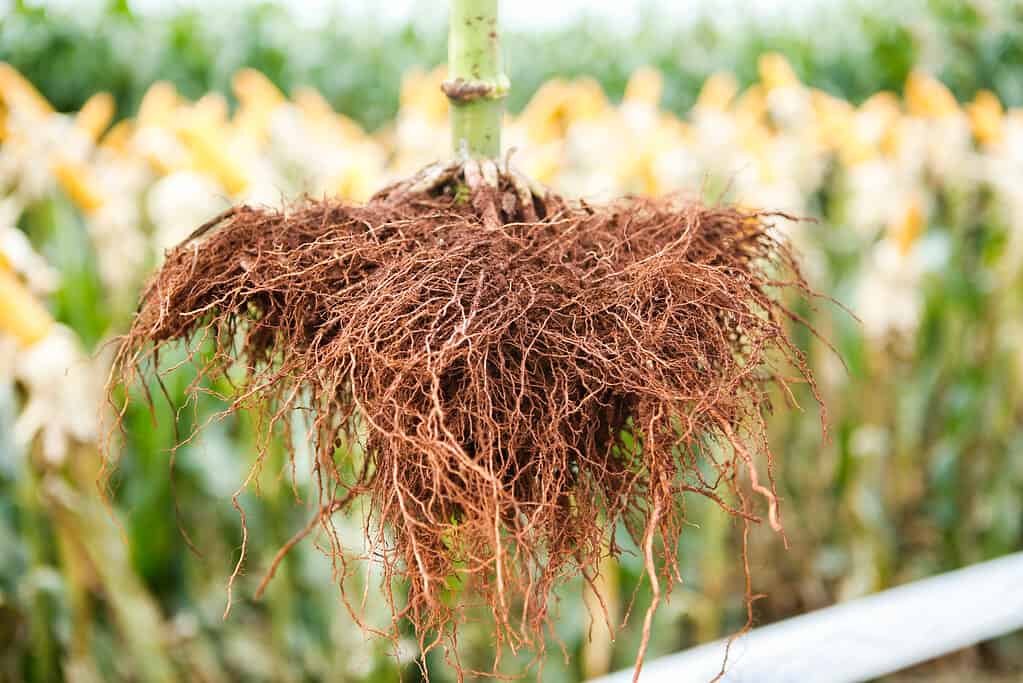
©Marcelo Hora/Shutterstock.com
Flower Structure
A plant’s flower parts, like the petals, sepals, and reproductive parts, can give clues to its lineage. Where monocots usually have flower parts in groups of three, dicots usually have them in groups of four or five. In the case of rosinweed (Silphium integrifolium), whose main flower can have 12 and even 15 petals, comparing one part isn’t enough. Upon closer inspection, this species of dicot has smaller flowers with five lobes in its central disc.
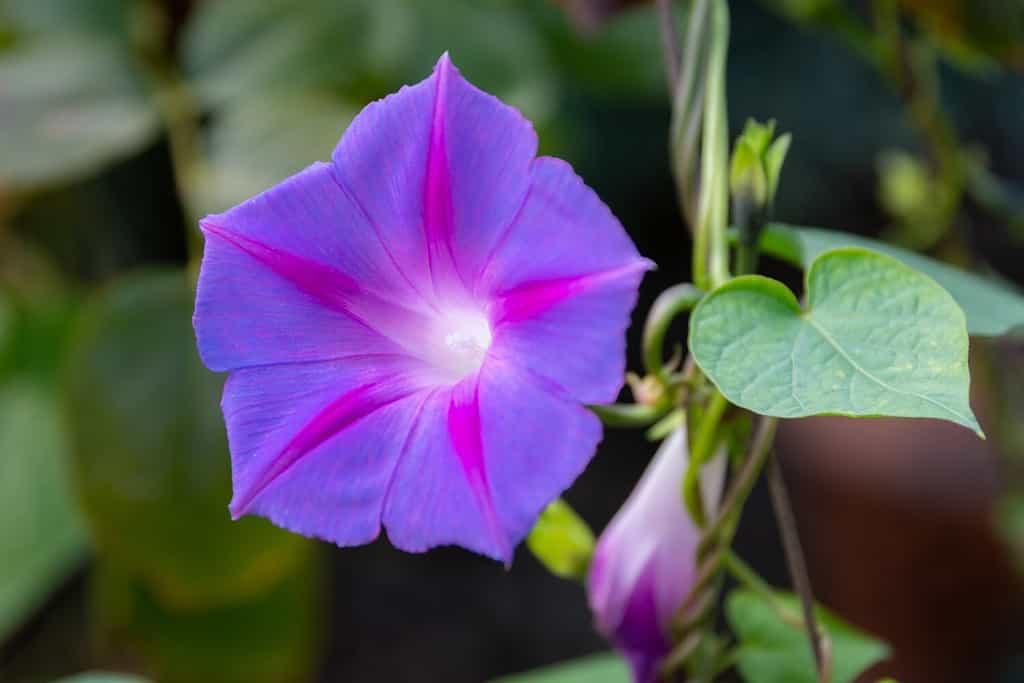
The common morning glory (Ipomoea purpurea) is a eudicot and produces trumpet-shaped flowers with five petals.
©CoinUp/Shutterstock.com
Other plants make the distinction much simpler. For example, compare the flower of the morning glory above — a eudicot — to that of the iris below — a monocot. The differences in their flower structures are quite apparent.
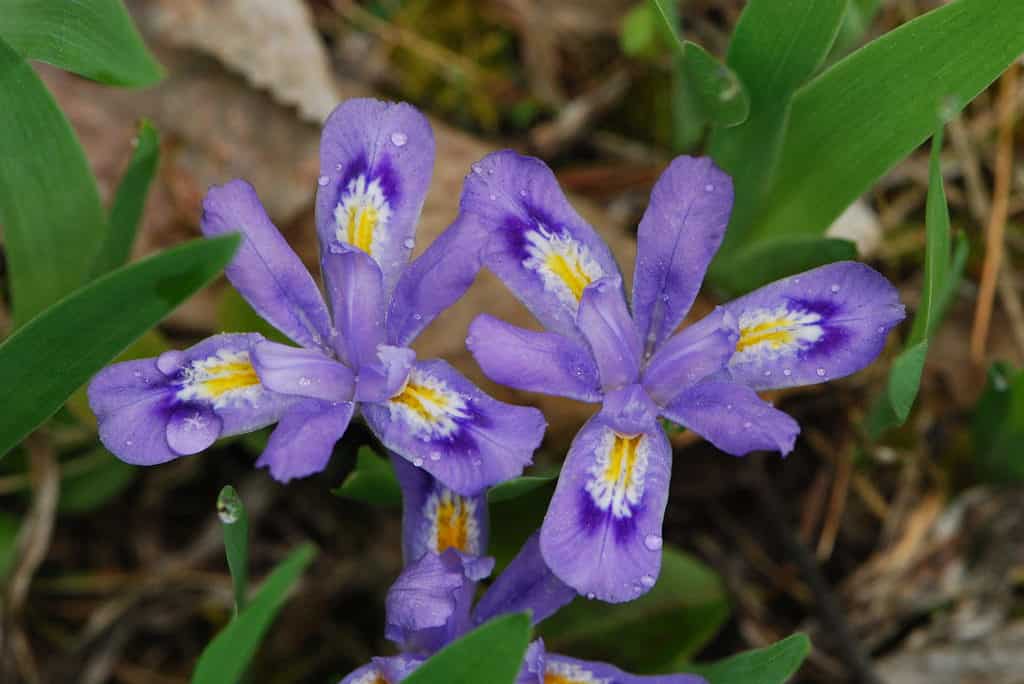
The dwarf lake iris (Iris lacustris) is a monocot that has flower parts in multiples of three.
©Joshua Mayer from Madison, WI, USA, CC BY-SA 2.0 <https://creativecommons.org/licenses/by-sa/2.0>, via Wikimedia Commons – Original / License
Leaf Venation
Dicots generally have leaf veins that branch out in a net-like fashion from a larger, central vein. This is called reticulate venation. Monocots, on the other hand, usually have one or more veins that all run parallel to the margins of their leaves. Solomon’s seals like Polygonatum biflorum, for example, show this type of venation.
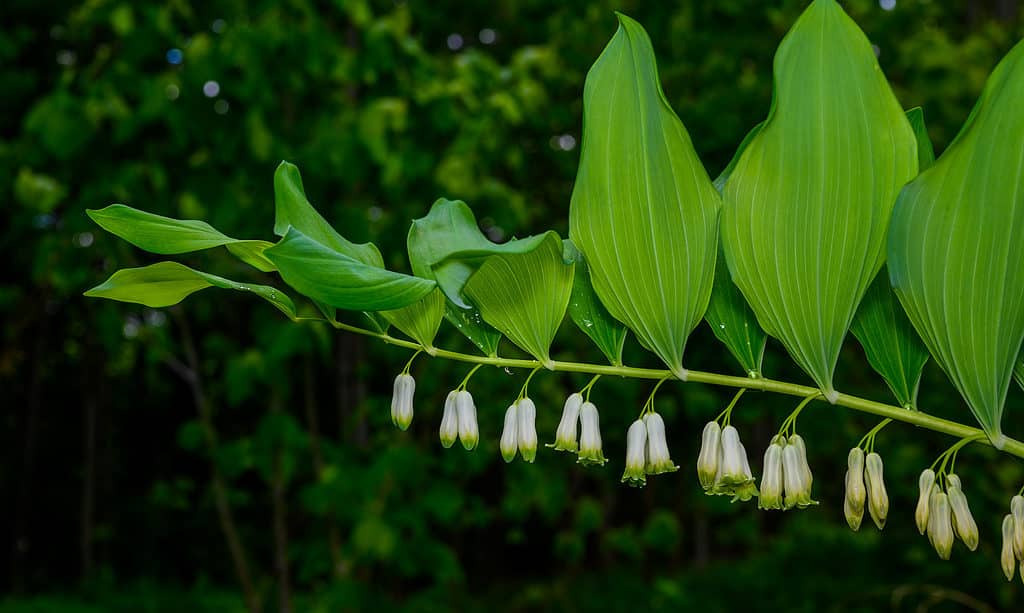
Note how the leaf veins of Solomon’s seal above run in parallel lines from the petiole to the tip of the leaf.
©Conrad Barrington/Shutterstock.com
Vascular Structure
The monocots tend to have a very scattered vascular structure. In contrast, dicots usually have a vascular structure that is much more organized. Most times, the vascular tubes inside of dicots form a neat ring that runs the full circumference of the stem. This ring becomes apparent when you cut the plant’s stem in cross-section. Cut celery provides a great example of the usual dicot vascular structure.
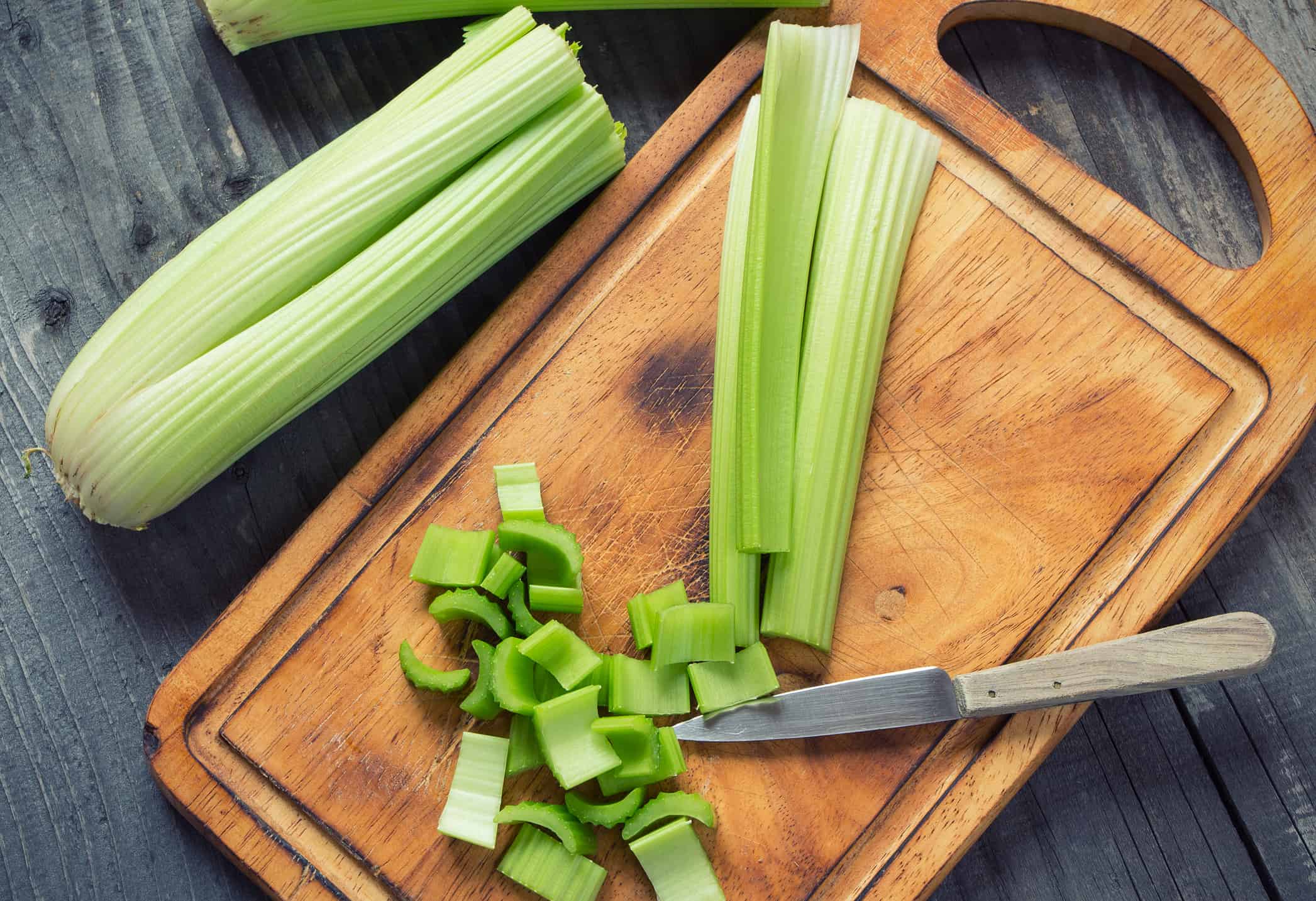
Next time you’re chopping up some celery, have a look at the orderly dots that run around the vegetable’s margins. These are the vascular tubes — the xylem and phloem.
©iStock.com/Lecic
Pollen Structure
You can use various types of microscopes to examine a plant’s pollen. Monocots have monosulcate pollen grains with a single pore or furrow while dicots have trisulcate pollen with three. These pores and grooves allow a pollen grain to release its genetic material during fertilization.
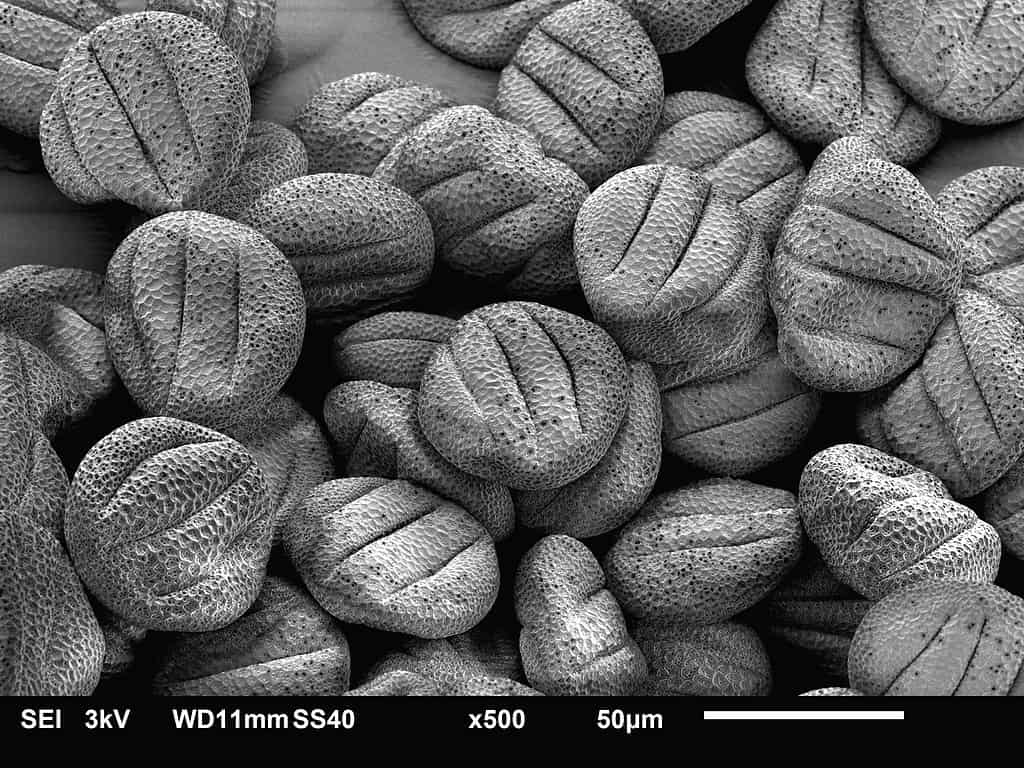
Electron microscopes offer extremely close views of pollen grains.
Wood Production
Dicots produce secondary growth like wood and bark to support their structures as they age. While some monocots, like palms and agaves, can produce something similar to bark, most cannot. Instead, they remain soft and fleshy throughout their lives.
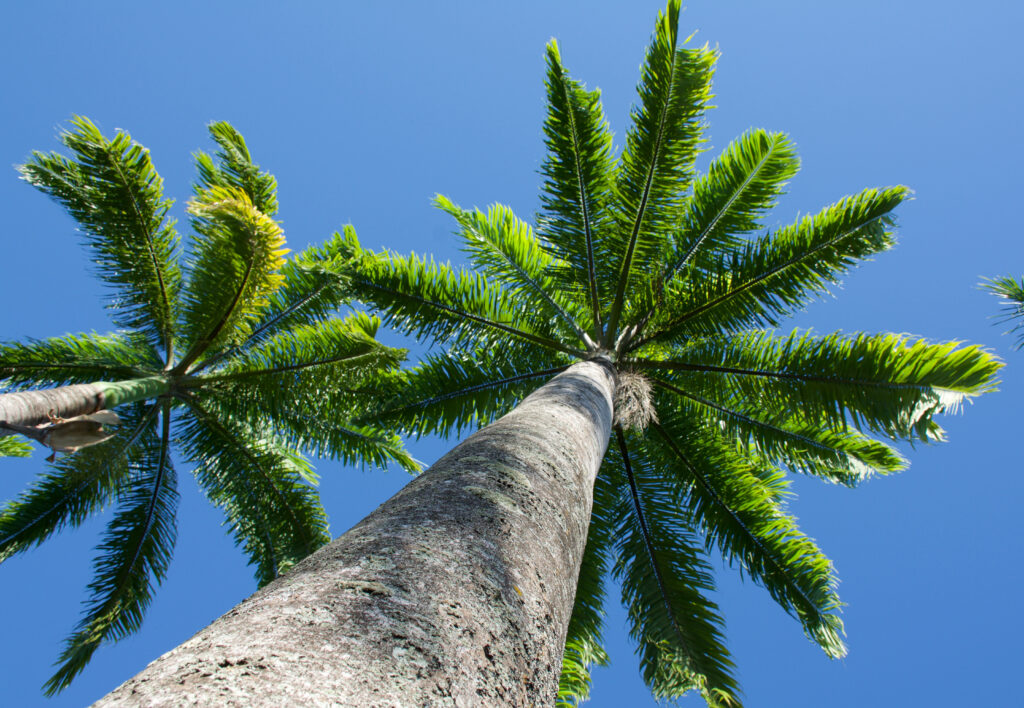
Most monocots remain soft throughout their lives. Some, however, like the Cuban royal palm (Roystonea regia) can produce a hard, outer layer called pseudo bark.
©Cre8 design/Shutterstock.com