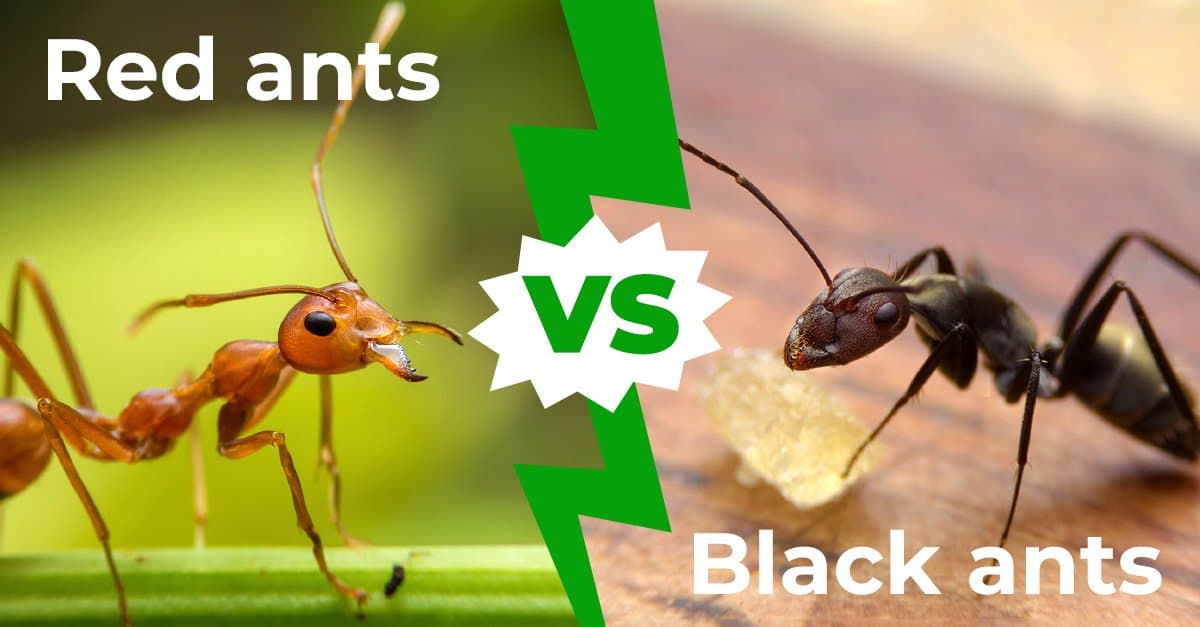

Ants are a nuisance to many homeowners, and most people don’t hesitate to reach out to their local exterminators to get rid of them. Many of us assume all ants are the same. However, when comparing red ants and black ants, these insects have more differences than you might expect. While it might seem that color is the only difference, red and black ants can also vary in size, habitat, and the level of threat they pose to humans and the environment. Keep reading to discover what sets red ants and black ants apart.
Red Ant Species and Black Ant Species
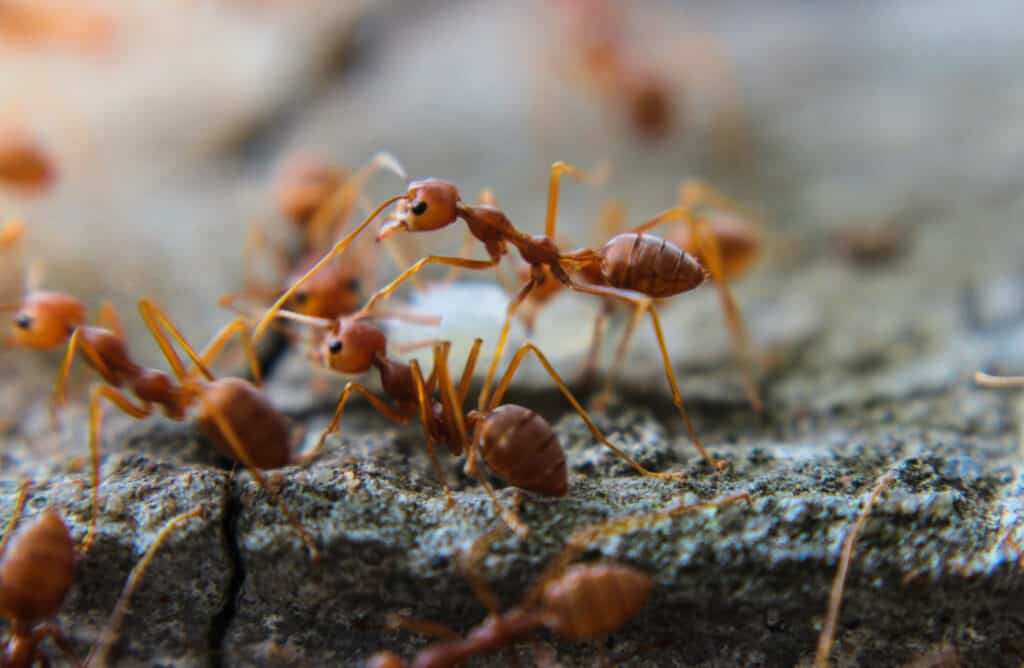
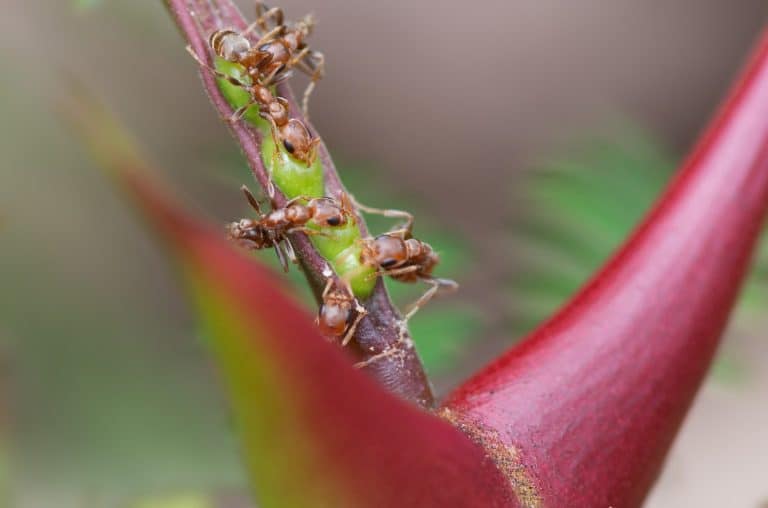
Red imported fire ants are known to feed on the buds and fruits of various crops.
©NOTE OMG/Shutterstock.com
The term, “red ants,” generally refers to invasive species like fire ants in the genus Solenopsis, but it can also refer to red harvester ants in the genus Pogonomyrmex, likewise known for their painful bite. The term, “black ants,” typically refers to ants in the Lasius genus, as these are the most common black ants in the U.S. However carpenter ants, Camponotus pennsylvanicus, and odorous house ants, Tapinoma sessile, are also widely distributed across the U.S.
Common Red Ant Species
The following are some of the most common red ant species in the U.S.:
- Red imported fire ant (Solenopsis invicta): These ants are reddish-brown to black in color. They are an invasive species from South America and a major pest in the Southeast, as well as Oklahoma, New Mexico, and California. Nests are often dome-shaped structures in open, sunny areas.
- Southern fire ant (Solenopsis xyloni): This ant is bi-colored, with a reddish-brown head and thorax with a black abdomen. It is found across the southern U.S., nesting near weeds or wet soil.
- Red harvester ant (Pogonomyrmex barbatus): These ants are not fire ants, but they are often confused with fire ants due to their red to dark brown color. They can be found across the southwestern U.S. They build their nests in areas with full sun and clear large, circular areas around the entrances.
Common Black Ant Species
Here are some of the most common black ants in the U.S.:
- Black garden ant or the common black ant (Lasius niger): This ant is often a glossy black color, though the queen of the colony will have a slight brown undertone. These are the most common black ants in the U.S.
- Carpenter ants (Camponotus pennsylvanicus): Carpenter ants can come in many color variations but are typically black. They swarm during the springtime and often nest within the structures where they are found. These ants are widespread across the U.S., especially in the Eastern and Central regions.
- Odorous house ants (Tapinoma sessile): These ants can be black or brown, and they will typically make their homes around human dwellings. They make themselves known during warmer months, infesting homes to eat sugary food sources and dead insects. Odorous house ants are widely distributed across the U.S.
Comparing Red Ants vs. Black Ants
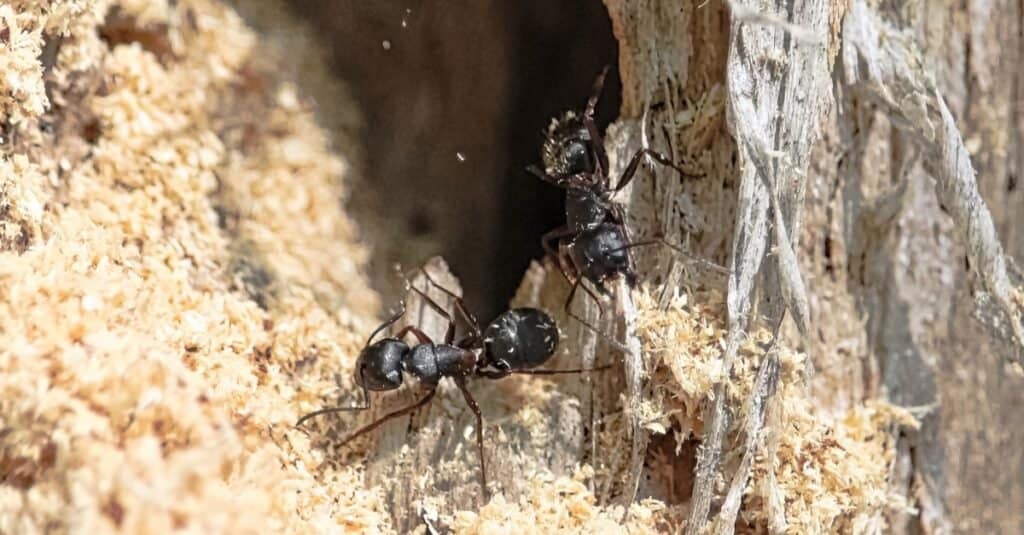
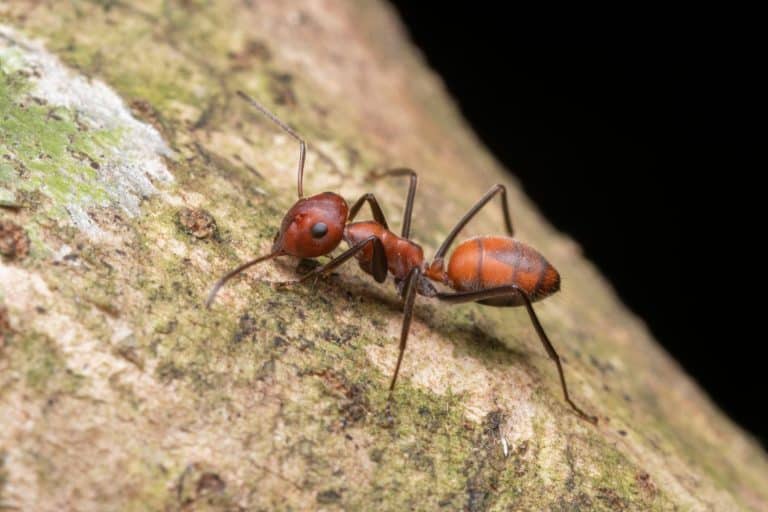
Carpenter ants often construct their nests in trees.
©Amelia Martin/Shutterstock.com
There are over 15,000 described ant species in the world. Some sources estimate there are as many as 1,000 species in the U.S. alone. In this chart, “red ant” indicates fire ants unless otherwise specified, while “black ant” refers to common black ants unless noted.
| Differences | Red Ant | Black Ant |
|---|---|---|
| Size | Up to around 0.5 inches for workers and around 0.55 inches for queens (red harvester ants) | Up to 0.5 inches for workers and 1 inch for queens (carpenter ants) |
| Preferred Habitat | Warm, open, sunny areas like meadows, playgrounds, golf courses, and other grassy areas with disturbed soil | Under rocks, in homes, under logs, inside trees or stumps, in cement cracks, gardens, grassy lawns |
| Threats to Humans and Animals | Aggressive towards humans and can swarm and sting; dangerous to young animals | Non-aggressive and rarely bite |
| Threats to the Environment | May build nests inside structures; consume crops; can kill trees | Primarily a nuisance, but carpenter ants carve tunnels in the wooden portions of homes which can damage and weaken the structure |
| Diet | Omnivore | Omnivore |
The 5 Key Differences Between Red Ants vs. Black Ants
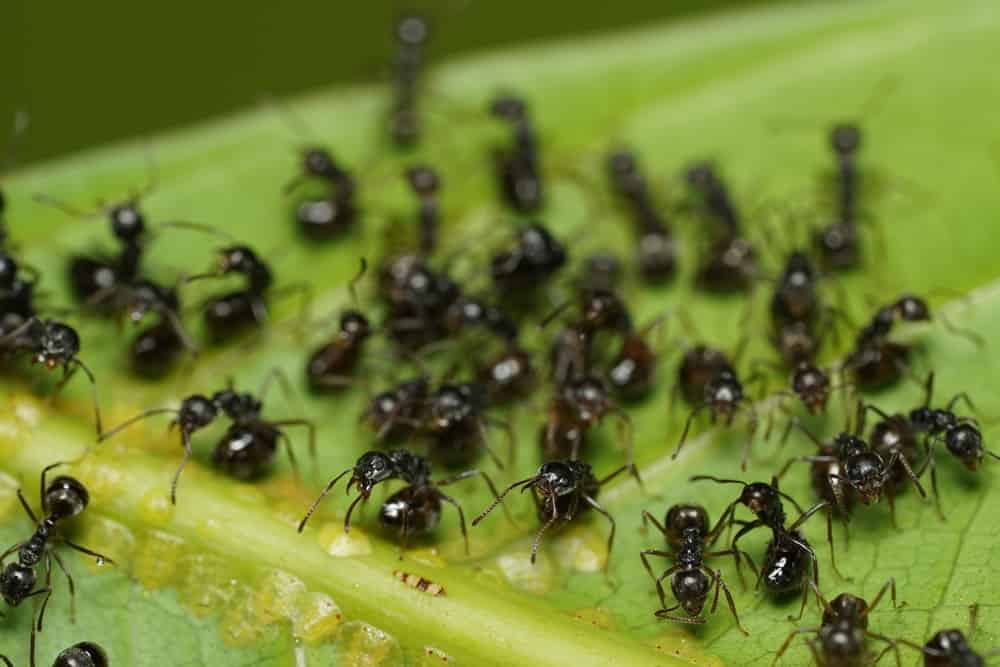
The black garden ant is the most common black ant species in the U.S.
©Sufian Hanif/Shutterstock.com
Ants primarily have the same shape with slight variations, and they all build colonies that are led by a queen. However, different species of ants live in different habitats and pose different challenges to humans. These range from being harmless nuisances to hazardous if disturbed. Knowing the difference can help you determine the threat level when you encounter them outside or within your home. Read on to learn more about the differences between red ants and black ants.
1. Color and Size
The terms “red ant” and “black ant” are descriptive and do not correspond to scientific classifications. The obvious physical difference between black ants and red ants is their color, but they can also differ in size. However, this varies depending on species, gender, and the ant’s role in the colony.
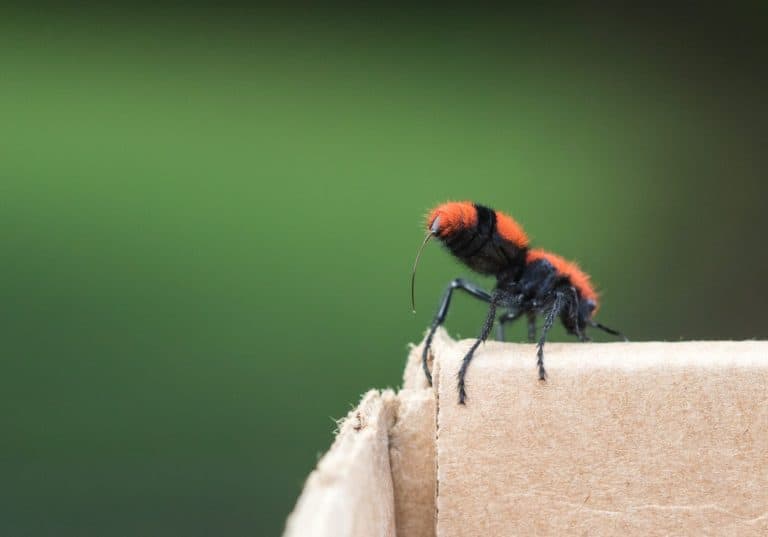
The largest red ant species in the U.S. that is not bi-colored is the red harvester ant. Workers can grow to be 0.5 inches long, while queens can grow to about 0.55 inches long. The largest black ant species in the U.S is the carpenter ant. Workers can reach up to 0.5 inches long. Queens are much larger, growing up to 1 inch in length.
2. Habitat
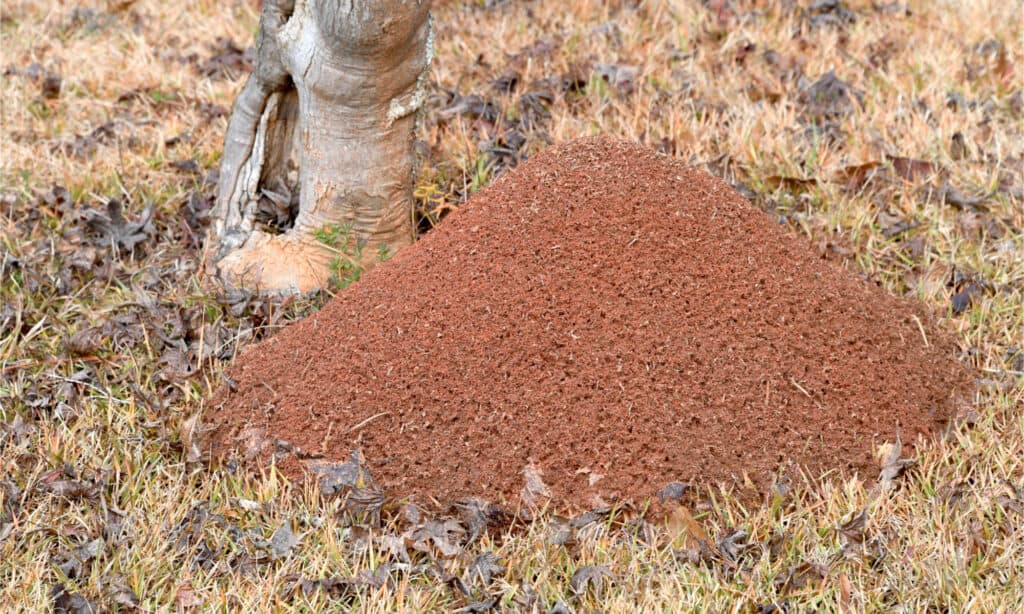
Red ants often build mounds or dome-shaped nests that can reach 18-24 inches high.
©Robert Gregory Griffeth/Shutterstock.com
As noted above, red ants are primarily prevalent across the southern U.S. from the Carolinas west to California. Red ants prefer warm, open, sunny areas like meadows, playgrounds, golf courses, and other grassy areas with disturbed soil. Some species also like wet, or even waterlogged, soil. Red ants build mounds or dome-shaped nests that can reach up to 18-24 inches high.
Black ants have a wide distribution across the U.S. They can be found under rocks, inside homes, in cement cracks, in gardens, and in grassy lawns. Black ants are often found inside damp, decaying wood, including stumps, logs, and trees. They may also make their nests inside porches, windows, and door frames.
3. Threats to Humans and Animals
Perhaps the most notable behavioral difference between the red ant and the black ant is the way that they interact with people. When a black ant is around people, they mostly leave them alone. They are more concerned with their nest and the task at hand than bothering people. Black ants are normally an annoyance rather than a health concern. Black ants may bite and even expel a small amount of acid when threatened. However, it won’t hurt as badly as a bite from a red ant.
Red ant species in the U.S. all have the ability to sting. For example, red imported fire ants respond quickly and aggressively when they are disturbed. A single ant can also sting multiple times. According to the U.S.D.A., hundreds of fire ants may swarm at once, and they will run up vertical surfaces to sting anything they deem a threat. These ants can be very dangerous to young animals. Stings from fire ants are painful, causing a burning sensation and blisters.
Regardless of color, ants do not seek out trouble. They bite and sting as a defense mechanism when they feel threatened. All ants will attempt to defend their homes — the difference between black and red ants is the level of aggression and the severity of their bites.
4. Threats to Surroundings
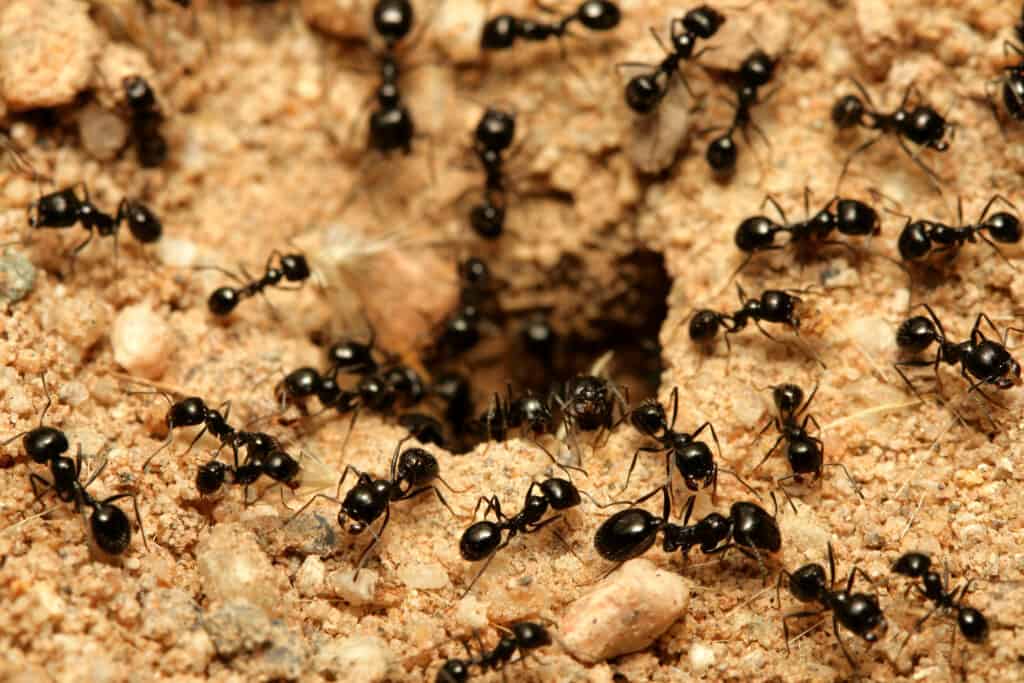
Black ants work and live in large colonies.
©iStock.com/Cabezonication
While the red ant is clearly more destructive to humans and animals around it, black ants are generally more bothersome than harmful to people. However, red ants can and do sometimes enter homes. When a red ant invades the home, it is generally looking for food, moisture, or shelter from extreme weather conditions. Red imported fire ants in particular may sometimes establish a nest inside the home, which can quickly become a big problem.
Red ants also consume crops such as corn, sorghum, forage grass, grain seeds, and citrus seedlings. Large nests in agricultural fields can damage equipment. They can also girdle trees by eating a ring around the trunk, severing the cambium layer responsible for growth and causing the tree to die.
Black ants mainly enter the home for the same reasons: they are seeking food, water, or shelter. That’s why it is common to find them in the kitchen when crumbs and spills are not cleaned up quickly. Carpenter ants are the primary ant species known for causing significant structural damage when they build their nests inside wood. They may create nests inside walls and ceilings, carve out tunnels and hollows which can damage and weaken the structure.
5. Diet
The different species of black ants have varied diets, but they are mostly opportunistic and omnivorous. Some of the foods that they eat include vegetables, seeds, sweet fruits, cornmeal, plant sap, and even candies. They also seek out proteins from dead insects.
Red ants are also omnivores, but they prefer to consume spiders, arthropod eggs, earthworms, and other insects. They will also consume honeydew and other sweet foods, as well as seeds. As mentioned above, red ants eat commercial crops such as sorghum, grain, corn, grass, and citrus seedlings.