
Quick Take
- Remoras don't just ride on the outside of manta rays, and recent footage reveals exactly how far inside they're willing to go. See where remoras hide →
- A dorsal fin that evolved into something stranger is the reason remoras can lock onto a moving manta ray without ever slipping off. Discover the suction secret →
- The manta ray can't stop remoras from entering its own body, which raises a question scientists are still trying to answer about who this relationship really serves. Explore the parasite question →
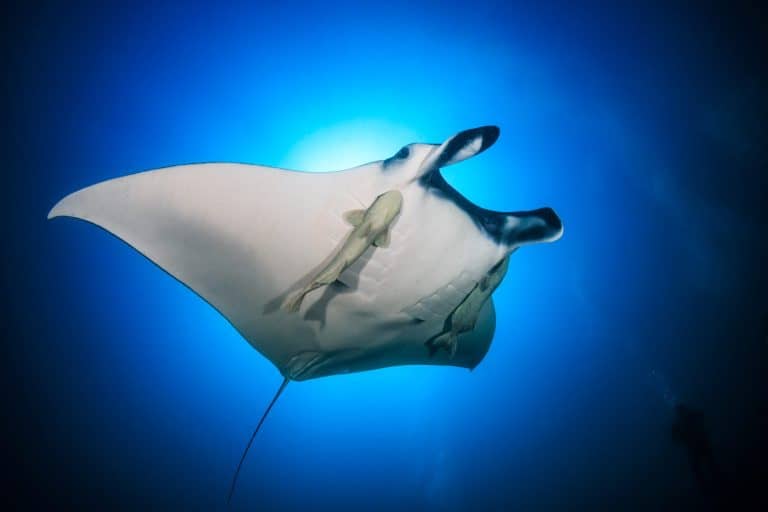
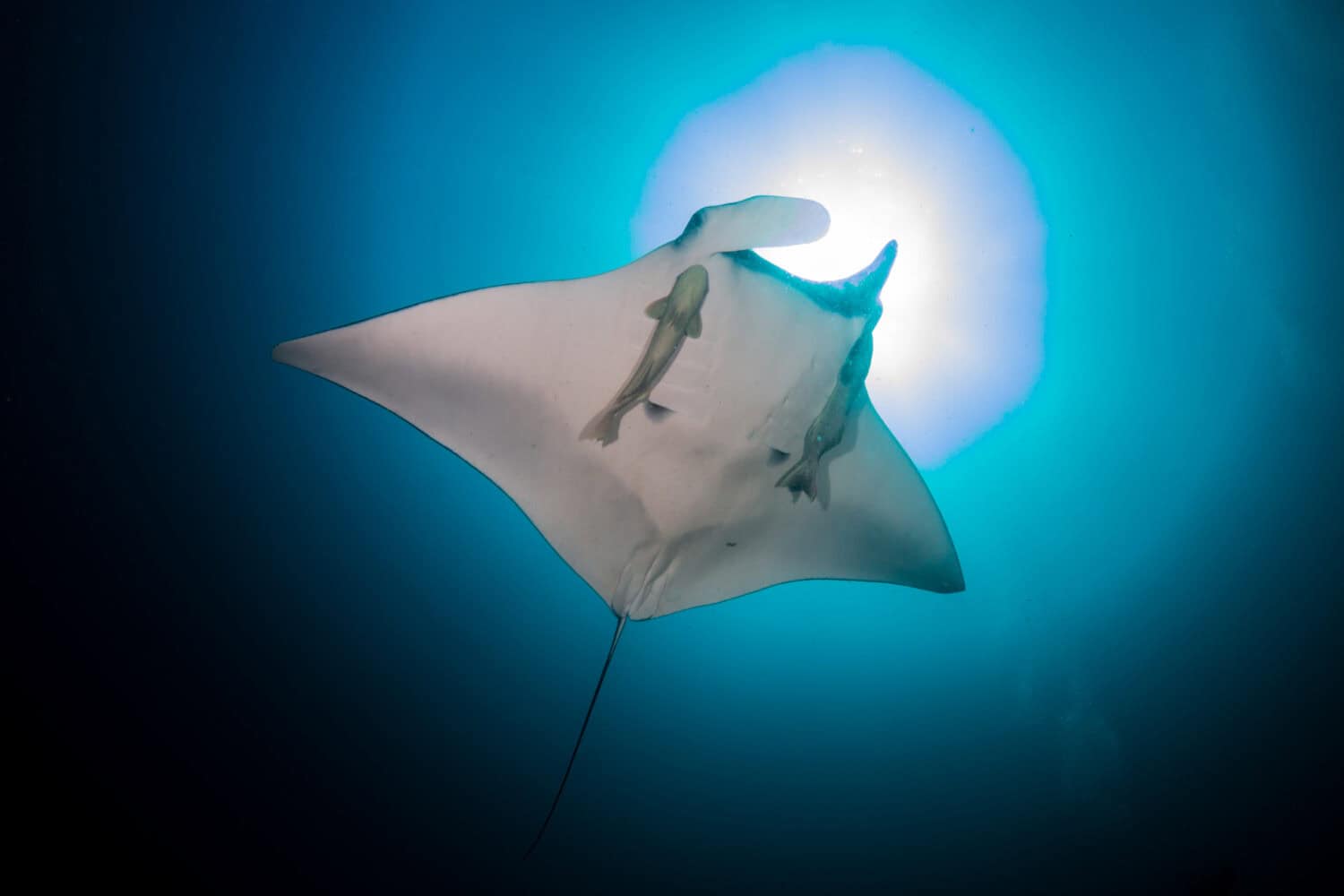
Marine biologist Michel Guerrero was observing oceanic manta rays in the Pacific when something caught his eye. Footage from his dive revealed a sight rarely seen by human eyes: a manta ray completely covered in mouth-sucking fish.
More than 15 of these fish, known as remoras, were getting a free taxi ride. As for the manta ray, its relationship with these sucking fish is a little more complex. But given recent discoveries about their symbiotic nature, it’s just lucky these remoras were on the outside of its body.
Rays Give Rides to Friendly Hitchhikers
With their gentle movements and wide wing flaps, manta rays make a perfect source of transportation. They’re known to let hitchhikers, usually small fish, ride with them. Along the way, many of these fish—such as remoras—help the ray by grooming it. And the manta ray in Guerrero’s dive footage was likely one of the cleanest around.
The benefits for remoras go beyond a free ride. They also get natural protection from predators who refuse to take on a manta ray for a meal. The manta rays’ intimidating size also helps remoras hide, as they tend to suction themselves to the ray’s underside. In Guerrero’s video, several remoras cover the manta ray from top to bottom. This is an extremely rare sight, and even the Manta Trust found it impressive.
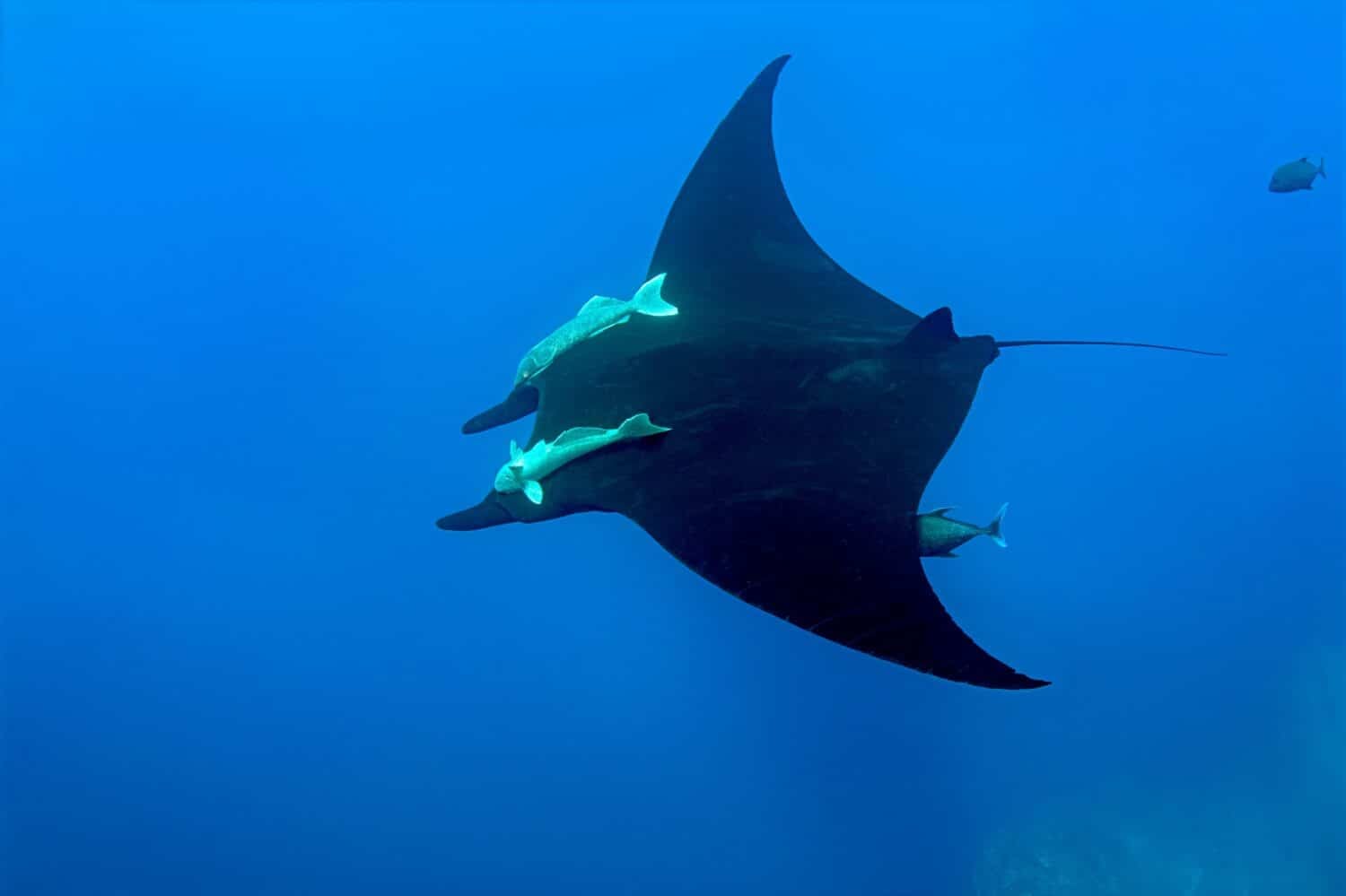
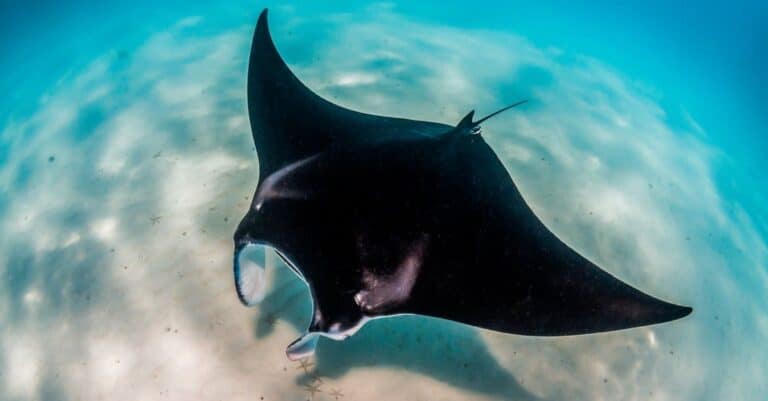
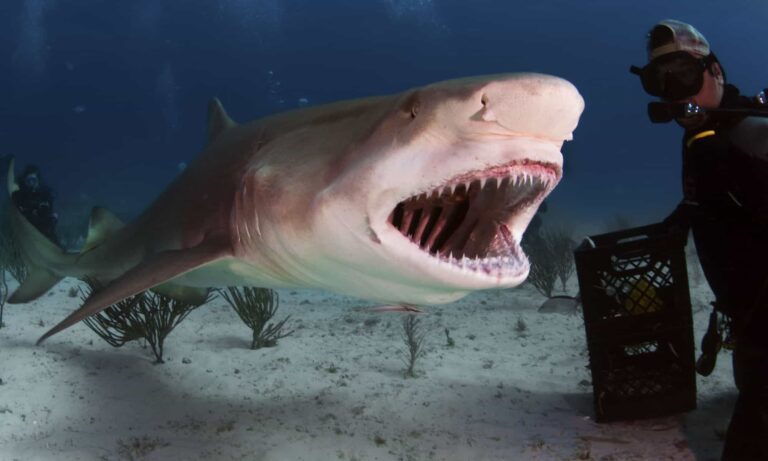
Remoras commonly attach themselves to passing sharks and manta rays.
©Burdos/Shutterstock.com
“These remoras are clearly making full use of all that surface area!” it wrote in its Instagram post.
The Manta Trust also shared that not every remora-ray interaction is pleasant. “Their choice of parking spot can get surprisingly bold: some remoras venture into their host’s mouth to feed on parasites and food scraps, and a recent study even recorded remoras entering mantas’ cloacas!” It added.
Remoras Found in Unsightly, and Bizarre, Places
One drawback to this symbiotic relationship is that manta rays don’t choose where remoras land. Many stay on the outside, but recent footage shows some may even find their way into the ray’s body cavities. Earlier this year, researchers at the University of Miami’s Shark Research and Conservation Program observed something unusual: remoras disappearing into a ray’s cloaca. This opening at the bottom of a ray’s body is used for excreting waste, reproduction, and urination. Cringe-worthy photos showed the fish swimming directly into the opening. In response, rays showed visible stress, with some making jerky, sudden movements.

As remoras evolved, their dorsal fins became vacuum-like suckers.
©Andrea Izzotti/Shutterstock.com
This led researchers to question whether the remora-ray relationship was truly symbiotic. If not, two options remained. In commensalism, one species remains unharmed while the other benefits. In this case, the remora would benefit from free food, a ride, and protection, while the ray would go unscathed.
But if the relationship is parasitic, the remora still receives all these benefits, but at the cost of the manta ray’s health. Researchers observing this behavior question whether the ray suffers internal or long-term damage from the interactions. At a minimum, the relationship could cause unnecessary stress for rays, which are powerless to keep remoras out of their bodies.
How Do So Many Remoras Benefit This Ray?
The ray in Guerrero’s footage is seemingly unaware of its passengers. This speaks to the benefits remoras do provide, thanks to their incredible, oval-shaped sucking mouth.
With a series of specialized lamellae, or bony plates, they can control airflow within their vacuum-sealed bite. Friction spines called spinules keep remoras from slipping off the skin of rays and sharks, and they’re typically painless for their host. Forward motion strengthens this hold until the remora releases its host by simply swimming forward.
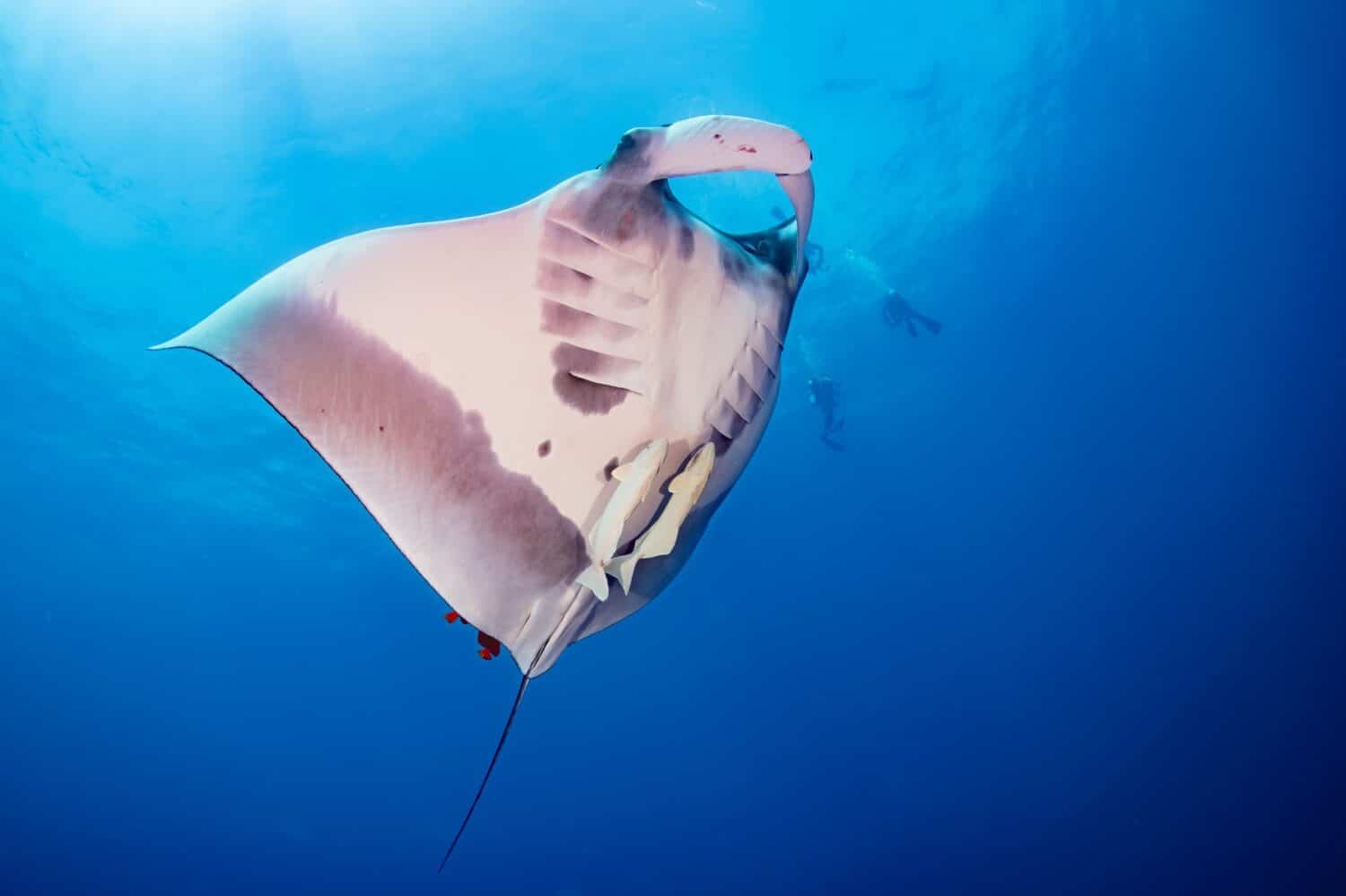
Humans rarely see the relationship between manta rays and remoras.
©Burdos/Shutterstock.com
But the magic happens when the remora is firmly secured to the manta ray. During this time, it consumes parasites, bacteria, and small pests that could sicken the ray. This also functions as a preventive measure, keeping the ray’s skin from becoming contaminated.
Remoras also consume small crustaceans that sometimes attach themselves to rays, along with dead skin cells. For this ray, having more than 15 remoras suction-cupped to its body was like having a full-body exfoliating session. Remoras are drawn to easy feeding, implying this ray had something to offer. While too many remoras can increase drag and slow the ray down, they can also be highly beneficial if the ray is sick, parasite-ridden, or needs a good cleaning.