
Quick Take
- A relationship scientists called one of the ocean's most perfectly balanced partnerships is hiding a disturbing secret.
- Researchers captured footage so unexpected it's forcing a complete rethink of how remoras actually treat their hosts. See the shocking footage →
- What looks like a helpful hitchhiker may actually be doing something that threatens manta ray survival in ways nobody anticipated. Discover the hidden harm →
Nature can be many things: beautiful, strange, ever-changing, and downright bizarre. In the marine world, many species benefit one another. These mutualistic relationships can often help both species survive. That is, until one decides it can benefit a bit more by changing its behavior.
The relationship between remoras and manta rays was previously thought to be one of the most symbiotic in the ocean. Remoras consume parasites and pests from the skin of the manta ray, and the ray provides protection in return. But now, new evidence is showing this relationship can be a real pain in the butt for manta rays. Literally.
Using the Back Door Entrance
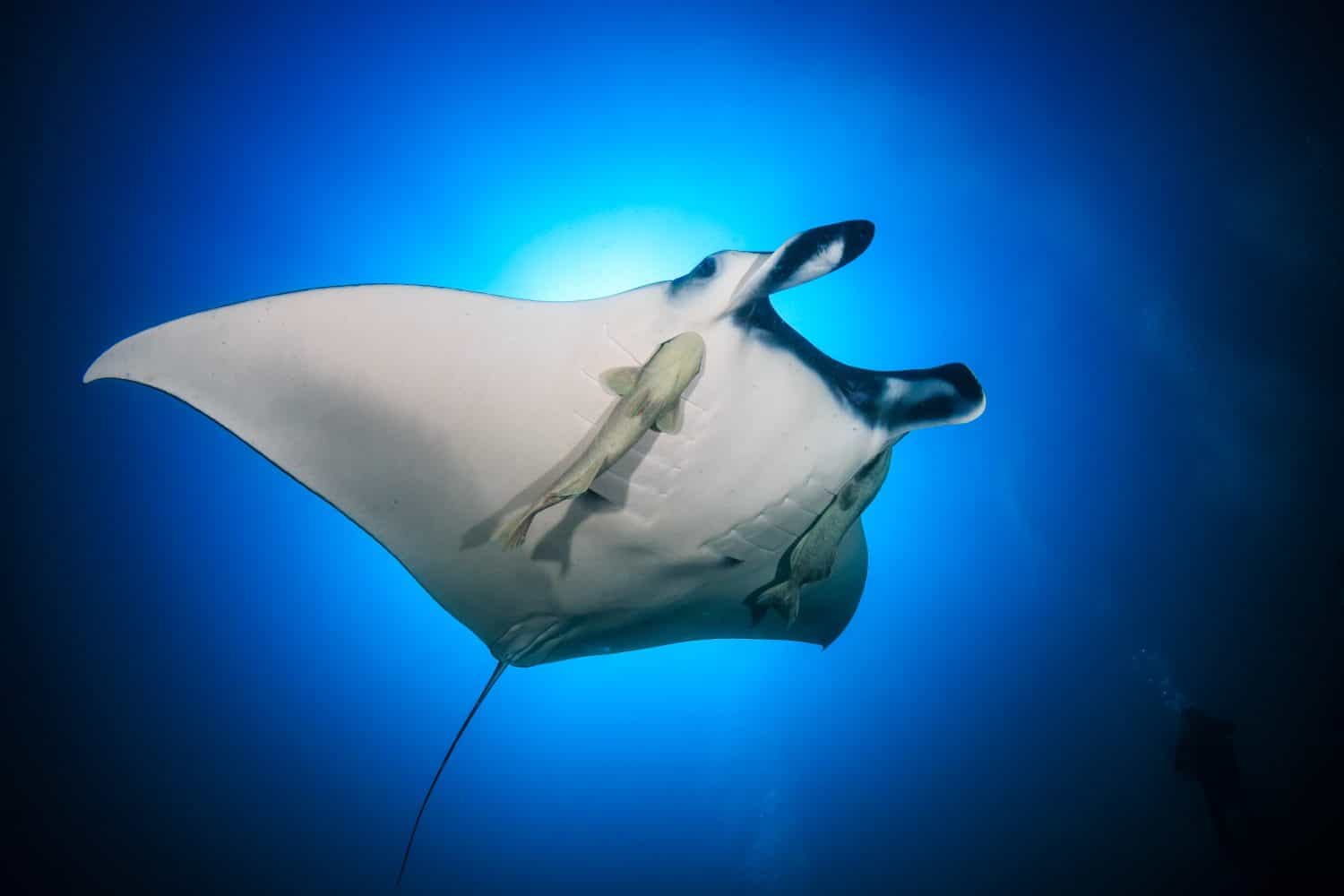
Researchers at the Shark Research and Conservation Program have studied manta rays in the Maldives, Mozambique, and Florida. These scientists have seen their fair share of remoras, as they typically go hand-in-hand with their study subjects. Remoras, known as suckerfish, attach themselves to the skin of the manta ray. Up until now, it was believed that this relationship was mutual; the fish essentially “clean,” or groom their host, while the manta ray provides protection to the remora by deterring predators.
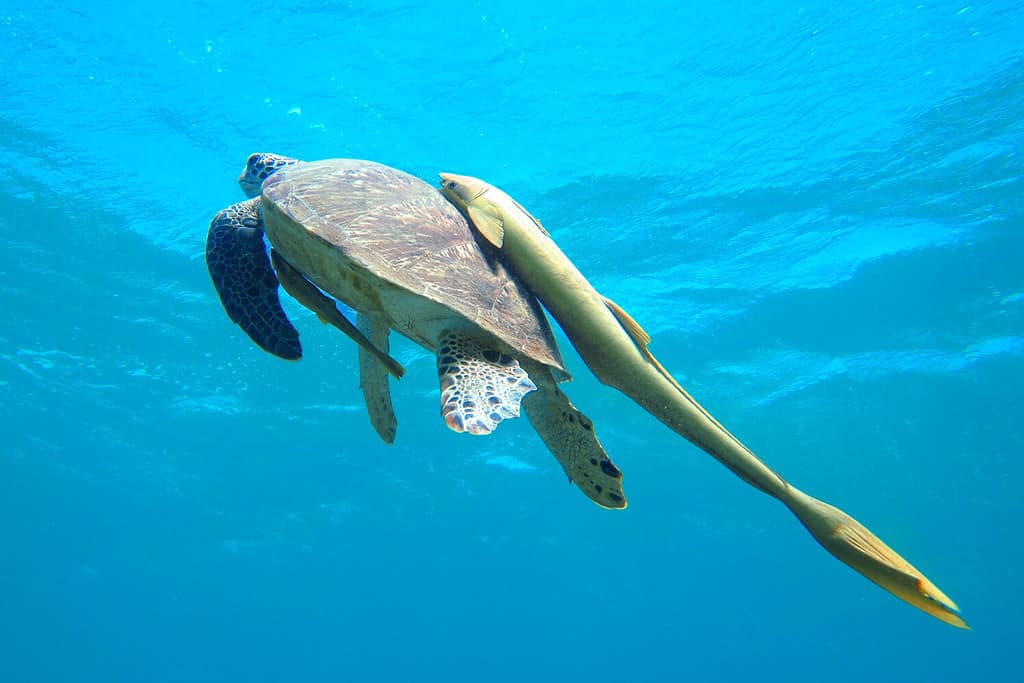
Remoras use suction to attach themselves to other animals and feed on feces, parasites, and dead skin.
©Nicram Sabod/Shutterstock.com
The remora also gets a free ride as it clings to the manta ray’s body. However, new footage has scientists second-guessing the intimacy between these two animals. After 15 years of gathering footage of the two, one clip is making the marine science world question how much they know about seemingly harmless remoras.
In the clip, a remora appears to be squeezing itself inside a manta ray’s cloaca. This is an opening at the tail end of the ray, used for excretion and reproduction. As such, it’s an incredibly sensitive part of the manta ray’s body. In the video, the remora is just small enough to swim inside the hole, concealing itself almost entirely. Such an incident has never been documented before, but this makes sense. Without witnessing it first-hand, you’d never guess there was a fish hiding inside the body cavity of a manta ray.
An Uncomfortable Intrusion
Scientists observing the footage determined that the action is not entirely painless. The ray appears to be uncomfortable each time it occurs, responding by twitching or attempting to shake the remora loose. It’s jarring, to say the least, since remoras are not known to be parasitic.
Remoras are also known to cling to sharks, whales, and turtles. If they can fit inside the cloacal openings and gills of manta rays, they could fit inside other small animal cavities. In total, scientists identified seven different cases of this occurrence, including the one recorded in Florida. These findings included three different species of ray: Atlantic, Oceanic, and reef. Because each of these manta rays lives in a different environment, it confirms the behavior is widespread. In reality, remoras may be causing harm rather than helping.
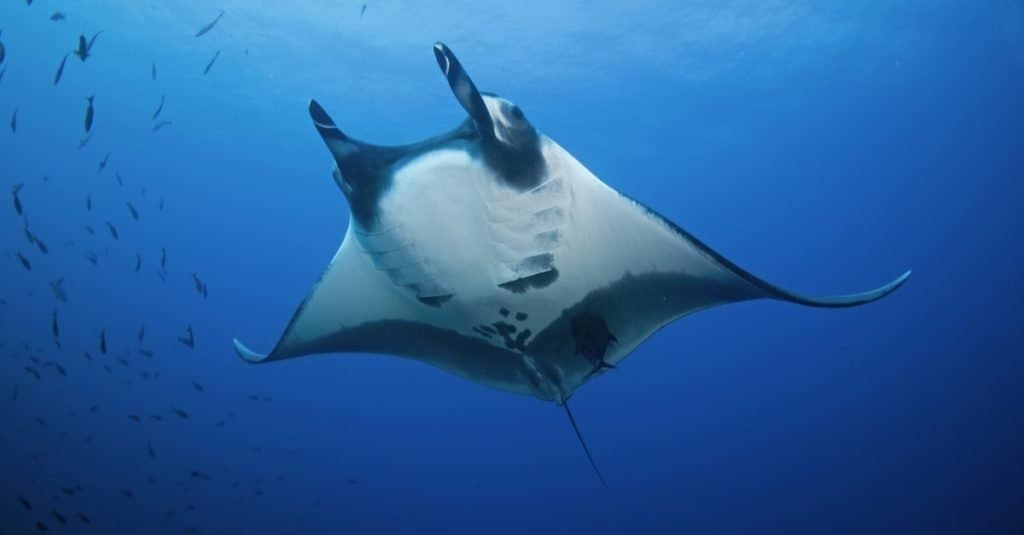
Manta rays provide natural protection for remoras, but now it seems they may also serve as physical shelter.
©Martin Prochazkacz/Shutterstock.com
In the case of the manta ray, the consequence can be severe. Remoras entering the manta ray’s cloacal opening could interfere with its ability to defecate. While there is currently no direct evidence of permanent or irreversible damage, scientists suspect this behavior may harm the animal. In females, a remora that’s lodged in the opening used for live birth can severely hinder babies being born.
Are Remoras Just Big Parasites?
One speculation from the study is that the remora in the Florida footage was hiding from a perceived threat. There’s no way to prove this for sure, and the repeated behavior means the evidence is stacked against this theory. However, it doesn’t mean that remoras don’t use cloacal openings and gills as hiding spots. Since there was no long-term footage of the Florida manta ray, scientists are still uncertain about the reason for the remora’s backdoor getaway.
Scientists have also noted damage to manta rays in footage collected between 2010 and 2025. According to the findings, these were consistent with obstructions caused by the remoras. Regarding their parasitic behavior, the team confirms remoras may find better feeding opportunities or protection by hiding inside their hosts. Another theory is that remoras have evolved to hide in their hosts’ body cavities simply to reduce drag as their hosts swim through the ocean. Further research is necessary to discover more about this odd behavior.