Quick Take
- Two mussels can look identical yet belong to completely different species, and scientists have finally cracked that problem. See how species are identified →
- One newly discovered mussel changes its entire appearance depending on where it lives, and it holds more than just that secret. Meet the shape-shifting mussel →
- 70% of North America's freshwater mussels are in danger, and finding hidden species may be the only thing standing between them and extinction. Learn about the extinction risk →
- Scientists waded through southern rivers for 20 years wearing snorkels, and the reason why tells you everything about how hard these creatures are to find. See the 20-year field search →
Distinguishing one mussel species from another is tricky due to their similar-looking shells! It’s taken 20 years of painstaking scientific collection work and modern genetic analysis to find new species hiding amongst the masses. As work progresses to unravel the hidden diversity of these amazing creatures, we share the news of no fewer than five new mussel species discovered in U.S. rivers!
Why Are Freshwater Mussels So Important?
Native freshwater mussels play a critical role in the ecology of our rivers. Mussels are filter feeders; they anchor themselves at the bottom of rivers, streams, and lakes and obtain food from the water. You’ll often see them buried in mud, sand, or cobbles. Using their siphon (tube), they draw in water and then filter out microscopic plants and animals for food. Thanks to this feeding system, they act as natural purification systems for freshwater habitats. One adult mussel can filter up to 15 gallons of water a day during its growing season. They remove harmful algae, excess nutrients, and suspended dirt, thereby making the water cleaner. The mussels also help to stabilize the sediments when water levels get high.
Sadly, around 70 percent of North American mussel species are considered threatened, endangered, or of special concern. This makes them one of North America’s most imperiled animals. Their populations have been reduced by human activity, including damming, habitat alteration, and pollution. What’s more, these are slow-growing organisms, so their numbers cannot quickly rebound and recover. The loss of mussels is leading to a general degradation of habitats in regional freshwater ecosystems.
Where Were the New Mussel Species Found?
The discoveries were made after testing the DNA of mussels found in rivers in Missouri, Arkansas, Mississippi, Alabama, Louisiana, and Texas. Samples were collected over 20 years with scientists wading through rivers across the southern U.S. region wearing masks and snorkels. Samples of mussels were recovered from muddy riverbeds and stream beds. Several of the new species are rare and are confined to single river basins.
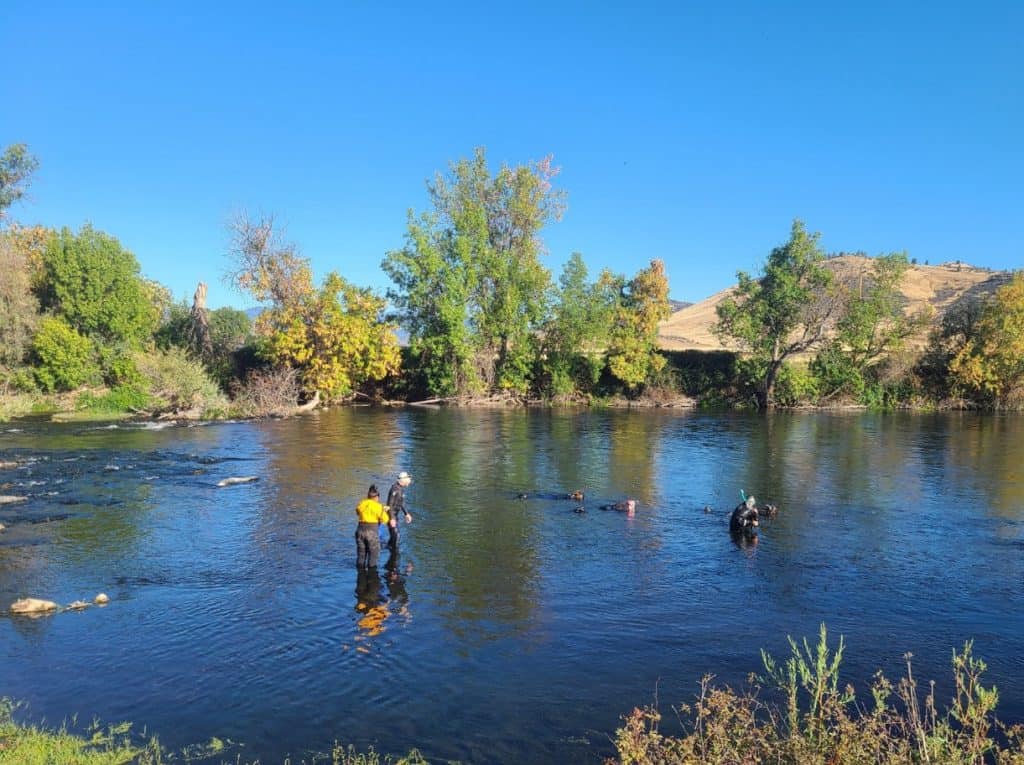
Collecting mussels entails lots of wading in rivers!
Identifying freshwater mussel species is challenging because they all look so similar. Therefore, the researchers turned to genetic analysis. They either clipped a small piece of tissue or took a swab to obtain genetic material that could be analyzed. Then the mussels were returned to their positions in the rivers. Back in the laboratory, the researchers sequenced three genes and compared more than 440 shell outlines.
Naming New Mussel Species
The research revealed the presence of cryptic diversity among the freshwater mussels of the southern U.S. This means that there were two or more distinct species that had previously been classified as just one species. It took modern taxonomy tools, including genetic analysis, to tell them apart. Each of the new species was named after where they live.
The first new species is Mobile hickorynut (Obovaria sipseyensis) and is named for Alabama’s Sipsey River. It comes from a Choctaw word meaning “swamp.” This species only survives in the upper tributaries of the Tombigbee River.
The second new species is named for Nee Ska, the Quapaw name for the White River. It is called the White River Hickorynut (Obovaria neeskaensis). To make things even more complicated, it has two different appearances depending on where it lives! Those that grow in the Ozark highlands have slimmer, tan or greenish shells streaked with thin dark rays. Whereas those that live on the Mississippi floodplain have thick, plump shells that are nearly black.
More New Species
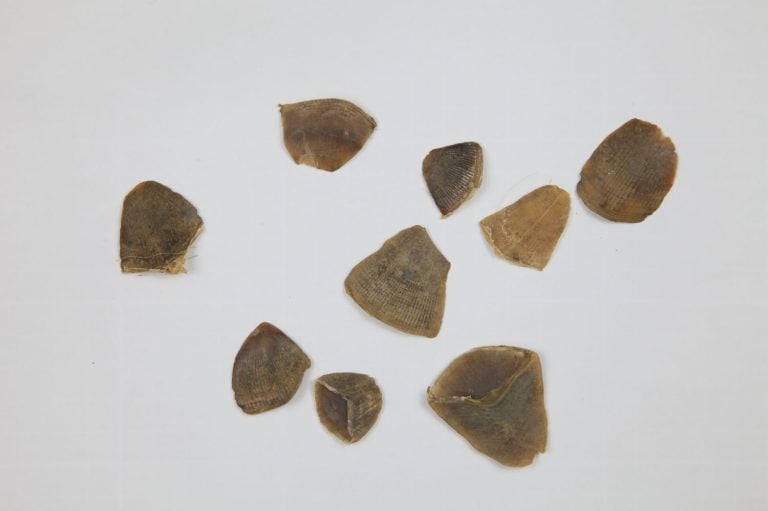
Next up is the Big Thicket hickorynut (Obovaria pinetorum) found only in a few locations in the Calcasieu, Sabine, and Neches rivers. The name pinetorum means ‘belonging to the pine forests’ and refers to the Piney Woods region, also known as the Big Thicket. These mussels are golf ball-sized, and their shells are patterned with fine rays or broader bands.
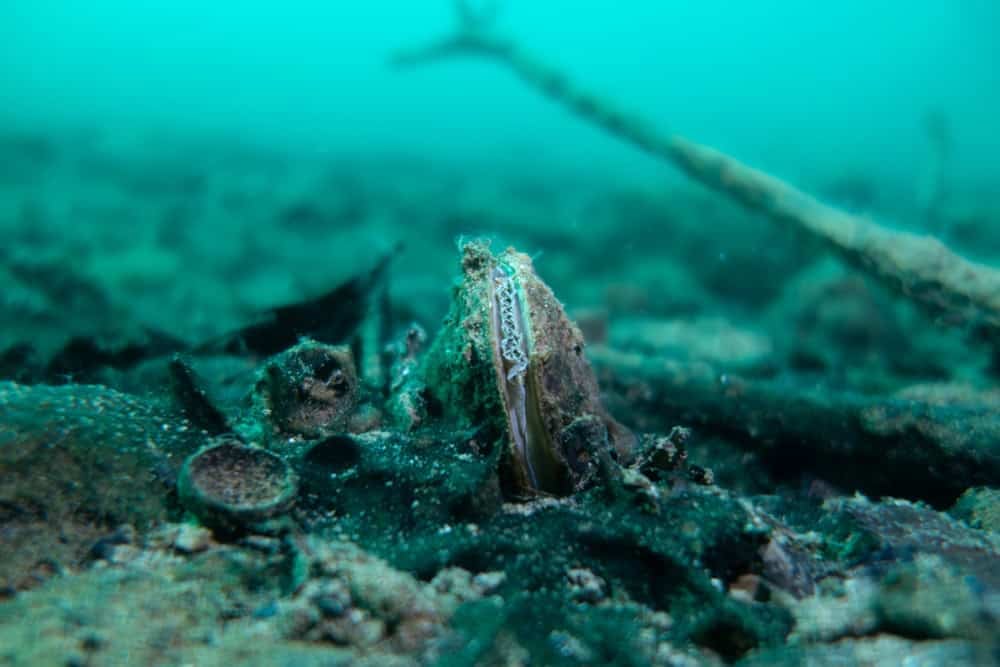
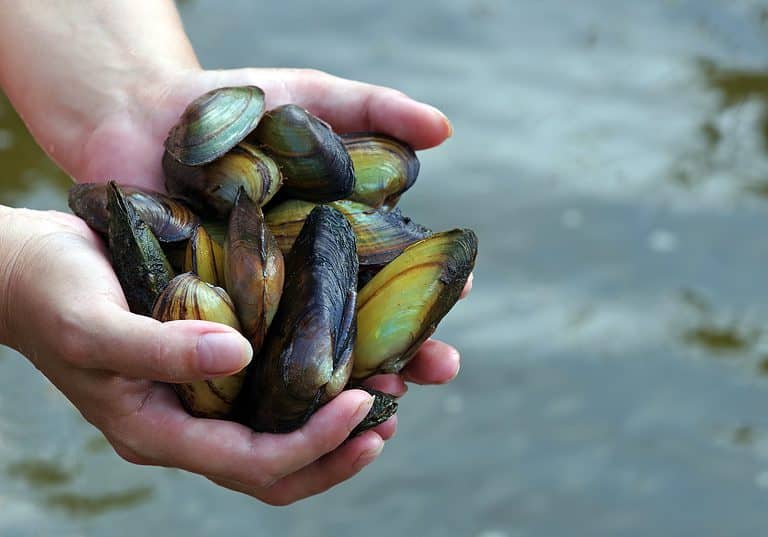
Freshwater mussels are hard to tell apart.
©P. Fromentin/Shutterstock.com
Found only in 10-mile stretch of Mississippi’s Big Black River, the Tallahatta hickorynut (Obovaria tallahattae) has a distinctive shell, which means you may be able to identify it without genetic analysis. Their shells are dark, often without rays and more oval than other mussels. Their name comes from the Tallahatta pale rock formation.
The final and largest new species is the Acolapissa hickorynut (Obovaria lumbo). The name refers to the Choctaw word for round, so guess what shape their shells are! You may spot these 2.5-inch-long, chestnut brown mussels with a satiny sheen in the Pearl, Pascagoula, and Lake Pontchartrain drainages in Louisiana.
Why the Discoveries Matter
Identifying previously unknown species is essential for preventing extinctions. These findings fill critical knowledge gaps about U.S. freshwater mussel distribution. This allows scientists and conservationists to assess extinction risk and prioritize their efforts. Speaking in this Shedd Aquarium Press Release, Dr. Kentaro Inoue, research biologist at Shedd Aquarium and lead author of the paper, said, “Conservation efforts can only protect what we recognize, and without this work, we risk certain species going extinct before they’re even known to science.” Also, each major river basin included in this work turned out to hold its own genetic lineage. Because of the very limited range of some of these mussel species, basin-specific conservation strategies may be needed.
This work demonstrates how much we do not know about freshwater biodiversity and how much we still have to learn. It also highlights how valuable collaborations between federal and state agencies, non-government organizations, and natural history institutions can be.