Quick Take
- Manta rays were given the same self-awareness test used on dolphins and great apes, and their response stunned researchers. See the mirror study →
- Engineers spent years trying to replicate how manta rays eat, and in doing so they discovered that the filtration system breaks every rule of how filters are supposed to work. Explore the filtration system →
- Manta rays have a social structure more complex than most people expect from fish, and disrupting even one specific location can unravel the whole thing. Discover their social networks →
- A single photo taken by a scuba diver helped rewrite what scientists thought they knew about how far manta rays travel, and it changed international conservation law. Trace the photo that changed law →
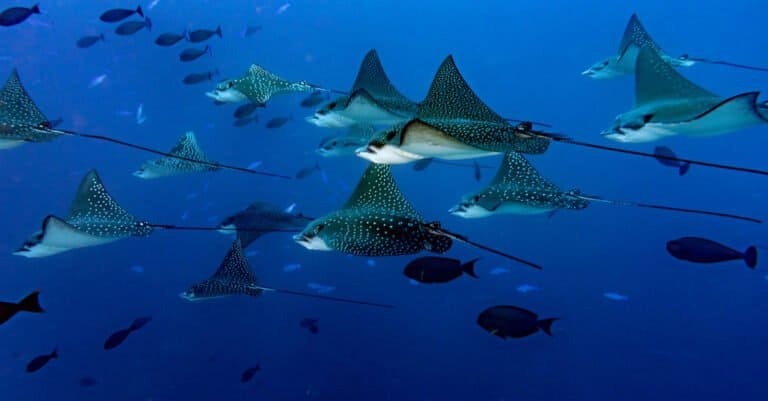
Manta rays are often called “gentle giants,” as their wingspans can reach up to 26 feet. However, their massive size and graceful swimming are only parts of their story. Beneath their broad, wing-like bodies lies a surprisingly sophisticated brain that is changing how scientists view fish intelligence, memory, and behavior. From self-cleaning filter systems to complex social lives and epic migrations, mantas are far more than just big fish.
However, their survival is increasingly threatened by overfishing, habitat destruction, boat strikes, and human activity.
World Manta Day on September 17 shines a light on the remarkable intelligence and beauty of manta rays — as well as the urgent need to protect these extraordinary giants of the sea.
Continue reading
A Fish With an Extraordinary Brain
Manta rays hold an unusual distinction among fish: they have the largest brain size relative to body size of any known fish species. An oceanic manta ray’s brain is roughly the size of a human fist — up to ten times larger than a whale shark’s. Although this brain volume is modest compared to that of a mammal, it is exceptional for a fish.
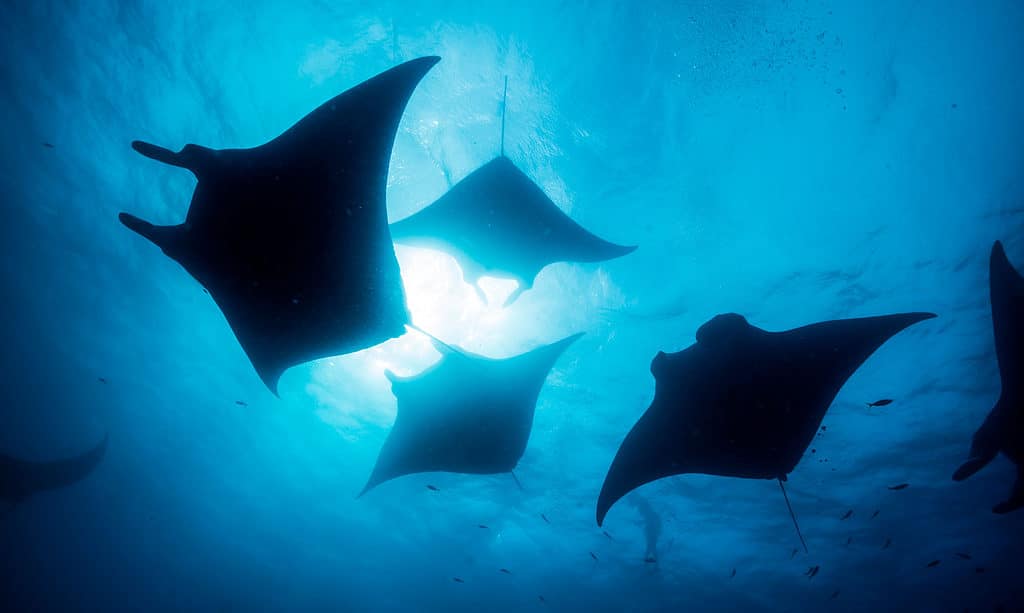
Manta rays give birth to live young.
©divedog/Shutterstock.com
Manta rays have equally unusual sensory abilities. Studies have found enlarged areas of their brains dedicated to intelligence, motor control, and vision. Some of their key cellular structures more closely resemble those found in mammals and birds than those in typical fish. Their specialized neural wiring gives them exceptional eyesight, making them ideal subjects for self-awareness and visual recognition studies.
Do Manta Rays Recognize Themselves?
A 2016 University of Colorado study on captive giant manta rays (Mobula birostris) provided some of the most compelling evidence of fish cognition to date. Researchers placed mirrors inside the rays’ tank and watched to see how the animals responded.
Interestingly, the rays did not treat their reflections like rivals. Instead, they spent extended periods examining themselves, repeatedly executing unusual movements to inspect areas of their bodies normally hidden from view.
The rays became more engaged, repeatedly swimming back and forth along the mirror and visiting it far more often than non-reflective walls. They also unrolled their cephalic fins ten times more frequently, blew bubbles at their reflections, and flipped upside down to expose their bellies.
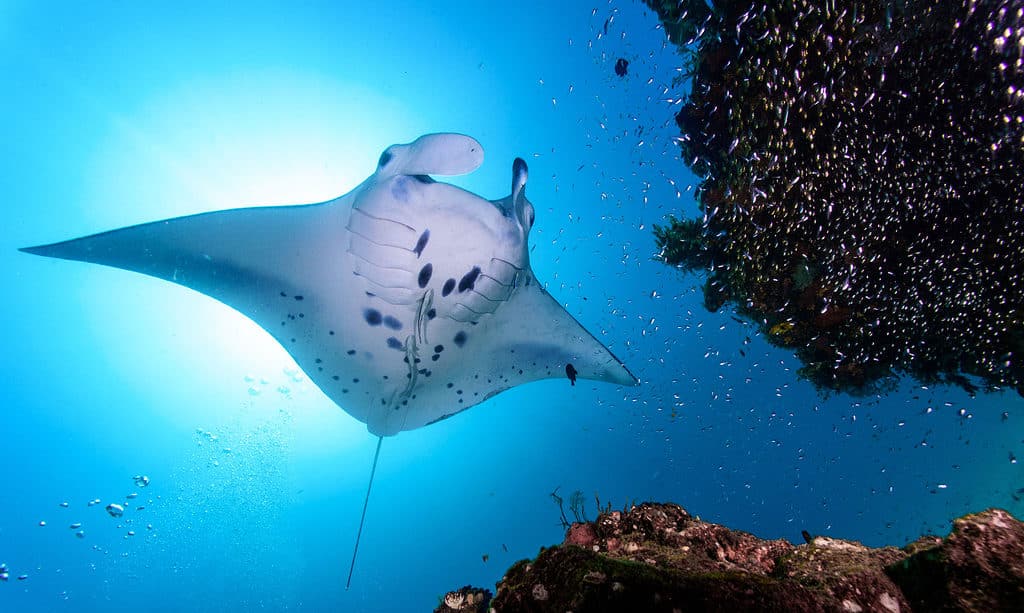
Each manta ray has its own individual and unique spot pattern, similar to a human fingerprint.
©Hoiseung Jung/Shutterstock.com
The rays displayed none of the territorial behaviors, warning signals, or color changes that are typical when encountering a strange manta. The presence of the mirror also reduced social interaction between the two rays, as both prioritized inspecting their reflections rather than interacting with each other.
While these findings remain debated and do not offer absolute consensus proof of self-awareness, the researchers concluded that the mantas met key criteria for passing the mirror self-recognition test. If confirmed, manta rays would join an exclusive group of non-human animals believed to be capable of self-awareness.
Memories, Personalities, and Social Lives
In the wild, manta rays display impressive navigation skills, long-term memory, intricate social networks, and unique personalities.
Along Hawaii’s Kona coast, researchers and tour operators frequently encounter the same individual rays across days, months, and years. Mantas show strong “site fidelity,” consistently returning to specific spots to feed on plankton or socialize. Each manta ray has a unique pattern of spots on its belly, acting like a fingerprint that allows scientists to track individual movements and behaviors over time.
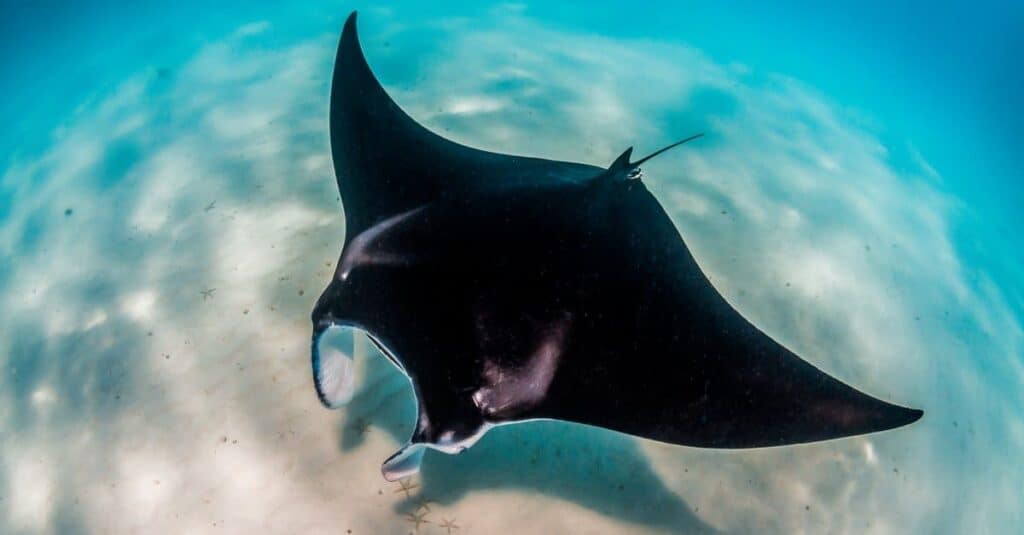
Giant manta rays can grow up to nearly 30 feet wide.
©Aaronejbull87/Shutterstock.com
Mantas are curious creatures that not only tolerate human divers — they actively seek them out. Ecologists describe their behavior as playful and inquisitive, noting that some rays seem genuinely interested in exploring their environment and interacting with people.
Manta rays also lead complex social lives. A five-year study of over 500 manta groups in Indonesia’s Raja Ampat Marine Park revealed that mantas actively choose specific social partners instead of randomly bumping into each other in shared spaces.
The local population split into two groups — one composed almost entirely of mature females, and another consisting of a mix of males, females, and juveniles. Female mantas form long-term social relationships, whereas males build fewer strong ties, likely due to different mating and movement patterns.
Cleaning stations — where cleaner fish remove parasites — double as community gathering hubs. Mantas consistently prefer specific stations to socialize, even when other nearby options exist.
Because these complex social structures depend on specific locations, protecting manta ray habitats requires careful and nuanced conservation strategies.
How Manta Rays Filter Millions of Plankton
Despite their massive size, manta rays survive almost entirely on microscopic plankton, consuming over two million of these tiny organisms every day.
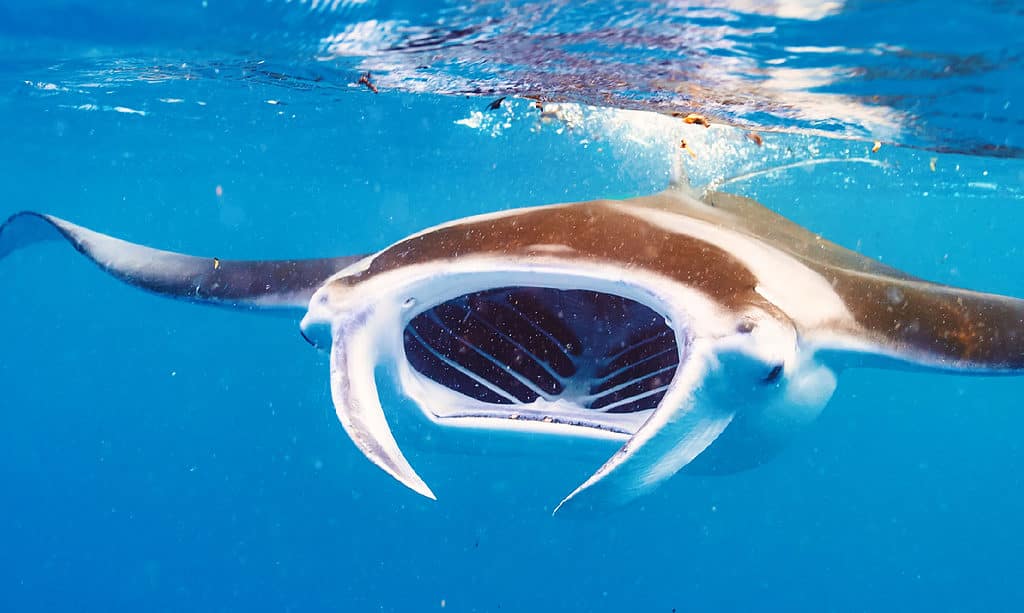
Manta rays are filter feeders.
©haveseen/Shutterstock.com
To feed, mantas unroll their horn-like cephalic fins to funnel plankton-rich water directly into their gaping mouths as they swim. However, filtering these enormous clouds of plankton poses a major challenge: mantas must process vast amounts of water without clogging their filtration systems.
Using 3D-printed models and fluid dynamics simulations, researchers discovered how manta rays feed without clogging their filters. Instead of using traditional biological filters such as sieves, cross-flow filtration, or sticky mucus, manta rays use ricochet filtration. Tiny plankton particles bounce off the spoiler-shaped filter lobes and ricochet straight back into the throat stream. Essentially, the water changes direction, but the food continues moving straight.
Flow-tank tests showed that the system traps particles even smaller than the filter pores themselves, capturing up to 62 percent of plankton. Because particles constantly bounce away from the filter surface, the system remains clog-free, creates low drag, and allows mantas to feed continuously with very little energy.
How Mantas Outsmart the Plankton Buffet
Mantas adapt their swimming and feeding strategies based on how their food is distributed. When plankton is sparse, a manta simply cruises steadily through the water to filter feed. However, when prey gathers in dense pockets, mantas make tight turns and loop back to remain in the richest feeding spot as long as possible. During massive plankton blooms, dozens or even hundreds of mantas coordinate their movements to feed together efficiently.
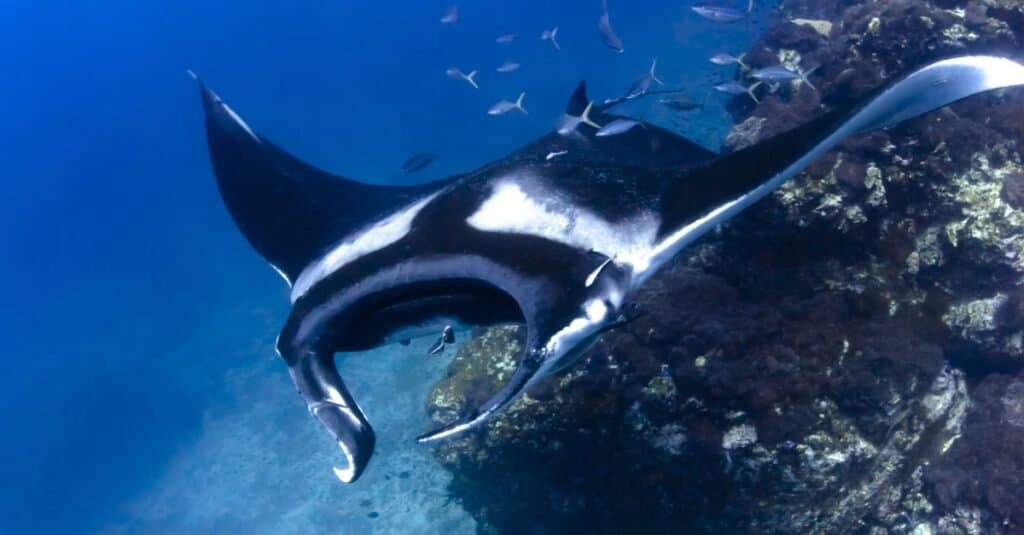
Manta rays are nicknamed “devil fish” because of the two horn-like fins sticking out from the front of their heads.
©OutdoorWorks/Shutterstock.com
To maximize these opportunities, manta rays use several unique and specialized feeding maneuvers. When chain feeding, up to 12 manta rays swim head-to-tail in a single line to consume plankton passed down the queue. Cyclone feeding can involve up to 150 manta rays that form a tight, counterclockwise spiral. This circular motion creates a vortex that sucks in and concentrates dense patches of plankton. Sometimes mantas will tilt their bodies 90 degrees to swim and feed on their sides. They also perform repeated backward loops in place to remain within a concentrated cloud of plankton.
Epic Migrations
Manta rays may appear to be animals designed to drift peacefully around reefs, but many travel incredible distances. However, movement patterns vary greatly among species.
Giant oceanic mantas can reach wingspans of up to 26 feet and weigh over 5,000 pounds. Though frequently spotted near the surface and around coastal seamounts, satellite data reveal they regularly plunge into the deep ocean — diving down to 3,280 feet.
Reef manta rays (Mobula alfredi), in contrast, routinely return to the same feeding spots, cleaning stations, and sheltered bays within home ranges of 40 to 50 miles. Female reef mantas travel significantly farther within their home ranges than males.
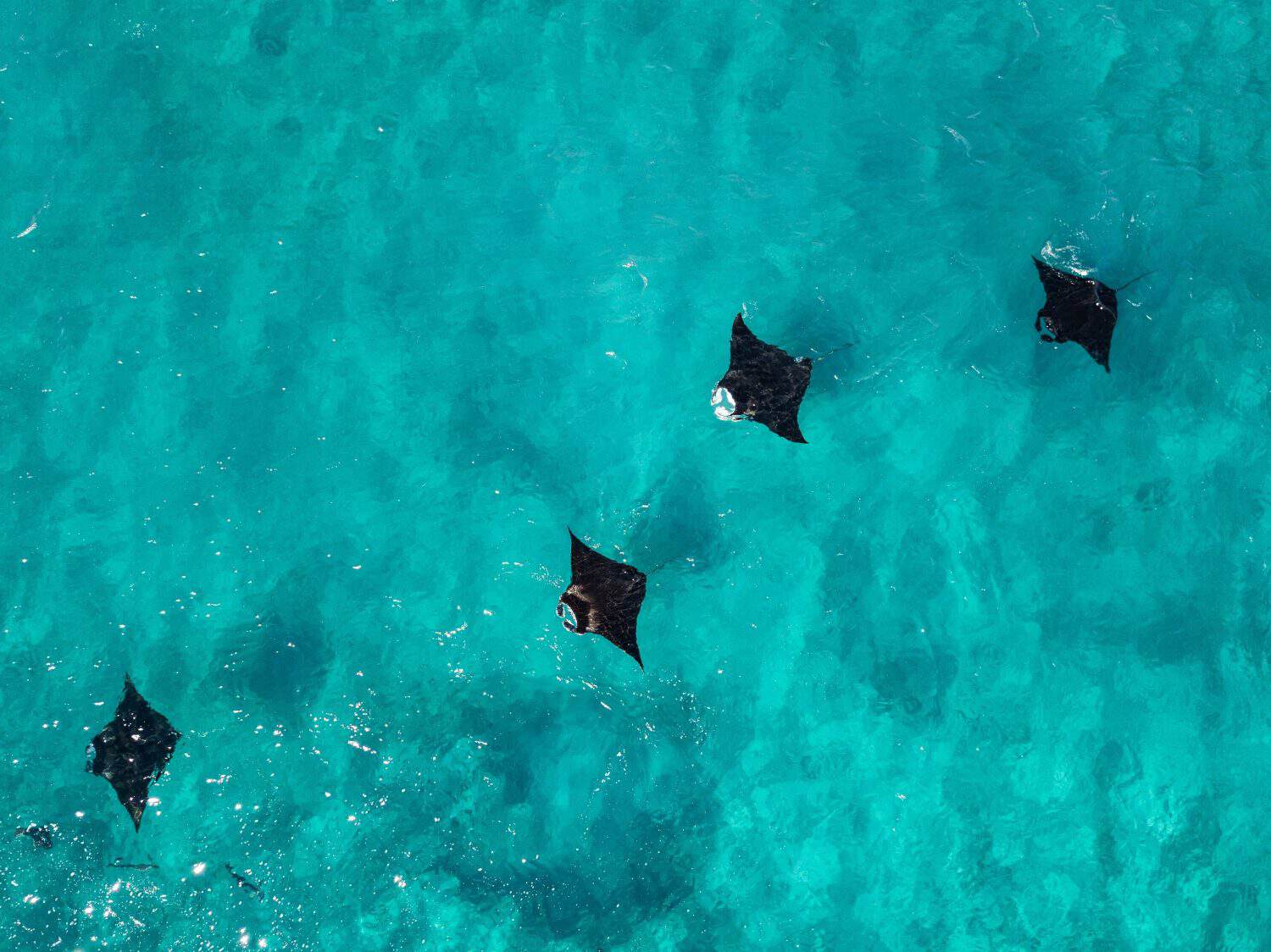
Some manta rays migrate thousands of miles across the open ocean.
©wagirl/Shutterstock.com
Scientists map these movements using acoustic telemetry (underwater listening stations), satellite tags (long-distance and dive tracking), and photo-identification (matching unique, fingerprint-like belly spot patterns). Photo-ID tracking, in particular, has begun to reveal that even reef mantas are traveling farther than previously thought.
How Far Do Manta Rays Travel?
A landmark study by the Marine Megafauna Foundation, published in the Journal of Fish Biology, documented the first recorded international, transboundary migrations of reef manta rays. Scuba divers contributed crucial photos to Manta Matcher, an open-access database that matched unique belly patterns to reveal the first cross-border journeys.
Researchers connected the vulnerable manta population in southern Mozambique to South African waters, including the iSimangaliso UNESCO World Heritage Site, extending the species’ known southern African range by 87 miles down to Mdumbi Beach. One ray swam 314 miles from Mozambique to South Africa in under 301 days; another completed a 540-mile round trip.
Aerial surveys during South Africa’s annual Sardine Run spotted juvenile mantas less than two meters wide, suggesting the Wild Coast serves as a critical nursery area.
These findings highlight a key conservation challenge: Because mantas routinely cross maritime boundaries, effective protection requires international collaboration among neighboring nations.
Manta Rays Are Running Out of Time
Unfortunately, manta rays are highly vulnerable to human activities. The giant oceanic manta ray (Mobula birostris) is classified as Critically Endangered on the IUCN Red List, while the reef manta ray is classified as Vulnerable.
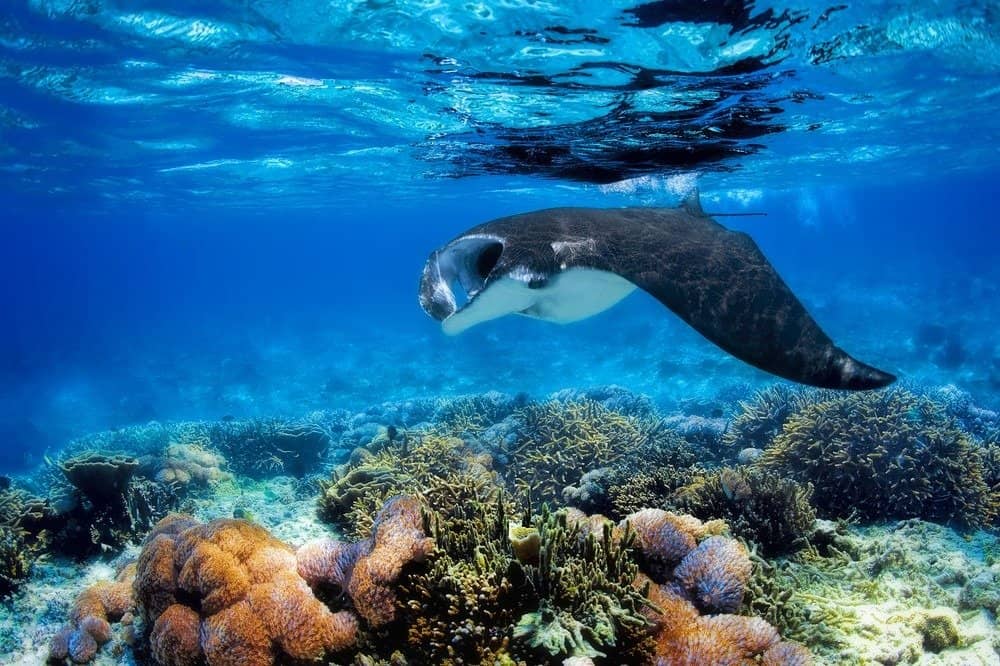
Manta rays have at least 12 unique feeding styles.
©Kjersti Joergensen/Shutterstock.com
Targeted fishing, commercial harvesting, and human activity are the greatest threats to manta ray populations across the globe. Mantas are aggressively hunted for their gill plates, which are sold for unproven traditional remedies. As shark-fin regulations have tightened, the market value of manta gills continues to increase.
Because full-sized mantas are often too large to fit onto fishing vessels, captured rays may be harpooned and dismembered while still alive.
Longline hooks, purse seines, and commercial nets frequently entangle rays. Because mantas spend significant time near the surface, collisions with boat hulls and propellers frequently cause severe injuries.
In high-traffic destinations like Hawaii, abandoned monofilament fishing line and heavy boat traffic present constant hazards. Offshore energy projects, dredging, marine pollution, microplastic ingestion, and climate-driven ocean acidification continue to disrupt the delicate planktonic food webs mantas rely on to survive.
Slow Reproduction Makes Recovery Difficult
The greatest biological hurdle manta rays face is their inability to replace lost individuals quickly enough to bounce back from population declines.
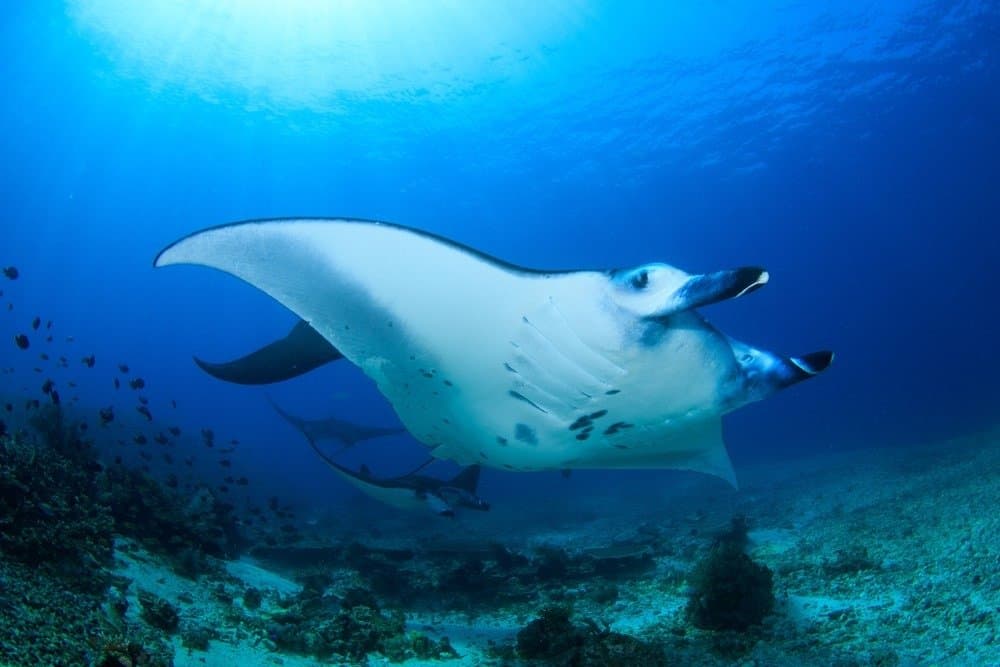
Manta rays frequently stop at reef “cleaning stations” where wrasse help clean parasites and dead skin off of them.
©SergeUWPhoto/Shutterstock.com
Mantas mature late in life, and females undergo a year-long pregnancy before giving birth to a single pup. Females reproduce only once every two to five years, depending on the region and environmental conditions.
While adult mantas face few natural predators outside of large sharks and orcas, their exceptionally slow reproductive cycle leaves populations unable to recover quickly from human-driven mortality.
Because these gentle giants reproduce so slowly, preventing their deaths is essential to their long-term survival.
Protecting the Ocean’s Gentle Giants
Protecting manta rays requires international treaties, national regulations, cutting-edge research, proactive habitat management, and changes in how humans interact with these animals.
All mobulid species are now listed on CITES Appendix I, which prohibits international commercial trade in these species. Under the Convention on Migratory Species (CMS), mobulid rays are listed on Appendix I, requiring strict protection within member nations’ waters.
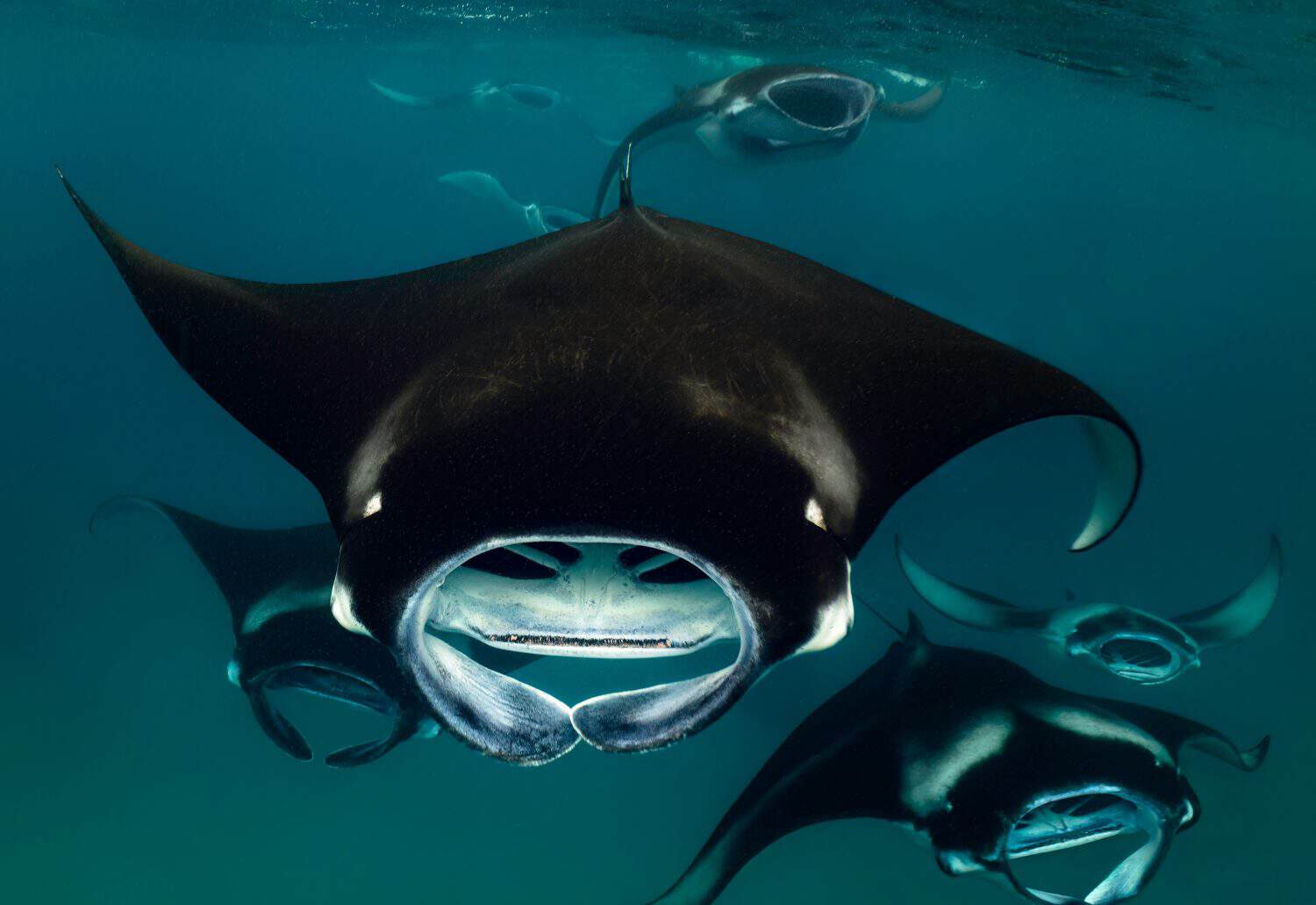
Manta means “cloak” or “blanket” in Spanish.
©David Keep/Shutterstock.com
NOAA Fisheries listed the giant manta ray as Threatened under the Endangered Species Act, making it illegal for U.S. citizens to harm, hunt, or capture them anywhere in U.S. waters or on the high seas.
Federal strategies focus on reducing bycatch, closing trade loopholes, mapping key migration corridors, and establishing robust systems for tracking populations.
Scientists and federal agencies also use telemetry, satellite tracking, and citizen science observations to identify important habitats and migration corridors. BOEM and NOAA Fisheries coordinate to assess potential impacts from offshore energy, dredging, and marine mineral projects along the U.S. Outer Continental Shelf.
Conservation Can Work
Despite the severe threats facing manta rays, strategic protection and public engagement offer real hope for their recovery.
Research supported by organizations such as the Manta Trust has helped secure national fishing, landing, and export bans in important manta habitats, including Peru, Mexico, the Philippines, Indonesia, Ecuador, the Maldives, Australia, and New Zealand.
Ecotourism can provide an additional incentive to keep manta rays alive rather than harvest them. Live giant mantas generate millions of dollars annually for coastal communities through dive tourism, demonstrating that these animals can have significant economic value while alive.
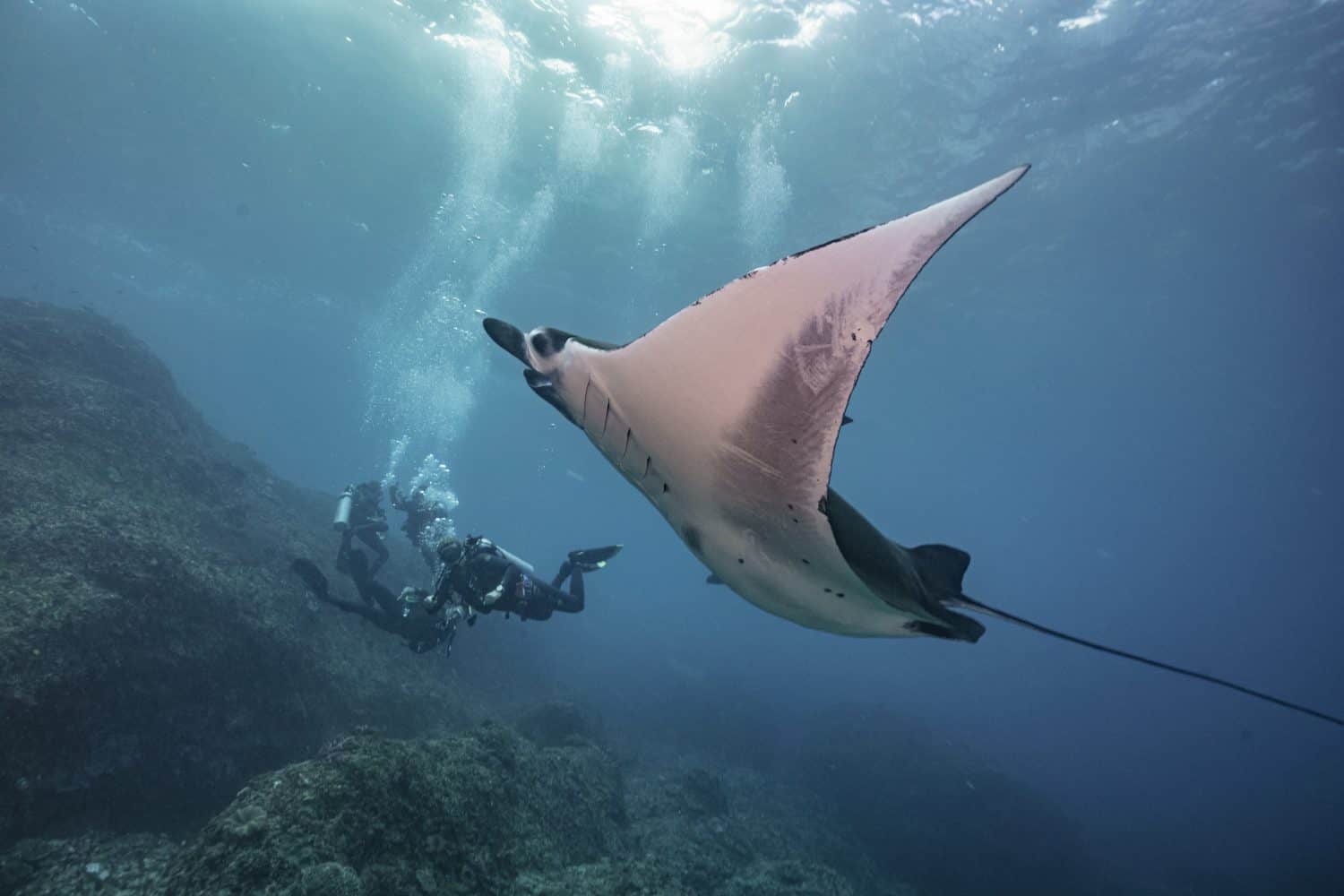
Manta rays have demonstrated high levels of intelligence similar to primates, elephants, and dolphins.
©Adam Leaders/Shutterstock.com
However, tourism itself must be carefully managed. Because heavy boat traffic and crowded diving sites can disrupt feeding and reproduction, implementing visitor limits and strict eco-tour guidelines is vital to protecting key gathering spots.
Citizen science is also an important tool for conservation. Every photograph submitted to a manta identification database helps researchers understand where individual rays travel, which habitats they use, and how populations are connected across national boundaries.
Why Saving Manta Rays Matters
Manta rays challenge some of our most deeply held assumptions about fish. They have enormous brains relative to their bodies, remember locations and individuals, and navigate across hundreds of miles. Mantas form social relationships and display curiosity and playful behaviors. They may even recognize themselves and exhibit self-awareness in front of mirrors.
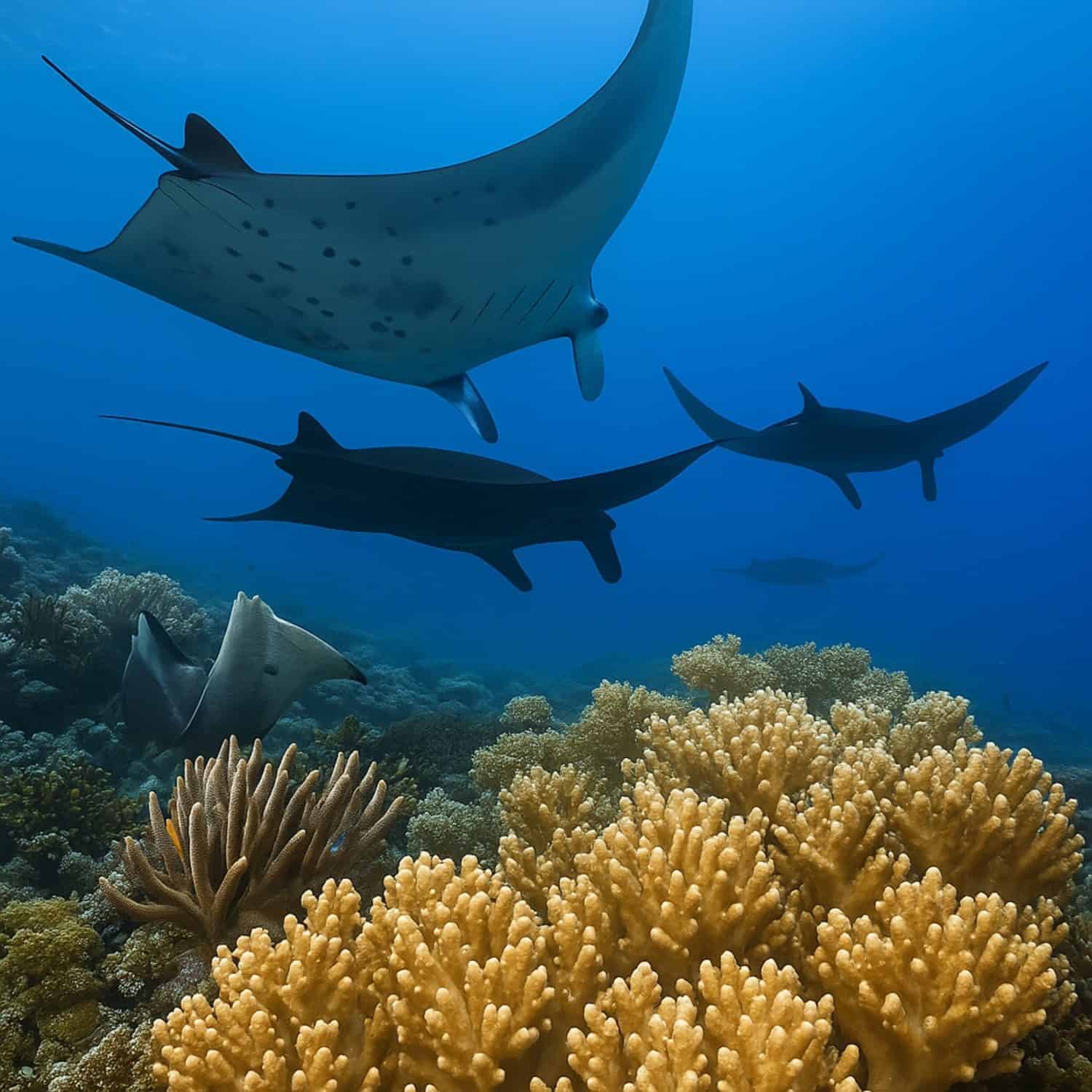
Manta rays are generally harmless to humans.
©Aryuda View/Shutterstock.com
Manta rays aren’t just beautiful creatures meant to inspire awe; they are intelligent, social beings threatened by overfishing, habitat loss, boat traffic, and unregulated tourism.
World Manta Day is not just a celebration of a popular marine species — it is a call to rethink how we define animal intelligence. As science reveals more about manta rays, it becomes increasingly difficult to treat them as “just fish.” Safeguarding these ocean giants requires protecting the feeding grounds, migration routes, and social habitats they depend on to survive.