
Quick Take
- Sheep have 32 teeth and no upper incisors.
- They have four incisors on each side of the bottom jaw and a dental pad on the upper jaw for cutting.
- Age can be estimated by tooth eruption and wear; permanent incisors replace the temporary ones by about 2 years, and all eight by 5 years.
Domestic sheep (Ovis aries) are popular livestock, as they are easy to feed and herd. Sheep were domesticated from the Asiatic mouflon (O. gmelini) approximately 11,000 years ago. They are typically raised for their meat and wool. Sheep are related to goats, cattle, and antelopes, all of which are ruminants with cloven hooves. Continue reading to learn about sheep teeth and their utility.
How Many Teeth Do Sheep Have?
Sheep have a total of 32 permanent teeth. On each side of the bottom jaw, sheep have four incisors (one of which is technically a canine), three premolars, and three molars. On each side of the upper jaw, they have no incisors, three premolars, and three molars. Instead of upper incisors, sheep have a flat, tough, toothless dental pad.
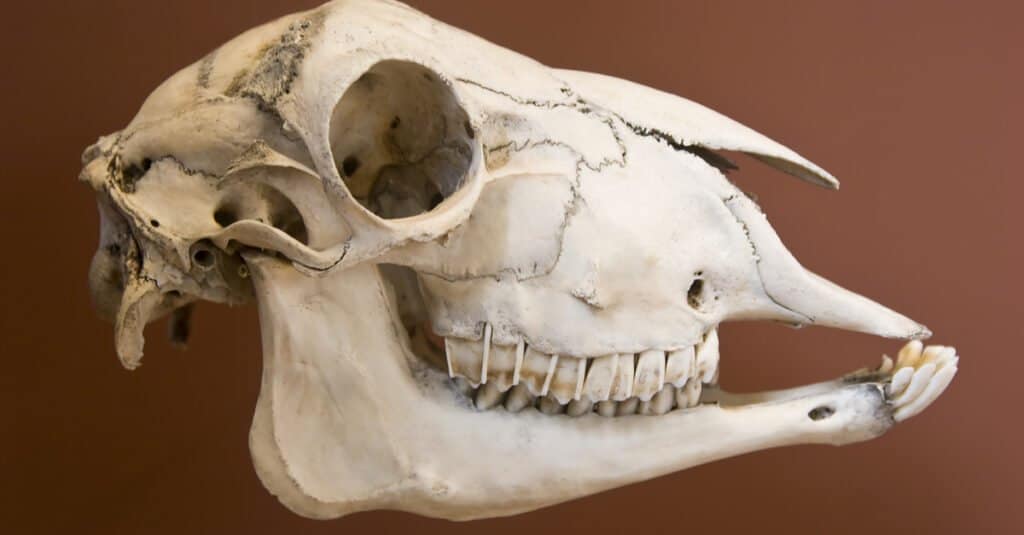
Sheep have 32 teeth and no upper incisors.
©jsp/Shutterstock.com
Like humans, sheep are diphyodont, meaning they are born with an incomplete set of temporary teeth. Two to six weeks after birth, three temporary premolars emerge in the lamb’s mouth. The first two permanent incisors appear at approximately 15 months. The next pairs of permanent incisors emerge annually. In the lower jaw, the first permanent molar emerges at three months, while the first permanent molar in the upper jaw does so at five months. The second and third permanent molars, as well as the permanent premolars, appear between the ages of 18 and 24 months.
What Are Sheep’s Teeth Used For?
When grazing, sheep use their incisors and dental pads like serrated scissors to cut and grab grass. The premolars and molars are then used to chew it into a mass called a bolus. Sheep take a while to chew because they regurgitate the digested bolus, rechew it, and then swallow again. The regurgitated bolus is called cud. Regurgitating and rechewing are part of the digestive process for sheep. This is because sheep are ruminants. Ruminants have complex four-chambered stomachs that ferment cellulose and other plant matter. This, combined with the regurgitation and rechewing, allows them to absorb nutrients from vegetation more efficiently than other herbivores. Sheep also use their tongues to wrap, tear, and chew their food. Since sheep do not eat meat, they have no use for sharp canines to tear tough food.
Can Sheep Teeth Tell Their Age?
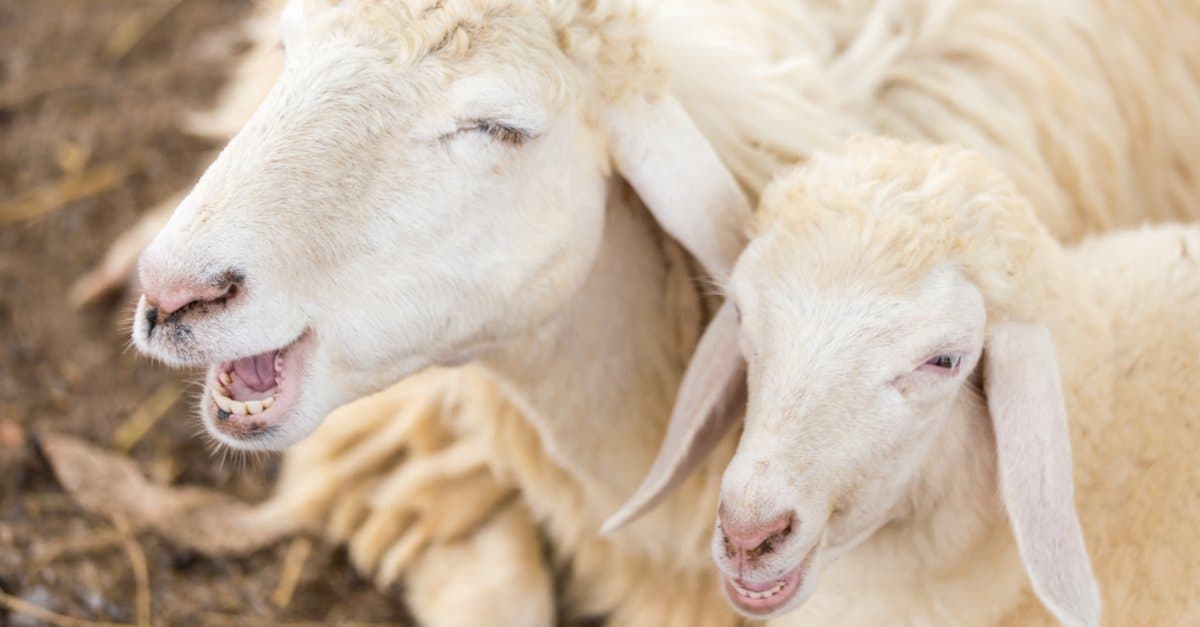
A sheep’s teeth can be used to estimate its age, particularly for those under the age of four. The temporary lower front incisors are small and sharp for lambs under a year old. Once they are a year and a half old, the temporary incisors are replaced by permanent ones. At two years old, another incisor will emerge on each side of the bottom jaw. Three- and four-year-old sheep typically have six permanent incisors, and after another year, all eight incisors will have been replaced with permanent ones.
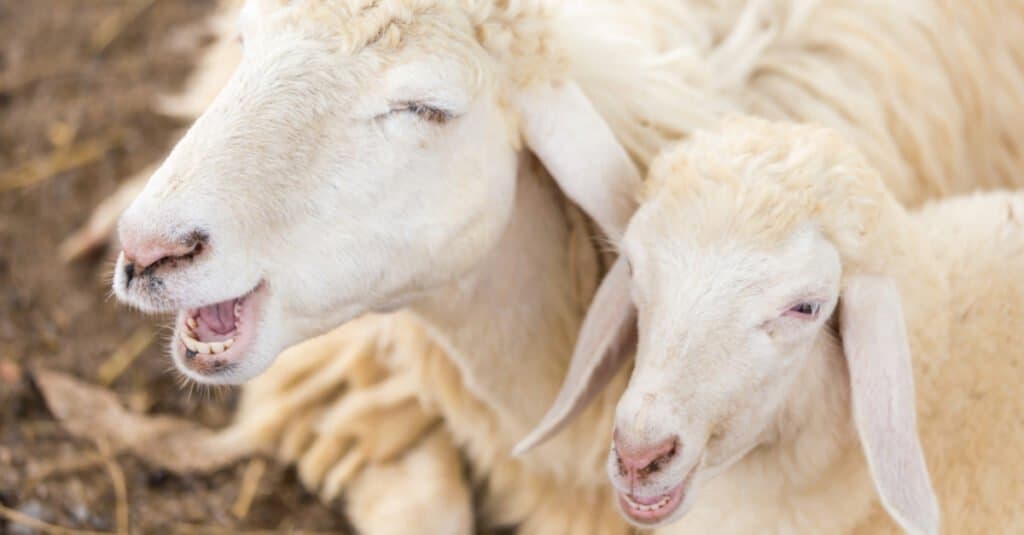
The condition of a sheep’s teeth can help estimate its age.
©SIWAT_R/Shutterstock.com
The age of mature sheep with a complete set of permanent teeth can be determined by how much their front teeth have worn down. As sheep age, the continuous chewing of cud and grass can cause their teeth to spread or fall out, and wear off enamel. This can make grazing difficult, making dental care important for domestic sheep.