
Quick Take
- Scientists say animal emotions are real, though whether these otters are actually being kind or just playing games is a trickier question than it looks. See what the otters are doing →
- Traffic cones in an otter enclosure aren't as random as they seem. There's a specific reason they end up in the water. Watch the cone-moving clip →
- Otters look harmless, but a documented attack on a swimmer reveals a side of them most viral videos leave out. Read about the 2016 attack →
- The otter species that can reach 100 pounds is not the one you would expect, and its anatomy sets it apart from every other otter. Explore otter species facts →
Kindness is easy to recognize when people show it. Someone pays for the next order in the coffee line, helps a relative with an overdue bill, or eats the slightly questionable pancakes their child made for breakfast.
Animals can display emotional and social behaviors, too, although interpreting a specific action takes some care. A 2000 BioScience review by cognitive ethologist Marc Bekoff argued that research supports a range of emotions in at least some animals. That does not mean every charming animal video proves kindness, but the otters below certainly look like they are pitching in.
Watch the Otters Move the Cones
A Cleanup Crew With Whiskers
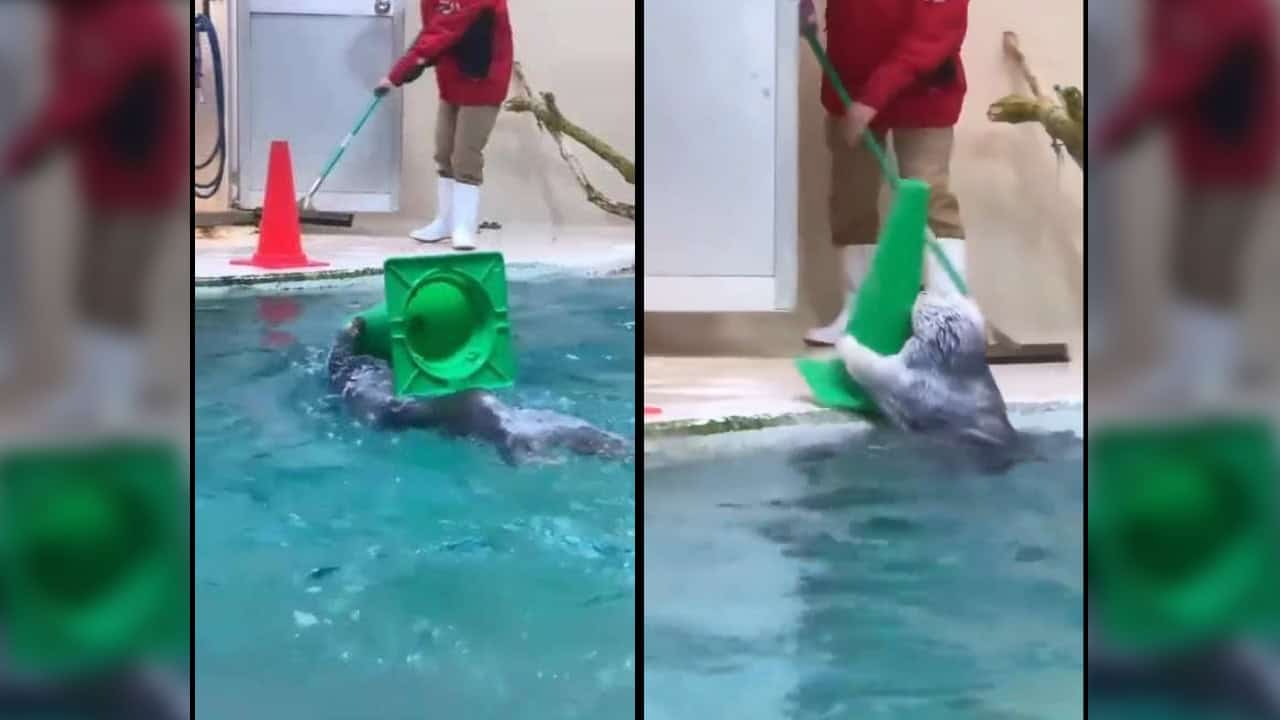
The clip was reposted by the Miami Vybe305 TikTok account. It does not clearly identify the original source, facility, location, or otter species, so calling it a local zoo would be a guess. Otter species live across parts of Africa, Asia, Europe, and the Americas. What the video does show is a staff member working beside a pool while several otters move traffic cones through the water.
Are the Otters Really Helping?
The setting appears to be a managed animal enclosure, although the clip does not identify the facility. A staff member stands beside the pool while several otters swim nearby.
Several traffic cones are floating in the water. One by one, the otters move them toward the edge of the pool, where the staff member can reach them. Traffic cones are sometimes used as enrichment items in otter care, but the video does not reveal whether these animals were trained to retrieve them, were responding to a cue, or simply found the cones interesting.
The result looks a lot like teamwork. The motive is harder to pin down. Either way, the otters appear to be doing a respectable job—and without stopping to check their phones every two minutes.
Can Otters Be Aggressive?

Otters are carnivores that eat fish and other animal prey.
©Colin Seddon/Shutterstock.com
Otters are undeniably photogenic, but they are also carnivores with the equipment to prove it. Their size and anatomy vary by species. Sea otters, the heaviest otter species, can reach about 100 pounds, and NOAA notes that their forepaws have retractable claws. North American river otters are much smaller, generally weighing about 10 to 33 pounds, and their claws are not retractable. Wild otters usually avoid people, but they can bite and scratch if a confrontation occurs.
A 2016 case report indexed by the National Library of Medicine described a 52-year-old woman who was swimming in a lake in southern Quebec when a North American river otter (Lontra canadensis) pursued her, biting and scratching both legs before she escaped. She sustained numerous deep wounds. The woman said she had not knowingly provoked the animal or swum near a den, so what triggered the encounter was unclear. The report also emphasized that attacks on people are rare.
The takeaway is not that otters have a secret villain phase. It is that a cute animal is still a wild animal. Enjoy videos like this, follow the rules at zoos and wildlife facilities, and give wild otters plenty of space. They do not need any help going viral.