
Quick Take
- A creature too small to see runs California's dullest-looking marshes. Its three-host relay has a nasty twist. Follow the three-host relay →
- Something rewires a fish's fear response, and the fish starts putting on a show. Who benefits? See how fish get rewired →
- Researchers counted the marsh's inhabitants and found a mismatch that shook old assumptions about who really matters. Explore the marsh survey →
As any coastal California resident will tell you, of all the vistas the state offers, the large, half-barren salt-flat marshes are probably the least interesting. These flat, swampy expanses of murky water and nondescript foliage are the last place you would expect to find high drama, macabre behaviors, and ruthless survival stakes. But this is exactly what you’ll find in Euhaplorchis californiensis, a parasitic trematode fluke that hijacks fish bodies and makes them more conspicuous.
These parasites not only live in these Southern California saltwater marshes, but they seem to run them as well. They may be small, even microscopic, but these parasitic flukes are a primary mover in the tidal wetland ecosystems. One team of researchers, which illuminated the mechanisms that drive the parasitic cycle between snails, fish, and birds, made an important discovery. Through meticulous surveys of at least one salt marsh, they learned that the total biomass of parasites equaled or exceeded the biomass of birds and fish in the same area. Let’s unpack the parasite life cycles, what researchers learned about their mechanisms of action, and how land surveys upended our understanding of balance in wetland ecosystems.
From Snail to Fish to Bird

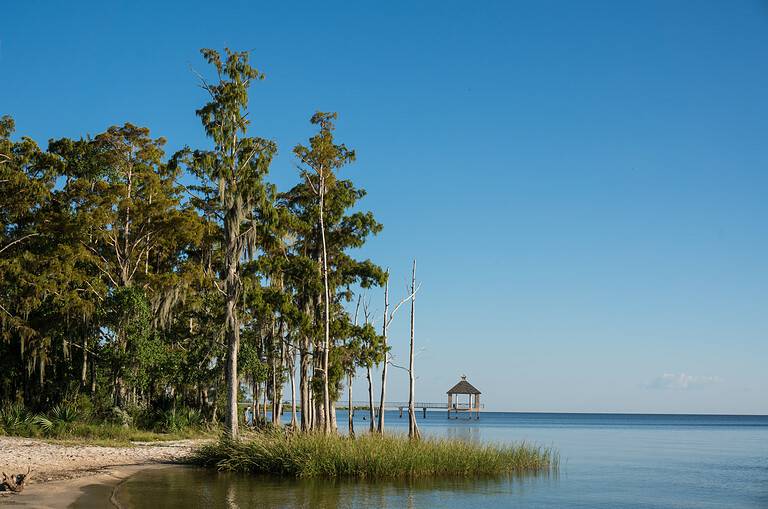
Salt Marshes look like no man’s land, but they are actually teeming with life.
©Alpha Wang/Shutterstock.com
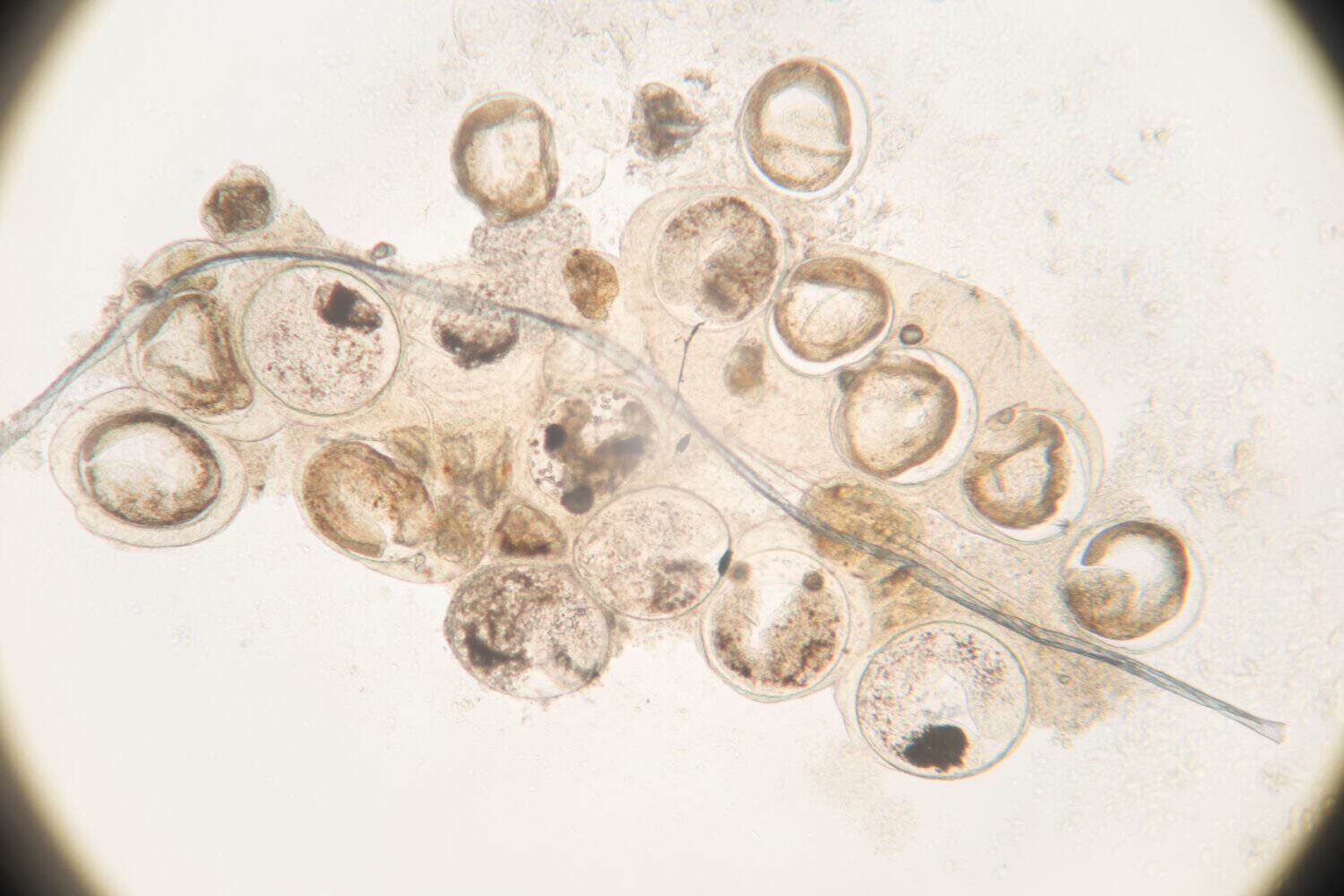
Euhaplorchis californiensis, a parasitic trematode fluke in Southern California salt marshes, is less than 0.2 millimeters in length.
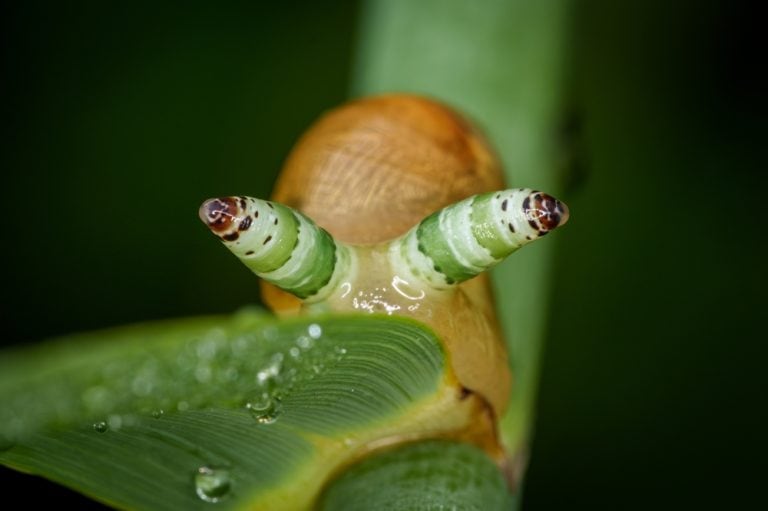
The process from egg to larva to maturity is as follows: Euhaplorchis californiensis eggs turn up on the shore of salt marshes in shorebird droppings. Horn snails eat these droppings, and the parasites castrate the snails, rendering them sterile. The eggs hatch in the snail, undergo large-scale asexual reproduction, and head out for greener pastures. By the thousands, free-swimming larvae called cercariae enter the salty swamp water. Thus begins the second part of their life cycle.
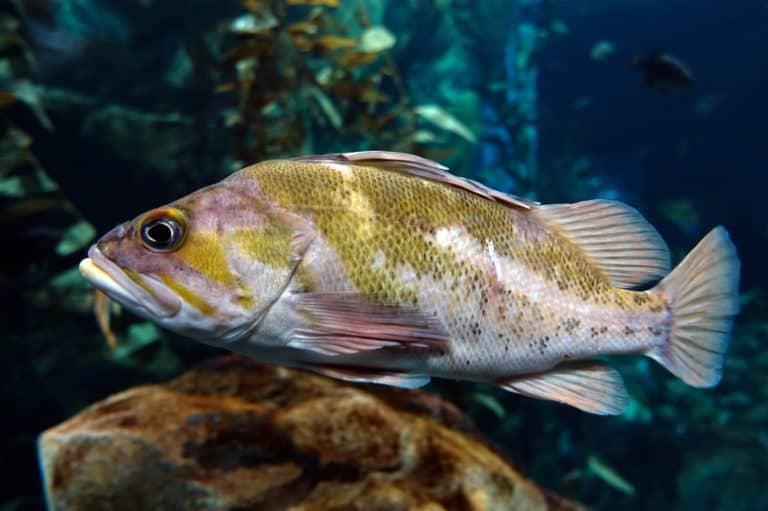
The cercariae specifically seek out California killifish, small, hardy, and omnivorous fish native to coastal wetlands. Once they find a killifish target, the parasites penetrate the victim’s skin. They drop their tails and travel along nerves or blood vessels into the host’s brain. There, the parasites set up shop on the brain surface and form protective cysts. In the process, they alter the fish’s behavior; normally cautious hosts begin flashing their bellies to the air, shimmering, and swimming dangerously close to the surface.
If successful, the parasites manipulate the fish into the final part of the life cycle. Only once a fish host is eaten by a shorebird can the parasites mature in the bird’s gut. Thus, the cycle begins anew. Eggs laid by these mature parasites are dropped on the shore for horn snails to eat.
Parasitic Puppet Masters
The exact way that these parasites manipulate cautious fish into conspicuous action interested ecologist Kevin D. Lafferty and A. Kimo Morris. In their 1996 study, published in the journal Ecology, and a 2009 follow-up study led by Jenny Shaw with Lafferty as a co-author, the researchers documented the behavior and then studied its mechanism. They found that when Euhaplorchis californiensis forms along fish brains and creates protective cysts, they alter the fish’s brain chemistry. When killifish experience stress, it triggers elevations in serotonergic metabolism, causing the body to freeze or escape. Plugged into the fish’s nervous system, the parasites block this response. They diminish serotonin levels and alter dopaminergic activity.
Ecology, 1996 Peer-reviewed
Researchers documented the conspicuous behavior of killifish infected with Euhaplorchis californiensis and then studied its mechanism.
In turn, infected killifish go from cautious creatures to reckless performers. They shimmer along the surface, jerking and contorting their bodies. Kevin D. Lafferty and others found that infected killifish are four times more likely to exhibit these flashy behaviors than uninfected fish. This effect compounds, as such behaviors make infected fish 10 to 30 times more likely to be consumed by shorebirds.
A Hidden, Dominant Biomass
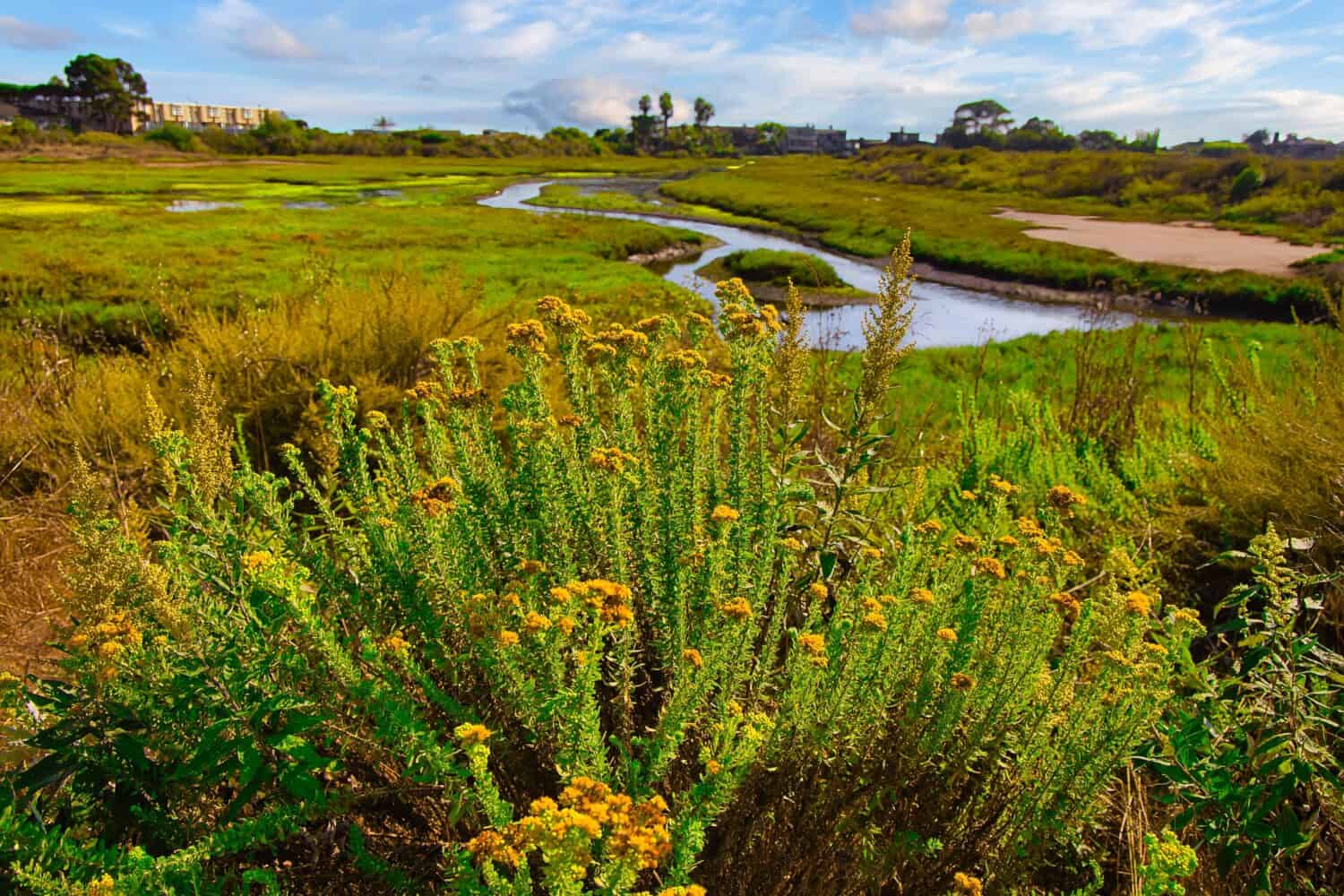
Researchers found that parasites are involved in 78% of the biological links in the Carpinteria Salt Marsh food web.
©L Paul Mann/Shutterstock.com
Lafferty and fellow researchers undertook many meticulous surveys of marshes from Baja to Santa Barbara. Their research, published in two follow-up studies, made clear just how much of an impact these parasites have on wetland ecosystems. Lafferty and company found that parasites practically controlled food webs. They found that parasites had a hand in 78% of the links in the Carpinteria Salt Marsh food web, a tidal zone outside Santa Barbara.
78%
%
of the links in the Carpinteria Salt Marsh food web involve parasites
We think of ecosystems functioning through a series of predator-prey links. Lafferty’s team showed that this is not so, at least in salt marshes. There, parasites appear to mediate most of the biological connections. Old studies suggested parasites disconnected food webs, but the researchers found the opposite. Additionally, the animals in the middle suffer the most; they are hunted by big predators while simultaneously being targeted by tiny parasites.
In the past, scientists calculated biomasses in conventional terms: plants, plant-eaters, and vertebrate predators. Parasites were treated like an anomaly. This series of studies suggests the opposite, radically altering our understanding of food webs and ecosystems. Instead of unwelcome nuisances, parasites account for a massive but overlooked layer of biological energy, ruthlessly engineering ecosystem function one infection at a time.