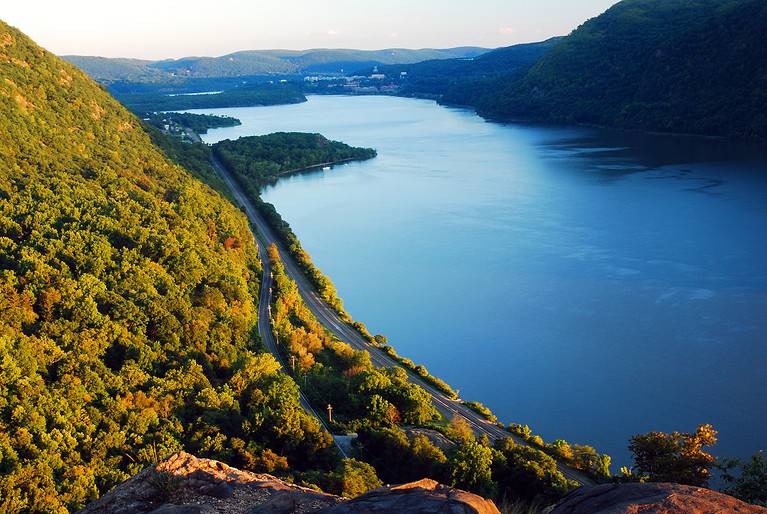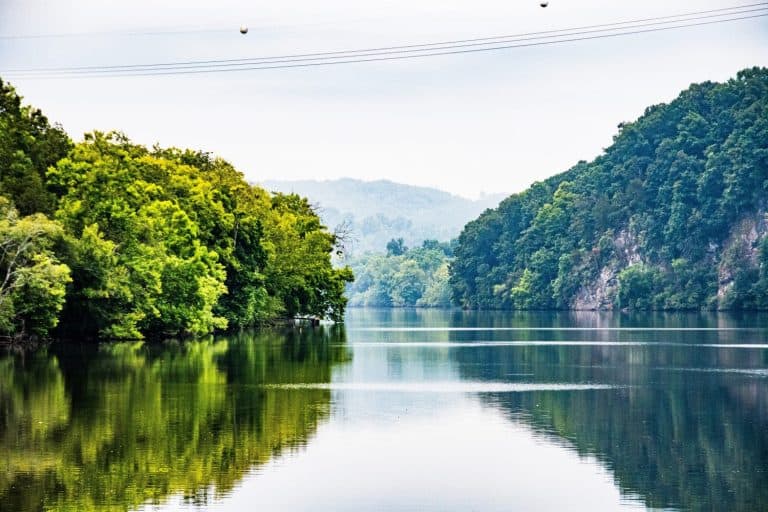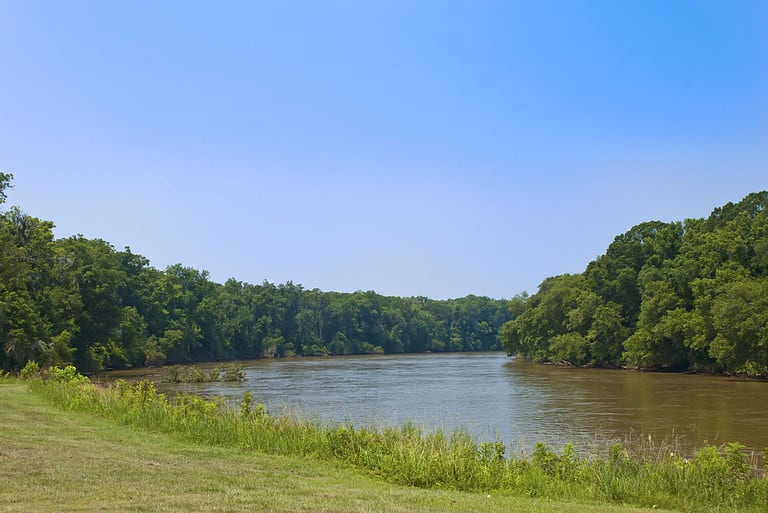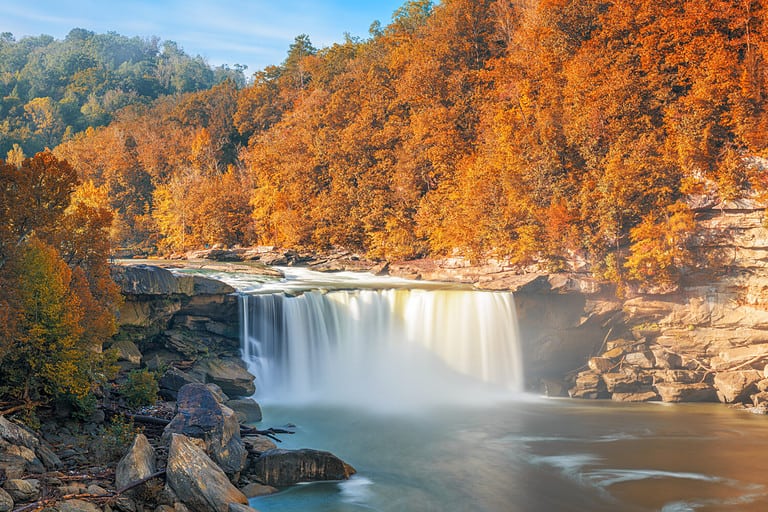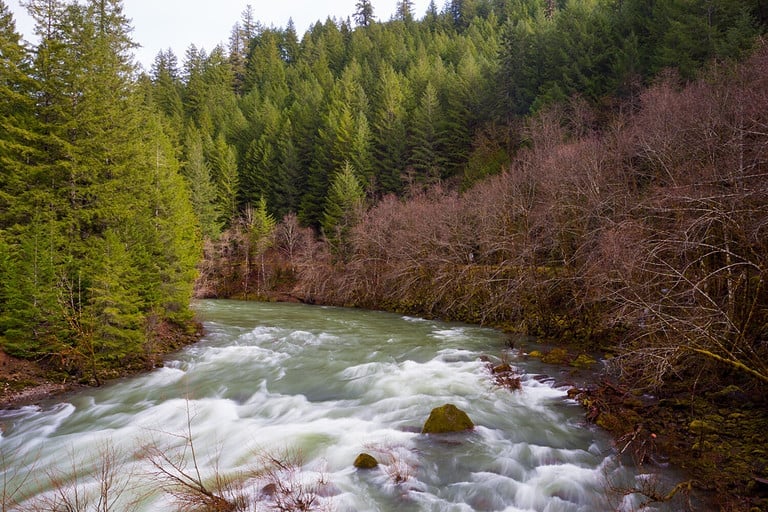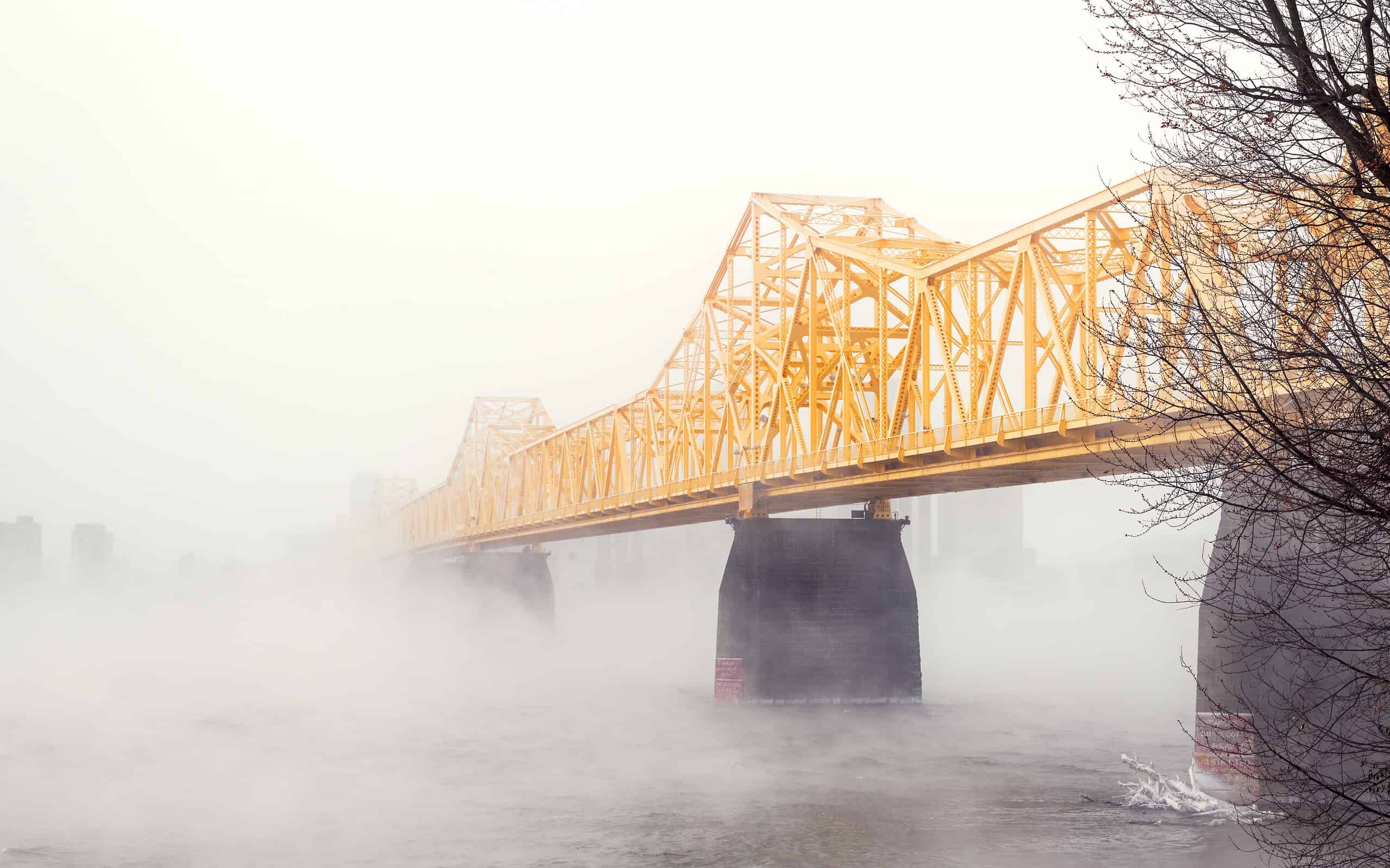

The Ohio River is 981 miles long and flows from Pittsburgh, Pennsylvania, to its mouth on the Mississippi River in Cairo, Illinois. Not only is it the third-largest river by discharge volume in the United States, and the largest tributary of the Mississippi, but it’s also the sixth-oldest river on the North American continent. Five million people rely on its currents for their drinking water. The word Ohio itself comes from the Seneca word ‘Ohi:yo,’ which means good river. Let’s learn more about the fish and freshwater animals that call the Ohio River home.
Gizzard Shad
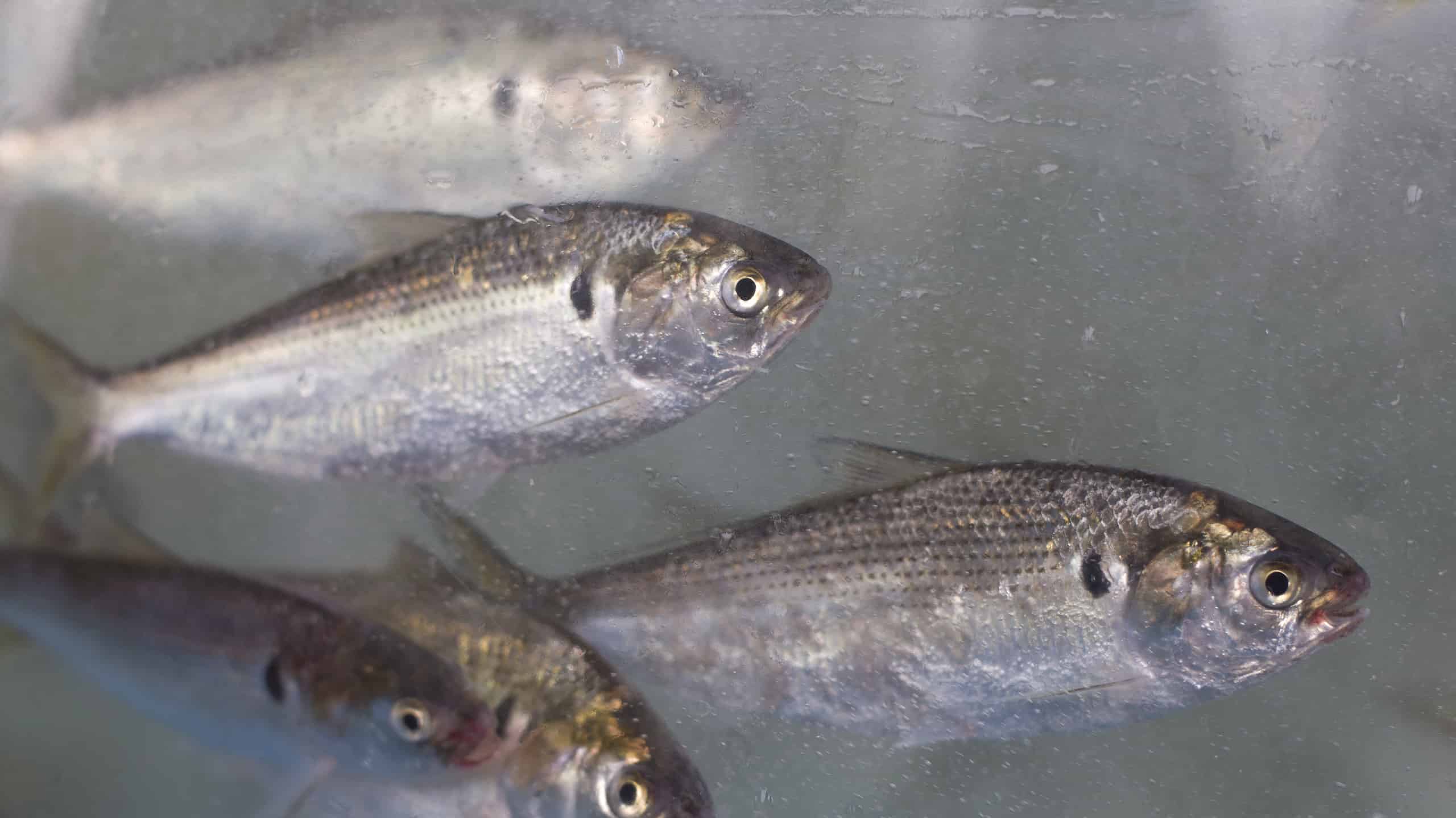
Gizzard shads can grow up to a foot long.
©iStock.com/bong hyunjung
Also known as mud shads, gizzard shads (Dorosoma cepedianum) are members of the herring family and can be found in the Ohio River, as well as other waterways in the state. Mature gizzard shads have deep bodies that are bluish-gray on the back, fading to silver on the sides and belly. These fish are often integral to their ecosystems, whether they live in the Ohio River or even as far south as Mexico. They drive changes in plankton populations, and in turn, affect fish that feed on plankton. In the Ohio River, gizzard shads are a common sight. Fishermen routinely use them as bait to catch larger game fish. Despite the above picture showing gizzard shads in an aquarium having smaller sizes, these fish can grow up to and over a foot long.
Bluegill
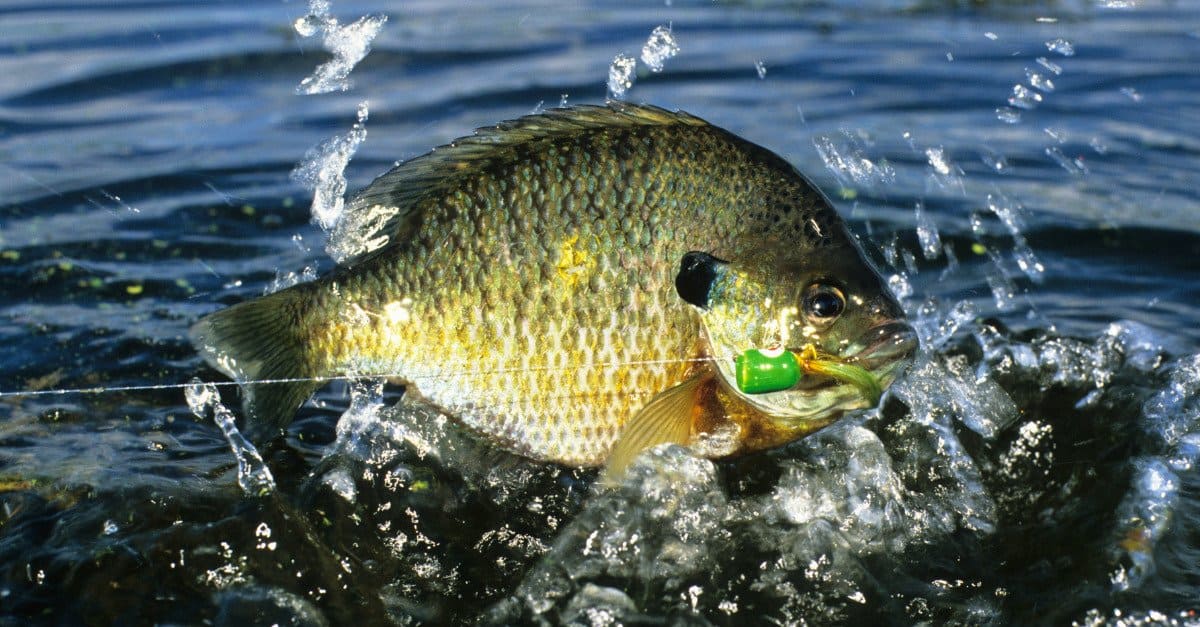
Bluegills are often sought after by fishermen.
©iStock.com/stammphoto
These fish are among the most common species that live in the Ohio River. Bluegills (Lepomis macrochirus), sometimes called coppernoses, are native to freshwater streams, rivers, lakes, and wetlands east of the Rocky Mountains. They have deep, slab-sided bodies that range in color, but their ear flaps are always black. Depending on their habitat and population size, bluegills can grow between six and ten inches long. They subsist on insects, larvae, small fish, and eggs. They are active year-round; however, they make the most prominent showing in Ohio during spawning season between mid-May and mid-June when water temperatures are agreeable. Though they are common in Ohio, you’ll have the best chance at finding them in the clearer parts of the Ohio River. Relatively prized by both anglers and fly fishermen, bluegills typically take to live bait such as red worms or insects.
Pumpkinseed
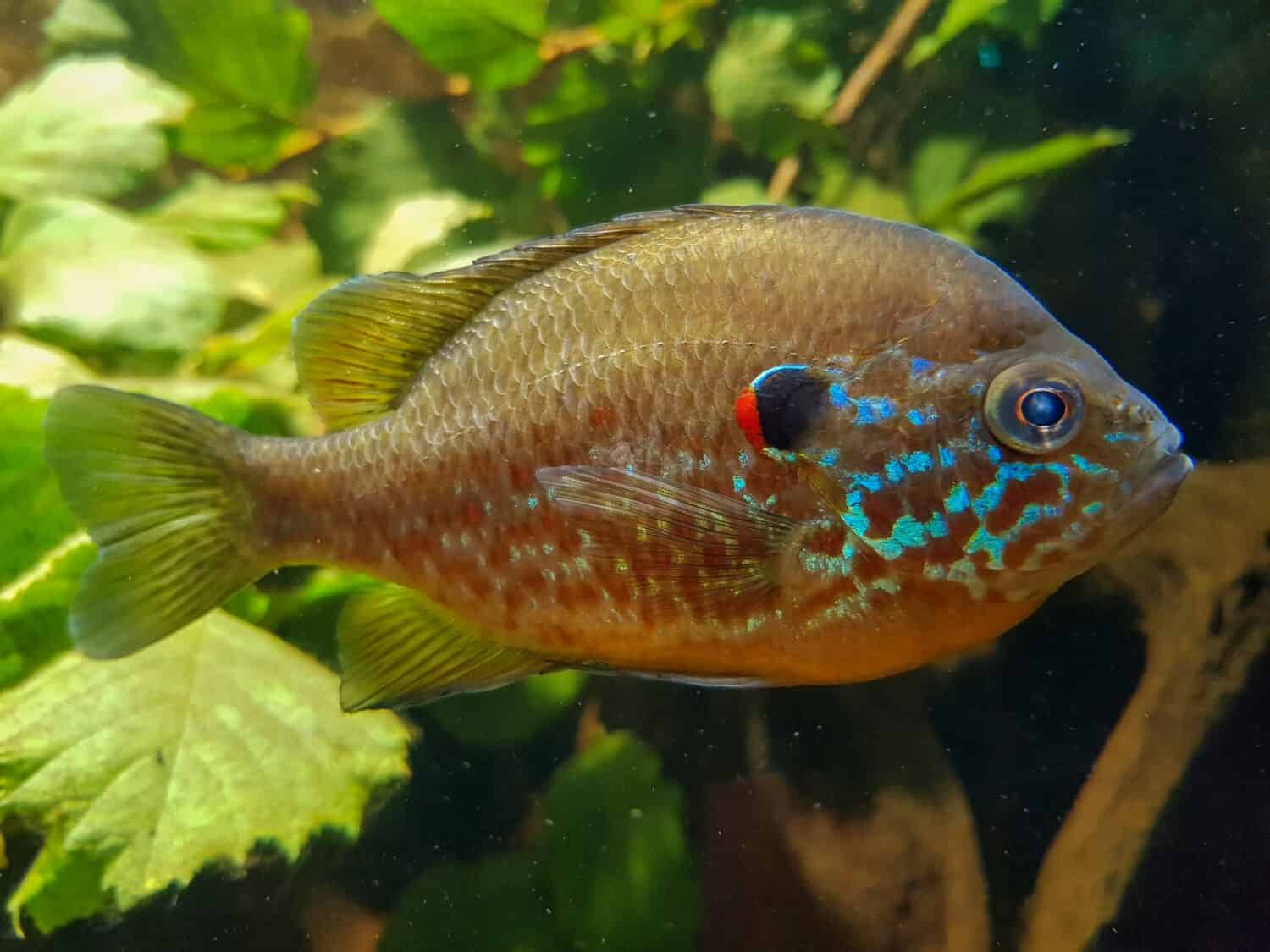
These fish prefer calmer waterways with vegetation.
©Fabian Junge/Shutterstock.com
Pumpkinseeds get their name from their vibrantly colored and deep bodies, which feature breasts and bellies with a distinctly orange or orange-yellowish color. This coloring extends to their ear flaps, which are black but bordered with orange-red speckles. Pumpkinseeds grow to between five and eight inches long. They subsist on insects, snails, and even some fish. While these brightly colored fish are endemic to the eastern part of North America, they are more of a rare sight in the Ohio River. That said, they can be found in considerable numbers in areas containing Lake Erie’s drainage. Wherever they are, pumpkinseeds prefer calmer waters with plenty of aquatic plant life. When fished, anglers catch them best with small, artificial lures or flies.
Spring Peeper
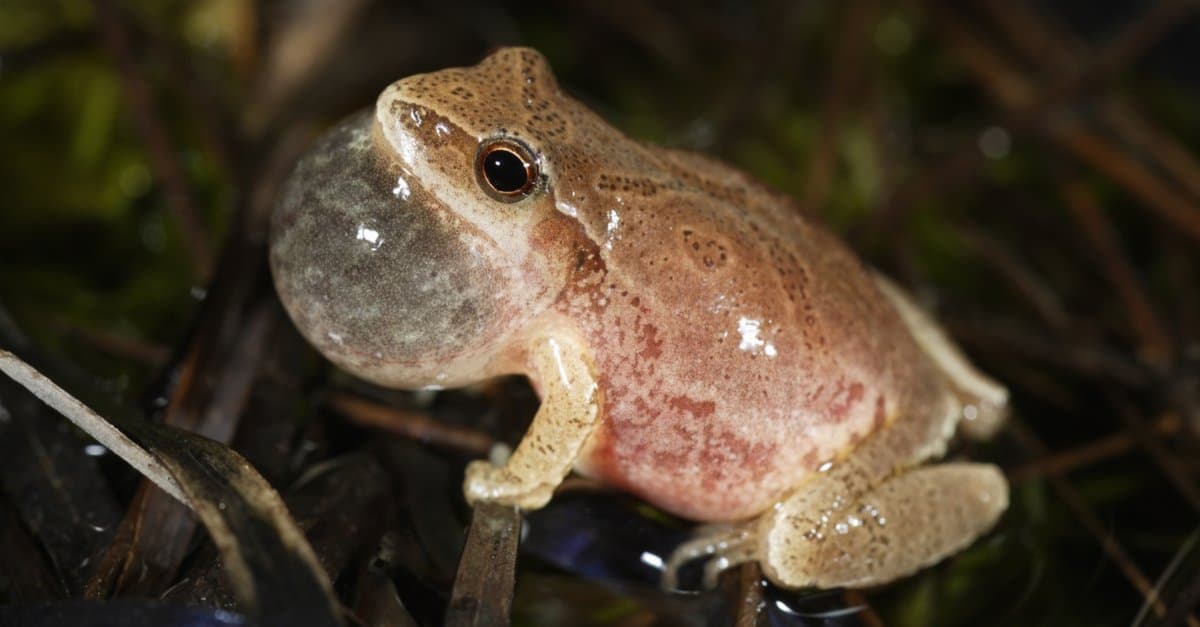
You’ll hear spring peepers before you see them.
©Paul Tessier/Shutterstock.com
Spring peepers (Pseudacris crucifer) are small chorus frogs commonly found throughout the eastern United States and Canada. They come in a range of colors, including tan, yellow, olive green, and even pink. Most spring peepers, however, have distinct toepads and considerable sexual dimorphism between males and females. These frogs also have vocal sacs that expand and contract like balloons to produce the peculiar peeping sound that they are named after. Remarkably, spring peepers can change their skin color depending on the temperature and amount of light.
When faced with atmospheric shifts or potential threats, spring peepers can alter their shade in as little as 15 minutes. While they may be hard to spot with your eyes, you’ll probably be able to sense their presence by their chirps and peeps. That said, you have the best chance of seeing them during the first weeks of spring. They become active when there is still some frost on the ground, but enough seasonal change to commence their breeding period. In terms of the Ohio River, people usually see spring peepers in the moist woodlands around its tributaries and offshoots that have more permanent placements. This helps them avoid predators.
Belted Kingfisher
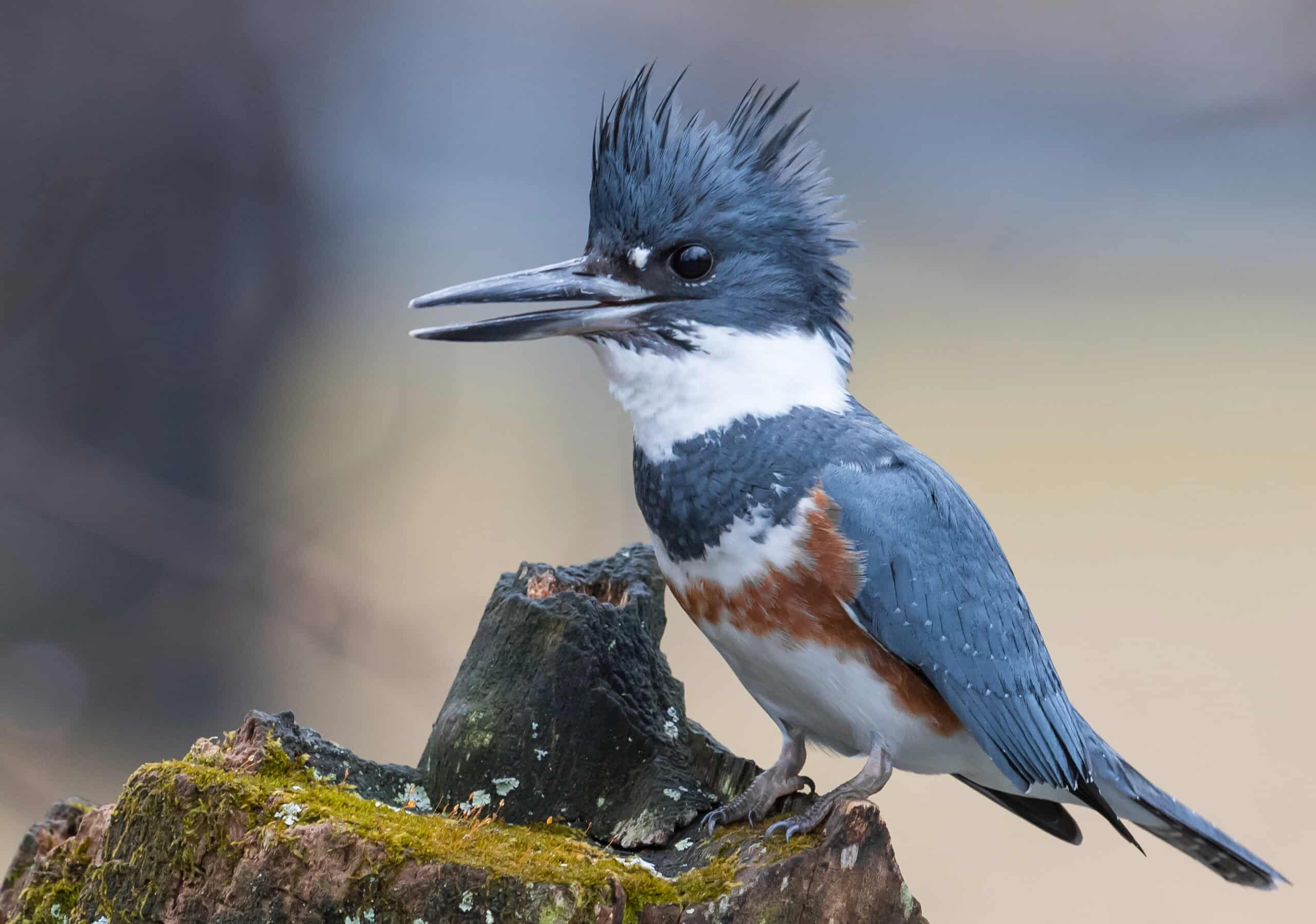
Belted kingfishers are often seen perched on posts or trees by the shoreline.
©Harry Collins Photography/Shutterstock.com
One of the more punk-rock looking birds that live around the Ohio River, belted kingfishers have large heads with shaggy, mohawk-like crests. They also have long, hefty black bills with grey bases. While these features are pretty common in kingfisher species, belted kingfishers have reverse sexual dimorphism. Males are usually the vibrant ones, but it’s the female belted kingfishers that have the more brightly colored features. On average, kingfishers feature a 19-23 inch wingspan and weigh between four and six ounces.
These birds are seasonal in many parts of North America. Around the Ohio River, however, belted kingfishers live year-round. When it comes to spotting them, belted kingfishers spent most of their time perched on high-profile vantage points. These include trees, wooden posts, or other vertical landmarks. This makes them a common sight on the banks of the Ohio River. There, they routinely divebomb the water headfirst to grab small fish, amphibians, and crustaceans. They even go for some berries once in a while.
North American River Otter
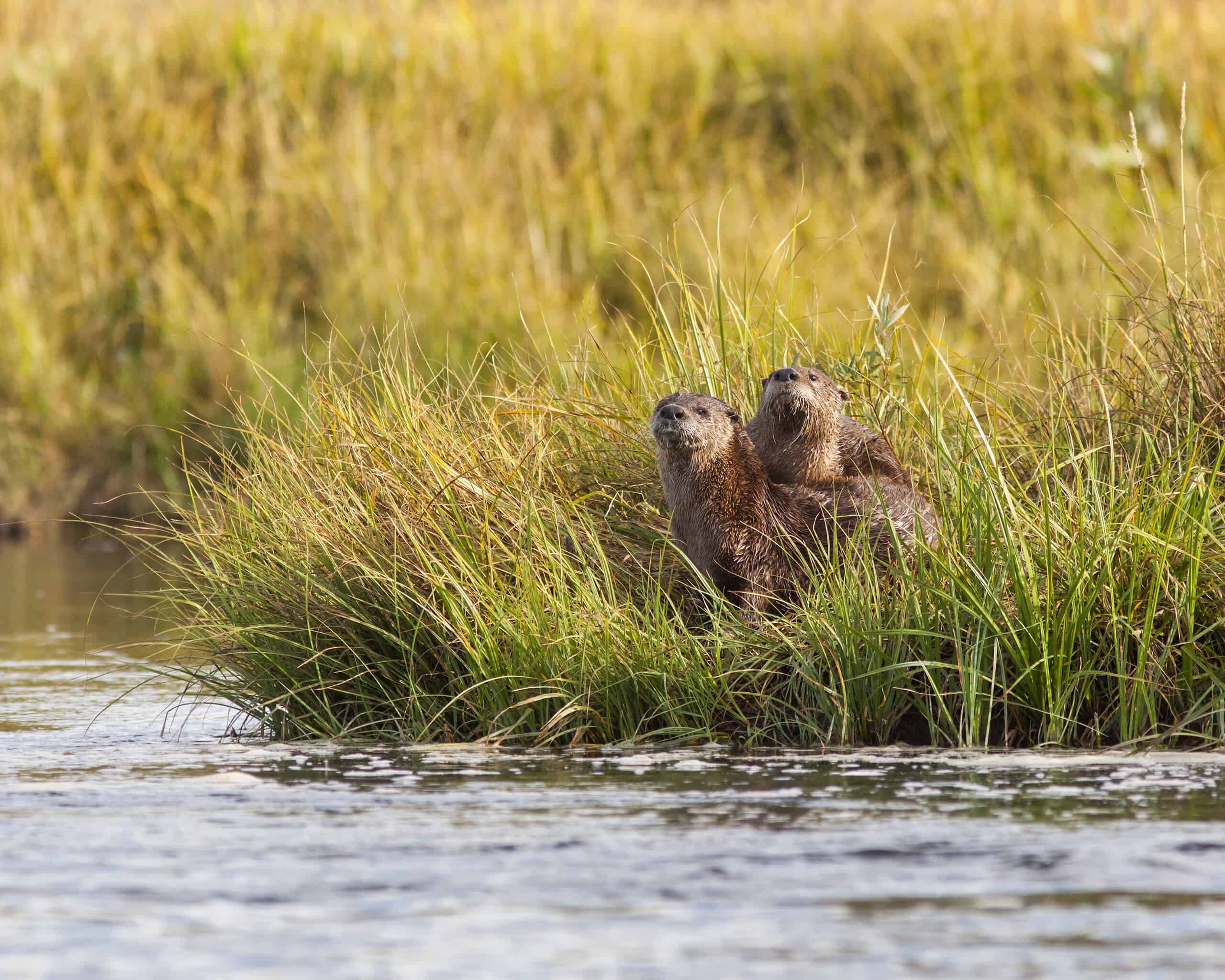
Ohio has helped reintroduce river otters, but also considers them pests.
©Jay Petersen/Shutterstock.com
One of the cutest animals found in and around the Ohio River is the North American River Otter. These semiaquatic mammals and members of the weasel family are endemic to North America. They typically construct burrows near the water’s edge in lakes, swamps, tidal flats, and rivers. North American river otters venture out of their burrows and hunt for fish, amphibians, clams, snails, and even small turtles. Over the last century, North American river otters have experienced significant reductions in their habitats. A hundred years ago, trappers extensively hunted North American river otters for their fur. Nowadays, however, they fall victim to pollution, which affects them quickly and considerably.
North American River otters are welcome in many parts of the country, but they have a contentious relationship with authorities in the Ohio River basin. According to the Ohio Department of Natural Resources, North American river otters enjoyed a large population in the state before being extirpated in the early 20th century. In 1986, however, the Ohio Division of Wildlife initiated a seven-year reintroduction program. What started as 123 otters being released into the eastern side of Ohio has grown into a population of approximately 6,500 river otters. The state keeps a careful eye on its otters for other reasons, too. It also considers North American river otters as pests because they damage private ponds and fish hatcheries.
Green Sunfish
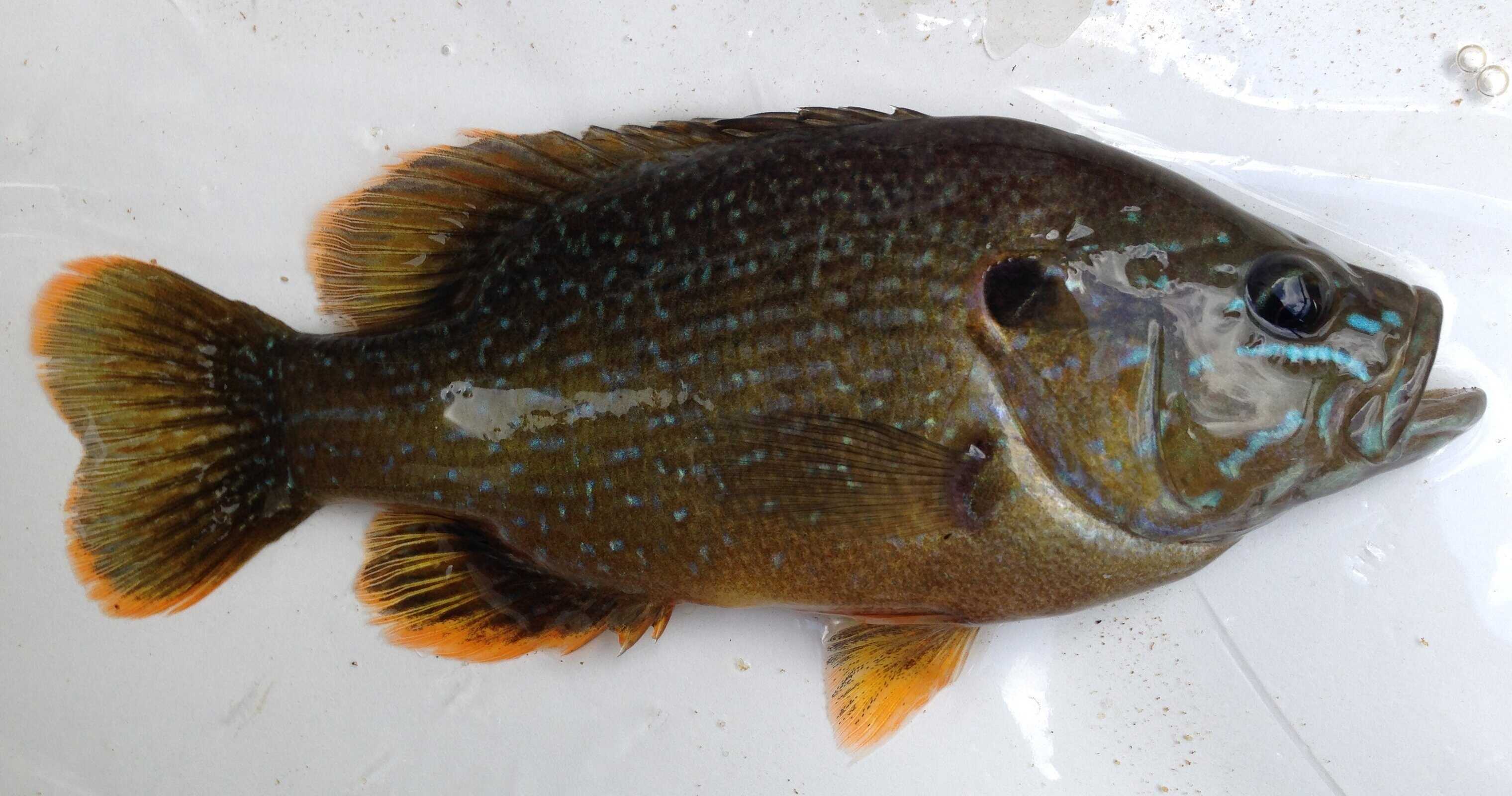
Green sunfish are considered an invasive species in many places.
©Fredlyfish4/Shutterstock.com
Another type of fish that people often find or catch in the Ohio River is the green sunfish. These fish are native to a wide swath of North America, from the Rocky Mountains in the west to the Appalachian Mountains in the east. Longitudinally, they range from the Hudson Bay basin in Canada all the way down to the Gulf Coast into Northern Mexico. These fish have somewhat compressed bodies with a bluish-green back color and a more yellow to white belly. Green sunfish typically grow between three and seven inches. They subsist on insects, mollusks, and smaller fish. They also eat hard-bodied creatures, which is rare for fish, but green sunfish accomplish the challenge thanks to their relatively large mouths. Unlike other sunfish, green sunfish can handle a wide variety of water conditions and aquatic environments.
While they are specifically indigenous to bodies of water like the Mississippi River and the Great Lakes, people have introduced green sunfish practically everywhere. This has resulted in unforeseen consequences. Green sunfish are aggressive and known to chase away other fish from habitats, particularly other types of sunfish. This has resulted in green sunfish absolutely decimating local fish populations. States like Arizona, California, and Georgia consider them an invasive species. New Jersey requires anglers to destroy any green sunfish they catch and report their presence to state fishery biologists.
Wood Duck
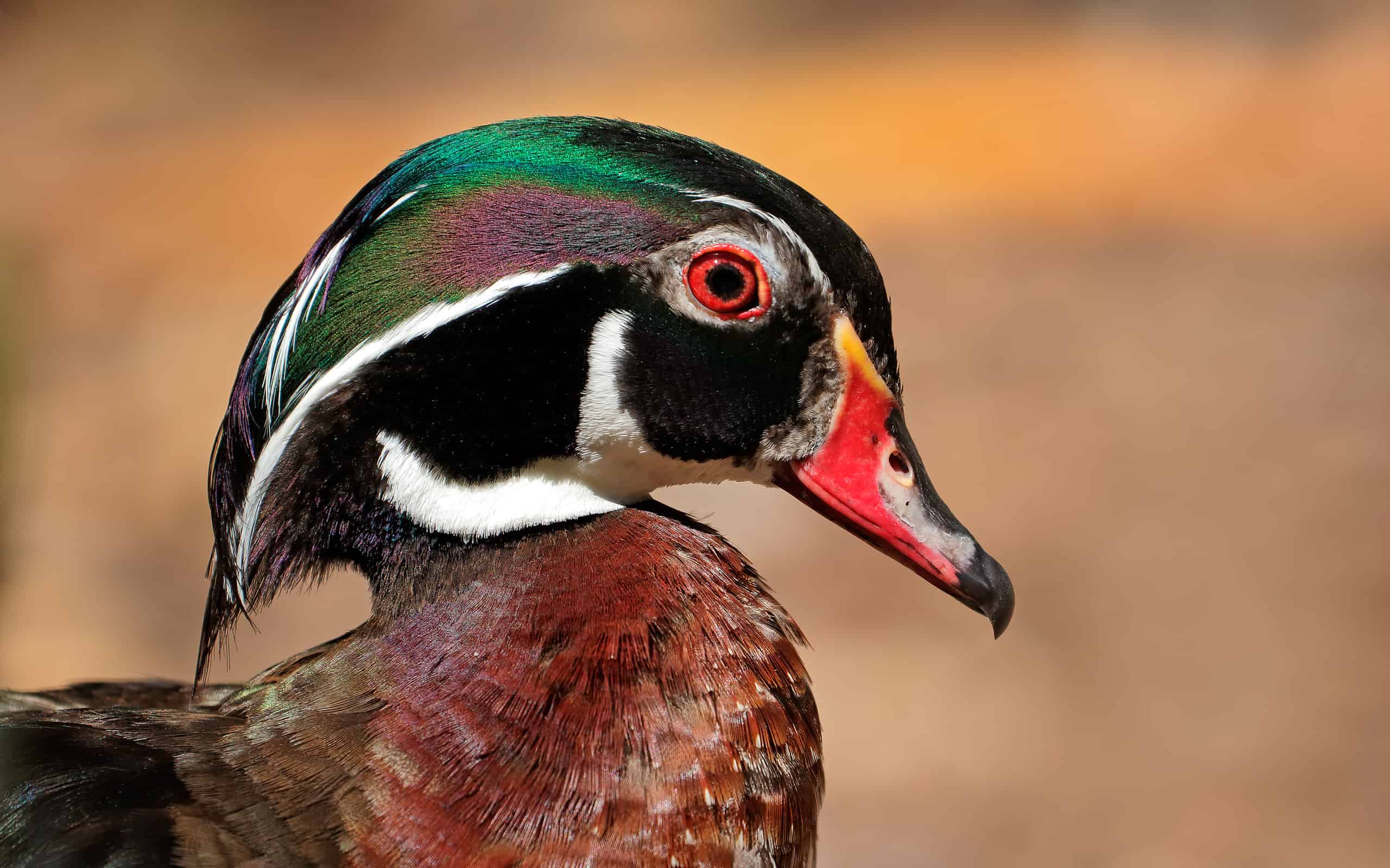
Male wood ducks have dazzling plumages.
©EcoPic/iStock via Getty Images
Wood ducks are arguably some of the most majestic, vibrant-looking creatures that live on the Ohio River. Also called the Carolina duck (Aix sponsa), males of this species feature dazzling multicolored and reflective plumages, as well as red eyes, and white flares down their necks. While females have less colorful presentations, both genders have crested heads. On average, wood ducks grow to about 20 inches in length and have a wingspan that reaches between 25 and 29 inches. This makes them slightly smaller than the mallard. While they mainly eat seeds, acorns, and berries, wood ducks are also known to eat insects and other invertebrates. Wood ducks have a pretty widespread population, as they reach from Canada down to Mexico. However, only certain parts of North America are home to these ducks year-round. Ohio and its waterways are one of them.
When it comes to habitats, wood ducks are pretty versatile. They are at home in wooded swamps, ponds, shallow lakes, and even creeks throughout North America. Wood ducks get their name, however, from the fact that they are one of the only duck species that nest in trees. This puts them in competition with other species like grey squirrels and even birds of prey, who also use trees and wood for nesting. Wood ducks may spend most of their time on the water where they feed, but their penchant for wood houses results in many of them nesting up to a mile away from water sources.
This is peculiar for ducks. Wood ducks make it work, however, as they have expanded their breeding range in recent years as far as the Great Plains. People across the world can’t deny the wood duck’s staying power, either. Populations have sprung up in the United Kingdom due to escapes from waterfowl collections, which they are routinely included in, thanks to their dazzling appearances.
Double-Crested Cormorant
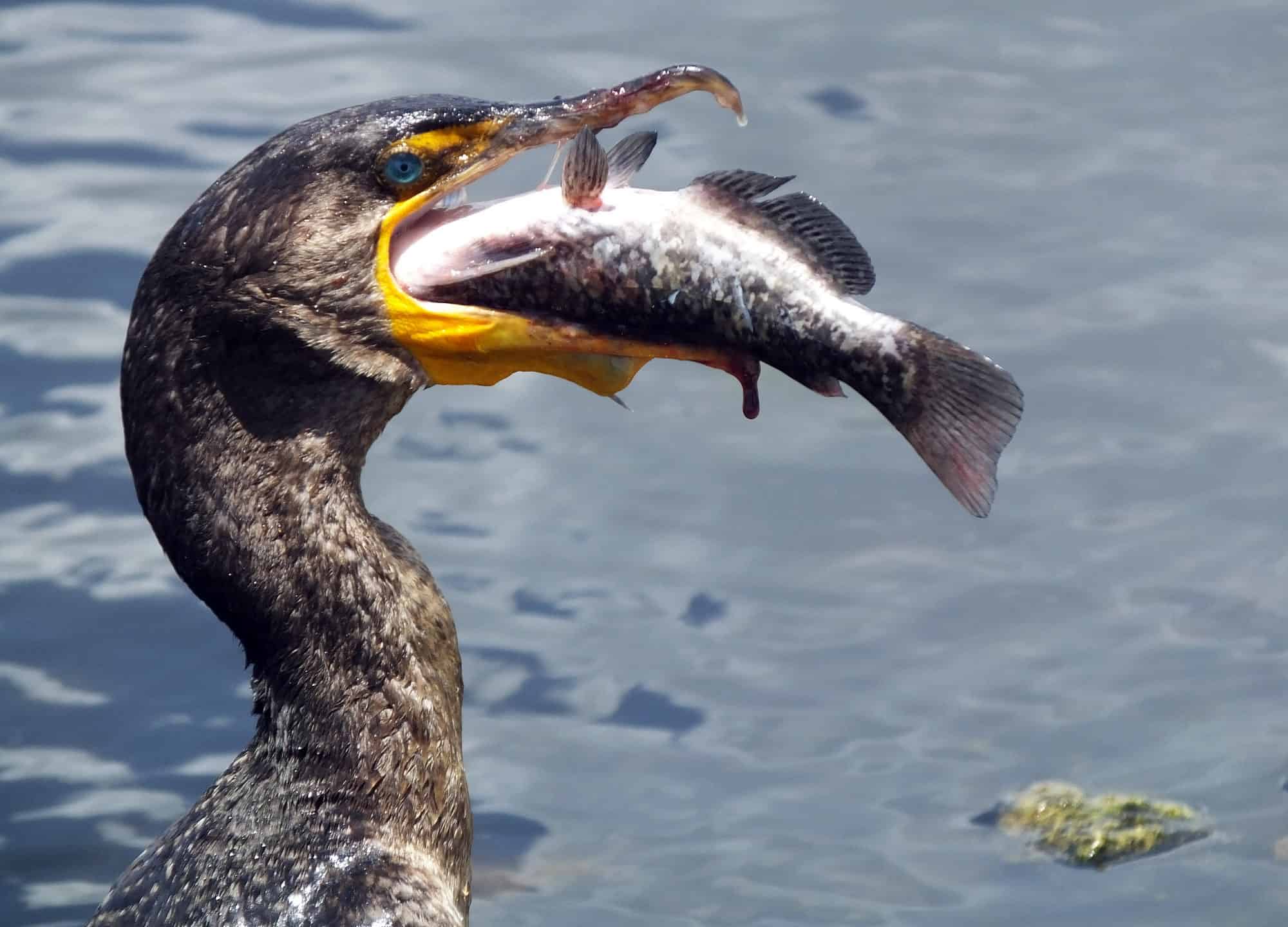
Once threatened by pesticides, double-crested cormorants have made a comeback.
©iStock.com/passion4nature
Double-crested cormorants (Nannopterum auritum) are another striking-looking type of waterbird. They are distributed pretty widely across North America, from the southern islands of Alaska down to Florida and Mexico. They feature entirely black plumages except for slight bare patches of orangish-yellow facial skin. When it comes to the Ohio River, double-crested cormorants stick to the open waterways of the basin. There, they hunt for fish by swimming low in the water, often with just their neck and heads visible above the surface. Remarkably, these birds can dive down over 20 feet for over a minute to grab fish.
In the latter half of the 20th century, North America’s double-crested cormorant population steeply declined due to the use of pesticides like DDT. Historically, these birds also sometimes ran afoul of humans who competed with these effortlessly good natural fishermen. In recent years, however, double-crested cormorant populations have increased. Experts suggest they’ve returned to glory thanks to the discontinued use of DDT as well as the increase in aquaculture ponds in southern wintering grounds.
Redear Sunfish
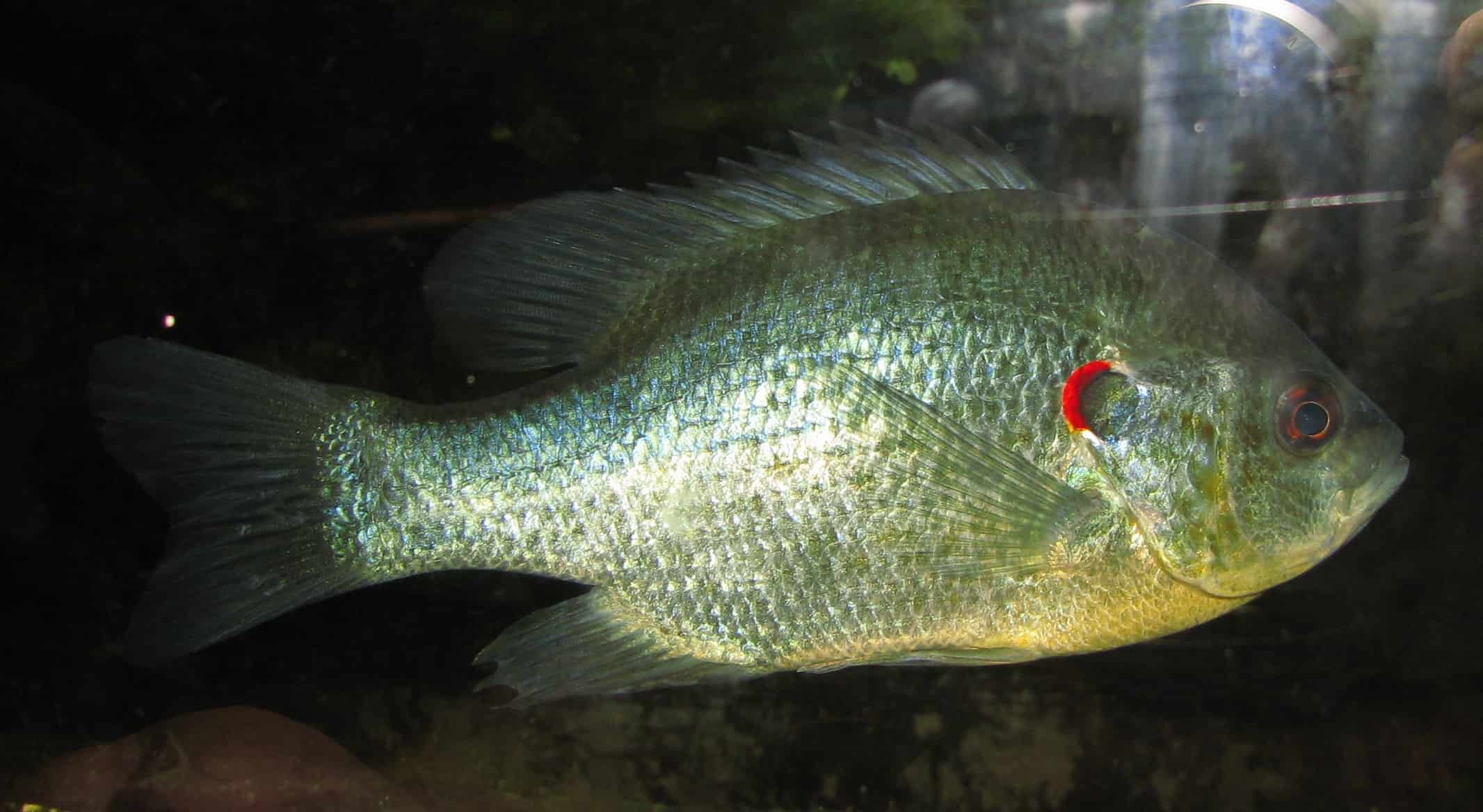
There are many types of sunfish, but redears like clear water with plenty of vegetation.
Redear sunfish are another type of sunfish found in Ohio’s waterways. They have deep sides like bluegills, but with black and red or orange ear flaps. They grow to about nine inches on average. Redear sunfish usually feed on crayfish, insects, and small fish. Thanks to specially modified teeth in their throats, redear sunfish can crush tough mollusk shells and extract the snails from within to eat. Their ability to do this and penchant for eating snails has led to some people calling them ‘shellcrackers.’ Typically, redear sunfish spawn in the early summer months when water temperatures are agreeable.
While they are not native to Ohio, people have introduced this sunfish variety to lakes and ponds throughout the state. If you see them in the Ohio River, it will be in clear waters with vegetation. They also seem to prefer submerged tree stumps. Catching them usually requires attaching live bait to small hooks. Fishermen believe the males are easiest to catch because they forcefully defend spawning nests along shorelines during the breeding season.
Eastern Newt
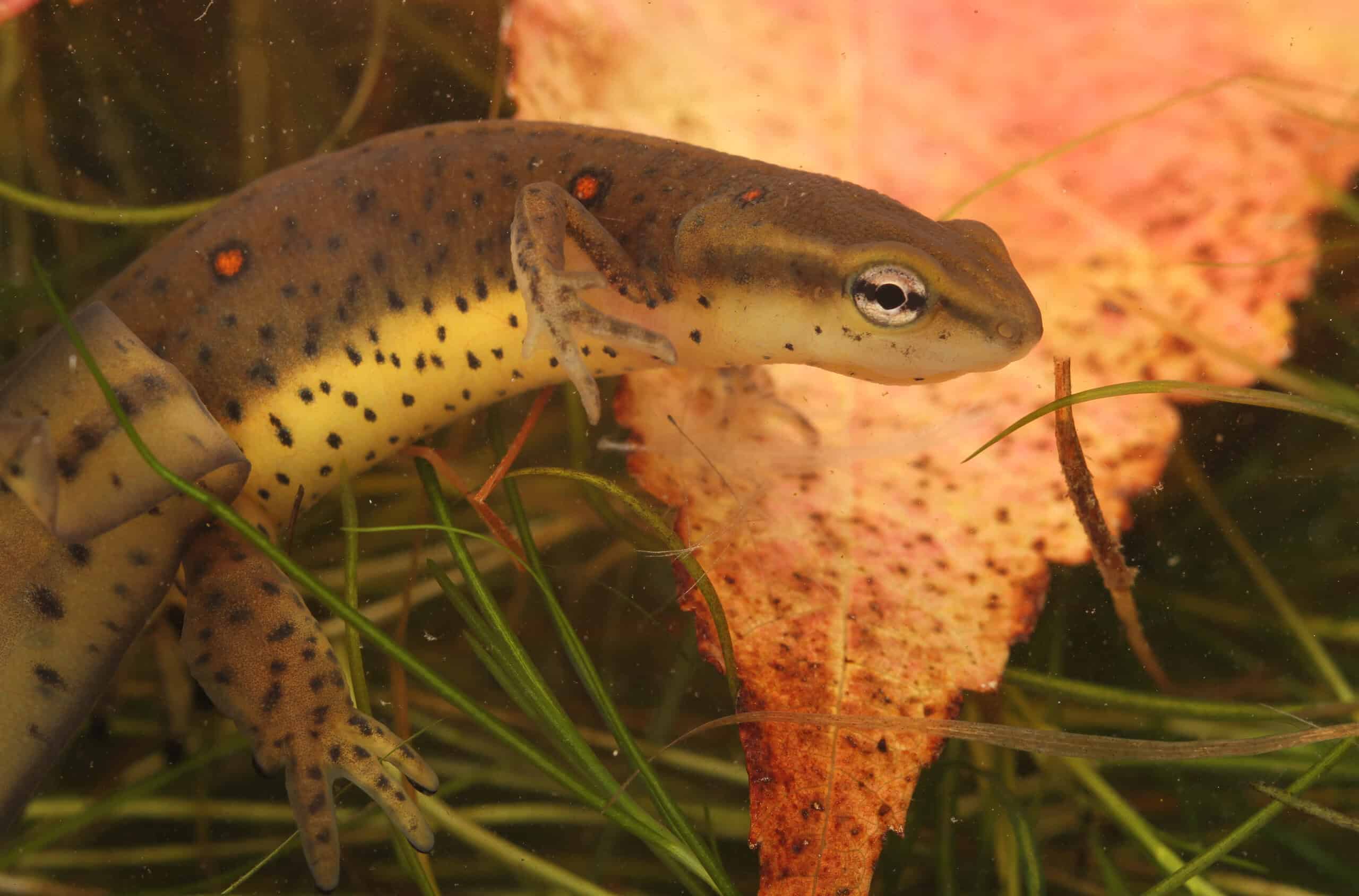
These newts prefer moist areas with slow-moving water.
©Michael Benard/Shutterstock.com
These intermediate-sized amphibians can be commonly found in and around the waterways of eastern North America, including places like the Ohio River. They feature greenish-colored backs and yellowish-colored bellies with somewhat iridescent speckles across their bodies. While predators routinely hunt other amphibians in the Ohio River valley, eastern newts aren’t very tasty. That’s because they produce tetrodotoxin, a potent neurotoxin that serves as an effective defense mechanism.
Eastern newts prefer coniferous and deciduous forests where they stick to shallow water sources like swamps, quiet streams, and calm ponds. That said, males prefer more open habitats while females stick to more earthbound, forested areas. In general, however, eastern newts are most active during warm rainy periods of the year. When the weather is too dry, they hide under leaf litter or other places with plenty of moisture.
Muskrat
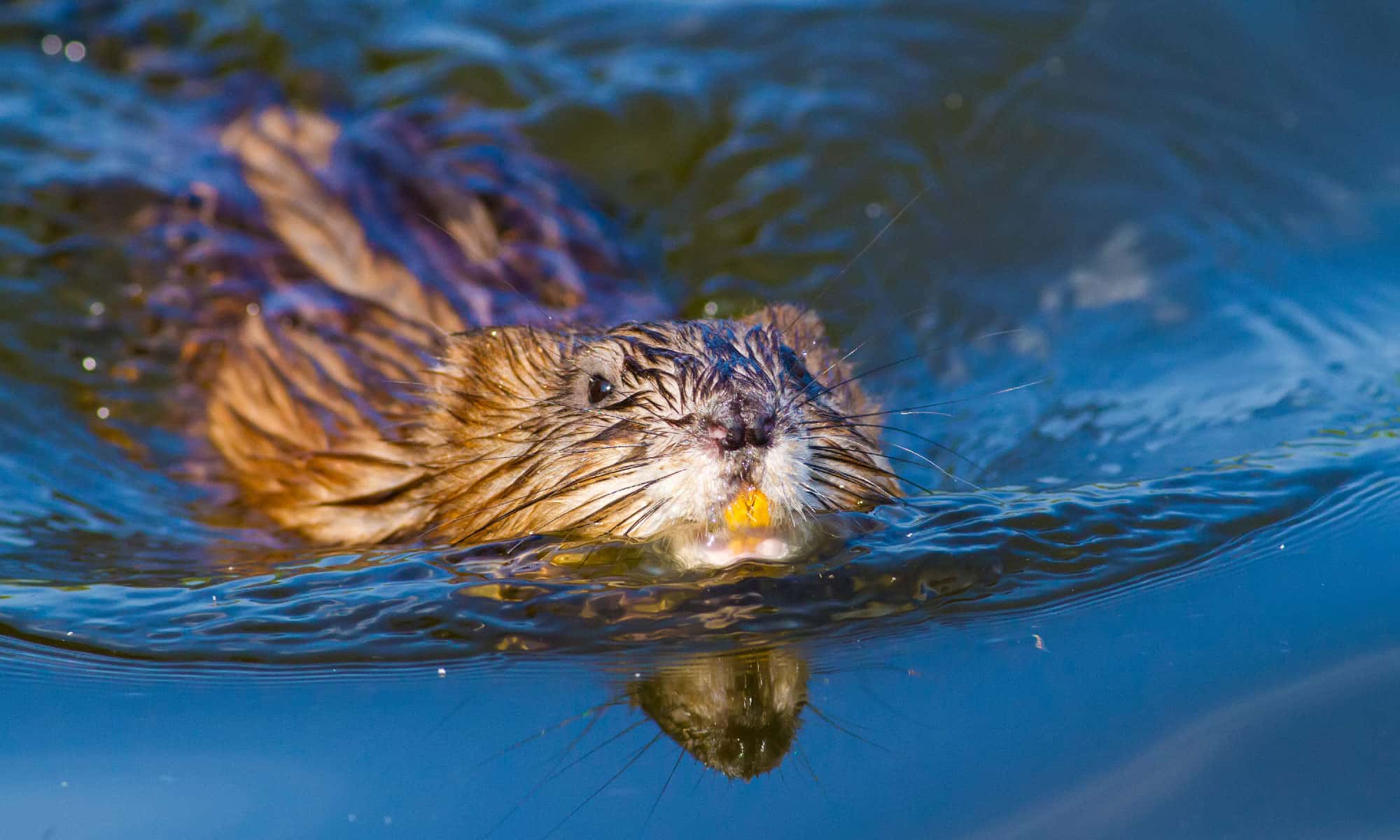
People sometimes mistake muskrats for beavers.
©Yuriy Balagula/Shutterstock.com
Another one of the few mammals that calls the Ohio River home is the muskrat. Often confused with beavers, muskrats feature webbed hind feet, scale-covered tails, and thick brown-colored fur. Muskrats spend most of their time in the water and can stay submerged for up to fifteen minutes at a time. While they usually eat aquatic vegetation, they are known to eat small creatures as well. You can see them best along the marshy banks of the Ohio River.
Rock Bass
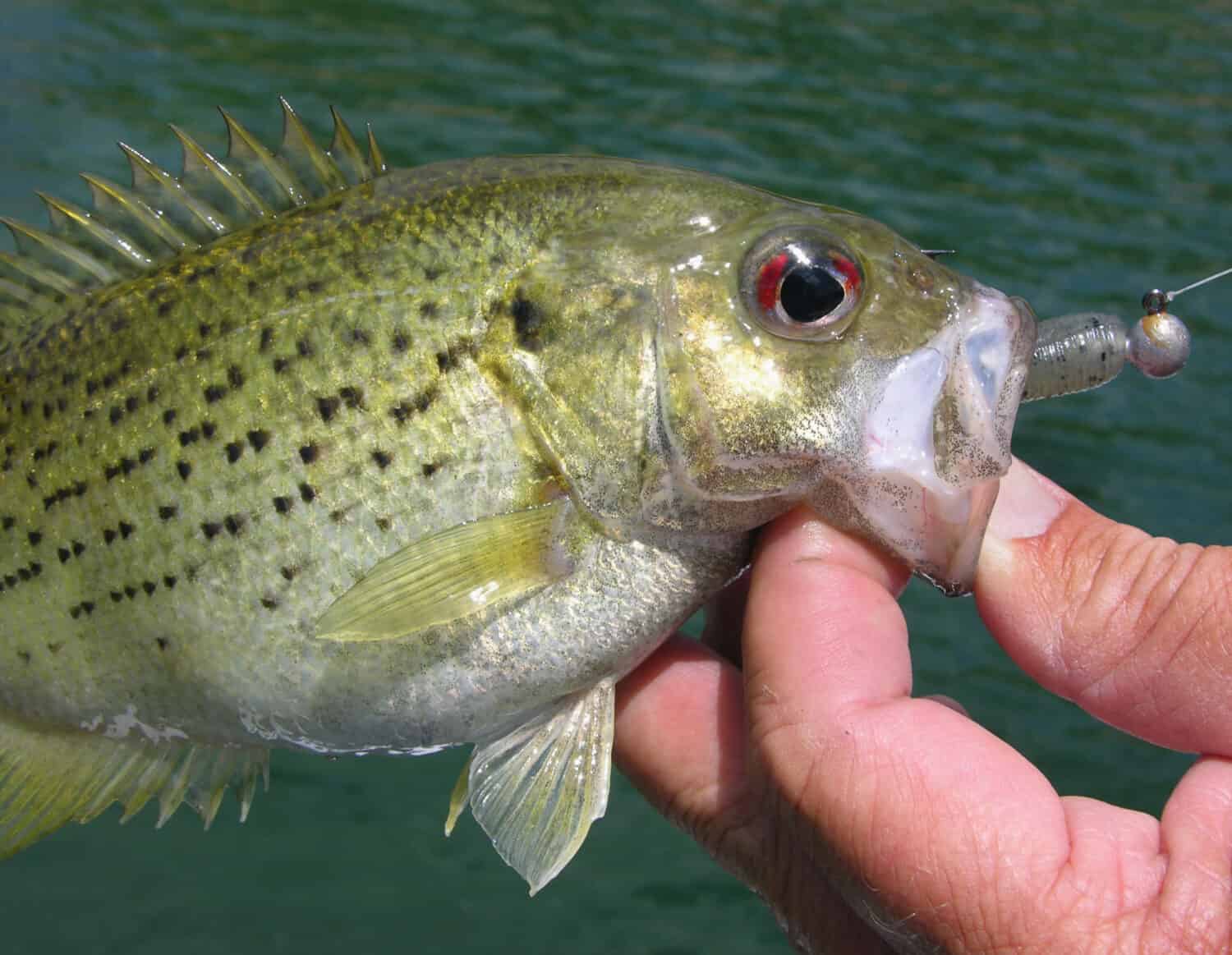
Fishermen often find rock bass around large boulders and patches of aquatic vegetation.
©Steve Brigman/Shutterstock.com
Rock bass are one of the more widespread types of fish in Ohio. They have thick bodies with dark green coloring that also contains some accents of bronze or copper-colored iridescence. They also have large mouths with upper jaws that noticeably extend past the middle of their eyes. Rock bass grow to about seven inches long and subsist on aquatic insects and small fish. They are pretty common across the state of Ohio, and fishermen often find them hanging out around large boulders, stumps, or dense patches of vegetation. In general, they prefer waterways that are clear and feature gravel beds. Though smaller than smallmouth bass, rock bass are distinguished by six spines in their anal fin.
Northern Water Snake
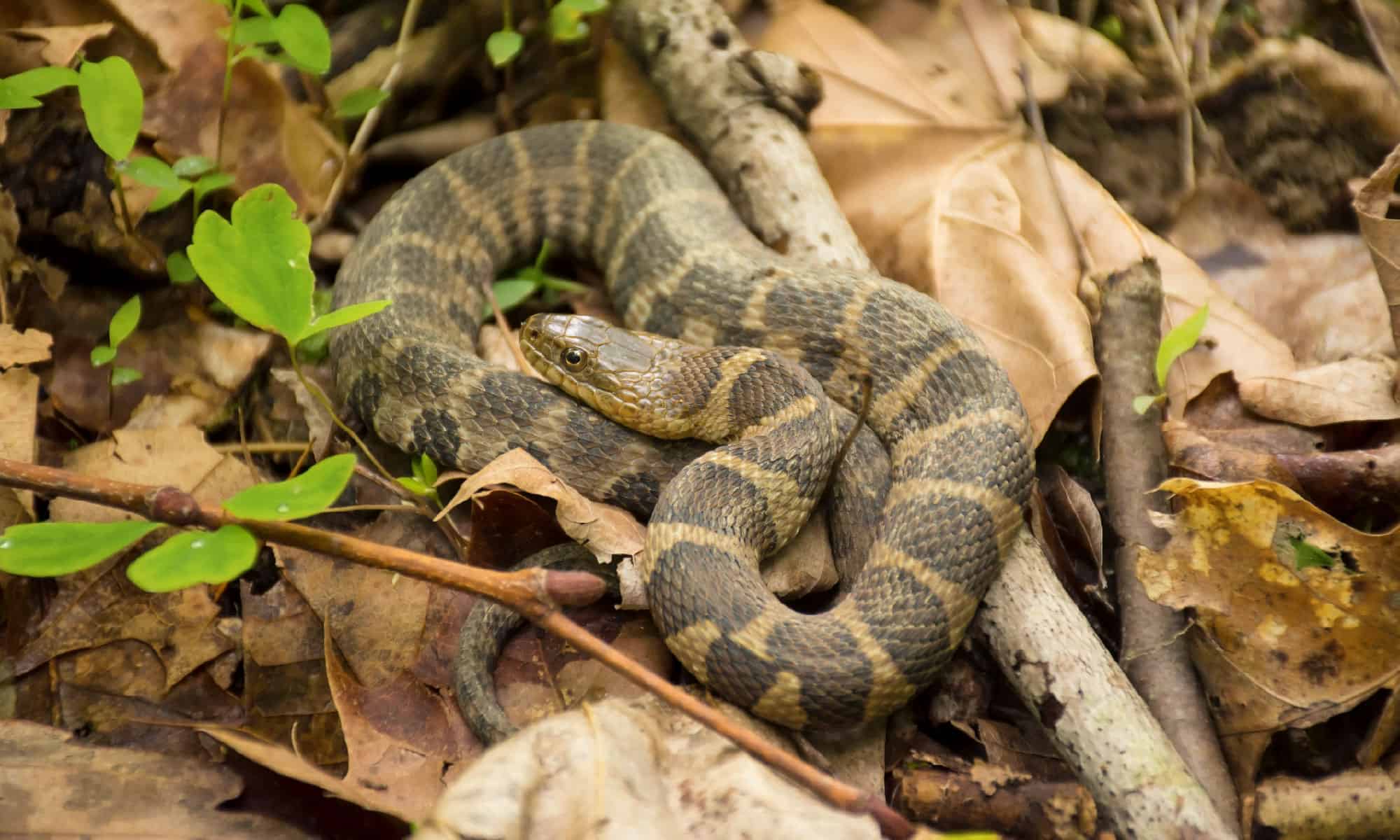
Water snakes are nonvenomous but can deliver painful bites.
©iStock.com/IcemanJ
Also called common watersnakes, northern water snakes (Nerodia sipedon) are one of the larger water snakes native to North America. Despite their large size and relatively threatening presence, northern water snakes are nonvenomous, but people often mistake them for far more dangerous cottonmouths. They feed on small fish, tadpoles, crayfish, and a host of other creatures in aquatic environments. During the daytime, they usually hunt along the shoreline. At night, northern water snakes go after small fish like minnows in shallow water.
The Lake Erie subspecies of this snake was once endangered. With the introduction of round gobies to the area, however, the snakes now have plenty of food to boost their numbers back to their former glory. They may not be venomous, but northern water snakes will often defend themselves if cornered and can deliver painful bites. People most often spot them when they are sunning on rocks along the banks of the Ohio River.
Sauger
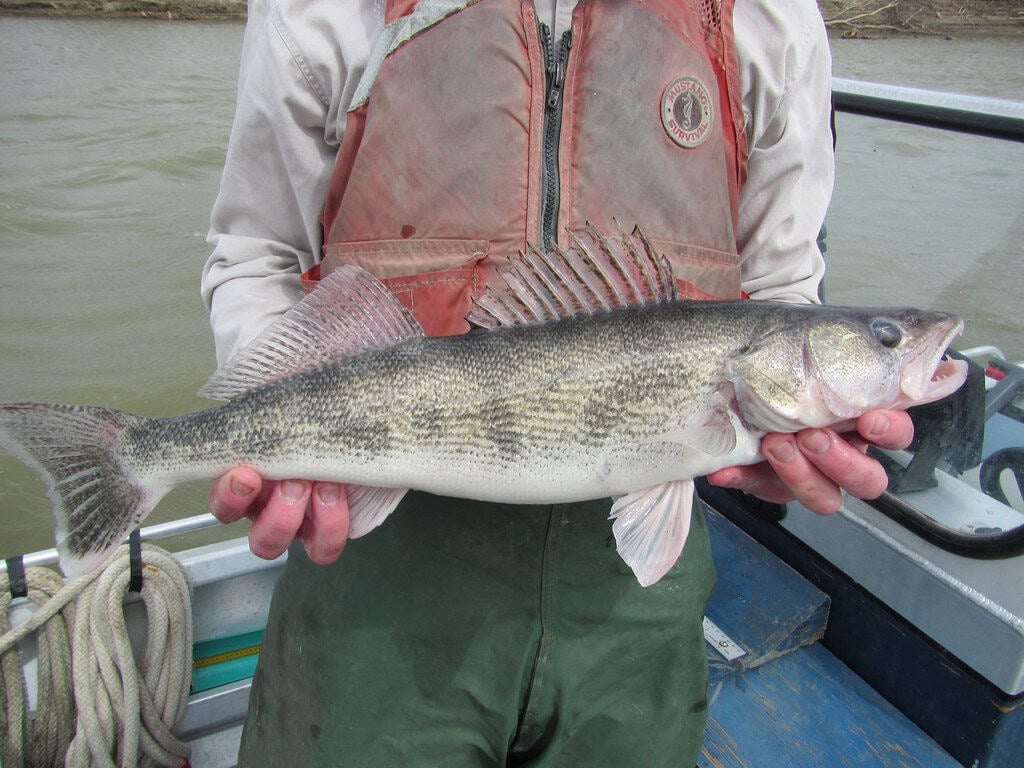
Saugers are commonly found in the Ohio River.
©"Sauger" by USFWS Mountain Prairie is licensed under PDM 1.0. - Original / License
One of the more commonly found fish in the Ohio River is the sauger. They have sharp teeth, cloudy eyes, and cylindrical bodies with blotches running along the sides. Saugers grow to between nine and fourteen inches but weigh less than a pound. That said, some specimens in Ohio grow to nearly seven pounds. They usually stick to areas with plenty of aquatic insects and small fish, which they hunt during the low-light hours of dawn and dusk. They prefer areas with large, slow-moving currents in rivers and cool, shallow areas in lakes. When it comes to the Ohio River, in particular, saugers are usually found in tailwaters below dams or in major tributaries during the late fall and early spring.
Paddlefish
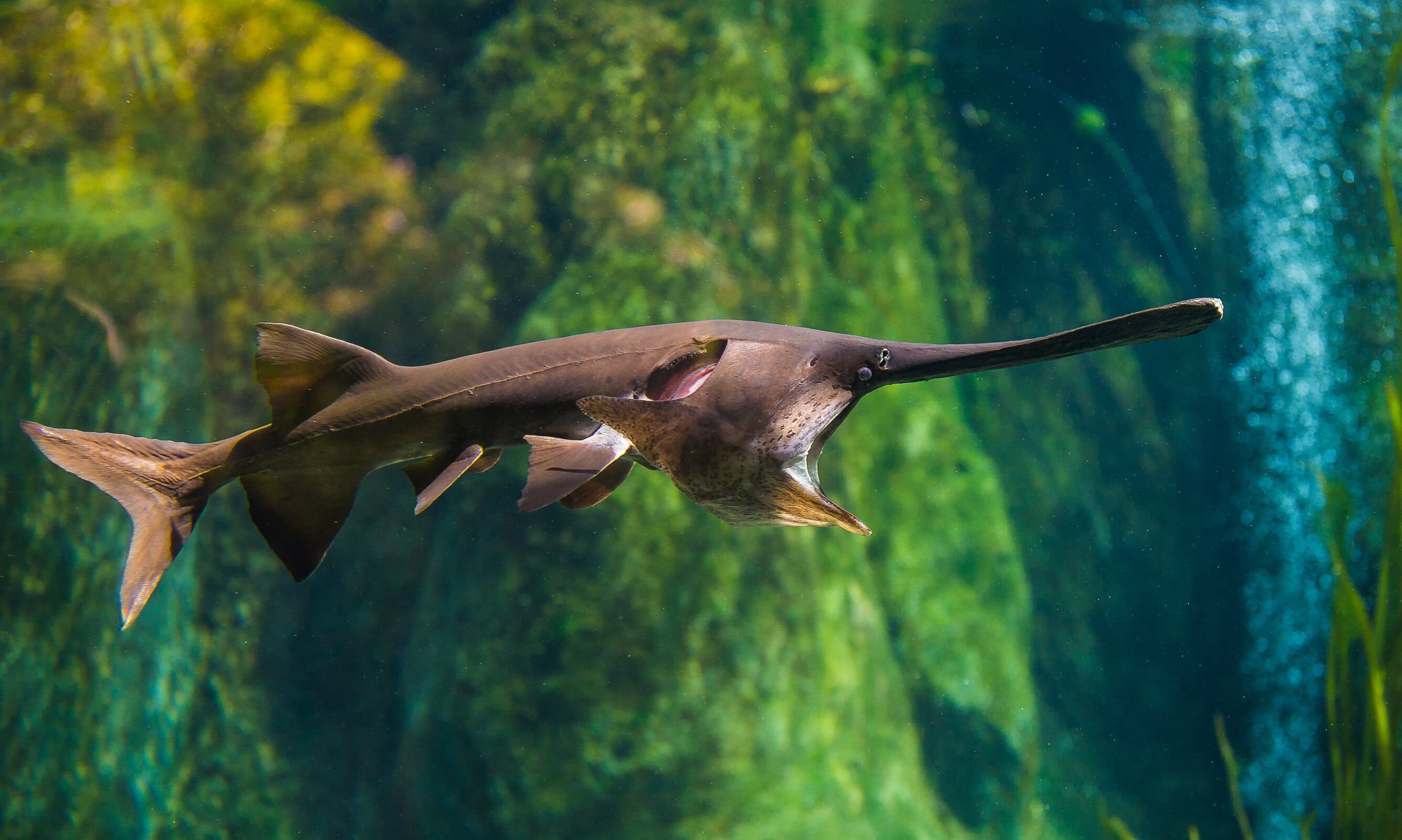
This threatened species has long, paddle-like snouts.
©Saran Jantraurai/Shutterstock.com
Paddlefish are undoubtedly the most unique-looking fish to call the Ohio River home. They have incredibly long and strange paddle-shaped snouts, bodies with a blue-gray color, toothless mouths, and scaleless skin. While juveniles grow to between one and four feet long, adults can reach over five feet in length and weigh over 100 pounds. They may look like something from tropical oceans, but paddlefish are found in the Ohio River.
They filter zooplankton and small insect larvae with their gill rakers. When it comes to the Ohio River valley, these striking fish are often found in the larger tributaries up to the first dam. There, they stick to more slow-moving pools and backwaters. Paddlefish are listed as a threatened species, so fishermen are required to release them if they catch them.