
Quick Take
- A parasite somehow rewires a snail's brain to make it do the one thing that gets it killed. See how the hijack works →
- The snail's pulsating, neon-colored eyes are not a symptom of the parasite. They are its most calculated tool. Discover the pulsating eyes →
- Bird poop is the unexpected starting point of one of nature's most diabolical takeovers. Trace the life cycle start →
- This horror show actually does ecosystems a quiet favor, though there is a catch. Find the silver lining →
Most snails lead fairly simple lives. They slide around their habitats looking for food and trying to avoid predators. But some snails have what can only be described as a mind-blowing experience. They get infected by a parasitic worm that takes control of their brain and turns their body into a pulsating disco zombie! This is nature at its most bizarre.
Meet the Crazy Trematodes
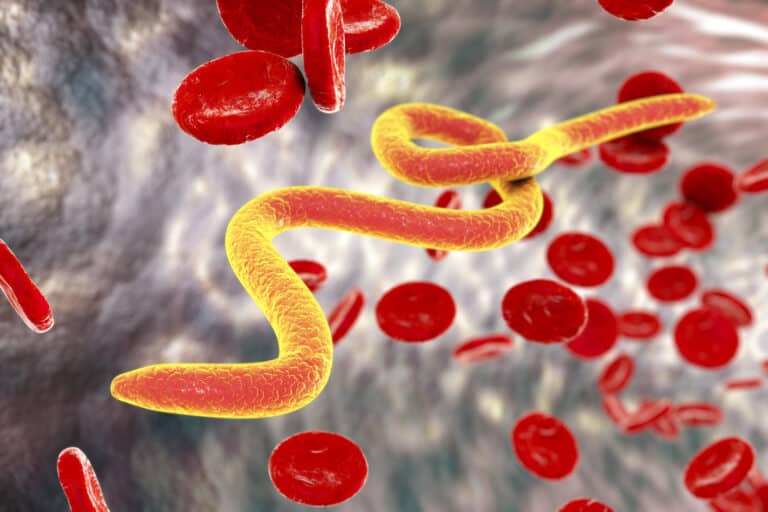
Meet Leucochloridium paradoxum, more commonly known as the green-banded broodsac. It’s a type of flatworm, also known as a helminth. One group of helminths is called trematodes, or flukes. These creatures have complex life cycles that involve multiple hosts, such as snails, fish, and birds. There are thousands of species of trematodes, and each one is specifically adapted for a particular host. Several trematode species infect humans. One example is the Schistosoma species, which causes schistosomiasis, also known as snail fever. The green-banded broodsac is a behavior-altering, parasitic trematode.
The Neuroparasitic Worm
The green-banded broodsac is a type of manipulative neuroparasite. These are a fascinating group of creatures that can hijack another animal’s nervous system and make it behave in ways that benefit the parasite. This particular parasite is found in Europe and North America. It is an endoparasite of snails in the Succinea genus. Some examples are the Appalachian amber snail (Succinea chittenangoensis) and the dryland amber snail (Succinea greeri).
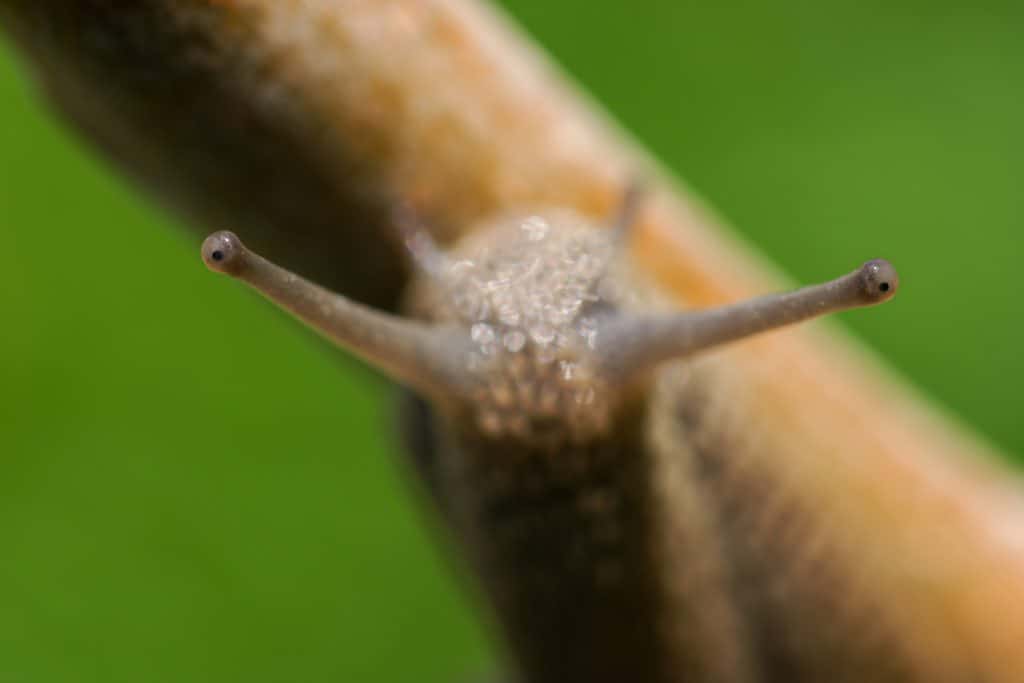
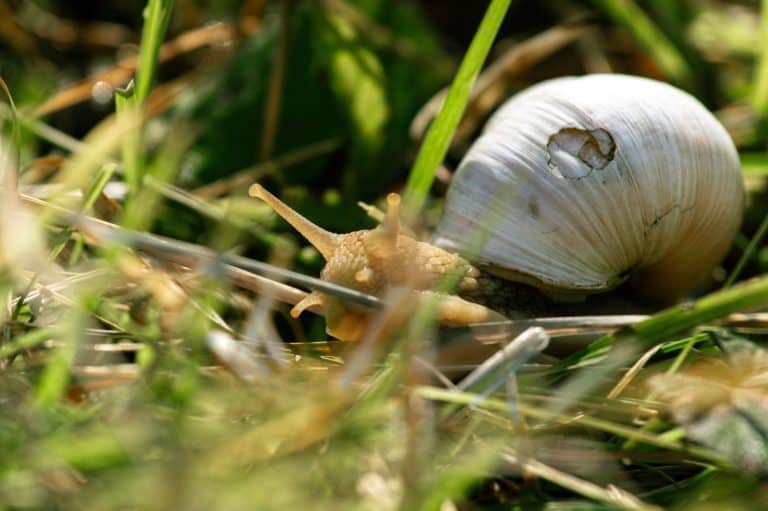
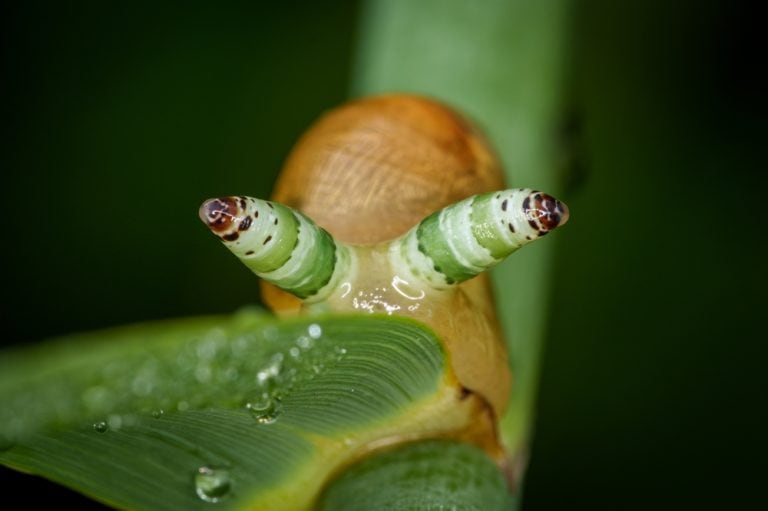
Snails have their eyes on eyestalks.
©Nepdar/Shutterstock.com
Amber snails typically have thin-walled, translucent shells that are often amber-colored. Like other snails, they have two eyestalks, also known as ommatophores. These are protrusions that extend the eye away from the body so that the snail can get a better field of view. They are essentially a specialized type of tentacle.
The green-banded broodsac also needs birds such as crows, jays, sparrows, and finches to complete its lifecycle. It finds its hosts in temperate forests.
The Green-Banded Broodsac’s Life Cycle
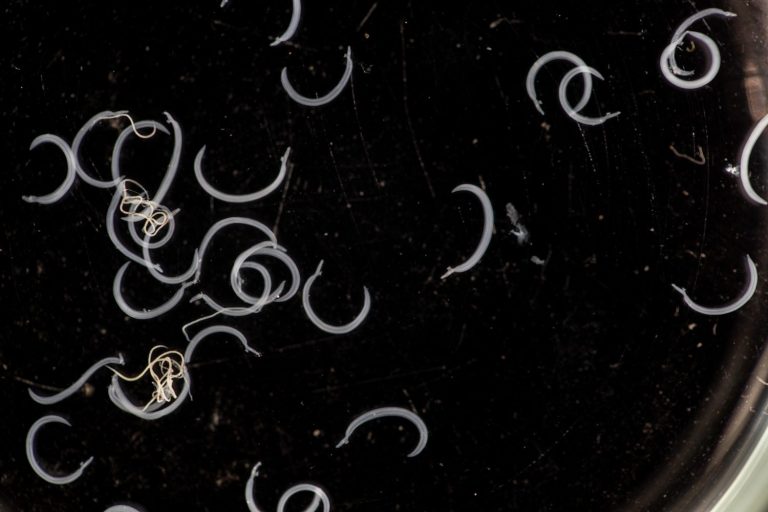
At the start of the life cycle, a bird eats a snail infected with the worm. The parasite lays eggs (which are brown and oval-shaped) inside the bird, and these pass back out into the environment with the bird’s poop. An unsuspecting foraging snail eats the bird poop, and the eggs enter its body. Here, they hatch, and the larvae begin to grow and multiply. The first stage, the miracidia, is clear and elongated. These transform into a sack-like object called a sporocyst.
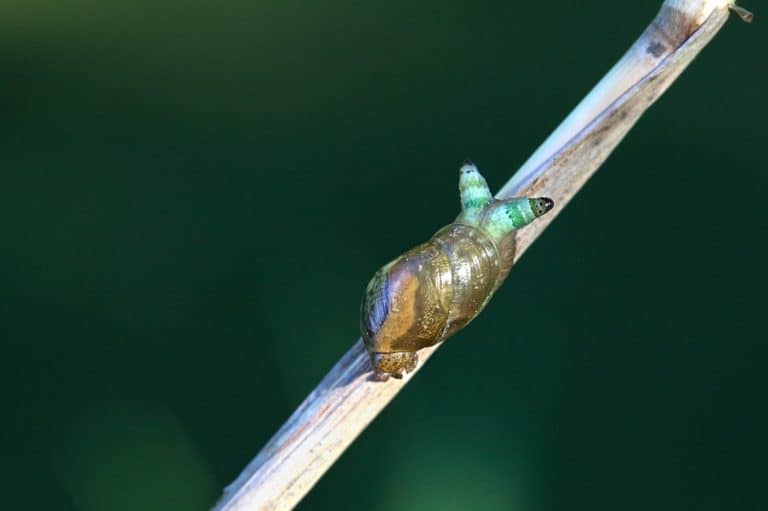
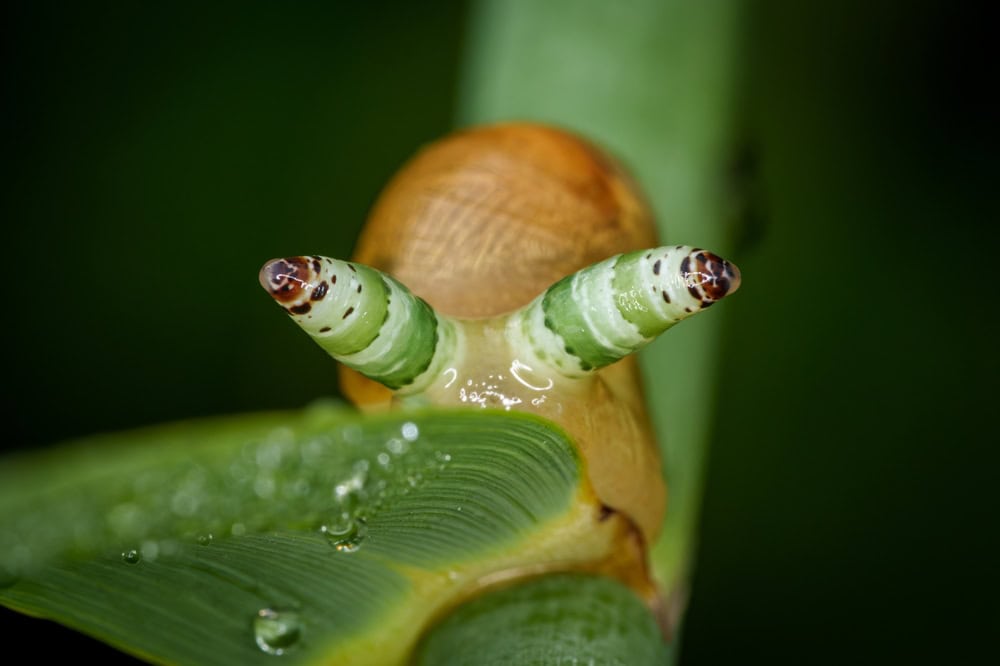
This is where the disco zombie appearance comes from! These larvae are brightly colored (yellow, green, and red) and pulsate! They get into the snail’s eyes, making them swell and look like pumping, brightly colored balls. Their vibration frequency is 40 to 75 pulses per minute. However, that is not the worst thing that the parasite does to the poor snail!
How Does the Parasitic Worm Alter a Snail’s Behavior?
Remember that these are called manipulative neuroparasites for a very good reason! Usually, the snails would prefer to hang out in sheltered, dark, moist places. Here, they are largely protected from bird predators. This makes them naturally photophobic (avoiding light). In scientific terms, the snail changes from photophobia to photophilia (seeking out light). The green-banded broodsac hijacks the snail’s nervous system and makes it seek out wide open spaces. They head for the tops of leaves or branches and parade around in the sunlight, where they are clearly visible. Scientists are still not sure how the worm brings about such a drastic behavior change. What’s more, they are now sporting a multi-colored and pulsating eyestalk. They literally couldn’t do more to draw attention to themselves!
This is exactly what the parasitic worm needs. It wants the snail to be available and attractive to birds in the area. The pulsating eyestalks attract a bird predator, which eats the larvae (probably because it looks like a tasty, wriggling caterpillar). The worm enters the bird host, and the whole life cycle starts again. Some eggs (sporocysts) become cercariae, which develop into adults. These adults can fertilize themselves or another adult, and the resulting eggs are released into the bird’s intestines. Within the bird’s intestines, the worms feed on digested matter.
It’s Not All Bad News
This may sound like a terrible horror story, but there is also some good news. This particular species of trematode cannot infect humans, so you do not have to fear becoming a pulsating disco zombie yourself. Other flukes, such as lung flukes (Japanese lung fluke), can cause an infection called paragonimiasis in humans.
These worms also help to regulate snail populations, which helps to limit the spread of disease. This helps to keep local ecosystems in balance. However, the parasite can infect both fish and livestock, which can cause financial losses.