Quick Take
- One number links these wild animals to something most of us carry too, and it's not reassuring.
- Living far from cities may not protect you as much as you'd think. The scale that matters most may surprise you.
- A wetland shielded by seasonal floods should be a safe haven. Researchers checked, and the results were unsettling.
- Human expansion is accelerating faster in one country than the global average. The gap is bigger than you'd guess.
Plastic pollution is not limited to discarded soda bottles and juice jugs. Microplastics, while much smaller, are increasingly recognized as a threat to both aquatic and terrestrial ecosystems. These tiny particles have even reached locations many miles from human development. A study has recently demonstrated that even tapirs and giant anteaters across Brazil have microplastics in their blood.
Why Are Microplastics a Problem?
Microplastics are defined as ‘synthetic polymer particles with a diameter of less than 5 mm’ and they pose a major problem. They spread in multiple ways, including through the atmosphere, rain and snow, rivers, and groundwater. Because they are so mobile, they end up in pristine parts of the planet where there is no human development. What’s more, they persist for centuries!
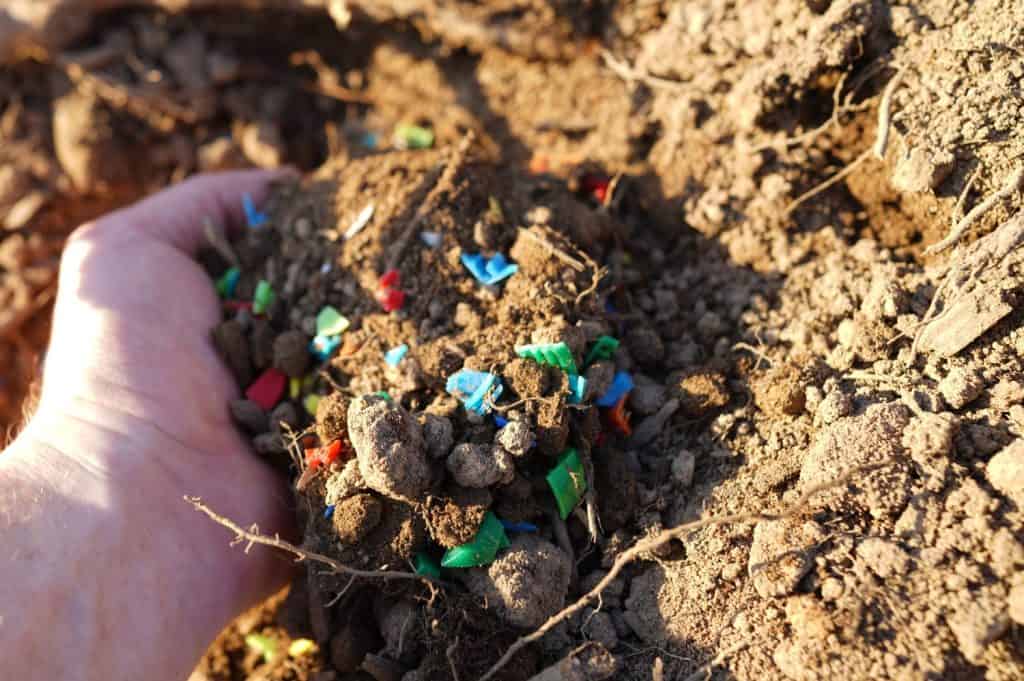
Microplastics are readily ingested by animals.
©Maksim Safaniuk/Shutterstock.com
Environmental microplastics are readily ingested by wildlife and can even get through mucous membranes to enter the bloodstream. They travel through food webs in processes called bioaccumulation and biomagnification. Ultimately, the concern is that they pose health risks to animals.
As human development continues to expand into wild spaces and plastic continues to be produced, it’s clear that this problem is not going away. We urgently need to figure out how variables in ecology and landscape relate to the quantity of microplastics inside the bodies of animals that live on land.
Studying Tapir and Anteater Habitats and Blood Microplastic Levels
The recently published study was carried out at the Arc of Deforestation in the Amazon, an agricultural mosaic in the Cerrado, Brazil and at a relatively undisturbed cattle ranch in the Pantanal. Data were collected between February 2021 and November 2022.
Researchers collected high-resolution GPS-based movement data for 26 lowland tapirs (Tapirus terrestris) and from 21 giant anteaters (Myrmecophaga tridactyla). Each animal was given a numeric value called the Human Footprint Index, which is a measure of ‘cumulative anthropogenic pressure’. Animals that live in undisturbed environments were given ‘0’, while those in environments heavily modified by humans scored ‘50’. The study also recorded local-scale effects, which recorded each animal’s proximity to the nearest human development such as a built environment, mining infrastructure, and power plants.
This data was then compared to each animal’s blood microplastic concentration. The concentration was obtained by using confocal Raman spectroscopy, which can detect particles larger than 1 μm.
Finding Microplastics in Tapirs and Anteaters
Microplastics were found in 18 anteaters and 25 tapirs. The concentrations varied a lot between the animals. Even though tapirs had higher concentrations, it was not statistically significant to levels recorded in the anteaters. Overall, the average microplastic concentration was 73.8 particles per ml. This is similar to levels recorded in human blood samples.
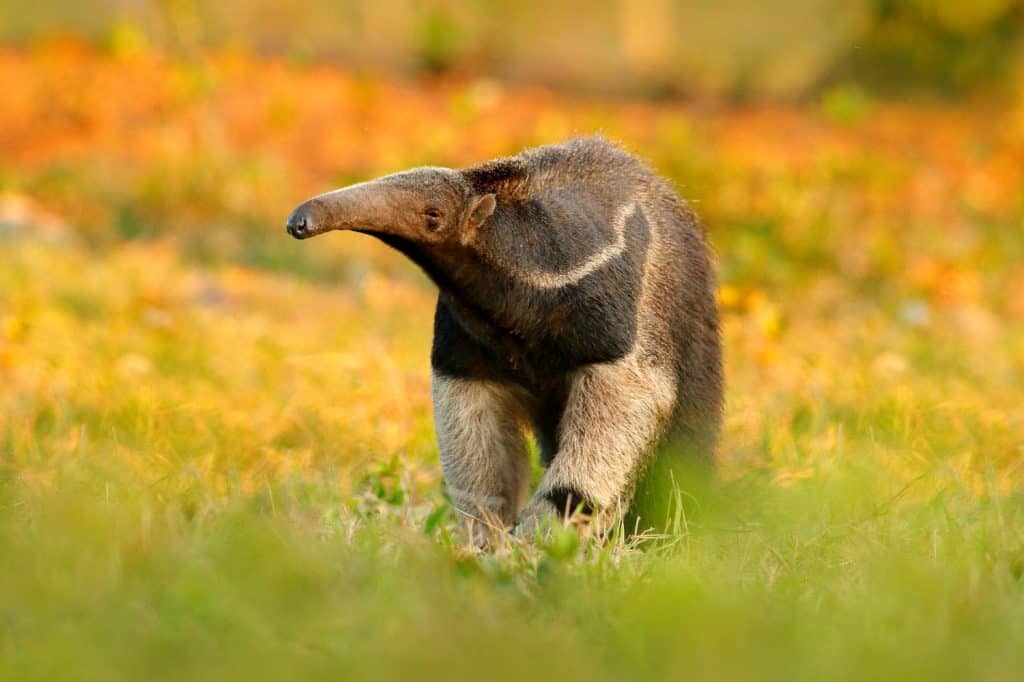
Brazilian anteaters had microplastics in their blood.
©Ondrej Prosicky/Shutterstock.com
One analysis showed that the animals with the highest blood microplastic levels were the ones who had higher Human Footprint Indexes for their home ranges. However, when other weightings were applied, this failed to reach statistical significance. These pollutants do not stay in one place; they are spread from urban, industrial, and agricultural sources via the atmosphere as well as rainfall runoff, river discharge, and seasonal flooding.
Interestingly, local-scale land use was important in predicting animal blood microplastic concentrations. Animals living closer to human developments and waste management facilities had significantly higher blood plastic levels.
The Bigger Picture
This research needs to be placed within the context of increasing human encroachment on wildlife habitats. The Human Footprint Index illustrates this trend, with the global average rising from 5.26 in 2001 to 6.63 in 2020. That’s a 26 percent increase! The situation is even more acute in Brazil, where it rose by 42 percent over the same period.
Sadly, our waste management infrastructure and systems rarely keep up with our land-use expansion. The regions that are least equipped to contain plastic waste are the ones experiencing the most dramatic change. Large parts of rural and interior Brazil are typical examples. Plastic quickly transforms from a useful material to a highly mobile environmental pollutant.

Plastic soon finds its way into the environment.
©DedMityay/Shutterstock.com
Sadly, the microplastic burden on terrestrial wildlife will likely rise as land-use change intensifies. What’s more, it is not just those animals living close to human infrastructure that will bear the burden. The modelling in this study suggested that even animals living at a Human Footprint Index of ‘0’ will have microplastics in their blood!
Plastics in the Pantanal
The Pantanal is widely acknowledged as the world’s largest and most pristine wetland. Here, a staggering array of wildlife enjoys a relatively undisturbed landscape. The area is remote and has limited infrastructure thanks to the seasonal flooding, which deters human developers. Yet, this study found microplastics in the blood of animals that live there.
The presence of plastic in the blood of these creatures living miles from the nearest human development confirms that even remote species in ecologically intact environments are being affected by the plastic problem. Whilst this study does not provide evidence that the animals are harmed by the plastics, it is inevitably a cause for concern.