
Quick Take
- Museum drawers hid a mix-up for years. What these thumb-sized fish really are will surprise you.
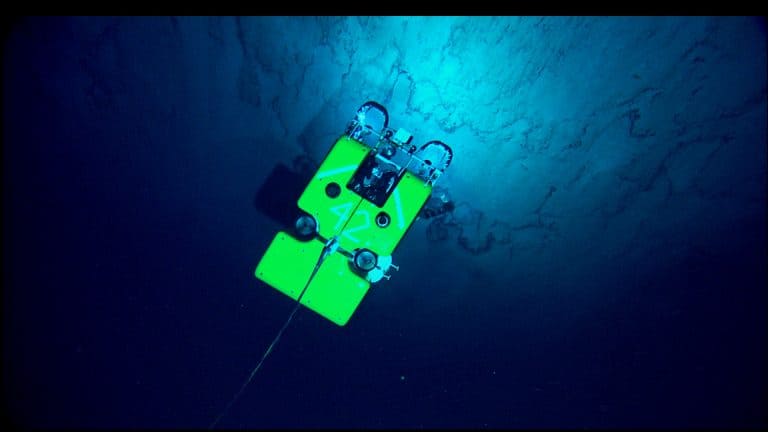
- Scientists couldn't cut these fish open, so they found another way inside.
- One lucky preservation choice decided whether DNA could settle the debate.
- Nobody has ever seen them alive, and the 'lost' label doesn't mean what you think.
For years, small, seahorse-looking fish were accidentally pulled up in trawling nets combing the seafloor off the coast of southern Australia. About the size of a human thumb, the specimens were saved, stored, then forgotten in several Australian museums.
Researchers recently began re-examining the specimens and made a startling discovery. Although some had previously been classified as seahorses, the specimens actually belonged to an entirely different genus. The scientists recently published their findings in the Journal of Lost Species.
What Did the Researchers Discover?
The different specimens turned out to be a new genus altogether. The research team named the genus Australyichthys, which is a combination of the Latin word for “southern” and the Greek word for “fish.”
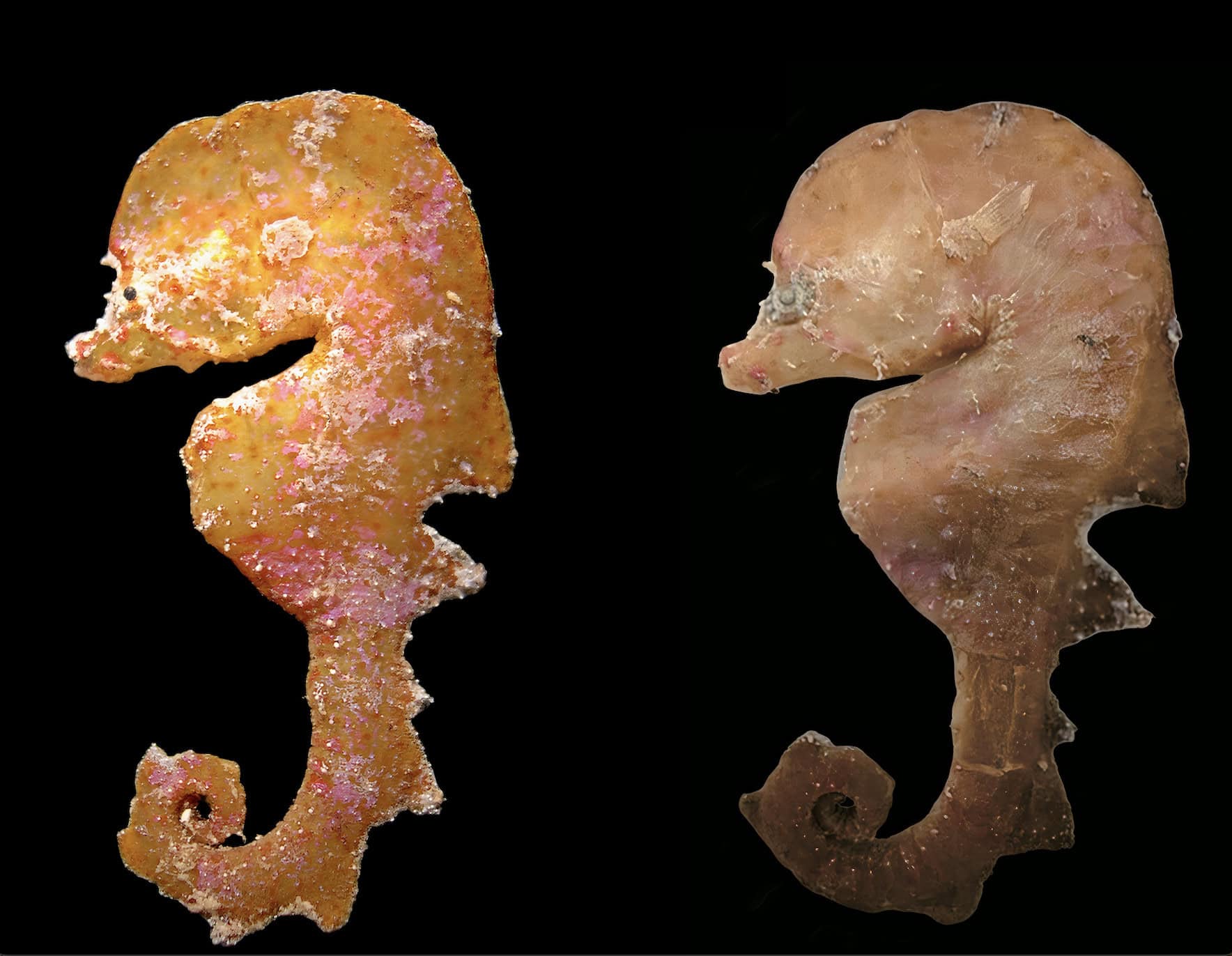
The genus includes one newly described species, A. aegis, and two previously known species, A. minotaur and A. paradoxus. They nicknamed them all “sea Muppets” based on their domed heads and fleshy lobes. The researchers thought looked like characters from The Muppet Show.
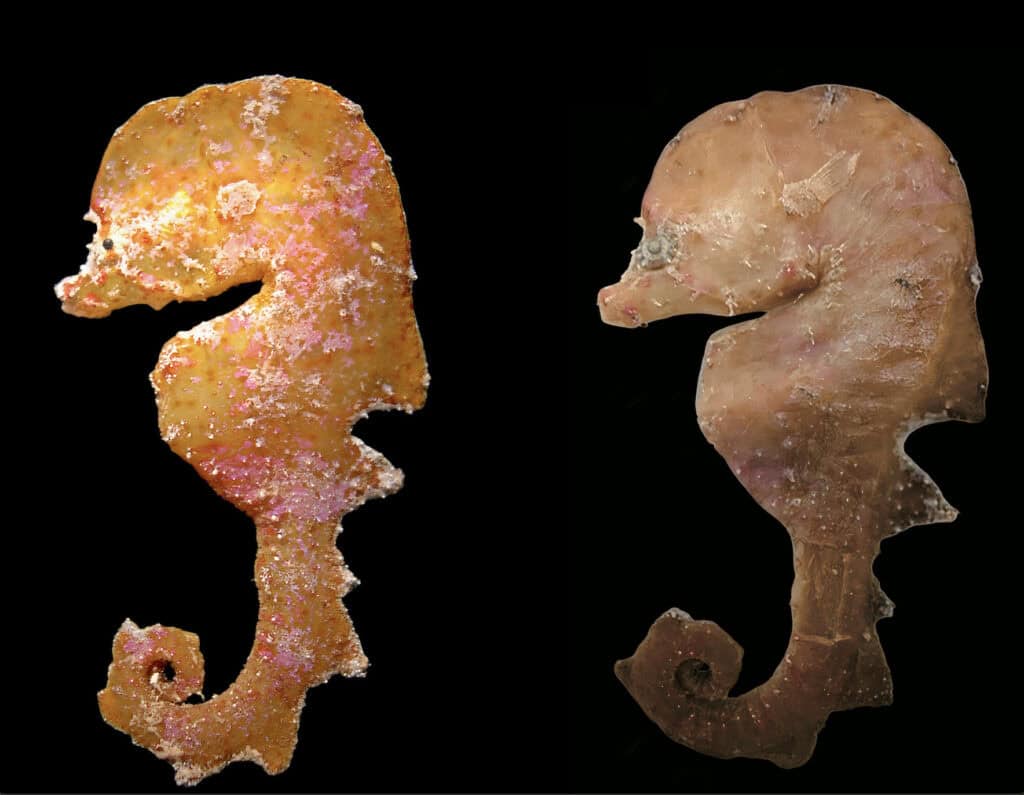
The Sea Muppets, a nickname inspired by The Muppet Show, for a new genus Australyichthys.
“Once you’ve seen the head, huge and domed with those fleshy lobes running down the back, you can’t unsee the Muppet Show. It stuck straight away. The species names follow from it: bullneck sea Muppet for A. minotaur, paradoxical sea Muppet for A. paradoxus, helmethead sea Muppet for A. aegis,” the study’s first author Graham Short told IFLScience in an interview.
How Were the Specimens Discovered?
Every one of the specimen samples were caught by accident by workers trawling for other fish or other research teams dredging for unrelated scientific studies. The specimens came from depths between 50 and 124 meters deep of the southern coast of Australia, well below recreational scuba diving limits.
The newly described species, A. aegis, came up in 2006 near the Gambier Islands at the mouth of Spencer Gulf in South Australia. It was captured by a research team looking for brachiopods, which are small shelled animals.
The research team assumed the specimen was a seahorse and misfiled it in the South Australian Museum’s invertebrate collection. The other specimens were pulled up from the seafloor at various times and ended up in different museums, including the Australian Museum, Museums Victoria and CSIRO.
The specimens remained in museum collections for years, with some incorrectly classified as seahorses. However, researchers believed that at least two of the specimens were misclassified. It wasn’t until Short and his colleagues reexamined the specimens that they recognized an entirely new genus.
How Did They Make Their Findings?
While the specimen had been preserved in the museums, the numbers were very small. According to Short, only eight specimens have been collected over nearly 80 years. No new specimen has been collected since the 2006 find.
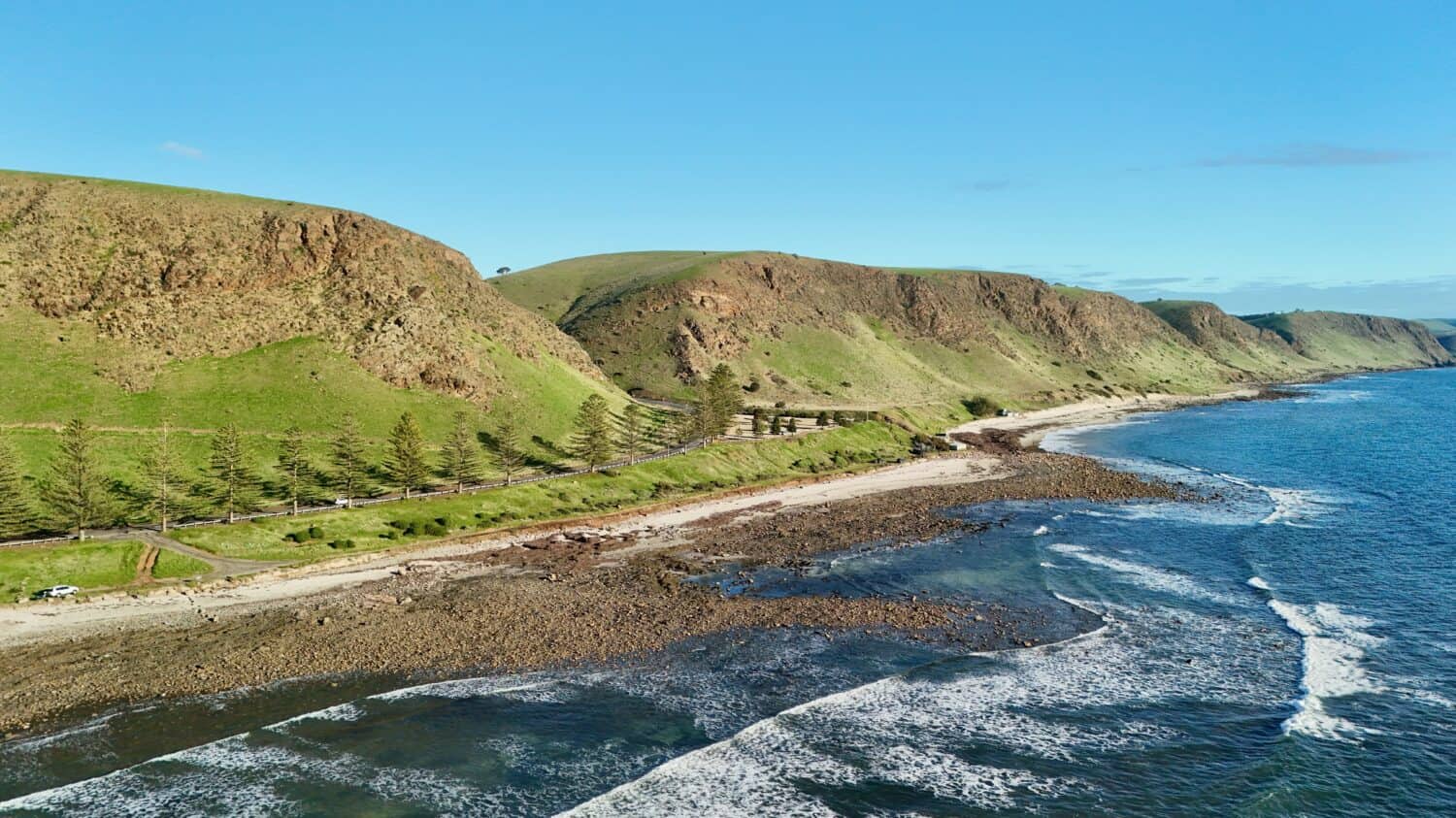
All the specimen studied were found in deep water off the south coast of Australia.
©Chillodi/Shutterstock.com
“The specimens are irreplaceable, so we could not dissect them. Instead, we used micro-CT scanning, the same X-ray technology used in hospitals but fine enough to resolve tiny bones,” Short wrote in an article published in The Conversation. “That let us build three-dimensional models of each fish’s skeleton and compare them bone by bone with true seahorses (Hippocampus).”
The micro-CT scans allowed the research team to study the specimen without damaging them. While they could differentiate the specimen from typical seahorses, they wanted to confirm through DNA testing. However, that presented a different challenge.
All but one of the specimens were preserved in formalin, which destroys DNA. Luckily, one specimen was preserved with ethanol which leaves genetic material intact. Researchers recovered a small fragment of genetic material from an ethanol-preserved specimen, providing additional evidence that the fish belonged to a separate lineage.
The DNA confirmed what the skeletal structure suggested. A new genus was needed, and the research team landed on Australyichthys.
Are Sea Muppets a Lost Species?
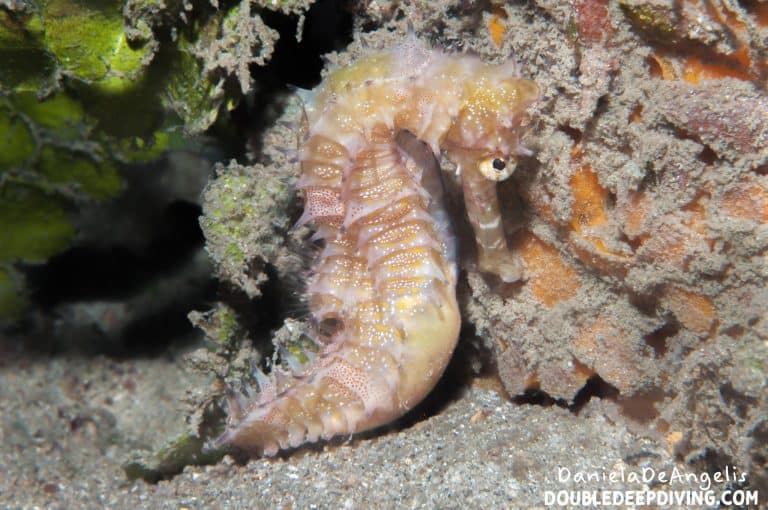
While the species in the new genus are not seahorses, they still look surprisingly like seahorses. The phenomenon of separate lineages evolving to look alike is referred to as “convergent evolution.” This often happens when distantly related species independently develop similar adaptations to comparable environments.
The three species inhabit deep, relatively poorly explored waters off southern Australia, within the broader Great Southern Reef region. Many species found here are found nowhere else. The deepest depths of this zone are rarely explored.
In fact, nobody has ever seen any species in this genus alive. The specimens seen by humans have only ever been brought up as bycatch during trawling or dredging operations. Based on these limited records, the researchers describe Australyichthys as a “lost genus.” This label indicates the need for targeted research to observe the species in its natural habitat.
“We’re calling Australyichthys a lost genus, and that’s meant as a target, not an obituary. Eight specimens in nearly 80 years, nothing since 2006, no confirmed sighting alive. The temperate mesophotic zone off southern Australia is one of the least surveyed marine environments anywhere, so the odds are these fish are still down there and simply haven’t been looked for,” Short said in the IFL interview.
“They’re also small, cryptic, and can’t escape a bottom trawl, which puts them at real risk. Going and finding out is the only way to know which it is.”