
Quick Take
- Salmon wreck their bodies on the way upstream. Brazil's fish pull off something stranger. See the migration begin →
- One government pays fishers to stay home for months. The reason is bigger than the fish. Explore the fishing ban →
- Fish ladders were built to rescue migrating fish. Some may be quietly doing the opposite. Why fish ladders fail →
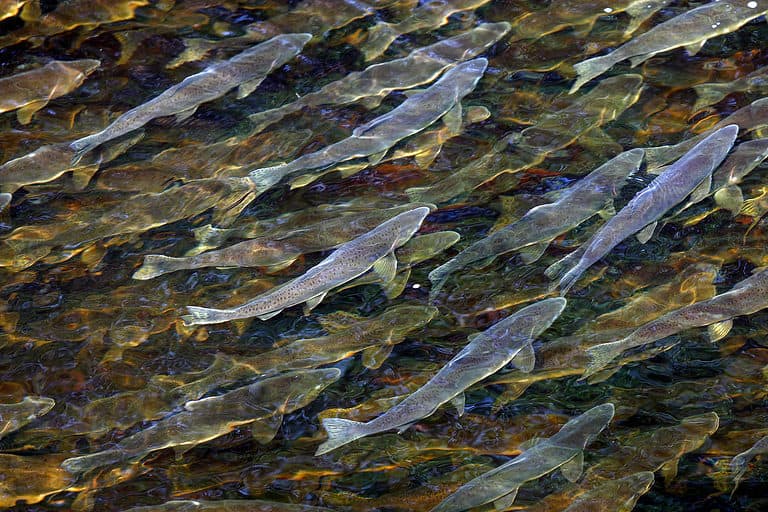
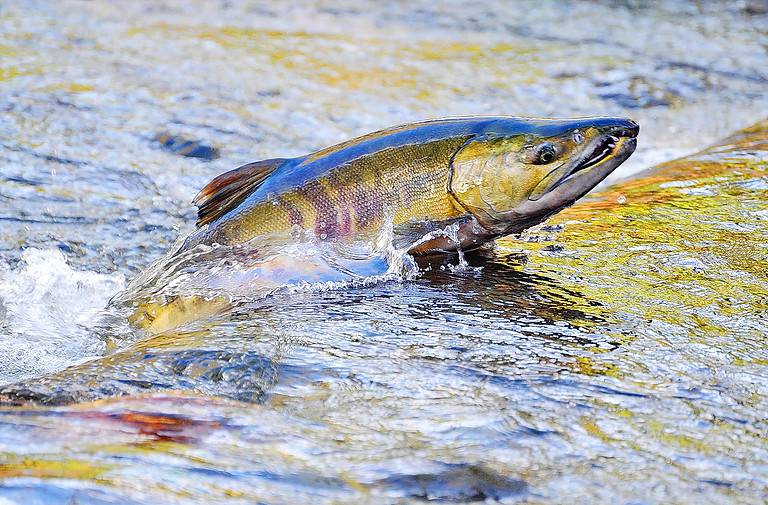
Many of us are familiar with the incredible process of salmon migration. Upon reaching maturity, salmon swim upstream, back to where they were born to spawn more salmon, ensuring the next generation survives. However, salmon aren’t the only fish to engage in such a remarkable migration. Every year in Brazil, a mass migration occurs that arguably rivals salmon migration in both breadth and scale. Locals call it Piracema. This phenomenon involves hundreds of freshwater fish species migrating upstream to reproduce. These fish span the majority of Brazil’s river basins, braving the currents to ensure the survival of the next generation.
It’s a perilous journey, featuring trauma and predation. However, Brazilian fish evolved to undertake this annual adventure, and their bodies don’t break down the way salmon do during their upstream migration. The biggest danger Brazilian fish face comes from human-made structures like hydroelectric dams and artificial water chokepoints. The Amazon River basin is a remarkable slice of biodiversity, and Piracema may be its most dramatic event. Let’s learn more about this process, how fish endure their upstream journeys, and how humans have both hurt and helped this ancient behavior.
Piracema Commences
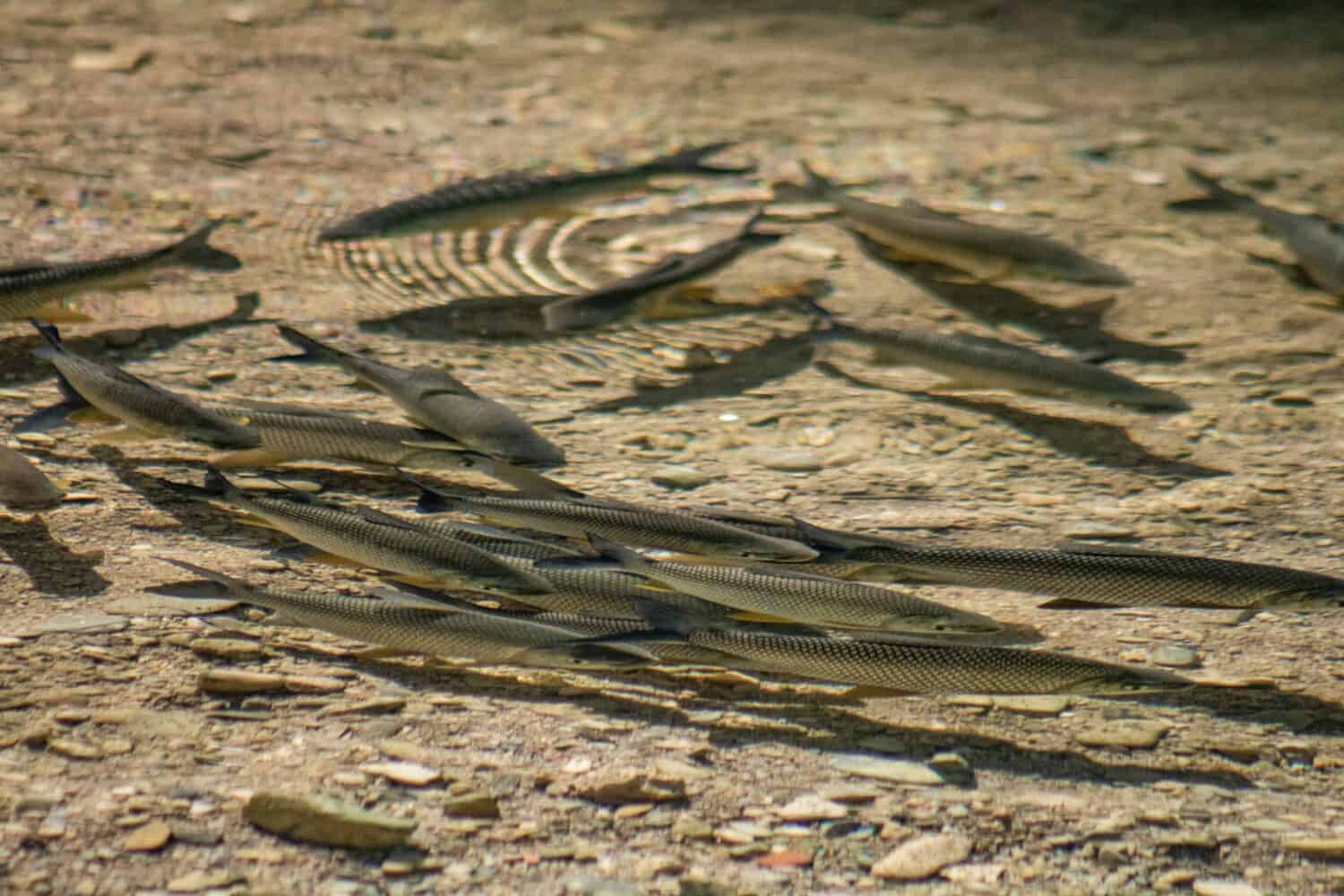
Piracema involves hundreds of Brazilian fish species swimming upstream to spawn.
©Gabriel Gabino/Shutterstock.com
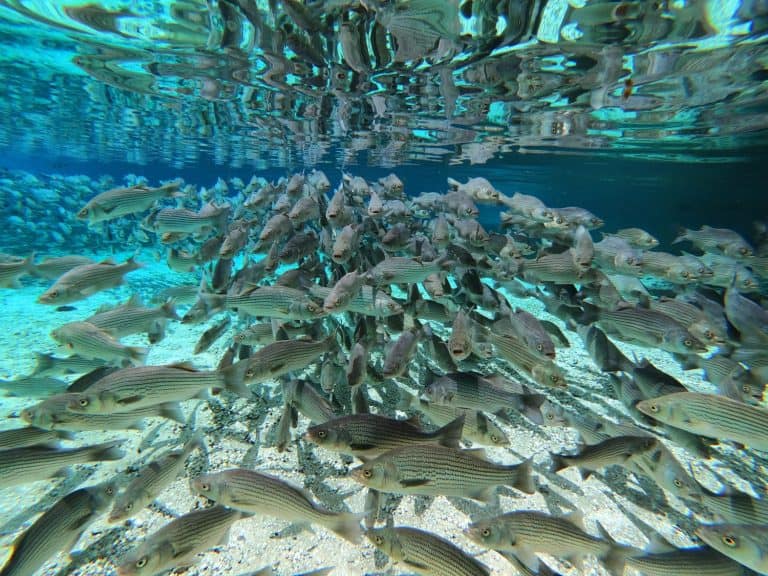
For most of the year, Brazilian fish species stick to the low ground. Species like dourado and curimbatá live in lagoons and lowland rivers, feeding and bulking up their visceral fat. When the heavy rain season commences, however, hundreds of fish species are triggered into action by rising water levels, raised water temperature, and increased sediment. In short order, hundreds of species gather in huge schools, often with different species mixed together.
As groups, they swim upstream, fighting the harsh currents. All of the fish cease to eat normally, instead relying on their internal fat stores for nourishment. When they reach natural phenomena like waterfalls, female fish’s ovaries swell. Simultaneously, males release milt (seminal fluid). All of this happens in open, rocky water. Their jobs complete, the mature fish drift back downstream to recover and begin the process anew next year. Meanwhile, the fertilized eggs stay suspended in the moving water before hatching within a day. There, the fish larvae are swept into flooded forests and lagoons where they feed on plankton before returning to main waterways to drift down to the lowland.
Locals call this annual migration process Piracema, which combines the Tupi-Guarani words for fish and ascent. The migration plays a long-standing role in local cultures; it is not only a community spectacle and a seasonal barometer, but it’s also a big part of folklore. It has economic impact, too; fishermen must endure a period of forced inactivity while Piracema occurs.
How Piracema unfolds
- Fatten up in lowlands Species like dourado and curimbatá live in lagoons and lowland rivers, feeding and bulking up their visceral fat.
- Rising water triggers them Rising water levels, raised water temperature, and increased sediment trigger hundreds of fish species into action.
- Schools swim upstream All of the fish cease to eat normally, instead relying on their internal fat stores.
- Spawning at waterfalls Female fish's ovaries swell while males release milt.
- Eggs hatch in moving water within a day The fertilized eggs stay suspended in the moving water before hatching within a day.
- Larvae swept to nurseries The larvae get swept into flooded forests and lagoons where they feed on plankton.
Pools Closed
Given that Piracema is the most vulnerable time in the lives of hundreds of native fish species, the Brazilian government steps in to ensure their safety. Indeed, both state authorities and Brazil’s environmental agency IBAMA enforce a closed fish season between November and February called Defeso da Piracema.
During this period, fishing for native species largely ceases; depending on the state, amateur fishing is either banned or limited to hook-and-line fishing with modest daily limits, often only for non-native species. Furthermore, fishermen must declare existing frozen stocks before the season begins. This fishing stoppage has such an impact on the economy that registered fishers receive a government unemployment stipend to offset the loss of seasonal income.
With such initiatives and legislation in place, it may appear that the hundreds of fish that undergo Piracema are relatively safe. But humans have a way of disrupting natural processes. In the case of Piracema, it involves human-made structures that prevent the natural flow of Brazilian rivers.
Hydroelectric Havoc
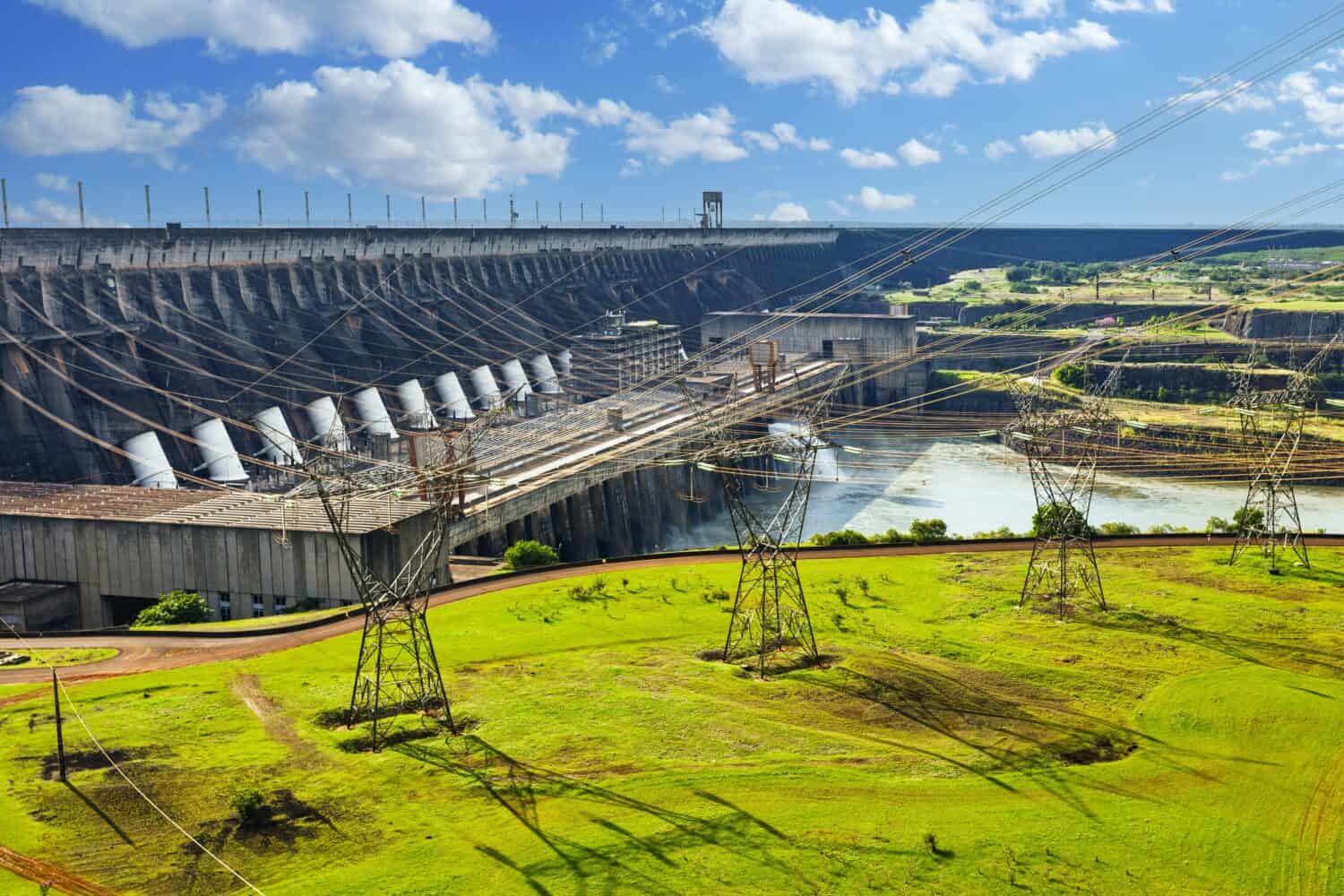
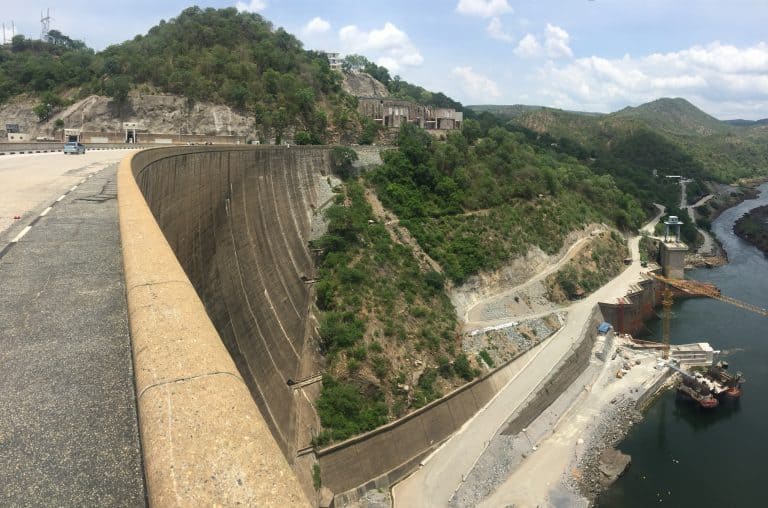
Efforts to prevent fish from being trapped by Brazil’s many hydroelectric dams have had mixed results.
©rocharibeiro/Shutterstock.com
Much of Brazil relies on hydroelectric power. Many hydroelectric dams dot the Amazon River basin, blocking the flow of waterways. This has several effects on migrating fish. For one, dam walls prevent mature fish from reaching their destination and exhaust precious energy reserves. These walls redirect fish to artificial reservoirs where eggs and larvae that require moving water stagnate and die. Over time, dams genetically isolate different species and contribute to extinction.
To resolve this problem, scientists have built fish pathways, including lifts, ladders, and bypass channels. In theory, these passages help fish avoid the problems that come with dam walls. In reality, however, they cause further problems. Many Brazilian fish ladders were originally designed for salmon, which can jump better than neotropical species in Brazil. When the structures work, they prevent larger fish from moving up the rivers. Research has shown that many ladders divert fish into stagnant reservoirs where their eggs aren’t able to flow downstream into natural nurseries.
Despite challenges, Brazilian fish remain remarkably resilient during Piracema. To help protect the process, scientists have turned to natural, slow-sloping channels to help fish navigate human hydroelectric structures. This, combined with genetic screening, protection of undammed tributaries, and community-led co-management, will allow the amazing process of Piracema to continue in the way it has for millions of years.