
Quick Take
- A flamingo eating lunch looks chaotic, but its bill is running a precision filtering system most people have never heard of. See the filtering system →
- Flamingos share their feeding strategy with one of the ocean's largest animals, and the connection is stranger than it sounds. Spot the whale connection →
- Standing on one leg looks exhausting, but science says it may actually be the laziest thing a flamingo can do. See the science behind it →
- The flamingos loitering in the background of this video aren't being shy. There's a very specific reason they're planted exactly where they are. Meet the San Antonio flock →
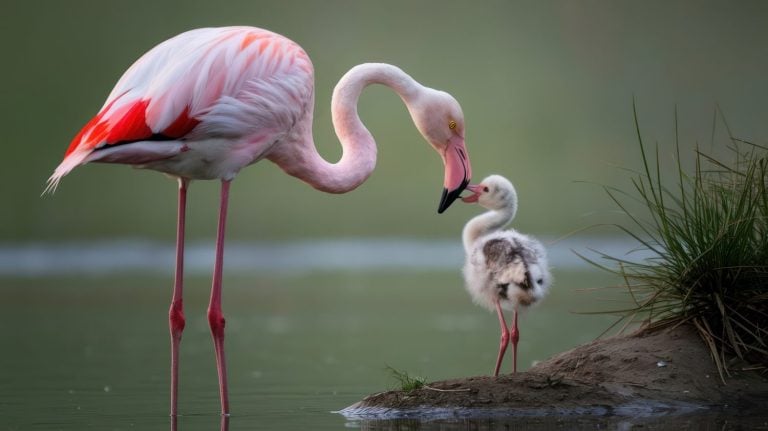
Feeding an animal can turn an ordinary zoo visit into a moment you remember for years. That is especially true when the animal approaches lunch with the enthusiasm of the flamingo in this video. Watch as one very eager bird steps away from the flock and makes remarkably quick work of the food in front of it.
A Very Hungry Flamingo at the San Antonio Zoo
The video takes us to the San Antonio Zoo in Texas, which shared the clip through its TikTok account. The zoo is home to a flock of Caribbean flamingos and offers supervised feeding encounters that let visitors see their unusual dining technique up close. Its social channels also feature hippos, kangaroos, sloths, other birds, armadillos, turtles, and many of the zoo’s other residents.
Why Flamingos Eat With Their Heads Upside Down
At the beginning of the clip, a flock of flamingos is gathered inside the enclosure. A woman approaches with a small bowl containing food and water. One bird immediately walks over to investigate and begins feeding at an impressive pace. The flamingo is not chewing or scooping the meal in the way a person would. Its sharply bent bill is built to separate tiny pieces of food from the water carrying them.
According to the National Zoo, flamingos are filter feeders. A feeding bird places its head upside down with its bill pointed toward its feet, sweeps its head from side to side, and uses its muscular tongue to pump water through the bill. That upside-down position aligns the bill perfectly for the job.
Comb-like plates called lamellae line the edges of the bill. Water passes back out while algae, seeds, insect larvae, tiny crustaceans, and other edible morsels remain behind. The rapid pumping action helps explain the flurry of movement in the bowl. The basic principle resembles the way a baleen whale strains prey from water, although flamingos and whales use very different anatomy to accomplish it.
Why Do Flamingos Stand on One Leg?
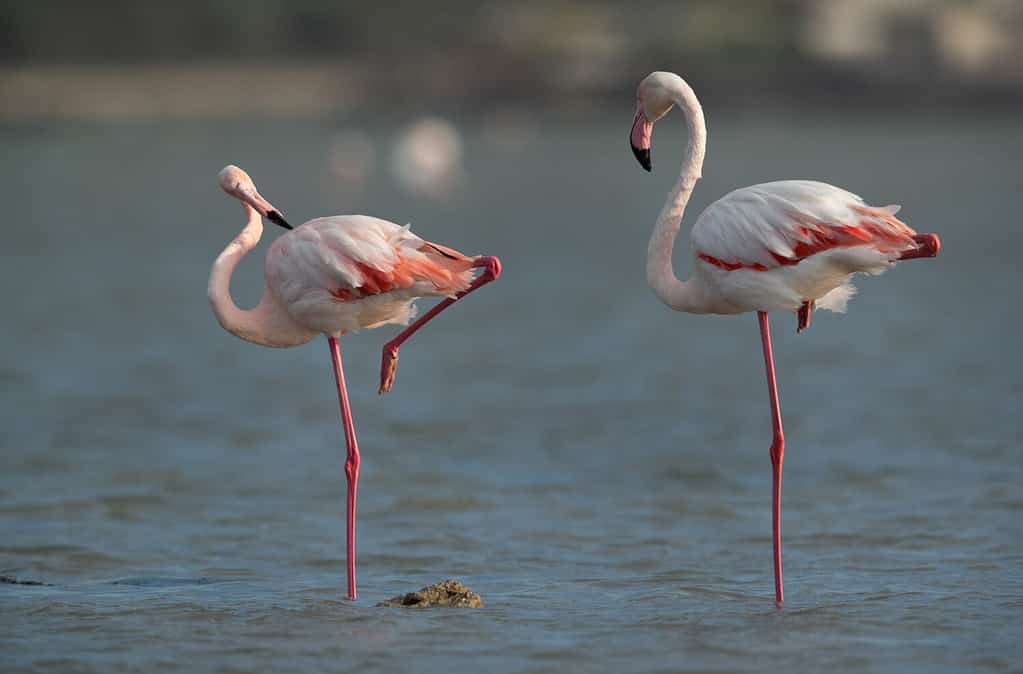
Flamingos can remain on one leg for long periods, even while sleeping.
©Dr Ajay Kumar Singh/Shutterstock.com
A flamingo balanced on one leg may look as though it is performing a difficult yoga pose. For the bird, however, the position appears to be surprisingly restful. As Bird Spot explains, the posture can reduce muscular effort. Tucking one leg against the body may also help limit heat loss through the legs and feet.
A 2017 study indexed by the National Library of Medicine found that flamingos can support their body weight on one leg with very little active muscular force. Researchers even positioned flamingo cadavers in a stable one-legged stance, demonstrating that the birds’ joints can provide passive support. Observations of living birds also showed that resting flamingos swayed less than alert ones. This efficient arrangement helps them stand and sleep on one leg for long periods, although the study does not establish a four-hour maximum or any other fixed time limit.
That helps explain the relaxed flock in the background of the video. Several birds appear perfectly content to remain where they are while their bolder companion claims the meal. What looks like an awkward balancing act to us may be one of the easiest ways for a flamingo to rest.