
Quick Take
- Deer can jump 8.5 feet high, so it raises the question of how one ends up completely unable to escape a pit.
- Approaching a trapped deer sounds heroic, but it carries a risk most people never consider.
- The deer bolted the moment it was free, though what it did in the seconds before that is worth watching.
- Muddy pits aren't the only surprising hazard lurking in deer territory. The list of threats is longer than most people assume.
You probably know the old medical-alert commercial: someone falls, presses a button, and says, “I’ve fallen, and I can’t get up.” The line eventually became a pop-culture punchline, but being unable to get back on your feet is no joke. That is especially true for a wild animal that ends up trapped somewhere it cannot escape on its own. In the video above, a deer finds itself in exactly that situation until a pair of people step in to help.
Deer Gets Trapped in a Muddy Pit
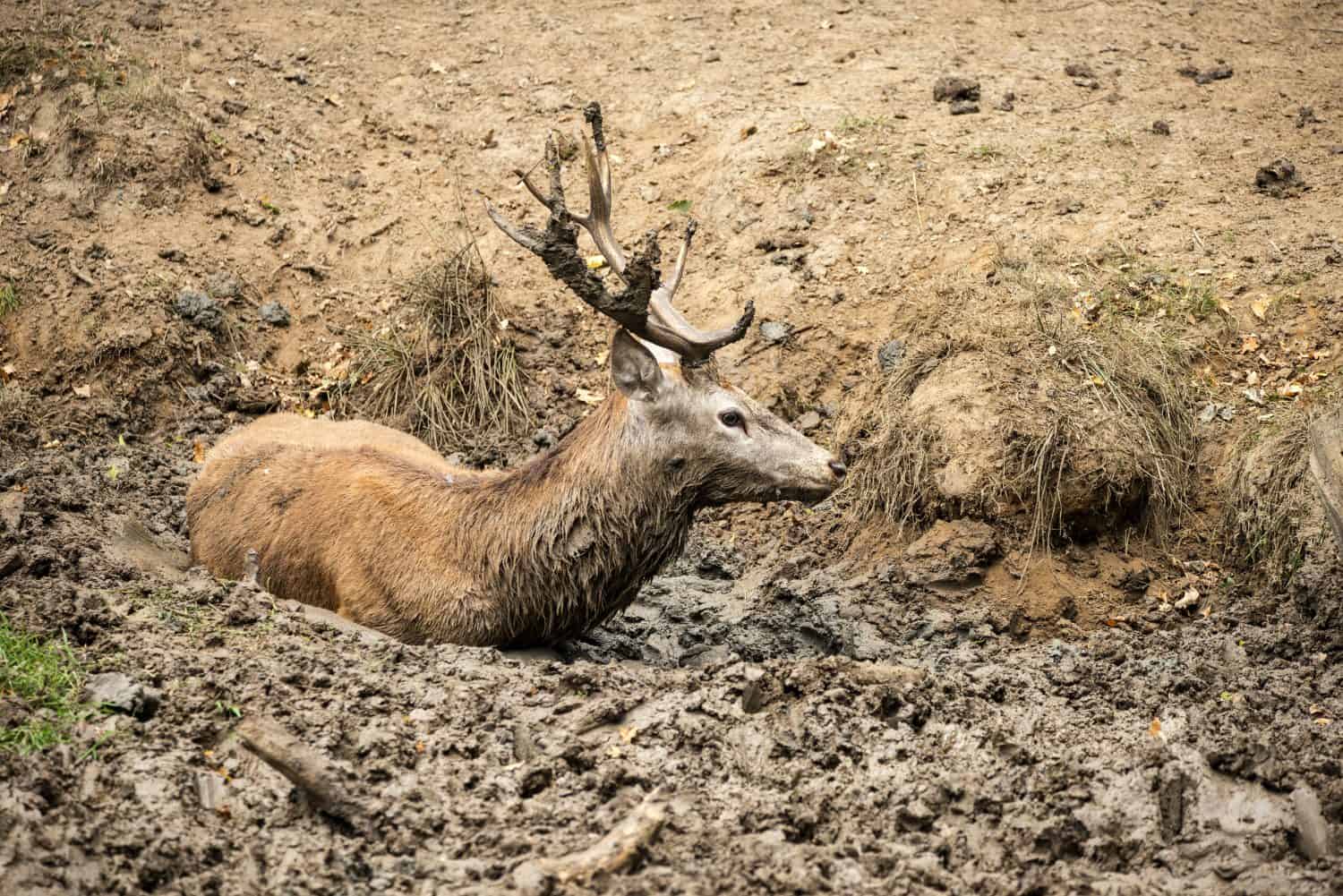
The short YouTube clip shown at the top of the page was shared by the We Love Animals channel, which regularly features wildlife encounters, animal rescues, and videos involving both wild and domestic animals. This time, the focus is a deer that has somehow ended up down inside a muddy pit and appears unable to climb back out.
Two Men Pull the Deer to Safety
As the video begins, the deer is down inside the muddy opening with steep sides around it. Tall grass surrounds much of the area, and a fence can be seen nearby. The clip does not show how the deer ended up there, so there is no way to know whether it jumped, slipped, or simply failed to see the drop before getting too close.
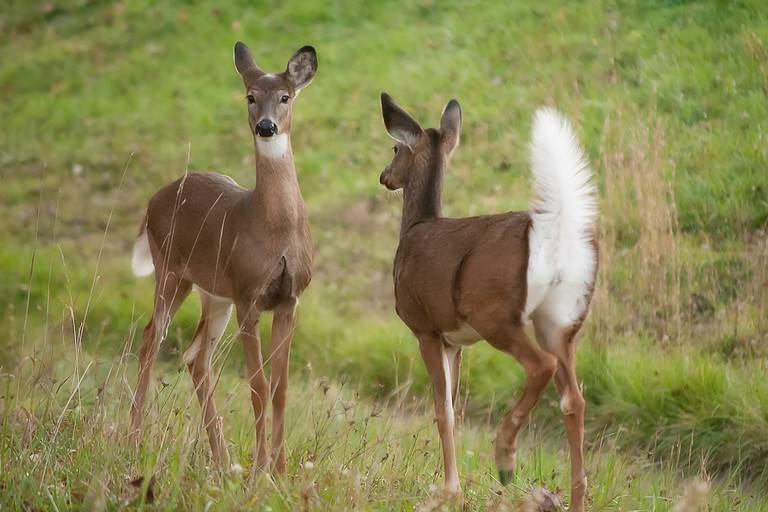
What we do know is that deer are impressive athletes. According to the City of Sugar Land, Texas, white-tailed deer can reach speeds of about 36 mph, jump as high as 8.5 feet, and leap as far as 30 feet. Those abilities help deer clear obstacles and escape predators, although even an animal built for running and jumping can get into trouble around pits, fences, roads, and other hazards.
Two men in the video eventually grab hold of the deer and work together to lift it straight out of the pit. It is not an easy pull, but they manage to get the animal back onto solid ground. Once its hooves are underneath it again, the deer wastes very little time. It bolts away from the rescuers and disappears from the immediate area, apparently able to run normally after the ordeal.
What Are Some of the Biggest Dangers Deer Face?
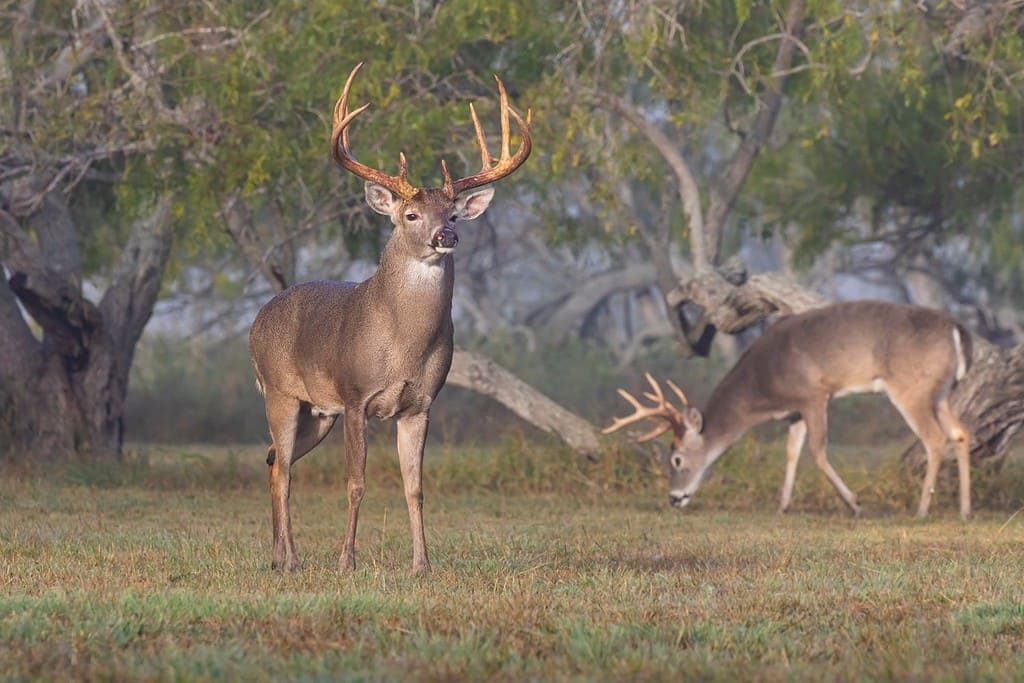
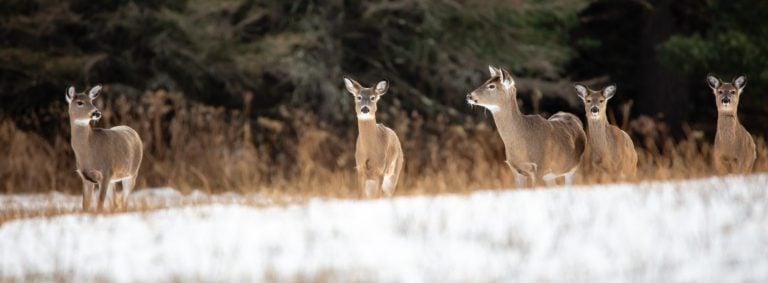
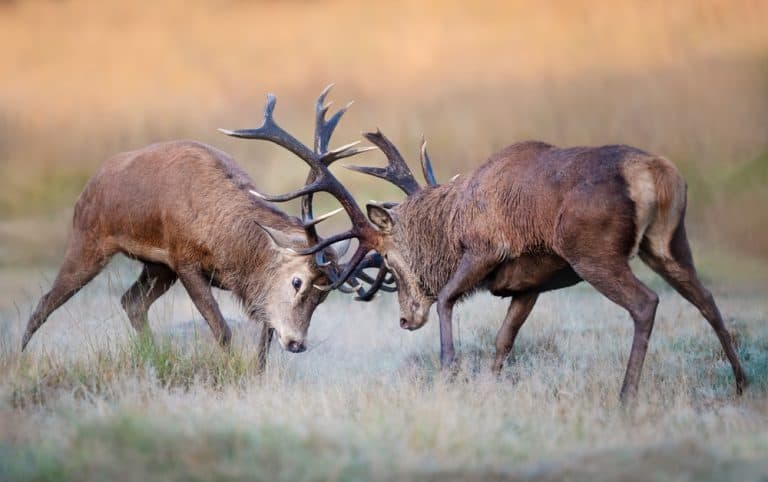
There are about 50 living species in the deer family, including white-tailed deer, elk, moose, and caribou.
©Danita Delimont/Shutterstock.com
The deer family includes about 50 living species found across much of the world. Like other wild animals, deer face different threats depending on their age, species, and location. Young deer can be especially vulnerable to predation and other natural causes. White-tailed deer can also be affected by diseases including hemorrhagic disease, while hunting is another major source of mortality in managed deer populations.
Human infrastructure creates additional hazards. Deer cross roads, encounter fences, and sometimes end up trapped in places they cannot easily escape. The rescue in this video ended well, but approaching a trapped adult deer can be dangerous for both the animal and the person trying to help. A frightened deer can kick or struggle with tremendous force. If you find an injured or trapped wild deer, the safest move in most situations is to keep your distance and contact your state wildlife agency or a licensed wildlife rehabilitator for guidance. In this case, the rescuers were able to get the deer back on its feet, and it took full advantage of its second chance.