
Quick Take
- Most people assume small dogs are safe around kids, but dachshunds are the exception, and the reason has nothing to do with aggression. Why kids and dachshunds clash →
- Dachshunds can sleep up to 18 hours a day and still wreck your house, which seems like a contradiction until you understand what's actually driving it. Sleep and destruction explained →
- Letting your dachshund gain even a little extra weight is not just a cosmetic issue. It triggers a chain reaction that can end in paralysis. Weight gain and paralysis risk →
- Their bark isn't a training failure but rather an engineering feature, and that distinction changes everything about how you manage it. Barking as a built-in trait →
The dachshund originated in Germany sometime between the 15th to 17th centuries, intentionally bred to track, chase, and flush out badgers. Its name literally translates to badger dog. Every distinct physical trait, from its short, powerful legs for digging to its long, flexible body and loud bark, was carefully cultivated to navigate and operate inside narrow underground burrows. Dachshunds arrived in the United States circa 1870 and were officially recognized by the American Kennel Club (AKC) in 1885. During World War I (1914-1918), anti-German sentiment negatively affected the breed’s popularity in America, with the AKC temporarily renaming the breed the badger dog. However, after the war, returning American soldiers brought dachshunds home from Germany, sparking a massive resurgence in popularity. But do dachshunds make good family pets? Keep reading to find out.
Dachshunds Come In Two Sizes
There are two types of dachshunds. Standard dachshunds weigh 16-32 pounds and stand 8-9 inches at the shoulder. Miniature dachshunds weigh less than 11 pounds and stand a petite 5-6 inches tall.

Dachshunds stand no more than 9 inches tall.
©Sherri Simms/iStock via Getty Images
Standard and miniature dachshunds share a baseline temperament defined by a loud bark, a strong prey drive, and a reputation for being notoriously stubborn. However, they differ noticeably in their personalities. Miniature dachshunds are generally more energetic and playful and are more prone to separation anxiety. Standard dachshunds tend to be calmer and more independent and are often aloof with strangers.
Dachshunds Have Delicate Spines
The dachshund’s elongated spine is exceptionally susceptible to injury due to a condition called chondrodystrophy, which is a form of dwarfism. This genetic condition causes their spinal discs to age and deteriorate prematurely, making them prone to rupture during normal physical activity.
The primary health concern for this breed is Intervertebral Disc Disease (IVDD), which affects roughly one in four dachshunds. It occurs when a brittle disc herniates (slips or bursts) upward into the spinal cord canal.
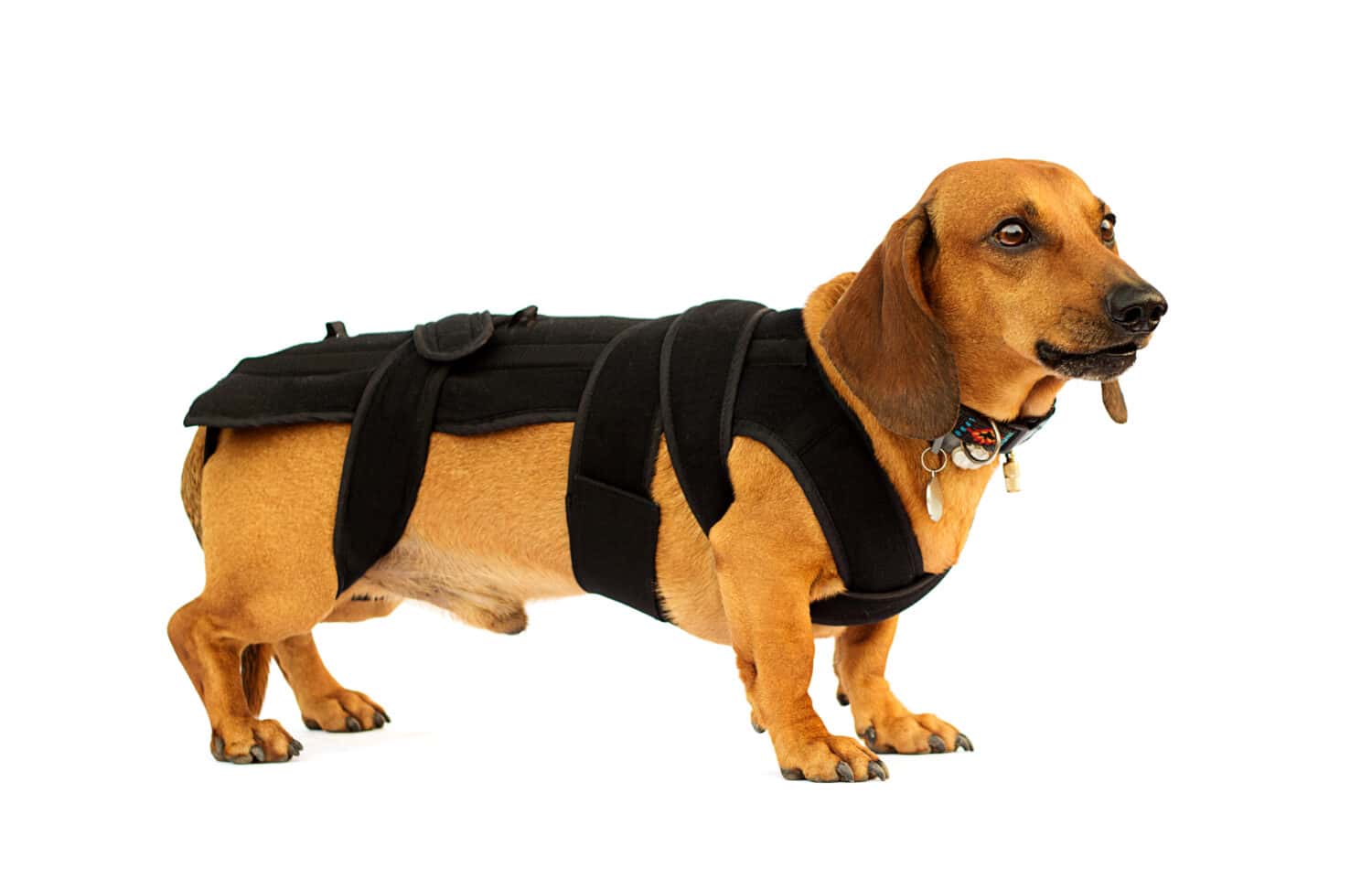
Spinal injuries are common in dachshunds.
©Happy monkey/Shutterstock.com
This compresses the nerves and can lead to a range of severe symptoms, including debilitating back pain, hind-limb paralysis, and incontinence.
Therefore, dachshunds must be handled with care. Dachshunds should not be allowed to climb stairs or jump from furniture. Placing ramps near furniture can help your doxie climb without injury. If you have stairs in your home, be prepared to carry your dachshund up and down.
Because of their delicate spines and high vulnerability to crippling disc injuries, dachshunds require incredibly mindful, gentle handling to prevent trauma. Consequently, they are not recommended for households with toddlers or small children, who may lack the motor control and situational awareness to avoid accidentally dropping the dog, falling on it, or tugging on its back.
Professionals recommend waiting until children are six to eight years old before bringing a doxie into your home. By then, children can typically comprehend and respect the boundaries needed to keep a fragile dog safe.
They Sleep a Lot
Standard and miniature dachshunds generally sleep between 12 and 14 hours per day, but may sleep more depending on their environment and life stage.
Dachshunds are also sensitive to the cold, meaning they will gladly spend 16+ hours a day completely buried under a warm blanket during the winter months. Because they have short legs that place them close to the cold ground and a single-layered coat with no insulating undercoat, they get cold incredibly quickly.

Even in the middle of a swimming pool, this dachshund is getting some sleep.
©Adriduquephoto/Shutterstock.com
When the temperature drops, a standard dachshund’s body shifts its energy toward maintaining its core temperature, which naturally drains their stamina and induces sleepiness. Their instinctual response to a cold room is to immediately burrow deep beneath blankets or cushions to trap their own body heat.
Once they are safely curled into a tight, warm ball, their heart rate drops, and they will happily snooze for 16 to 18 hours out of sheer comfort and a desire to avoid the chilly air.
Dachshunds Can Be Energetic
Despite their high sleep numbers, dachshunds are energetic hunting hounds that require daily exercise to maintain their physical health and prevent destructive behavior. However, their exercise limits must be tightly controlled to prevent injuries to their fragile spines.

Dachshunds love to play and need plenty of daily activity.
©iStock.com/NORRIE3699
Dachshunds are athletic hounds that require daily physical activity to prevent weight gain and destructive behavior, though their routines must be strictly managed to protect their fragile spines. Healthy adult dachshunds generally need 30 to 60 minutes of purposeful exercise per day, which can be split into multiple shorter walks on flat surfaces to protect their spines. Miniature dachshunds may require slightly less exercise than standards, but both benefit from regular, gentle activity tailored to their individual needs. High-impact activities like jumping, walking, running on steep inclines, or intense games of fetch should be avoided.

Doxies require more exercise than other small breeds.
©iStock.com/NORRIE3699
This activity level is perfect for some, but it is more than others might expect from such a small breed.
Dachshunds Can Be Destructive
When dachshunds are deprived of adequate physical exercise and mental stimulation, their instinctual hunting drive and high intelligence quickly morph into frustration, leading to severe boredom-induced destructive behaviors.
A bored dachshund will actively invent its own tasks to release pent-up energy, most commonly by relentlessly digging through carpets, couch cushions, or yard turf to satisfy its burrowing instinct.
Instead of trying to prevent your pup from digging, encourage this natural behavior but redirect it to an appropriate outlet, such as a designated digging area in the backyard or a pile of old blankets for them to burrow beneath.

Doxies love to chew.
©Carolyn Dietrich/Shutterstock.com
Dachshunds are notorious for destructive chewing, targeting baseboards, shoes, and furniture legs. A bored dachshund may also engage in non-stop, repetitive barking at the slightest environmental triggers.
It’s important to dog-proof your house before you bring your dachshund home, removing any electrical cords, toxic houseplants, and treasured items from their reach.
Providing your dachshund with enough exercise and mental enrichment can help prevent boredom and anxiety, which are two leading causes of destructive behaviors.

Their digging instincts may result in messes from time to time.
©Masarik/Shutterstock.com
Dachshunds Have Strong Prey Drives
Dachshunds may chase pets or wildlife due to their strong prey drive. This can be annoying to deal with, but it’s all part of adopting a hunting breed.

Because of their strong prey drive, dachshunds don’t always mesh with cats.
©Ermolaev Alexander/Shutterstock.com
Dachshunds have a notoriously strong prey drive. Originally bred to hunt badgers and other burrowing animals, they are genetically hardwired to track, chase, and dig. Movement, sound, and scent easily trigger them, making them eager to pursue small animals like squirrels, birds, and rodents, as well as family pets like cats and rabbits.
Dachshunds Bark a Lot
Dachshunds are notorious for barking frequently because they were originally bred to bark from underground burrows to alert hunters to their location. This makes them highly vocal watchdogs. Because they are deeply attached to their owners, they also bark to seek attention or express frustration and separation anxiety when left alone. While consistent training and plenty of mental stimulation can help manage the habit, a potential owner should expect a dog that naturally speaks its mind. Frequently.

Historically trained to bark, dachshunds can be quite vocal.
©David Pecheux/Shutterstock.com
Dachshunds are Difficult to Train
Dachshunds are considered difficult to train. They are naturally stubborn, strong-willed, and easily distracted by scents. They also have a strong urge to bark and dig, which requires patient, consistent, and positive reinforcement-based training to manage.

Dachshunds are smart, but may prove challenging to train.
©iStock.com/Ирина Мещерякова
Can Dachshunds Be Clingy?
Dachshunds are exceptionally clingy dogs that form intense bonds with their owners and constantly crave physical closeness. They will follow you from room to room, claim your lap, and sleep tucked under the blankets right next to you.

Dachshunds require loads of attention every day.
©Taisa/Shutterstock.com
Because they view their humans as their ultimate source of safety, this deep attachment makes them highly prone to separation anxiety and distress when left alone. This makes establishing independence through crate training and structured alone time essential for maintaining healthy affection and stress-free interactions.

Separation anxiety can cause problem behaviors like excessive barking and destructive chewing.
©Luiza Kleina/Shutterstock.com
Are Dachshunds Prone To Weight Gain?
Dachshunds are prone to weight gain due to a naturally slow metabolism, a voracious appetite, and a body built for conserving energy. This tendency to gain weight is especially dangerous for the breed because extra weight places immense strain on their long spines, drastically increasing the risk of Intervertebral Disc Disease (IVDD) and painful back paralysis. Keeping a dachshund lean through strict portion control, limited treats, and low-impact exercise is one of the most important aspects of maintaining their lifelong mobility.

Doxies’ treats should be limited so that they stay at a healthy weight.
©Kaczleo/Shutterstock.com
Medical Problems are Common in Dachshunds
IVDD is incredibly common in dachshunds, affecting between 15% and 21% of all dachshunds in their lifetime. Spinal injuries require immediate medical care, as untreated minor injuries can rapidly escalate into permanent paralysis.
Dachshunds are highly prone to severe dental issues because they have small mouths with small, tightly packed teeth. This tight alignment creates tiny pockets that easily trap food, plaque, and bacteria, rapidly accelerating the buildup of tartar and leading to early-onset periodontal disease.

Doxies need their teeth brushed regularly.
©Masarik/Shutterstock.com
This is especially true for miniature dachshunds. Their risk for infection, tooth decay, and premature tooth loss is exceptionally high. Left untreated, these chronic oral bacteria can destroy the underlying jawbone, cause painful abscesses, and may even enter the bloodstream, damaging vital organs like the heart and kidneys.
Brushing your doxie’s teeth once every day or two will help prevent plaque buildup. You can also use dental chews and other dental hygiene products. Those approved by the Veterinary Oral Health Council have been shown to help control plaque and tartar and are recommended by many veterinary dental professionals.