
Quick Take
- The weird link between a rat's teeth and its eyeballs explains everything about this bizarre behavior. Discover the teeth connection →
- Wild rats almost never do this, and the reason why says a lot about what boggling really means. Why pet rats boggle more →
- Boggling can mean two very different things, and misreading it could matter more than you'd expect. Stress vs. happiness boggling →
Sometimes, animals do startling things. This Instagram reel of a rat in a sea of blankets is a wonderful example. Once a human begins petting the rat, something very odd happens to the little rodent. First, its body responds with increased movement. Remarkably, its eyes then begin vibrating, almost bulging and popping out of its head.
For a novice rat or rodent owner, this behavior would probably seem pretty concerning. After all, if your cat or dog started shaking with its eyes bulging outward, something would certainly be wrong. However, people who understand rats know that this behavior is quite normal. When rats are especially relaxed, their unique anatomy can produce startling but harmless effects. Eye bulging or vibrating is a result of the dental-facial framework that all rodents possess. Called boggling, it is one of the cutest, if not slightly unsettling, side effects of true relaxation. Let’s learn more about rodent anatomy and why it produces these physiological effects.
Perpetually Growing Teeth
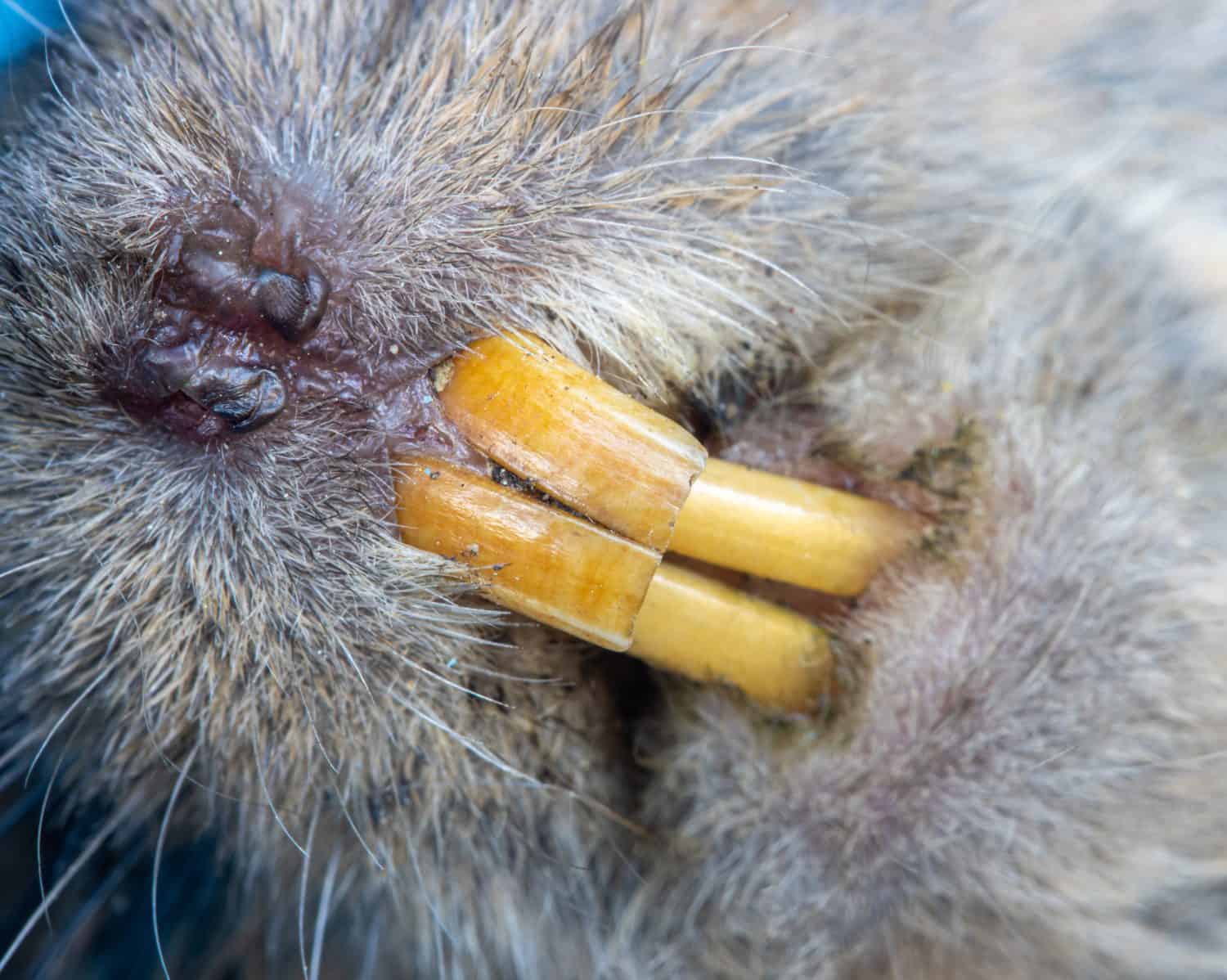
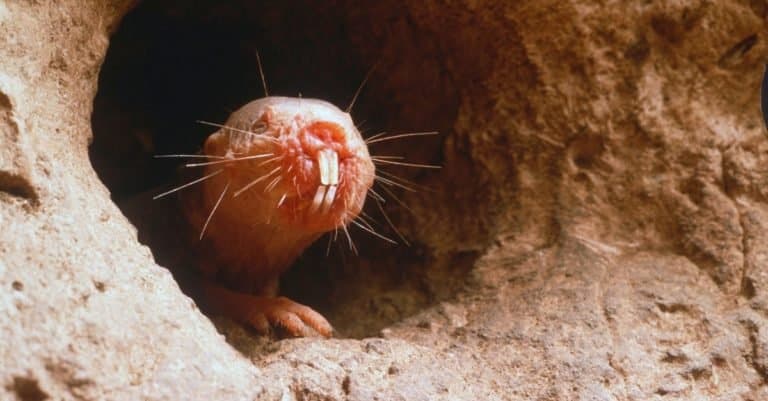
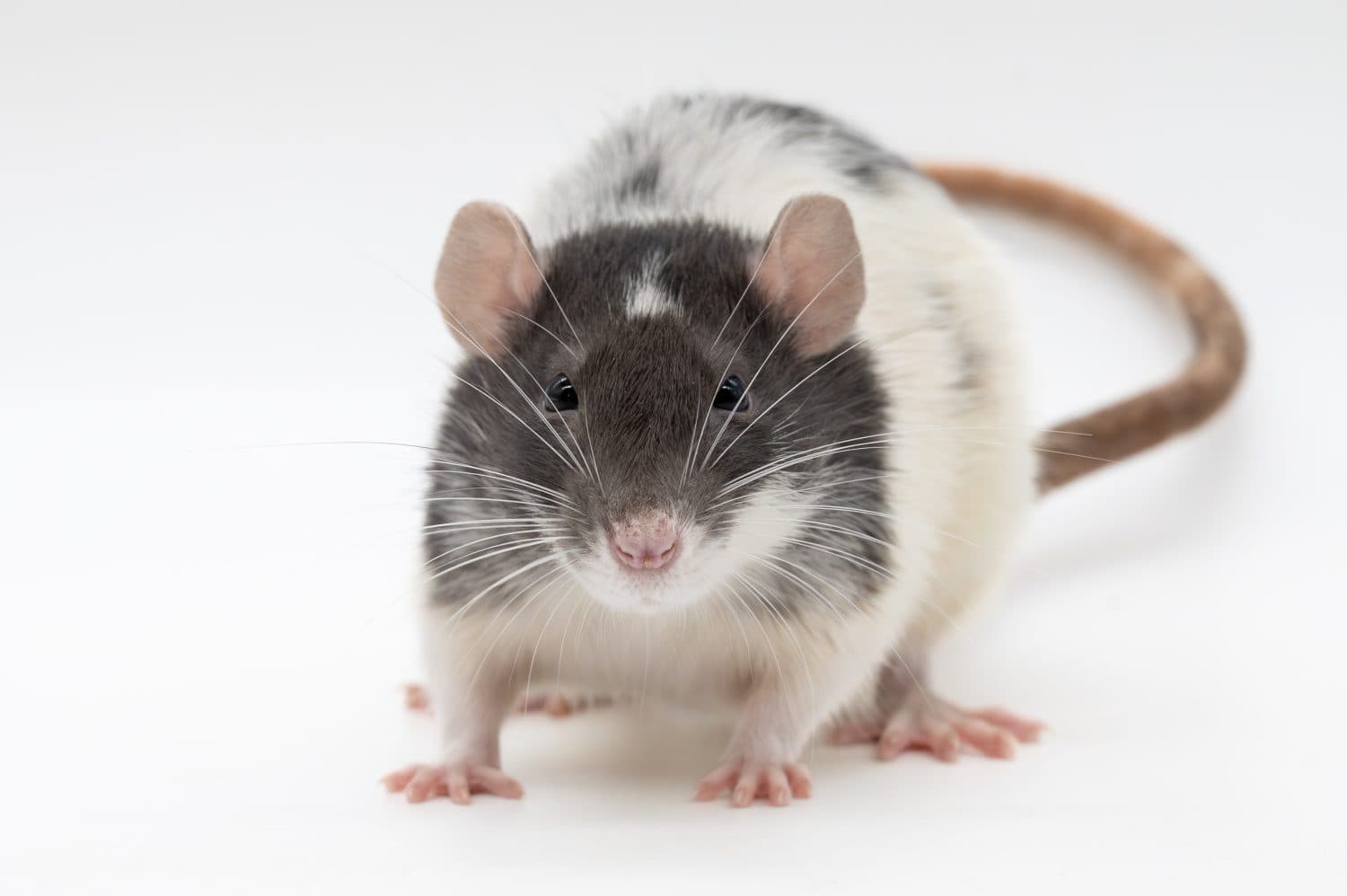
Rats are rodents, which means they have teeth that constantly grow and require constant chewing to keep them a manageable length.
©Milkovasa/Shutterstock.com
All rodents, including rats, have teeth that constantly grow. Stem cells at the base of each of their teeth, called cervical loops, perpetually produce new cells. These cells mineralize and cause teeth to grow. If humans lose a tooth, they must simply accept the gap in their smile or get an implant. Rats, however, have the opposite experience. The teeth don’t stop growing, so they have to constantly gnaw or chew on things to keep them a normal length.
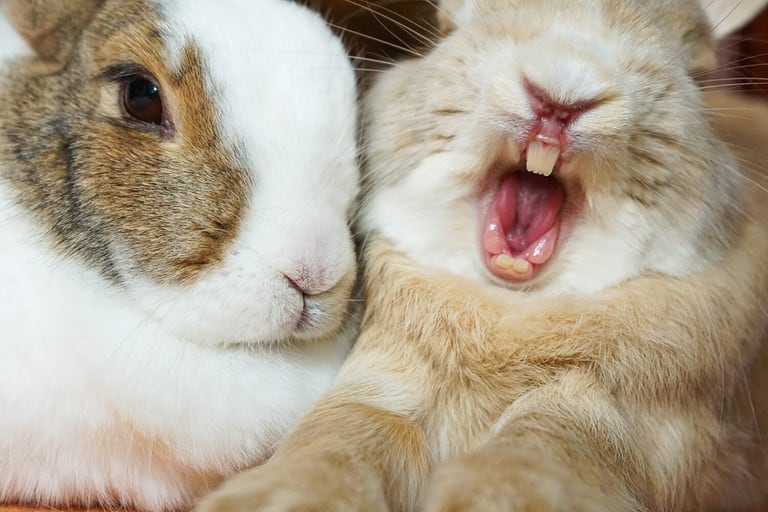
Rats have both molars and incisors. In rats, the molars do not grow continuously the way incisors do — though in some other rodent species, molars can also grow continuously. The incisors, however, keep growing throughout a rat’s life. Technically speaking, rats are monophyodonts. This means they only have one set of teeth for life. This attribute can lead to problems, including misalignment or overgrowth. Other animals, like rabbits, can develop continually weepy eyes due to abnormal tooth root growth or dental disease.
You may be asking yourself what this has to do with bulging eyes, but it is closely related to tooth structure. Humans sometimes develop a condition called bruxism, which involves repetitive tooth grinding. Rodents get this too, and it has interesting causes and equally surprising physiological effects.
Satisfactory Side Effects
Bruxism in rodents typically occurs as a by-product of excessive emotion. When rodents are incredibly stressed, they will grind their teeth loudly. They will also grind their teeth when they are extremely happy or relaxed. The contracting and relaxing of their jaw muscles pushes against their eye sockets, which causes their eyeballs to vibrate or bulge outward.
In this Instagram reel, a rat is arguably in a state of bliss. It is wrapped in blankets, and a tender human hand slowly, compassionately pets its back, rubs its head, and lightly strokes its little feet. The rat, unsurprisingly, becomes incredibly relaxed. This extreme emotional state causes its teeth to grind, which pushes on its eyeballs. The eyeballs begin to vibrate and bulge out of its face as a physiological sign of emotional well-being.
Rat Species

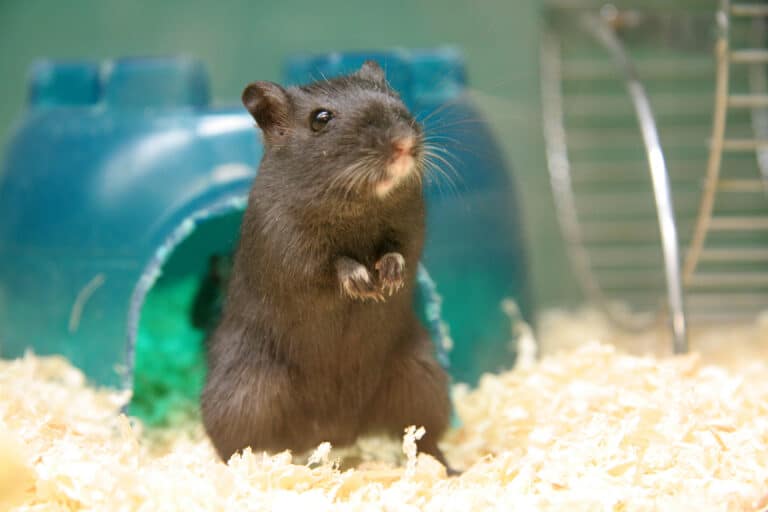
All rodents are capable of boggling, but usually wild rodents are in too much of a constant state of hyper-vigilance to relax enough for the behavior to occur.
©New Africa/Shutterstock.com
Boggling of the eyes is possible for every species of rat. They all share the same skull anatomy and muscular framework to produce these effects. That being said, lifestyle can play a part in how often this behavior manifests.
Seeing a rat engage in boggling in the wild is pretty rare. They are simply too preoccupied with survival — from finding food to evading predators — to ever be relaxed long enough for boggling to happen. Rats kept as pets have more chances to feel true relaxation or physiological comfort, which produces happy bruxism, leading to boggling.
Technically, boggling can also happen when a rodent is extremely stressed or dealing with an illness since they grind their teeth as a form of self-soothing as well. Context clues should help you determine whether a rat’s boggling stems from bliss or stress.