
Quick Take
- The black Rat evolved in South Asia, where it has had a deep historical and cultural impact
- The black rat helped spread the Yersinia pestis bacterium, which was responsible for the Black Death
- Rats destroy and contaminate billions of dollars of agricultural products annually
- Protecting island ecosystems from black rats often involves dropping rat poison from helicopters
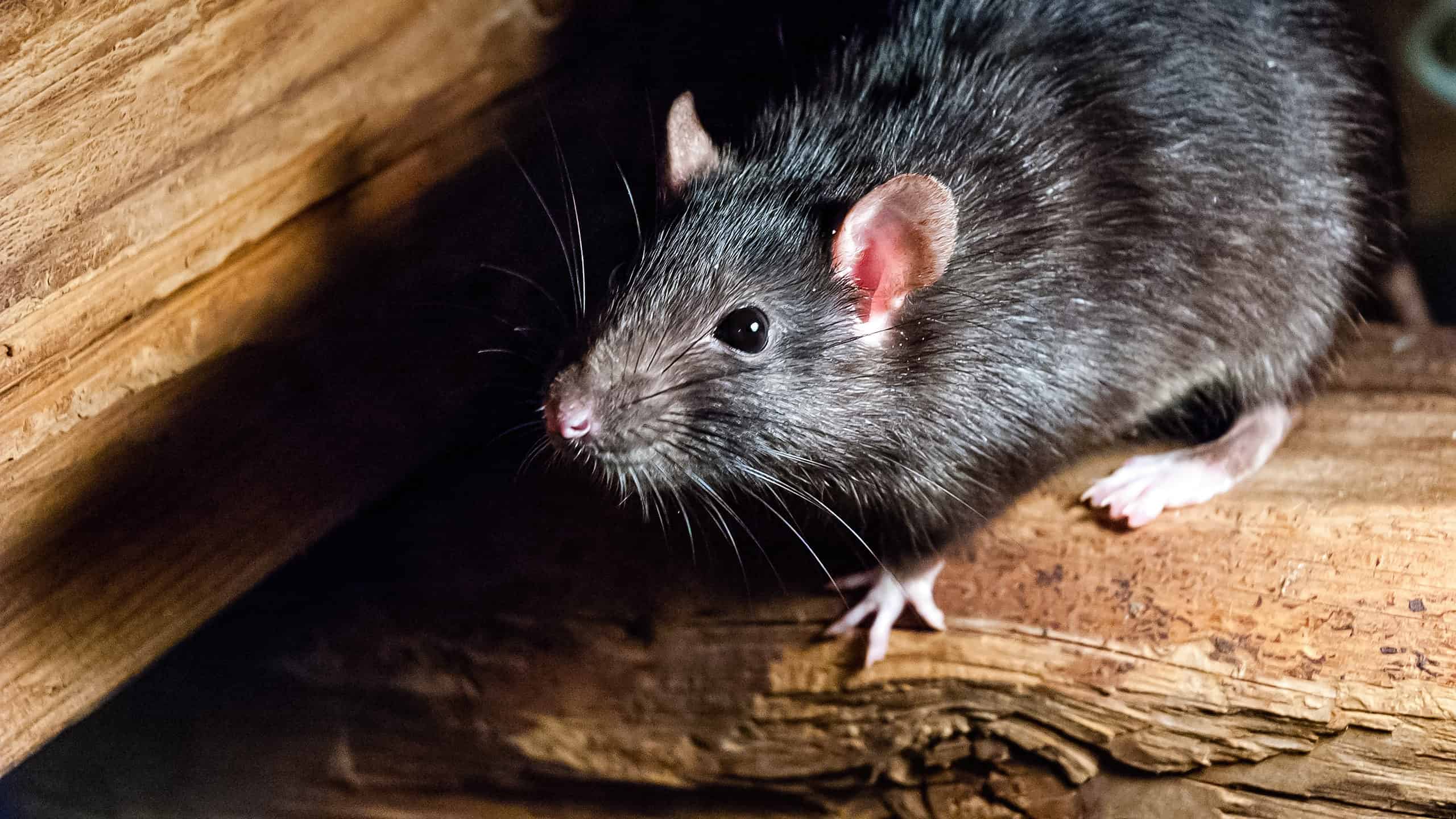
Black rats (Rattus rattus) have lived alongside humans for millennia, making homes in our dwellings, raiding our food stores, spreading diseases, and inspiring hostility, fear, and wonder. Black rats have unique adaptations that make them well-suited to man-made environments, allowing them to travel on ships to the world’s most remote islands, where they have caused significant ecological devastation. Now, experts are finding novel ways to protect both precious ecosystems and agricultural necessities from these eager omnivores.
The Origins of One of the World’s Most Invasive Species
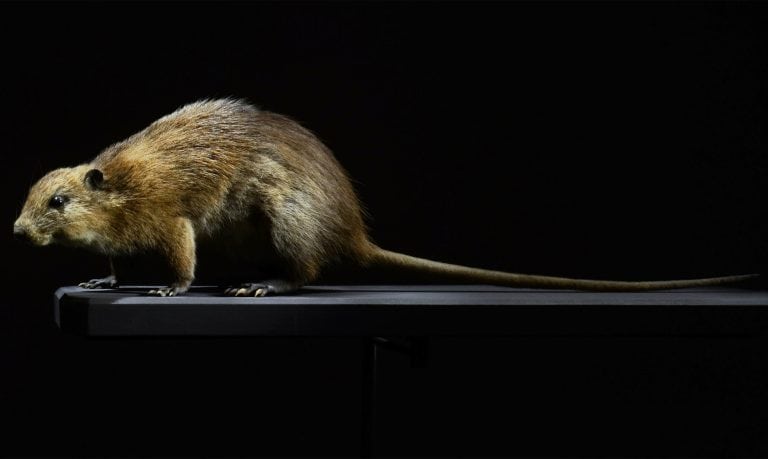
The black rat is a medium-sized rat with long, hairless ears and a scaly tail that is always longer than its body. Its propensity for exploring and nesting in high places has given it the name “roof rat.”
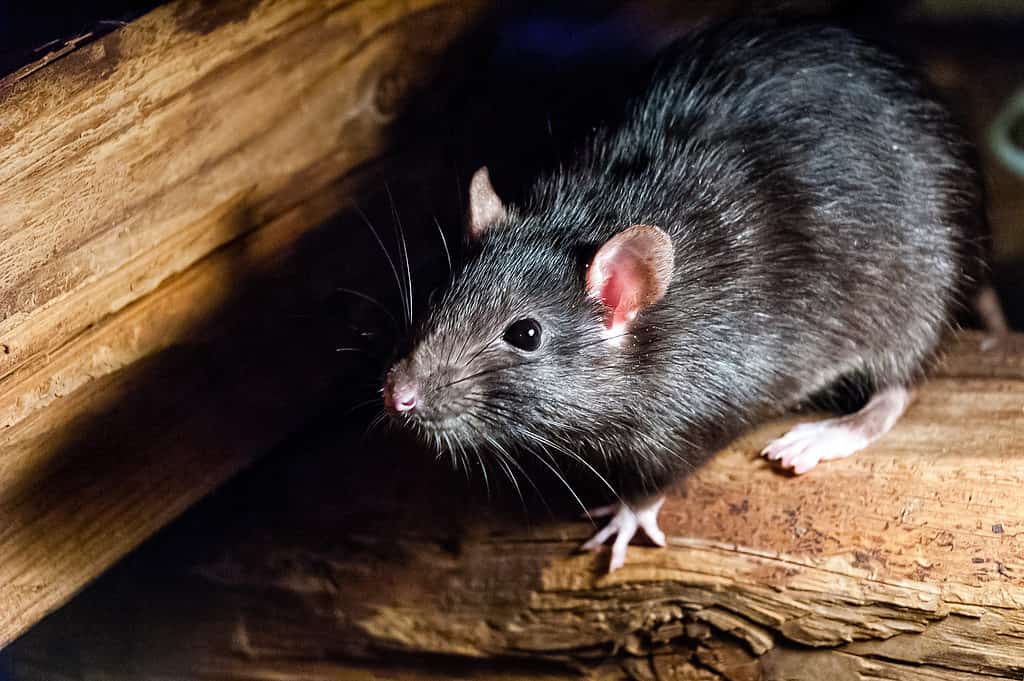
The black rat is also called the ship rat or house rat.
©Carlos Aranguiz/Shutterstock.com
The black rat evolved in South Asia, and it has had a deep cultural influence in that region. The hills of northeastern India and western Myanmar are covered in bamboo forests, which bloom synchronously every 48-50 years, covering the land with bamboo seeds and triggering a rat flood in an event called the Mautam.
Black rats can reproduce rapidly—a single female can produce 60 offspring per year—and during a Mautam, overwhelming numbers of rats destroy fields of crops, orchards, granaries, and any kind of stored food, leading to famine and regional instability. The famines resulting from a Mautam in 1881 led to mass migration and regional conflict in northeastern India, and in 1951, instability caused by a Mautam famine led to the formation of the Mizo National Famine Front, which would declare independence from the Indian state in 1966 and engage in 20 years of armed conflict with the Indian government.
Despite this devastation, the black rat is not universally reviled in India; some 1,600 miles away, in Deshnok, stands the Karni Mata Temple, where at least 20,000 black rats are cared for by temple workers, fed, and treated with reverence as reincarnations in the Hindu tradition.
Black rats began to spread around the world when larger, seafaring ships began forming networks of trade routes across seas and oceans. Black rats found themselves at home in rigging and masts, spreading alongside traders to ports around the Indian Ocean, Europe, and eventually the rest of the world.
A Cozy Relationship With Humans—But One With Deadly Consequences
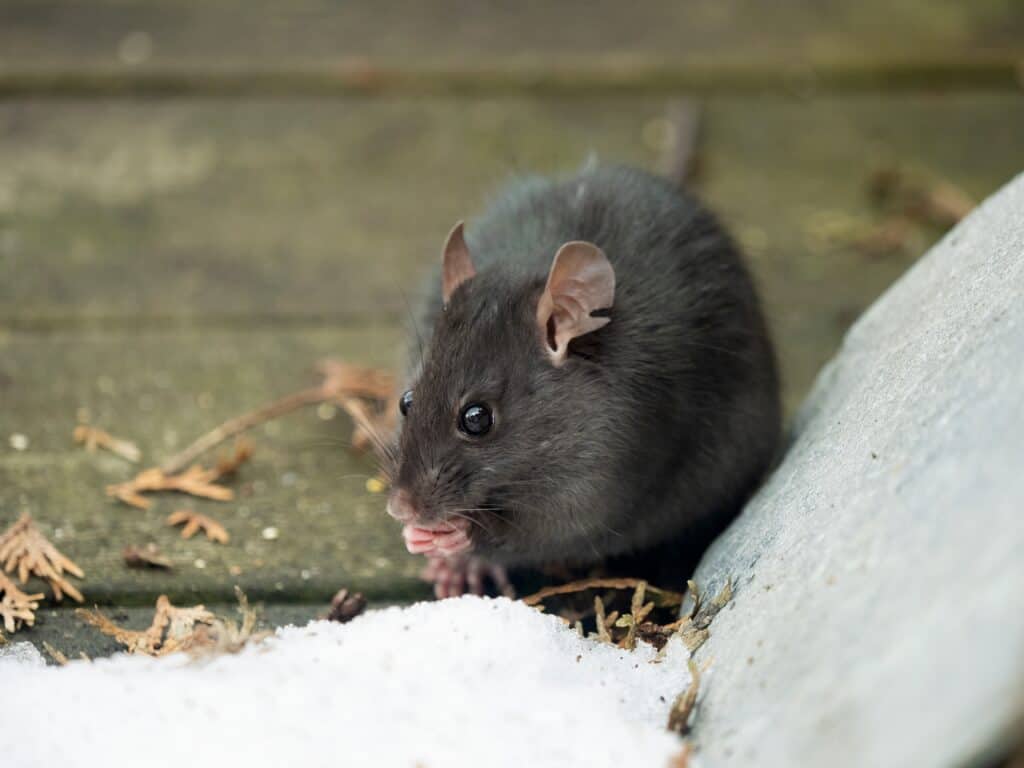
Black rats thrive in human-dominated ecosystems and act as vectors of disease.
©Ernie Cooper/Shutterstock.com
Black rats are a commensal species with humans, a word meaning “eating at the same table.” They are also a very social species, living in colonies as small as 6 or as large as hundreds of individuals. They benefit from changes that humans make in the environment, relying on the food and waste we create and finding homes in our houses, sheds, barns, orchards, and storehouses.
Their ability to adapt to human environments is what has made rats the 2nd most common mammal on earth, after only humans. But the fact that they live closely with each other and near humans makes them the perfect vector for disease, and rats have helped to bring about some of the most notorious pandemics in human history.
In 541, a ship left port in Egypt, carrying grain to another city in the Byzantine Empire. The ship also carried black rats, which in turn were infested with Oriental rat fleas (Xenopsylla cheopis) infected with Yersinia pestis, the bacterium that causes plague. Millions would die in the resulting Justinian Plague, but it wouldn’t be the last time that rats brought infectious death to Europe.
The Black Death began in a similar fashion, when sick sailors docked in Messina, Sicily, in October 1347. Oriental rat fleas prefer a rodent host, but black rats are not immune to the fatal effects of Y. pestis. When a flea is infected with Y. pestis, the bacterium prevents it from digesting blood, causing the flea to become increasingly hungry and bite its host repeatedly, which spreads the bacterium further. After an infected rat population collapses from plague, the fleas seek human hosts, spreading the disease. Around one-third of the population of Europe would die in only 5 years during the Black Death.
Though black rats and their flea hitchhikers certainly played a role in spreading the plague during the Black Death, recent research indicates that the lice and fleas that parasitize humans might have been a larger driver of plague transmission, especially in areas that did not have black rat populations.
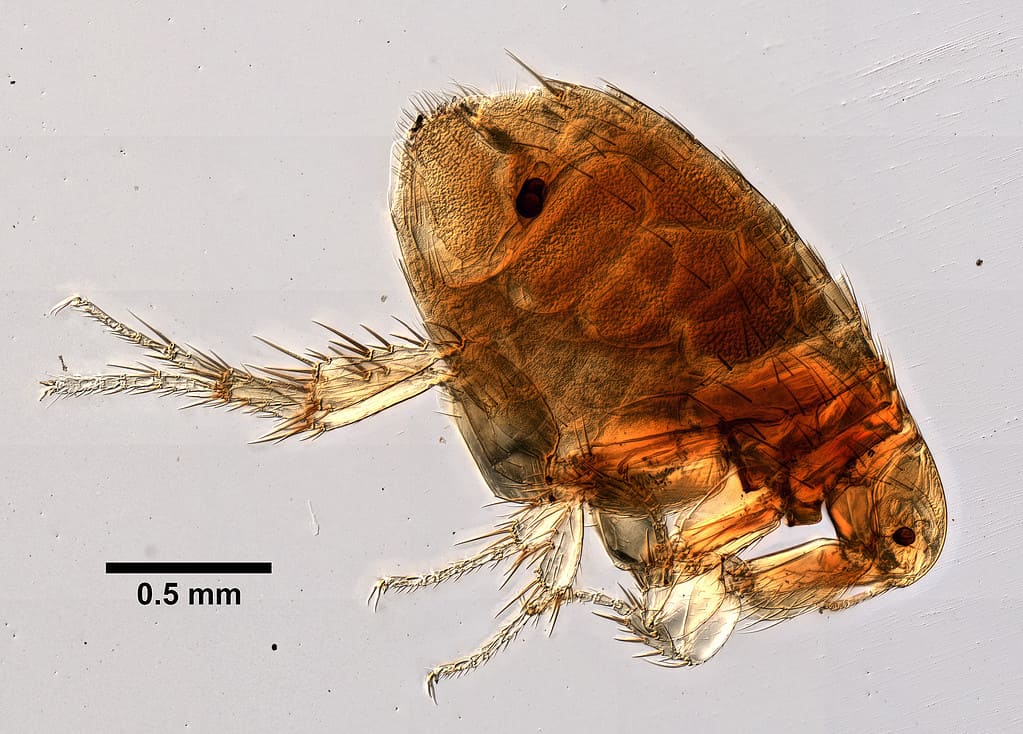
The Oriental Rat Flea, one of the parasites that spreads the plague
©Yale Peabody Museum (Daniel J. Drew), CC0, via Wikimedia Commons – Original / License
Humans wouldn’t learn that Y. pestis is the pathogen that causes plague until 1894, when Alexandre Yersin, a Swiss/French doctor and bacteriologist, isolated a sample of the bacteria during an outbreak of the plague in Hong Kong. During the Black Death, people attributed the disease to divine will, the alignment of the stars, or clouds of corrupted air. Rats were not understood to be a vector of disease, but rat infestations still caused headaches in the Middle Ages. Those battling rats could hire ratcatchers, who would deploy traps and poisoned bait; others might ask a priest to recite a specific prayer to send the rats away.
Today, Y. pestis is treatable with modern antibiotics, but that doesn’t mean we don’t have to worry about diseases spread by black rats. To learn more, we spoke to Annabel Ellis of the University of Sydney, a biologist who has researched rats. She says, “In modern times, there are dozens of zoonotic diseases, such as leptospirosis and hantavirus, which are transmitted by rats and continue to impact human health.
Unfortunately, modern life has created the perfect environment with lots of food waste and warm nooks for these commensal species to cohabit with humans.” In January 2026, a leptospirosis outbreak in Berkeley, California, affected both dogs and rats, resulting in the death of at least one dog. If left untreated, leptospirosis can lead to kidney and liver failure, meningitis, and death. Additionally, black rats can spread murine typhus, rat-bite fever, salmonella, and eosinophilic meningitis.
An Agricultural Pest of Mind-Boggling Proportions
Though the threats to public health from rat infestations are significant, greater still is their impact on our agricultural systems. According to an international team of researchers, rodents cause $19 billion dollars worth of damage every year in the United States, and 20% of all agricultural products are contaminated by rats and mice every year, leading to the destruction of said products. Not all of that damage comes from rats—in fact, beavers cause even more economic harm due to their tendency to build dams and destroy embankments, which leads to flooding—but rats are responsible for more agricultural damage than any other rodent.
The black rat’s arboreal nature makes it a perfect pest for fruits and nuts in particular, and they are enthusiastic consumers of citrus, coconut, coffee, cocoa, and any cereals or grains. Black rats can sweep through orchards, consuming fruits and nuts before the harvest, but the damage caused by infestations does not stop there. Like all rodents, black rats have four long, rootless incisors, which grow continuously during the rat’s life, and they must find things to chew upon for the teeth to stay short and sharp.
This can spell disaster for farms: destroyed irrigation lines, electrical wiring in tractors or buildings chewed to bits, walls and insulation in warehouses shredded and used for rat bedding. And though they are hungry eaters (rats can typically eat about 25 grams per day), their urine and feces are a larger concern, as a rodent can contaminate 10 times as much food as it can eat in a day through its leavings. Rats have the unfortunate habit of excreting where they’re eating.
A Tricky Pest To Eradicate
For as long as humans have practiced agriculture, we have practiced strategies to protect our food and food systems from rats. In the 1800s, dog breeds specifically developed for hunting rats were perfected and introduced in Europe to protect agriculture. If you were dealing with a rat infestation at your farm, you could call a crack team of dog and ferret handlers to the scene.
The “ferretmeister,” who controlled a team of trained ferrets, was the star of the operation: rats are deathly afraid of the small, nimble, and flexible ferret, which could squeeze into even the smallest rat hiding places. When they smelled the ferrets, rats would flee from their homes into the open, ideally into the waiting jaws of rat terriers surrounding the infested buildings.

Yorkshire terriers were originally bred by cotton and woollen millworkers as a rat-hunting dog.
©Anna Vasiljeva/Shutterstock.com
Black rats have a curious way of exploring possible sources of food in their habitat. When black rats are introduced to a new area with a variety of potential food sources, they are known to taste small samples of each one. In doing so, they can learn which food source is the best one to focus on (or make a cache of it near their homes).
Black rats are also neophobic mammals, meaning they tend to avoid anything new introduced into their environment. For these reasons, rats can be very difficult to kill with poison—they will often avoid the poison entirely for a considerable period of time, and even if they do eat some of it, they may only take small samples. Pest control specialists during the Black Death tried putting arsenic and strychnine in tempting fried or sweetened grains, but rat poisons remained largely ineffective until the modern era.
Traps are no better, according to Ellis. “Traditional traps are often not very enticing for a rat to enter. Famously, a single brown rat took 4 months to be recaught despite extensive trapping efforts,” she says.
In 1938, researchers studying cattle that were dying from a bleeding disorder discovered a new compound, warfarin, that slowly prevents the body’s ability to form blood clots, leading to internal hemorrhaging. After we learned how to synthesize the tasteless, odorless chemical, it was approved as a rodenticide in 1948, and has also become an important anticoagulant medicine for people suffering from clotting disorders, saving countless lives.
What made this toxin such an effective rodenticide was its ability to kill rats days after ingestion, and warfarin soon became a front-line tool in dealing with rodent infestations, as well as protecting ecosystems from this pernicious invader.
Rats are incredible animals—they are highly intelligent, sociable, and adaptive to new environments.
Annabel Ellis of the University of Sydney
An Adaptable Invasive Species
The black rat has an unusual distinction—it has never dropped off the International Union for Conservation of Nature’s list of top 100 worst invasive species. Black rats have reached virtually every ecosystem that humans have traveled to via ship, and with devastating consequences.
Though the black rat was the most prevalent rat in Europe and in other temperate zones during the Black Death, it has since been outcompeted by the larger, more aggressive brown rat (Rattus norvegicus). But in tropical zones, the black rat has an advantage, and it is on tropical islands where the black rat has caused the most ecological destruction.
Ellis, of the University of Sydney, explained that there are 3 main reasons that rats are so invasive: “One, they are synanthropic (living near and benefiting from humans), often living commensally with humans and hitching rides on boats; two they are generalist omnivores, allowing them to eat a lot of different foods (e.g. bird and turtle eggs, lizards, plants, invertebrates); and three, They are highly agile with good climbing and swimming abilities.”
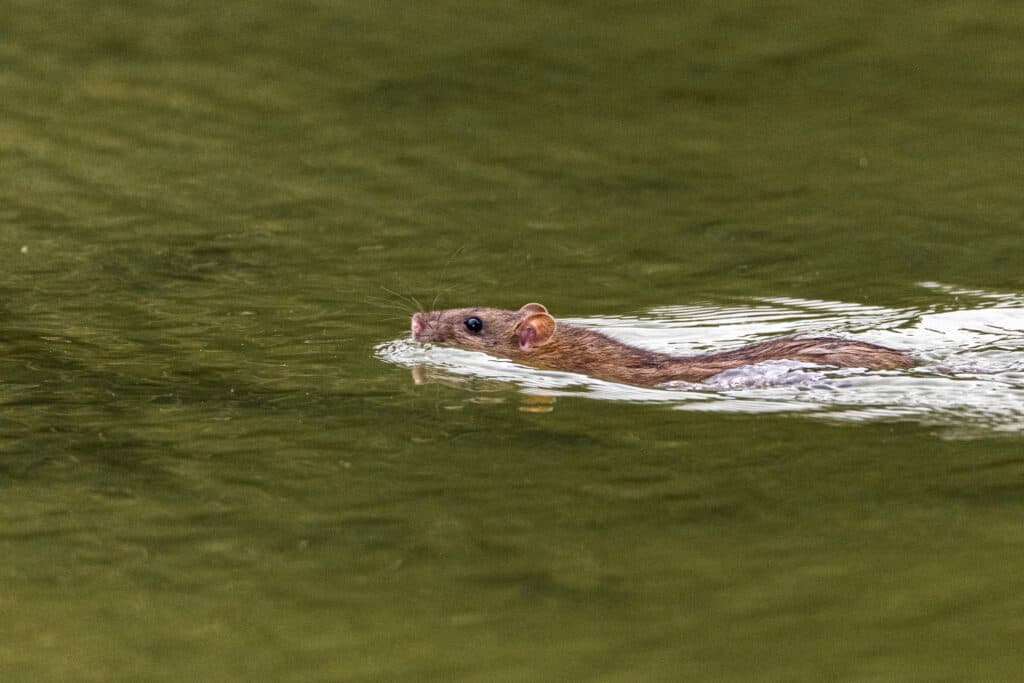
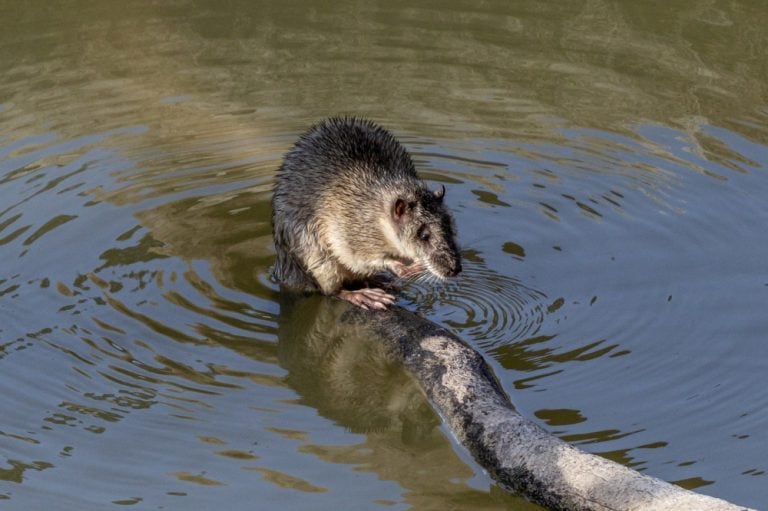
Rats can disperse across some archipelagos due to their advanced swimming abilities.
©iStock.com/Philippe Paternolli
Ellis explained why rats were especially destructive in island ecosystems. “This has been particularly bad in island ecosystems, where native species are often endemic (found only in a restricted range), have limited dispersal mechanisms, and lack adaptations to these novel predators. With over 85% of the world’s island archipelagos having been invaded by rodents, island species are especially threatened by invasive rodents,” she says.
Seabirds rely on islands free of predators, which are safe spaces for them to build nests and rear young. One study found that seabird densities are almost 760 times higher on islands without rats, which have a voracious appetite for seabird eggs and tree seeds, seriously disrupting tropical island ecosystems.
Birds bring important nutrients like nitrogen and phosphorus to island ecosystems through their droppings, enriching the soil, and when the ecosystem loses them, it causes a cascade of effects. The absence of bird droppings deprives the soil of nitrogen and phosphorus, and rat infestations can even hurt nearby reefs that depend on nutrients flowing from the forests and the bird colonies into the ocean.
But biologists and conservationists are fighting back. Ellis reports, “Rodenticides or rat baits are the most successful tool for eradicating rats; however, adequate planning is required in sensitive ecosystems. It’s really important to know which species are present and how they could be impacted by rat baiting. Some wildlife managers have temporarily taken non-target species (e.g., native rodents or birds-of-prey) into captivity before bait application and rereleased afterwards.”
Many islands have been treated with rodenticides to protect native species, most often by dropping bait stations or poison pellets from helicopters, sometimes in huge amounts: in 2012, conservationists dropped 22 tons of rat poison on 2 islands beset by invasive rat populations.
On islands where rats have been eradicated, nesting birds have returned in greater numbers, and reptile populations have been observed to increase 50-fold after the elimination of rats. Across 666 islands, 820 efforts have been made to eradicate rats, and 88% have been successful.
The Black Rat’s Constant Competition with Its Cousin, the Brown Rat
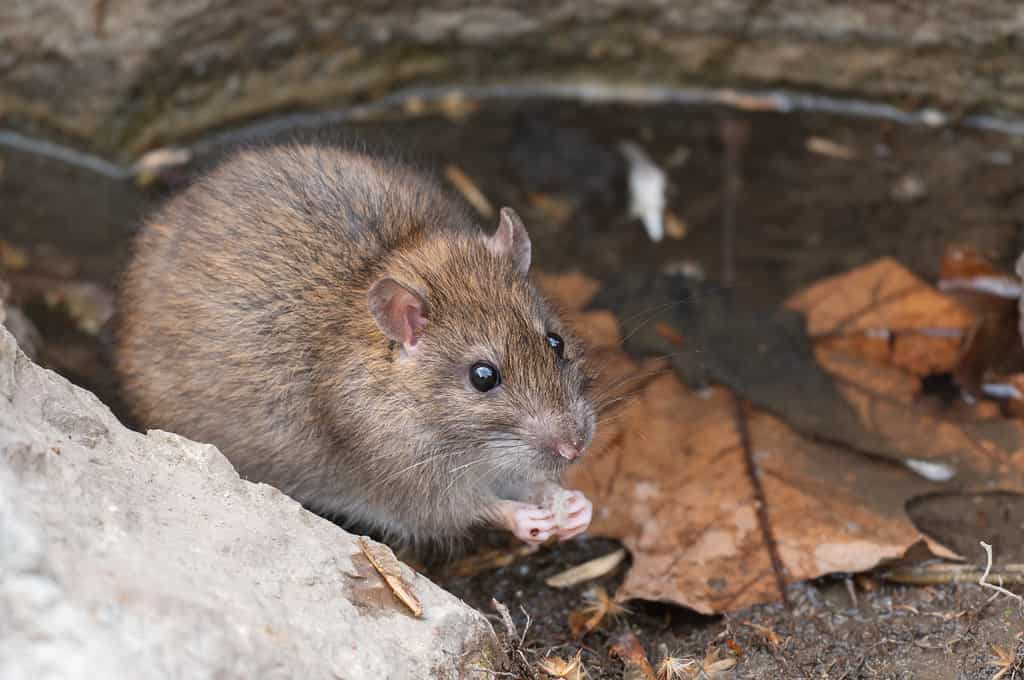
Brown rats have competitive advantages over black rats in certain environments.
©iStock.com/MriyaWildlife
Though black rats were by far the most prevalent species in Europe during the Black Death, they have been displaced by larger, more aggressive brown rats (Rattus norvegicus) in many temperate zones. The brown rat is also known as the sewer rat and is better adapted to live in the ground or in surface-level dwellings.
As cities transitioned to building more in brick and tile, and thatched roofs became rarer, black rats were deprived of some of their favorite nest sites. Brown rats attack black rats and invade their territory, but in tropical zones, black rats have an edge—their climbing abilities allow them to take advantage of all levels of the forest canopy.
Brown rats are just as destructive as black rats, but they have nonetheless formed close and beneficial relationships with humans. Unlike the skittish and aggressive black rat, the brown rat is docile and sociable—they are easy to train and have become popular pets. Because of their amenable natures and physiological similarities to humans, brown rats have also been bred as laboratory animals, helping to lead to many breakthroughs in medicine by serving as test subjects.
A Few Positive Qualities Of Rats
Despite their destructiveness and propensity to spread disease, there’s a lot to admire about the black rat. They show a crafty mischievousness, able to outwit or avoid even the best-designed traps. They are very affectionate with one another, spending hours grooming each other, and scientific experiments have shown that rats can be empathetic, working hard to free a trapped fellow rat in experiments. Ellis has also found some admiration for rats.
“Honestly, working with and researching black rats has given me a greater appreciation and fondness for rodents,” she says. “Rats are incredible animals – they are highly intelligent, sociable, and adaptive to new environments. Black rats are able to swim over one kilometre (1.6 miles), which is amazing for such a small animal!”
Thanks to second-generation rodenticides and advanced trapping systems, we’re better prepared to deal with invasive rats and rat infestations than ever before. Still, these dynamic, commensal animals aren’t going away anytime soon. We share the planet with seven billion rats, and it’s up to us to create environments that keep them away from our resources and out of our homes.