
Quick Take
- A bird that nearly vanished from existence now nests on one of Chicago's busiest city beaches, and the public's reaction was nothing short of extraordinary. Meet Monty and Rose →
- Habitat loss and hunting drove these birds to the edge of extinction, yet there is an unexpected reason they keep building nests in the worst possible spots. See how they nearly vanished →
- Thirteen zoos are quietly playing a hidden role in keeping this species alive. How zoos raise chicks →
- Restoring shorelines for these tiny birds turned out to rescue something far bigger than anyone planned. Explore the ripple effects →
Great Lakes piping plovers are making a comeback. In 1986, the population was federally listed as endangered. By 1990, only about one dozen pairs remained, all of which were in Michigan. However, thanks to intensive recovery efforts by conservation experts and community volunteers, the endangered little sand birds experienced a record year in 2026. This past breeding season, the Great Lakes were home to 99 nesting pairs. From those parents, there were 184 chicks fledged, with 160 raised in the wild and 24 raised in captivity.

Piping plovers nest in the sandy dunes of the Great Lakes shorelines.
©csterken/iStock via Getty Images
Meet the Great Lakes Piping Plovers
There are three populations of piping plovers (Charadrius melodus):
- Great Plains
- Atlantic Coast
- Great Lakes.
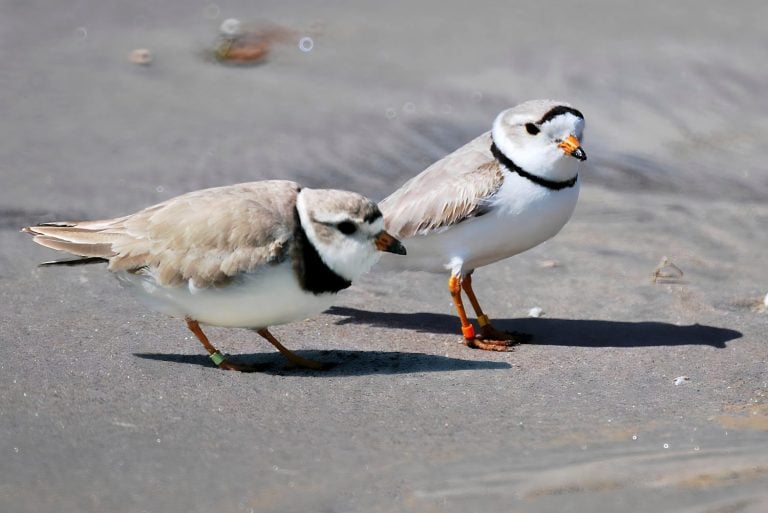
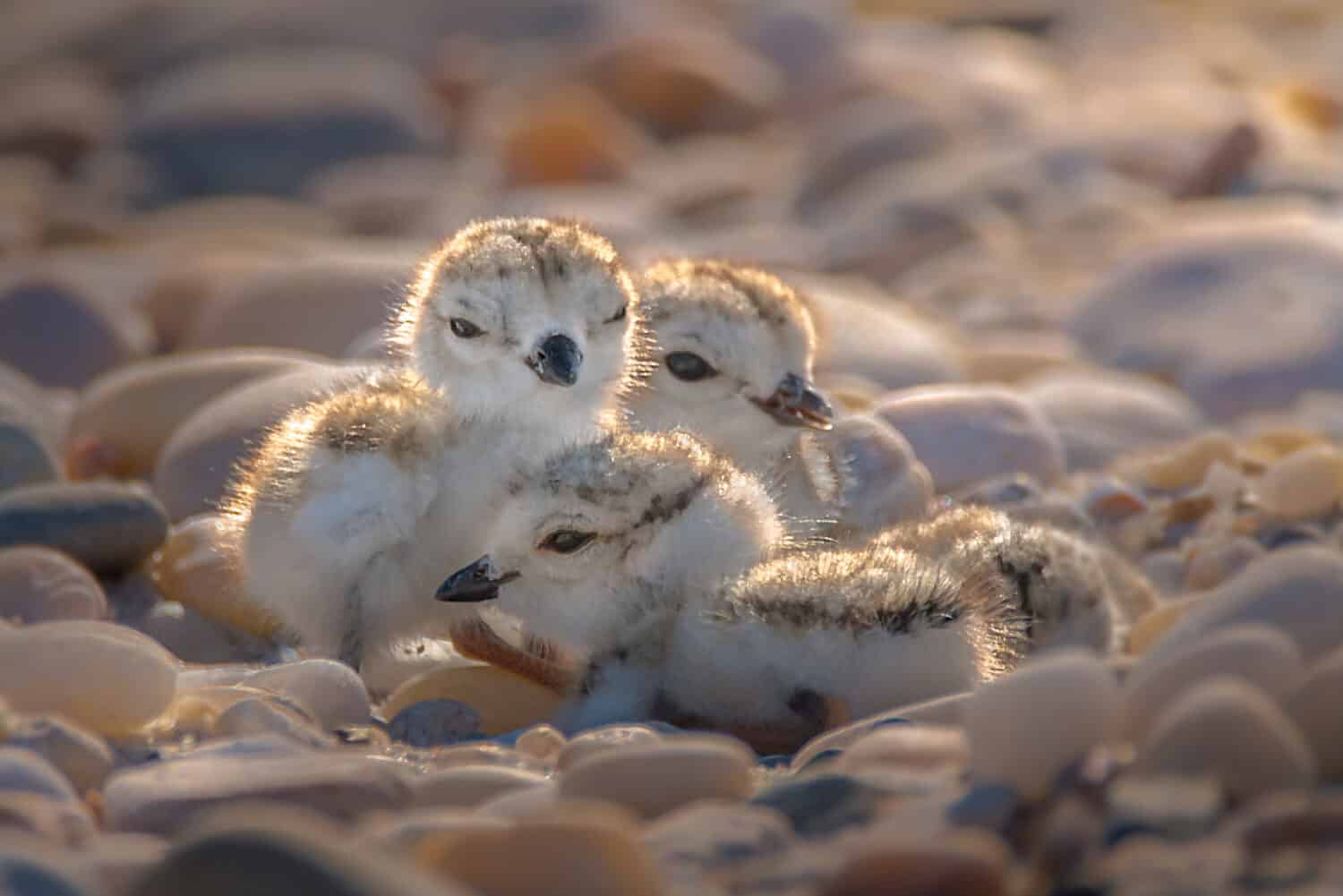
The Great Lakes population only nests and breeds in the Great Lakes. They migrate hundreds of miles south to the Gulf or Atlantic Coast in winter. Most return each spring to the same nesting spots where they were born. These sand-colored birds blend in well to their sandy environment and can be hard to spot until they move.
From Hundreds of Pairs to Just a Handful
Experts estimate that at one time 500 to 800 pairs of piping plovers migrated every season to the Great Lakes region. But widespread habitat loss, human disturbance, and hunting during the late 19th and early 20th centuries brought their numbers to an all-time low of about 12 pairs in 1990.
The birds’ nests are particularly vulnerable to human activity and predation. They have open nests which they scratch into the sand or gravel of a Great Lakes beach. Unfortunately, piping plovers aren’t the only ones that love the beach. Great Lakes beaches are also prime spots for human recreation and development.
Experts believe the birds are prone to nesting alongside areas of high human activity because they start nesting in early spring, while the beach is mainly quiet and empty. Once the weather warms, people begin showing up. All it takes is one dog walking with their owner along the beach to run up and discover a nest of hatchlings.
How Conservationists Are Helping Piping Plovers Recover
It took a dedicated group of conservationists to bring the small population of a dozen pairs up to the current numbers. It started with a small population of birds living only in Michigan. However, today, the count is 99 nesting pairs found across multiple states, including Michigan, Wisconsin, Illinois, Indiana, Ohio, Minnesota, and New York. To bring these little birds back from the brink of extinction, conservationists used various techniques, including captive rearing, nest monitoring, and habitat restoration.
Captive Rearing
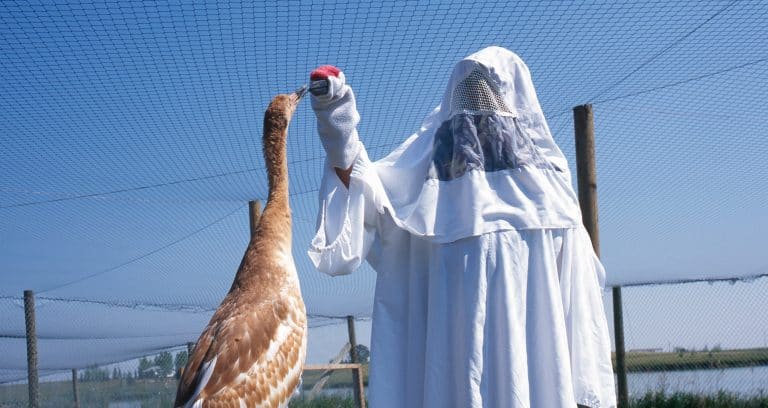
Currently, 13 zoos participate in the captive rearing of chicks as a way to save abandoned piping plover eggs. The chicks are hand-raised by zoo professionals. Then, once they are old enough, they are released into the wild where they were originally found. The hand-raised birds migrate south for the winter but often return to the same place where they were released.
Protecting Nests from Predators and People
Biologists, with the help of volunteers, scan the beaches each spring to locate nests. Nesting areas may be roped off to protect the birds from human interaction and interference by pets. Conservationists erect signs warning the public to maintain their distance and keep pets on leashes.
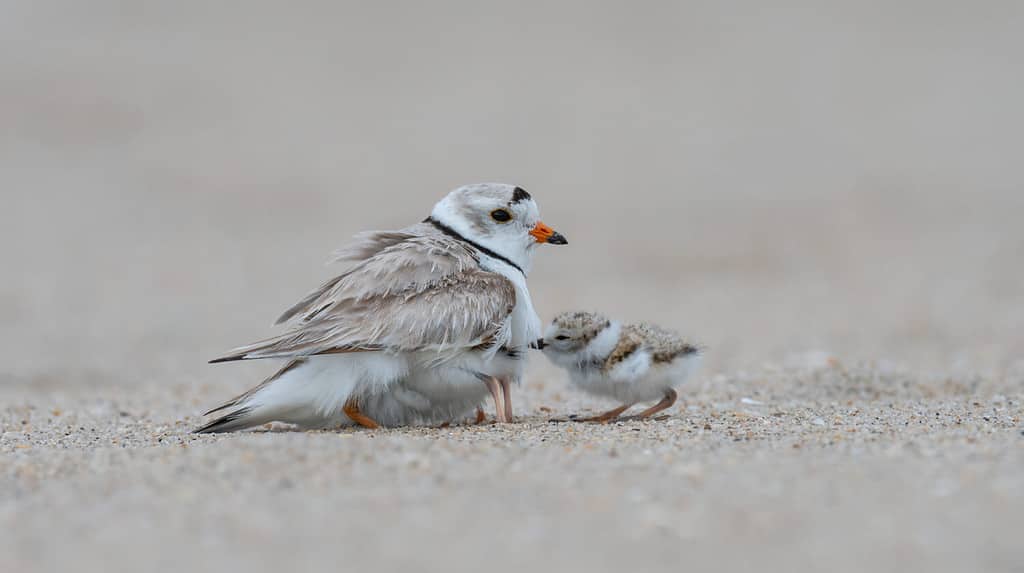
Piping plover chicks stay with their parents for about four to five weeks until they are old enough to be independent.
©Randy G. Lubischer/Shutterstock.com
Sometimes, special enclosures are placed over the nests to protect the eggs and chicks from predators. Volunteers play a vital role in the success of conservation programs. Community volunteers spend hours monitoring nests to track the birds’ activity, watch for abandoned nests, report disturbances, and raise public awareness. Volunteers can identify individual birds by the colored bands placed on chicks’ legs between five and sixteen days old. The bands help scientists track their movement and monitor population counts.
Habitat Restoration
Another critical role in helping the piping plovers return has been restoring their habitat. Conservationists have restored shorelines by removing invasive plants and dredging sand to rebuild beaches and islands. In addition to saving the piping plovers, restoring natural habitats has cleaned up pollution, brought back the state-endangered hairy-necked tiger beetle, helped increase declining populations of native fish, and increased habitats for shorebirds and migrating waterfowl.
A Conservation Success Story
The first pair of piping plovers to return to the Chicago area along Lake Michigan famously nested in 2019 on Montrose Beach, a crowded and active city beach. Named Monty and Rose, the two birds were fiercely protected by volunteers and quickly became celebrities.
Monty and Rose reunited in the same spot for three years in a row. Surprisingly, the public rallied around the tiny birds. Concerts were canceled, ropes were installed, and volleyball matches were moved to ensure the pair had successful broods. The public became aware of the importance of protecting the endangered species by watching the round little birds run up and down the shoreline with their tiny hatchlings.
Although Monty and Rose are no longer with us, ecologists continue to track their hatchlings, who are carrying on the tradition of returning to the Great Lakes region each summer.
The Road to 150 Pairs
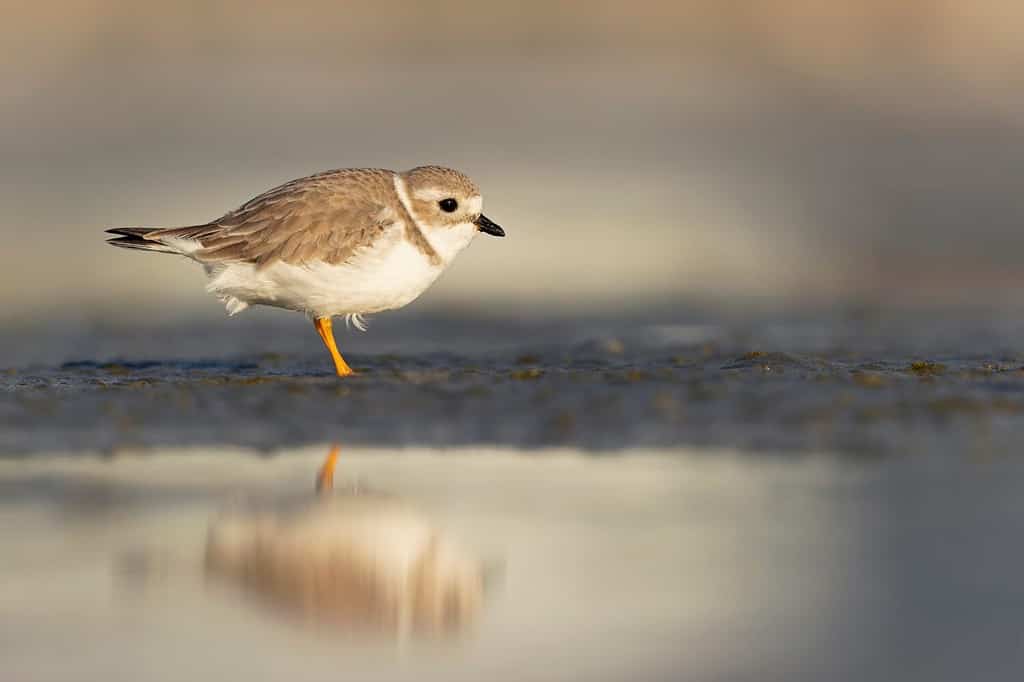
Conservationists hope to bring the Great Lakes piping plover population up to 150 nesting pairs.
©Bouke Atema/Shutterstock.com
Conservationists have had enormous success in helping the piping plovers return to the Great Lakes. But the work is far from over. “Local volunteers continue to play a vital role, contributing many hours of their personal time to monitoring, outreach and education,” Jillian Farkas, U.S. Fish and Wildlife Service lead biologist for Great Lakes piping plovers, stated in a press release. “With 99 pairs nesting in 2026, we remain hopeful that it’s possible for these plovers to reach their recovery goal of 150 breeding pairs.”