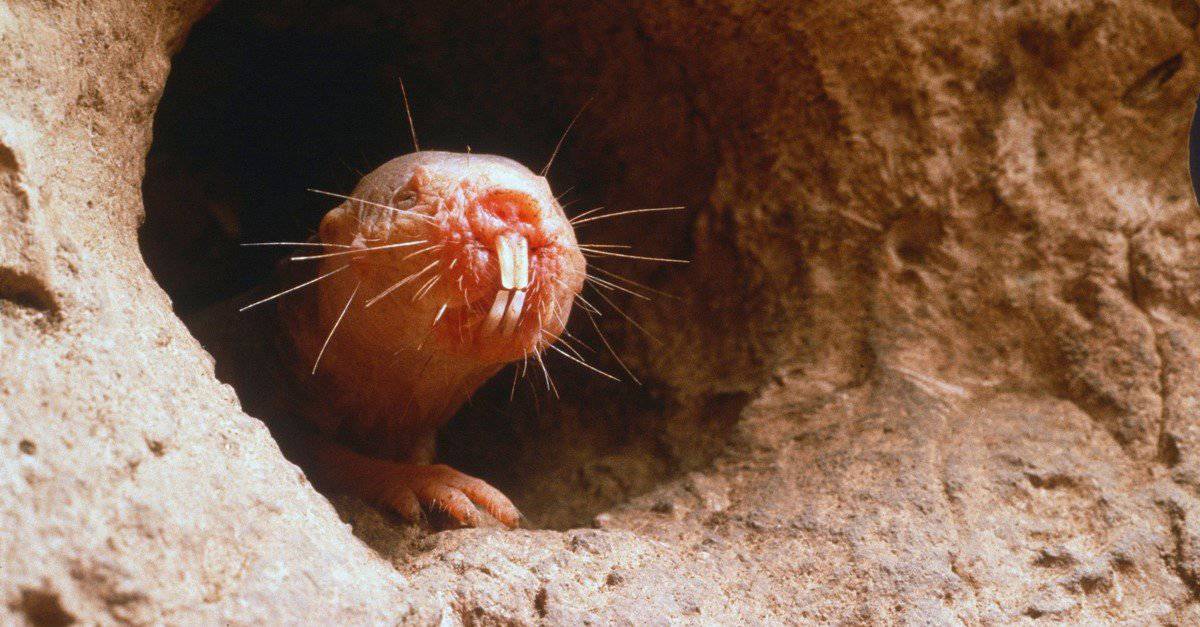

The naked mole rat is unlikely to win any awards when it comes to looks, but it may hold the key to understanding the aging process. A new study has revealed why they are resistant to many age-related diseases. The implications are far-reaching and may even help us to develop therapies for our aging society. Here we explain more.
All About the Naked Mole Rat
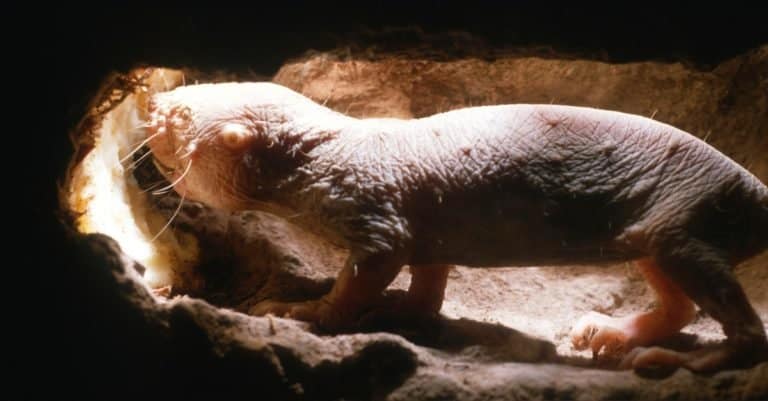
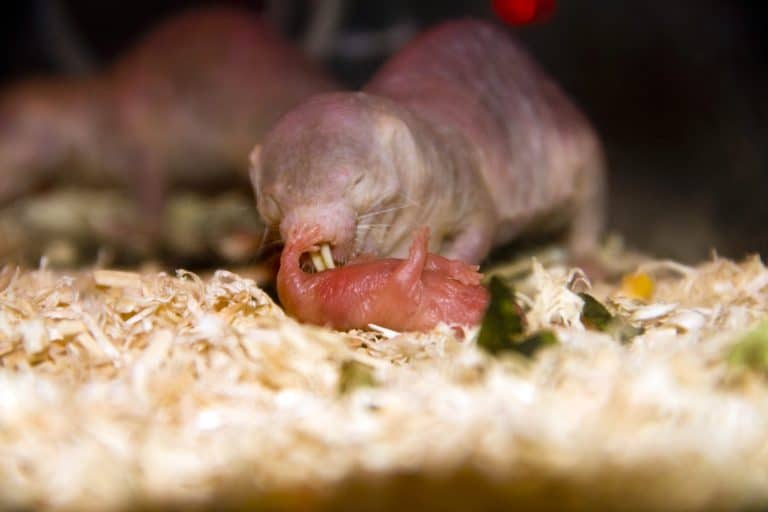
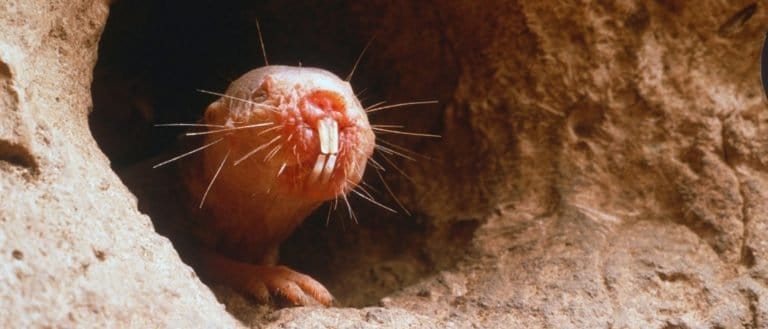
Naked mole rats (Heterocephalus glaber) can live for around 37 years, making them the longest-lived of all the rodent species. They are, however, not exactly beautiful! As their name implies, they have no fur, so their pink or grayish-pink wrinkly skin is exposed. They have a short, broad head out of which protrude huge incisor teeth. With no ears and tiny eyes, they gain most of their information about their surroundings from their smell and by sensing vibrations. Generally, they are about 3 inches in length and weigh 1.5-2.5 ounces. These burrowing rodents are found in grassy, semi-arid regions of eastern Africa. They live in large colonies where only one female, known as the queen, breeds, while the male and female workers dig through the soil to find food.
Exceptional Longevity, Investigated
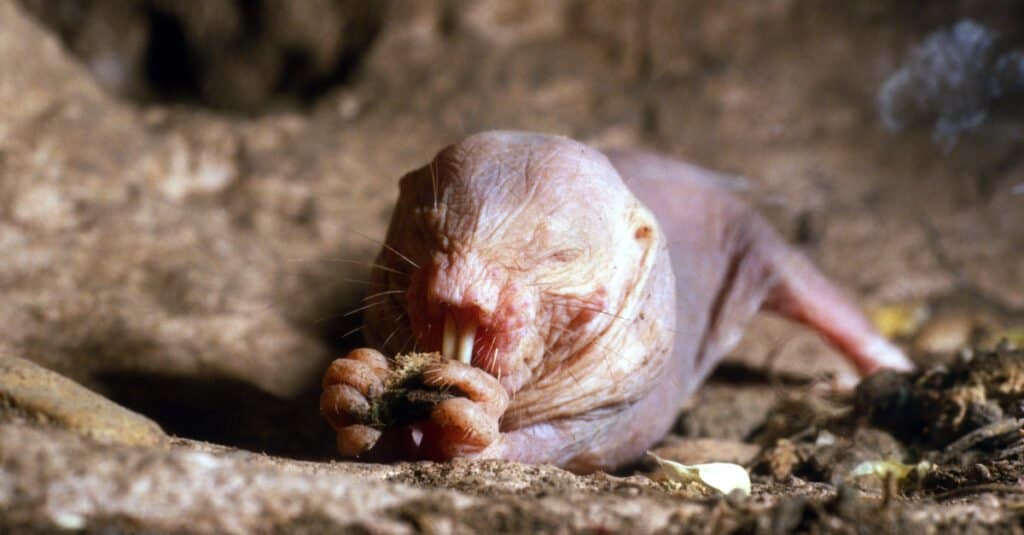
Naked mole-rats rely on touch, smell, sound, and taste since their eyesight is so poor.
©Neil Bromhall/Shutterstock.com
A lifespan of over 30 years is unheard of in any other rodent species and is considered exceptional. Their bodies are resistant to many of the factors that cause most creatures to die, including cancer, deterioration of the brain and spinal cord, and arthritis. Genomic instability, or instability in an organism’s DNA, is a primary cause of aging. DNA is where all of the genetic information of an organism is stored. If DNA can repair itself, the genome remains stable, and the organism does not age as quickly.
A team at Tonji University in Shanghai, China, wanted to explore the genomic stability of naked mole rats. DNA is constantly being damaged, but organisms are able to make some repairs. Cells use undamaged DNA as a template to repair damaged regions.
DNA Repair Protein

DNA can repair itself.
©Natali _ Mis/Shutterstock.com
When cells detect that a section of DNA is damaged, they produce a protein called cyclic guanosine monophosphate–adenosine monophosphate synthase (c-GAS). Crucially, c-GAS interferes with DNA repair by suppressing an essential part of the process called the homologous recombination pathway.
In humans, c-GAS hampers DNA knitting back together and therefore promotes genetic instability. Ultimately, this interference is likely to increase the chances of cancer developing and can lead to a shortened lifespan.
Naked Mole Rat DNA Repair
In the recent study published in the scientific journal Science, researchers found that c-GAS did not hamper DNA repair in naked mole rats as it does in humans. Thanks to just four changes in amino acids (the building blocks of protein), c-GAS in naked mole rats actually enhances DNA repair. This stabilizes the rodent’s genome and increases its lifespan.
If future studies can harness the principles behind the naked mole rat’s molecular repair mechanisms, we may be able to develop therapies that extend our own quality of life.