
Quick Take
- Nicotine kills most insects, yet one caterpillar weaponizes it against its predators in a way scientists didn't expect. How nicotine gets stored →
- The hornworm's defense doesn't come from its mouth, and that distinction is precisely what makes it so effective. See the breathing pore mechanism →
- Wolf spiders can detect the hornworm's toxic cloud before it's even released, yet they still lose the standoff. How wolf spiders detect it →
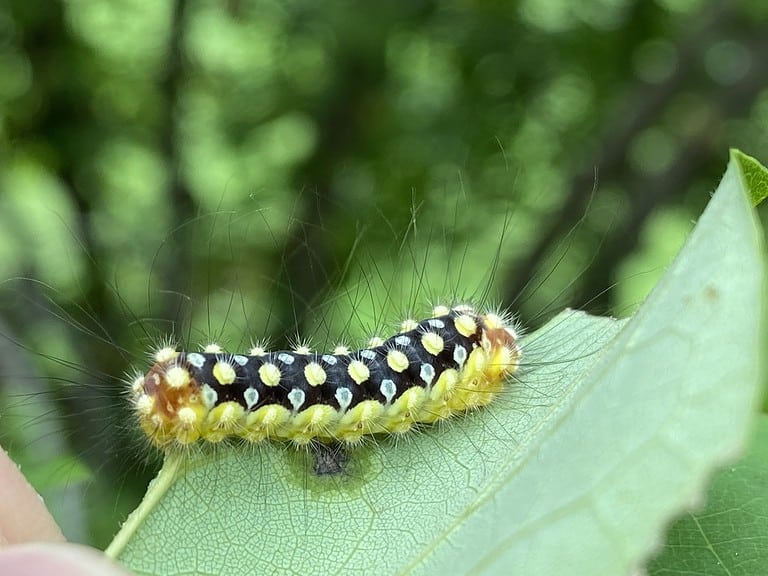
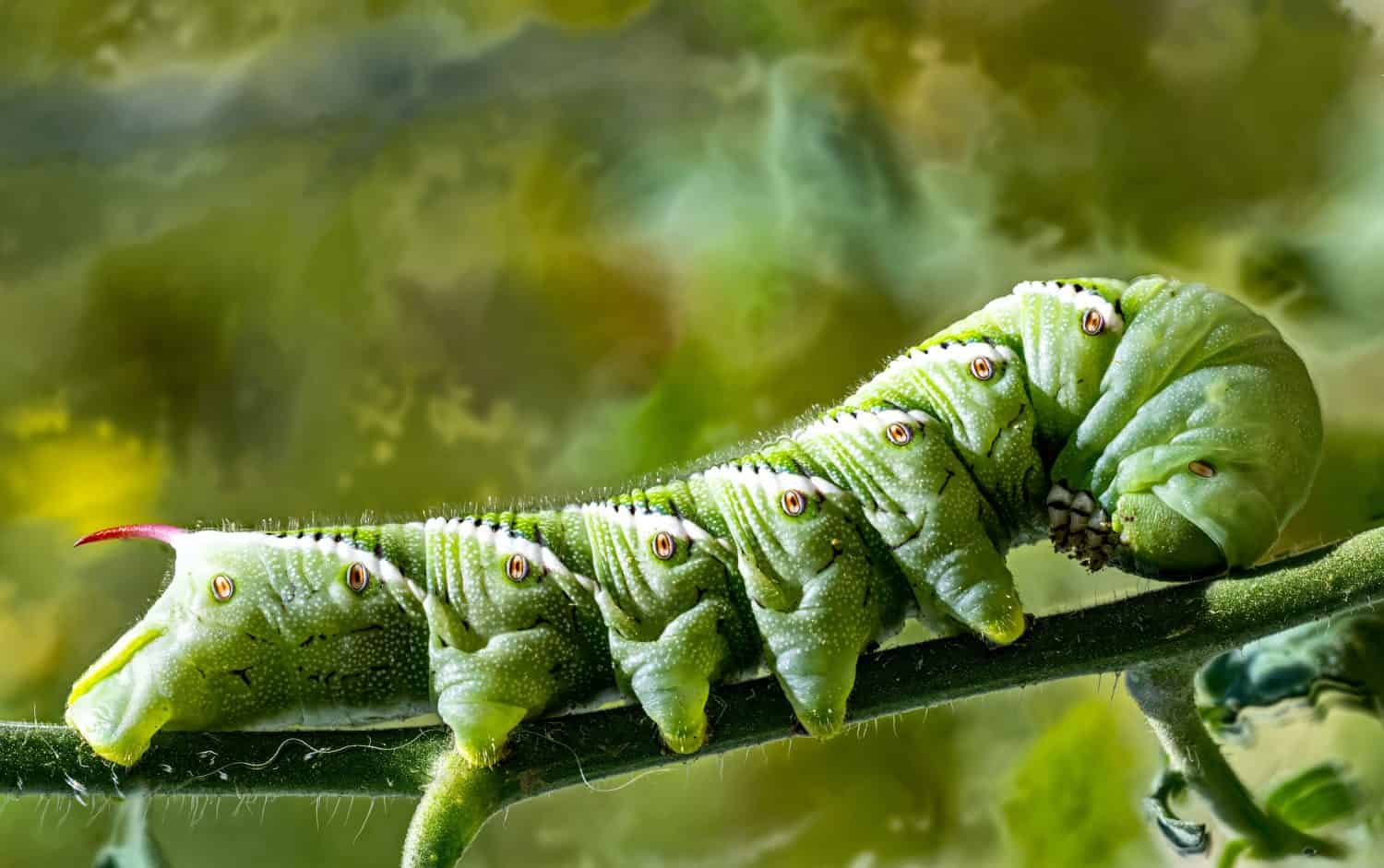
If you’ve ever been the victim of bad breath, then you know how potent it can be. It’s a proven fact that bad breath is a side effect of smoking, but for one species, it’s also a survival mechanism. The tobacco hornworm (Manduca sexta) uses its nicotine-rich breath as a surprisingly potent defense.
When consuming tobacco leaves, the tobacco hornworm ingests the noxious chemicals. Rather than killing the worm, as they would in most insects, these toxins are stored and used as the ultimate deterrent.
A Hornworm with the Most Foul-Smelling Breath
Tobacco hornworms are rarely found far from agricultural fields. They prefer to remain close to vegetable gardens, meadows, and crops where food is abundant. Despite their name, they primarily consume leaves of plants in the nightshade family. While many of these compounds are highly toxic to humans and even to other insects, tobacco hornworms are tolerant of them.
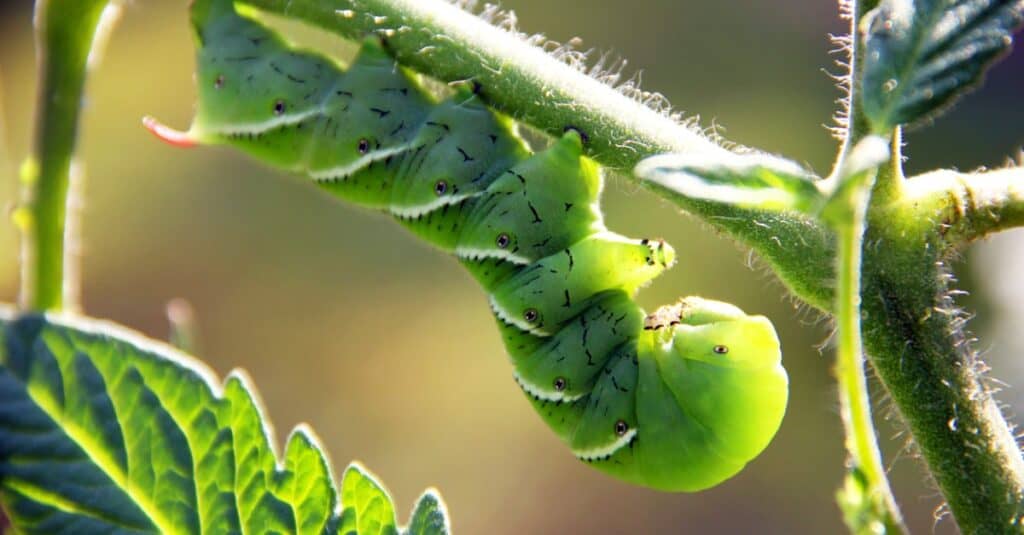
Tobacco hornworms are among the few species that aren’t poisoned by nicotine.
©iStock.com/lauraag
Potatoes, tomatoes, peppers, eggplants, and, of course, tobacco are fair game. Some tobacco hornworms even consume the fruit of these plants, such as underripe peppers and green tomatoes. They also feed on nightshade, horsenettle, and jimsonweed, which also have their own toxic defenses. As a result, the tobacco hornworm has become immune to the toxins in plants that would kill most other worms.
But something unique occurs when a tobacco hornworm ingests nicotine. Rather than becoming overloaded with poisonous compounds, the caterpillar absorbs the nicotine. Whereas many insects would be paralyzed following ingestion, tobacco hornworms process the nicotine into their bloodstreams. From here, the toxin makes its way to their breathing holes, where it remains until needed. And for some unsuspecting predators, it comes as a very unpleasant surprise when they get too close.
Nicotine Becomes the Ultimate Weapon for Tobacco Hornworms
A protein known as CYP6B46 redirects a small amount of nicotine from the tobacco hornworm’s gut into its hemolymph, or bloodstream, from which it is eventually exhaled through breathing holes. Rather than coming out of its mouth—a common misconception—nicotine gas is released along its entire body.
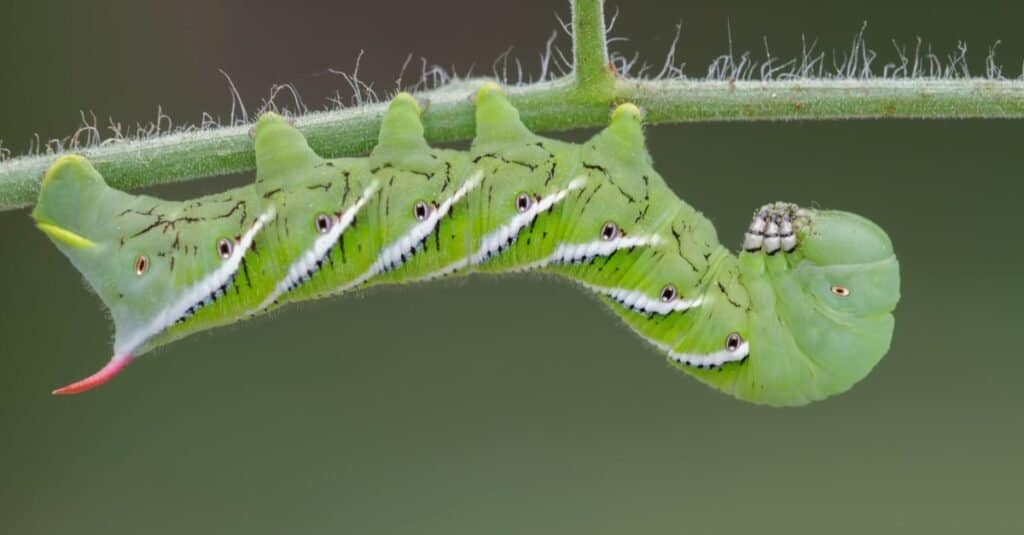
Tobacco hornworms can also cause significant damage to plant leaves, making them a common pest.
©vbalson/Shutterstock.com
For the unknowing predator, this means a blast of nicotine directly to the face. And while this isn’t enough to poison another insect or mammal, it is enough to make them think twice about proceeding. This defensive maneuver is almost as effective as blowing cigarette smoke directly at an insect. It likely won’t have long-term effects on the bug, but it will send it flying away.
As a perk, this also makes tobacco hornworms potentially toxic to ingest. Built-up nicotine that hasn’t been released is harmful to mammals, which is why pets are encouraged to steer clear of these caterpillars. Ingesting a hornworm before it has released its noxious plume can cause secondary issues.
One Predator Is Especially Sensitive to Tobacco Hornworm Breath
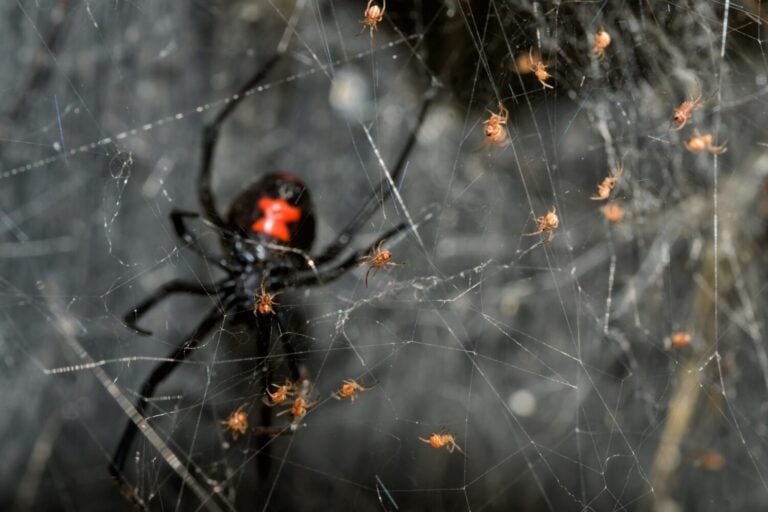
Scientists have found that one predator, in particular, is sensitive to the nicotine-breath-spewing hornworm: wolf spiders. These spiders, which are active night hunters that routinely prey on hornworms, are not fans of the nicotine-carrying critters. When a wolf spider nears a tobacco hornworm, the hornworm releases its noxious cloud, which is usually enough to send the wolf spider teetering backward.
Studies have shown that some wolf spiders even flee from the tobacco hornworm, abandoning their hunt altogether. This is known as “toxic” or “defensive halitosis.” Some of these toxic blasts even contain the same amount of nicotine found in an entire cigarette, becoming potentially harmful to the spiders.
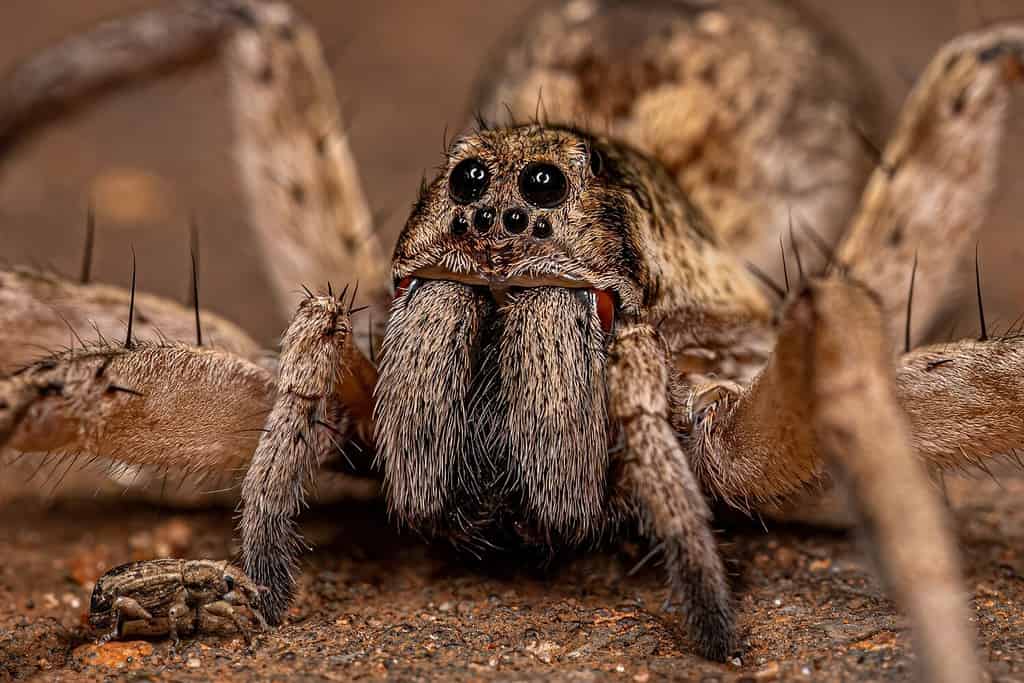
Wolf spiders are especially sensitive, with chemical receptors on their hairy legs.
©Vinicius R. Souza/Shutterstock.com
The chemosensory hairs on a wolf spider’s legs allow it to pick up the potency of a tobacco hornworm before its bad breath is even released. In some studies, hornworms fed nicotine-free tobacco were preyed upon, whereas those fed pure nicotine were not. In the later experiments, scientists also noted that some wolf spiders wouldn’t even go near a tobacco-filled hornworm, despite being ravenously hungry.
Unfortunately, this defense only goes so far. In that same study by Utah researchers, tobacco hornworms did fall victim to big-eyed bugs. These predators hunt during the day and are largely immune to the tobacco hornworm’s “bad breath”. They’re one of the biggest threats to tobacco hornworms due to their natural resistance to tobacco plants. Since they feed in many of the same fields and gardens, over time, both prey and predators have developed immunity.