
Quick Take
- Two breeds on this list share a bizarre physical trait found in almost no other dogs on earth, and that trait has nothing to do with their wrinkles. Chinese Crested's unique traits →
- One of these "Chinese" breeds may not be Chinese at all. Its true origin story is thought to stretch to a completely different continent. Uncertain African origins →
- Several of these breeds were deliberately shrunk by imperial breeders, and the reason why tells you a lot about life inside the Forbidden City. Imperial miniaturization story →
- The breed that looks like a lion wasn't always a lapdog, and its working-dog past is nothing like the pampered reputation it carries today. Chow Chow's working-dog past →
Throughout history, people all over the world have bred dogs to suit their climate, culture, and practical needs. In China, thousands of years of breeding have resulted in a diverse range of breeds molded by the country’s landscapes and traditions. From tiny royal companions to sturdy farm dogs, we explore Chinese dog breeds that make great pets.
1. Chinese Shar-Pei
The Shar-Pei has a wrinkled face with a hippo-like muzzle, rolls of skin on its stocky body, a sandpaper-like coat, a tail that curls over its back, and triangular, curled ears. They are also one of two breeds that have bluish-black tongues as a breed standard, the other being the Chow Chow. Shar Pei can reach 18-20 inches tall at the shoulder and weigh between 45 and 60 pounds.
The Shar-Pei is believed to have originated more than 2,000 years ago during the Han Dynasty. They were farm dogs used as hunters, herders, and livestock guardians. Today, these dogs are loyal and devoted to their families, but they can be wary of strangers and other dogs. They are intelligent and can be stubborn, but with early socialization and consistent training, they are affectionate and protective companions.
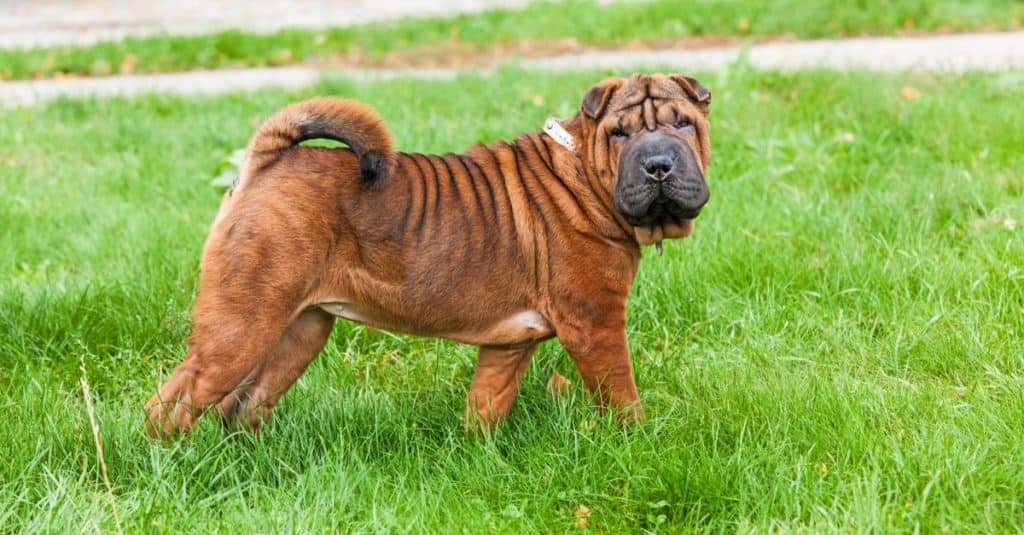
The Shar-Pei’s origins date back to the Han Dynasty more than 2,000 years ago.
©Alexeysun/Shutterstock.com
2. Chow Chow
Chow chows have fluffy coats, a lion’s-mane ruff around their heads, curled tails, and triangular ears. As mentioned above, they are one of just two breeds that require bluish-black tongues as a breed standard. These sturdy, powerful dogs stand 17-20 inches tall at the shoulder and weigh 45-70 pounds.
Chows are thought to be one of the oldest breeds in existence. They are depicted in Han Dynasty artifacts dating from around 206 BCE to 220 CE, but their origins may be even older. These dogs have served as companions to Chinese nobles, but also as guardians, hunters, and haulers. Chow chows are loyal and affectionate with their families, but they can be wary of strangers. They are also smart but stubborn, so early socialization and positive training methods will give owners the best results.
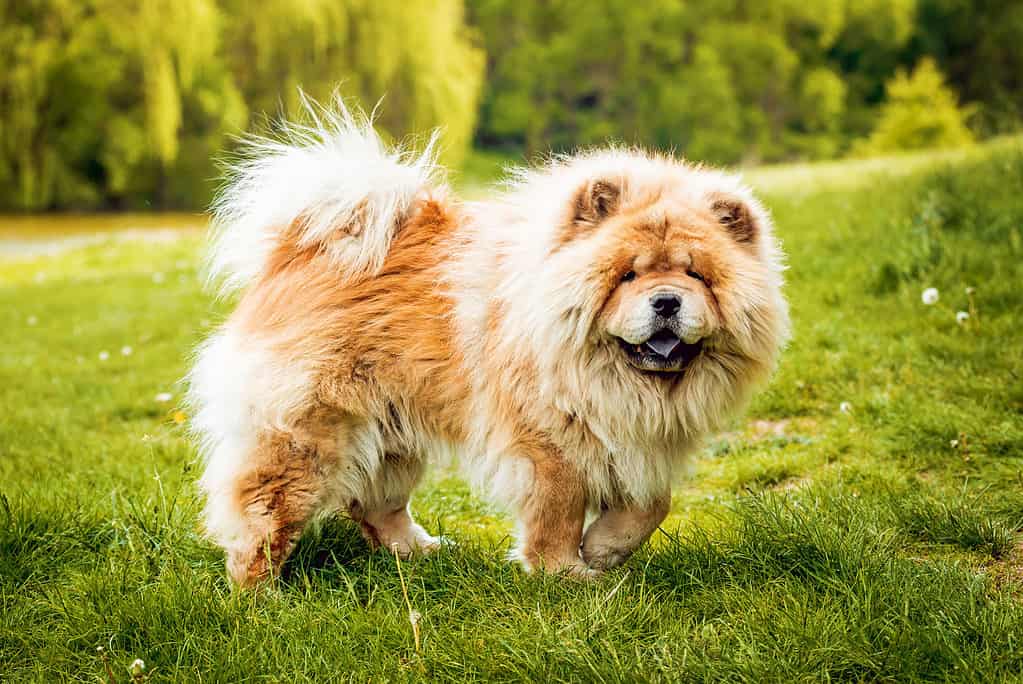
Chow Chows are among the oldest dog breeds.
©Roman Zaiets/Shutterstock.com
3. Pug
Pugs are one of the smaller Chinese breeds, standing just 10-13 inches tall and weighing only 14-18 pounds. They have large, rounded heads, wrinkled foreheads, flat snouts, and tightly curled tails. They often have black face masks, but pugs can also be all black.
These little dogs also have a long history, dating back around 2,000 years. They were bred to be companion animals to emperors and members of the imperial court. Pugs are friendly pups that are good with strangers, children, and other dogs, and they are very affectionate with their families. They don’t do well when left alone for long periods, but they are eager to please and generally easy to train.
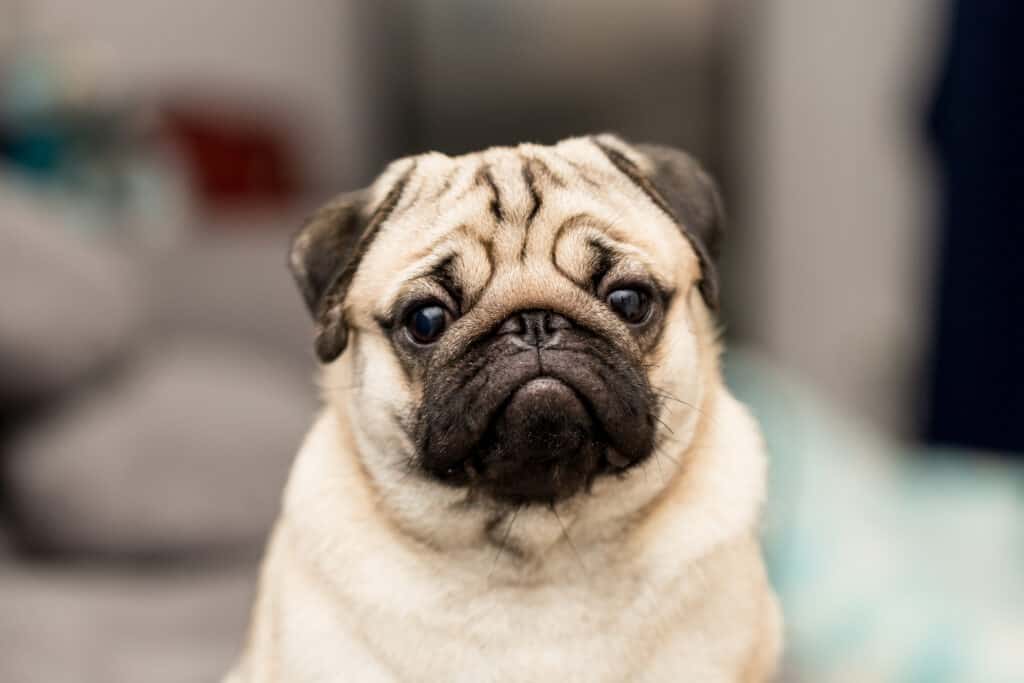
Pugs are friendly, outgoing, affectionate companions.
©220 Selfmade studio/Shutterstock.com
4. Pekingese
Pekingese are a small, stocky breed, standing just 6-9 inches tall and weighing up to 14 pounds. They have thick double coats, longer at the neck and shoulders, which give them their signature lion’s mane. They have large heads and short muzzles. These dogs are also said to have a distinctive rolling gait.
The Pekingese is an old breed, but its exact origins are unknown. It is thought to have been bred down to toy size by the Chinese emperors and their imperial courts. These dogs have friendly, loving temperaments and develop strong bonds with their humans. They are smart but can be independent, and they make good watchdogs.
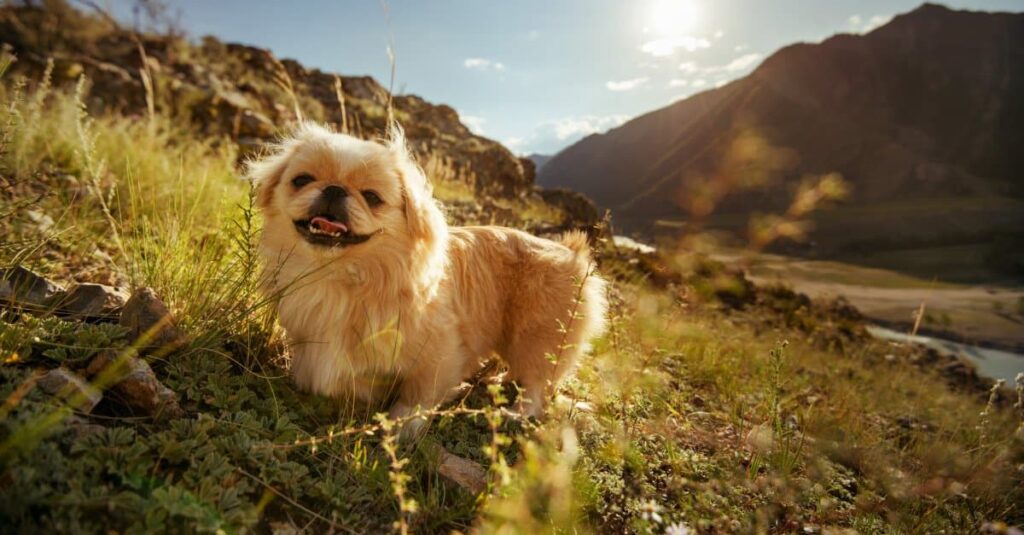
Pekingese were originally bred to be close companions to Chinese royalty.
©iStock.com/molchanovdmitry
5. Shih Tzu
Shih tzus, or “lion dogs,” are an elegant little breed, standing 9 to 10.5 inches tall and weighing 9-16 pounds. Their coats grow like human hair and shed as little as the hair on our heads. They also have large dark eyes, and their tails curl over their back. Grooming can be time-consuming, so many owners opt for a shorter cut.
Like other lap dogs on our list, the Shih tzu is a breed whose origins lie in antiquity. Imperial breeders of the Chinese emperors developed the Shih tzu as companion dogs for the emperor, his family, and members of his court. These dogs are lively and affectionate, especially with children. They also get along well with other pets.
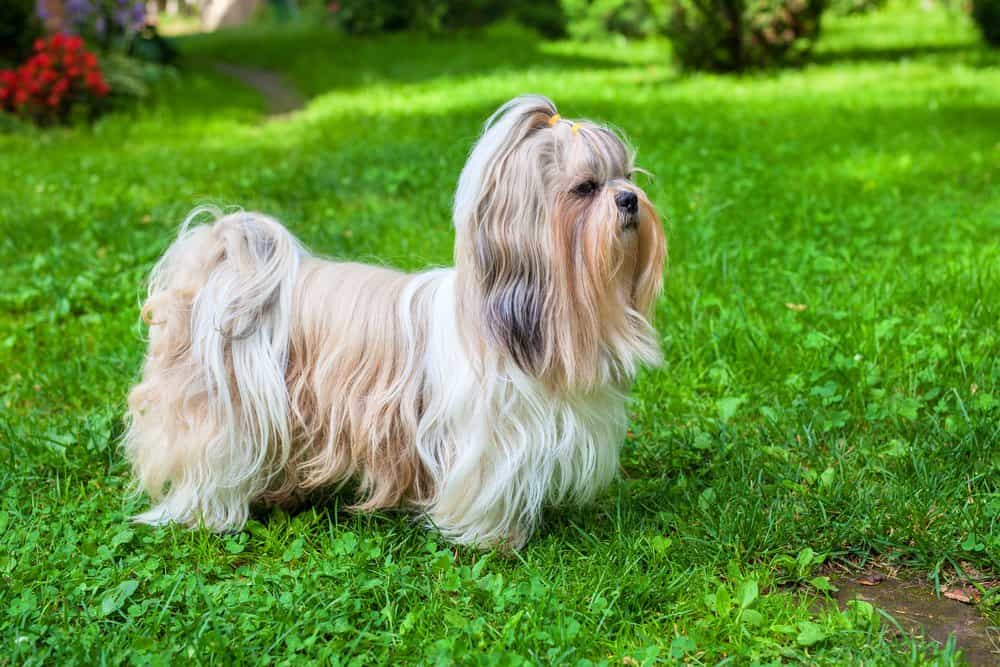
Shih tzus are often shaved or trimmed, as grooming their long hair can be time-consuming.
©chaoss/Shutterstock.com
6. Chinese Crested
Chinese crested dogs come in two different types: hairless and powderpuff. Hairless Chinese crested dogs have pink spotted skin, apart from long hair on their heads, tails, and the bottoms of their legs. Powderpuff dogs have long, silky hair all over their bodies. Hairless dogs require sunscreen and other skin treatments, as their exposed skin is quite sensitive. The hairless variety’s fur should be brushed daily to prevent tangles or mats. Powderpuff dogs must also be brushed daily, as their fur mats easily.
The Chinese crested’s origins are so ancient that no one knows how the breed began. Experts believe that large, hairless dogs were taken from Africa and brought to China, where imperial courtiers bred them to be smaller. This breed stands between 11 and 13 inches high at the shoulder and weighs 8-12 pounds. They are loving and loyal toward family and friendly to strangers. These pups are also playful, adaptable, and eager to please. However, they can be barkers, especially if bored or left alone for long periods.
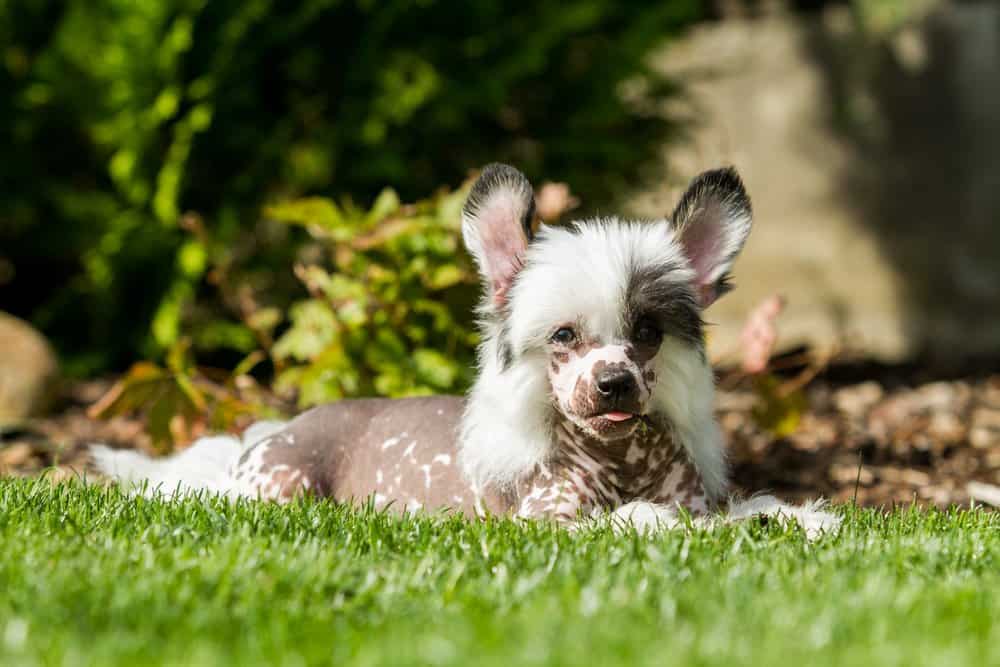
The Chinese crested has spotted pink skin.
©Aneta Jungerova/Shutterstock.com