





C
Species Profile

Chinese Shar-Pei

Canis lupus familiaris

Wrinkles with a watchful heart.
Alexeysun/Shutterstock.com

Chinese Shar-Pei Distribution

Click a location to explore more animals from that region

Origin Location

This map shows the native origin of the Chinese Shar-Pei. As a domesticated species, they are now found worldwide.

Loading map...

Found in 1 country

Size Comparison

Human 5'8"
Chinese Shar-Pei 1 ft 7 in

Chinese Shar-Pei stands at 28% of average human height.

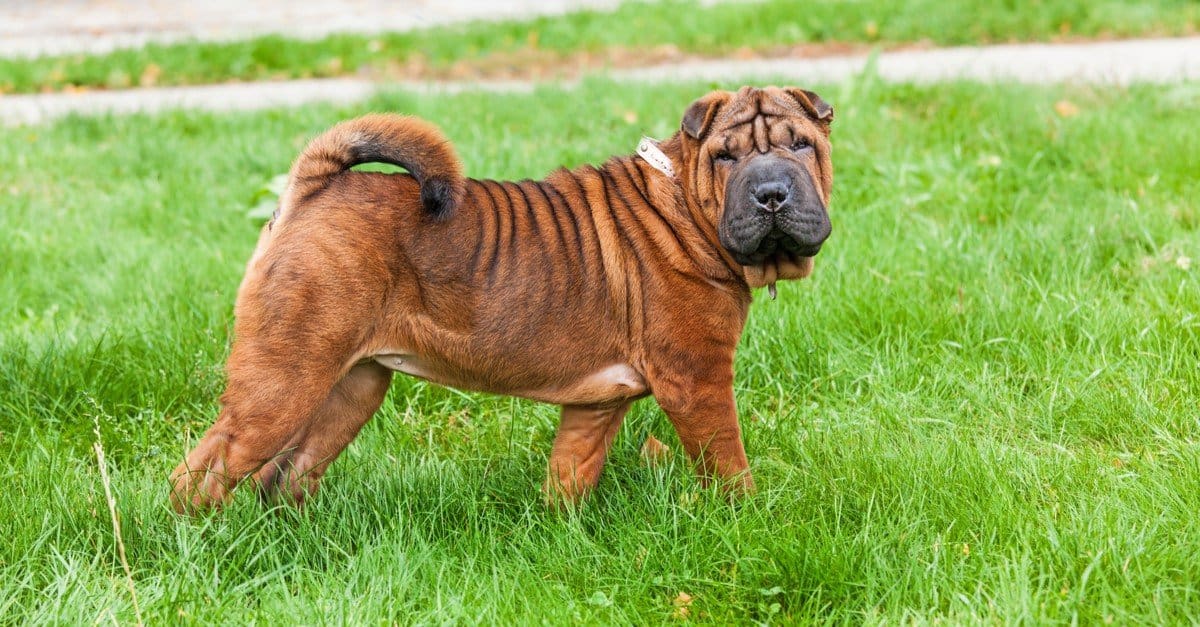
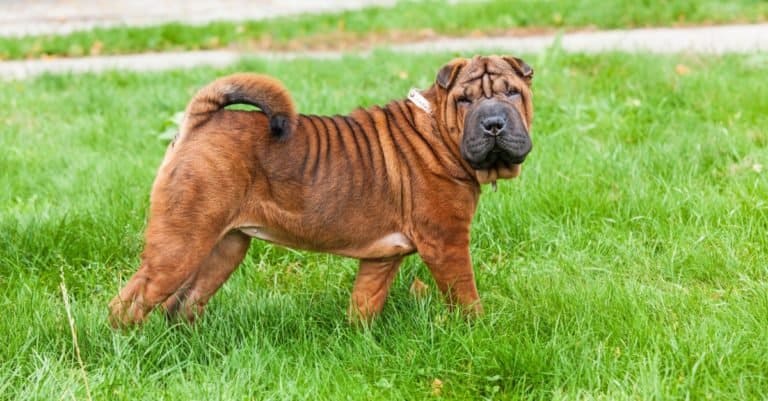
A beautiful, young red fawn Chinese Shar-Pei dog standing on the lawn, distinctive for its deep wrinkles and considered to be a very rare breed.

At a Glance

Domesticated
Also Known As Shar Pei, Shar-Pei, 沙皮犬, Shāpí quǎn, Sand-skin dog
Diet Omnivore
Activity Diurnal+
Lifespan 10 years
Weight 30 lbs
Status Not Evaluated
Did You Know?

"Shar-Pei" comes from Cantonese, often translated as "sand skin," referencing the breed's short, harsh, bristly coat.

Scientific Classification

The Chinese Shar-Pei is a distinctive domestic dog breed originally from China, known for its loose, deeply wrinkled skin (especially as puppies) and a short, harsh coat.

Kingdom
Animalia
Phylum
Chordata
Class
Mammalia
Order
Carnivora
Family
Canidae
Genus
Canis
Species
Canis lupus

Distinguishing Features

  • Loose, heavily wrinkled skin (most pronounced in puppies)
  • Small, triangular ears set high on the head
  • Broad, ‘hippopotamus’-like muzzle
  • Short, bristly coat (“sandpaper” texture) in common varieties
  • High-set, thick tail typically curled over the back

Physical Measurements

Males and females differ in size

Height
1 ft 7 in (1 ft 6 in – 1 ft 8 in)
1 ft 6 in (1 ft 5 in – 1 ft 7 in)
Length
2 ft 2 in (1 ft 10 in – 2 ft 6 in)
Weight
53 lbs (44 lbs – 60 lbs)
47 lbs (40 lbs – 55 lbs)
Tail Length
7 in (6 in – 8 in)
7 in (6 in – 8 in)
Top Speed
22 mph
About 35 km/h

Appearance

Primary Colors
Secondary Colors
Skin Type Chinese Shar-Pei (Canis lupus familiaris) has loose, thick skin with deep wrinkles, especially in puppies. Coat is short, harsh ('horse coat') or slightly longer, rough ('brush coat'). Folds need regular cleaning and drying.
Distinctive Features
  • The Chinese Shar-Pei (Canis lupus familiaris) has very loose, heavy wrinkles, a very short rough coat, and a compact, square, medium-sized body, bred as a Chinese farm and guard dog.
  • Loose, deeply wrinkled skin over head/neck/shoulders; puppies are typically the most wrinkled, with some wrinkling persisting into adulthood.
  • Short, bristly coat that stands off the body; minimal undercoat compared with many double-coated breeds.
  • Small, thick, triangular ears set high and carried close to the head; relatively narrow ear canals predispose to ear issues.
  • Broad, padded muzzle often described as 'hippo-like'; dark, tight lips and prominent nose pigment are typical.
  • High-set tail, thick at the base and carried curled over the back or to the side.
  • Deep-set eyes; facial skin can contribute to eyelid problems.
  • Breed-typical health concerns: Shar-Pei autoinflammatory disease/'Shar-Pei fever' and secondary amyloidosis; ophthalmic issues such as entropion; recurrent skin-fold dermatitis/pyoderma; chronic otitis externa; allergy/atopy and possible hypothyroidism in some individuals.
  • Check and dry skin folds, clean and watch ears, keep weight down to reduce skin rubbing, get vet checks for eye problems, avoid overheating from compact build and thin coat, socialize early for guarding.

Sexual Dimorphism

Sexual dimorphism is modest but noticeable: males are typically larger and more robust, with broader head/neck and heavier bone; females are usually slightly smaller and more refined while retaining the breed's characteristic wrinkles and compact frame.

  • Slightly greater height/weight; broader chest and thicker neck ruff/folds.
  • More massive head and heavier bone, often giving a blockier overall silhouette.
  • Slightly smaller, lighter build with a more refined head/neck.
  • Often appears a bit less bulky through shoulders/chest while keeping the same wrinkled skin and short bristly coat.

Did You Know?

"Shar-Pei" comes from Cantonese, often translated as "sand skin," referencing the breed's short, harsh, bristly coat.

Puppies are famously covered in deep wrinkles; many dogs "grow into" some of them as adults, though the head/neck often stay wrinkled.

The breed's small, tight, triangular ears are part of its distinctive silhouette-and can contribute to ear-canal ventilation issues.

Some Shar-Pei have a blue-black tongue, a trait also seen in the Chow Chow and uncommon among most other dog breeds.

Shar-Pei were traditionally multipurpose village dogs in southern China-used as watchdogs and farm guardians rather than specialized herding or hunting dogs.

The modern Shar-Pei population traces strongly to a rescue effort in the 1970s after the breed became rare; international breeding programs rebuilt numbers.

Their curled tail and compact, sturdy build reflect classic spitz-type influences seen in several East Asian dog lineages.

Unique Adaptations

  • Loose, folded skin (especially as puppies): a hallmark morphology that distinguishes the breed from the base species (gray wolf) and most other domestic dogs; requires proactive skin management to prevent irritation and infection.
  • Short, harsh "sandpaper" coat: unlike the wolf's longer, layered coat optimized for wild climates, Shar-Pei coats are very short and can be bristly to the touch.
  • "Hippopotamus" muzzle: a broad, padded muzzle shape selected in the breed standard; can be associated with breathing/skin-fold considerations in some lines.
  • Very small, thick ears: contribute to the breed's unique look but can predispose to ear inflammation if wax/moisture accumulates.
  • Compact, muscular build with a high-set, curled tail: typical of several East Asian domestic dog types and distinct from the wolf's straight, low-carried tail in most contexts.

Interesting Behaviors

  • Reserved, "one-family" loyalty: often deeply attached to their household but aloof with strangers compared with many companion breeds-more like a small guardian than a social greeter.
  • Quiet sentinel behavior: many Shar-Pei vocalize less than typical watchdog breeds, relying on posture, blocking, and watchful positioning.
  • Independent decision-making: as a farm/guard type, they may evaluate commands rather than obey instantly; consistent, reward-based training works best.
  • Body-checking and guarding spaces: they may naturally place themselves between family and newcomers, or patrol doors and property lines.
  • Dog selectivity: some individuals show intolerance toward unfamiliar dogs, especially same-sex, making early socialization and controlled introductions important.
  • "Cat-like" cleanliness: many owners report a strong preference for staying clean and avoiding mud-useful, but it doesn't replace skin/ear care routines.

Cultural Significance

The Chinese Shar-Pei (Canis lupus familiaris) comes from southern China's village dog tradition as a farm guardian. A 1970s rescue made it known worldwide. Its deep wrinkles and rough coat are symbols of a calm, protective companion.

Myths & Legends

Name lore in southern China links the breed's identity to texture: the Cantonese "Shar-Pei" ("sand skin") is commonly cited as an old descriptive nickname for its rough, bristly coat.

Collectors and breed historians often point to Han-era Chinese tomb and pottery dog figures as "ancient echoes" of Shar-Pei-type village dogs-used as a narrative of deep antiquity for the breed in popular retellings.

In the 1970s Hong Kong breeder Matgo Law asked people overseas to help save the Shar-Pei when it was rare. Foreign interest helped rebuild the breed's numbers and fame.

In Chinese popular association, wrinkled guardian dogs are sometimes described as having a "fierce" or formidable look meant to discourage trouble-an anecdotal protective motif echoed in how Shar-Pei are portrayed as stoic household sentinels.

Conservation Status

NE Not Evaluated

Has not yet been evaluated against the criteria.

Population Stable

Life Cycle

Birth 5 pups
Lifespan 10 years

Lifespan

In the Wild
8–12 years
In Captivity
7–13 years

Reproduction

Mating System Polygynandry
Social Structure Managed Domestic
Breeding Pattern Not Applicable
Fertilization Managed Selective
Birth Type Internal_fertilization

Behavior & Ecology

Social Pack Group: 3
Activity Diurnal, Crepuscular, Cathemeral
Diet Omnivore Meat-forward, complete-and-balanced dog food (often poultry or fish-based); many Shar-Pei do well with limited-ingredient diets when food sensitivities are suspected.

Temperament

Aloof or reserved with strangers; typically affectionate and loyal with family (strong in-group preference).
Calm to moderately active; often settles well indoors when exercise and routine are consistent.
Independent and sometimes stubborn; responds best to patient, reward-based training (harsh corrections can increase distrust/defensiveness).
Protective/territorial tendencies are common (breed-specific guarding heritage), which can present as alertness, blocking, and watchful stillness rather than constant barking.
Dog-selective; potential for same-sex intolerance and conflict if poorly socialized or if introductions are rushed.
HUBS (breed-wide pattern with variation): many Shar-Pei show low "social display" but high environmental assessment-quiet observation, then decisive boundary-setting if they feel pressured.
Health-linked behavior considerations (breed-specific): discomfort from entropion (eye irritation), skin-fold infections, ear inflammation, or Shar-Pei fever episodes can reduce tolerance and increase irritability; proactive veterinary care and pain/itch control support steadier social behavior.
Care requirements affecting social behavior: early, structured socialization; controlled introductions; consistent rules; moderate daily exercise; wrinkle/skin-fold hygiene and regular ear cleaning; heat sensitivity can reduce activity and increase grumpiness when overheated.

Communication

Low, infrequent barking typical of many individuals Often used as an alert rather than continuous vocalizing
Growls and grumbles as distance-increasing signals, especially when guarding space or resources.
Whining/soft whimpers for attention, discomfort, or anticipation.
Howling is uncommon but possible More typical in some lines/individuals than others
Body blocking, leaning, and positioning between family and a perceived threat Protective spatial behavior
Facial tension and wrinkles deepening with focus; fixed stare or head-forward posture to signal discomfort or challenge.
Tail carriage changes Often tightly curled when confident; lowered or stiff when uncertain/guarding
Ear position is subtle due to small ears; relies heavily on head angle, gaze, and whole-body posture for signaling.
Scent marking and investigation (normal canid communication), often paired with 'patrolling' of home boundaries.
Avoidance/turn-away, freezing, or slow approach in uncertain social encounters Common 'assessment' style within the breed

Habitat

Biomes:
Temperate Forest Temperate Grassland Mediterranean Savanna Tropical Dry Forest Tropical Rainforest Temperate Rainforest Boreal Forest (Taiga) Tundra Alpine Desert Hot Desert Cold Wetland Freshwater Marine +9
Terrain:
Coastal Plains Riverine
Elevation: Up to 16404 ft 3 in

Ecological Role

Domesticated companion/guardian omnivore; in free-ranging contexts functions as an opportunistic mesopredator and scavenger.

rodent and nuisance-animal control (when free-ranging) deterrence/guarding of property and livestock human companionship and social support alerts to intruders/wildlife near dwellings

Diet Details

Main Prey:
Dog food Animal-based proteins Carbohydrate sources Therapeutic diets
Other Foods:
Fruits Vegetables Grasses and plant matter Starches and grains in formulated diets

Human Interaction

Domestication Status

Domesticated

Chinese Shar-Pei (Canis lupus familiaris) is an old Chinese dog breed from southern China (Guangdong). It was used for guarding, hunting, fighting, and companionship. It has loose, wrinkled skin, a very short harsh coat, and a bluish-black tongue. Breeding for heavy skin folds can cause health problems, so they often need vet care.

Danger Level

Moderate
  • Bite risk if poorly socialized, mishandled, or if territorial/guarding instincts are triggered (especially toward strangers entering the home/property)
  • Dog-directed aggression can lead to redirected bites during fights or high arousal situations
  • Strong, independent temperament may resist forceful handling; cooperative-care training is important for safe grooming and veterinary exams
  • Risk increases with inadequate training, pain from chronic skin/ear/eye conditions, or irresponsible ownership

As a Pet

Suitable as Pet

Legality: Chinese Shar-Pei are usually legal to own in most U.S. places, but local breed laws, HOA or rental rules, insurance rules, and dangerous-dog laws can limit ownership; check local, housing, and insurance policies.

Care Level: Experienced

Purchase Cost: $200 - $3,500
Lifetime Cost: $20,000 - $60,000

Economic Value

Uses:
Companion animal market (pet ownership) Breeding/show and conformation events Veterinary services (dermatology, ophthalmology, ENT, orthopedics, immunology) Pet products (specialized grooming/skin-care items, diet trials, allergy management) Training/behavior services (socialization, reactivity management, guarding tendencies)
Products:
  • Puppy and adult Shar-Pei sales (pet and show lines)
  • Breed-specific rescue and rehoming services
  • Veterinary treatment for common Shar-Pei issues (skin/ear disease, eyelid surgery, fever workups)
  • Specialty diets (hypoallergenic/novel protein), supplements, and medicated shampoos/cleansers
  • Training packages and behavior consultations

Relationships

Ecological Equivalents 5

Animals that fill a similar ecological role in their ecosystem

Quick Take

  • This breed was once considered one of the rarest dogs on Earth, yet a single magazine cover is what brought it back from the brink. Discover the breed's revival →
  • The Shar-Pei's most iconic feature is those deep, adorable wrinkles, and they come with a hidden maintenance cost most new owners aren't prepared for. See the wrinkle care routine →
  • Shar-Peis are smart enough to learn commands quickly, but that same intelligence is exactly what makes training them so difficult. Explore the training challenges →
  • Their cat-like temperament makes them fiercely loyal family dogs, but there's one household dynamic where that loyalty becomes a liability. See the family dynamic risks →

Chinese Shar-Peis are compact and medium in size, though they are a purebred dog, not mixed with any other breed. They have a broad hippopotamus-like muzzle and a tongue that is blue and black. Their eyes are small and sunken, their ears are tiny and triangular, and their skin has abundant folds. Their coat has a sandpaper texture, complemented by the wrinkles on their skin. They are strong, independent, and suspicious of strangers. This breed is known for its loyalty and intelligence, and typically has a price ranging from around $800 to over $2,000 for a purebred puppy, depending on pedigree and breeder reputation.

An educational infographic about the Chinese Shar-Pei dog breed, featuring an illustration of a wrinkled dog alongside sections on health, history, and temperament.
Taxed to the brink of extinction and known for its sandpaper coat, this ancient guardian was saved by a single magazine plea. © A-Z Animals

3 Pros and Cons of Owning a Chinese Shar-Pei

ProsCons
Good guard dog: If you are looking for a dog that can watch over the home and family, this would be the perfect choice for you to consider.Training: These dogs can sometimes be difficult to train. When teaching them new commands, make sure to be a firm and confident pet parent while dealing with them.
Affectionate: These pups are very affectionate and are very protective of their owners’ families.Strong-headed: They are strong-headed and often want to be independent and make their own decisions rather than blindly following commands. This can sometimes be a problem for their owners.
Low exercise needs: These dogs need only a low level of daily exercise, which means that they can happily stay in an apartment.Health problems: These dogs are prone to several health problems, which can be difficult to handle for the owners sometimes.
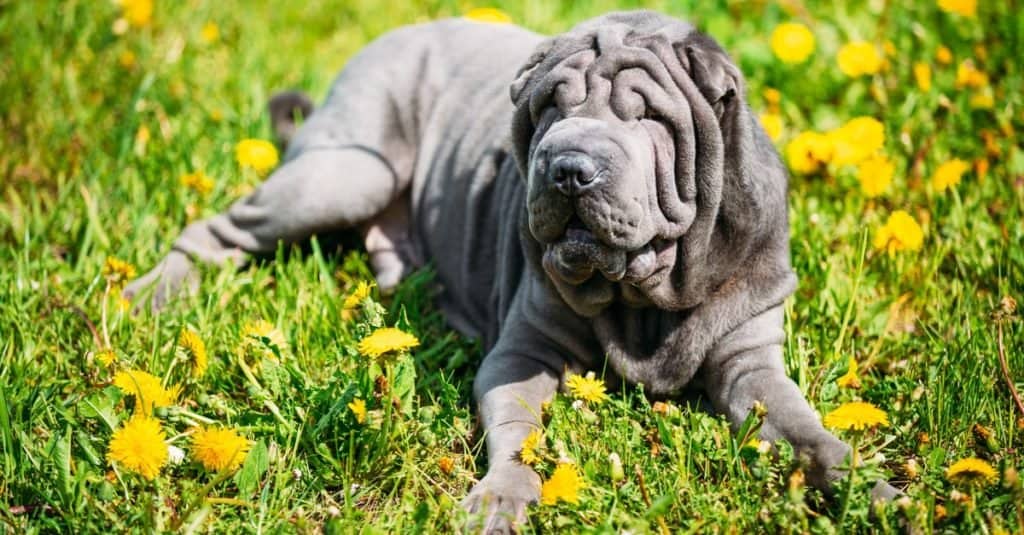
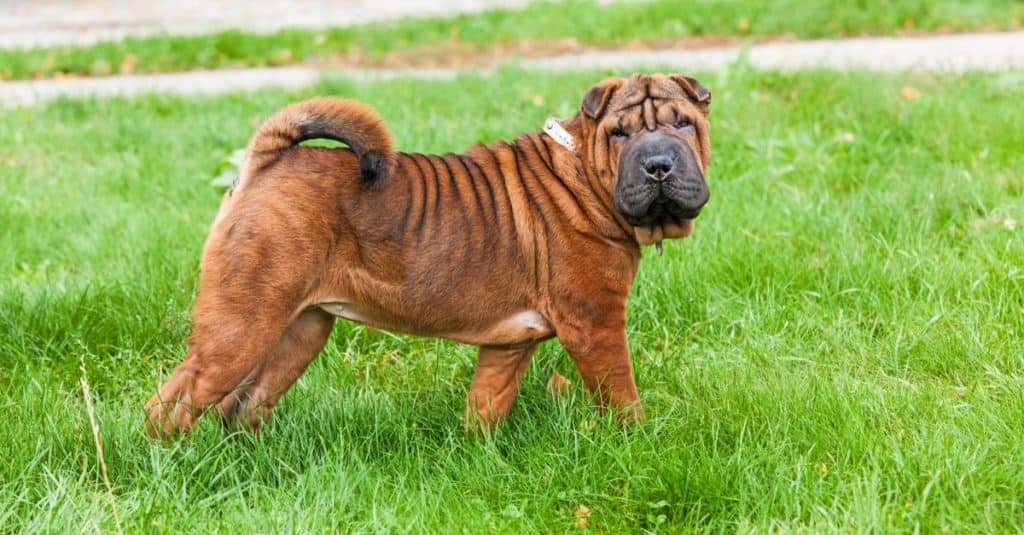
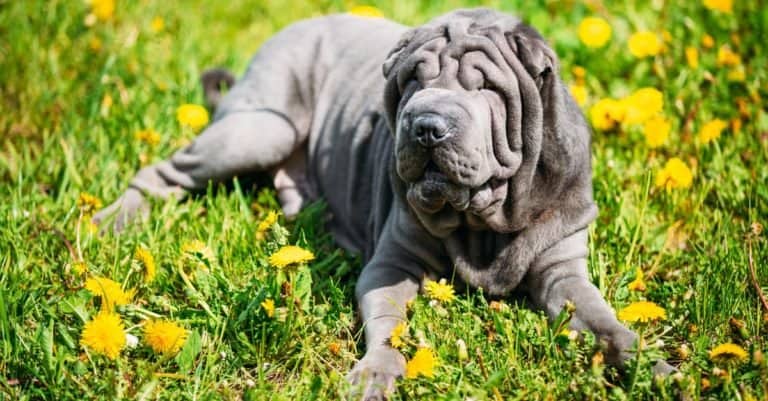
Blue Shar Pei Dog in green grass in a park. The Shar Pei, or Chinese Shar-Pei, is a breed of dog known for its distinctive features of deep wrinkles.

The Chinese Shar-Pei is an affectionate dog with low-exercise needs.

Evolution and Origins

The Chinese Shar-Pei is named for its rough coat, with shar-pei translating to “sand-skin.” It is thought to have originated in China around 200 BC and was used as a hunting and guard dog. It was once popular as a fighting dog due to its thick skin, but after larger breeds were introduced, it suffered a decline, and its population further decreased in the late 1940s when the Chinese government imposed high taxes on dog ownership. This breed almost became extinct, and during the 1960s and 1970s, they were considered one of the rarest dogs in the world.

In 1979, Life magazine featured a Chinese Shar-Pei on its cover alongside a plea from a breeder in Hong Kong named Matgo Law to keep the breed alive. It was immediately successful; sales of Shar-Pei puppies rapidly increased, and the breed was saved from extinction.

Some breeders in the U.S. bred Shar-Peis to be smaller and with more wrinkles, creating what they call the Miniature Shar-Pei, which stands at around 16 inches, which has been met with resistance from some breeders of traditionally sized Shar-Peis.
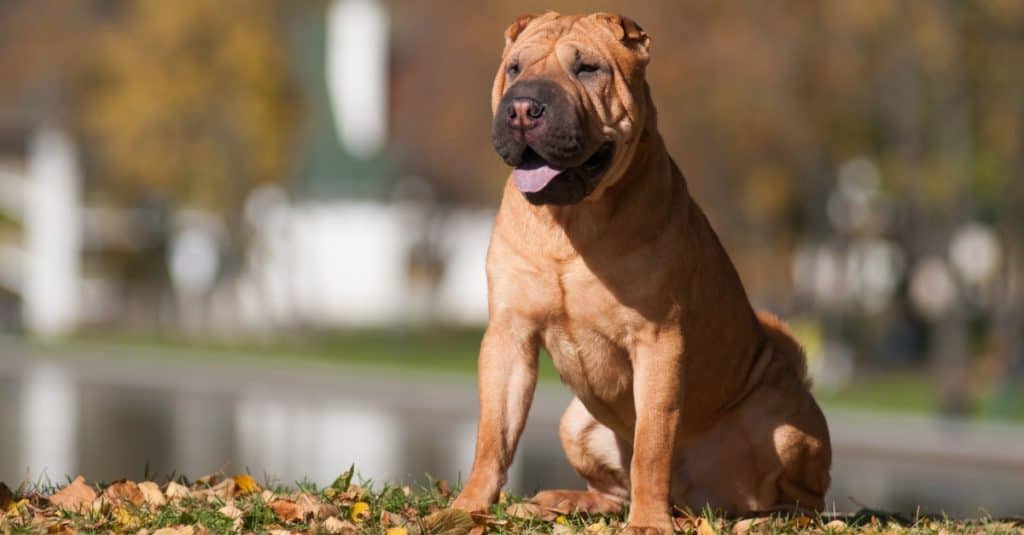
Chinese Shar-Pei sitting on the grass in the garden.

The Chinese Shar-Pei originated in China in 200 BC and was used as a guard dog.

Size and Weight

Chinese Shar-Peis are compact and medium in size. They are about 18 to 20 inches tall and usually weigh between 45 and 60 pounds. These dogs have short and very harsh coats and do not usually have loose hair. Their coat comes in various colors like fawn, red, brown, white, black, and cream.

Common Health Issues

The Chinese Shar-Pei, while it is a beautiful and smart animal, can come with health issues if you choose an unreliable breeder or source to adopt from. Hip and elbow dysplasia is rather common in this dog, which is an incredibly painful condition involving abnormal joint development that can result in reduced mobility and significant discomfort. Patellar luxation also impacts the bones, causing misalignment of the femur in the hind legs.

Autoimmune thyroiditis is another common condition, inflaming the thyroid. It is often caused by antibodies in the dog’s body that attack the thyroid, and it can be deadly.

Due to the shape of the eyelids, many conditions can arise that affect the eyes. Entropion, for example, occurs when the dog’s lower eyelid turns inward, causing the eyelashes to rub against the cornea. Retinal dysplasia, however, may happen when the folds in the retina cause lesions that could lead to blindness.

These dogs can also develop glaucoma and cataracts.
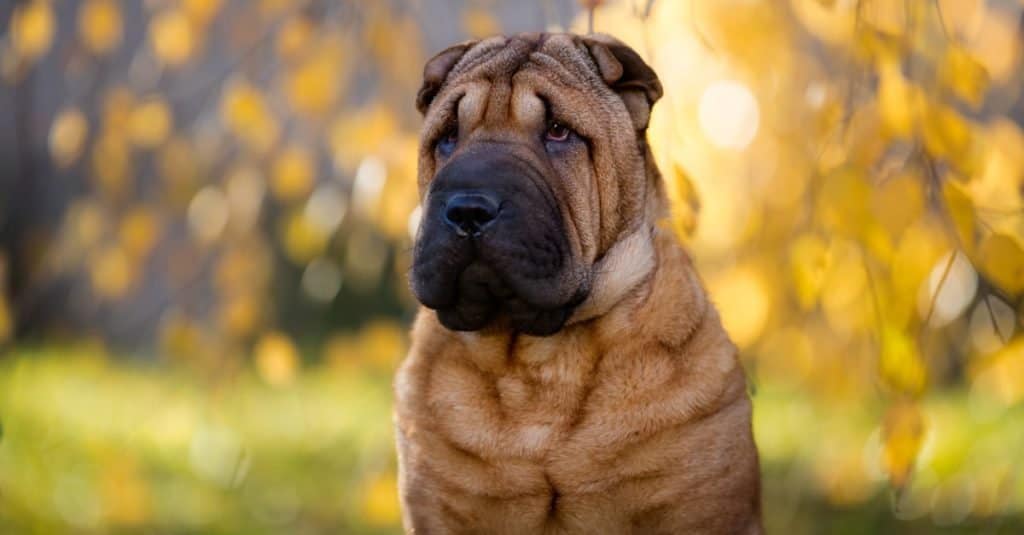
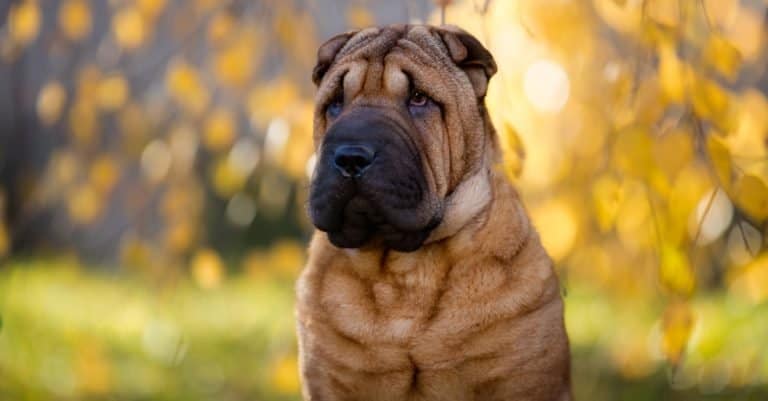
Chinese Shar-Pei close-up in an autumn garden.

Due to the shape of the Chinese Shar-Pei’s eyelids, many health conditions can arise that affect the eyes.

Temperament

Chinese Shar-Peis are rather cat-like when it comes to their temperament; they tend to march to the beat of their own drummer, giving attention only when they feel like it. They can come to cuddle with you, but it depends on their mood. Still, these dogs can get suspicious of strangers.

These dogs are intelligent and strong, and they are affectionate toward their owners. They are also quite devoted and can make excellent watchdogs. Shar-Peis are great family dogs and are very protective of the families that they live with.

These dogs are strong-willed and prefer making their own decisions rather than blindly following a command.
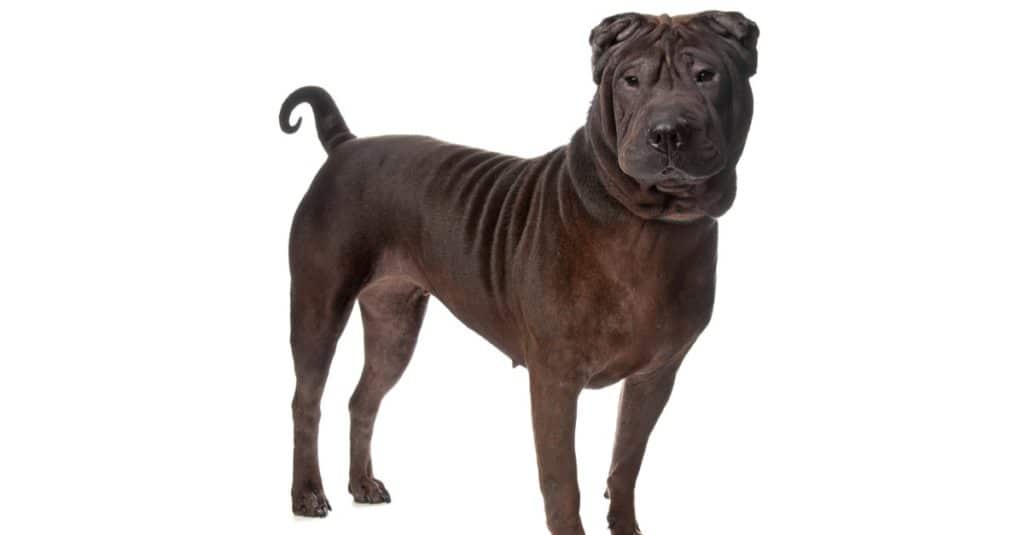
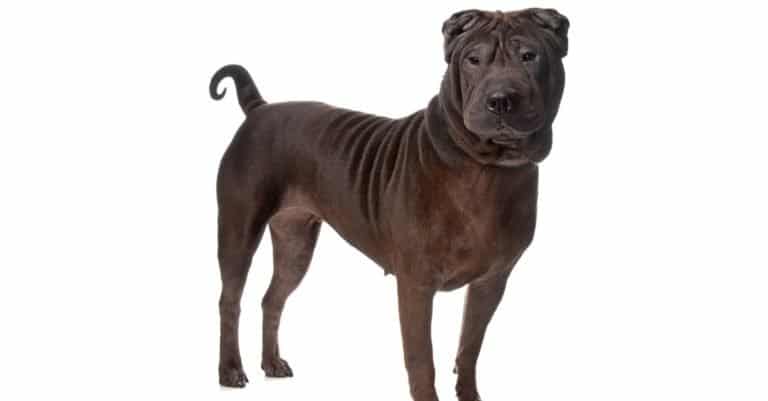
Chinese Shar-Pei isolated on white

The Chinese Shar-Pei is almost cat-like in its temperament.

How to Take Care of a Chinese Shar-Pei

The Chinese Shar-Pei can be a fickle pet, so it is important to be fully prepared to give them what they need. Here are a few considerations that you should have in mind for their food, grooming, and even their training.

The Best Dog Food

You should feed your Shar-Pei healthy food, and a natural diet with lean meats will do your dog good. You can add other whole ingredients to your Shar-Pei’s diet, including fruits and vegetables, but high-quality dog food would be beneficial.

Keeping the right type of diet supports the health of the Chinese Shar-Pei, protecting and improving the quality of its hair and skin.

Maintenance and Grooming

For grooming your Shar-Pei, brush them as often as you want. Aim to brush it at least once a week. If you want to keep their coat in the best condition, brushing twice a week is more than enough. Their coat has a texture similar to that of sandpaper.

It is a good idea to brush their teeth twice a week. The deep wrinkles on their skin also need to be cleaned and thoroughly dried afterward, preventing any infections that might develop under their wrinkles. As a purebred, this dog does not usually shed loose hair.

Training

While Shar-Peis are smart, they are strong-minded and love to make their own decisions. Therefore, they can pick up commands quickly but often prefer to go their own way.

They do need a firm pet parent to guide them and train them. It is important that their training starts early in life, helping them to develop good habits in the long run.
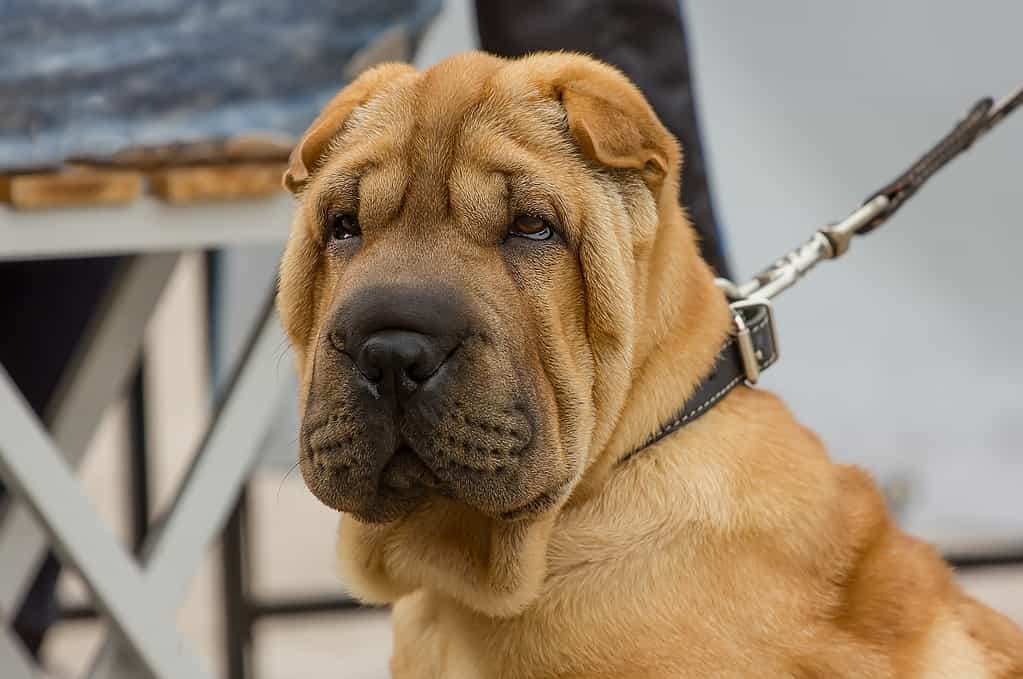
Shar Pei dog breed with a serious look

Chinese Shar-Peis are strong-minded and love to go their own way.

Exercise

Shar-Peis are usually alert but do need low to moderate levels of exercise daily. These dogs can happily stay in an apartment, but bringing them along on a walk or two each day satisfies their need for low to moderate exercise.

They are good for being companions to the elderly, as they can accompany them on slow walks. These dogs do not consider dog parks to be ideal playgrounds and are often wary and suspicious of unfamiliar people.

Puppies

A Shar-Pei puppy requires the same general care as an adult. However, some things need to be kept in mind while dealing with Shar-Pei puppies.

For instance, the food portions should be smaller for Shar-Pei puppies. They also need to be trained at an earlier stage in life so that they can develop good habits.
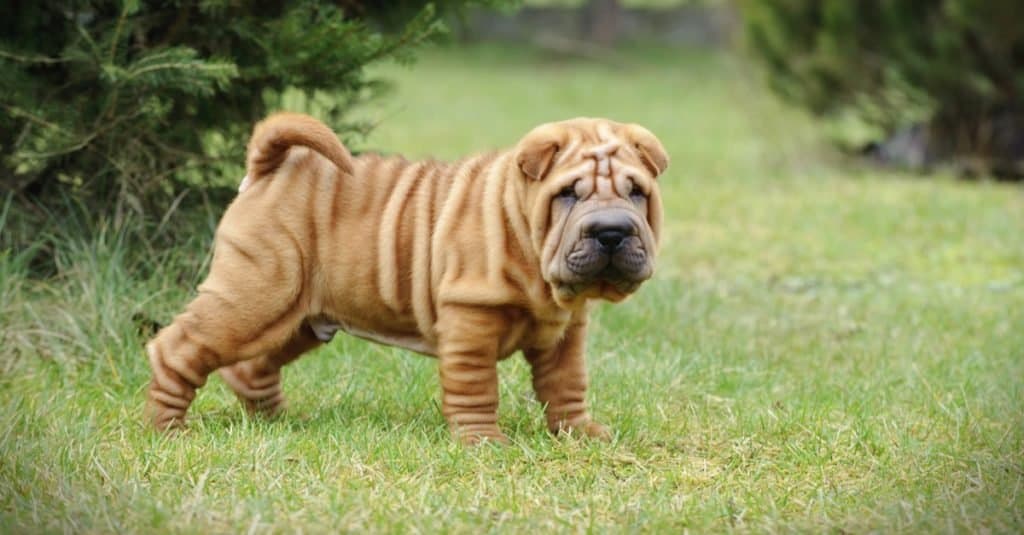
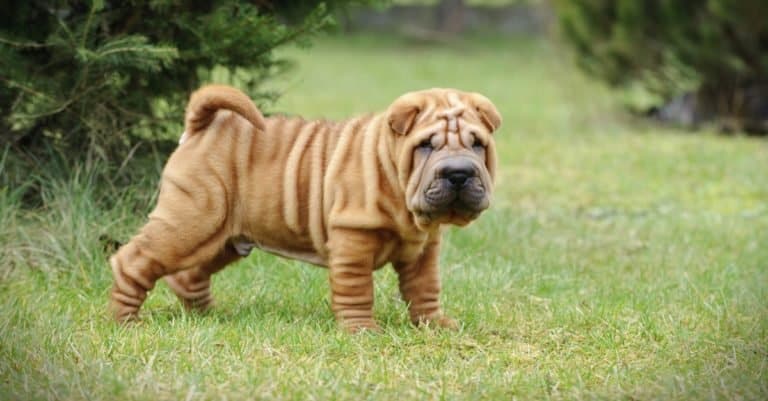
Chinese Shar-Pei puppy playing outside in the garden.

A Chinese Shar-Pei puppy should be trained and socialized from an early age.

Chinese Shar-Pei and Children

Shar-Peis make great family dogs and can be very playful and protective of the children of the family. However, it is always advisable to get these dogs only when your children are older. Toddlers should not be left unsupervised with these dogs.

Dogs Similar to the Chinese Shar-Pei

The Chinese Shar-Pei is not the right choice for everyone, but that’s okay. Here are a few dogs that are similar to the Chinese Shar-Pei, to help you find the right match.

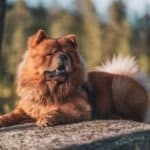
  • Chow Chow: These dogs are incredibly calm and confident and make great watchdogs. Their fur is much fluffier, which means they will need much more grooming.
  • Pugs: These dogs are very loyal and friendly and have big personalities, though they are much smaller than the Chinese Shar-Pei.
  • Corgi: These dogs are great with children and do not shed a lot. They are also easily trainable.
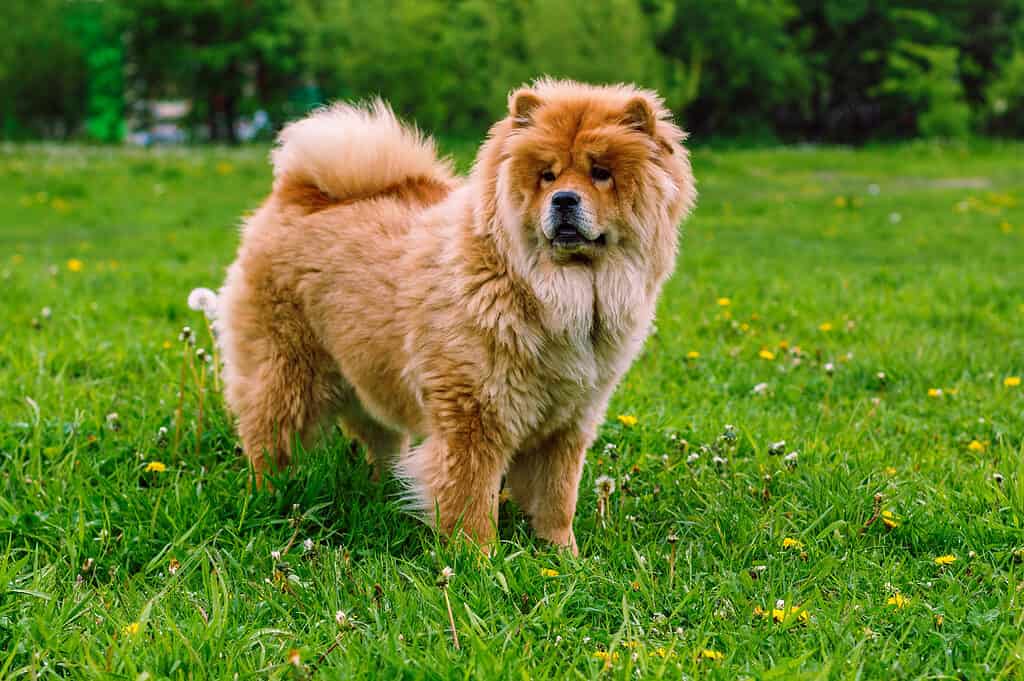
chow-chow

The Chow Chow’s coat is fluffier than the Shar-Pei’s, so it will require more grooming.

Famous Chinese Shar-Peis

While there might not be many famous Shar-Peis in the world, there are a few notable Instagram accounts where you can see these dogs. Some of them include @sharpeisofinstagram, showcasing individuals of this breed, and @franklinandleo, Shar-Pei brothers living in Australia.

View all 395 animals that start with C

Sources

  1. American Kennel Club / Accessed June 24, 2021
  2. The Nest / Accessed June 24, 2021
  3. iPupster / Accessed June 24, 2021
  4. Embrace Pet Insurance / Accessed June 24, 2021
Catherine Gin

About the Author

Catherine Gin

Catherine Gin has more than 15 years of experience working as an editor for digital, print and social media. She grew up in Australia with an alphabet of interesting animals, from echidnas and funnel-web spiders to kookaburras and quokkas, as well as beautiful native plants including bottlebrushes and gum trees. Being based in the U.S. for a decade has expanded Catherine's knowledge of flora and fauna, and she and her husband hope to have a hobby farm and vegetable garden in future.

Thank you for reading! Have some feedback for us?


Chinese Shar-Pei FAQs (Frequently Asked Questions)

The Chinese Shar-Pei is a medium, compact-sized dog with a strong and intelligent personality.