
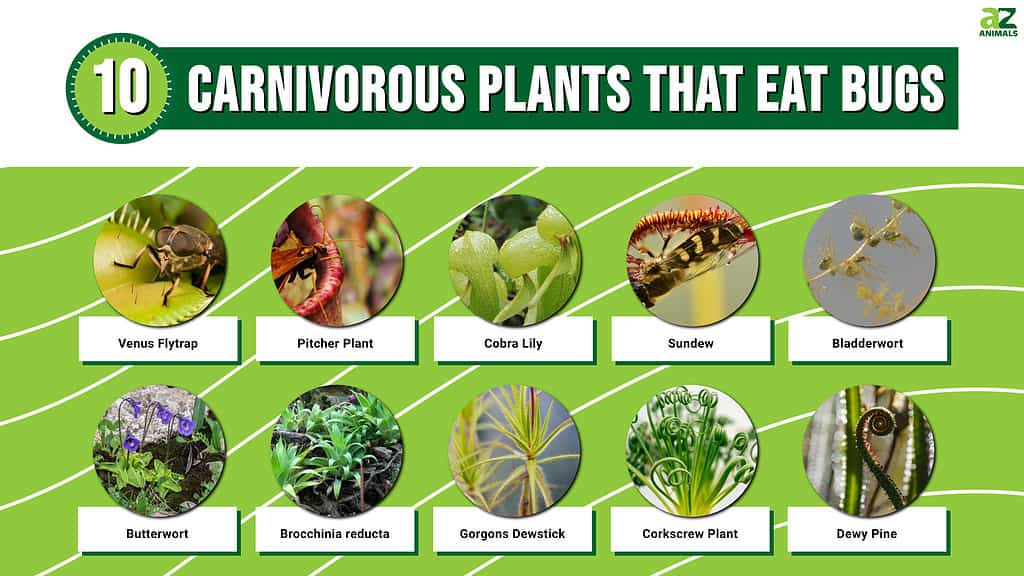
How Carnivorous Plants Work
When it comes to plants, we tend to think of them as feeding solely on water and nutrients in the soil. However, plants that cannot get nourishment from the soil will readily absorb animal bones and even human flesh stuck in the ground, and garden centers have blood and bone meal fertilizers. But we rarely consider that some plants are truly carnivorous and actively target small, living animals as their source of gas, chemical, and mineral nutrients by using one or a combination of the following five trapping mechanisms:
- Snapping: Quickly shutting closed around the animal.
- Flypaper: A glue-like, sticky substance that immobilizes the prey.
- Pitfall: A rolled leaf with a deadly pool of digestive bacteria or enzymes that drowns the prey before the plant eats it.
- Bladder: A bladder sucks in prey by generating an internal vacuum.
- Lobster or Eel: Inward-pointing hairs force the prey to move toward the digestive organ.
Growing in thin and sparse soil of heaths, bogs, and swamps, usually in temperate or tropical climates, carnivorous plants evolved to access nutrients necessary for their survival. These include macronutrients like protein, nitrogen, potassium, and phosphorus and micronutrients like sulfur, calcium, and magnesium.
It takes careful attention to successfully grow these species, which are not as easy to care for as you may think. Pests like greenflies and spider mites, poor air circulation, and low humidity can lead to the death of your carnivorous plant. On the other hand, they do not need fertilizer, non-natural water sources, or to be fed bugs but can instead catch them by themselves, especially outdoors. The following ten plants need to eat meat to live and will shock you with their unique looks and their predatory survival methods.
Venus Flytrap
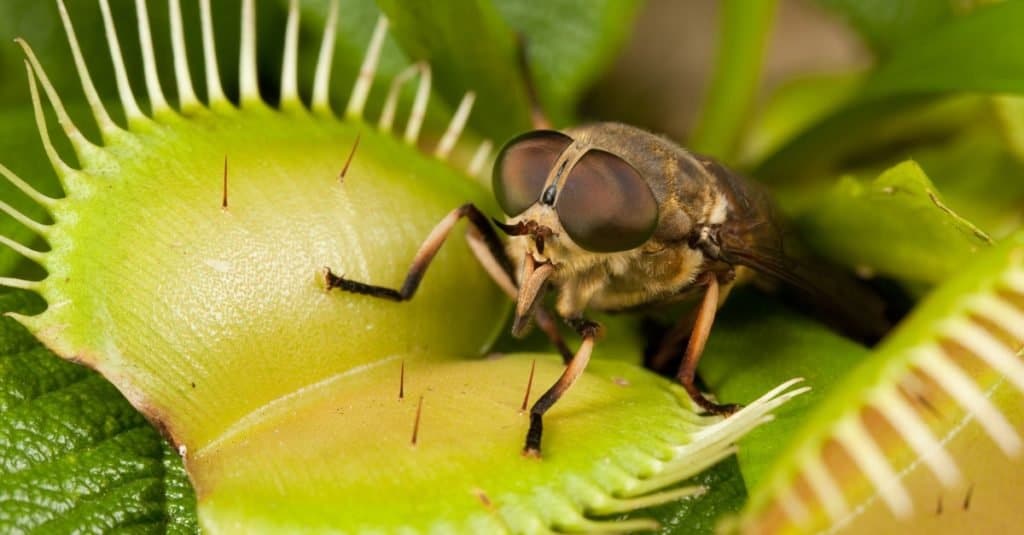
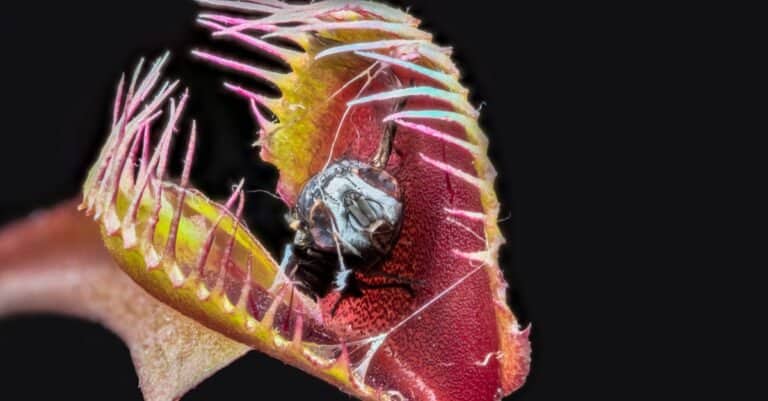
The “trap” of the Venus flytrap is made of two hinged lobes at the end of each leaf. On the inner surfaces of the lobes are hair-like projections called trichomes that cause the lobes to snap shut when prey comes in contact with them.
©Linas T/Shutterstock.com
The Venus flytrap (Dionaea muscipula), found exclusively along the coastal plains of North Carolina and South Carolina, is certainly the most well-known of the carnivorous plants. It is also the easiest to acquire, being inexpensive and small enough to find in your home improvement store’s garden department. True to its name, it uses the snapping trap to capture prey — after it lures them in with its sweet smell and fluorescent blue glow.
While its most common prey is indeed the fly, it also eats ants, beetles, other insects, arachnids, and even frogs! Once it snaps shut, it takes up to 10 days to consume the prey before reopening to reveal the exoskeleton. One caveat: You can’t feed it the meat humans eat, so don’t feed it ground beef because the plant cannot digest it. However, frogs, lizards, and small birds are fine if you wish to feed your flytrap something more substantial than its typical meal of small insects. Interestingly, the Waterwheel Plant is like the aquatic version of this plant in both genetics and trapping mechanism.
Pitcher Plant or Monkey Cup
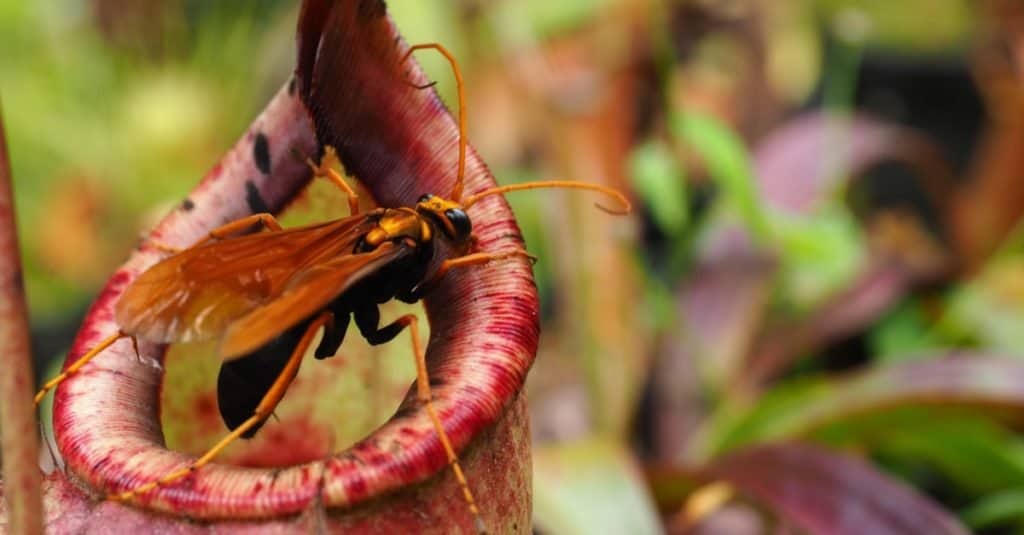
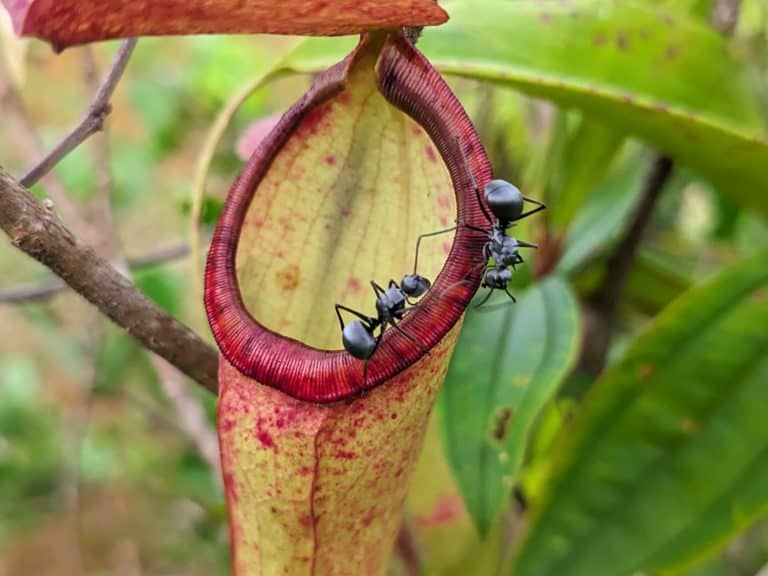
Many pitcher plants (Nepenthes sp.) have modified leaves that can form a vase or pitcher-shaped vessel that produces a sweet syrupy secretion that attracts insects and dissolves them into nutritious goo that is then absorbed back into the plant.
©JTKP/Shutterstock.com
There are many varieties of pitcher plants (Nepenthes), the tropical versions of which are called monkey cups. These carnivorous beauties grow in bogs throughout the South Pacific. The trapping mechanism is a hybrid combination of lobster pot and pitfall. Their slippery insides and bristles ensure that prey very rarely escapes. Plus, most have sugars laced with an alkaloid to intoxicate the prey. They also all eat insects — even butterflies, grasshoppers, and crickets. The monkey cups may hold a liter of water, and monkeys have been seen drinking from them.
Cobra Lily or California Pitcher Plant
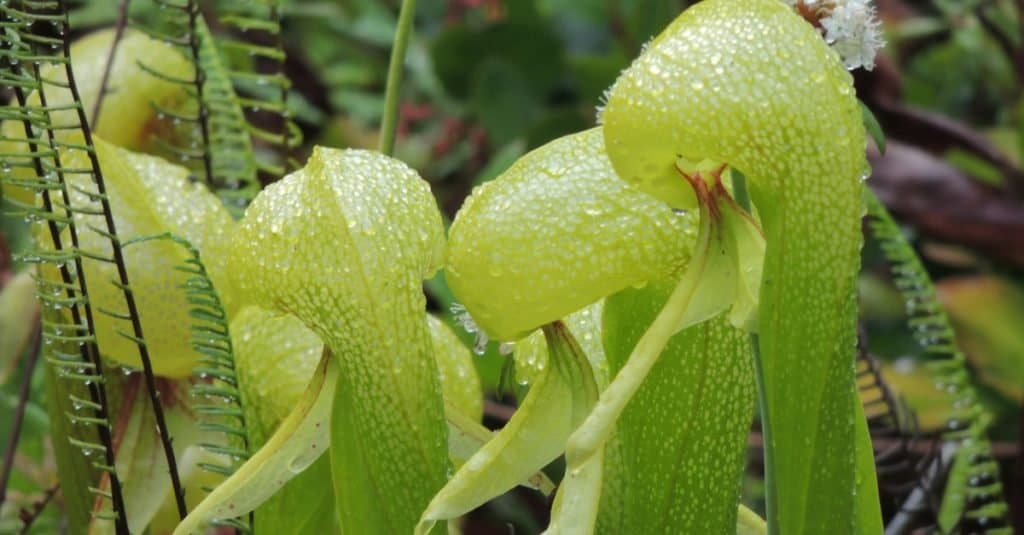
Darlingtonia Californica or California pitcher plant, also known as cobra lily. The carnivorous plant is hooded and pale green.
©Arty Alison/Shutterstock.com
Found growing in bogs along the U.S. West Coast, the cobra lily (Darlingtonia californica) is a type of pitcher plant, though it doesn’t resemble a monkey cup or display a pitcher shape. Instead, it looks like a cobra with its head curled up and ready to strike. Also, unlike other pitcher plants, it doesn’t trap rainwater but instead fills up its pitcher with water it absorbs from its roots. Cobra lilies eat a variety of insects and use pitfall trapping mechanisms. These carnivorous plants are designed with false exits that trap prey. Unable to escape, the prey succumbed to drowning.
Sundew
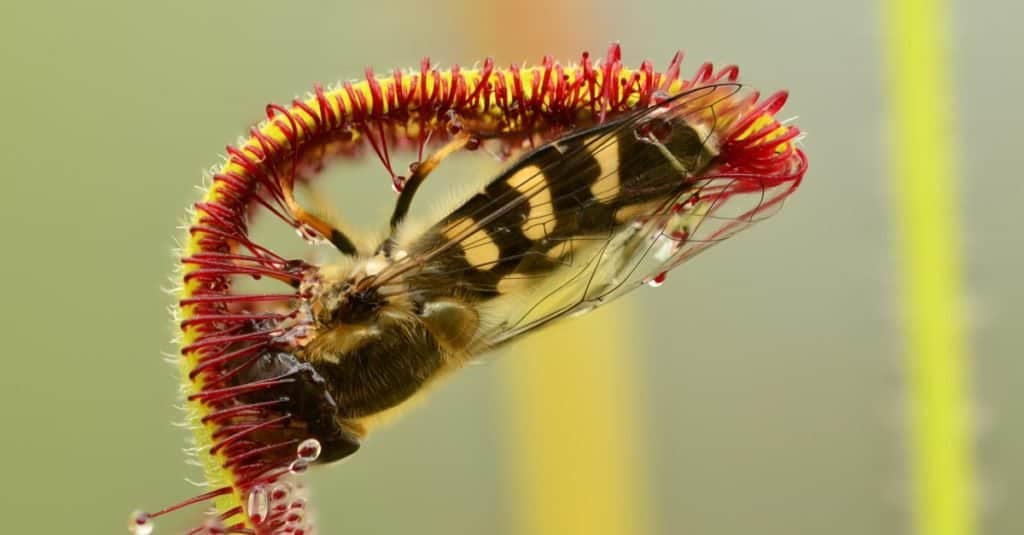
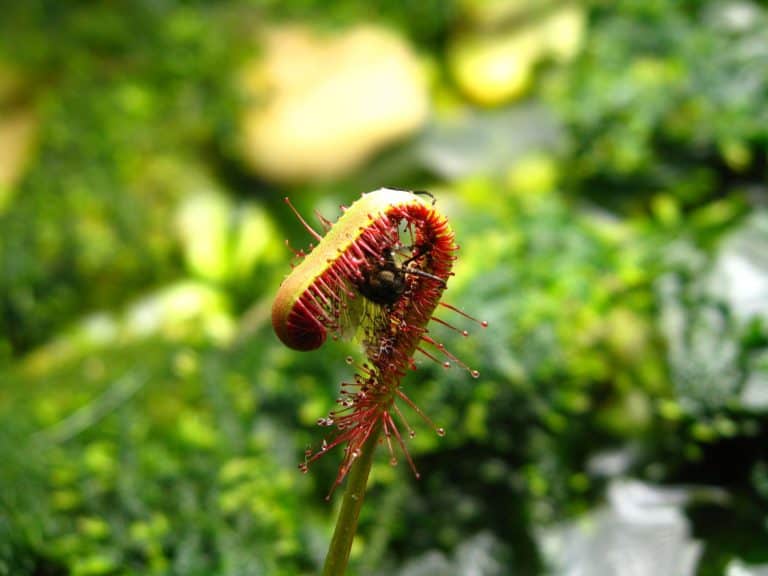
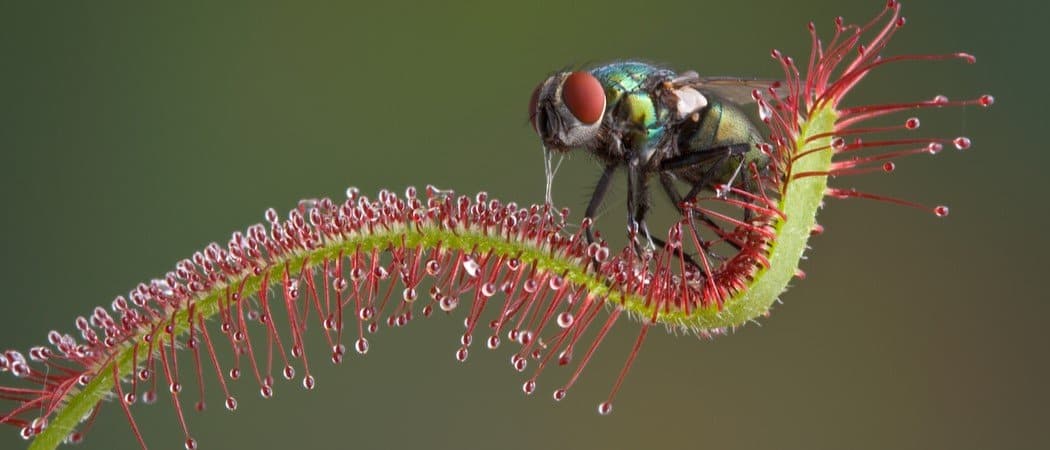
The sundews capture their prey by producing from stalked glands an adhesive, or glue (the drop of “dew”), which captures and holds fast the insect.
©Robert Evenflow/Shutterstock.com
Found everywhere except Antarctica, the sundew (Drosera) uses both flypaper and snapping tentacles as trapping mechanisms to capture and eat insects. Its name is derived from the droplets of sticky “dew” that collect on the ends of hairs on its leaves. The secretions trap thirsty insects that are then stuck on the small but deadly plant. Some sundew plants have reportedly lived for over 50 years!
Bladderwort
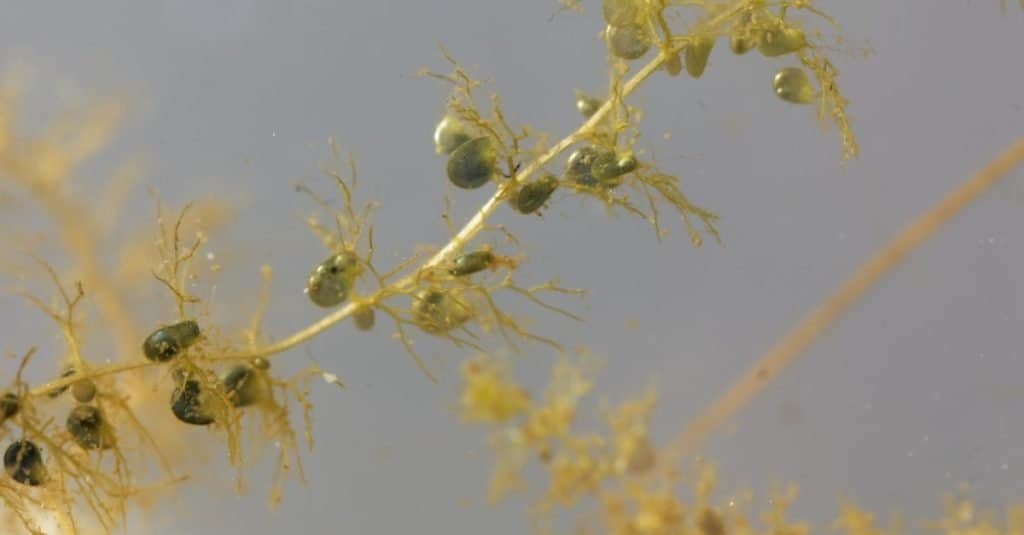
Underwater leaves with bladder-like traps of greater bladderwort, Utricularia vulgaris, a carnivorous water plant.
©ChWeiss/Shutterstock.com
Bladderwort (Utricularia ), found in freshwater streams, lakes, and bogs across Europe and Asia, uses a bladder trap to capture and eat insects, aquatic worms, water fleas, fish fry, mosquito larvae, and young tadpoles. But how exactly does it work? This aquatic plant pumps out water from its bladders to create a vacuum suction. When prey comes and touches the bristles on the flexible openings, the bladder opens to take in the prey along with water.
Butterwort or Sticky Leaf
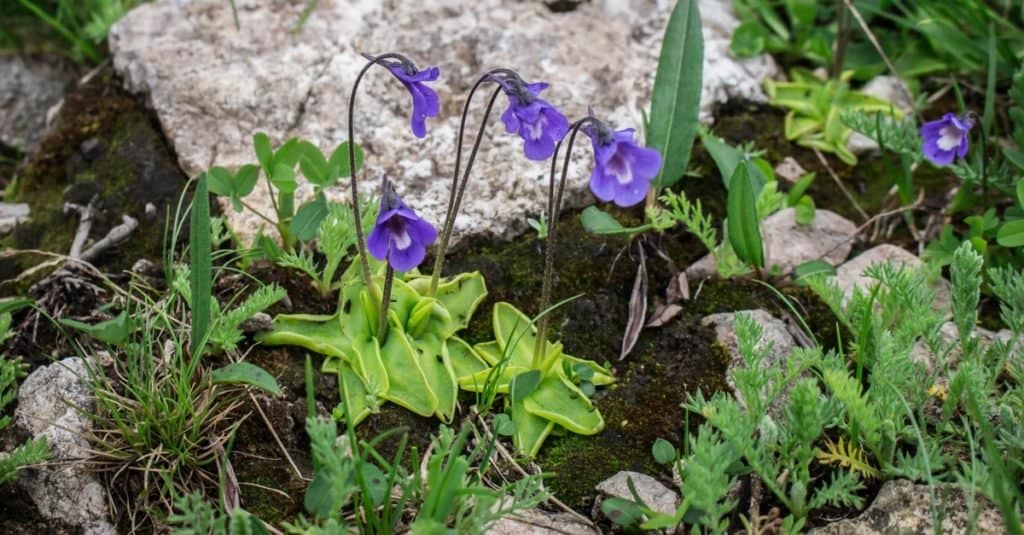
The butterwort plant produces bright flowers that lure insects into its trap.
©IvanaStevanoski/Shutterstock.com
Bright, orchid-like flowers are the main feature of butterwort/sticky leaf (Pinguicula). A closer look reveals the tiny hairs that secrete a mucus-like substance to create the flypaper trap. The vibrantly colored blossoms, whether white, pink, yellow, or purple, attract the prey, which the flypaper traps. The leaves secrete digestive juices that devour crickets, flies, spiders, caterpillars, slugs, gnats, springtails, and fruit flies. Butterwort is found throughout the Americas and Eurasia.
Brocchinia reducta
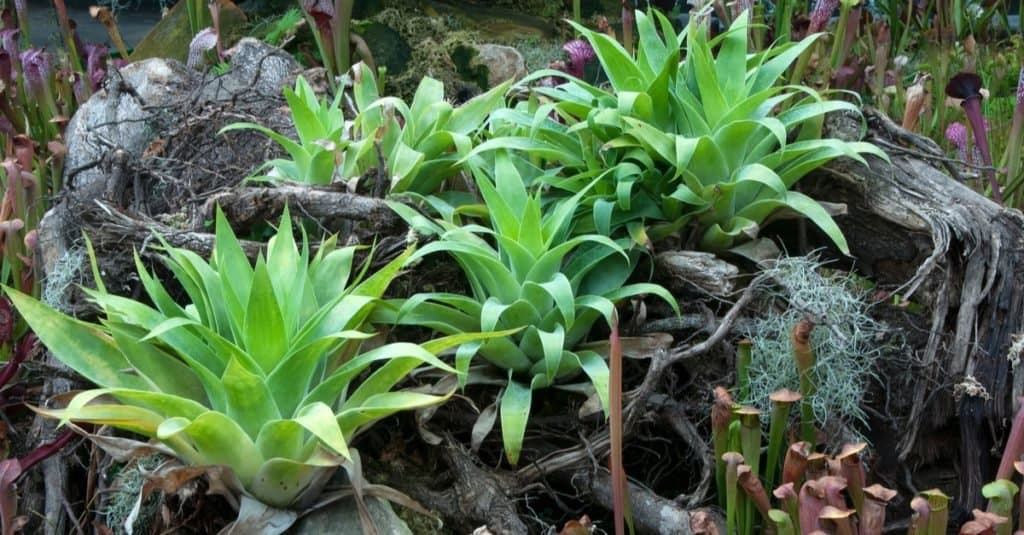
Carnivorous bromeliads surrounded by trumpet pitcher plants.
©demamiel62/Shutterstock.com
There is no common name for Brocchinia reducta, a carnivorous bromeliad belonging to the same family as pineapple, thick-leaved succulents, and Spanish mosses. Its trapping mechanism is the pitfall, aided by the reflection of ultraviolet light, a sweet scent, and its slippery, waxy surface that prevents claw anchorage. Flies and other insects then slide toward their doom to be digested by enzymes. Brocchinia reducta is native to South America.
Flycatcher Bush or Gorgon’s Dewstick
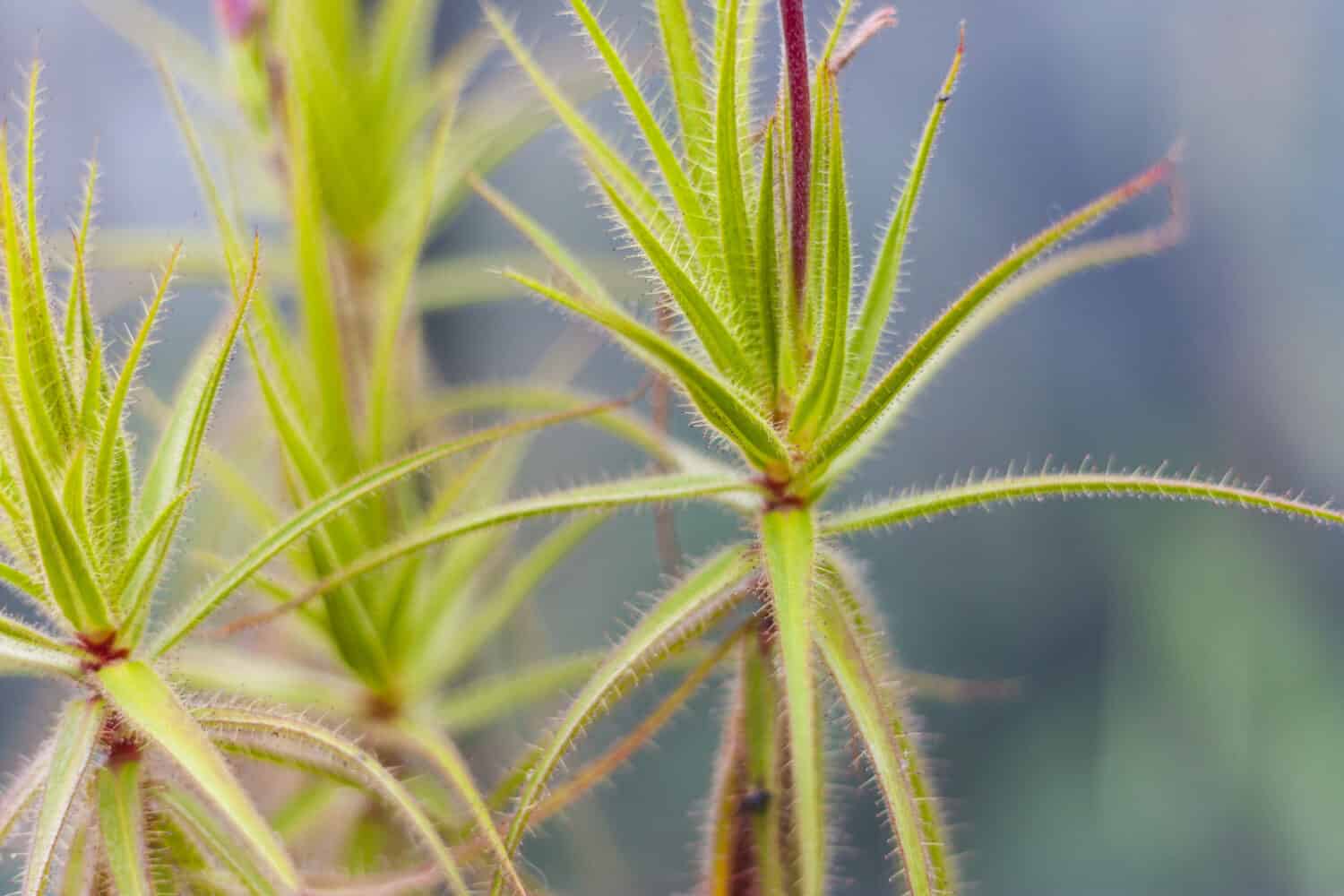
Native to South Africa, Gorgon’s Dewstick “eats” bees and wasps.
©kentaylordesign/Shutterstock.com
The flypaper mechanism is the trap utilized by the flycatcher bush, aka Gorgon’s Dewstick. This plant captures wasps, bees, and other insects. The shiny resin on the tentacles attracts the prey, only for them to become stuck. This plant is recognizable for its flower spikes with white or pinkish-purple petals.
The plant doesn’t digest the insects on its own. Rather, it relies on the jumping tree bug (Pameridea roridulae) to feed on trapped prey. The plant then absorbs nutrients from the jumping bug’s droppings in symbiosis.
Corkscrew Plant
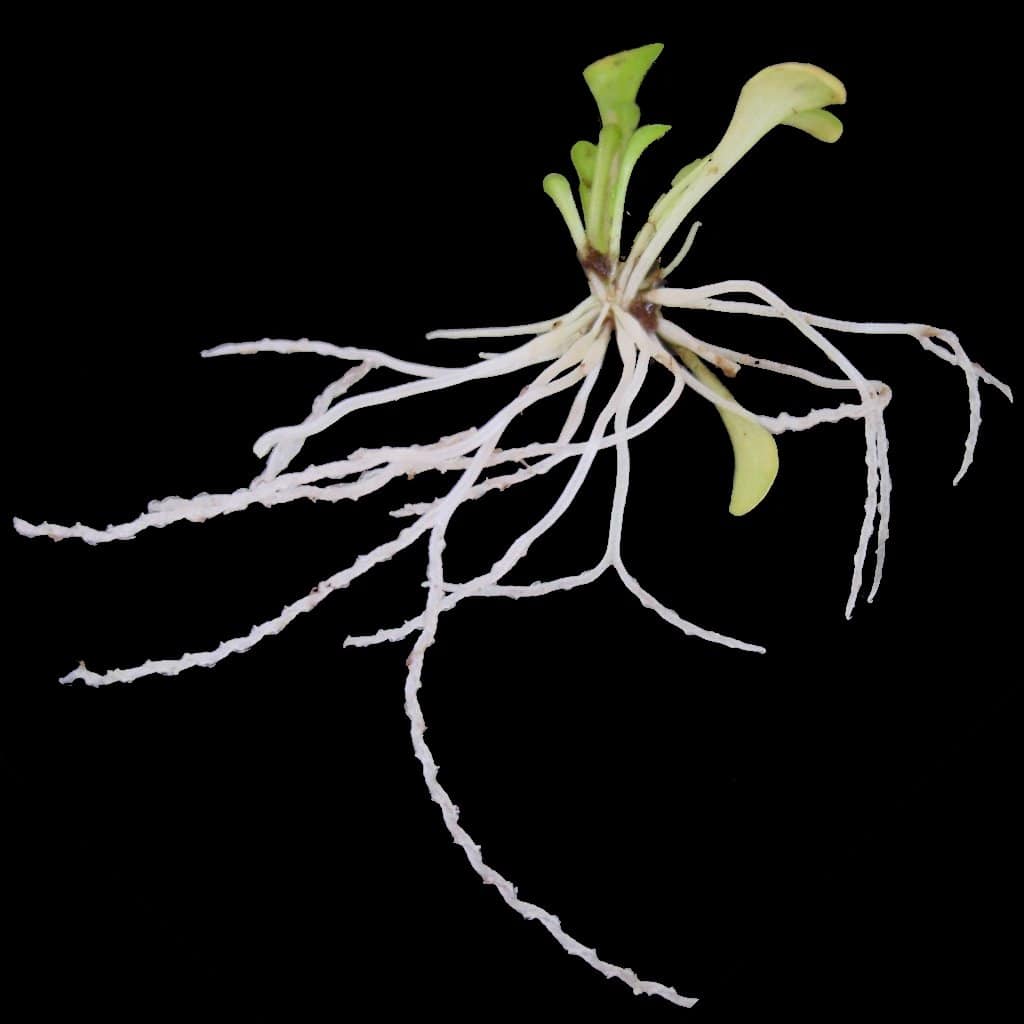
Genisea, commonly the corkscrew plant, features subterranean traps.
This carnivorous plant differs from other carnivorous plants in that it doesn’t target insects. Instead, Genlisea, commonly called corkscrew plants, eat microscopic organisms, including protozoans, using the lobster pot trap. Also, rather than attracting their prey above ground, corkscrew plants have white, tube-shaped leaves growing under the soil, in which they trap their microscopic prey. Above-ground leaves photosynthesize light, making them green. These interesting plants are found in Africa and South America.
Dewy Pine
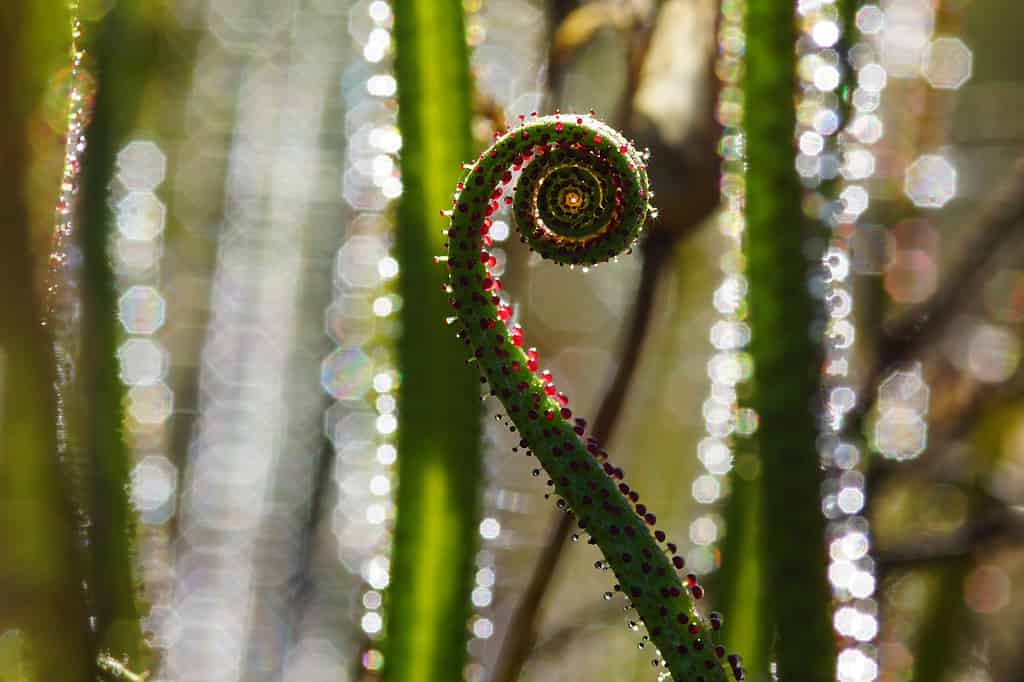
Each dewy pine leaf is covered in two types of glands: stalked glands that produce sticky mucilage and sessile glands that secrete digestive enzymes and absorb nutrients.
©anjahennern/Shutterstock.com
Unlike most other carnivorous plants, dewy pine (Drosophyllum lusitanicum) grows in dry regions, primarily along the Iberian peninsula, including Morocco, Portugal, and Spain. Dewy-looking secretions resemble honey to attract prey, while the sticky leaves trap insects. Plant enzymes digest the insect’s innards, leaving behind a dry shell.