
Quick Take
- Maintaining life at 3,601 meters requires the newly discovered death ball Sponge to bypass standard sponge survival mechanics, trapping and consuming live prey as opposed to filter feeding.
- This new species was discovered after an ROV-led deep-sea dive, leading to multiple samples and unknown creatures.
- The Chondrocladia species thrives in this difficult environment because of its carnivorous tendencies.
- The Ocean Census scouting process was required to prove the endemism of multiple species within the remote South Sandwich trenches.
It’s impossible to ignore a new discovery known affectionately as the death ball. And there’s a good reason to pay attention to this creature: it represents a group of organisms that scientists are still learning about each year.
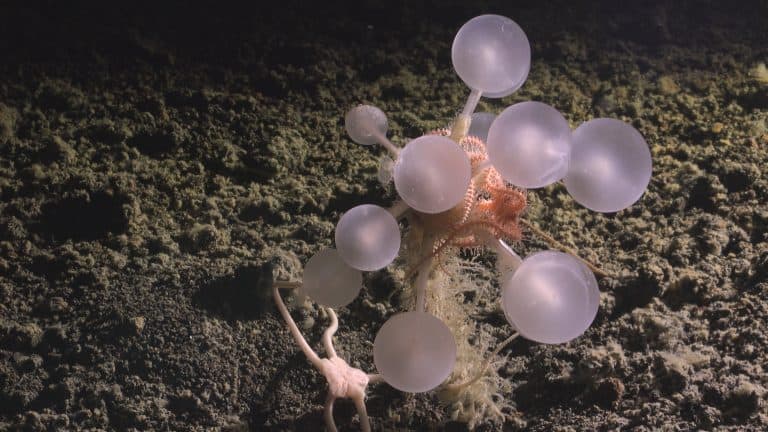
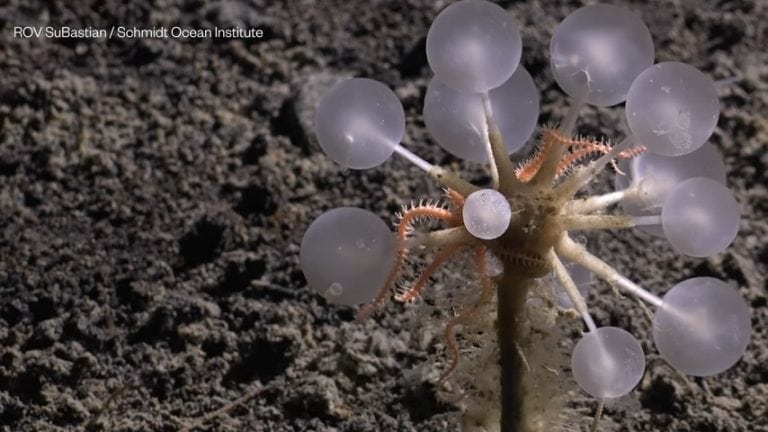
In early 2026, a roundup of 2025 discoveries made by the Schmidt Ocean Institute confirmed a newly discovered carnivorous sponge from the Southern Ocean and nicknamed it “death ball.” This Chondrocladia species doesn’t rely on filter feeding; instead, it uses unique structures to trap live prey. But how was this creature found, and what does it represent to the scientific and ocean sponge community overall?
We’ll take an in-depth look at the death ball sponge today, exploring where it was found, why it fascinates scientists, how it differs from other sea sponges, and other notable facts. Let’s take a deep dive into the death ball now!
Where Was the Death Ball Sponge Found?
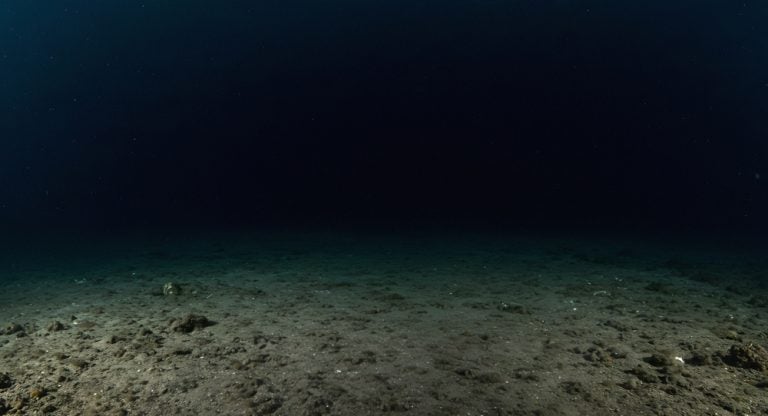
In the aforementioned report, the death ball sponge was discovered during a SuBastian dive, which is a remotely operated vehicle we’ll discuss in more detail momentarily. This carnivorous sponge was found at 3,601 meters, or 11,814 feet, at the Trench North dive site east of Montagu Island in the South Sandwich Islands region. It has been classified as Chondrocladia sp. nov. for the time being.
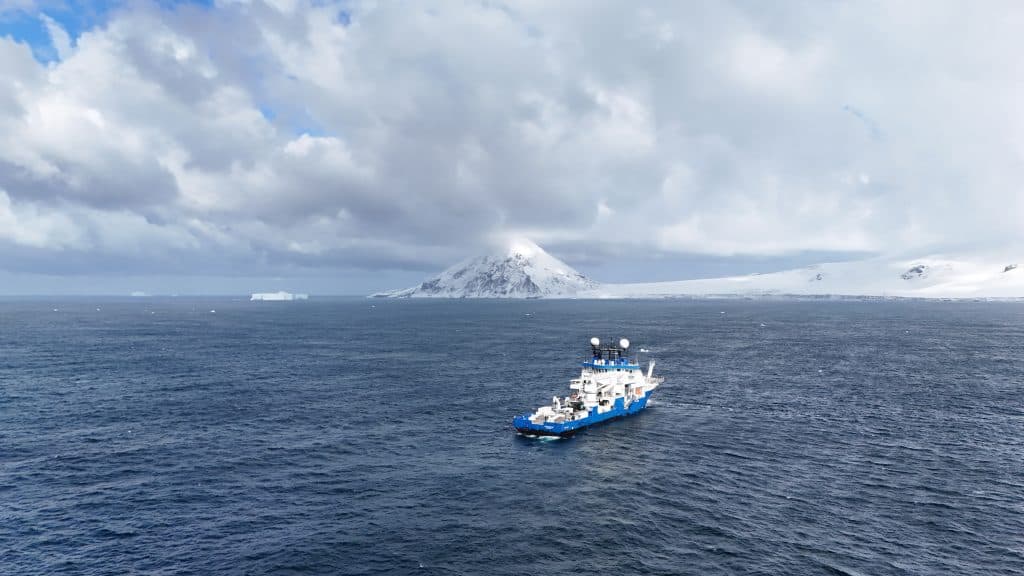
This is the Schmidt Ocean Institute’s research vessel at the South Sandwich Islands, during the 2025 expedition.
©Paul Satchell/The Nippon Foundation-Nekton Ocean Census/Schmidt Ocean Institute © 2025 – Original / License
The Schmidt Ocean Institute made the journey and the discovery, noting this sponge is a big deal scientifically. The location where the sponge was found is remote, cold, volcanically active, and shaped by trench geology that can create pockets of endemism—areas where species exist nowhere else.
This cruise ran from February 20th to March 26th, 2025, and it was designed specifically as an Ocean Census flagship expedition, aimed at accelerating species discovery in extreme habitats. This means the death ball represents a find from a relatively unexplored region, given its difficult location; it’s a creature that offers hope for future findings, too.
How the Schmidt Ocean Institute Found the Death Ball Sponge
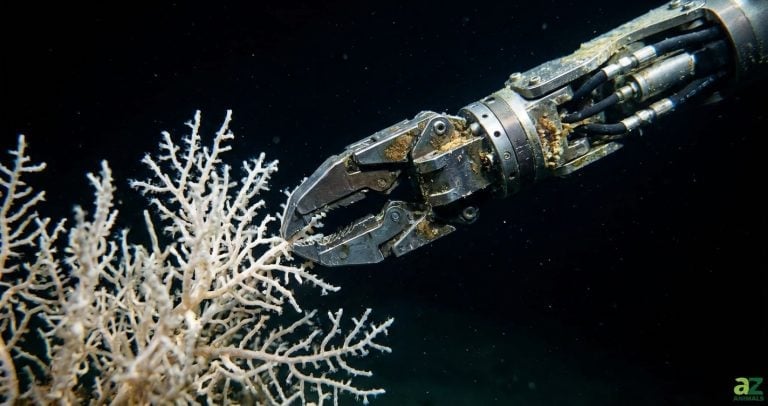
How exactly did the Schmidt Ocean Institute find this carnivorous sea sponge in the first place? It had the right tech ready to go. A remotely operated vehicle, or ROV, named SuBastian was deployed. This machine records high-definition video and stills, which helps scientists flag unusual morphologies or animals in locations that may not be readily accessible to humans.
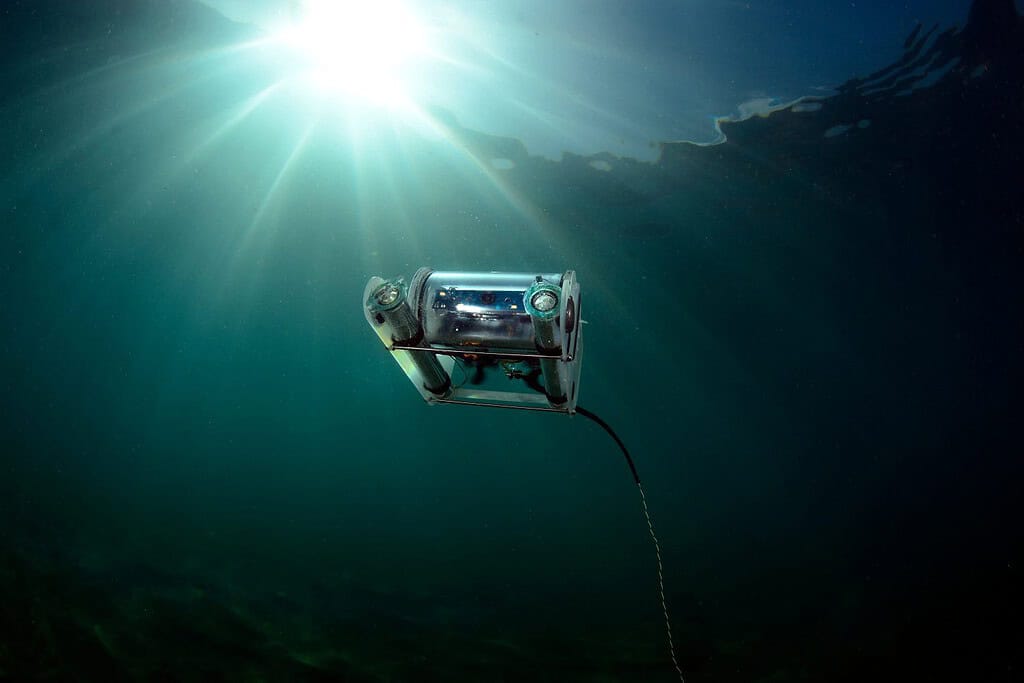
Remotely operated vehicles are one of the only ways scientists explore depths of this size.
©Humberto Ramirez/Shutterstock.com
When possible, the ROV collects specimens using manipulators or sampling gear, and those samples are preserved aboard the ship until it resurfaces. Back on land, taxonomists and specialists use detailed anatomical and DNA-based comparisons to determine whether the samples match any previously described species. Scientists must confirm that a sample is different from other species before conducting further studies or making any claims.
While this species has likely existed for some time, it required the right technology to locate it. Ever since its discovery, the death ball sponge has garnered so much spotlight because of its unique way of feeding, a way most other sponges don’t utilize at all.
How a Sea Sponge Hunts
Most oceanic sponge species feed by pumping water through their bodies, filtering bacteria and organic particles using multiple internal canals and specialized cells. Carnivorous sponges, like the death ball and other members of the family Cladorhizidae, take a different route.
Many of these creatures have reduced or modified filter-feeding systems, allowing them to capture small animals directly. For example, the harp sponge traps crustaceans with barbed hooks, and is another member of the same family as the death ball.
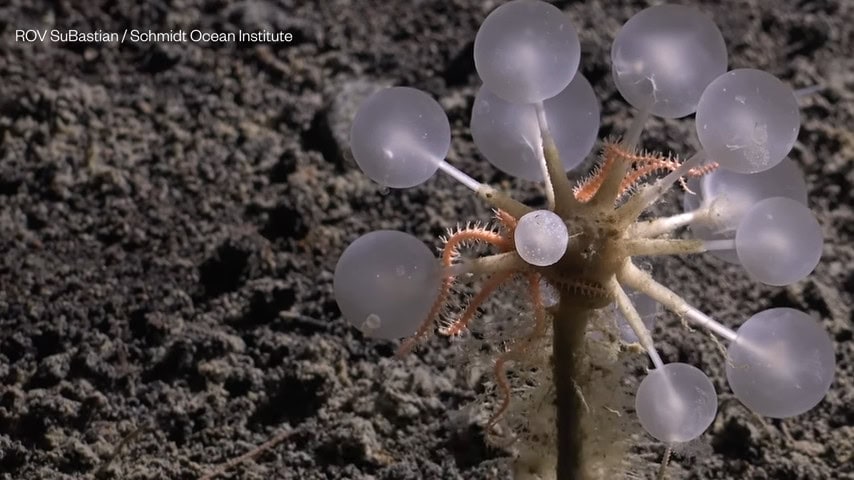
Thirty new deep-sea species, including a carnivorous “death-ball” sponge and shimmering scale worms, have been discovered from one of the most remote parts of our planet: the Southern Ocean.
©Ocean Census / YouTube – Original
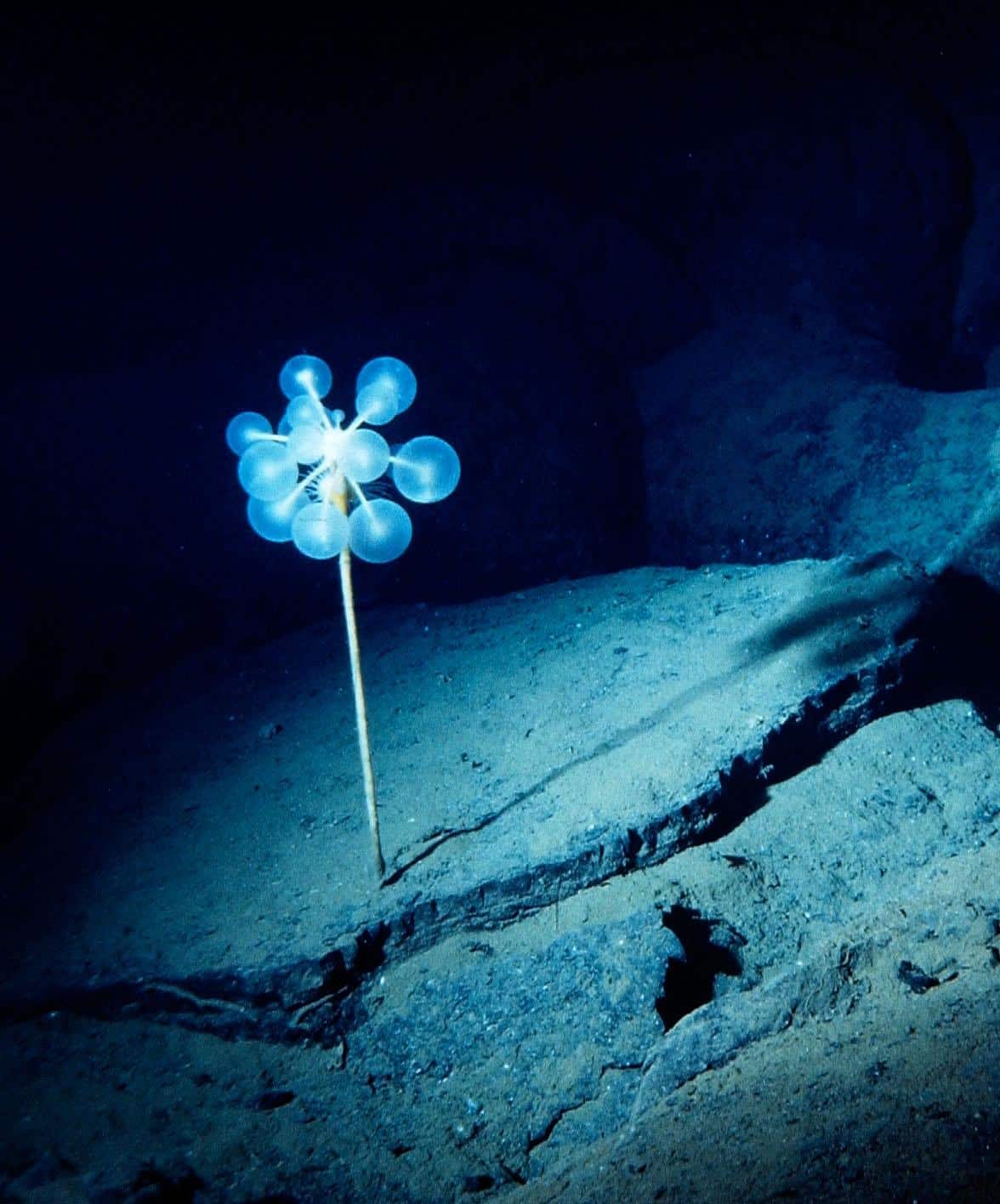
Additionally, some species in this genus use spheres, unique structures where prey can get snagged in hook-like mechanisms and remain trapped until they are eaten. That’s what makes the death ball sponge more unique than the average oceanic sponge. It doesn’t filter seawater and can reach out to grab its prey. But what prey is on the menu for the death ball sponge?
What Does the Death Ball Sponge Eat?
The exact prey preferred by this specific Chondrocladia sp. nov. is still being studied, but it likely eats small crustaceans and other tiny drifting animals, as these are the only creatures available in its limited, remote habitat.
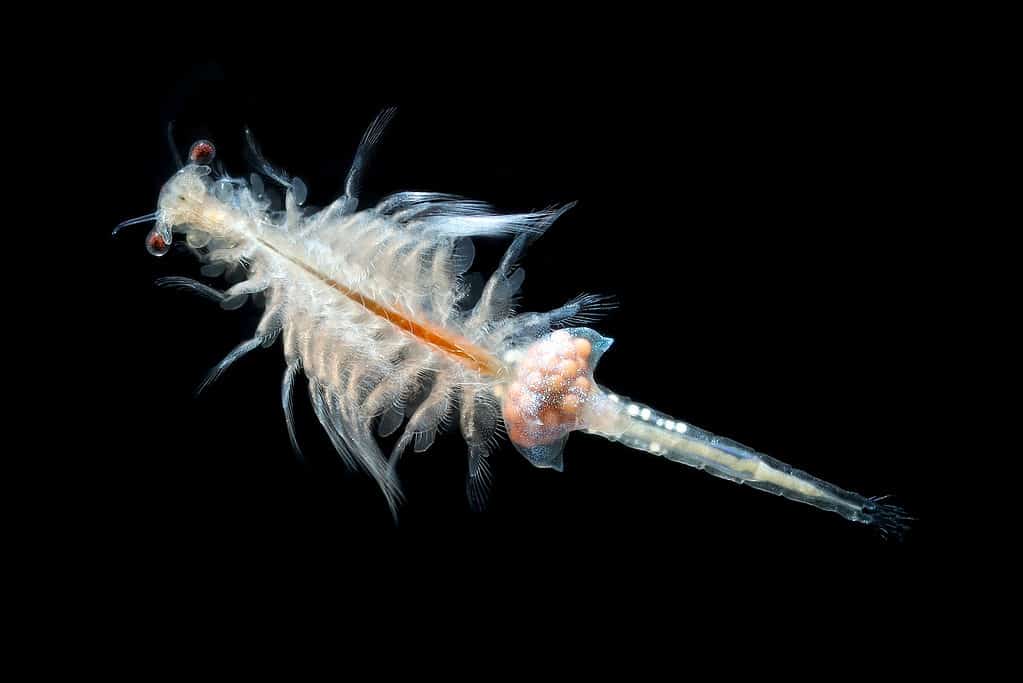
The death ball sponge likely eats tiny crustaceans and other microscopic prey.
©Dan Olsen/Shutterstock.com
As sources and reporting around the death ball sponge emerge, they have included mentions of this creature consuming amphipods or isopods. However, it is still too new to confirm the exact diet. All scientists know is that the sponge is built to trap small, mobile prey, with its hooks catching animals that would otherwise slip its grasp.
The Rise of Carnivorous Sponges
Carnivorous sponges are most often associated with deep-sea habitats or other nutrient-limited environments where filter-feeding may not keep them alive for long. In the deep ocean, there can be plenty of long stretches where suspended food particles are scarce, which is why relying on water filtration alone may not provide enough energy to the creature.
Carnivorous sponges are the survivors in these remote locales. Instead of filtering a constant stream of potentially empty water, a carnivorous sponge can snag high-calorie meals, lasting on a single bite for some time. Most animals adapt when food is scarce in an ecosystem, as natural selection favors strategies that capture more energy per event.
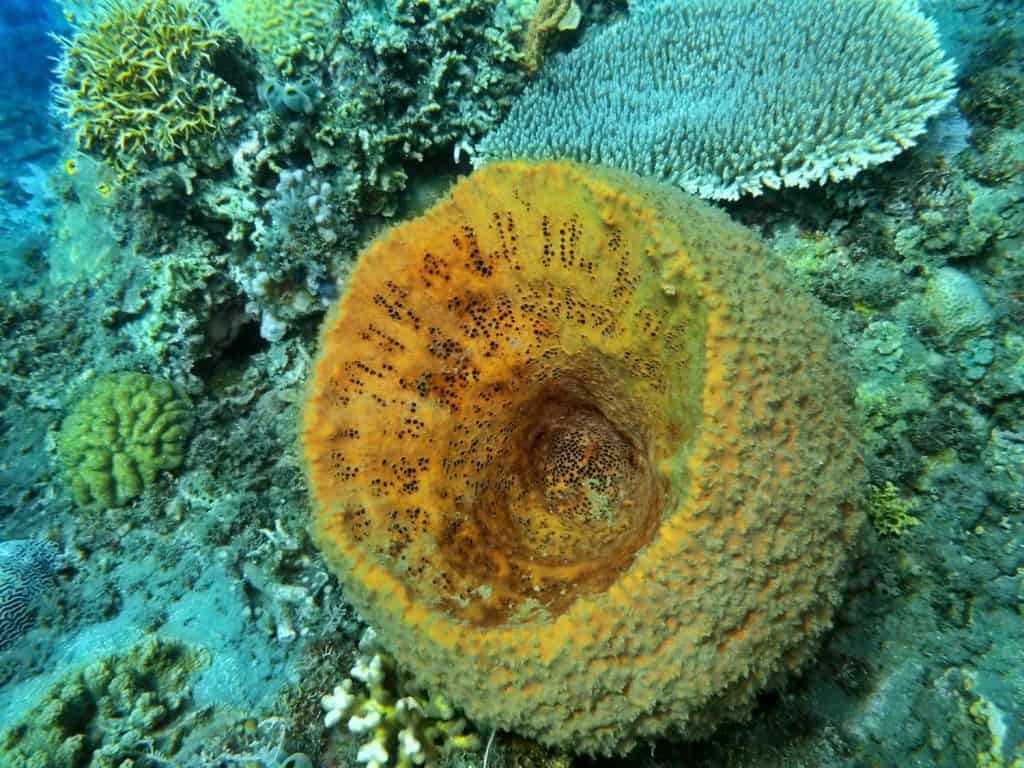
Most sea sponges filter their food, but carnivorous sponges have unique ways of capturing larger prey.
©Ogurtsov/Shutterstock.com
Given that the South Sandwich Islands region is full of trenches, volcanoes, vents, and boundaries in ocean currents, the environment directly shapes where life can thrive. Typical filtering sea sponges likely can’t survive long in this particular area, making the death ball sponge a top competitor.
Is the Death Ball Sponge Endangered?
For any newly discovered species, the conservation status is almost always unknown at first. Scientists can’t assess its population size or unique threats without basic data, including the creature’s range, abundance, reproductive capabilities, and habitat specificity. However, scientists can document the potential risks new species may face, including the possibility of vanishing before being studied.
The habitat where the death ball sponge was found is profoundly undersampled. In reporting that draws directly from Ocean Census statements, Dr. Michelle Taylor stated that less than 30% of collected samples have been assessed so far. Given how remote a region this sponge lives in, scientists are still learning its environment as well as how it operates within it.
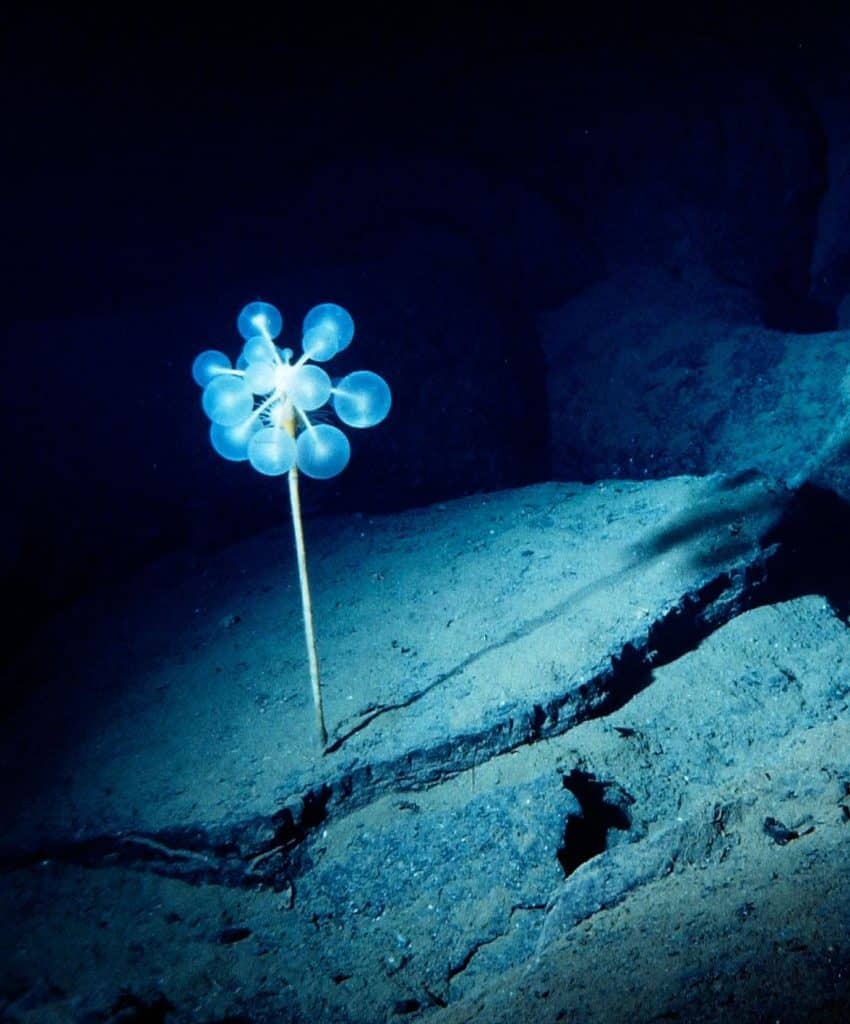
It is unclear just how many death ball sponges exist in the wild, given their recent discovery.
©"Campagne GEOCYARISE – Eponge carnivore Chondrocladia lampadiglobus (Ifremer 00703-81529)" by null is licensed under BY 4.0. – Original / License
Thankfully, they discovered the sponge before it went extinct, which has likely happened to countless species in the same ecosystem without us realizing. While a deep-sea organism documented at a specific trench site near a remote island chain could turn out to be widespread, it could also turn out to be locally restricted. The death ball sponge highlights how much remains unknown, encouraging further research and discoveries over time.
The Deep Sea and Its Unexpected Carnivores
The death ball sponge reinforces the notion that the sea may still be hiding a great deal of biodiversity within its depths. Indeed, the same announcement that mentioned the death ball sponge also confirms dozens of other new species from the same region, a region widely unexplored and in need of future study.
If future expeditions confirm that this Chondrocladia species is narrowly distributed, it may be labeled as endangered. However, the death ball sponge could be more widespread than we realize, making it a fascinating species that inhabits our ocean floors and trenches.